Category: radical discipleship


IMG_5798


If cleanliness is next to godliness then I am a sinner indeed.

There is is difference between cleaning out of a sense of duty and as an act of love.  When its an act of love it’s a lot less unpleasant for one thing, you approach it differently because it’s an opportunity not a chore.  How can I show you that I love you well today?  How often do people ask themselves that question?

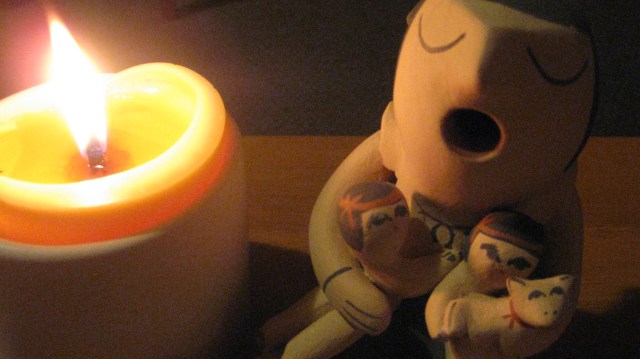
I was thinking today that if my body is not sacred or profane then I make it an object… a gun is not sacred or profane in and of itself but how it is used.  If you asked me to think of a sacred object I think I would struggle.  It seems a word belonging to past times when a church or an icon of some kind might be called sacred.  What is “sacred”?  Something employed only for the glory of God?  What is “only”?  What is the glory of God?  Credo was sacred – not clean, tidy or holy necessarily but sacred.  Are the churches that hire out as function spaces more profane?  As long as >50% is for the glory are we doing ok? Cleaning the bathrooms can be a sacred act if it is done as an act of service and expression of love.  Nothing I eat or drink can profane my body… there is a new law.  What else can I do, or not do, that might make my body more sacred? Or profane?  I pray but I don’t think that makes me sacred.  I might light a candle – the candle itself is not sacred but my intent in lighting it… if I follow that logic then You are sacred, and also those spaces we might encounter You.  I do not encounter You often in church these days and that make my heart glad because it makes the trees, the birds, the sky, the water, the blank A4 page sacred if that is the intent I bring to it.

Water on the counter and the floor, then we walk across the floor, so over the day a trail of muddy footsteps back and forth develops. Have you made my bathroom dirty? Am I unclean amidst your preparations for prayer?

What is sacred? What is profane?

Is there not love in the hands that change the nappy and soothe tears?  In the hands that shower a disabled father and wash the incontinent sheets? Is there not love in the hands wielding cleaning cloths and assembling shelves?  So humbling such a love as this and I expect good work if it can be seen for what it is.

Where my thoughts are on God, I encounter God.


IMG_5264

Welcome, we acknowledge that we gather on the land of which the people of the Kulin Nations have been custodians since time immemorial.

This is our third in a series called The Art of Discipleship where we showcase the material of different books and engage with their material creatively.

WEEK THREE

The activity this week is taken from:

Binding the Strong Man: A Political Reading of Mark’s Story of Jesus


This book by Ched Myers looks at the book of Mark as a manifesto for radical discipleship — i.e., Jesus as exemplar of nonviolent resistance to the powers-that-be in his day, and ergo in ours.  We will be reading Mark, all of it, in one go and sitting in the queries; “What do the questions Jesus poses to the disciples have to say to us today?”

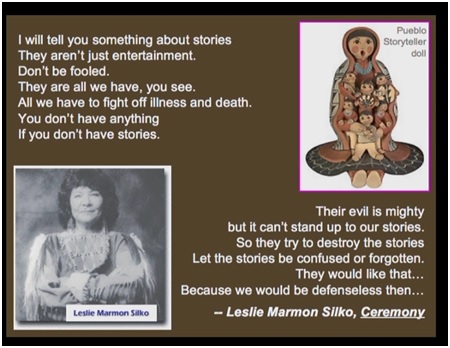
The Word is removed from us in time and space. We all tell stories and know how to tell stories. It is a common language that bridges other cultural gaps between us. These stories are not just entertainment but they actually educate and nourish us. BUT because they are good and healing stories, there are powers out there that will try to destroy them or… “let them be confused or forgotten” – BUT these evil powers cannot stand up to these stories (a statement of faith – conviction -hope that there is a power greater than what we face).  So what we are doing, reading scripture is counter cultural – sitting down and sharing, taking time.

silko

Radical – arising from or going to a root or source. From latin radicalis, having roots.

Radical simply means to go to the roots. Twin task of going to roots of tradition in scripture and in spirituality and in social solidarity and in roots of our contemporary pathologies to deal with root causes and not symptoms.

What are the current issues these stories could be informing?

  • War Israel/Palestine/Afghanistan/Syria/Russia
  • Riots/protests throughout middle east – for democracy and Europe/America in relation to global financial crisis.
  • Isaiah 14.:8: strategic asset Cedars of Lebanon, oil of the ancient times. What was empire then and what is it now? Phonecia, Babylon, Rome – clear cut the cedars for masts for ships and bearing poles for temples. Ecological justice.
  • Matt 1-2, Luke 1-2 Christmas story sentimentalised – imperial violence and human displacement, infanticide as a matter of domestic policy.
  • Road to Emmaus – story of courage and resistance, within a few days of crucifixion. Easter Luke 16:31 – under the shadow of death, not a zen walk down a country road. What is the meaning of the death of our leader for our movement.
  • Immigration/boat people – Isaiah 56, scripture and restorative justice – right using the bible to exclude immigrants and gay people. Radical
  • Matthew 18 restorative justice, ambassadors of reconciliation 2 Corinthians 5:16-6:2.

Draw parallels and analogies with our current context.

  • Ambassadors in chains Ephesians 2-3 & MLK letter from a Birmingham jail (Eph 3:10, 6:1)

How does the story read in our own context?

allegory

As we read be mindful of the following:

  • Oral tradition – uses language to set the scene – are we at the seaside or in the city now?  Look for introduction of new characters, new settings, changes in plot.  Often read the bible like a 5 minute segment out of an entire movie  – how can you understand what’s going on when you come in part way through the story? Need to rebuild critical literacy.
  • We can romanticise the Roman Empire – nothing nice about it.  I am a descendant of the colonising empire – British Empire, conquest, world sovereignty, racial superiority and global management.  Empire looks very different from the bottom IMG_5266up, than the top down – victims are always reminded of their vassalage. Money replaced with that with an image of Emperor or Queen.  The Romans were driven out of Judea and then they struck back. Jerusalem was laid siege, conquered and burned.  The book of Mark was written during this war.  Empire can be defined as the rule of the centre over the periphery.
  • Mark 1:7 baptiser – One is coming who is stronger than I am.  Power contesting power.  Not baptised with only water but the holy spirit and fire.  Baptism was and is a personal and political statement in a social context calling on the Holy Spirit of water and fire out in the undomesticated wilderness against the struggle of empire.
  • “True evangelical faith cannot lie dormant. It clothes the naked, it feed the hungry, it comforts the sorrowful, it shelters the destitute, it serves those that harms it, it binds up that which is wounded, it has become all things to all people” Menno Simons 16th century.  This is a discipleship of struggle and resistance as well as renewal.  Will it have a cost?  Baptism into Christ and into Christs death.  When Jesus was baptised he went right under into the Jordon, shedding  everything of socialisation – rises up completely unobligated to empire.  Jesus was baptised into a specific watershed/river, a specific story, a specific (un)kingdom.


Working from the same copy, read the – whole – book of Mark aloud in one session. The document below, to help with the sense on one whole flowing story (as the oral tellers would speak it), has had all chapter and verse numeration and story “titles” removed.

Mark stripped back

First thoughts?
Sound/feel different than it usually does? What stands out?
Have some general discussion around the ‘mindful’ notes re our ideas about – stories, empire, baptism, discipleship…

Hostility or hospitality?

059

I wake early on the second morning in my new house. I’m still learning the new sounds and lie half asleep trying to associate each noise to an action: that is a drawer opening, that is someone coming downstairs, that is someone going out the front door, that is someone being really careful to be quiet in the kitchen… How considerate. I roll up thinking: if I let them know I’m up, they can stop worrying about waking me.

The lights aren’t even on! How is anyone meant to get ready for work in the dark.  I flip them on to tease my housemate, “Thanks for being considerate but you don’t have to tiptoe around in the dark!”  and realise very quickly that this roughly-dressed man coming out of our pantry is not she.

I think we both froze and then I followed up with something stellar like, “Hey”

I follow that up with just what’s on the surface.

“Are you looking for something to eat?,” and continue babbling as I move into the kitchen, “Do you want toast? I could make toast. And coffee.  I can’t really function before I’ve had coffee.”

He says, “No thanks” and we move into a conversation about the purpose of the Footscray Community Outreach house.  He’s on the street and looking for housing but we’re really set up for families with children so he can’t stay here … “How did you get in?” I ask.  “Knocked”. He replies casually.

I talk about our open community dinner.  I don’t have housing referral information but if he comes back tonight I’ll print stuff out.  Eventually we run out of small talk and I indicate I need to start getting ready for work. “No problem,” he says, “I’ll show myself out.” But I follow him to the door anyway, see him out, check it latches, then check all the other latches. Just in case.

Later in the day I fire an email around: “Hey guys, think we need to be making sure the doors are secure at night. Found a community member in the kitchen at 6.30am!”

Aah, but, as it turns out, my new friend is not a known community member and I’ve been having a chat with someone whom I guess may have been casing the place looking for something to take.

There’s lots of different ways to respond to finding someone you don’t know in your kitchen at 6.30am.  Apparently, “What the hell are you doing in here? Get out!” {with optional further swearing for colour}, is a more common response…  and quite a confrontational one.

At the first point of contact, I am standing in the doorway that, as far as this guy might imagine, is the only way out of the room.  He will have to go through me to get out.

I’m in my pyjamas, I’m not wearing my glasses and (sorry to let the side down) I’m a girl.

I genuinely didn’t feel unsafe at the time.  My confusion was probably an advantage to him – had my housemate just let him in? was he known in the community? has he lived here before?  

What is your need?  I have just unpacked in the kitchen, bought some food… is there anything I would really miss? Anything I couldn’t give you?

It starts to sink in more as the community responds to my blithe email.  Housing referral information, sleeping bag, dinner, someone to be with me when he comes back to the house (it will be a bloke), clear boundaries to be communicated, all residents are informed and offered support – “How can we continue to make this feel like a safe space?”… it may have been out of the box, but as the story spreads beyond community to friends and work colleagues I am asked again and again “Why didn’t you tell him to get out!?”, I can only respond helplessly, “Well, if I’m choosing out of hostility and hospitality… I can back hospitality up yeah?”

In responding out of my pre-coffee and ignorant state I have possibly  dialed back a scenario that might have been unpleasant.  I’ll give you that.  But I am interested in what the factors were that made my response different from what it might have been  because it seems how spaces are set up and what our expectations are of those spaces purpose can impact the range of responses available to us when welcoming strangers:


  • I expected my home space to be a common one and for stranger to be welcome there
  • As a lead tenant of the house –  hosting folks who rock up is part of the position description
  • I expect people looking for something at 6.30am need it. I don’t do anything at 6.30am without a really good reason.


How can we make: “What is the need that brings you to this place?” our first consideration in responding to others? (whether that’s kids, partners, work colleagues, or randoms in off the street…)

Not a bad thing to pick up the first week on the job.


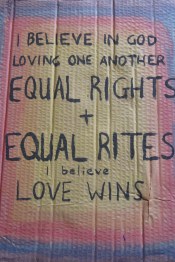
i believe love wins

007

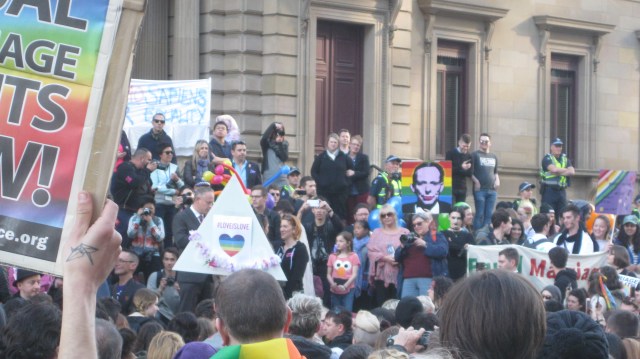
Today feels like a day for bright colours.  Uncharacteristically I am wearing one of the skirts I have made – full and colourful, no one around today to comment on it and I love that – what would we wear any given day if we thought no one would ever say anything?

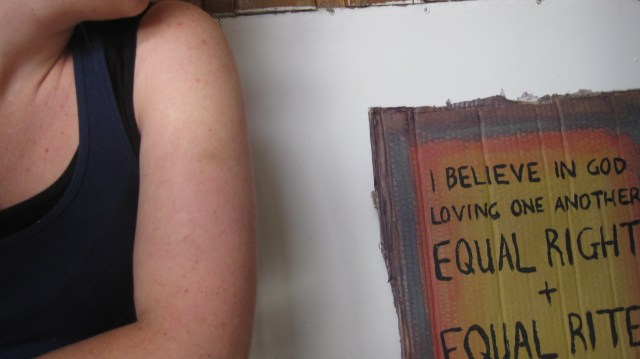
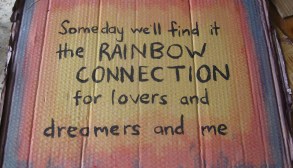
I feel nervous carrying my homemade 009signs to the marriage equality march – do I  carry them facing inwards until I get there?  Am I going to draw negative attention from people that are anti-gay or anti-Christian? You are making a choice, to set yourself out, apart, from ‘normal’ people going about their ‘normal’ day, doing ‘normal’things.

To be contrary, I line them up beside me on the seat at the bus stop while I wait – people idling in the weekend traffic read them but no one says 005anything and I am almost disappointed… let’s do it, let’s talk about how we’re treating one another.  People see the signs – rainbow broadcasting
makes the topic clear – no one says anything… aah, I have found a new way to be invisible.

Now at the train station, I put in my headphones as I step into the train carriage, block out an uncaring world and I am tapped on the shoulder…

“Hey, you want to join us here in the marriage equality corner?”

…I am welcomed in, a place, a space made for me and my signs.  they look me over assessingly, am I like them?

“I haven’t ever been to a rally before, But I have been to the Sydney Mardi Gras – I hope it’s like that – there’s a power in people coming together from all over, no matter what their age, race, religion, gender orientation is… there’s something really powerful about that, ay?”

Yes.  Yes there is.

How much riskier must it be if your clothes or mannerisms or something “give you away” and make you feel like you’re carrying a rainbow coloured banner with you everywhere you go… I’m embarrassed of the fear I felt of some kind of retaliation for sticking my neck out… is this a fear people live with going out their door every day?

The act of solidarity isn’t just showing up at the parade but being willing to put yourself in a position to share the experience of the person being marginalised – so what if someone did yell something out of a car on the way past or defaced the sign or comes into my personal space with aggression.  Is this something gay people ask of themselves every day? “Do I wave the banner today or mute something of who I am so I don’t attract attention?” As with all movements perhaps it requires some to be be ‘extreme’ with it to broaden the range of what’s ‘normal’… maybe that’s literally carrying a rainbow banner – drawing some of the attention away from you over there to me right here.

It’s not the same, hating me when it’s not my lifestyle choice.  You have to have a conversation with me to  find out why I’m doing it – and I’ll have a conversation with you about why you aren’t.


014

Yesterday I attended the book launch of “The Jihad of Jesus” by Dave Andrews… that’s a title that’ll get your attention…

I feel it takes a little explanation so I’m going to take the liberty of including Dave’s Preface here so that he is introducing the material in his own words…

“I do not write this an an expert. I am not.

I do not write this as a specialist. I am not.

I simply write this as a Christian, in conversation with Muslim friends, seeking to find a way we can struggle for love and justice that is true to the best of our traditions.

I am writing this for Christians who are concerned about the way Jesus has been (mis)represented by well-known crusading combative pastors, like Mark Driscoll.

I am writing this for Muslims who are concerned about the way jihad has been (mis)represented by well known militant extremist preachers, like Abubakar Shekau.

And I am writing this for people who subscribe to neither religion, but watch with horror, as Christians and Muslims slaughter one another in the name of God.

For many people jihad and Jesus are totally contradictory, mutually exclusive options.  You must choose the one or the other.  You cannot have both.  Given our present situation, Muslims would tend to choose jihad, Christians would tend to choose Jesus.

But it is my contention that – rightly understood -you can’t have one without the other.  in spite of the fact this may seem heresy to Muslims and/or Christians, I contend you cannot rightly pursue jihad without Jesus, or rightly pursue Jesus without jihad.

Reza Aslan’s book Zealot sets forth the case that Jesus was not simply a pious spiritual teacher, but actually a radical messianic activist. Of this there is no doubt.  Both Muslims and Christians believe Jesus was the Masih or the Messiah.  The debate is about what his radical messianic activism meant in the context of his time and what his radical messianic activism means in the context of the violence and counter-violence in our time.

If, as some would argue, Reza Aslan is right, Jesus could be a model for violent jihad.  But if, as I argue, Ahmad Shawqi is right, Jesus would be a model of nonviolent jihad: as

Kindness, chivalry an humilty were born on the day Jesus was born.  No threat, no tyranny, no revenge, no sword, no raids, no bloodshed did he use to call to the new faith.

The Jihad of Jesus is the sacred nonviolent struggle for justice.”

Dave Andrews, Bribane 2015

http://www.jihadofjesus.com

daveandrews.com.au

Nora (short, coloured, Muslim, woman) speaks first which is an important signal I think – the medium is the message.  She and her family build their home in a new development and meet with the neighbours regarding fence options and collectively decide not to have them but have the children stay, play, eat together… different religions, different cultures… five months later 9/11 happened.  She said “The fences will go up now” and they didn’t. Not until many years later when the family was to move.  They were known and, known, they were accepted.  Muslims make up 2.2% of the population in Australia (2011 census) – not likely to meet one but the culture of fear is being fed.  Nora felt called to speak out but Christians wouldn’t listen – “You won’t be accepted if you don’t remove your scarf”, serving her pork and giving her copies of the bible… someone suggested she meet Dave and she didn’t want to, this books captures 7+ years of the shared conversations that followed.

Dave (yes… tall, white, Christian, male) speaks second.  We believe in the same Abrahamic God- need to start where we agree and then explore other areas.  When 9/11 happened, Dave went to his local mosque and said “I’m sorry, they’re going to try and make it them and us (set us against each other) may I come in and join you in prayer as an act of solidarity?”

He gave Nora a copy of this books manuscript and has included her comments in footnotes where she has disagreed with him – minority/dissenting voice included.

Steps forward:

(Buy and read this book I reckon’!)

  • talk about it
  • live it out yourself
  • tell stories
  • invite others in
  • celebrate the wins


IMG_5589

My blog posts almost feel like signposts, pointing out the way to You that I have followed but it would look like this… The thing with You being everywhere, the centre and the edges, maker of all things… Your fingerprints are all over everything and everyone who has ever been. It really isn’t all that hard to find You if people are truly willing to “look”.  I don’t want people to focus on reading the signposts.  I want them to commit to “looking.”

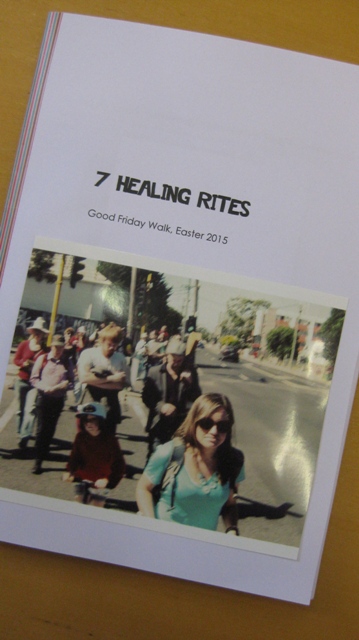
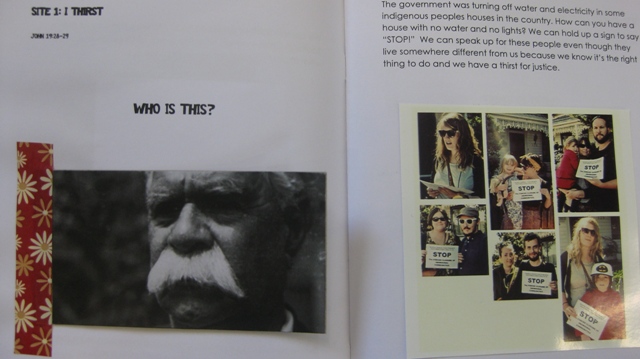
Further to our Stations of the Cross walk on Good Friday I made a lift-the-flap book for each of the families that participated.  How can we bring the messages of the high holidays into the everyday?  Kids know who cartoon and TV characters are because they are shown images of them, if we want them to learn to recognise our elders we must show images and share the words of these people… you cannot know what you haven’t learned, what you haven’t learned you cannot love.

007 - Copy

008 - Copy

009

012 - Copy

protest

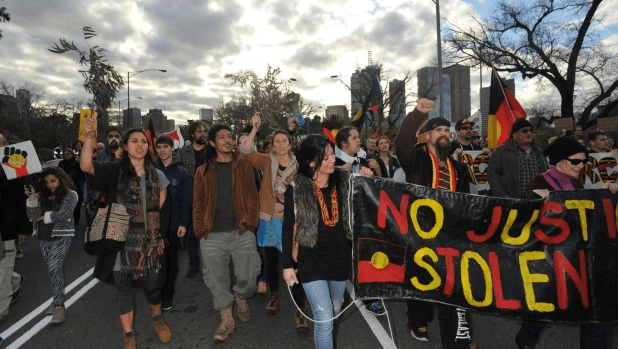
Protesters make their way across Princes Bridge. Photo: Joe Armao

This month the Government announced that they were going to turn off/stop maintaining access to water, electricity, etc. in multiple rural indigenous communities and this protest came very quickly in response.  We like to think that “taking the land away” or dispossession was something that happened long ago and far away and has nothing to do with me but then something like this happens to bring it front and centre and our willful blindness is confronted by the reality: this is still an issue and it is still happening.

These are the words the protestors called in chorus:

“Always was, always will be, Aboriginal land”

Talk to me about economics. Talk to me about closing the supermarket so people had to travel for food, closing the school so families with children had to travel or move, talk to me about closing the petrol station – it might be true that some of these communities have only 4 people living in them but there used to be many more.

“Always was, always will be, Aboriginal land”

Talk to me about land and place.  There’s hardly any of them, why should they get special treatment? They can move to the nearest big town… to give you a sense of scale Kimberley is c. 3 times the size of England and has a population of 40-50K people.  The nearest town is, well, pretty darn far away – what we white fullas can forget is that indigenous Australia is a lot kimberleymore like Europe, made up of many different countries with their own language, and myths, and dances and traditions… this map on the left is rough overview of the First Nations Peoples and language groups in Kimberley.  This is their map of how they see the world –  we wouldn’t expect it to be reasonable to ask the Italians to move to the nearest town in France and give up everything that informs their own unique culture and identity and we should not ask it of Aboriginal people here either.
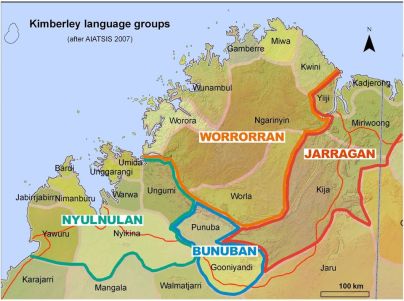
photo credit: kimberleyfoundation.org.au

“Always was, always will be, Aboriginal land”

Talk to me about civilisation.  We brought civilisation with us, did we not?  Are these people not better off because we bought them farming and livestock and tools and machinery they didn’t have before?  We brought in the piped water and wired electricity and overrode the old ways with our better new ways…?  There might not be many left who remember and could live by the old ways.  We’ve created a dependence and now you want to take the civilisation away? Did our civilisation include the law, and does the law include provision for human rights like access to water?  What is civilisation?

“Always was, always will be, Aboriginal land”IMG_5269

Tell me a story.  Tell me who your people are and where you are from.

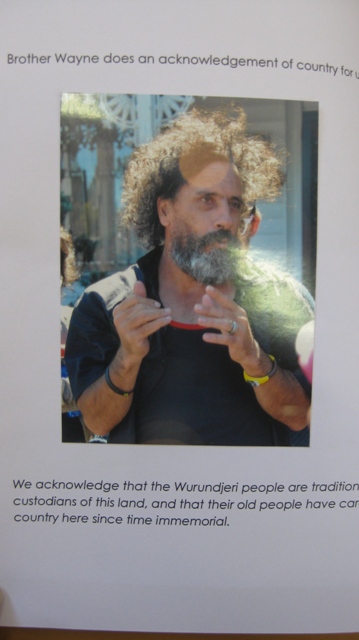
At the start of some (too few) events, ceremonies or proceedings you might hear an Acknowledgement of Country… We acknowledge that we gather on the land of which the Peoples of the Kulin Nations have been custodians since time immemorial.  I went to a cultural awareness training day with Aunty Doreen Garvey-Wandin a few years ago and she did this activity with sticky dots to illustrate how Aboriginal people have lived here for 50,000 years – if each dot is equivalent to 1,000 years – then this black drawing, on the very last dot, represents the 200 years of contact/settlement with us white fellas.  We are a blip on a landscape that was here long before we came.  We need to understand and be reminded of our place in the story of things from Aboriginal peoples point of view. While, I’m here I’ll point out that this is what makes “Australia Day” also so hard.  It marks (and celebrates) the anniversary of colonisation over the culture that had existed here many thousands of years prior.  These acknowledgements should not be empty words.  We eat, we play, we gather, we work – on land where indigenous people were here before us – doing those things first – for many, many years.

“Always was, always will be, Aboriginal land”

Talk to me about belonging.  Do we “belong” here?  I think there is something in the psyche of all of us asking this question because at some level, perhaps we sense the truth of having displaced others to enjoy the space we now hold.  I am from New Zealand, and we have our own history and yet unfolding story of fair trade for land, foreshores and fish – and who should be the custodians of these things.  We need to respect Traditionally Acquired Knowledge more than we do because people lived and ate seasonably and sustainably and can probably teach us a thing or two about living well in this climate and speak wisely into other current social issues.  Do I belong here in this crowd? It can be easy to feel smug – Maori is taught in our schools, we had a treaty and are hearing settlement claims, we have a Ministry for Maori Development… but that is not enough: Te Whiti, a Maori Chieftain, exhorts us to “Ask that mountain” – the land itself bears 076witness to what takes place beyond any particular action of my lifetime whether we have done everything that we can to make things right.  How might the Great Barrier Reef answer? Or Uluru? or The Big Pit in Kalgoorlie? I was proud to see the Maori flag raised and carried alongside the Aboriginal flag in solidarity.  Others who have experienced displacement themselves – they do not forget.  We need to recognise that living in a world that has more languages, more dances, more patterns, more stories makes it a more enriching place for all of us and is worth protecting and defending by us all.
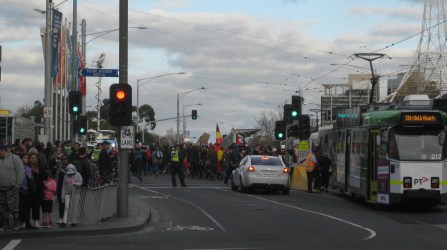
We chant it together.  We claim and proclaim it publicly:

“Always was, always will be, Aboriginal land”

“When you haven’t got a homeland or place to go, you lose your identity,and personality and you become sick.
Where are these communities going to go?”

Indigenous activist, Rieo Ellis

Thanks to ANTaR for this summary of the issue:

Announcement to discontinue funding essential services in remote communities

  • In September 2014 the Federal Government announced that it would no longer fund essential municipal services including supply of power, water, and management of infrastructure in remote Aboriginal communities in Queensland, Victoria, NSW, Western Australia, and Tasmania, despite having done so for decades.
  • The South Australian government refused to sign an agreement, and the Western Australian government signed an agreement with the Federal Government for funding of $90 million which would fund services until June 2016.
  • The WA government announced that it would not pick up the bill beyond that time and would instead close between 100 and 150 of the 274 remote Aboriginal communities in the state.
  • The decisions by both the Federal and the State Governments occurred without any consultation with Aboriginal people in the affected communities.

How many people live in these communities

According to the WA Department of Aboriginal Affairs, there are around 12,000 Aboriginal people currently living in the 274 communities in WA, with around 1,300 living in 174 of the smallest. In 115 of those communities, there are around 500 people in total, or an average of 4.4 people per community.

What will the impact be of shutting down communities

Premier Barnett himself acknowledged that closing communities would:

“…cause great distress to Aboriginal people who will move, it will cause issues in regional towns as Aboriginal people move into them.”

Professor Patrick Dodson, Yawuru man from the Kimberley, who authored a review of small homeland communities for the NTgovernment said closing down communities would:

“…be disastrous, increasing access to drugs and alcohol and exacerbating social tensions,  which would flow on to antisocial behaviour and incarceration. The immediate consequences would be to create an internal refugee problem for the indigenous people.

He also said that breaking people’s connection to land:

“…would threaten the survival of Aboriginal knowledge and culture, because in towns people were restricted from camping, lighting fires, hunting and fishing.” 

What criteria will be used to close communities

It is not known where any closures might occur, nor what criteria might be used.  In fact, there has been great anxiety and uncertainty over this, particularly as no consultation has occurred prior to the statement being made by Premier Barnett.

The Federal Government prepared a document in 2010 titled “Priority Investment Communities – WA” which categorised 192 of 287 remote settlements as unsustainable. The majority of those assessed as unsustainable are in the Kimberley, with 160 communities in the region.

Non-Indigenous communities

We could not find any examples of government decisions to refuse to fund essential municipal services for non-Indigenous communities, including small communities in remote areas in WA. For example, the non-Indigenous community of Camballin (of about 300 people) is located near Looma (an Aboriginal community of around 370 people) in the Kimberly. Looma will be assessed by the Western Australian government for funding whereas Camballin will not.

001

At Gembrook Retreat Centre for a silent, contemplative retreat using 7 Sacred Pauses [by Macrina Weiderkehr – this text will be used throughout the weekend  as a framework for following a monastic rhythm of prayer] – greedy and grasping I have reached for my new journal “making space” despite the sheets remaining for Teresa… I will come back to you Teresa! …but I wanted all of ‘this’, whatever it is, to be in one place and I wanted this clear window of time to feel like a fresh start.

In our pre-sharing there has been an emphasis on soul over mind and body, and moving away from words… I want to encounter You with my mind and body, AND my soul.. You know I want to encounter You with words! I don’t know that I was ‘good’ at the shared silence this evening.  Is that a discipline to cultivate?  Perhaps I am a kinesthetic listener?  We each of us want to seek after You… be found by You.  I don’t know if that language is necessarily helpful as You are with me always, it is only that other tasks and work and expectations lead me to spend time elsewhere – the coming together, or encounter, is about re-focusing my lens on You.  You know all the things I have in me and with me to do… let me offer them all to use or discard as You see fit.

  • Leunig talk
  • sustainability report
  • the very trees will speak Your name! (As You Like It)
  • photography
  • writing up previous blog posts
  • reflections on the Teresa content

…I wish I had a week, a month, a lifetime to give over to doing as I felt led.  Does anyone really get to do that?

…I am torn between ruefully laughing at how much I clearly didn’t get the living simply component of this weekend and wondering how much it matters to You.  Would eating or not eating draw me nearer to You? Travelling more lightly make it easier to reach You?  I think I find You where I look for You basically – is that too simplistic?  You are everywhere and the Creator of everything so it doesn’t matter if I am lying on a blanket on the grass in the sun, reading the wisdom of the saints, or drawing, or writing, or eating… You provide all things and You are in all things.  I need only be present to contemplate You and Your forms.

We have started off with the  Night prayers:

[p.168] “I yearn to be held in the great hands of your heart – oh let them take me now. Into them I place the fragments, my life, and you, God – spend them however you want.”

Let this be the yearning, the taking the placing, the spending… for each of us seeking You out this weekend.

wondering how much it matters to You.  Would eating or not eating draw me nearer to You? Travelling more lightly make it easier to reach You?  I think I find You where I look for You basically – is that too simplistic?  You are everywhere and the Creator of everything so it doesn’t matter if I am lying on a blanket on the grass in the sun, reading the wisdom of the saints, or drawing, or writing, or eating… You provide all things and You are in all things.  I need only be present to contemplate You and Your forms.

We have started off with the  Night prayers:

[p.168] “I yearn to be held in the great hands of your heart – oh let them take me now. Into them I place the fragments, my life, and you, God – spend them however you want.”

Let this be the yearning, the taking the placing, the spending… for each of us seeking You out this weekend.

054

Last night I participated in a graveyard shift with the Walking for Freedom crew who were walking for 30 hours for the 30 ASIO negatively assessed refugees who are still indefinitely detained in Australia.  Largely this is awareness raising, while we will willingly acknowledge the rights and responsibilities of the ASIO to protect the local populace we are interested in what this looks like in the light of that little piece of paper called The Universal Declaration of Human Rights.  People are being held, uncharged, indefinitely, without any opportunity to defend themselves. Is that OK?

The Universal Declaration of Human Rights has 30 Articles – here’s the first 14… apart from Article 4 (slavery)… can we honestly say that these refugees are being treated fairly and with just consideration of their human rights?  Let’s talk about it as we walk along the way… 

Article 1.

  • All human beings are born free and equal in dignity and rights. They are endowed with reason and conscience and should act towards one another in a spirit of brotherhood.

Article 2.

  • Everyone is entitled to all the rights and freedoms set forth in this Declaration, without distinction of any kind, such as race, colour, sex, language, religion, political or other opinion, national or social origin, property, birth or other status. Furthermore, no distinction shall be made on the basis of the political, jurisdictional or international status of the country or territory to which a person belongs, whether it be independent, trust, non-self-governing or under any other limitation of sovereignty.

Article 3.

  • Everyone has the right to life, liberty and security of person.

Article 4.

  • No one shall be held in slavery or servitude; slavery and the slave trade shall be prohibited in all their forms.

Article 5.

  • No one shall be subjected to torture or to cruel, inhuman or degrading treatment or punishment.

Article 6.

  • Everyone has the right to recognition everywhere as a person before the law.

Article 7.

  • All are equal before the law and are entitled without any discrimination to equal protection of the law. All are entitled to equal protection against any discrimination in violation of this Declaration and against any incitement to such discrimination.

Article 8.

  • Everyone has the right to an effective remedy by the competent national tribunals for acts violating the fundamental rights granted him by the constitution or by law.

Article 9.

  • No one shall be subjected to arbitrary arrest, detention or exile.

Article 10.

  • Everyone is entitled in full equality to a fair and public hearing by an independent and impartial tribunal, in the determination of his rights and obligations and of any criminal charge against him.

Article 11.

  • (1) Everyone charged with a penal offence has the right to be presumed innocent until proved guilty according to law in a public trial at which he has had all the guarantees necessary for his defence.
  • (2) No one shall be held guilty of any penal offence on account of any act or omission which did not constitute a penal offence, under national or international law, at the time when it was committed. Nor shall a heavier penalty be imposed than the one that was applicable at the time the penal offence was committed.

Article 12.

  • No one shall be subjected to arbitrary interference with his privacy, family, home or correspondence, nor to attacks upon his honour and reputation. Everyone has the right to the protection of the law against such interference or attacks.

Article 13.

  • (1) Everyone has the right to freedom of movement and residence within the borders of each state.
  • (2) Everyone has the right to leave any country, including his own, and to return to his country.

Article 14.

  • (1) Everyone has the right to seek and to enjoy in other countries asylum from persecution.
  • (2) This right may not be invoked in the case of prosecutions genuinely arising from non-political crimes or from acts contrary to the purposes and principles of the United Nations.

— About the ASIO Negatively Assessed Refugees —

Australia has found these 30 people to be refugees fleeing war and persecution. However, ASIO have given these people negative clearance assessments- claiming that they may be a security threat to Australia. ASIO do not have to inform the people of why they think they are a threat. The refugees are not given any chance to dispute or explain the claims against them.

As they were granted refugee status, Australia cannot deport them to their home countries and because of their negative assessments from ASIO, they cannot be released into the Australian community.

For some it is now the beginning of their sixth year in detention. Six years of their lives have been taken from them. No one knows when they will be released.