Latest Entries »

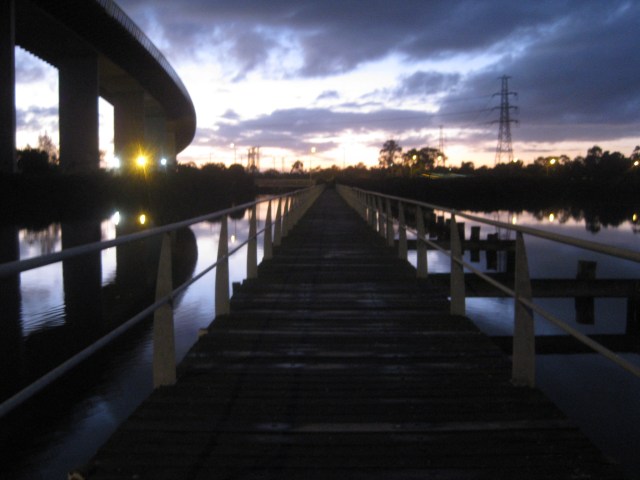
IMG_7771

“It must be our prayer. In spite of the fact that the prayer is denied, reviled, contradicted, made sport of, mistranslated every hour of every day – by the powers and dominations, by Church and State, by law courts and schools and think tanks. Yet, the prayer needs to be verified, insisted on, repeated, persisted in, learned by heart, shouted in unison, enacted, pondered. It exists indeed only to the degree that it makes sense to Christians, that they stretch their wills and voices to its understanding. To make of it their credo; to make of eternity their native ground.

…At every hour his angel of deliverance comes to us. In noise and stench and foolish anger, and the ever-flowing spate of damaged lives. In the evidence of breakup all around – broken bones, broken hopes, splayed carcasses of sound beginnings. In this jail. Where we must dwell. Not a lake of glass, you understand. But in a desert of fire. The ever present demons within. enticements. Despair. Depression of spirit. Disabused hopes. And even with one another; a certain paralysis, outreach cut short.

…The prayer would deny it.  “All manner of things shall be well.”  We must, by sheer grit of faith, live in that future, live it until it is as vividly present as any beloved possession, any loved one, could well be.  We join those for whom all manner of things is well; they join with us, for whom all manner of things is intolerably unwell. The future and the present join hands – barely, but truly. The meeting is incandescent, an ecstasy in the midst of torment.
You can understand the prayer, its audacious character, only if you understand this: the prayer is everywhere and at all times denied.”


An excerpt from Beside the Sea of Glass by Daniel Berrigan


Because, but, despite…

IMG_7825

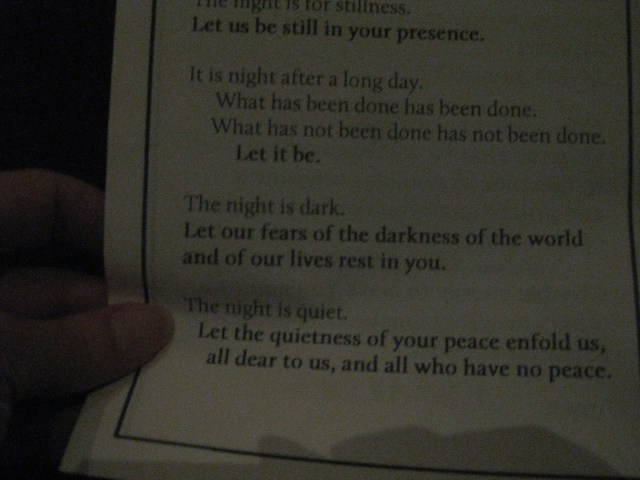
who   I   am

∫            ∫           ∫

because of       but         despite

∫           ∫           ∫

who   You   are


Talitha Fraser (in the style of RD Laing)

Cut, cut, cut, cut…

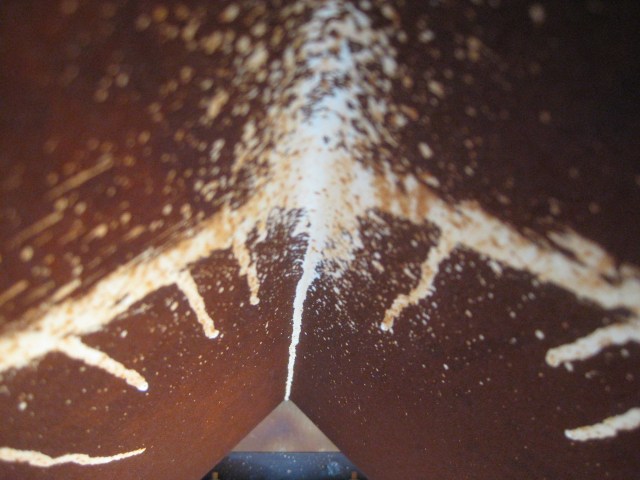
rusted iron train tracks footscray station

Cut, cut, cut, cut…

I thought death by a thousand cuts
was a good way to live but
it may merely be that’s
a bad way to die.
This is my blood poured out for you.
I want it to count for something.
I’m sorry I can’t be everything you need.
I’m sorry I can’t be everything I want.

Talitha Fraser

This slideshow requires JavaScript.

A hollow grief, a hallow grief

We light candles in defiance of the darkness
raising our lights high to honour those voices silenced and stories untold
mine goes out.
A small enough gesture and mine is snuffed out before
it can transmit its’, however fragile, beacon of hope.
Discouraged, I lower my arm and my head but
a hand, bearing a lighter, comes into my view.
We each have that power – to share the light we have.
I had forgotten but this stranger reminds me:
the fellowship isn’t only with the Other but each other too.
Touched by grief, I don’t immediately move away following the vigil
a Chinese international student approaches to ask in broken English:
“Why do these people gather here this way?”
I try to explain but realise asylum “seeker” evokes Potteresque imagery
I let it lie – elusive to gain, as much to do with luck as skill,
glittering just out of reach… there are worse metaphors.
“You all show much courage”, she says.
“How’s that?” I ask.
“In China, this would never be allowed.”
What seems little enough… not nearly enough…
is to this person unthinkable
and I am confronted by my privilege to be here.
She moves off and a man joins me on the library lawn
“The powers you must overcome…
they would keep you from expanding.”
He lights a cigarette.
“They are going backwards, except,
it seemed backward even the first time”
he sighs looking around, “It is little enough”.
It is little enough.

Tonight on the anniversary of the “Regional Resettlement” initiative 55 vigils are taking place across Australia. It is little enough. It is something…


Messages from Manus

Timeline: Four years of abuse

19 July 2013: Then Prime Minister Kevin Rudd announces a new “Regional Resettlement Arrangement” with Papua New Guinea (PNG) so Australia can buy its way out of its ethical responsibilities. From this day forward anyone seeking protection and safety in Australia who arrive by boat will be forcibly transferred to PNG for processing and, if they are found to be refugees, be permanently settled there.
19 July 2013: The announcement causes distress amongst the people warehoused in detention in Nauru with peaceful protests escalating into violence.
3 August 2013: The Australian Government signs a new memorandum of understanding with Nauru similar to its Regional Resettlement Arrangement with Papua New Guinea.
17 February 2014: 23-year-old Reza Berati is murdered, and over 60 others injured, some of them seriously, on Manus Island. Numerous witness reports state Reza Berati was attacked by a group of G4S staff and at least one local staff member employed by The Salvation Army. Several eyewitnesses reported that one attacker picked up a large rock and hit Reza Berati on the head with it several times.
5September 2014: Hamid Khazaei, who was only 24 years old dies from a sepsis infection three weeks after he cut his foot at the detention centre on Manus Island. Inadequate medical care and delayed medical evacuation were later reported to have let to to Mr Khazaei’s death.
26 September 2014: The Australian and Cambodian governments sign a deal under which people on Nauru who are found to be refugees are to be resettled in Cambodia.  This second deal again allows Australia to buy its way out of its ethical responsibilities.
18 November 2014: Then Immigration Minister Scott Morrison announces that asylum seekers who have registered with the United Nations High Commissioner for Refugees in Indonesia after 1 July 2014 will no longer be able to be resettled under Australia’s humanitarian program.
5 December 2014: bill passes both Houses providing the Immigration Minister with the power to detain people at sea (including outside Australia’s jurisdiction) and send them to other countries or vessels, even without the permission or knowledge of those countries.
20 March 2015: The report from independent review into allegations of sexual abuse on Nauru is released detailing reports of women being raped and allegations of children being sexually assaulted.
20 March 2015: A boat carrying 46 Vietnamese asylum seekers is intercepted by Australia. Its passengers are held at sea for nearly a month and undergo “enhanced screening” before being returned to Vietnam on 18 April.
28 May 2015: Thousands of men, women and children seeking protection are abandoned at sea in what is now known as the Andaman Sea ‘boat crisis’. Regional governments eventually agree to allow the boats to land but then Prime Minister Tony Abbott’s callous response to Australia offering safety is “nope, nope, nope”.
4 June 2015: Nine months after the $55 million Cambodia deal, four refugeesarrive in Phnom Penh from Nauru. All of these people subsequently choose to return to their countries of origin, despite the fact that all four were found to have well-founded fears of persecution.
1 July 2015: The Australian Border Force Act takes effect making it a crime punishable by two years’ imprisonment for medical professionals, educators and others contracted by the Australian Government to speak about what they see in offshore detention.
5 October 2015: The Nauruan Government announces that the Regional Processing Centre will operate under an open centre arrangement.
29 October 2015: Amnesty International Australia publishes a report revealing evidence that Australian officials paid boat crews to return peopleseeking asylum to Indonesia.
8 November 2015: Fazel Chegeni, an Iranian refugee detained in Christmas Island Detention Centre, is found dead after escaping the centre.
19 February 2016: Australia again rejects the standing offer from New Zealand to accept 150 people from Nauru or Manus Island, failing to provide sensible, durable solutions for the people trapped there.
21 February 2016: Baby Asha, a one-year old who was transferred along with her family from Nauru to Brisbane Lady Cilento Children’s hospital for medical treatment is released into community detention. This came after the doctors at the hospital refused to discharge Asha after the completion of her treatment, fearing she would be transferred back to Nauru.
23 March 2016: At the Ministerial Bali Process meeting a declaration was released (the Bali Declaration) which for the first time identified the need toprovide protection to refugees in the region.
15 April 2016: A refugee in Nauru is convicted of attempted suicide, which was recognised as a crime in Nauru at the time.
26 April 2016: PNG’s Supreme Court rules that the transfer and detention of asylum seekers on Manus Island is illegal.
26 April 2016: Omid Masoumali, a refugee living in Nauru for three years sets himself on fire. After more than 24 hours he is medically evacuated to Australia where he dies in a hospital in Brisbane on Friday 29 April 2016.
2 May 2016: A young Somali refugee living in Nauru sets herself on fire. She is later flown to Australia by air ambulance suffering burns to 70% of her body.
5 May 2016: A boat with 12 Sri Lankan people seeking asylum who were intercepted by Australian authorities earlier in the week are screened at sea before being returned to Sri Lanka. They were reportedly arrested on arrival at Colombo airport.
10 May 2016: The Federal Court rules the Government must provide a woman,raped on Nauru, access to a safe and legal termination.
July 2016: Amnesty International’s Senior Director for research visits Nauru where she finds a system of deliberate abuse hidden behind wall of secrecy.
10 August 2016: The Guardian releases the Nauru files – thousands of leaked incident reports from Nauru detail assaults, sexual abuse and child abuse.
19 September: UN Global Summit for Refugees and Migrants in New York misses opportunity to find solutions to the global refugee crisis.
17 October 2016: In a new report Island of Despair’: Australia’s “processing” of refugees on Nauru Amnesty International find that the conditions to which refugees and people seeking asylum on Nauru are subjected amounts to torture.
30 October 2016: Immigration Minister Peter Dutton tries to introduce legislation to ensure anyone taken to Nauru and Manus and then resettled anywhere in the world, would never be able to come to Australia.
13 November 2016: The Government takes an extreme step in shirking responsibility byannouncing an agreement with the United States for some of the refugees in offshore detention to be settled in the US via a process administered by the UNHCR.
25 November 2016: Malaysia begins work on a pilot scheme to allow refugees from Myanmar’s persecuted Rohingya minority to work in the country, which in turn reduces number of people forced to take dangerous journeys in search for a safe place to rebuild their lives.
24 December 2016: Faysal Ishak Ahmed collapses at the Manus detention centre. He dies on Christmas Eve.
31 December 2016: The Indonesian President issues a Presidential Decree for refugees which for the first time provides people seeking asylum and refugees in Indonesia with a more formal legal status.
14 April 2017: PNG Soldiers fire directly into the Manus Island detention centre putting lives at risk. 9 people are injured. No one is held accountable.  

IMG_7633

The Oratory glows golden for a moment. Lit by wintery midday sun. Behind the lids of my prayerfully closed eyes it seems the light filling the room is the same light filling me and I turn my face to Your warmth.

We light candles. Mine is a confession.

IMG_7531

IMG_6851

Ethnic church:

  • challenges for the younger generation
  • parents history
  • ethnic culture and values
  • links to culture and religion
  • evangelism and discipleship approach – believe need to be saved rather than a gracious understanding of faith and relationship with God
  • parents acculturation response
  • younger generation’s experiences with culture, identity and belonging

What was/is your experience of ethnic church or the first time you experienced being it as ‘different’?

~ Confucius quotes ~ learning memory verses ~ emphasis on listening to your elders (honour your mother and father) ~ formal dress = not refugees, we will dress well to reflect our new status ~ a successful look synonymous with a Western look ~ In India we would dress nicely for church but here in Australia no, I’m daggy when I go back! ~ 

Berry’s Acculturation Model

In transition between old culture to new people will typically have one of 4 main responses:


Marginalisation {not identifying with the host culture}

Assimilation {absorbed into the new culture}

Integration {previous culture maintained and participate in the new culture}

Separation {previous culture maintained and new culture rejected}


This is frequently a zero-sum game – how do we forge new opportunities?

When did you first experience race?

~ moving from one country to another: Philippines to India, then to Oz ~ excursion protocol – don’t know what’s happening (have to learn) ~ sports team – they wouldn’t pass the ball to me ~ not around coloured people until Uni, grew up in a white neighbourhood ~ First day of Year 1, got asked: “Where are you from?” …I was born in this town, I’d never had a sense of being from somewhere else! ~ Broke up with my boyfriend and got called “Ching chong” and told to “go back to where you came from” ~

What is race?

  1. Arbitrary system of classification
  2. Hierarchal system (superior and inferior)
  3. Naturalise and make the system the norm, make invisible the effects e.g. denial of rights, wealth and resource distribution

Transmission of these ideas about race occur in representation and are reiterated until ‘race’ becomes  realities. eg. if pen (object) and writing (concept) communicated through language – the pen (signifier) therefore the meaning becomes attached to the object.

Media perpetuates these myths/representations e.g Vietnamese community treating international students badly that work in their restaurants, Vietnamese community wasn’t consulted or invited to speak to the issue > don’t get to choose the story that gets told about our community.

Who do you identify as?

 ~ I call myself second generation Korean but I don’t like it when others do it (bring what they think that means) ~ pass… Australian… Child of God ~ Child of God first, Vietnamese and Australian ~ NZ European/Pakeha and Maori (Ngai Tahu) claim this when it feels like it’s a benefit eg. Maori electoral roll >representation in NZ Parliament but not to claim/take anything ~ Indian-Australian (rejection of Indian culture, don’t know enough about culture & history) ~ Australian/Filipino – never one or the other ~

Ref: The Whiteness Project (youtube)

Ref: Race the Power of an Illusion (documentary)

Johann Blumenbach came up with the categories:

Caucasian – white
Mongolian – yellow
Malayan – brown
Ethiopian – black

Rev James Black Roland: “Let us keep before us the noble ideal of white Australia, a snow white if you will. Let us be pure and spotless.”

How does ‘whiteness’ function in your life? (personally, professionally, at church…?)

~ my workplace, need representation of other people of colour on the Council ~ white, straight hair, feminine = beautiful. Tried to be something I’m not eg. Jonah from Tonga show ~ Safest I’ve ever been. Can figure out what “Indian” means for me ~feel the poverty of being ‘stuck’ with white people – established systems and processes both at work and in community ~ Party culture – don’t fit in. Assimilated Asians treat me badly. Need to be funny, out-spoken, tell stories… church is accommodating > understand each others brokenness. Asian guy – Maths or The Hangover archetypes ~ “If you want to be competitive with white people you need to overachieve” (YES from the group) became my coping mechanism.  Colonised at home/church, assume you’re assimilated and it’s used against you.  Have learnt now to feel more comfortable there (white space than I do within my own cultural community). Jarring moments of being brought to awareness of your non-whiteness eg. insult calling based on colour (school had felt like safe space until then) ~

Operating across a lot of levels: personal/institutional/systemic…
how do we develop racial literacy?

IMG_6338

This is what you shall do: love the earth and sun and the animals, despise riches, give alms to every one that asks, stand up for the stupid and crazy, devote your income and labor to others, hate tyrants, argue not concerning God, have patience and indulgence toward the people, take off your hat to nothing known or unknown or to any men or number of men, go freely with powerful uneducated persons and with the young and with the mothers of families, read these leaves in the open air every season of every year of your life, re-examine all you have been told at school or church or in any book, dismiss whatever insults your own soul, and your very flesh shall be a great poem and have the richest fluency not only in its words but in the silent lines of its lips and face and between the lashes of your eyes and in every motion and joint of your body…

From the Preface to Leaves of Grass, Walt Whitman

IMG_7411

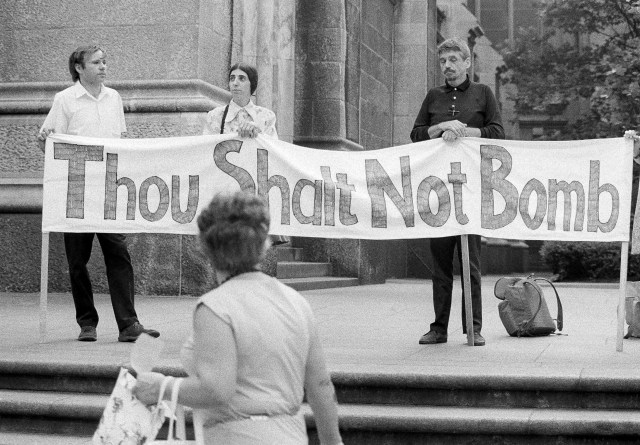
daniel berrigan

The Rev. Daniel Berrigan and some friends hold a vigil at St. Patrick’s Cathedral in New York on July 25, 1973, while fasting to protest the bombing in Cambodia. | AP


This has been a year of vigil and rally and protest and placard and march that sometimes feels like a long walk. It’s good to be reminded it’s all been done before, in whose footsteps we follow, and what wisdom we can learn from their journey to encourage our own…


  1. Call on Jesus when all else fails. Call on Him when all else succeeds (except that never happens).
  2. Don’t be afraid to be afraid or appalled to be appalled. How do you think the trees feel these days, or the whales, or, for that matter, most humans?
  3. Keep your soul to yourself. Soul is a possession worth paying for, they’re growing rarer. Learn from monks, they have secrets worth knowing.
  4. About practically everything in the world, there’s nothing you can do. This is Socratic wisdom. However, about of few things you can do something. Do it, with a good heart.
  5. On a long drive, there’s bound to be a dull stretch or two. Don’t go anywhere with someone who expects you to be interesting all the time. And don’t be hard on your fellow travelers. Try to smile after a coffee stop.
  6. Practically no one has the stomach to love you, if you don’t love yourself. They just endure. So do you.
  7. About healing: The gospels tell us that this was Jesus’ specialty and he was heard to say: “Take up your couch and walk!”
  8. When traveling on an airplane, watch the movie, but don’t use the earphones. Then you’ll be able to see what’s going on, but not understand what’s happening, and so you’ll feel right at home, little different then you do on the ground.
  9. Know that sometimes the only writing material you have is your own blood.
  10. Start with the impossible. Proceed calmly towards the improbable. No worry, there are at least five exits.