
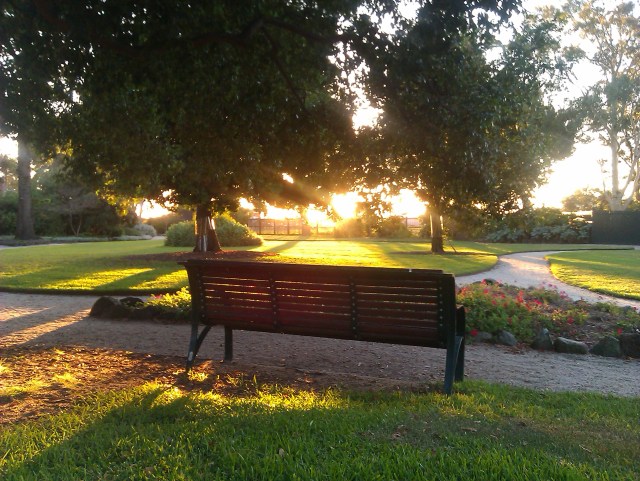
God of the all and the nothing
the making and unmade at the same time
the span of the universe and the seed
You believe in me and I must believe in You
the wheel turns, the fire burns
Allelujah, Allelujah
Talitha Fraser
God of the all and the nothing
the making and unmade at the same time
the span of the universe and the seed
You believe in me and I must believe in You
the wheel turns, the fire burns
Allelujah, Allelujah
Talitha Fraser
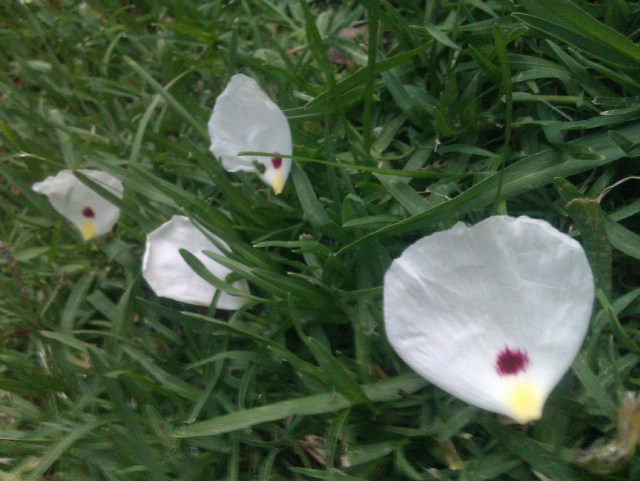
I poke and prod
prod and poke
inside and out
my blemishes and wounds
scarred recovery and discovery
of what is yet untouched.
The markers of pain are the
milestones of my journey to wholeness
it is in my breaking I am made.
Talitha Fraser


p. 27-29, Theopoetics
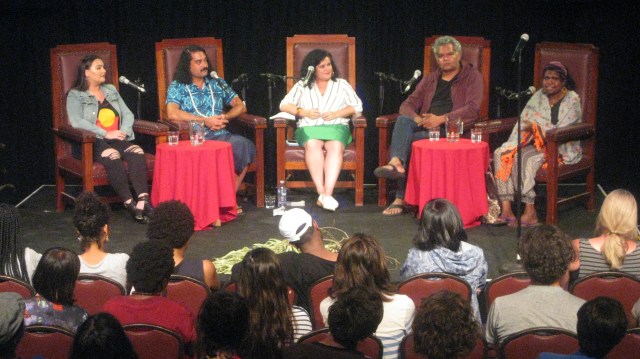
Panellists Rosie Kilvert, Léuli Eshraghi, Paola Balla, Kamahi King
and Miliwanga Wurrben in conversation
Q: What will you do on January 26th?
(note: I’ve deliberately chosen not to attribute these quotes as I feel, although they spoke in their own voice, the panelists also spoke as one Voice and I want to express that if I can)
Don’t celebrate either way. I do nothing to give it energy. Day we lost all hope really. I wish that the stamp duty of from the sale of every house would go to local Aboriginal people. To my own mob. This is an example of how we could get past “eating out of the white man’s hand”. I mourn.
Refuse to call it that [Australia Day]. It’s celebrating genocide. I pay thanks to the ancestors and their resilience. Put out a reminder: We’re still here. Surviving and thriving.
I might go to Share the Spirit or a protest. Send prayers to those who have passed and shouldn’t have.


The Weaving Country exhibition will run at Footscray Community Arts Centre until 1 April, 2017 and I encourage people to check it out, many of these beautiful pieces are available to buy.
Artists include Sandra Aitken, Eileen Alberts, Donna Blackall, Lee Darroch, Debbie Flower, Gail Harradine, Cassie Leatham, Denise Morgan-Bulled, Greta Morgan, Glenda Nicholls, Kathy Nicholls, Marilyne Nicholls, Eva Ponting, Bronwyn Razem and Lisa Waup.
Weaving Country is a story of weaving and fibrecraft across Aboriginal Victoria from the Victorian Aboriginal Weavers Collective.
In this exhibition we have aimed to create a woven narrative, beginning with baskets as vessels for gathering and fibres as the threads that knit together family and kinship ties.
In this way we liken our first collaborative curatorial journey together as a journey of gathering and collecting. Having gathered the weavers works into our metaphorical curatorial basket, we have then bought these works together to create a cohesive and beautiful body of work.
Weaving Country is about Country and place.
Each weaver’s generational knowledge of grasses, fibres, harvesting and process is inherent in their practice. What is not always apparent, and is the idea this exhibition aims to provoke, is the impact environmental changes have on the grasses ad fibres used by the weavers and therefore on the overall health and wellbeing of COuntry and People. This is reflected in the diverse use of materials and the incorporation of found objects.
The Victorian Aboriginal Weaving Collective speak with one voice through their diverse woven and sculptural forms to the strength and vitality of this continuing and unbroken tradition. These contemporary works demonstrate their innovation yet retiran cultural integrity and truth.
By Vicki Couzens and Hannah Presley

[p.9-10]
Why is the measure of love loss?
…You said, ‘I love you’. Why is it that the most unoriginal thing we can say to one another is still the thing we long to hear? ‘I love you’ is always a quotation. You did not say it first and neither did I, yet when you say it and when I say it we speak like savages who have found three words and worship them. I did worship them but now I am alone on a rack hewn out of my own body.
…love demands expression. It will not stay still, stay silent, be good, be modest, be seen and not heard, no. It will break out in tongues of praise, the high note that smashes the glass and spills the liquid. It is no conservationist love. It is a big game hunter and you are the game. A curse on this game. How can you stick at a game when the rules keep changing? I shall call myself Alice and play croquet with the flamingos. In Wonderland everyone cheats and love is Wonderland isn’t it? Love makes the world go round. Love is blind. All you need is love. Nobody ever died of a broken heart. You’ll get over it… It’s the clichés that cause the trouble. A precise emotion seeks a precise expression. If what I feel is not precise then should I call it love? It is so terrifying, love, that all I can do is shove it under a dump bin of pink cuddly toys and send myself a greetings card saying ‘Congratulations on your Engagement’. But I am not engaged I am deeply distracted. I am desperately looking the other way so love won’t see me.

I arrived late and missed Miliwanga Wurrben but both wonderful and powerful to see the work of young artists presented at Scribe.
Hannah Donnelly read some segments of recent work – dystopian young adult fiction exploring the long term impacts of climate change in Australia. Asking the audience questions between readings like:
Prompting important self-reflection on the ways we are (or aren’t) aware of the impacts of climate change and the ways we’re complicit in not taking good care of Country.
HANNAH DONNELLY
Hannah Donnelly is a Wiradjuri writer who grew up on Gamilaroi Country. She is the creator of Sovereign Trax, an Indigenous music blog which aims to foreground the consumption of music that speaks to collective stories and identities. Hannah’s writing experiments with speculative fiction and Indigenous responses to climate change.

It’s hard to find words to describe what Jack Sheppard shared – all about words but using few he shared a story using his body and video footage of two friends who recently committed suicide, the piece capturing the evolution of his grief, healing and response to that. Their stories are written on his body and he carries them with him. This evoked the sense of a beginning in an ending and possibility in a situation that feels hopeless. Where he is, they are. The gift of his work was holding space for the piece to mean whatever it might seem or need to mean to each person watching it… below is my attempt to express some of what that was for me watching him.
JACK SHEPPARD
The Honouring is a presentation of a physical theatre work in development, paying homage to Indigenous life and culture in its hardships, beauty and spirituality. Using movement, dialogue, video installations and poetry, the work is influenced by Aboriginal and Torres Strait Islander totems and landscape, with the story journeying to parts of Australia of deep significance to Jack Sheppard.
Pen to heart
writing is a full body experience
physical and not just head.
Disparate ideas and pieces of a life
you try to fit together
but they don’t come.
Voice.
Listen.
What are you trying to say?
What are you trying to read?
Winds blow,
walking in your own mess,
dance like no one is watching.
All about words but silent.
I lost my voice again today…
Cuddle up to the pieces
keeping you warm at night.
Collect the pieces up,
we must nurture the ghosts
that lie down with us,
check and care for them.
Shedding clothes,
layers of skin,
who we are.
Naked, unfolding a
piece of paper with the
whole story.
Reflection of self
wraps around you
like a cocoon.
Lie with the dead,
those we can’t save.
I want to sleep but I can’t.
Awake, I’m still awake.
Talitha Fraser

You are faithful
beyond an expectation.
You can still surprise me
and make me laugh.
Reveal things of extraordinary beauty
and terrible emptiness.
Having both helps us to appreciate
the beauty more.
You in the hard spaces – yes
and the mundane and inane too.
I am so grateful for You.
Talitha Fraser
 itellyouarise