Latest Entries »

img_2075

“Old words do not reach across the new gulfs, and it is only in vision and oracle that we can chart the unknown and new-name the creatures.

Before the message there must be the vision, before the sermon, the hymn, before the prose, the poem.

Before any new theologies however secular and radical there must be a contemporary theopoetic.  The structures of faith and confession have always rested on hierophanics and images. But in each new age and climate the theopoetic of the church is reshaped in inseparable relation to the general imagination of the time.”

– from the foreword to Grace Confounding: Poems


You are not unknown

IMG_2017.JPG


Hey God,

We’re not down, we’re not out, but we’re hurting.
This vulnerability sits like an open wound and
every new hit jars it.
We breathe through it, lean into it,
listen for what the pain has to tell us.

Lend us quiet that allows us to hear
the harmonies of the universe that let
us know, even in this, as we are, we have
a place in the order of things.

Lend us space that allows us freedom
for those things that are tight to loosen,
those thoughts and events moving quickly
time to slow so that we can look and
see them clearly.

Lend us peace that allows us grace
to tell the difference between our internal
and external insecurities – our own and
also of those around us.

There is much that is unknown,
but You are not.

We are grateful for that.

Lead us. Teach us. Send us.

Amen


Talitha Fraser

img_1986


Aotearoa Festival 2017, Immigration Museum

Motivation

img_1965

IMG_1878 - Copy.JPG

We are running a fortnightly bible study following our community dinner looking at the exegesis (interpretation) of the bible passages that underpin each of our community values. You can read the list of Values here so you know what’s coming up next.

These values can be relevant whatever context you live and work in just make the Word you own.


Value 5: Becoming family

We value the intimacy of relationship we can have with Christ, and the belonging found in growing closer to God and therefore to each other.  Our goal is to be family for those facing loneliness and social isolation.

Biblical basis: 1 John 3:16-18, John 13: 34-35


Let’s read the value together. What stands out?

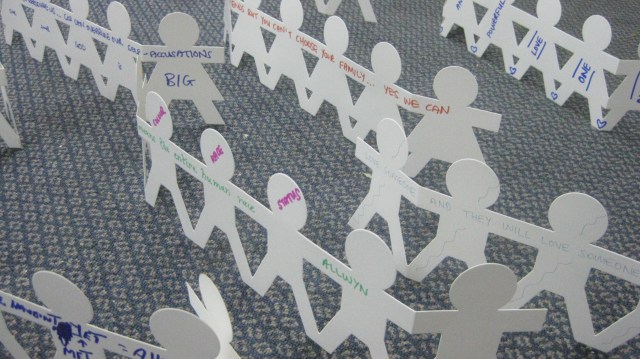
There’s a saying ‘You can’t choose your family’… yes we can.

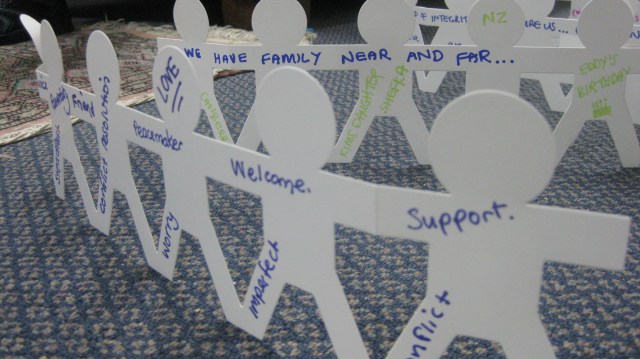
We have family near and far, our actual relations and the people we choose to share our life with.

Family means the entire human race – regardless of colour, race status…

Family see us at our best and at our worst, we can come as we are and still be loved. We seek to be and provide that sort of space for one another.

Read the bible. What words/ideas stand out?

What can we learn from the bible about living the Value: Becoming family?


1 John 3: 16-18

……..It was the example that Jesus set in laying down his life for us that put us in the know about real love. If we would love, then we need to do likewise, and lay our lives on the line for one another. How on earth can people claim that the love of God is at home in their hearts if they turn their backs on their needy brothers and sisters, even though it is quite within their means to help?

……..My dear friends, let us love; really love. Let us make sure we’re not just talking the talk, but walking the walk: being fair dinkum about our love and expressing it in action. This kind of integrity between what we say and what we do is a sure sign that our lives are genuinely grounded in God’s truth. It enables us to hold our heads high when we approach God, even though self-doubts may be trying to make us feel guilty and fearful. Our record of integrity can reassure us at such times, because God knows everything and can overrule our self-accusations. So when we are doing what God tells us to do, and thus living lives that please God, we can rest assured that when we approach God with our requests, we will get a positive response, whether we feel we deserve it or not.

 ©2002 Nathan Nettleton LaughingBird.net


 John 13: 31-35

……..When Judas left, Jesus said to his disciples, “Now the moment of glory has arrived for the New Human, and it is God’s glory too. If God’s glory is made known in him, then God will pour out his own glory on him. It’s all happening right now.

……..“You are my children, but you’re about to be on your own because our time together is almost up. You’ll keep looking for me, but as I said to the people before, where I am going, there is no way you can come.

……..“I’ve got one new instruction for you — in fact take it as an order — love one another. I want you to love one another in the same way that I have loved you. If you do that — if you really have love for one another — then it will be apparent to everyone that you are following in my footsteps.”

©2002 Nathan Nettleton LaughingBird.net


Reflection time… followed by sharing time.

Our record of integrity can reassure us… God can overcome our self-accusations – where we are small God is BIG.

Simple and powerful message: LOVE ONE ANOTHER

Love someone and they will love someone, and they will love someone, and they will love someone… the ripples go on and on.

Let’s get into groups of 2-3 and catch up with each other about life through the week…

…highlights, lowlights, needs, dreams

We do things we don’t like sometimes because it’s family. Belonging & interconnectedness. 

What’s your role in your family?  What are things you need from family?  What are things you have to give?


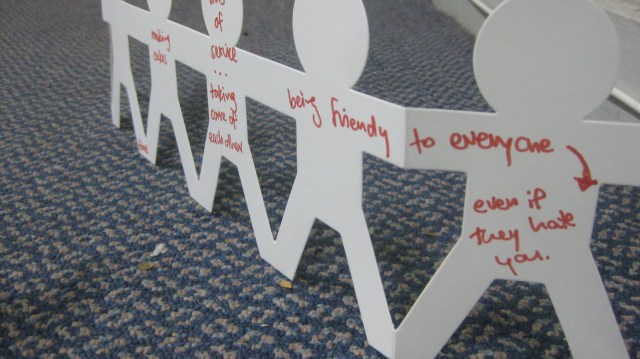
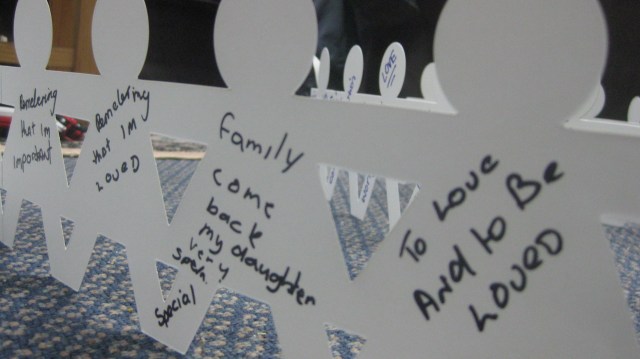
* trying to keep everyone together * practical support * there in ups and downs * advice * generosity * steadfast * conflict resolution * friend * peacemaker * LOVE * welcome * imperfect * support * conflict * time * making cakes * acts of service * taking care of each other * being friendly to everyone (even if they hate you) *


img_1901

img_1906

img_1905

img_1903

img_1904

screen-shot-2016-10-07-at-1-33-14-pmscreen-shot-2016-10-07-at-1-33-04-pmscreen-shot-2016-10-07-at-1-32-57-pmscreen-shot-2016-10-07-at-1-32-45-pmscreen-shot-2016-10-07-at-1-32-37-pm

A few of my faves from the exhibition:

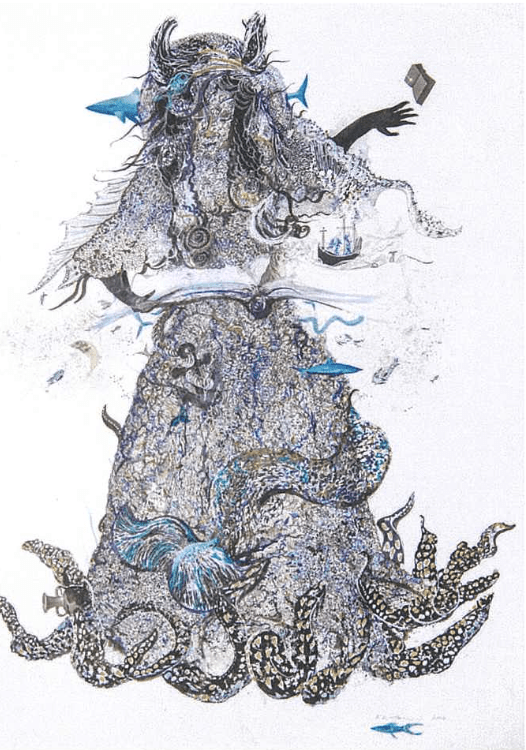
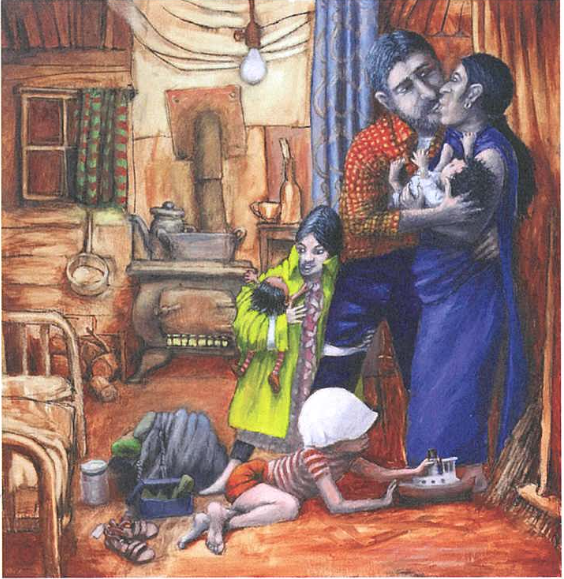
  1. Stories of the Sea Kathryn McGovern
  2. Home from the Sea Bill Nix
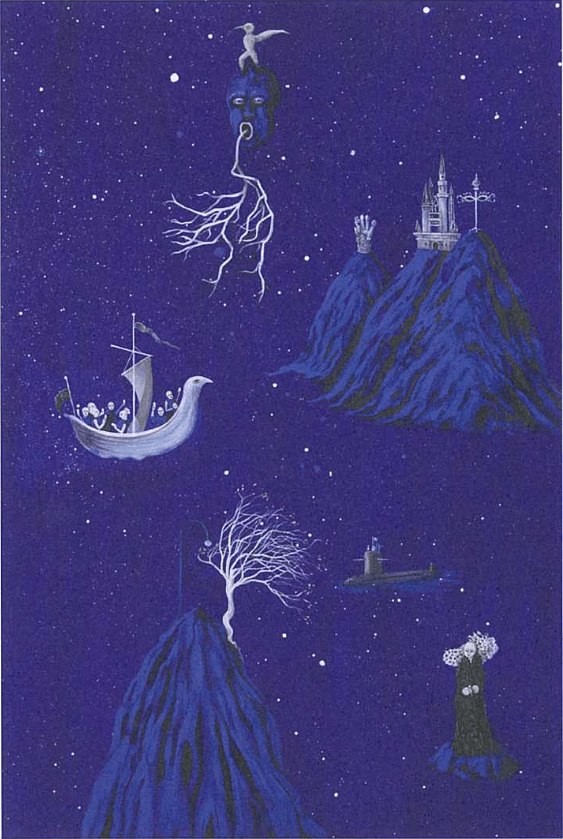
  3. Rift in the Heavens #2 Gabrielle Courtenay
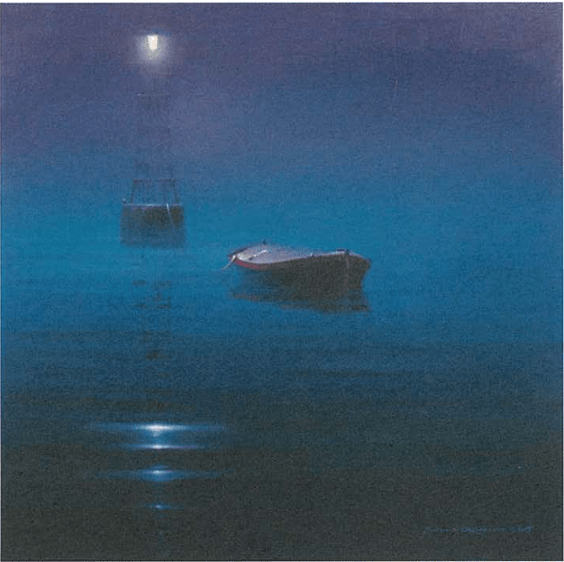
  4. Eternal  John Orlando Birt
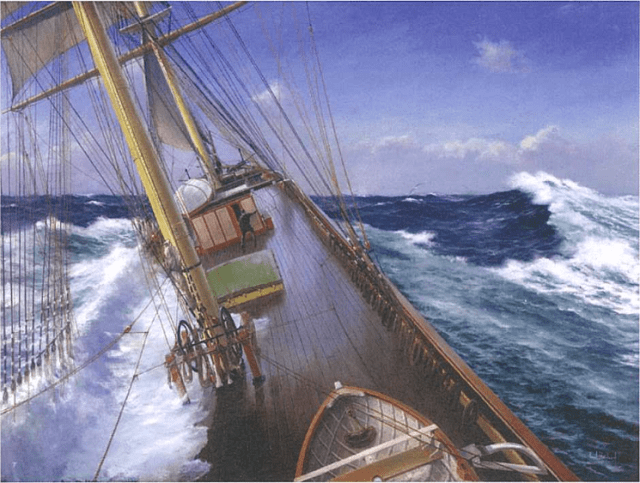
  5. Calling the Watch Ian Hansen

Sherbrook Forest


I have walked into the woods, off the muddy, many-feet-trodden path.

It is very windy and the susurrous of the trees carries a muted roar with it. I suppose it could bring branches down yet I am not afraid.

I walked to this place as surely as if I had somehow known to come here.

All that is of the world is left behind. There is only me. And You. And the magic in the woods.

Those I used to play in as a child around Erskine College had this feeling also.  As though anything might Happen.

I cried as I walked to the place where I now sit.

The silence speaks to me and I want to hear it. I wish I could always hear it.

img_1514

We are running a fortnightly bible study following our community dinner looking at the exegesis (interpretation) of the bible passages that underpin each of our community values. You can read the list of Values here so you know what’s coming up next.

These values can be relevant whatever context you live and work in just make the Word you own.


Value 4: Seeking justice for the poor

We value God’s priority for the poor and seek to prioritise the marginalised of Footscray.  We do not want to just show mercy, but instead offer our lives, in voice and activity, with those who we seek to serve.

Biblical basis: Jeremiah 22:16, James 2: 1-5


Let’s read the value together… what words/phrases stand out?

Who do we think are “the poor”?

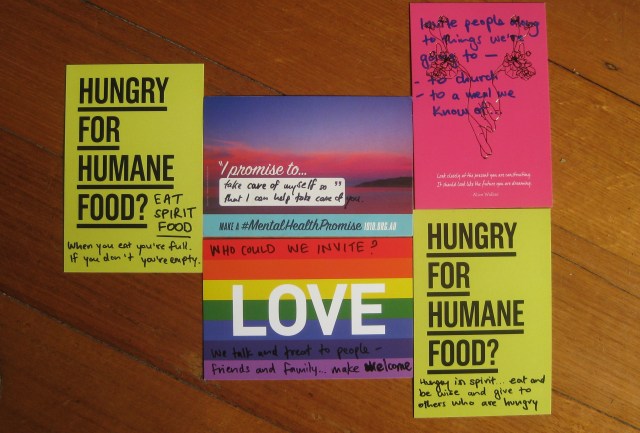
Those who are poor in heart? in spirit? or without money?  It’s those who are poor in spirit that are worst off = those who feel empty.  When you eat you’re full. If you don’t eat you’re empty.

We need to be helping one another more.

Read the bible. What words/ideas stand out?
What can we learn from the bible about living the Value: Seeking justice for the poor?

Jeremiah passage brought to mind people such as Donald Trump and Gina Rinehart…

Who gets behind and left out? What kinds of people?

What does it mean to “have a huge head-start in the faith stakes”?
Know how to be grateful.


Jeremiah 22: 16-17

“Doom to him who builds palaces but bullies people,

who makes a fine house but destroys lives,

Who cheats his workers

and won’t pay them for their work,

Who says, ‘I’ll build me an elaborate mansion

with spacious rooms and fancy windows.

I’ll bring in rare and expensive woods

and the latest in interior decor.’

So, that makes you a king—

living in a fancy palace?

Your father got along just fine, didn’t he?

He did what was right and treated people fairly,

And things went well with him.

He stuck up for the down-and-out,

And things went well for Judah.

Isn’t this what it means to know me?”

God’s Decree!

“But you’re blind and brainless.

All you think about is yourself,

Taking advantage of the weak,

bulldozing your way, bullying victims.”

The Word became flesh and blood,

and moved into the neighbourhood.

We saw the glory with our own eyes,

the one-of-a-kind glory,

like Father, like Son,

Generous inside and out,

true from start to finish.


The Message


James 2: 1-10

……..Sisters and brothers, if you really believe in our glorious Lord Jesus Christ, how come you still play favourites? If people walk into one of your meetings and you make a fuss of the ones dressed up to the nines and looking a million dollars, ushering them to the best seats in the house, while at the same time turning up your nose at those dressed like battlers, down on their luck, telling them to stand out in the foyer, aren’t you practicing apartheid, segregating God’s children? You’re as crooked as a judge who bases your sentence on the length of your skirt!

……..Get this straight in your minds, dear friends. God has turned the world’s opinion polls upside down. Those who have been deprived of what the world values have a huge head-start in the faith stakes. Their names are at the top of the list of those who God has chosen to inherit the riches of the kingdom. All who love God have an equal share in God’s promises, but you’re insulting some of them by means-testing your welcome.


©2002 Nathan Nettleton LaughingBird.net


Reflection time… followed by sharing time.

Who are “the poor” in Footscray?

Offer our lives – in voice and activity…

  • what ways are we doing this now?
  • what ways could we start?
 

On the weekend of 24-25 September Whitley College hosted a conference called Constitutions and Treaties: Law, Justice, Spirituality – these are notes from session 9 of 9. We acknowledge that this gathering, listening and learning occurred of the land of the Wurundjeri People of the Kulin Nations and offer our respects to their elders past and present, and all visiting Aboriginal and Torres Strait Island visitors present.


img_1490

Line through Papua New Guinea, literally nations were “dividing the world between them”.

img_1491

img_1493

Roger Williams, Baptist theologian, a dissenting voice to the Doctrine of Discovery model – wanted to respect Native Americans, house church on Rhode Island for 6 years. Had to go to England at one point – needed a patent or would be annexed.

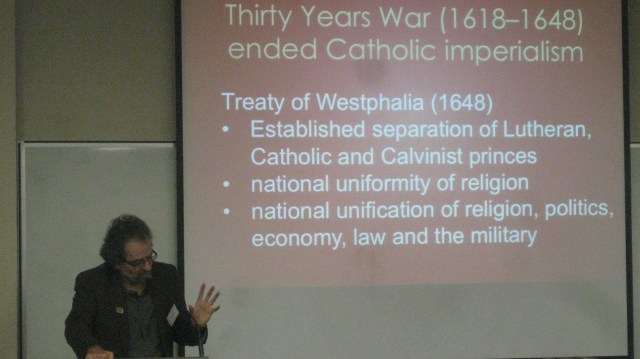
The Treaty of Westphalia was the end of the 30 Year war. No right to divide the world in two.  Move from Empires to a rise of nation states.

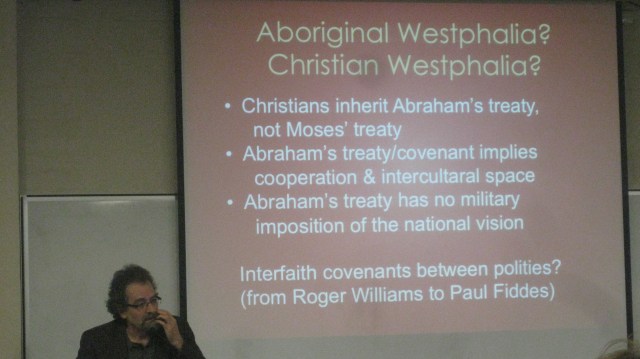
If we think of the Treaty of Waitangi as an interfaith covenant, what are the implications of that? The phrasing of the words “you will acknowledge no other gods above me” implies an acknowledgement of other gods existing. There is a danger when uniformity is a presumption.  What kinds of covenants can we imagine between polities (e.g. could a treaty have some reference to God or Creator Spirit with Bundjil and representatives of Bundjil’s land)? Any covenants (treaties) would need to be local. Can Christian churches model this?
Made under sovereignty of God (not state/federal Government)?


Entering a treaty under State/Federal terms legitimises them and their system, it’s not being legitimised ourselves.


Being hard isn’t the same as being not worth doing.


What does “local” mean/look like to people who know who they are/where they’re from.

Lutherans practiced a vernacular theology – learned the language of those they lived with whereas as other denominations refused to learn the language (and used theological grounds for that) you have to learn/imposing my theology…


On the weekend of 24-25 September Whitley College hosted a conference called Constitutions and Treaties: Law, Justice, Spirituality – these are notes from session 8 of 9. We acknowledge that this gathering, listening and learning occurred of the land of the Wurundjeri People of the Kulin Nations and offer our respects to their elders past and present, and all visiting Aboriginal and Torres Strait Island visitors present.

Terrific to be part of the Minutes of Evidence project – collaborative performance sparking conversations about structural justice.

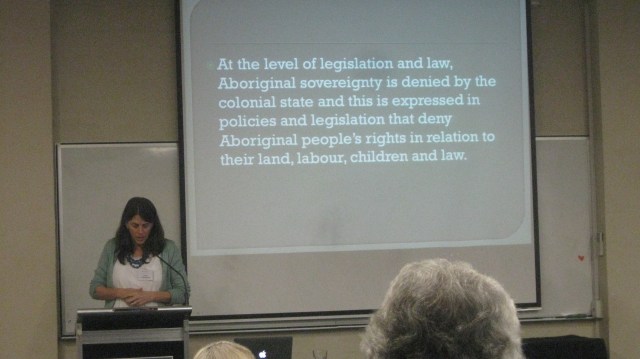
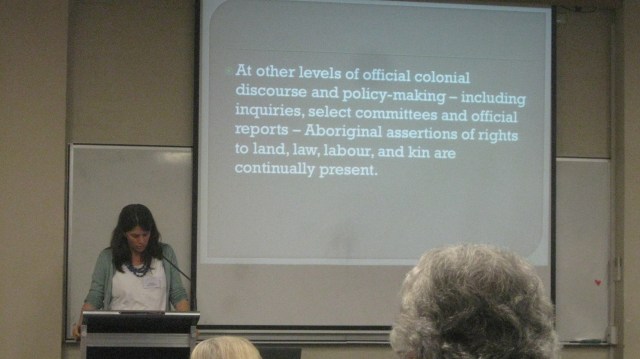
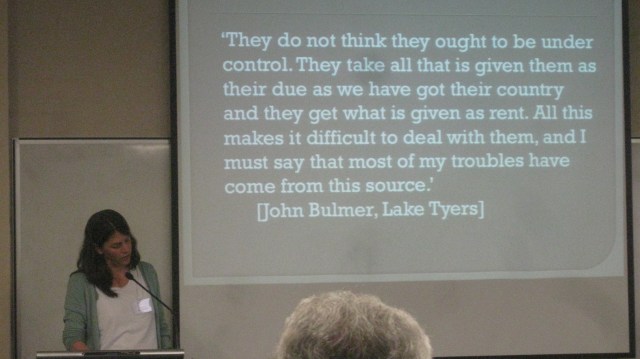
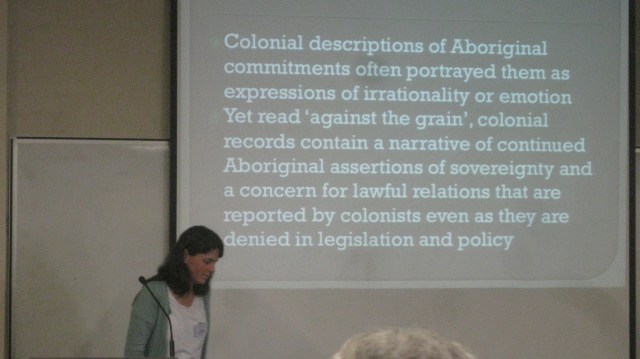
British colonisers ran a “Paper Empire” – numbers, counting surveillance… combined with counter-archives (other ways of knowing) can be used to create sources/proofs. Presumption of colonisation (denial of sovereignty) complicit and absolutely imbued in statutes and policies.

img_1479img_1480

img_1481

img_1482

img_1484

img_1485

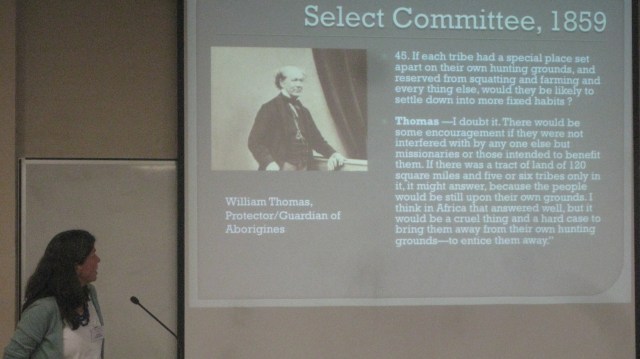
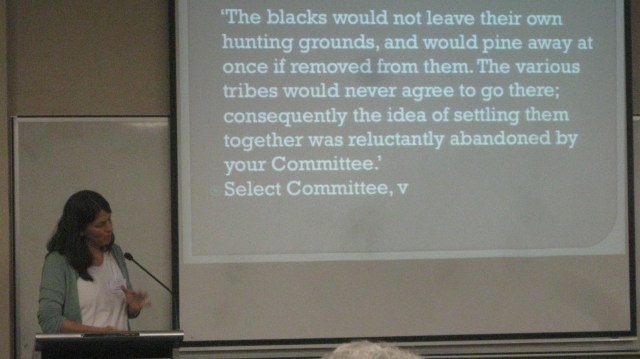
“…powerfully committed to hunting grounds” the Committee couldn’t break or deny this connection to Country… this is why the regional system of Missions was put in place.  The testimony of these men changed the political “solution”/outcomes. Although 50 years later the missions were closed after all and people were centralised.

img_1486

img_1487

img_1488

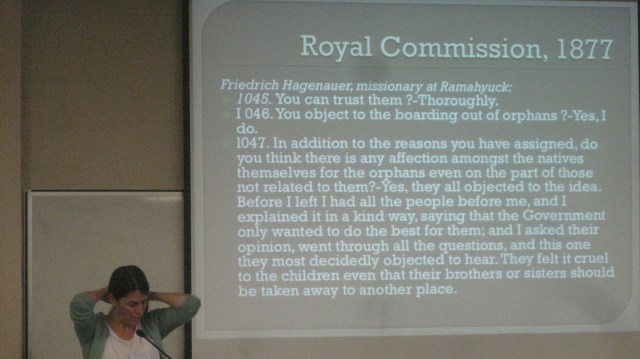
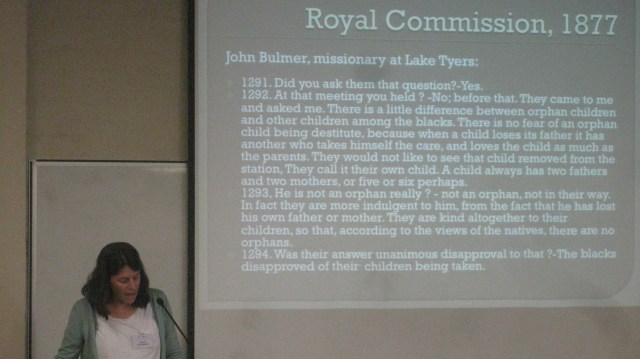
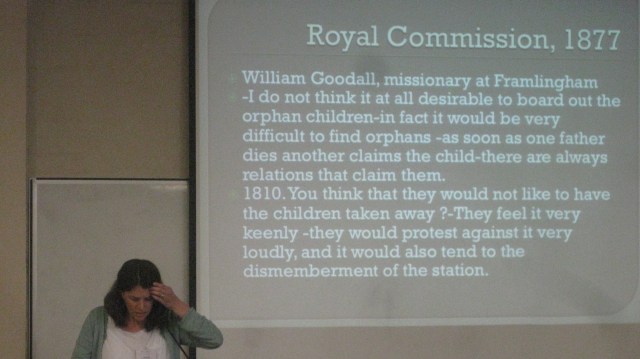
On the subject of children being taken away, missionaries testified that:   Those on the Missions knew of all the children in their District when a white couple adopted a girl then no longer wanted her – they were going to send her to Sydney, the Aboriginal people on the Mission appealed to take her in. There is no such things as orphans… every child had two parents. 100s of letters written by Aboriginals exist speaking to self-determination, religious freedom and for rights.

img_1489

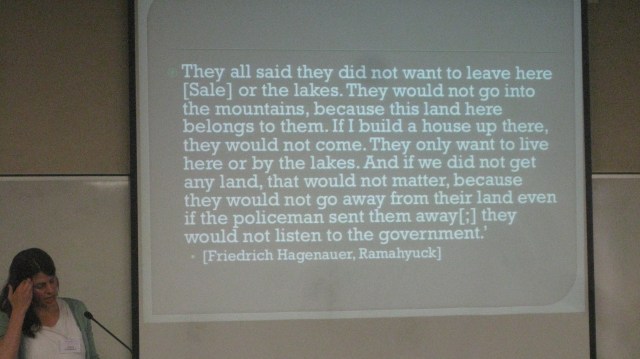
Political activism was happening pre-1920s.  Is it racial prejudice that dismisses testimony of “pining away” or “affection” for the land as irrational/emotional but this speaks to the depth of feeling of cultural belief/commitment, assertion of rights, sovereignty and justice.  Not able to recognise the implications of what you ‘see’ in front of you but providing testimony of it jsut the same.