


At the end of myself let me find You.
At the end of myself let me be found.
Show me what love is.
Amen
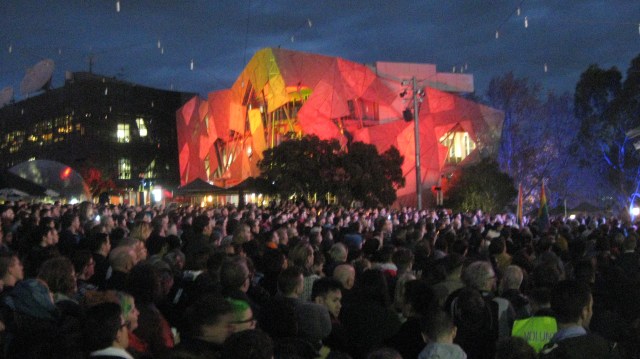
I am on the 5.08pm train to the city – dusk sees the city lights hang suspended against a purple-grey backdrop of condolence. I go into this space with high hopes and low expectations I think, but I hope I see love. I hope I see love poured out. It can be so hard to find safe spaces where you feel accepted, welcome, safe to express all of who you are. I hope there is a sense of welcome for everyone who comes tonight… including me!
Somewhere, over the rainbow, way up high
There’s a land that I heard of once in a lullaby
Somewhere, over the rainbow, skies are blue
And the dreams that you dare to dream really do come true
Someday I’ll wish upon a star
And wake up where the clouds are far behind me
Where troubles melt like lemon drops
Away above the chimney tops
That’s where you’ll find me
Somewhere over the rainbow, bluebirds fly
Birds fly over the rainbow
Why then, oh why can’t I?
…I have that moment we all have. Should I come here? Am I intruding on a private grief I have no right to?
I find a friend I know on the edge of the crowd.
“Thanks for coming.” she says.
“It’s important. I’m sorry it took something like this to bring us together”. I answer
It only needs to matter to one person. It’s not really about how it matters to me. For all those times you felt alone, you felt sad, you felt despair – can my standing with you now make up for those times? No… but it doesn’t follow that it’s insignificant now.
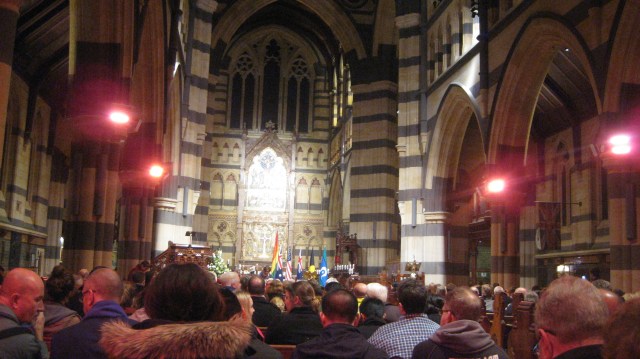
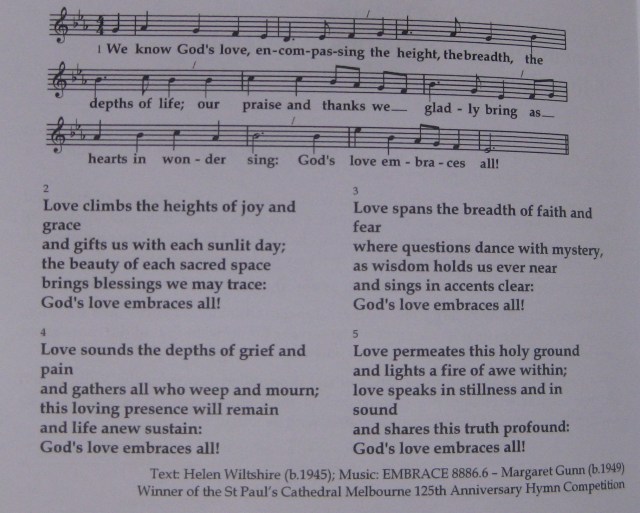
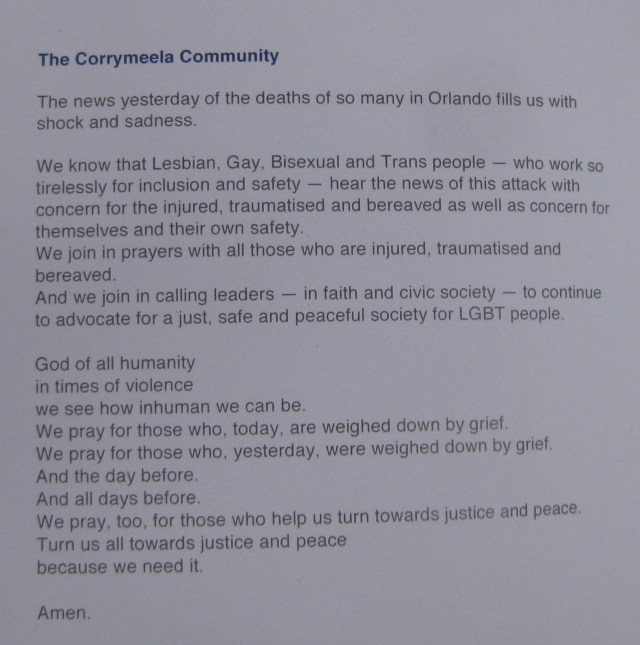
Forty-nine people have died and fifty-three others have been injured in the latest mass shooting in the US… plenty of Muslims and Christians are praying and acting in solidarity and support – these issues are engaged globally more and more. Born, raised, educated, armed in the US… can you call it an Islamist attack? SOme of my grief is with the perpetrator who must have been desperate indeed to feel belonging somewhere. But it’s the stupid idiot pastor that’s quoted as saying: “I woke up to a world with 50 less homosexuals in it and I was glad” that will be what goes viral, spreading hate and fear and violence in its wake. It’s not the the good news that is shared so often as the bad.We have a conscious choice about what we’re spreading but it seems something used more for evil than for good… what of courage and encouraging? hope and joy? We pray for those weighed down by grief – today and “all the days before”
Recently I had a look at the stats page of this blog and realised I had missed, if I had thought to consider it, a 5 year milestone of writing. So and so number of posts, so and so number of visitors to the page over those 5 years – what do those numbers mean? When I created this page in Feb 2011, it was September before I posted anything to it. I felt like I had to know the answers to all these questions: who are your audience? why are you writing?
I suppose I still don’t really know the answers to those questions but I suppose I care less that I do not know. I will confess I have been known to answer facetiously “I write because I get something out of it, if you get something out of it – it’s Gods fault”. Do what you want with that.
I think all I ever hold of anything are fragments. One of the reasons I think I’ve found it hard to classify “what I’m writing” or “who for”, is that what I post here is so mixed – things I write, things other people write, stories, poems, quotes, photos… life. These aren’t considered think pieces or articles, I don’t have any 5-point plans to answer any of your questions, I’m not here to teach you anything or be an expert about anything.
I write because…
I participated in a bible study session with my small group towards the end of last year… it’s small, and I’ve known some of them a long time but, despite this, as we’re introducing the topic for discussion I can sometimes get this hot flush through my body, a rising sense of discomfort, I’m not sure I agree with what you’re saying but I can’t articulate why. In the interim, others weigh in: “I haven’t heard it put like that before…”, “I agree…”
What I have to express at this time is “I’m not sure I agree with that…” or “That isn’t how I would see it”. The difficulty in expressing that, is that it begs the obvious follow up questions “How do you see it?” or “What do you think is happening in the passage instead?” I know I don’t have the answers for those questions yet.
What is the value in pointing out to someone you think there’s an alternative interpretation if you cannot articulate it? My silence is my mind working a mile a minute to process what I’m thinking but in the meantime the conversation moves on – there is further affirming of the original interpretation and as each layer/next question is applied to the text, they are read within the lens of this.
Now I am still working on what I think but there is increasing pressure – it was going to be awkward suggesting an alternative interpretation to one person (what if the ‘revelation’ of this study hangs on the basis of this suggested interpretation?) but now others have concurred and the conversation has moved on, jumping in now will actually be disruptive and, as others also agreed with the original interpretation, I feel as if need to ‘make a case’ solid or justifiable enough to de-rail the conversation.
I opt out of the chat, no new input until I can get my head around the initial idea. Session winds down and I take my journal and sit outside and scribble – it helps me to think about an idea to take it out and look at it.
I write to say the things unsaid and to know myself better. We need to communicate in different ways, yes, and we need to listen in different ways and have different spaces to communicate in. I write to explore what all these might be and what I might be.
I write because…
Lydia Wylie-Kellerman wrote a beautiful sermon for Pentecost and also to honour her Dad’s 10 years of ministry at St Peter’s Episcopal Church in Detroit… asking what does it mean for us to be followers of a subversive Storyteller? Some excerpts:
With social media the world seems terribly small sometimes – just these past weeks my Facebook feed has been filled with the trial outcome of the rape of a woman at Stanford and now this terrible shooting at the gay bar Pulse in Orlando (on a Trans and Latino/Latinx night on Puerto Rican Heritage Day during Pride Month). There would have been a time when such events were beyond the scope of knowing occurring far away but now, for days at a time, we are touched by layers of pain from such events. I don’t personally know anyone impacted first hand by these events but I know many impacted by the ripples as each new headline flashes up like a neon sign advertising darkness. “My FB feed has been filled”… I think of the native wisdom of the story of the two wolves and wonder if I have not lost my appetite. You see it’s not the stories of rescue, or redemption, or hope that seem to go ‘viral’ but the brokenness that seems to be replicated over and over again until it is part of the perpetuating harm itself. Is there any way it could be different? What choices are we making about what stories, voices, news, good news, we are perpetuating? What is in the ‘feed’ you are serving?
Jenny Peek at Yale Divinity School puts it like this: “I don’t want this fear to have the final word, because all too often fear is at the root of our hatred, disgust, and division. So instead I want to share a verse that continues to give me hope and direction even in times like this:
1 John 4:11-12 – Beloved, since God loved us so much, we also ought to love one another. No one has ever seen God; but if we love one another, God lives in us, and his love is made complete in us.”
I write because I want to read stories that nourish me (and I try not to ask of others what I’m not willing to do myself). I want us to understand and to love one another. The world is inexplicably wounded and inexhaustibly good… tell me about that… don’t leave out the inexhaustibly good part.
I write because…
Last month I was privileged to meet Aunty Sharyn an Indigenous Christian leader from Brisbane and hear her story. A vocation rising out of her own personal experience, Aunty Sharyn has started up B’ira – a significant community ministry addressing domestic violence and sexual abuse in Indigenous communities. Bir’a Women’s Ministry (Bir’a is Wakka Wakka Language for ‘High Spirit’) is all about when ‘Women meet Jesus’. They run yarning circles – providing a safe space to talk through grief, trauma, healing and relationships and do art therapy for when we can’t find, or just don’t have, the words to describe what has happened to us. I was put in mind of the women in Mark (5:21-43).
Jesus is walking along with his disciples and a leader of the Synagogue comes along asking for healing for his daughter who is unwell. Jesus agrees to come, yet along the way a bleeding woman who, against all purity codes, reaches out to touch a Jewish man in the desperation and hope of being healed. This woman reaches out for and takes what will heal her. v.29 “Immediately her haemorrhage stopped; and she felt in her body that she was healed of her disease.” but v.33-34 goes on to say “the woman, knowing what had happened to her, came in fear and trembling, fell down before him, and told him the whole truth. He said to her, “Daughter, your faith has made you well; go in peace, and be healed of your disease.” She had already been healed of the physical symptoms (v.29), this second healing (v.34) addresses the mental anguish of what the disease had cost. Exclusion from temple which was a central part of life, if she had a husband perhaps he left – not being able to touch what she had touched or share intimacy, to spend time with her would be to take on the limitations of impurity and ritual cleaning yourself, perhaps people worried they might catch the disease, perhaps the priests tried various means and methods of cleansing or praying out demons… what isolation and exclusion had this woman known over these 12 years? How long does it take to pour out this tale of grief, fear and loneliness? Long enough for the Synagogue leader’s daughter to die – does one person’s healing come at the cost of another’s? No.
I write because I want to encounter God, I want to be heard and healed and whole, and for others to have that too. What part does truth telling have to play in our healing? {personal, family, community, political…?} We need times and spaces to hear the whole truth, we need to be willing to tell our truth, we need to be willing to listen.
You see. All I have are fragments. Fragments of listening, voices – others and my own – word weaving or stitching together some patchwork of understanding from stories…
I don’t know that you can call this “feminist theology”. This is only what theology has ever been – codified collective human experience – stories, poems, liturgy, literature, prophecy and cultural influences trying to understand the shape of something bigger and beyond ourselves.
It is not finished.

excerpt from Estranged Relatives – Mediation and Nonviolent Direct Action (A Conversation between Ched Myers and Elaine Enns)




I go for a walk
and am reminded
the world
is beautiful
it is not given to me
to understand
all this
only to watch
and then,
we’ll see…
Talitha Fraser
this culture
grips, snips, snares you
wants a share of you
does everything it can
to make you small
I will stand tall
I see your wall
but I see too
I don’t have to go over, under, through
just be and do
as I’m called
yours is not the law I follow
yours is not the path I take
yours is not the truth I believe
shallow, fake, relieved…
I will go on
Talitha Fraser

I’m puddling my way through the Bartimaeus Institute Restorative Justice online course – and am struck anew by what it means to have teaching that holds the bible in one hand and the newspaper in another, historical contextual interpretation and current relevance… Ched and Elaine re-frame the above tool in such terms as peace keeping, peace making, peace building and peace waging.
This is good theological meat and you should eat some. Lots of free access articles and webinars on their website too…
What follows are some excerpts from an Anne Elvey article I picked up at the Creation Symposium (full article available here) interesting reading for anyone thinking about the ways our disconnection to the earth is mirrored in our disconnection from our own bodies
In being transcended through certain forms of western discourse and practice, bodies and earth have been critically endangered. In the context of this endangerment, an ecological feminist politics and ethics seeks to affirm the materiality of bodies and earth.
OOO
 The language we use in addressing the question of the relationship between culture and nature is critical, because discourse is one of the key processes through which we construct the agency or non-agency of the other and create structures that allow or disallow that agency.
OOO
As with all experience, sexual experience is vast, not only in its possibilities but in the resonance of even the simplest sensation. Desire, longing, pleasure, passion, orgasm, move the body into states of being which defy all definitions, not only those of gender or sexuality but of the boundaried way European culture perceives existence… Apart from any bond or relationship between lovers, in sexual experience an erotic connection to existence is kindled.
(Katherine Hayles, 1995:60)
OOO
I take up the now fairly commonplace notion of earth as a community of interconnected constituents. This community includes humans, other animals, plants, rocks, soil, water, air, trees, rivers, oceans, forests, hairy-nosed wombats, viruses, kangaroo apples, hermit crabs, amoeba and so on, connected by way of a complex sociality marked by plurality, particularity, diversity, interdependence and sometimes violence, oppression and indifference to the other. What if this earth, however we might know earth, is understood as a material given that precedes and resists but also underpins and gives space to our cultural constructions of it? This space is given not as a hole to be filled but in the manner of hospitality or to borrow a term from Jean-Luc Nancy (2000) of ‘being toward’. What if this understanding of the earth is giving precedence in our thinking about the questions of ‘sex and gender’? What if the questions of ‘sex and gender’ are considered within the context of the materiality of human beings as constituted within the wider materiality of a plural and diverse earth community?

OOO
 The experience of the lived body offers a particular example of the agency of experience. In pregnancy and childbirth as well as in illness, the lived body challenges my ‘illusions of control’ (Diprose 1994:103). During an illness, for example, my bodily experience is foregrounded in such a way that the interplay between nature and culture in the processes of my lived embodiment cannot be reduced to a simplistic notion of the cultural construction of bodies or nature… feels nevertheless as though the virus is in some sense constructing or deconstructing me.
OOO
She describes two forms of cultural impact on bodies and landscapes: first, the productive transformation of bodies and landscapes through cultural practices such as depilation and agriculture, for example, and second, the reproduction of bodies and landscape in discourse. (Kate Soper, 1995:137)
OOO
Instead she locates this agency not in the individual organism alone; rather it is an ‘agency in relation’, emerging ‘out of the engagement of the organism with its surroundings’. In this context, sexed bodies are continually being shaped and re-shaped both internally and externally through processes which are ‘partly material and partly social/experiential’, and these processes are inseparable. (Lynda Birke 2000:152)
OOO
Contemplation is a practice of attentiveness to the other, which begins with a movement of unknowing and through a practice of openness is followed by a movement of partial and provisional ‘knowing’

God to whom I am but a wrinkle in time
Be a light for me when all other lights go out
Be love for me when all other loved seems unsecured
Can it not be enough to be known by You?
Called by You?
Loved by You?
Give me Your perspective that sees and weighs
what is truly important
I have no control here.
No plan.
Help me trust to Your unfolding.
What will You make?
Give me curiosity, give me wonder, give me You
so that I might never feel alone.
Talitha Fraser
 itellyouarise