Teaching 12 – The Root of Suffering
What keeps us unhappy and stuck in a limited view of reality is our tendency to seek pleasure and avoid pain, to seek security and avoid groundlessness, to seek comfort and avoid discomfort. This is how we keep ourselves enclosed in a cocoon. Out there are all the planets and all the galaxies and vast space, but we’re stuck down here in this cocoon. Moment after moment, we’re deciding we would rather stay down in that cocoon than step out into that big space. Life in our cocoon is cosy and secure. We’ve gotten it all together It’s safe, it’s predictable, it’s convenient, it’s trustworthy. If we feel ill at ease, we just fill those gaps.
Our mind is always seeking zones of safety. We’re in this zone of safety and that’s what we consider life, getting it all together, security. Death is losing that. We fear losing our illusion of security – that’s what makes us anxious. We fear being confused and not knowing which way to turn. We want to know what’s happening. The mind is always seeking zones of safety, and these zones of safety are continually falling apart. Then we scramble to get another zone of safety back together again. We spend all our energy and waste our lives trying to re-create these zones of safety, which are always falling apart. That’s the essence of samsara – the cycle of suffering that comes from continuing to seek happiness in all the wrong places.
Teaching 20 – Solgan: “All activities should be done with intention”
Breathing in, breathing out, feeling resentful, feeling happy, being able to drop it, not being able to drop it, eating our food, brushing our teeth, walking, sitting – whatever we’re doing could be done with one intention. The intention is that we want to wake up, we want to ripen our compassion, and we want to ripen our ability to let go, we want to realise our connection with all beings. Everything in our lives has the potential to wake us up or put us to sleep. Allowing it to awaken us is up to us.
Teaching 37 – The Practice of Compassion
We cultivate compassion to soften our hearts and also to become more honest and forgiving about when and how we shut down. Without justifying or condemning ourselves we do the courageous work of opening to suffering. This can be the pain that comes when we put up barriers or the pain of opening our heart to our own sorrow or that of another being. We learn as much about doing this from our failures as we do from our successes. In cultivating compassion we draw from the wholeness of our experience – our suffering, our empathy, as well as our cruelty and terror. It has to be this way. Compassion is not a relationship between the healer and the wounded. It’s a relationship between equals. Only when we know our own darkness well can we be present with the darkness of others. Compassion becomes real when we recognize our shared humanity.
Teaching 43 – Tonglen: The Key to Realising Interconnectedness
…when anything is painful or undesirable, breathe it in. In other words, you don’t resist it. You surrender to yourself, you acknowledge who you are, you honour yourself. As unwanted feelings and emotions arise, you actually breathe them in and connect with what all humans feel. We all know what it is to feel pain in its many guises.
You breathe it in for yourself, in the sense that pain is a personal and real experience, but simultaneously there’s no doubt that you’re developing your kinship with all beings. If you can know it in yourself, you can know it in everyone. If you’re in a jealous rage and you have the courage to breathe it rather than blame it on someone else, the arrow you feel in your heart will tell you that there are people all over the world who are feeling exactly what you’re feeling. This practice cuts through culture, economic status, intelligence, race, religion. People everywhere feel pain – jealousy, anger, being left out, feeling lonely. Everyone feels it in the painful way you feel it. The storylines vary, but the underlying feeling is the same for us all.
By the same token, if you feel some sense of delight – if you connect with what for you is inspiring, opening, relieving, relaxing – you breathe it out, you give it away, you send it out to everyone else… If you’re willing to drop the storyline, you feel exactly what all other human beings feel. It’s shared by all of us. In this way, if we do this practice personally and genuinely, it awakens our sens eof kinship with all beings.
Teaching 86: Six ways to be Lonely
Usually we rgard loneliness as an enemy. It’s restless and pregnant and hot with the desire to escape and find soemthing or someone to keep us company. When we rest in the middle of it, we begin to have a non=threatening relationship with loneliness, a cooling loneliness that turns our usual fearful patterns upside down. There are six ways of describing thsi kind of loneliness:
1. LESS DESIRE is the willingness to be lonely without resolution when everything in us yearns for something to change our mood.
2. CONTENTMENT means that we no longer believe that escaping our loneliness is going to bring happiness or courage or strength.
3. AVOIDING UNNECESSARY ACTIVITIES means that we stop looking for something to entertain us or to save us.
4. COMPLETE DISCIPLINE means that at every opportunity, we’re waiting to come back to the present moment with compassionate attention.
5. NOT WANDERING IN THE WORLD OF DESIRE is about relating directly with how things are, without trying to make things okay.
6. NOT SEEKING SECURITY FROM ONE’S DISCURSIVE THOUGHTS means no longer seeking the companionship of constant conversation with ourselves.

 A hermit said, ‘When you flee from the company of other people, or when you despise the world and worldlings, take care to do so as it if were you who was being idiotic’. (p83)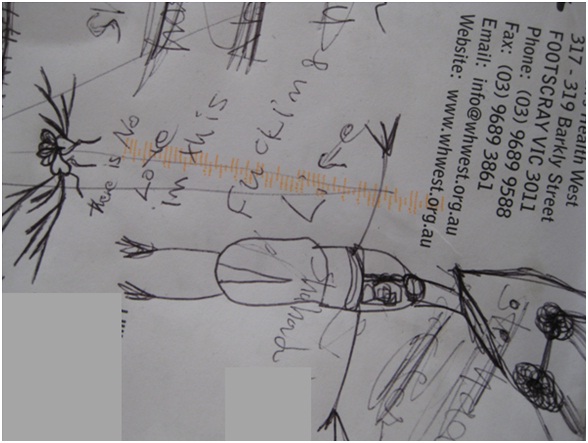


 itellyouarise