Tag Archive: brokenness


Non violence is a weapon for the strong – Mahatma Ghandi

Non violent communication (NVC) is base don the principles of nonviolence – the natural state of compassion when no violence is in the heart.

NVC begins by assuming that we are all compassioante by nature and that violent strategies –  whether verbal or physical – are learned behaviours taught and supprted by the prevailing culture.  NVC assumes that we all share the same basic human needs, and that each of our actions are a strategy to meet one of more of those needs.

People who practice NVC have found greater authenticity in the communication, increased understanding , deepening connection and conflict resolution.

(Further reading: Non-violent Communication by Marshall B Rosenberg)

We are made in the image of God > compare Christian creations story with others.  We are created in the image of a Creator. This has been co-opted by empire – trying to sell clothes, make up, some ideal image – they are trying to sell something I already have.  The world and earth are alive and creating always. There is a scientific link between art/creativity and healing… when you are writing a story, cooking, drawing, gardening… we are not functioning out of the survival part of our brain.  Importance isn’t what is made but the process of creating.
024

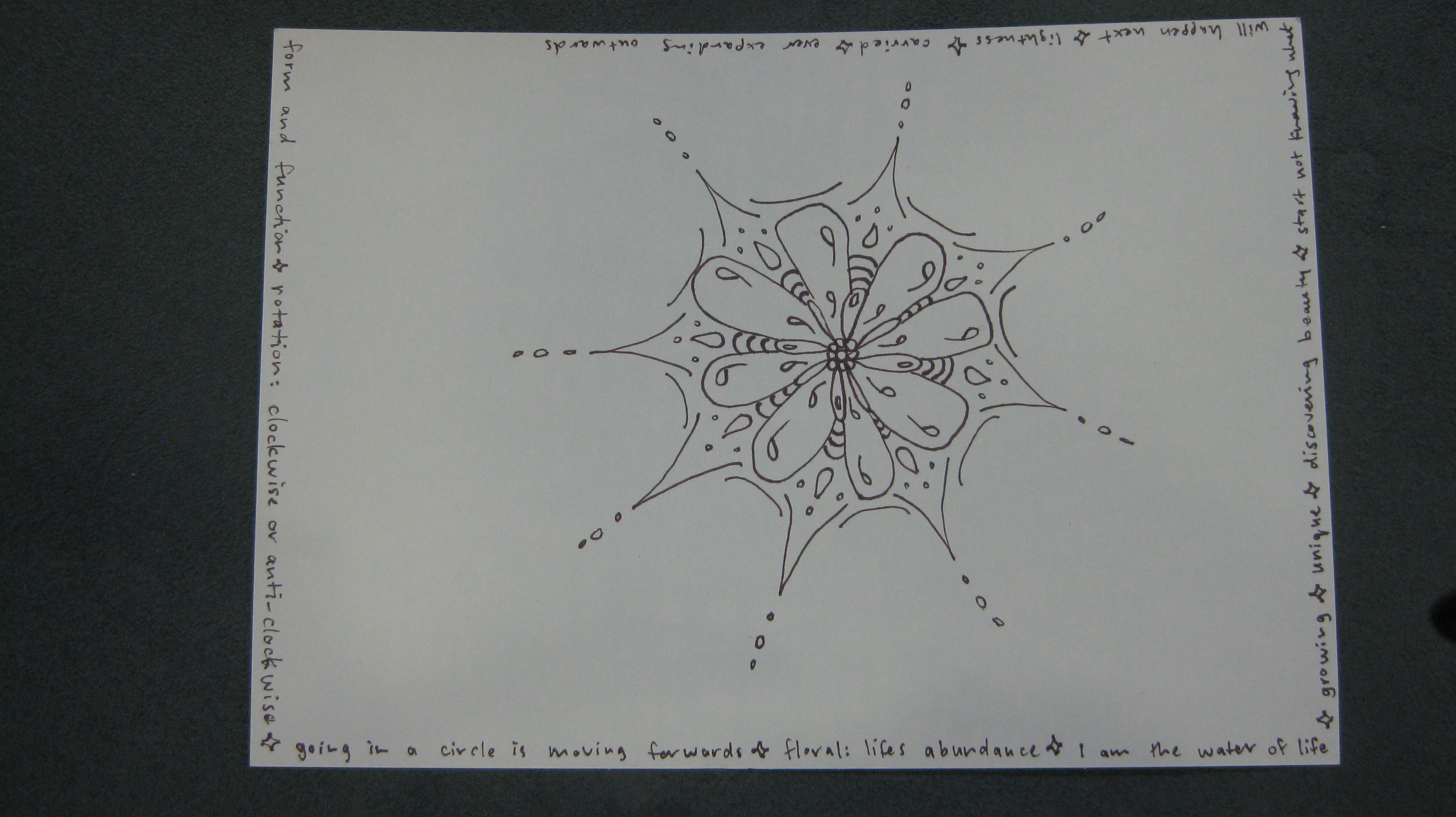
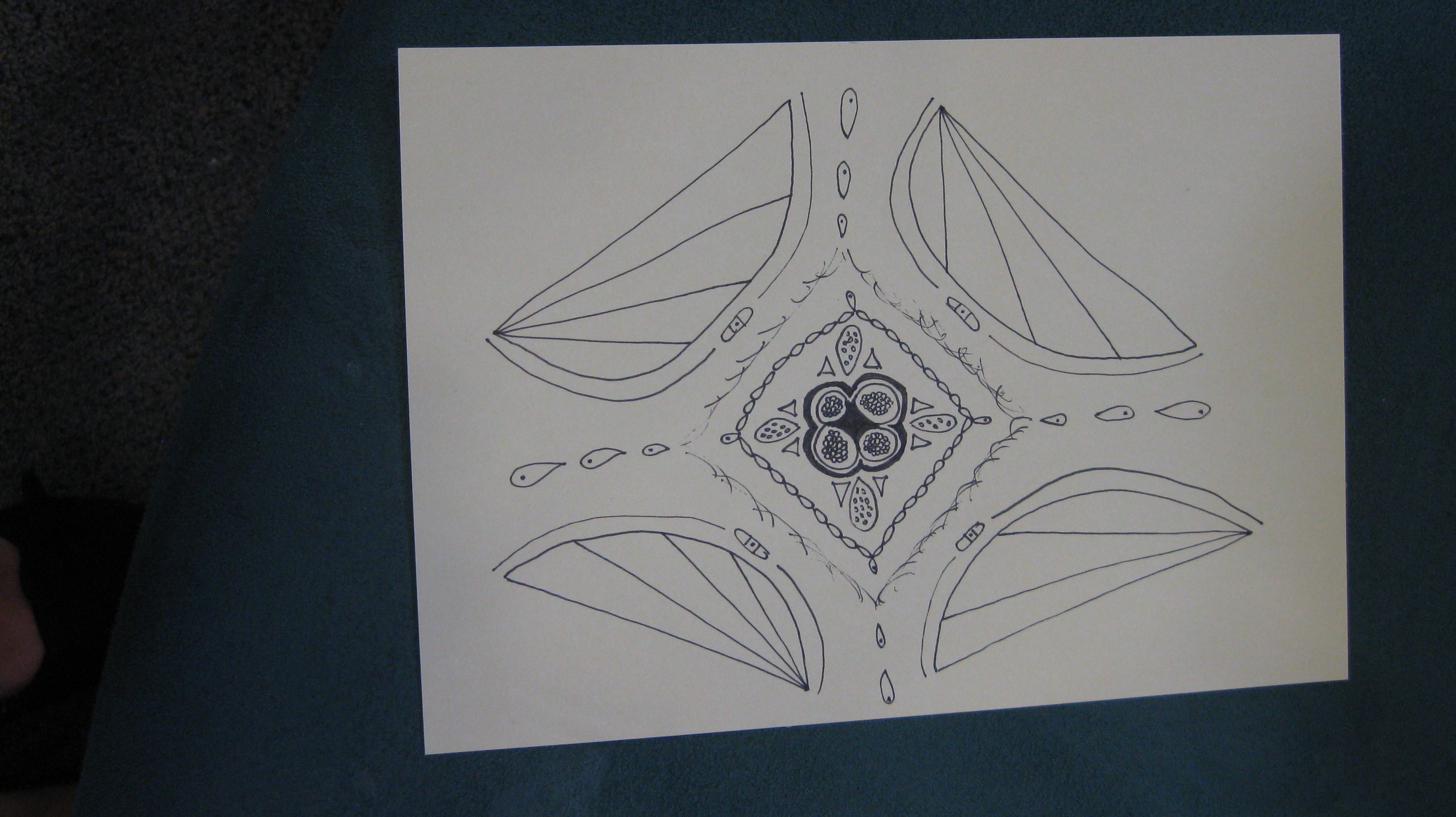
MANDALAS

The Mandala (Sanskrit for circle or completion has a long history of being recognised for a deep spiritual meaning and representation of wholeness.

The very nature of creating a mandala is therapeutic and symbolic.  The shapes and colours you create in your mandala will reflect your inner self at the time of creation.  Your instinct and feeling should inspire and guide you through the process of creation.  Ultimately, you will be creating a portrait of yourself as you are when creating the mandala.  So whatever you are feeling at the time, whatever emotions are coming through, will be represented in your mandala.027
So then, how shall we live?

Practices and principles for compassionate, non-violent communication

Proposition: We are made in the image of God, therefore if I am careful and I am creative, exploring who you are and revealing who I am can be an act of worship (our communication)

First issue is realising our reaction to what we perceive as agression or conflict… this is not right or wrong this is just how we are made:

  • fight or flight
  • non-verbal agression
  • tone and inflection

Colossians 1:18-20

He was supreme in the beginning and – leading the resurrection parade – he is spreme in the end. From beginning t end he’s there, towering far above everything, everyone.  So spacious is he, so roomy, that everything of God finds its proper place in him without crowding.  Not only that, but all the broken and dislocated pieces of the universe – people and things, animals and atoms – get properly fixed and fit together in vibrant harmonies, all because of his death, his blood that poured down from the cross.

Basic technique:

  1. Observe (without judgement)
  2. Share our feelings
  3. Sharing what needs, values or desires have created our feelings
  4. Requesting (a concrete action we are requesting to enrich our humanity)

Stumbling blocks: judgements, comparisons, denial of responsibility, demanding.
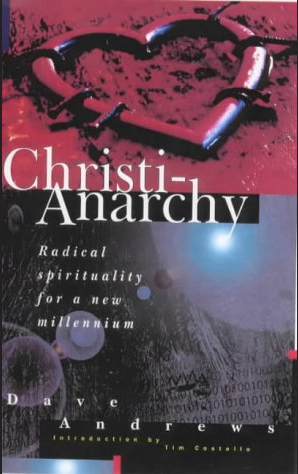
christianarchyJesus Christ preached a gospel of love and peace with justice. But the history of the Christian religion is littered with every kind of evil. What went wrong?

If you have ever wondered – how can anyone choose to be “Christian” when so much harm has been been done in the name of the church? I can only say 1) that’s a very good question and 2) Dave Andrew’s has creditably tried to answer it.  It’s not enough to say: “Well, I didn’t do those things…” these stories form part of the history we are a part of and it is only when we know and accept that story that we can understand and speak for our place in it.

Literally, “Chapter 1 – A History of Christianity: A History of Cruelty” is a history of the faith spanning 4 eras:
-Councils, Creeds & Coercian: ca. AD 100-500
-Emperors, Popes & Power: ca. AD 500-1000
-Crusades, Inquisitions & Control: ca. AD 1000-1500
-Worldwide Evangelism, Witch Hunts & Genocide: ca. 1500-2000

Dave Andrews also talks about how his connection with the YWAM community broke down.

If you are working to reconcile brokeness with grace, to understand why you should (or anyone would) persist in the pursuit of faith when church/religion/community can disappoint you and let you down then this is a good read albeit a confronting one because it goes there, looking at the ugliness… (I’d recommend reading it with others or at least at time you are feeling strongly rooted/centred in your faith because it IS confronting)

(p.152) “When Christ was crucified, the hope of his diciples, that they actually might have been able to build a better world together, was totally shattered… Jesus was dead.  And all their hopes were buried with him.”

In a complete plot spoiler, I’m about to tell you how it ends (so feel free to skip this and buy the book) with Dave Andrew’s conclusion and call to live the Way of Christ as it was intended:

(p.167-169) “Christ calls us to be a network of residents working towards community in the localities where we live, so as to realise the love of God for all people, particularly those on the fringes of our society. Christ himself is our example, and his spirit serves as the inspiration for the simple, practical, compassionate path he wants us to take, regardless of the difficulties along the way.
His expectation is that we would not slavishly copy him, but voluntarily make the same kind of choices that he made, and that he encouraged his diciples, like Peter, to make: to accept life, to respect life, and to empower people to live life to the full.
Christ calls us to know God, the surce of all life, more fully, and to cultivate the disciplines that will help us to develop a relationship to God in the midst of our ordinary everyday lives.
He calls us to live in sympathy with the heart of God, sustaining ourselves, supporting one another, and serving those around about us, in an increasingly steadfast, faithful and life-affirming manner.
Christ calls us to be aware of ourselves, and the gift of life, that each of us can bring to the community.
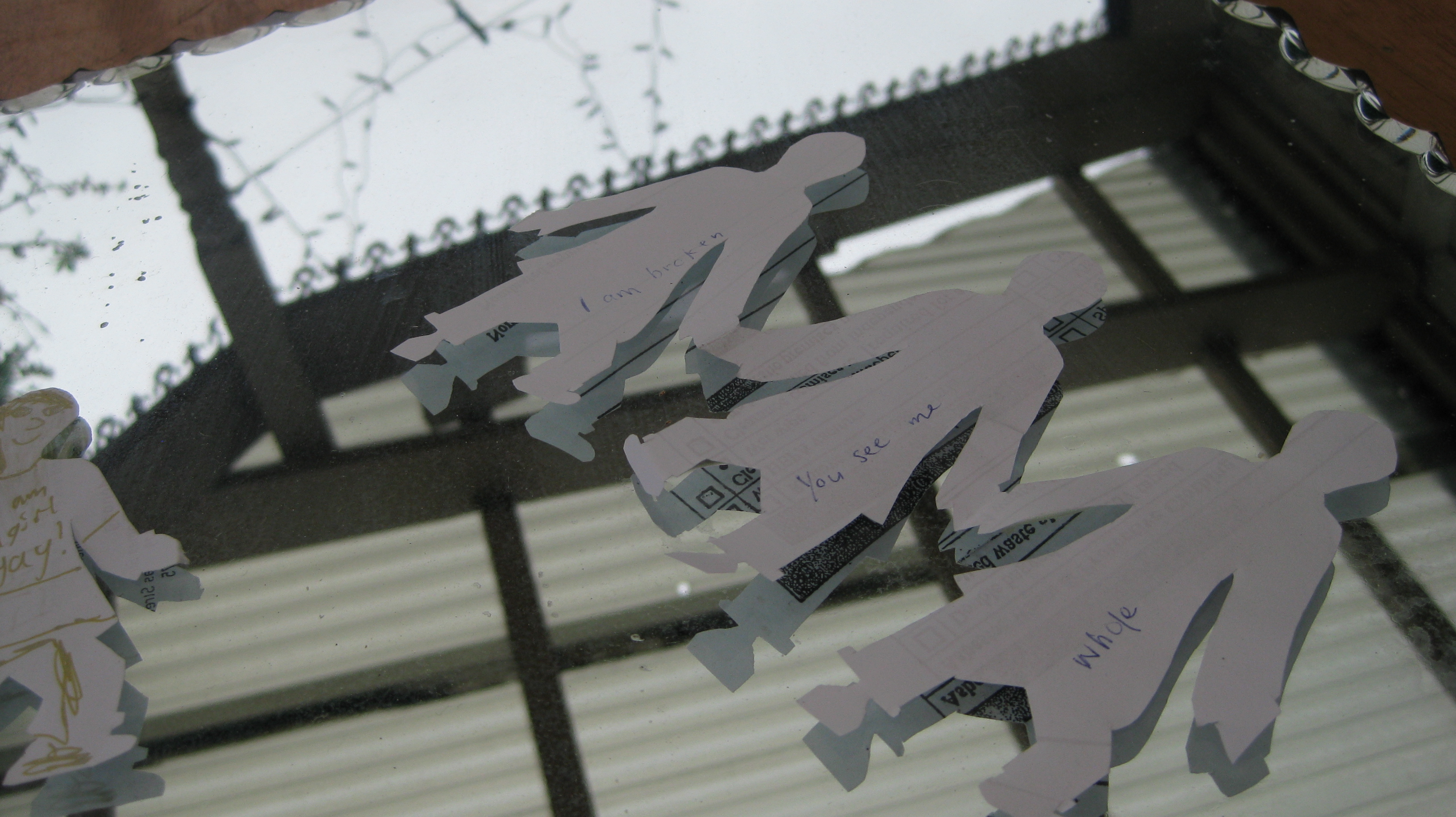
He calls us to scknowledge not only the reality of our brokenness, but also the potential for wholeness in our relationships, and our responsibility to grow collectively as people, in our capacity to speak truthfully, listen attentively, and work co-operatively, for the sake of the community.
Christ calls us, over and over again, particularly to remember those people in the community who are forgotten, who are rejected, neglected and ignored.
He calls us to affirm our commitment to the welfare of the whole of the human family, and to make ourselves available to brothers and sisters who are marginalised, in their ongoing struggle for love and justice.
Christ knows we disagree about many things, if not most things, but he wants us to agree on at least oen thing: the need for us to join together to develop communities in our localities that reflect his compassion by being more devoted, more inclusive and more non-violent.”

For the prayers…

004for those prayers spoken, unspoken and for which our spirit groans
but we cannot find words
Amen

Small Things

You are a God of small  things.

Snapped shoe laces, the sticking utensil drawer

Outreaching arm over the cold side of the bed

Watching the bus you’re meant to be on go by

(and the one after that)

Siren chaser, conflict avoider, the job I don’t want to go to much today

What I needed to bring and forgot,

What I wanted to say but didn’tplaydough people

(the stupid thing I say instead)

You – in my fears, real or imagined

You – my consolation and my comfort

You – there always in all things

You

Talitha Fraser

F*** off

17.12.14b

Communion at FCOC

[Hand out both bread and wine so that they are in our hands]

Yesterday I was in my car and had a little Christmas tantrum “I HATE Christmas!” thumped the steering wheel… “I can’t wait for it to be over…”

Every day I feel like I’m running from thing to thing and doing them all badly, traffic’s terrible – don’t get me started on Highpoint and there’s so many social things to do, I’m barely overlapping with my housemates… I’m stressed out. Yesterday in my car I asked myself the question, “Where is God in this?” How can I engage with the deeper meaning of Christmas when I get swept up in the commercialness and busyness of it?

I’m going to read a poem by Peter Rollins called “In the name…” in an attempt to answer that – invite you to hold the elements and reflect on where you yourself are at at this point of the season… and where God is in the mix. Some of the language may be a bit confronting but it captures some of the missed feelings I have around this time of year and I trust that while we won’t identify with all of it, we will all identify with some of it.

The Lord be with you… and also with you.

In the name of the Father, of the Son, and of the Holy Spirit.

In the name of goodness and love and broken community.

In the name of meaning and feeling and I hope you don’t screw me…

In the name of darkness and light and ungraspable twilight

In the name of meal times and sharing and caring by firelight

In the name of action and peace and human redemption

In the name of eating, and drinking and table confession

In the name of sadness, regret, and holy obsession, the holy name of anger, the spirit of aggression…

In the name of forgive and forget and I hope I get over this…

In the name of the Father, and Son and the Holy Spirit

In the name of beauty and beaten and broken down daily.

In the name of seeing our creeds and believing in maybe, we gather here, a table of strangers, and speak of our hopeland and talk of our danger…

to make sense of our thinking to authenticate lives to humanise feeling and stop telling lies.

In the name of philosophy, theology and who gives a damn?

In the name of employment and study and finding new family.

In the name of our passion, our loving and indecent obsessions

In the name of prayer and of worship and of demon possession.

In the name of solitude, and quiet and holy reflection.

In the name of the lost, and the lonely and the withered direction

In the name of efficiency, stupidity and the wholly ineffectual

In the name of the straight, the queer, transgender and bisexual

In the name of boot clogs, and boob jobs and erectile dysfunction. Schizophrenia, hysteria and obsessive compulsion.

In the name of Mary and Jesus and the mostly silent Joseph.

In the name of speaking to ourselves, saying this is more than I can cope with…

In the name of touch up and break up, and break down and weeping

In the name of therapy, and prozac and full-hearted breathing.

In the name of sadness and madness and years since I’ve smiled.

In the name of the unknown, alien and the holy in exile

In the name of goodness and kindness and intentionality. 

In the name of harbor and shelter and family.

(like telling an exciting secret…)

Christ is coming!

Christ is coming!

Christ is coming!

The Lord be with you… and also with you.

Let’s eat and drink.

This week, the second of advent, we light the candle of peace. We light it knowing full well that peace is elusive, and in some parts of the world almost completely absent – but God is never absent from us. God is always preparing something new. And even where there is war and discord, whether between countries, within families or within our own hearts, God is present, leading us to new possibilities. Loving God, in this time of preparation and planning, we thank you for the hope and peace you unfailingly offer us. Show us the creative power of hope. The us the peace that comes from justice. Prepare our hearts to be transformed by You – that we might walk in Your light. Amen.

001


I will tell you something that has been a secret; that we are not all going to die, but we shall be changed.
1 Cor 15

I am hungry. I am full. I am empty. I am all these things in You.

These words from Corinthians bear hope for me. They give me a sense of space and flexibility where I have felt rigid and tight. This is the gift of Your grace and I am grateful for it.

We draw lines in the sand and then are constricted by the confines of the smallness of our own imaginations. This is why we require You and cannot trust to our own abilities.  Let me confess I am slow to seek You, You speak but I do not hear, I look but do not see what You would show because I imagine I know. Give me the grace to know all I do not know, humble me to be dependent on You always and in all things.

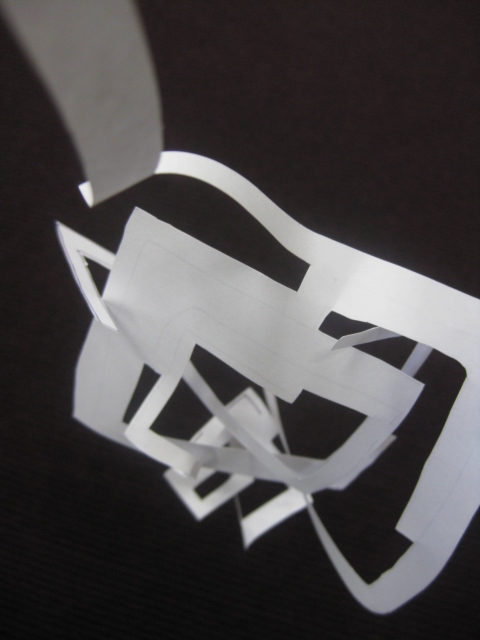
Is our destination to You outside of ourselves or inwards? Both at the same time? It was clever for cities of old to be built as a maze with the church at the centre.  You would always have a sense that you could not get lost because you’d have some understanding of where you stood in relation to God at all times.  Sometimes near.  Sometimes far.  Even a deadend is useful in that we have learned the way not to go.  Perhaps we find a place along the Way that is comfortable and we do not wish to go any further? Perhaps if we go too far we will not be able to find our way back? …but that is a fallacy – there is only ever forwards.  Our commitment to God needs to be this, that ‘I will keep on moving forwards’.  This page, limited to two dimensions, the image could seem to ascend or descend but it would be better to imagine some sort of Cubist mobile suspended in space and time in constant motion.

010

This is our God.

This is why I – and you – can be made new

in every moment, made anew, renewed

in every moment.


Listening

021

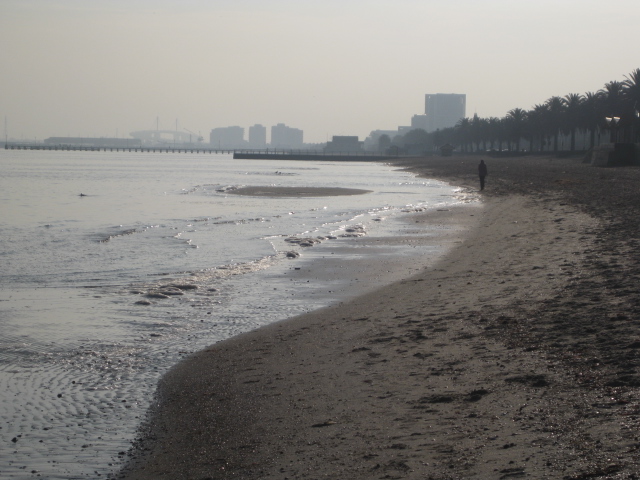
I walked beside the sea today
the sea, the sea
Seeing out but looking in today
looking in, looking in
Doubt, fear, responsibility I exhaled today
I exhaled, I exhaled
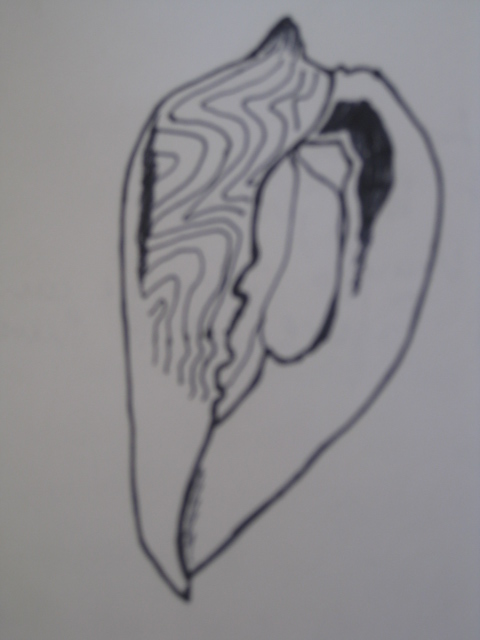
I picked up a broken yet beautiful shell today
broken yet… broken yet…
and held it to my ear to listen today
to listen, to listen
and today, today I heard You

Talitha Fraser

blog 008

women of spirit 010

For prayers at community dinner last week we reflected on the Seeds query What does it mean for us to be the body of Christ? and the words of Joy Cowleys psalm…

Seeing

Dear God,
I need to see myself
as you see me.
My own vision is fragmented.
I try to divide up my life
and reject those parts of me
I consider to be weak.
I waste time and energy
in the battle of self against self
and Lord, I always end up the loser.

Dear God,
help me to see myself
as you see me.
I forget that you made me just as I am
and that you delight in your creation.
You do not ask me to be strong;
you simply ask me to be yours.
You do not expect me to reject my weakness,
merely to surrender it to your healing touch.

Dear God,
when I can see myself
as you see me,
then I will understand
that this frail, tender, fearful, aching, singing
half-empty, shining, shadowed person
is a whole being made especially by you
for your love.

Joy Cowley