Tag Archive: brokenness


In fear aspiring

I fear that what might be my honest, deliberate truth might in fact be driven by my fear, or worse, that I have never been tested.

How do you measure integrity?

In this moment my truth explains, justifies, gives grace to my life. Could I ever doubt, regret, call that into question as some new learning, new light shines into my brokenness?

In every moment we are given a choice about what we do or say – watch TV? Do the readings for Uni? Check for the 5th time in 10 minutes whether someone has retweeted  my tweet? How do we register the frequency of the symphonic harmony of life and step into the dance?

The only thing sadder than a life on the sidelines is not even knowing you are invited…

i tell you arise

Jesus seemed to move around a bit… city to sea, centre to margins; in between the “happenings” the speeches and stories, the healing and the casting out – he and his friends would have spent some time on the road.  I wonder if this was his introverted time to recharge before the gig? Whether they’d process how it went “I don’t know, do you think they get it?”, “OMG did you see that Pharisees face? I thought he might have a heart attack”… Joy or sadness, success and frustrations poured out around a campfire at night, shared around a meal, not ranked recliners but a simple circle on the ground – men and women together, schmick tax collectors and homely fishermen. Despite having people around him all the time I bet there were times Jesus felt lonely in his vocation, times he wrestled with the call, felt caught between the surety of purpose and the unknowing of where the path would lead… and felt fear.

i tell you arise

Martin Luther King, Mother Teresa, Te Whiti, Dorothy Day, Ghandi, saints, prophets and witnesses have gone in that water, I am not worthy to set foot in it.

Maybe just a toe? I’ll paddle here on the edges –  I can see to the bottom, sure footing… it’s safe here. I can see the way forward and the way back.

What if I’m swept off my feet? What if the current takes me? Where will it take me? I am not strong enough to swim against the current long… what if I can’t get out?

This is the river that baptised Jesus.  This same water that washed his feet and that of his disciples whom he knelt to serve… this water is not of death but of life…

i tell you arise

Talitha Fraser

my own skin

Uncomfortable in my own skin
I imagine I am a shapeshifter
I read… watch movies… to embody
someone else to get relief from myself
I try to escape who I am as if that person bores me, annoys me,
repels me
I think to love someone more than myself is ridiculously easy,
to love myself as I love others…
that is a very daunting thing
to imagine.

Who might I become if I were loved?

Talitha Fraser

O, the shame of it

the turbulence of the world behind my eyes spills out
shame burning
guilt gasping
heart constriction

shock

I see your shock at my nakedness.
The nakedness of my whole truth.
My vulnerability.
Like a foetus curled, cold, helpless.

Quick. Retreat. Apologise.

Tuck it back in, decorum returns.
Healing might not have happened but my humanity affirmed your own.

Somehow with our shit, our baggage, our brokenness
we still find a way to live loving one another.

it is very dark there
and very lonely
in the world behind my eyes

footscray 004 - Copy

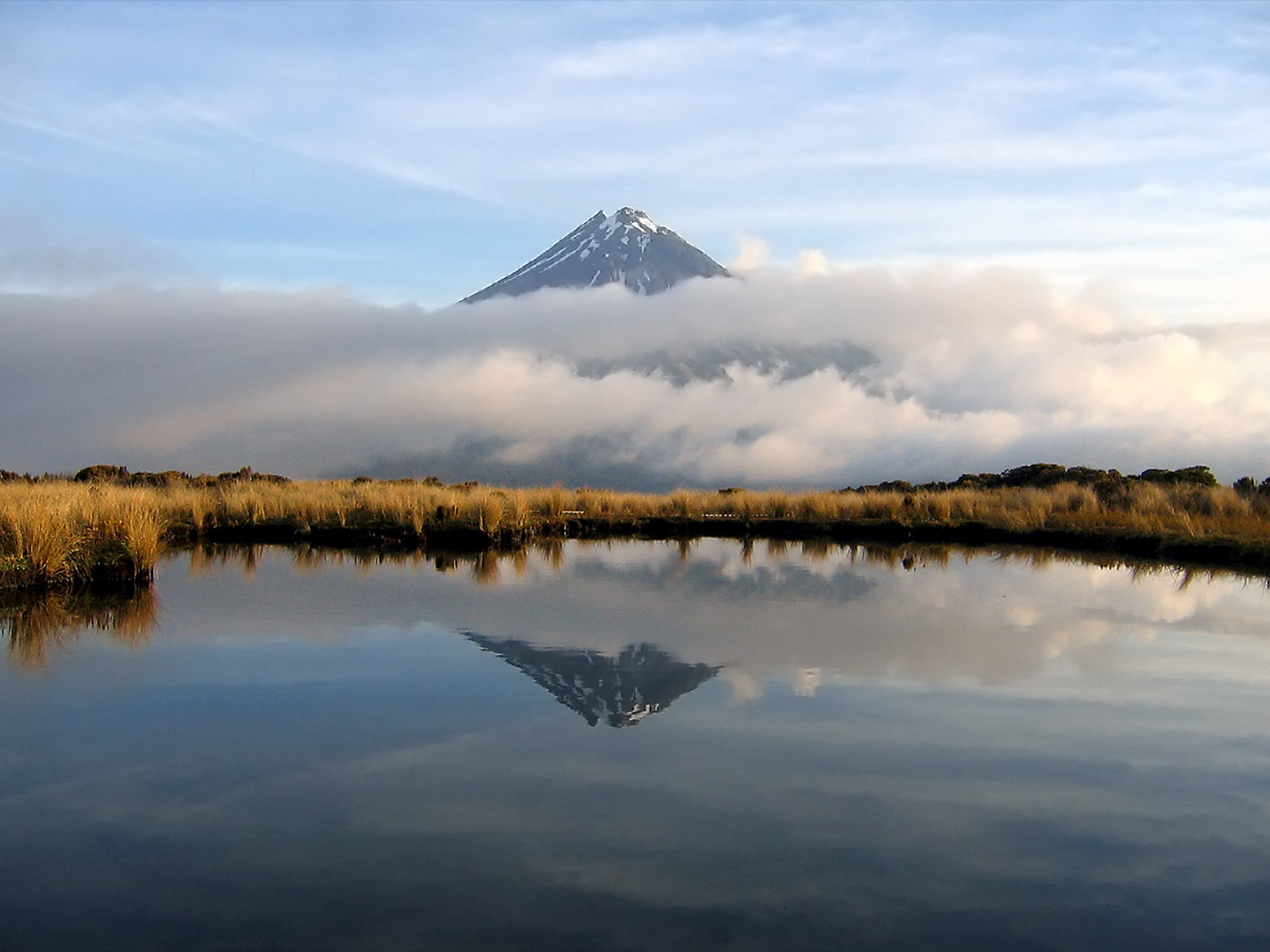
                                                           (photo of Mount Taranaki, Richard Crowsen)

Maori continued with the task unarmed and, to a person, they declined to respond to aggression when removed. Go, put your hands to the plough. Look not back. If any come with guns and swords, be not afraid. If they smite you, smite not in return. If they rend you, be not discouraged. Another will take up the good work. If evil thoughts fill the minds of the settlers and they flee from their farms to the town, as in the war of old, enter not . . . into their houses, touch not their goods nor their cattle. My eye is over all. I will detect the thief, and the punishment shall be like that which fell upon Ananias. When the ploughmen asked Tohu what they should do if any of their number were shot, he replied, ‘Gather up the earth on which the blood is spilt and bring it to Parihaka’ (Scott, pp 56-57).


February 6th  is Waitangi Day in New Zealand, the anniversary of the signing of the Treaty  of Waitangi in 1840. To the British this achieved full sovereignty and government of the country but Maori  thought, while giving authority to govern, they would still be entitled to manage their own affairs in their own way.  Similarly to Australia Day on January 26th being known as “Invasion Day” to the First Peoples of that nation, Waitangi Day is often attended by protest as well as being a celebration of nationhood.

What perhaps not enough New Zealand settler descendants may know is that there were Taranaki chieftains who never signed the Treaty of Waitangi, steadfast in their refusal to acknowledge foreign sovereignty in preference for maintaining their own way of life on their own land – the pa at Parihaka became a sanctuary for Maori forced, fought, deceived off their land. Likened forerunners to Ghandi  and Martin Luther King, Te Whiti and Tohu ran a campaign of non-violence spanning 40 years sheltering the dispossessed.

The Waitangi Tribunal[1] published “The Taranaki Report: Kaupapa Tuatahi” in 1996 saying, “ If war is the absence of peace, the war has never ended in Taranaki, because that essential prerequisite for peace among peoples, that each should be able to live with dignity on their own lands, is still absent and the protest over land rights continues to be made.”  Contrary to the belief held by many New Zealanders that in an acknowledged first equal language, proportional representation in government and other policies we might be considered advanced in our journey of equality and reconciliation, in fact we are the only colonising country where there is no land held and managed autonomously by the indigenous population (Ch.8 Parihaka).

The title of Dick Scott’s book is a quote from Te Whiti, Chieftain at Parihaka who says:

Ask that mountain – here before us, it will be here when we are gone – that mountain as witness, can we honestly say that we have done everything we can? That everything is ‘right’?

These are the questions we need to ask ourselves and the stories that should continue to be told if we are to participate in the journey of healing between the people and the land.

It is often difficult to know where to start in confronting these issues, I have more questions than answers yet I have hope.  I have ordered a T-shirt from the Emmaus Rd community, on the front it reads Arohamai which means “sorry” or “forgive me” and on the back are a list of some of the injustices as occurred over those 40 years and are carried yet in our dreams and bones today:

I’M SORRY FOR THE

// INVASION OF YOUR VILLAGE – 5th NOV
// UNJUST ARREST AND EXILING OF TE WHITI AND TOHU
// LOOTING BY THE ARMED CONSTABULARY / 8th NOV
// DESTRUCTION OF THE WHARENUI & CROPS / 20th NOV
// FORCIBLE EJECTION OF 1,556 PEOPLE FROM THEIR HOMES /20th NOV
// RAPE OF YOUR WOMEN
// CONGENITAL SYPHILLIS IN YOUR CHILDREN

ALSO FOR THE:

// IMPRISONMENT WITHOUT TRIAL OF 420 PLOUGHMEN AND 216 FENCERS FOR TWO YEARS
// DEVASTATING EFFECT ON THEIR WIVES AND CHILDREN
// UNJUST CONFISCATION OF YOUR LAND
// BACKDATING OF LEGISLATION TO MAKE LEGAL THE GOVT’S ILLEGAL ACTS

AND OUR FAILURE AS A NATION TO FACE THESE ISSUES

In her Booker Prize Winning novel The Bone People Keri Hulme writes, “I was taught that it was the old people’s belief that this country, and our people, are different and special. That something very great had allied itself with some of us, had given itself to us.  But we changed. We ceased to nurture the land.  We fought amongst ourselves. We were overcome by those white people in their hordes. We were broken and diminished. We forgot what we could have been, that Aotearoa was the shining land.  Maybe it will be again… (p.364)

I will wear this T-shirt as an act of public witness, as a peacemaker wanting to put things right personally and as someone who believes the people of New Zealand are different and special and in faith that the mountain will stand to see a shining land, whole and restored, again.


[1] The Waitangi Tribunal was established in 1975 by the Treaty of Waitangi Act 1975. The Tribunal is a permanent commission of inquiry charged with making recommendations on claims brought by Maori relating to actions or omissions of the Crown that breach the promises made in the Treaty of Waitangi. The full text of The Taranaki Report: Kaupapa Tuatahi can be found on the website http://www.waitangitribunal.govt.nz/.


…but it’s broken

A Chinese man with a cane tied my old chest of drawers to his wife for her to carry to their home which I hope was somewhere nearby! I kept repeating “but it’s broken” and he kept repeating “very thank you, very thank you” – a western suburbs multilingual misunderstanding? Or a message of there always being something of value, something that can be put to good purpose, in the broken things – even if we can’t see it…

We take turns running prayers at the start of admin meeting and Blythe is projecting a video on the wall of bread being made: ingredients mixed, kneading, left to rise… In Matthew 13:33 Jesus says “the kingdom of heaven is like yeast that a woman took and mixed in with three measures of flour until all of it was leavened.”

Without notice the yeast begins to permeate the dough and the dough begins to rise, Jesus said “follow me” without saying where he was going but promising transformation.  A God of broken people and broken places, he asks us to leave what we know and go into wilderness desert. Far we have come, far we must go. We believe in a God of rebuilt places and rebuilt people.

This is where the concept of liminal space was first introduced to me:


We have left point A but have not arrived at point B yet.  The liminal space is the in between-ness of being neither here nor there.  These transitional phases – they are not necessarily a comfortable place to be, it is hard to know what to be sure of, but we can have a default to view change as negative and it is not always so.  God led the Israelites into the desert for 40 years, many of them complained and sought to return to the relative comfort of slavery (regular meals!) under the Egyptians. “In that way I will test them, whether they will follow my instruction or not.” (Ex 16:4) Perhaps we can begin to see these liminal spaces as an opportunity for growth and learning, with the assurance that God is with us as a broken person in a broken place.

Far we must go – but we need not go alone.

As the yeast transforms the bread, so knowing God yields subtle transformation in our lives. Be present to the transformation that is happening around you…

How would completing the sentence, “the kingdom of heaven is like…” or “the economy of God is like…”  look like in your context?

Earlier this year Samara wrote some for us, here are some that she came up with:

The Economy of God is like…

…a residents’ group who lived in the heart of the city.  One day a woman buzzed level 8 demanding assistance.  One of the residents invited her in and spent the day helping her contact Hanover, giving her access to the phones and accompanying her to apply for crisis housing.  Finally when the resident was tired and fed up after a day of being bossed around, she invited the woman over to her place for dinner.

The Economy of God is like…
…a street and hospitality group whose regular retreat campsite was destroyed by bushfire.  Some people who had experienced loss and homelessness wanted to help out, so a BBQ and cake stall was organised.  When the time came to set up the stall on Collins St, the food was all prepared but the people who’d suggested the event were not available.  Instead of cancelling, some others stepped in and ran the stall.  They sold many sausages and cupcakes, and they raised twice as much money as they had expected.  And there were two plates full of cakes left over to enjoy the next day!

The Economy of God is like…
…a youth and schools team who ran a seminar for a feisty bunch of Year 9s who thought the homeless had it easy.  When they started complaining that homeless people should have their Centrelink payments cut and go and get a job, the presenter who’d experienced homelessness explained how his 14 year old kids would end up visiting him on the street…and some of the Year 9s changed their minds!

The Economy of God is like…
…a fundraising team who went to a training day on finances.  When they got there they discovered that they were the youngest in the room by 15 years and that all the baby boomers in the room were terrified of the Global Financial Crisis.  The fundraising team spoke soothingly to them and invited them to lunch at Credo.

The Economy of God is like…
…an open meal in a basement where they invested in litres of coloured paint but no dishwasher.