Tag Archive: call


offwego[A short paper presented to the Spiritual Reading Group 21 July 2015 on Michael Leunig]

So… Leunig… one of the questions he is most often asked and is always baffled by, is what does a particular cartoon mean? “People will say, ‘I don’t know what it means but I like it.’ Leunig replies… “I don’t know either but I like it too. I’m not trying to say anything but I hope it awakens something in you.”

Michael Leunig was raised listening to Oscar Wilde stories on the radio. He read Enid Blyton, Biggles and Childrens Encyclopaedias… he went to Sunday  school and always said he found it, “not full of God but full of stories.” It was lyrical and what was lyrical made him happy – Leunig heard Psalms and asked of himself “What can I do like that?”

Though born in East Melbourne in 1945, Leunig grew up in Footscray going to Footscray North Primary School and Maribyrnong High School. Many of Leunigs friends, and many of his teachers when he grew up in the 1950s were war refugees or were the children of people from Germany, Russia, Poland. It was a very industrial area –ammunitions factory with machine guns firing, meat works, cannery… it smelt awful and drained into the river… for Leunig this wasn’t bleak but held lots of peace and space. Not a lot of nature around, but then you appreciate and give more significance to what you have… a duck and the moon.

A duck bought from the market while doing the family shop imprinted on Leunig following him around everywhere, coming home from school he’d turn the corner and the duck would see him and come running. So he always got ducks after that considering them playful and good-humoured and innocent with those rounded beaks.

A formative misadventure at eight years, occurred while playing at the rubbish tip Leunig stepped up to his thighs in hot coals and wires – receiving horrible and incredibly painful burns with fear of gangrene and amputation – for five months he couldn’t walk and had long periods of feeling cut off from others and lost.

From paper boy to making sausages at butchers on Barkley St, Leunig didn’t do well at school, repeating his last year, and came to work in the meatworks himself. This was great thinking time and Leunig advocates manual work that keeps your hands moving and your mind free. He said: “Working in such places either toughens or sensitises you” and it sensitised Leunig… he became a humanist (is now nearly vegan) and finely honed his earthy working class sense of humour. Leunig was conscripted for the Vietnam war in 1965 – he was going to fight it, a conscientious objector, but was rejected regardless when found to be deaf in one ear.

In Curly Stories, Leunig talks about it “Being an advantage to grow up without art consciousness… nothing to aspire to but things to find and create”. Homeschooling his own four children would have allowed him to foster a similar environment for them believing “Natural ideas exist within children… their play should be “utterly free” and they must be allowed to be bored – they feel free to explore and discover and the world is new to them and there’s this sense of wonder” Leunig refers to childrens ability to ‘blank out’ looking at a teapot spout or light through a window being present to what is right in front of them, commenting: “The loss of that beauty is appalling… how do I address that as a communicator? How can I express what everyone is feeling?” The prophet expresses the grief of the people. The artist expresses what is repressed.

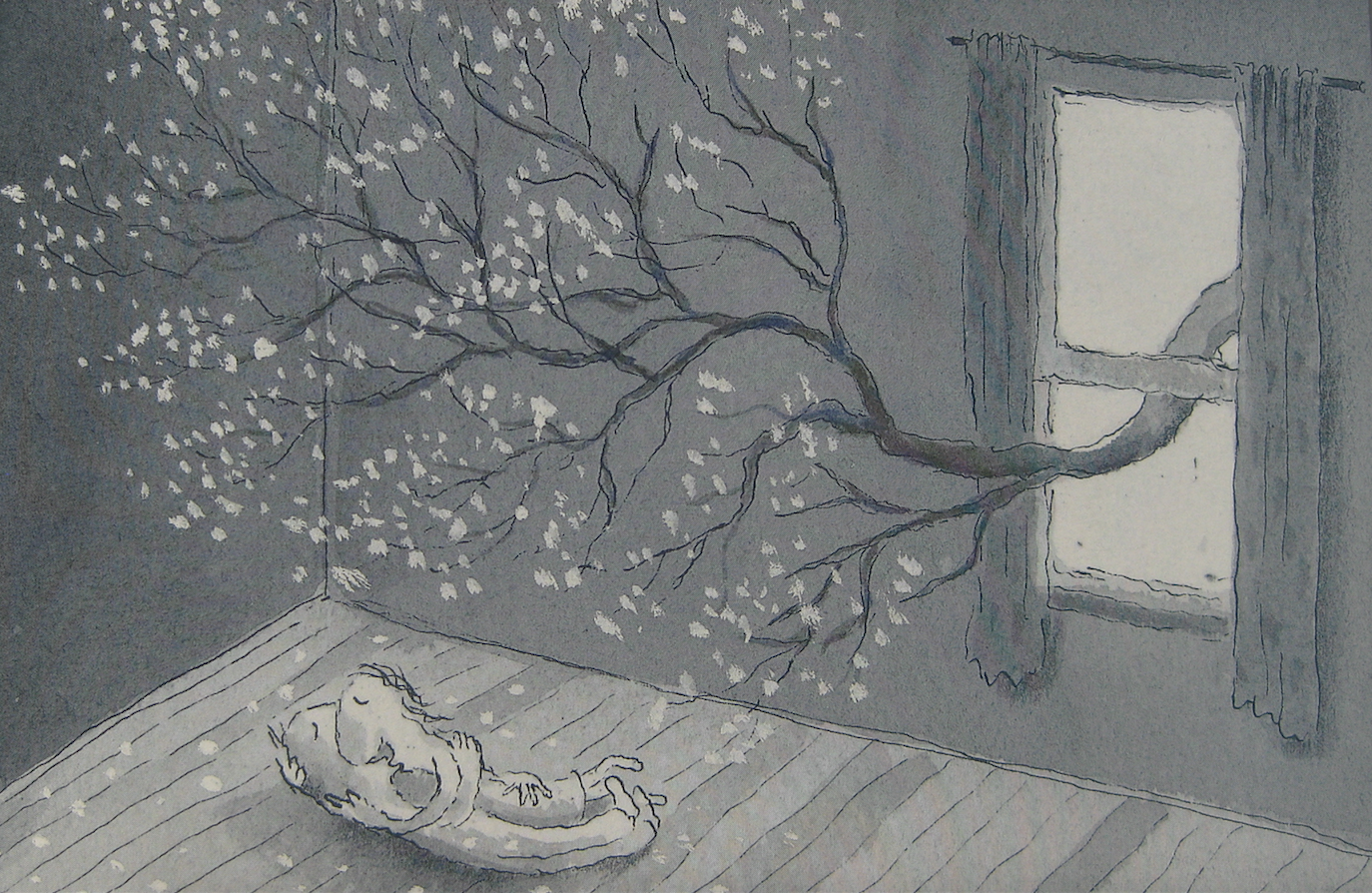
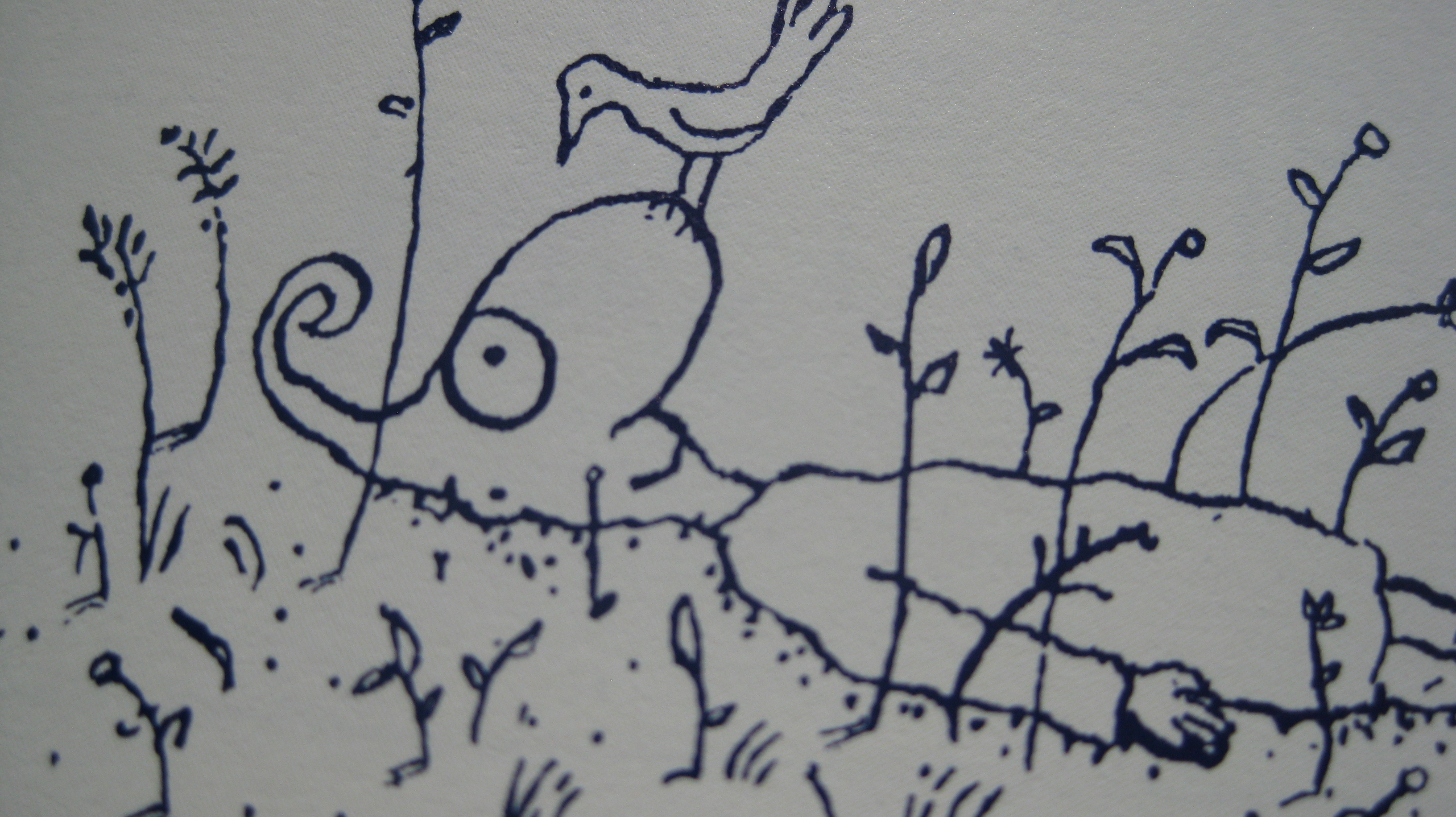
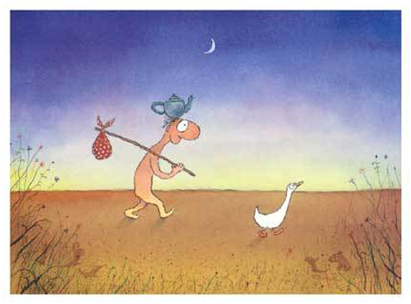
maxresdefaultWalking out of his 3rd year at Swinburne Film and Television School, it was 1969 when Leunig first began to work as a political cartoonist at Newsday, while the factories might have taught him to use humour – intellectual, witty, cynical – to deflect serious things, Leunig says “I was sung sentimental songs. Part of my first language. Fluent in that emotional language” His Grandma used to tell him: ‘All the world is bad, except for you and me, but even you’re a little strange.’ …perhaps this is where we meet The Creature… The Holy Fool– scribbled in the margins since school – amusing to his slightly hungover Editor, with a teapot on his head and riding a duck into the sunset, the image was put to print. Subhuman, primal, foetal, without gender. Leunig is somehow able to speak to our soul. To take small things and make them large, domestic things and make them sacred. For his own discipline he talks about the paradox of art theory – rules to follow, teachers to emulate >> how this stifles creativity. It’s about earning money, systematic success, built for efficiency, for velocity but you lose much, Leunig believes: “[You] cannot love or appreciate beauty at speed. How do you talk about it in ways that are unsuppressed and real? Might make a bridge with love, make a sandwich with love – it’s passed on to others. Love is what we go to bed thinking about.”the kiss by leunig

Since his first book in 1974, Leunig has produced 23 more – books of newspaper columns, poetry and prayer in addition to his prints, paintings and drawings. Leunig shares intimacy with us, personal and confessional – e.g. The Kiss. We are invited into the privacy of his love life, his soul searching… Leunig makes the private public. He takes the small dark fearful things and brings them out where we can look at them “crying with the angels for a world that is different – this is not fatalistic but hopeful”. Perhaps it is because he has offered his own soul first that we are willing to listen to him expound on many themes:

>> loneliness >> the 9 to 5 grind >> war >> sex >> consumption >> love >> god >> media >> religion >> politics

It was being asked to contribute a cartoon to a new paper in 1989, The Age, that Leunig started writing prayers to the horror of his friends… Rather than born-again Christian Leunig’s interpretation lay in the realm of John Keats’s “negative capability”, a word for the unsayable and profound in life. He wanted to say the words publicly as another way of addressing the problems of our time, of our society, of our psyche, of people’s personal suffering {1998} His friends reactions sort of egged Leunig on, wanting to see how much he could push believing that “until a man discovers his emotional life and his gentle, vulnerable side, until he gives it expression, he never will find his women or his soul, and until he does find his soul he will be tortured and depressed and miserable underneath a fair bit of bullshit”.

From Archbishops to Presidents, the Opera House, Australian Chamber Orchestra, National Theatre in London to clay figure animations for SBS and remote communities in northern and central Australia – Leunig has Gone Places and Done Things. Declared a national living treasure by the National Trust in 1999 and awarded honorary degrees by 3 universities for his unique contribution to Australian culture.

094The ‘war on terror’ following 9/11 was a watershed moment in Leunig’s cartooning work where, opposing the war and invasions of Afghanistan and Iraq, he was at odds with many editors, commentators and members of Australian society – there became less gentle and lyrical themes and he stopped drawing the whimsical characters Mr Curly and Vasco Pyjama as often although the duck and the moon have still faithfully remained. Adding curls arose out of Leunig’s desire to communicate that “What makes you feel so alone and strange is in fact normal. There’s a lot of curliness in life and you can have a homecoming – there is a place for you and for that aloneness, that eccentricity, and there’s a fulfilment of it eventually, it’s no longer the cause of your outcastness. So that’s the curl. It’s the curious, unique self and, if you find that, you find the connection to the whole world because the world is curious and unique and authentic at its best level.” You might say the war, not understanding how people can fight other people this way, has been a breach to Leunigs sense of connection to Australian society and thereby rest of the world.

These days, Michael Leunig has 3 small dogs but no ducks. He enjoys talking to strangers and going to bed at night. He is a devout nature lover and spends his time between the solitude of the bush in Northern Victoria and a home in Melbourne where he enjoys walking in the local park, morning coffee in the café, chamber music in the concert hall, and attending to work in his studio .

When asked: “What is the meaning of life?” Leunig replied: “For humans as for all the plants and creatures: know yourself, grow yourself, feel yourself, heal yourself, be yourself, express yourself”… “I want to be a voice of liberation”. Leunig speaks not only for the wealthy or the poor but both, not only those armed and those without weapons but both, not only the pretty people or only the ugly people but both – he enjoys this inconsistency and variety. As Barry Humphries says “through the vein of his compassion and humanity and his humour – illuminating many a darkling theme”

Like Jesus with his parables and questions – Leunig doesn’t present us with solutions or easy answers but an invitation. He sees his vocation as cracking what is stoic and cold in society – to make us feel anger, grief, joy, sadness… Leunig believes we have something to discover in the wrongness… “Live without ‘knowing’, in mystery. Find things. Unlearn. Get lost. Get primal, getinfantile. When you have lost all hope – start to play. You have nothing to lose. Stay with it and don’t take it too seriously…”

I hope maybe it awakens something in you.”

IMG_5009To know the gaze of God – Sister Miriam

St Teresa is convincing because she is speaking out of her experience.  We don’t have to guess about her interior life.  She is anxious to explain herself truthfully – hard on herself – a light fault is serious if it goes against His Majesty.  She would see herself as like the Samaritan Woman and pray “God, give me that water”.  She was dedicated to hours of prayer – even when praying hour would be over. “more enabled to bear the beams of love” – Blake. Saw prayer as the only way to deeper connection – God did in a moment what she could not have done in years on her own.  Stick with it, Godwards (inward) our centre whether we know it or not.

Prayer consists not in thinking much
but in loving much.

Each person inexhaustible – there are many rooms in our interior castle.  There is a call to growth – face to face encounters with the living Christ.  Steady unwavering gaze of God kindles love.

In the measure you seek Him, you will find Him.

Hone focus and choices > prayer fosters “presence” to unfathomed, unconditional love, Under His gaze, joys and sadness are given perspective.

 St Teresa had a spontaneity and gladness to her interior life > personal gratitude.  You must put on the new self that is clothed in God’s likeness. Mystical experiences ‘more’ real than ‘normal’ life > reformer.  Energy/capacity to write, correspond despite illness… by their fruits shall you know them.  Her way, her truth, her life.

Sips of what we hope for.
Lives with very determined determination.

He who lives in God, lives in love and God lives in him.

St Teresa’s gift of wisdom – Sister Paula

Wisdom illuminated her life and vision.  Learned through fidelity in prayer.  Knowledge and understanding acquired in life brought to thoughts.  Trustful confidence and hope.  Listened to voice of God in her heart > sought counsel.  So enriching, longed to share it… this is possible for everyone.  Practical and idealistic.  Lived simply and appreciated beauty.  Wrote hundreds of letters – family, convents, business, books… 1562 St Jospehs of Avila dedicated to prayer and contemplation, 3 essentials:

  • love for one another
  • detachment
  • humility

Pure love without self interest does not lower itself to seek recognition.
For love you were fashioned.

“This is the love wisely sought IMG_5008by the pure of heart”

God/Trinity always to be found in human heart, a familiar homeliness not a remote establishment. Captivates soul with fresh encounters.

Love is complete in giving itself
and serving.

Appreciated holiness and integrity in others.  Priceless treasures with glimpses of eternity.  Everyday common sens and compassion.  Let down by friends > loneliness > let nothing bother you because God alone suffices.

There was no  conflict between her inner life and actions because all was one.  If noticed foibles in others, looked beyond to how God saw them.  Fostered friendship, encouragement, support between sisters. Contemplative but enmeshed in practical affairs.

“Seek yourself in Me,
seek Me in yourself”

Know sublime truths.  New depths of human capability, certainty from her own experience.Love at the beating heart of the universe enables us to participate in the resurrection. It is not the greatness of the works that are done but the love with which they are completed.  Each person is gifted individually and has something unique to share.  Gifts are multiplied when they are shared.


Jesus Christ, St Teresa’s true friend and companion: Her definition of prayer – Sister Angela

Loneliness and longing for God.  Desire for love and wholeness > struggle fraught with conflict.  Minority: Jewish blood/conversas (objects of hatred and suspicion); woman; ecstatic experiences and wrote books > threat/pollutant. Despite obstacles – pursued goals determinedly. Sought advice from highest theologians – proof. Love, affection, legitimacy, acceptance: she was warm and extroverted.  Shadow: crippling dependent relationships at the expense of inner truth and full Surrender to God.

Defines prayer in terms of love: frequently and secretly sharing with Him …grew in intensity and Presence.  Human personality caught up in Christ.

Forsaken moments alone and afflicted – Gethsemane/cross.  Could accept her in brokenness and poverty. Consoling Him.  Consoling each other. This became habitual. “Tried to keep God present within me.”  That was my method of prayer…

I’m not asking you to do anymore than look at Him.
The truth of who He is will be imprinted in us.

Humble ourselves and delight in the Lords presence.

Maintained presence:

  • identifying with people in gospels
  • those who needed redemption – Mary Magdalene, Peter in tears after denying Jesus, John at the foot of the cross, Samaritan woman…
  • moment after receiving eucharist, receive divine gift within her.
  • Not just inner prayer but human limitations and conflicts > see transformative power of Jesus at work.  Battle between being friends with the world and friends with God (stalled growth for 20 years).

St Teresa felt an inner conflict/fragmentation – unable to commit herself fully to God.  Likened it to a voyage on tempestuous seas and sought a remedy.  “Life I was living was not life”. Let go of trusting herself > trust God.  39 years old when she had a conversion experience.  God lived in her – act of surrender, discovered Christ, healing and transforming her.  Desired by God, in her entirety, as she was.  Set free of needing to be ‘approved’, rooted in Jesus Christ. “Jesus As Friend And Liberator” permeates her Christian life.  Satisfied all desires.  All sufferings and trials – related back to his humanness and limitations.

Body needs to be integrated in our search for God.  Life is hard.  Need example and companionship of one who has gone before.  Reality and weakness of human experience… could converse continually.

God understands our miserable make up.  Flesh and blood, life and death, joy and sorrow – embrace this reality with trust and love.  Freed to live more fully.  Obedience to life under God’s conditions. The will of the Beloved became her sole compass.


St Teresa’s writings – Sister Teresa

“I am yours born for you, what do you want from me? …move me from here to there… sorrowing or exalting… what do you want form me?”

Living and developing her great gifts.  Asked friends to pray she would do God’s will.  Moved by servile fear – then had her conversion – served by love.  Receive s graces, calls within herself, encounters to follow vocation .

“Those things of God made me happy,
the things of the world made me bound”

Self judgement critiquing her earlier life.  Had darkness and dryness, moments of light. Mental prayer – intimate sharing between friends with Him who we know loves us.  Vocal prayer – liturgy – not thoughtless recitation but mindful.  Come to prayer with self-awareness of our brokenness and need for grace.  Adamant of building solid foundation of prayer – virtues: detachment, humility, charity and obedience. Don’t stand still! Don’t be dwarfs! Space in her teaching – desire that all will reach prayer God is offering.  Criteria for holiness in doing God’s will and charity.  Call addressed to everyone not just religious.

 Grace always costs.

Gave writings to mentors and confessors – anything wrong, cut it out!  Resolve to do the little I can do (as a woman, scope was limited).  Reform of Carmel (hermits 1200s) solitude and space.  Value silence and solitude and live in continual prayer.  Liturgical prayer (church), contemplative prayer (individual). Small in number.  All in house must be friends with each other “all made of the same clay”. United in love of God and prayer for the church. Peace and joy in community and life.  God spare us from sorry saints! Give me Calvary or Tabor.  The castle is the masterpiece of the interior journey.  The soft whistle of the Shepherd can be heard through all the spaces.  My daughters, good work, my God wants good works.

Yours I am…


St Teresa’s Conversion: The movement from performer to beloved – Adrian Jones

Live out of a role – profession/family/community… the way we are socialised to behave.

1538-1565 move beyond ‘role’ to her loved self.  Feisty and an adventurer.  Loved by her family and she loved them.  Didn’t want to married (one of ten children herself).  Family of faith > raised in that atmosphere.  Her father didn’t want her to join the Carmelites.  Ran away at 20 to join.  Lived faithfully and with energy > liturgical prayer and community life.  Individual prayer not at the fore (Latin/couldn’t read… not easily accessible). “midlife crisis” had become burdensome – plateau.  Felt torn between the satisfactions of life and the stirrings of God.  Best reminded about what was going on during prayer life… continually checking in… being present to God.  18 years trying to hold the middle road.  Tried to have effective control, everything under her control, God wanted affective control – trusting God and things find their own place.  Know depths of God’s love and her own hearts desire… invitation to come close to God.  Call to religious life not questioned but can I let God be God?

Absorb story through immersion.
A living in Christ.

Loving God drew her to the centre to “be” with God.  “We” might have a good book with us > she and God hanging out together.  The Samaritan Woman and Mary Magdalene (in John) had strong conversion experiences with strong emotions.

Turned by love.

Only wrote after 1565 had established ideas  and experiences.  The reality of God, the presence of God, not doctrine (in Teresa we stand in the presence of God) – trying to describe/explain that.  Time between rising something new and familiar practice.  Not here or there.  In the middle is where we’re supposed to be.

1st mansion – become aware of God in our life. Self-awareness.

2nd mansion – awareness of that.  Must answer, become aware of implications too.

3rd mansion – taken or living for God, “perfect” Christian. Downside, miffed with god (entitlement). God: love yourself or do you love me?

4th mansion – God wants to wound us.  Doing things for God.  Can’t avoid.  Struggle living with it.  Let go of control, let God be in charge > be grateful.


St Teresa approach to community living – Richard Hallett

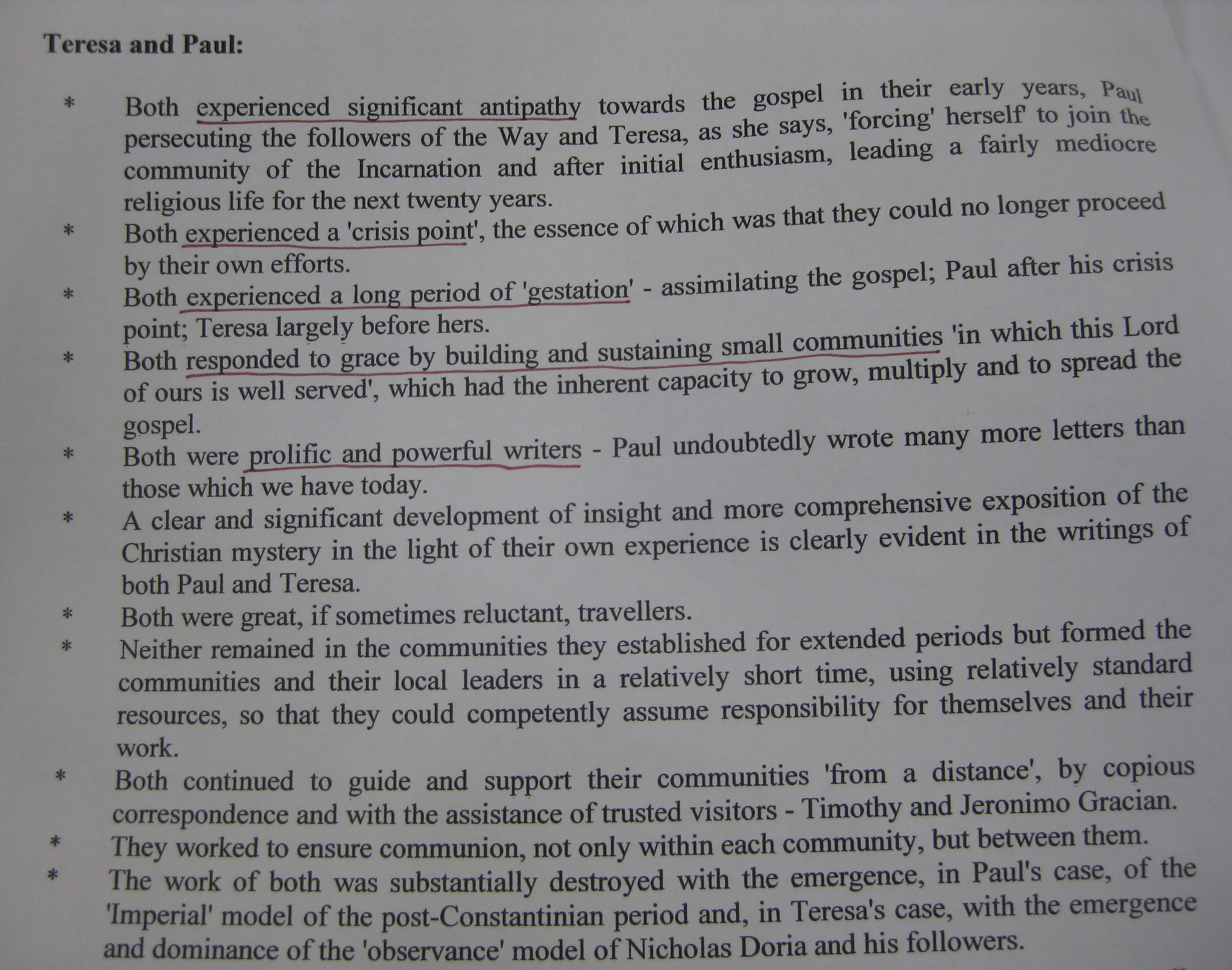
Teresa wrote constitutions for the communities she established.  Teresa, Paul and Alberts constitutions for sustainable community (handout). Doing very poorly at Sundays in our communities > 12 years a minister.  Work in Catholic schools and talk to families who can’t connect to Sunday services.  “ekklesia” means the group who gathers.

If the quality of inter-personal relationships among those who gather are weak, the ekklesia is weak, weak in the quality and scope of its service; weak in its power to transform and save lives.

Whether she was explicitly aware of it or not, Teresa established her communities on the same model employed and developed by Paul of Tarsus:

IMG_5068


Teresa did not consider that she was doing anything particularly original. Her aim was to establish and sustain an environment in which her contemporaries would have the opportunity to respond to divine Grace in the greatest liberty of spirit and to live life to the full.  She recognised that her Carmelite history, if honestly implemented, provided just such an opportunity.

p.314 St Teresa ‘The Constitutions’

What stands out in the guidelines for the Teresian life is balance. We find an interweaving of eremitism and cenobitism, or work and contemplation, of liturgical and extra-liturgical prayer.

Eremite: hermit of recluse
Cenobite: member of monastic community sharing common life.

p.324

#18 The Sisters should pay no attention to the affairs of the world, nor should they speak about them.  They may do so if the matter concerns something for which they can offer a remedy or help those with whom they are speaking, assist them in finding the truth, or console them in some trial.  If no effort is being made to make the conversation a fruitful one, they should bring it to a quick conclusion, as was said.  It is very important that those who visit us leave with some benefit, and not after having wasted time, and that we benefit too.


A Bernard McGinn retrospective – Philip Harvey

Inner life and connection with God.  First female ‘doctor’ of Catholic church.  “New mysticism” actively going out and doing things.  Democratisation, mysticism for everyone/anyone, vernacular (not just in Latin).

Read widely: Augustine… Jerome…

Creating new: Prayer of Quiet, sleep of the faculties…

Mystical theology – whole of life, hidden presence of God. [Teresa was the last of the old line not early in the new]

Def. That part of religion deepening consciousness of God in our life and lives of others.  Not intellectual, found in other religions, in eucharist, etc.  Thousands of rooms (Teresa only writes about the ones she knows about).

  • Thinking, knowing, acting, deciding out of context with
  • Personal and transpersonal
  • Absence as well as presence of God

Every baptised Christian called to mystical life.  To love God and neighbour.

Cataphic and ataphatic/positive and negative.

Dedicated to outreach of spiritual life.

A mystic doesn’t need to be a ‘drop out’ of society. Confined to cloister not ends but means > to love God and love others.  True active contemplative.

 “do not be sad
for I will give you an inner book”

Liber experienciae.

  1. The Slacker
  2. The Contemplative
  3. The Contemplative in Action

Others wrote their own spiritual expression or related them to confessors but never combined with apostolic action.  Union of inner and outer worlds.  Reactive > social reform.  Teresa: political, fundraising, leaders of reform (training others to continue her work), participation in community.  No rank within monasteries.

Mary & Martha//Raptures?? Grace of spiritual marriage. Need a uniting of Mary and Martha to host the Lord well.  Prayer will be more powerful for its responsibility/relationship > pray for those you know.

Action and contemplation not opposed but mutual.  Two lives are equal and active ways of loving God.  We should not build castles in the air but work with love.


For whom did Teresa write?  Reading the Interior Castle today – Father Greg

Like the ocean – shallow enough anyone can walk in, deep enough for anyone to swim in.

Teresa was not writing a DIY manual for mystics.

  • For drunks and prostitutes, drug users, alcoholics anonymous, AIDs clinics, out where my people are.
  • 12 steps not n alcohol or self but higher power of God > sobriety of life.
  • 7 steps – realisation one is loved and worthwhile, self worth given as a gift to be received gratefully. Love and therefore loveable – changed how she understood God. Response of a person loved by God/freedom/love God/love others/love church.

Humility aka authenticity.  Detachment aka spiritual freedom > moved to love others.

That which makes me most me is also that part which I’m to share with everyone else > dignity of the human person.  Sense of the importance of her own experience.  What she understands a mature Christian to be – submitting wholly to God.  Just read the 7th dwelling place… know where you’re going.  Within each dwelling place are sets of relationships:

  • Others
  • God
  • Action
  • Prayer

First 3 dwelling places – co-operation with God’s grace in our lives:

  1. God exists
  2. Following
  3. Well ordered – judgemental

Next three dwelling places – lose control, God works without us planning or co-operating:

  1. Praying not praying
  2. Rest and work
  3. Grace and receiving

Invalid>dynamic/active.  Visions, locutions, shadow of the cross. Changing memories and hope and how and who we love… LONG JOURNEY

Last/7th dwelling place – profound transformation, live in a different way.  God working with us in our lives.  Moat outside filled with vipers, toads and vermin >> do not know that you are loved.  Knock on the door through prayer, reflection on self, scripture, liturgy of the church.  Parents have seen who you will marry – caught sight of your “intended”. SEEING/BETROTHAL/CONSUMMATION commit to each other.

  1. Sharing the passion

Encounter God as Trinity. Christ-centric >Trinitarianism (with others) ekklesia.


God is not static. Creation still happening now.  Species just beginning to understand now.  Incarnation happens in us, death in us and ascension >> Marriage and the House of Divine Love.  God doesn’t give Teresa a wedding ring but a nail from the cross.  Pray with eyes open.  Prayer for others… good works, called beyond ourselves to hospitality of others > most mature and developed human/Christian. Hungry, cold, poor, excluded >> wok for the benefit of others is to be alive. “Seek yourself in Me”.

Seeking God would be very costly if
we could not do it until
we were dead to the world.


–ooO0Ooo–


SUMMARY RESONANCE

God give me that water

For love you were fashioned

Seek yourself in me,

Seek Me in yourself

Set free of needing

to be approved

Tried to keep God

present within me

Grace always costs

God spare us from sorry saints

Yours I am, I am Yours

A living Christ

Do not be sad for I will

give you an inner book

Sense of the importance

of her own experience

Seeking God would be very costly if

we could not do it until we

were dead to the world.

004

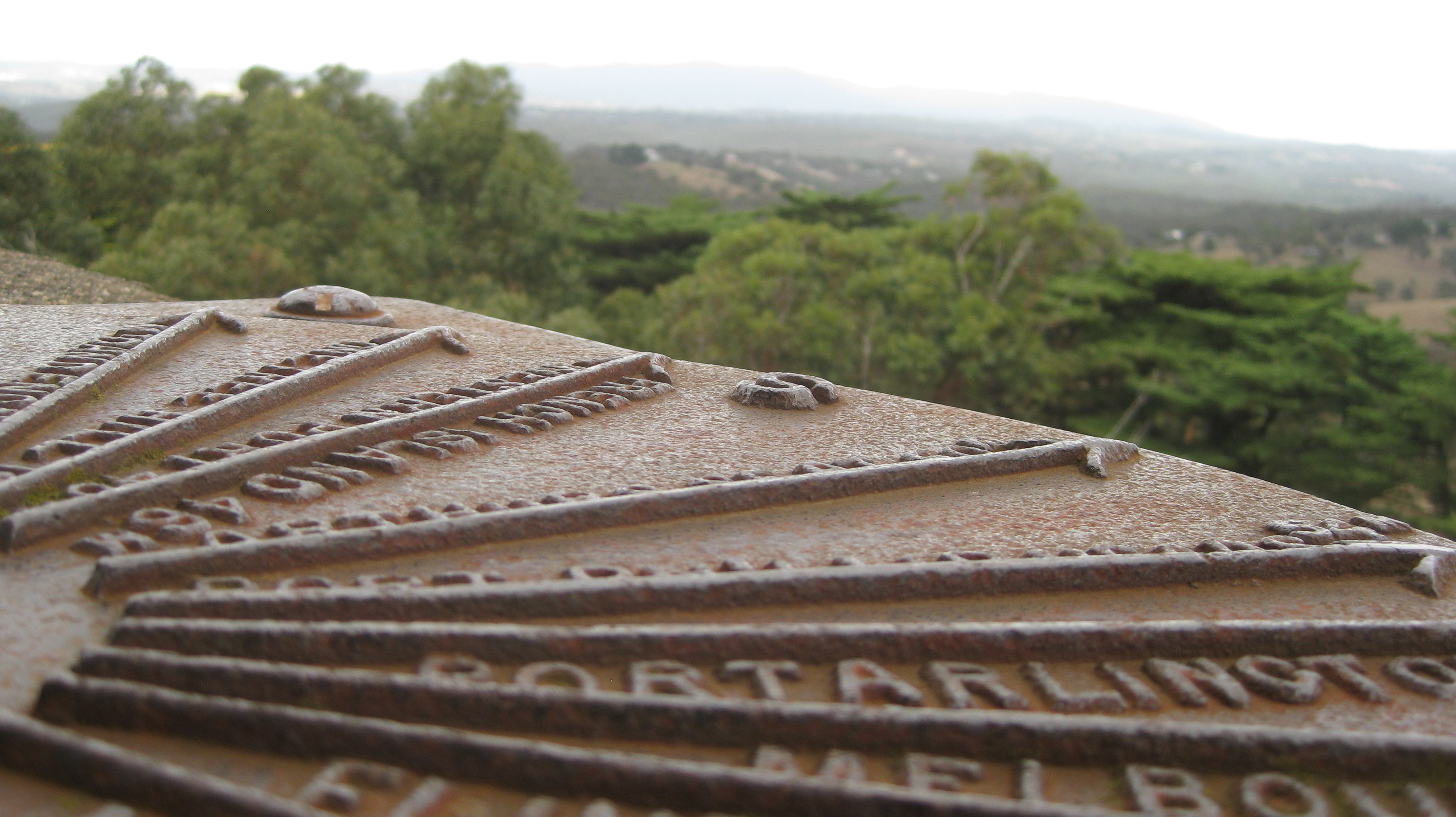
007012011Eltham War Memorial Tower & Park at Kangaroo Ground in Melbourne

What does it mean to look out?
How does/can it change your perspective to feel above things? to understand their size in the order of things?
Do you feel a sense of space and freedom when in the wilderness?

Try physically placing yourself where you need to be to get what you want in terms of headspace.

020

Western culture is at a turning point. Christendom forms of church (churches organised according to the machinery and mindset of empire) are dying, but spirituality increases.  What can Celtic models of spirituality offer?

Roots, rhythms and relationships
deep enough to provide common ground.

Jesus came to confirm what is true and purify what isn’t – Jesus does that, not you.
Are you spiritual or are you religious?
Church preaches kingdom but doesn’t model.  Homes model but don’t preach.  Need: little villages. CHurch that knows Sunday is not enough.

hub

Tribal leaders gave lands by the strategic highways of sea and river to church planters who established communities of daily prayer, education, hospitality and land care.  Peoples monastery churches served as daily prayer base, school, library, scriptorium/arts centre, drop-in, health centre.  They had farms with livestock and crops, workshops such as wood, spinning and milling. They were open to the world.  They offered soul friends, training and even entertainment.  Children, housewive, farm workers and visitors would wander in and out.  Visitors bought news from overseas.  They were villages of God.  Each had its wn flavour in worship and values (Rule) yet each was connected with the univvrsal church through common prctices, prayers, and priests ordained in the apostolic sucession.

today’s changing trends

Although our society is vastly different, changing trends again require churches that are more than single-building Sunday-only congregations.

  • A twenty four hour society calls for seven day a week churches
  • A cafe society calls for churches that are eating places
  • A travelling society calls for churchesthat provide accommodation and reconnect with the hostel movement
  • A stressed society calls for churches that provide spaces for retreat and meditation
  • A multi-choice society calls for churches that have a choice of styles and facilities
  • A fragmented socitey calls for holistic models and whole life discipling
  • An eco-threatened society calls for more locally sustainable communities.

“Can’t have deep ecology without deep spirituality” – John Phillip Newel.

The glory of God is seen
through the human life fully lived.

Need self-sustaining spiritual disciplines.
“Our hearts are restless until they find their rest in you Lord” – Augustine

016sml[Earlier this year I had the great privilege and profoundly impacting experience of attending the BCM Kinsler Institute in Oak View, California – a.k.a a clusterfest: part birthday party, part conference, part church, part action planning meeting… – it’s worth noting that I can/am only speaking to my own notes from those sessions I attended and there were generally 5-6 options for every devotional and workshop spot so this is not conclusive coverage and the mistakes are my own. If you’re interested in this kind of reading there’s many more resources, articles and stories at the Bartimaeus Cooperative Ministries (BCM) and Radical Discipleship websites]


Bible study: “Jesus, Disciple of the Kingdom” – Ched Myers

Mark 1:9 In those days Jesus came from Nazareth of Galilee and was baptised by John in the Jordan

This is our introduction to Jesus in Mark, Nazareth is so small and insignificant that it’s not mentioned anywhere other than the New Testament – a marginal village at the margins of the country. Based on the outreaches of Sepharus (the admin base of Rome)… what was it known for other that being the birth place of Jesus? The Sepharus uprising. The Romans crushed Sepharus and enslaved everyone. Nazareth is only 4 miles from Sepharus and Jesus would have been 10 years old when this happened. Jesus and his Dad were techtons (labourers, construction workers) hired to help rebuild Sepharus. Labouring under the bitterness of colonial occupation… this would shape your consciousness, this would have a huge impact… this is why context is so important.

Of all the people Jesus could have gone to he went to John the Baptist. Calling for change. Peripheral/wilderness. Wildman. Elijah. Spoke truth to power – defending people whose land was being taken by the King. Jesus discipled in a deep tradition.

He was apprenticing himself to the peripheral
radical edge of his own tradition.

Mark doesn’t do genealogy but what ‘testimony’ is it giving us? Traditionally and consciously apprenticing to? (Mark written during the uprising to overthrow the Romans 30-40 years after Jesus was killed) The authors wanted to frame their ‘call’ drawing on the narrative weight of the example of Jesus.

Who are we apprenticed to? [BCM – Martin Luther King}

What does the kingdom of God mean?

The true king of the world is God, that’s who we’re called to follow, to penultimately obey – no one else is higher (conflictive political statement, no empire likes to hear that)

We are disciples of someone who was himself a member of this anti-kingship.

Jesus had dark nights of the soul – watching Sepharus burn, seeing his Dad going to work building empire…

The kingdom of God is imminent, it is here – first sermon of Jesus.


Worship: Rev Robert Two Bulls – Lokota Taize

Profoundly moving to sing together a Taize song in the Lokota language.  I could not capture it but here is a link to an article written by Rob in Sojourners about writing the chants… what would it mean to us here in the South Pacific to have Wurundjeri… all Kulin Nations, all Aboriginal and Torres Strait Islands language taize chants?


Preacher: Rev Arthur Cribbs

Isaiah 61 The Spirit of God is upon me

Mayra 11016722_10153155574714715_3033034683319964493_n (1)

Jesus in the temple, those words are fulfilled in me today. Challenge on us to say/claim this for ourselves… people are treating people like they don’t matter. Reach out right now and touch someone else, reach those further away, reach those not here… every person is sacred across all borders. Are these words prophetic or historic? The Spirit of what is on who? We need to understand the importance of God’s presence with us.

Ethics for police officers (e.g. treatment of suspects on arrest), ask: “What do you do when you’re doing what you think is right, society says its right, law says its right and someone says ‘Ouch’?” …Be who God intended you to be because the world is waiting for YOU.

(photo credit: Mayra Stark)


Plenary Panel: Forty Years of Radical Christian Witness – Rose Berger (Sojourners), Myra Brown (Call to Action, Spiritus Christi,), Tensie Hernandez (Catholic Worker), Joerg Rieger (faith & labour), Steve Clemens (Koinonia Community, Clarence Jordan), Shady Hakim (Christian Peacemaker Teams)


Rev Nelson Johnson (Beloved Community Center, Greensboro) by video conference

Language and words, name and claim, have great meaning. Took us 35 years to get the language right (accident, massacre… murder, assault…) I was exhausted. What gave me faith and meaning was rediscovering my roots. Labour/low wage fights in Greensboro… built community… the community became the union. Can have national implications if you do your job right.

Important to learn the story of your place. [what is the name of the water source in your watershed?] River flowed before and flows after. What we’re doing and what needs to be done. Have to appreciate the context to appreciate what they were doing. Strongest and most enduring movements came from knowing stories of our mothers and fathers. Drill down in a place and then gather in that place – become a foundation – work becomes more powerful. Not heroes but ordinary common people standing up against bureaucracy.

The culture of domination – that will be in the language you use. Sometimes can’t say anything, have to sing it out… poetry… how we understand is important and language is what we have to convey that . Language has to call us together, set direction without making what we’re trying to do matter.

Appreciating the fear and the pain of those affected by social injustice, my parents, hope even though I can’t see it >> gives me courage. Gathering together now, strengthens courage, strength and resistance, mourn with those who mourn… share joy with those who feel joy… become a community and transcend ourselves. Not in the fight for ourselves but for our children and our children’s children.

Lion coming over the hill – climate change. New threat. All bad times >> been connected to others. We need to reconnect with natives who are connected to the earth and creation. Beaten down – think only of immediate survival. Need to bring issue in a way that connects to their reality right now… solar panels on buildings in poorest neighbourhoods – opened up discussion. Community gardens is another example of that. White people need to connect their struggle to others experience >> make connections. “We are hooked into a mutuality” – MLK


Question to the panel: If I’m 18, 25, 33 years old… why/how did the tradition that you’re now with grab you? Give us the biography of the movement history that has changed your life…

Tensie Hernandez (Catholic Worker)

Young. Traditional. Immigrant pious Catholic. Only in passing heard of Ghandi and St Francis. Mid-80s heard word of some nuns getting arrested and wondered… why? Churning heart. Came upon a vigil in downtown LA on Good Friday – wanted to hand out bread from holy Thursday at school to homeless. They held a banner “God died today in Central America” – not St Francis or Mother Teresa but close. Invited me in. Good Catholic, don’t eat Good Friday. Catholic Worker Homeless Soup Kitchen invited me in, “come and eat with us!” I can’t. Fasting. We’re having shrimp. I definitely can’t!   What would Jesus do? Courage to have a living faith. Where are the people and the issues that we choose to live with daily. “You become like that which you are habitually with” – Don Sheats. Be transformed by that.

Steve Clemens (Koinonia Community)

Don Sheats – multimedia values – materialism/competition/militarism vs. cooperation/compassion/non-violence. Ballot number was too high for the war in Vietnam, decided to sign up anyway. Challenged to respond a different way. Koinonia not resistance but calling to be alternative and sustainable.

Myra Brown (Call to Action)

Daughter of migrant farm workers. First four years – oppression – experience shaped me and prepared me to be “caught”. Black Catholic church, 16 years old, asked me to preach and I said “No.” He asked me to pray about it (my Grandmother said, “When God goes silent, that’s it”). I’m black, I’m a woman, Catholic… I said: You open the doors and I’ll trust You and step through them. At 25, heard about Corpus Christi, first time worked with white people that were compassionate and ‘got it’, who worked hard to create safe space. We can’t call you a pastor but we’ll give you a title and you can write your own job description. Launch black civil rights/justice issues and see the fruit of that. Build on that. Worked with me to see what my gifts/callings were.

Shady Hakim (Christian Peacemaker Teams)

Israel/Palestine conflict, people on the ground living gospel restored my faith (1996) 5-6 people living in the conflict zone. Met Ched and Elaine (1998)

Rose Berger (Sojourners)

Mennonites offered land if joined fighting and said no. Married Irish Catholics. Arkansaw – cross burned in their front yard. 4 years old seeing saints and angels. Emergency response card – Nicaragua. I anoint you in honour of Micheldech, kicked out of church – been kicked out of churches with my parents before… picked up a copy of Sojourners – advertised for an internship. Anti-nuclear protest/test site. Lord is there truth to be found here? I wake up and go to work. I hear: “Yes.”

 This festival is about hearing and telling these stories –
stories that have midwived these people,
now they midwive others…


Workshop I:
Resistance & Public Liturgy: Non-violent Direct Action as Gospel Witness


Bill Wylie-Kellerman (St Peter’s Episcopal Church Detroit)

Author of/Further Reading: Seasons of Faith and Conscience: Reflections of Liturgical Direct Action

Worship is categorically political – subverts all other allegiances. Baptism a sacramentum (protest against Caesar). Combined with civil resistance rather than direct action cloaked in piety. Ref: Freedom struggle ‘50s funeral liturgy “The Cross and the Lynching Tree” Emmett Tell addressed a white woman in a store, beaten, Mother insisted on an open casket. Liturgical confrontation. Montgomery bus boycott – Christmas, let’s not go shopping; Birmingham Children’s Crusade, running out of gas, put on jeans and walked – Good Friday; MLK arrested, wrote letter from jail – Easter Sunday. During the Freedom Struggle church was the place you went out from, sang songs and shared worship… by the time you went out the door the dogs and the hoses were already beaten… singing went out into the streets. Liturgical dimension to those directions – trained with Ghandi. Doing service and worship at the same time. Direct action involved both of these things at the same time. Cadenceville, Berrigan brothers – homemade napalm burning files – standing in a circle praying. Stringfellow “politically informed exorcism”.

 Liturgical action
implicates the church

Good Friday – blood
Ash Wednesday – nuclear ash/fires
High feasts like Easter and Pentecost – power/fear of death/bondage of death liturgy and action
Passover – liberation
Beneath the feasts are egrarian – lambing, harvest, earth, turning world… layered with history and politics
Pentecost – first time the disciples act

This is the Gospel pattern we are invited into.

Steve Clemmens (Koinonia Community)

In the year of the election, made a roster, each peace group had a week of public action at the Pentagon. Did a prayer Pilgrimage to the Plantex Plant in Texas in February 1981. 3 days of prayer and discussion prior to the action. Ephesians Ch. 6. Gathered in a circle. Scaling fences in blizzard. When act on faith not fear, faith increases. I had no fear that morning. Reading scripture – on the run, in jail, in exile – a lot of it was written by these people. Became a front page story. Raised questions for a Catholic staff member who asks his priest who asks the Bishop who issues a statement telling them to walk off the job. Would fund people who did that as choice of conscience… 25 years later in 2005 School of America vigil, Centre for Global Education visit where Romano executed along with Jesuit priests and women. Abu ghraib (treatment of Iraqis in prisons) – enter base to pray in front of school. Never act alone, community “with” me. Gathered two days before trial to discuss, how to bear witness, pray “don’t contest” pro se plea. 3 months in prison. Listened to my fellow inmates. Listening in the belly of the beast. Heshua’s “incarnating our prayers”. Conversation with family of origin. Prayer vigil. Labour Day weekend – bloody handprints (Bill Wylie-Kellerman). Ploughshares > beating swords into Ploughshares. Larry Rosenbaum – retreat to discern action. In community, go around circle and name fear.

Inside: in service of power – get out in service of the action/Holy Spirit. Lit Paschal candle.

Seal on the tomb : cut the fence even though we could’ve climbed under it – resurrection.

Want to write “Christ lives, disarm” in paint but it was snowing. Renewed baptismal vows. Renounce Satan and all his works.Liturgy and location informs things. Did Eucharist at gun point.

“we believe God has already intervened. Breaking in to break out on behalf of humankind. Recognise authority of God,
not of [name who…]
we believe [name what…]
we believe in the meaning of the resurrection
and we’ve come to say so”

Further reading: Catonsville 9 Statement by Daniel Berrigan
Further reading: Tribes of Yahweh – Norman Gottwald

Where is resurrection happening? Move stations every year. Waterboarding > read story of washing feet. Moral conviction – what if people had sat on the tracks in front of trains into Auschwitz?

 Good news is relative to how
willing you are to read the bad news.

Workshop II: The friendship of Berrigan and Stringfellow – Bill Wylie Kellerman

Futher reading: Stringfellow “Instead of Death”; Dorothy Day; Merton “Desert Fathers”; Underground Seminary; Jacques Ellul… “I freaked in” (instead of “I freaked out”); Modern Spiritual Masters series, “Stringfellow: Essential Writings”

Further watching: Hit and Stay: History of Faith and Resistance” (video) – not hit and run but hit and stay >consequences and responsibility.

While the trial was on – festival of life every night. “Death shall have no dominion”
Act of resistance as simple as offering hospitality (hiding Berrigan for c. 6 months)
Paradox: It’s worse than you think it is, you are freer than you think you are… (Stringfellow)

—-

A Statement by Anthony Towne and William Stringfellow of Block Island, Rhode Island, concerning Indictment No. 7709 in the United States District Court for Rhode Island:

Grave charges have been made against us by the public authorities and we have pleaded innocent to those charges because we are innocent. In due course, a jury of our fellow citizens will have opportunity to uphold our innocence and we await their verdict with cheerful expectations.

Daniel Berrigan is our friend. We rejoice in that fact and strive to be worthy of it. Our hospitality to Daniel Berrigan is no crime. At a certain time and in a certain place we did “relieve, receive, comfort and assist” him and we did “offer and give sustenance and lodging” to him. We did not “harbor” or “conceal” him. We did not “hinder” the authorities.

Father Berrigan has and had no need to be concealed. By his own extraordinary vocation, and by the grace of God, he has become one of the conspicuous Christians of these wretched times. We have done what we could do to affirm him in this regard. We categorically deny that we have done anything to conceal him.

We are not disposed to hide what light there is under a bushel.

Our indictment has not happened in a void. We cannot ignore the scene in which such a remarkable event takes place: the manifold and multiplying violence of this society, the alienation between races and generations, the moral fatigue of Americans, the debilitating atmosphere in which citizens become so suspicious and fearful of their own government that they suppose silence is the only safety and conformity the only way to survive.

Because we are innocent, we believe that we would not have been indicted but for the pervasiveness of the spirit of repression which has lately overtaken the nation.

In that respect, we consider that whatever happens to us will in truth be happening to all Americans.

And so, to our fellow citizens, we say:

The violence must end.

All violence must stop.

The vainglorious war in Asia must now cease, but, more than that, the war enterprise must be dismantled and the military predominance in our society must be reversed.

And the violence of political terrorists must end now. Arson, kidnapping, bombing in fact sabotage the social change the nation so pathetically needs, and such tactics are just as wrong and just as futile as the violence of war and racism and repression.

The psychological violence, sometimes officially condoned, by which citizens are accused and impugned without opportunity for appropriate reply and are otherwise harassed, spied upon, frightened or intimidated must be stopped now.

These are all works of death. Only when our country is free of them will it be a society in which men can rejoice as human beings.

We make this statement as our Christmas greeting—especially to Daniel and Philip Berrigan, to all prisoners of conscience, and to all Americans who wish to be free.

William Stringfellow

Anthony Towne

Block Island, Rhode Island

Honouring the Cloud of Witnesses – Susie Henderson Hanson

Memorial Altar Building050copy

Over the time of the conference a space will be set up to go to remember those who have gone before or cannot be here with us. We do this remembering for many reasons:

As an act of resistance to those who want efficiency, to get ‘over it’ quickly

  • Stages of grief
  • Tasks of mourning
  • Reclaim burial ground
  • Institutionalised
  • Indigenous
  • e.g. Cyclers who do a memorial ride every time someone dies riding a bike – laid down their bikes, reclaimed the street, pause traffic.
  • Isaiah 61 – restoration is work done by the mourners, through process of mourning

Beyond reminiscing

  • Cloud of witnesses that came before
  • In the river
  • Stronger
  • Belong in community
  • Gives courage and hope

Go and honour own sense of life. Honour those who have gone before. Cast a net. Tie a prayer tie, write a name, share tobacco… cut or mend or adorn the net – welcome to engage with it – alone or with a friend.

Keynote: Myra Brown and Rev Mary Ramerman (Spiritus Christi Church)

Song:
Up above my head I hear freedom/justice/healing/music in the air (x3)
And I really do believe there’s a heaven somewhere

Asked: “Jesus, can I go with You?”

Role of layperson/women in the Catholic church – got in trouble for touching the Eucharist, asked “If it is Jesus, why isn’t it okay for a woman to touch Jesus?”
(photo credit: Mayra Stark)

Mayra 11016722_10153155574714715_3033034683319964493_n (5)>importance to speak from my own voice for what I deeply believe
> cannot make everyone happy

LGBT community: everyone counts, everyone is welcome, sharing night once a week.

2 Hands – one extending welcome, one outstretched to poor.

3000 people at the church. 1000 met to organise/advocate to save Corpus Christi. You can cut back the flowers but you can’t hold back spring.  Corpus Christi (body) > became Spiritus Christi (spirit) } Catholic but inclusive.

God has given a message – we are created in God’s image. Not allowed to be priests mocks this message. How we’re treated at church reinforces the messages of how we are treated at work an at home. Conversation provoked in offices/workplaces around the city and the state > look to the church for leadership. When Matthew Shepherd, a young gay man, was crucified on a cross – the church was silent.

Young man says to a wise man “How do I get to be enlightened like you?”
“Are you willing to be called names, dragged through the mud, vilified until you’re 45?”
“Yes.   …what happens when I turn 45?”
“Oh… you get used to it.”

Became able to say you know what? I don’t deserve that. People are more sacred than the altar. People are gifted with dreams and visions – community is to celebrate that with joy. Ubuntu: I am because we are. Do ministry that does people no harm. Make a decision – participate in my own oppression or stand up for my community. I have been liberated, no one is free until everyone is free… relationships that were there at the start won’t be there at the end and that’s ok.

Our dreams need to be bigger than our fear.

Song – Seth Martin
(tune of Are You Sleeping?)
I know nothing x2
Not a thing x2
Nothing about anything x2
This is good x2

001


I will tell you something that has been a secret; that we are not all going to die, but we shall be changed.
1 Cor 15

I am hungry. I am full. I am empty. I am all these things in You.

These words from Corinthians bear hope for me. They give me a sense of space and flexibility where I have felt rigid and tight. This is the gift of Your grace and I am grateful for it.

We draw lines in the sand and then are constricted by the confines of the smallness of our own imaginations. This is why we require You and cannot trust to our own abilities.  Let me confess I am slow to seek You, You speak but I do not hear, I look but do not see what You would show because I imagine I know. Give me the grace to know all I do not know, humble me to be dependent on You always and in all things.

Is our destination to You outside of ourselves or inwards? Both at the same time? It was clever for cities of old to be built as a maze with the church at the centre.  You would always have a sense that you could not get lost because you’d have some understanding of where you stood in relation to God at all times.  Sometimes near.  Sometimes far.  Even a deadend is useful in that we have learned the way not to go.  Perhaps we find a place along the Way that is comfortable and we do not wish to go any further? Perhaps if we go too far we will not be able to find our way back? …but that is a fallacy – there is only ever forwards.  Our commitment to God needs to be this, that ‘I will keep on moving forwards’.  This page, limited to two dimensions, the image could seem to ascend or descend but it would be better to imagine some sort of Cubist mobile suspended in space and time in constant motion.

010

This is our God.

This is why I – and you – can be made new

in every moment, made anew, renewed

in every moment.


019

There is a vitality, a life force, a quickening that is translated through you into action, and because there is only one of you in all time, this expression in unique.

And if you block it, it will never exists through any other medium and be lost.  The world will not have it. It is not your business to determine how good it is: nor how valuable it is: nor how it compares with other expressions. It is your business to keep it yours clearly and directly, to keep the channel open.

You do not even have to believe in yourself or your work. You have to keep open and aware directly to the urges that motivate YOU.
Keep the channel open…

No artist is pleased…
There is no satisfaction whatever at any time.
There is only a queer, divine dissatisfaction, a blessed unrest that keeps us marching and makes us more alive than the others.

~ Martha Graham

…metabolise pain as energy.  The key to doing that is to know, to trust, and to act as if a silver lining exists if you are only willing to look at the work differently or to walk through a different door, one that you may have baulked at.

(p.135, Julia Cameron, The Artists Way)

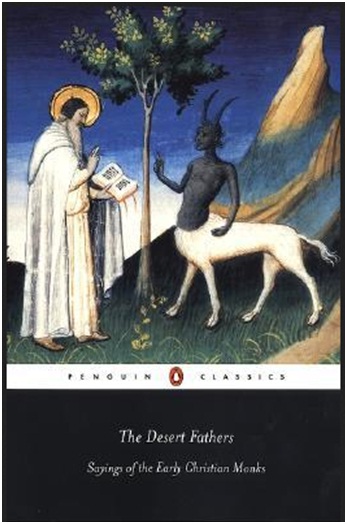
desert fathersA hermit said, ‘When you flee from the company of other people, or when you despise the world and worldlings, take care to do so as it if were you who was being idiotic’. (p83)

A brother sinned and the presbyter ordered him to go out of church.  But Bessarion got up and went out with him, saying, ‘I, too, am a sinner.’ (p84)

In Scetis a brother was found guilty.  They assembled the brothers, and sent a message to Moses telling him to come.  But he would not come.  The the presbyter sent again saying, ‘Come, for the gathering of monks is waiting for you.’
Moses got up and went.  He took with him an old basket, which he filled with sand and carried on his back.
They went to him and said, ‘What does this mean, abba?’
He said, ‘My sins run out behind me and I do not see them and I have come here today to judge another.’
They listened to him and said no more to the brother who had sinned but forgave him. (p85)

If you are angry with your brother for any kind of trouble that he gives you, that is anger without a cause (Matt 5:22) But if anyone wants to seperate you from God, then you must be angry with him. (p100)

If a man answers before he has heard, it is foolishness to him and discredit (Ecclesiastes 11:8). If you are asked, speak; if not, say nothing. (p102)


In fear aspiring

I fear that what might be my honest, deliberate truth might in fact be driven by my fear, or worse, that I have never been tested.

How do you measure integrity?

In this moment my truth explains, justifies, gives grace to my life. Could I ever doubt, regret, call that into question as some new learning, new light shines into my brokenness?

In every moment we are given a choice about what we do or say – watch TV? Do the readings for Uni? Check for the 5th time in 10 minutes whether someone has retweeted  my tweet? How do we register the frequency of the symphonic harmony of life and step into the dance?

The only thing sadder than a life on the sidelines is not even knowing you are invited…

i tell you arise

Jesus seemed to move around a bit… city to sea, centre to margins; in between the “happenings” the speeches and stories, the healing and the casting out – he and his friends would have spent some time on the road.  I wonder if this was his introverted time to recharge before the gig? Whether they’d process how it went “I don’t know, do you think they get it?”, “OMG did you see that Pharisees face? I thought he might have a heart attack”… Joy or sadness, success and frustrations poured out around a campfire at night, shared around a meal, not ranked recliners but a simple circle on the ground – men and women together, schmick tax collectors and homely fishermen. Despite having people around him all the time I bet there were times Jesus felt lonely in his vocation, times he wrestled with the call, felt caught between the surety of purpose and the unknowing of where the path would lead… and felt fear.

i tell you arise

Martin Luther King, Mother Teresa, Te Whiti, Dorothy Day, Ghandi, saints, prophets and witnesses have gone in that water, I am not worthy to set foot in it.

Maybe just a toe? I’ll paddle here on the edges –  I can see to the bottom, sure footing… it’s safe here. I can see the way forward and the way back.

What if I’m swept off my feet? What if the current takes me? Where will it take me? I am not strong enough to swim against the current long… what if I can’t get out?

This is the river that baptised Jesus.  This same water that washed his feet and that of his disciples whom he knelt to serve… this water is not of death but of life…

i tell you arise

Talitha Fraser

I want to dream

I want to dream
I want to dream together
I want to dream together and for your vision plus my vision
to surpass anything either could imagine on our own
I want to use my gifts to serve your vision, and
for you to do the same for me
I want the dream to be organic and to change
as you and I change
I want the dream to look different in different kinds of light
– sunlight, moonlight…
and seasons
– spring, autumn…
I want to talk about the dream as we walk along, catch the bus, share a meal together
I want to know the intimacy of shared thoughts with you
common and sacred at the same time
I want a dream that in its dreaming makes me smile in my sleep and
hold hope for a whole world through the day
I want a dream that needs a roll of butchers paper, five colours of post it notes and
four coloured marker pens to explain and still doesn’t really capture its soul
I want to dream together with you
I want to dream together
I want to dream

Talitha Fraser