This year we held the third iteration of the Healing Rites for 7 Sites walk in Footscray.
We are convicted anew of the necessary work of telling our ‘hidden’ stories, acknowledging the pain, and undertaking the healing rites that not only work for our own recovery, but also towards the collatoral benefit of our neighbours and communities.
The Healing Rites for Seven Sites are an invitation to walk the way of the Southern Cross, and visit seven sites looking at issues we all grapple with, such as the referendum result, addressing food security when the cost of living is so high, climate change and the impact of the Maribyrnong flooding. By connecting with significant social issues of our time, in curated and collective ways, we believe can develop tools in creative resilience and recovery that can keep us hopeful.
This tool is most effective when it tells site specific stories – do you know the stories of your place?
This is an offering we make free to our community – if it’s something you see value in, please feel free to make a koha (gift) to our work to support us to show up this way.
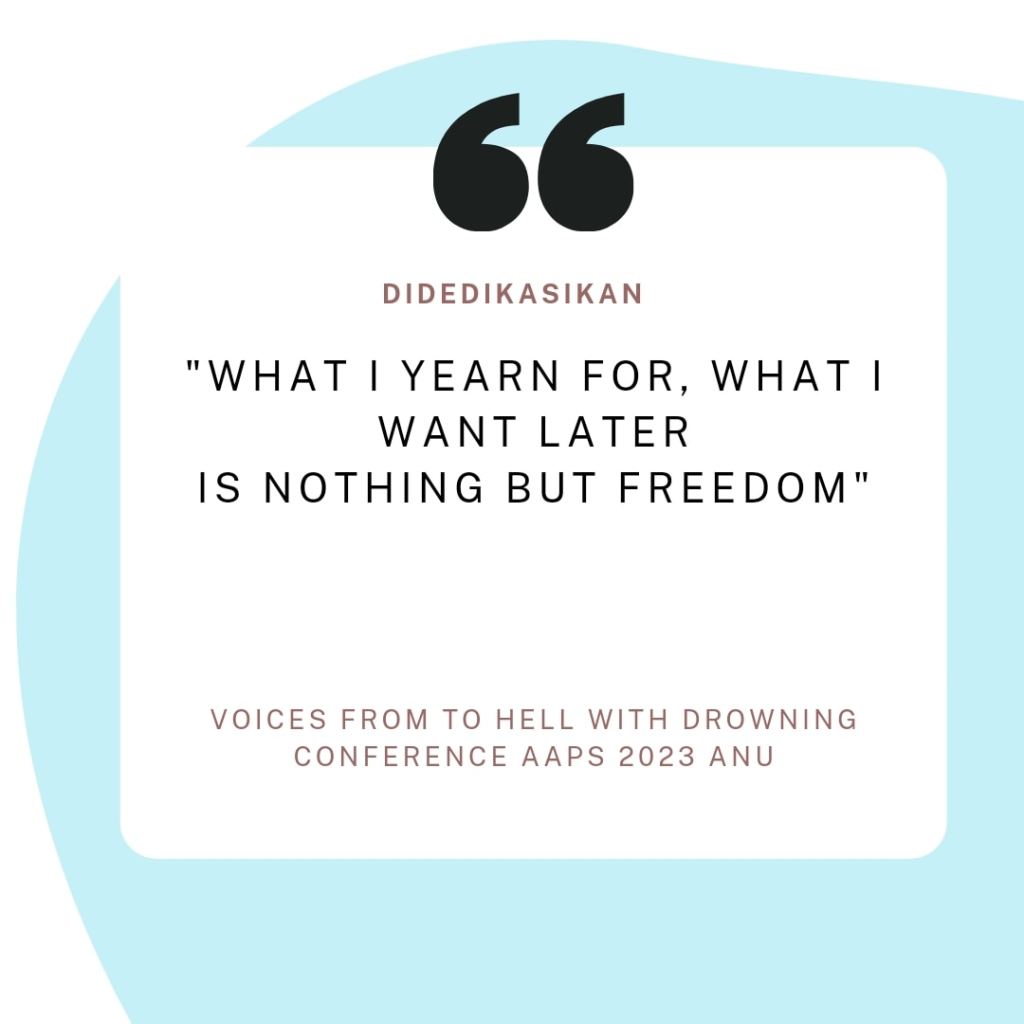
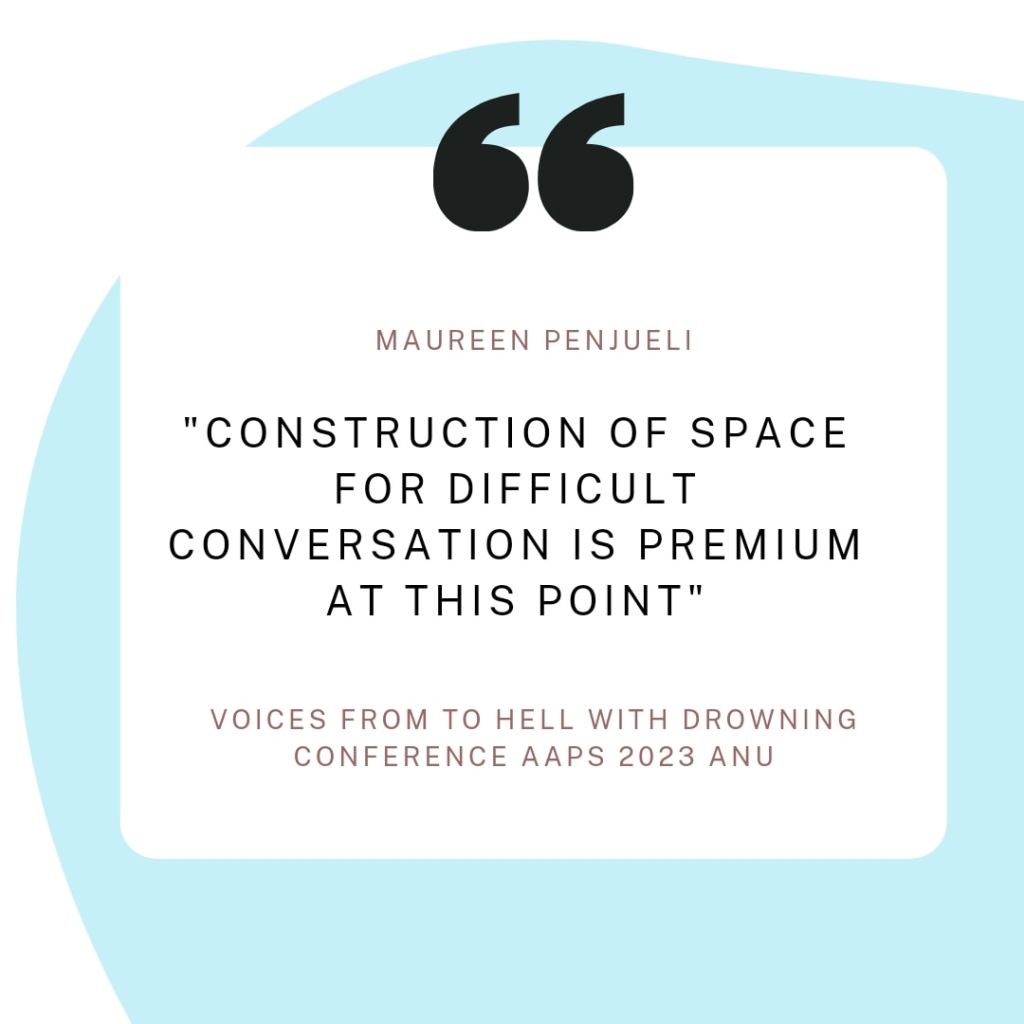
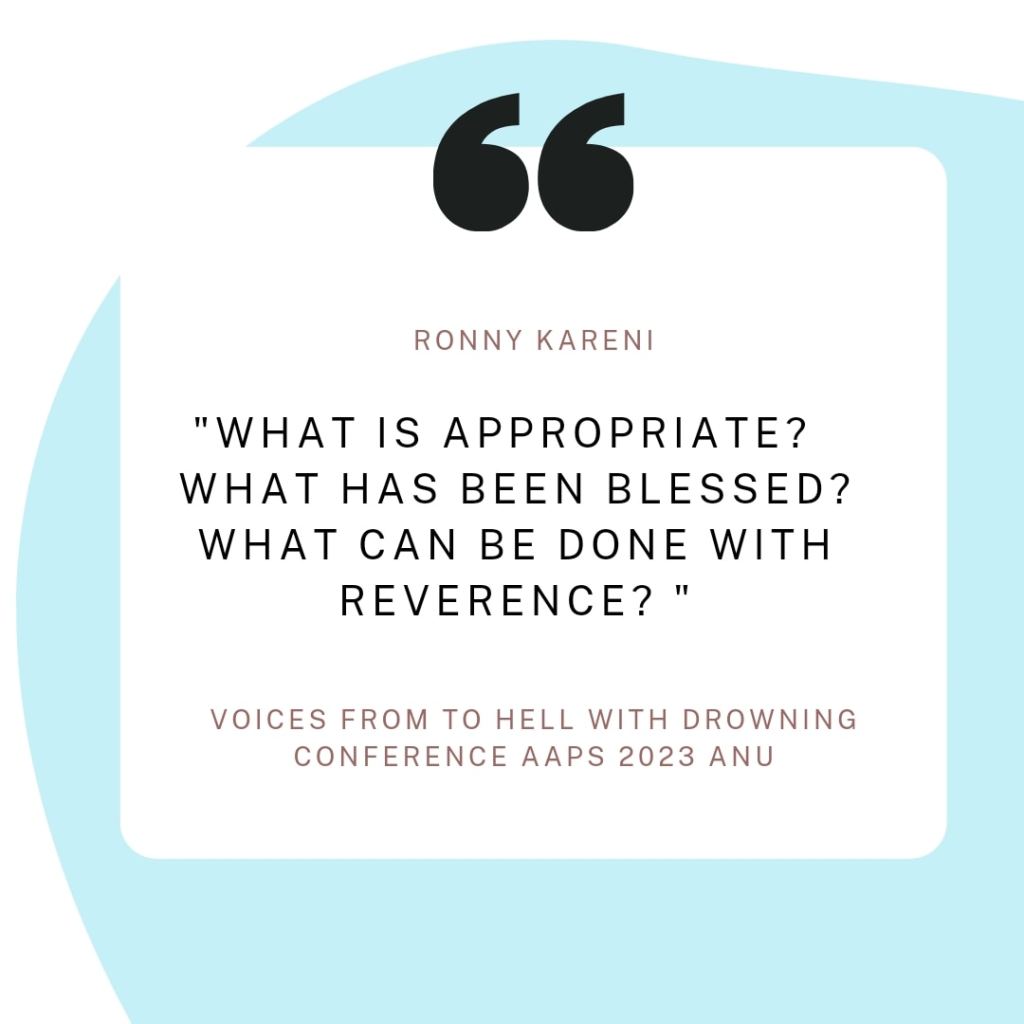
The 2023 AAPS conference theme emphasises the need to resist and reframe fatalist and narrow representations of Oceania.
From the highlands to the islands, the conference aims to advance multiscopic understandings of Oceanic people’s relationships and relationality of places through storytelling rooted in a trans-disciplinary, critical and creative Pacific Studies.
Justice for Creation: Indigenous perspectives and the role of the church
Consider what, or who, you’re apprenticed to in the context of climate justice. From this grounding, and locating to place – what is the invitation to action?
Mark 1:9-10In those days Jesus came from Nazareth of Galilee and was baptized by John in the Jordan. And just as he was coming up out of the water, he saw the heavens torn apart and the Spirit descending like a dove upon him.
In those days William Barak was born into the Wurundjeri clan of the Woiwurrung people and was initiated into men’s business near the Walla Creek by his Uncle Billibellary.As he was coming up out of the water, he looked to the sky and saw Creator Bundjil soaring overhead.
An invitation here to visit the water’s edge and a lens to decolonise our theology…
Rivers are rich landscapes – you know that what is passing now has passed by others before you and will pass by others after you.
There is something special in the biodiversity of this – at once you are not alone and, also you can ask: What does the river bring here with it? What will it carry away?
Consider what, or who, you’re apprenticed to in the context of climate justice. Where are you immersed? From this grounding, locating to place – what is the invitation to action?
Our land story is not valued in the main-stream cultural practices here on these lands known as Australia.
It is radically counter-cultural to resist, and insist that we need to acknowledge our elders past and present – of these lands and waters here, and those we come from. Might be different. Might be the same. We are because they were.
When we do this, we acknowledge our elders’ deep wisdom of listening and presence.
When we do this, we acknowledge our elders’ relationships with Creator and Creation, and recognise they are custodians of land, language, law and more – now, and since time immemorial. Our meeting is the confluence of these.
This wisdom is the inheritance of our communities, flowing down to us, carried within us. What will we pass forward? Come. Meet us at the river. Tell us your land story.
_____
Raisera McCulloch is a Pasifika woman living on Bunjalung country. She’s an educator developing training on decolonizing practices for systems change and a consultant to INGOs in racial justice. Her homeland of Tuvalu is facing a climate crisis and she advocates for action so her own children can preserve their culture. Currently a student of NAIITS completing a Masters in Theological Studies focusing on Indigenous Theology. Founder of Indigenous Giving Circle, a philanthropic initiative created to decolonise wealth, working towards a reparations model of giving.
Talitha Fraser, The Recollective, is a Ngai Tahu/Pakeha settler on the lands of the peoples of the Kulin Nation. She is the curator of The Recollective and Administrator for the Australian Collaborators in Feminist Theologies. She is passionate about building communities of care and resilience that honour that identity we come from, and celebrate those we move to claim and participate in. Her creative practice is one of contemplative listening: How does place or event shape creative practice, and how does practice change place, or event, or people?
My current forethoughts are around these queries… in my hemisphere (southern), it is summer/autumn and there is abundance, harvesting, preserving… it doesn’t seem like a time of year that makes much sense to give things up. I think that part of ‘giving up’ for Lent was that people died because there wasn’t enough food to get through the winter. They had to food ration to make it through. I like the idea that feasting on Sundays was someone bringing out a faithfully reserved jam, or stewing their last apples. The community survived the winter because they worked together. Spring brings relief of the austerity measures. Because of this, Lent has made more sense to me when I took something up (rather than personally giving something up) because it connected me with others.
With over a 100 days of the last year spent in lockdown, I think we’ve given up on plenty: a 5km radius, a curfew, only so many visitors or none. What do the learnings of our season and context in this moment have to say to our rhythms of church?
In the Eastern Kulin seasonal calendar March is Iuk Eel Season. Hot winds cease and temperatures cool. The days and night are of equal length – rather than austerity, what if we heard a call to balance? If you’re anything like me, areas of: exercise, food, drinking, social connection, and work became unbalanced during COVID and boundaries between home and work, and work and rest, have blurred. How might they be redefined?
The Iuk (eels) are fat and ready to harvest as they make their way downstream to spawn at sea. On the way they change from the dark pigmentation of freshwater eels and become silver. What if some of those things that have felt ‘lost’, like access to our creative outputs have actually been maturing during this time? What procreative energy is in you, seeking to move, to be fulfilled in its purpose and becoming? What brightness emerges from your season of darkness? What does it look like to make space for this procreation through Lent?
The Binap (Manna Gum) is flowering, and the hot summer air dries it’s sugary white sap (manna) and this a good treat to eat – what have you looked forward to all this time? How sweet is it after the wait?
My second thought is that Jesus knew the road he was walking, and what was at the end of it. He walked it anyway. When we commit to choose to do something difficult, we know there’s going to be times that’s hard. When we follow our commitment maybe, in a small way, this is an act of solidarity with the path/choice Jesus walked and offers insight to his sacrifice. So, when you live on the 7th floor and give up stairs, if you’ve left your bus ticket up there then you’re going to be tempted to take the lift. When faced with a choice between as easy and a difficult path – what do we choose to walk?
I think all of us know of relationships that broke up during lockdown. People decided to move – regionally, interstate, “home”. People changed jobs. In the crucible of limitation people had to make choices about what was most important. Decisions about what was necessary to flourish in scarcity. These decisions weren’t made lightly or easily, sometimes they were forced by circumstances outside of our control. The choice when there were no other options to choose from. Hard choices. Choices that cost us something. National Close the Gap Day and Harmony Day fall at this time of year… we reflect on the long road so far and the hard road to walk yet, what choice can we make but to keep walking? On the flip side, lockdown gave effect to many restrictions we thought couldn’t be done in the face of climate change – is the hard road that, despite our freedom, we continue to live within our restrictions of travel, working from home and shopping within 5kms?
Easter falls in April this year, when morning mists begin and nights become longer, we move into Waring Season. Wombats emerge from their burrows becoming active. Migrating birds arrive from Tasmania and male bulen-bulen (lyrebirds) display their mounds, tail feathers, and songs to attract a mate.
We know where we have been. Where are you planning on going?
What expectations did we have of ourselves over the last year that we did not meet? Of others that they could not meet? As you emerge from the burrow and become more active, how do we show the best of what we have to offer to each other again? We need to forgive ourselves and each other for what we have done and all we have left undone. Let’s have Good Friday and grieve, acknowledge what we have lost, but let’s also have the resurrection of Easter Sunday. What does it look like to celebrate that the season of loss and grief might be over? What about making a commitment to have friends or family to your house? To share and hear the stories of what the last year has been? To share you hopes for the future. To share a hug.
The community survived the winter because they worked together. Spring brings relief of the austerity measures.
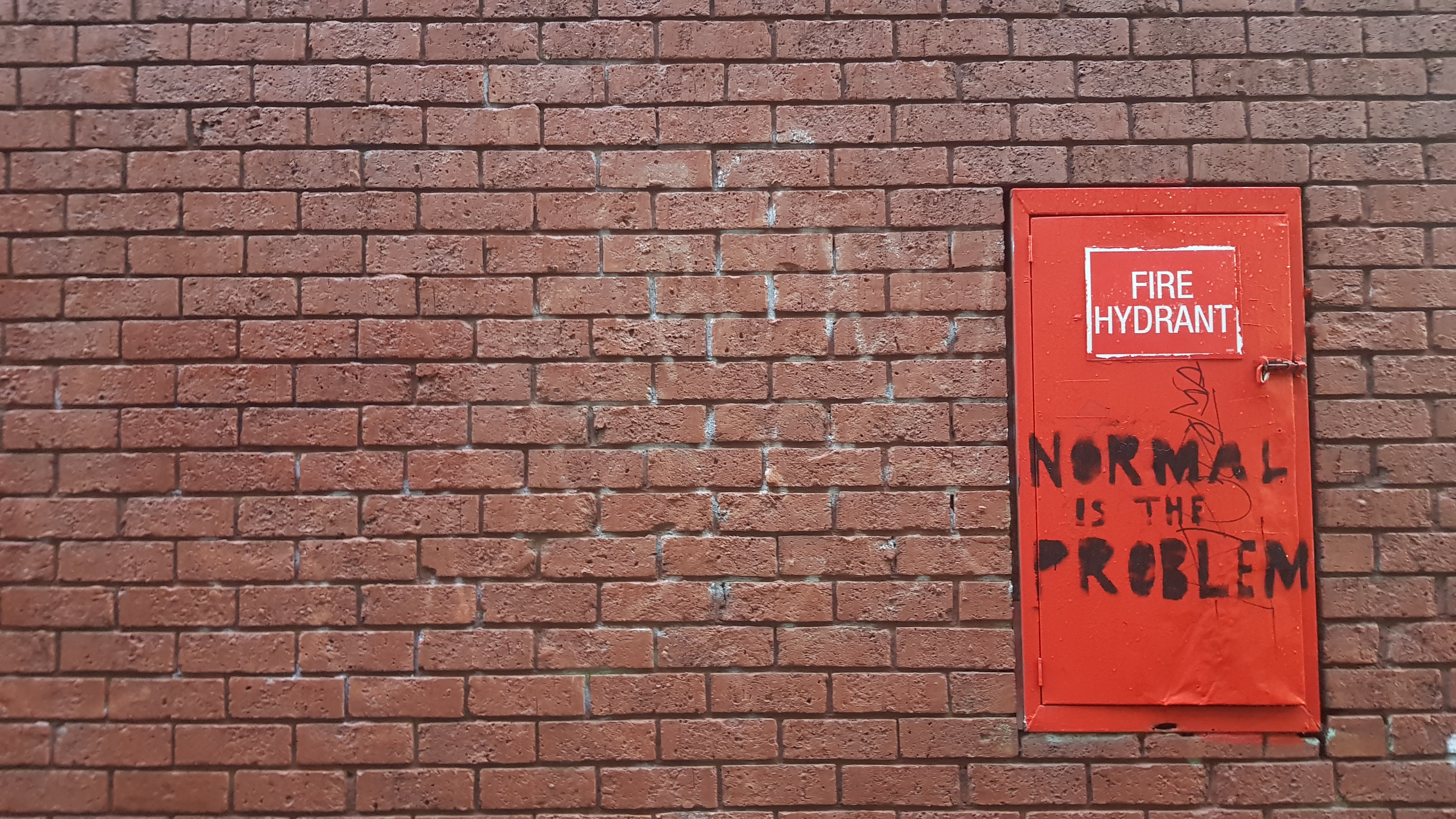
I listen to people talk about a “new normal”. I hear it as something ‘out there’ and I wonder, “Who’s making it? Who’s working on building the new normal?”
Sometimes I catch up with friends (over zoom or for a socially distanced walk) and they’ve discovered something wonderful in this season and they ask: “What can I do to keep this? How can I keep living my life with this in it once things go back to normal?”. There is that word again. Normal. This idea that normal is something that happens outside of us and is controlled by forces outside of us. But what we’re really talking about is life, or culture, and culture is made up of ‘the values, beliefs, underlying assumptions, attitudes, and behaviours shared by a group of people’. How and why is lockdown having an impact on these?
In trying to come up with a parallel for this lockdown experience, I started thinking about the idea of pilgrimage. Pilgrimage is a conscious stepping aside from life as normal in order to explore and experience a totally new environment such as: a journey to the Red Centre, walking the El Camino or doing an internship, or taking a sabbatical often for a time of discernment or at a time of transition such as a relationship or job ending. Anyone who has had experiences of this kind will know that it is not the destination that teaches us something, but rather what we learn along the way.
We have not been able to choose to take this pilgrimage, but regardless there are similarities: We have needed to let go of the ‘way things have always been’ and consider what else they might be. The routines aren’t there, the busyness, the commuting, the activities and events that take up our time… the bustle of life has slowed because we cannot travel more than 5kms and need to be home before a curfew. There is an invitation here to consider, what is essential to us? What can we survive well without or even is a relief to stop? Unbidden, we are being asked to reconsider, “What are my values, beliefs, assumptions…”?
Here’s what can happen on a pilgrimage: when you sit with a empty horizon before you and allow the land to speak to you, you will discover how full it is; or when you walk (and walk and walk) and hold silence within yourself knowing yourself to be walking where many others have walked, and will walk again, you can identify both as singular and part of the collective of all of humanity; or when you visit a new country and experience being the person who doesn’t know the language, the food, courtesies, jokes or the slang and might know for the first time that you can be the ‘other’ too… it’s not the place we go that changes, or the places we come back to – but us. I don’t know that change is the right word for this because, really, it’s remembering, and re-membering. A coming back to the wholeness of who we feel called to be, and how we can be – and become – that which we lost sight of somehow.
Here’s what can happen on a pilgrimage: when you walk, you meet and get to know your own neighbours, you might discover a little library, a lovely garden, a cute letterbox – familiar and new as if you were trying to memorise the face of a loved one before you lose them, suddenly there are details you never saw before and they are precious; or when you are removed from friends, family and the usual social circles, you paint a spoon for Spoonville, put a teddy bear in the window, or leave groceries at the free pantry. Learning without words, without touch, without ever meeting, I can connect with someone and that can be profoundly meaningful; or when you are stuck with someone, or stuck apart, stuck in a job you need or stuck on a job you love and can’t go to right now, you recognise the fragility of life and how important it is to do what you love with the people you love best and who love you well – what will it cost you to have that? What is it worth to have that?
This seems the spot where you might easily drop T.S. Eliot’s ‘the end of all our exploring will be to arrive where we started and know the place for the first time’. T.S. Eliot wrote these Four Quartets during World War II and the air-raids on Great Britain. It is good to remember that these times ARE precedented. Pandemics have ravaged with worldwide impact before, as disease arrived on cruise ships so too it came with the First Fleet. People have lived through experiences wondering if the world would ever be the same again, wondering whether a safe world would exist for their children to grow up in. It is this line from Eliot that drew me today:
“last year’s words belong to last year’s language And next year’s words await another voice.”
The new normal belongs to you. It is yours to discover. It is yours to remember.
I invite you to gently and creatively engage with any/all of these questions through journaling, a vision board, mind map, or other mindfulness practice you enjoy, as you make your way onwards.
Is there anything you have discovered a lockdown love for? Make a list… what did this teach you about yourself you didn’t know before? What needs did these meet?
Make a list of things you have felt you’ve missed or lost in lockdown. What do you value about them?
Are there things that you haven’t missed? What has putting these down, freed up capacity for?
Land, family, law, ceremony and language are five key interconnected elements of Indigenous culture – how have the interventions and new laws of the lockdown impacted how these elements in your life have looked over the past few months? Was there somewhere outside your 5kms you longed for? How were rituals different, such as birthdays, weddings or funerals? Have you been using Zoom, Google Hangouts, Discord… or silenced by in accessibility of software or skills?
Has this time brought up things from the past that have been painful or difficult? Honour that. Celebrate what you know about survival. Consider doing a compare and contrast of then and now as a way of seeing how far you’ve come and how much resiliency you have learned. If someone was absent – who is present? If someone harmed – who is healing?
Has this time brought attention to or caused areas of your life to become painful or difficult? Honour that. What is this telling you about what’s important to you? One way to enter into this conversation might be to map What Is/What Could Be. Know you are worthy of dignity and respect and a life that fulfils you and brings you joy. Are there any steps, however small, that might create movement between what is and what could be? Take them.
Did you take up new, or see changes in, the roles and relationships you have through COVID? As teacher, partner, parent, friend… acknowledge these shifts. Have you learned something about your expectations of yourself and others?
This activity was a mash up of a few ideas for community members to check in with each other and themselves and be connected through that activity. How can we recognise that what’s going on for us might impact others in expressed and unexpressed ways? There is lots of change but not all change is necessarily bad? How can we hold where we are at as a community gently?
Activity: The People’s Mike
So the idea behind the People Mike is that folks shout out words, it’s a Wild Church tool, eg: what is holding us back from living the lives we’re called to? What are we afraid of? One person shouts it out and then we all shout it out together in chorus. This acknowledges what impacts one of us, impacts all of us, and is a way of “holding” those fears and feelings together. Each part, one body.
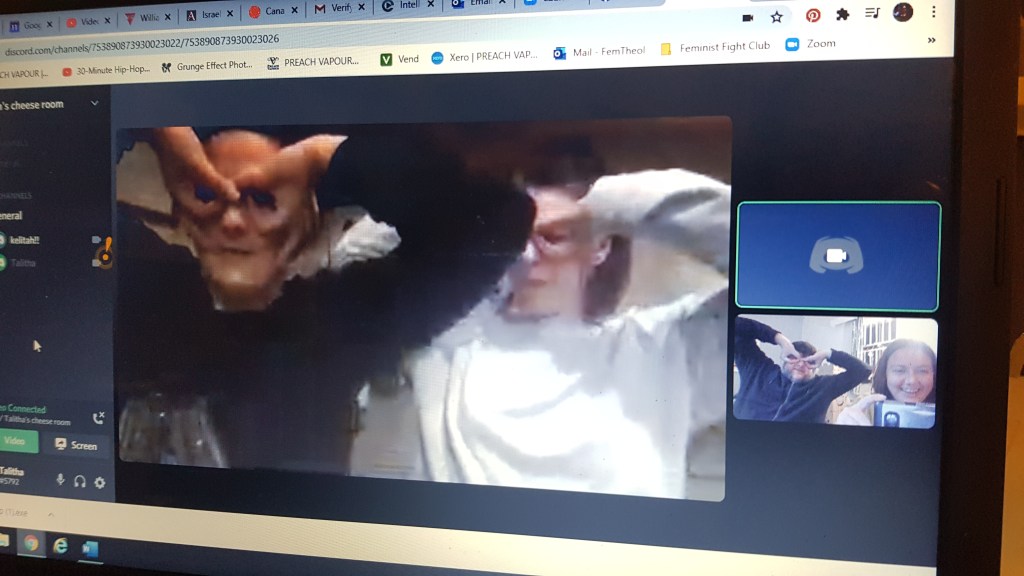
We were attempting this reflection by zoom which is not an easy medium to hold space for people speaking in chorus/at the same time. We asked folks to share something they miss or feel the lack of and something new they’ve discovered, enjoyed or had more time to appreciate and captured those words on pegs.
To understand where the pegs come in you might like to read this short little story I’ve got you pegged from back to 2012, but the gist of it is that you can bring to mind, and hold gently, special time/people in ordinary and every-day ways. This is a way of acknowledging the strangeness of now with the juxtaposition of a number of things that go along as they always have – like hanging out the washing. A way to hold the now and the not-yet.
What are you grieving right now? Or looking forward to having again soon?
We are looking for bears. We are looking for Easter eggs. We looking for ways to connect and be together while we are apart. We are looking for ways to show care for, and bring joy to, our neighbours and neighbourhood. We are looking for ways to make people smile and I am encouraged. #looking #titiroana
Today we savour and celebrate playing in the park, tree climbing, sunshine and flowers… we see a couple have written their love in the branches that hold us up. May we be carried by one another’s love every day. #celebrate #whakahari












 itellyouarise