Tag Archive: healing


There is love

imag0265


There is love and there is love.
What would You call me into?
What is love that does not
arc towards wholeness?
What is love unlived, unfamiliar, unrecognisable?
A strangers face.
I have been here before.
How will you help me stranger?
How will you help me know you
and, in the knowing, know myself?
Let us walk on a little way together yet
and speak of love.

Talitha Fraser

img_9817

Ch 2, p8

“The surrender of faith does not happen in one moment but is an extended journey, a trust walk, a gradual letting go, unlearning and handing over… to finally surrender ourselves to healing, we have to have three spaces opened up within us – and all at the same time: our opinionated head, our closed-down heart, and our defensive and defended body… the work of ‘a Power greater than ourselves’, and it will lead to great luminosity and seeing.”

Richard Rohr

hurt people, hurt people

IMG_9500

whoever said:
“what you don’t know can’t hurt you”
was an idiot.
what I don’t know
hurts me all the time
not knowing how to articulate
what I need or want
and wanting you to provide it
and being disappointed when you don’t
hurts me
not knowing how my upbringing,
my culture, my experiences
shape the filter by which I take life in
– not recognising you have a filter you relate out of too –
hurts me
not knowing how intergenerational trauma
has affected my great grandparents, grandparents,
parents and siblings and self
hurts me
it’s a lie to think that not talking about things
will make them hurt less.

Talitha Fraser

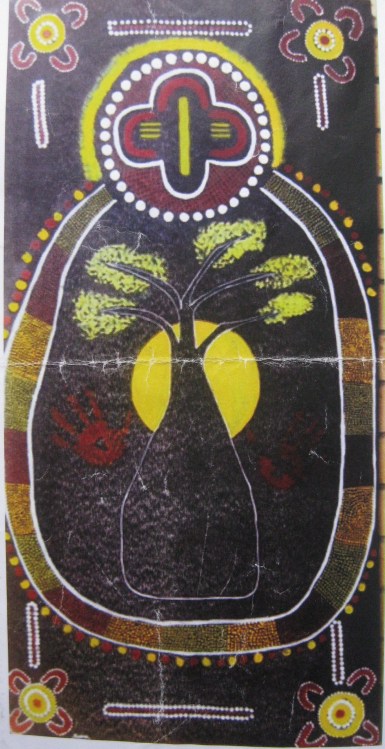
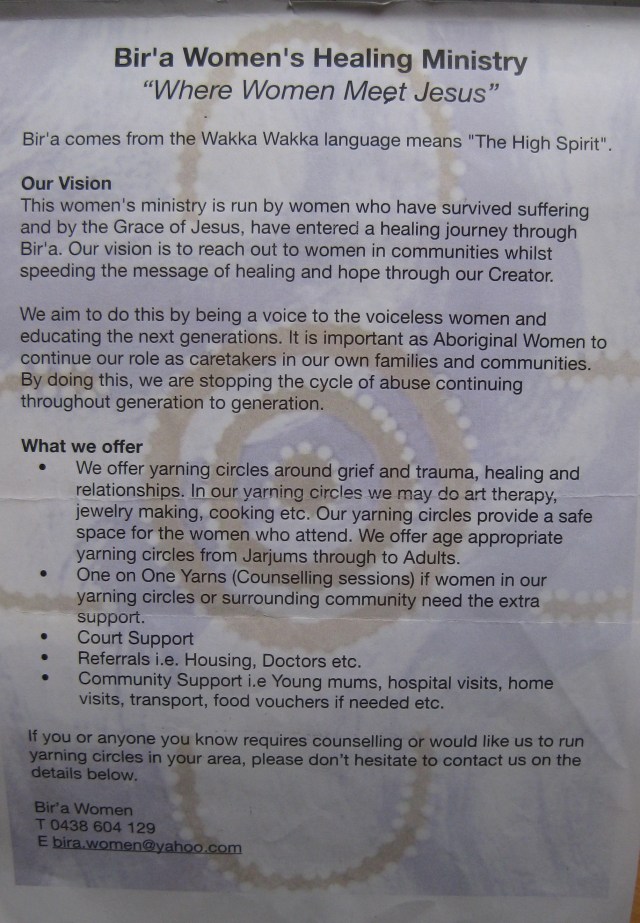
IMG_0080It was a privilege to meet Aunty Sharyn Bird on Thursday night – she was sharing her story and talking about the initiative Bir’a Women’s Healing Ministry she has started up that: raises awareness about abuse (emotional, domestic and sexual), encourages survivors to speak out, and gathers support for survivors .

It’s not for me to try and tell anyone else’s story but if there’s an opportunity for you to hear Aunty Sharyn (or participate in a yarning circle yourself!) I would encourage you to take it. A visual representation of her story told in a painting (left)

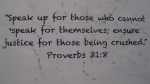
I have been drawn to the way in the gospels Jesus’ touch heals but then he “hears her whole truth” [Mark 5:33] and she is healed again.  There is more than one layer to our healing.

What role can/does truth-telling and story-sharing have in our healing and wellbeing?

We need people willing to ask us our story; safe space to tell it; someone to listen.  Our wholeness (being healed and whole – all we were created to be) is tied up with being known, heard, understood…

How do we make/take time for this?

Aunty Sharyn held such a space – generosity in that  – and a lot of compassion.


You can read more about Bir’a below and make a gift to support their work through Jisas Wantaim ref: BiraWomen.

IMG_0079

The session put me in mind of the Cheryl Lawrie poem “This is my Body” from Easter – how might we engage in our own re-membering and bringing it about for others?

What do our re-membered selves look like?

What is one thing you could do right now to go from where you are now towards the ‘whole and healed’ version of you?


5541796370_bd2d4d27bf_o

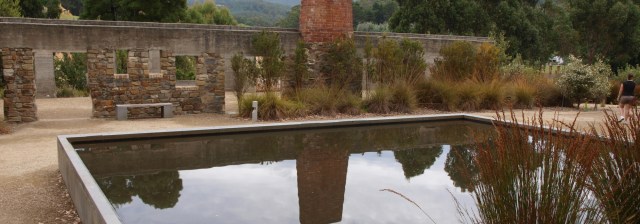
Port Arthur memorial garden, by Michael Rawle / Flickr.com

This article was published on the Sojourners blog 15/12/2015 .

“Death has taken its toll. / Some pain knows no release / but the knowledge / of brave compassion / shines like a pool of peace.”


These words are engraved on the memorial pond at the Port Arthur mass shooting site in Australia. Nearby, a wooden cross is inscribed with the names of the 35 men, women, and children who died here. In contrast, a brochure at hand provides a simple explanation of what occurred in this place; it notably does not name the gunman. 1996: Australia’s last mass gun death.


After any traumatic event we ask ourselves, “What saves the next person from what has happened to me? How can I make sure no one sees what I have seen? Goes through what I have gone through?”… as bereaved, survivor, emergency responder, community member, minister.


Glenn Cumbers became an ordained minister of the local Church of Christ a mere six weeks before the Port Arthur massacre. The morning service was over and he was enjoying lunch at a home nearby when the sounds of shooting were heard. He and his companions were among the first responders. In the days that followed, the church was open 24 hours for anybody to come for prayer or to feel a bit of peace and quiet. There was ministering to the community and leading memorial services, private and public, as well as advocacy urging gun owners to act in the national interest: “We ask that the minority be willing to forgo their short-term wants for the long-term good of Australia.”


It is not insignificant to have all the Federal, States and Territories Parliaments of Australia pass one universal law. There was lobbying by many parties after the 1987 Queen Street massacre and the 1991 Strathfield massacre.


As Australians, we are not so many generations removed from penal colony settlement or “subduing the natives” (those were massacres, too, it warrants mentioning) that saw an “every man for himself” attitude become culturally embedded. But the 1996 massacre in Port Arthur saw a tipping point where the law was far behind popular opinion.

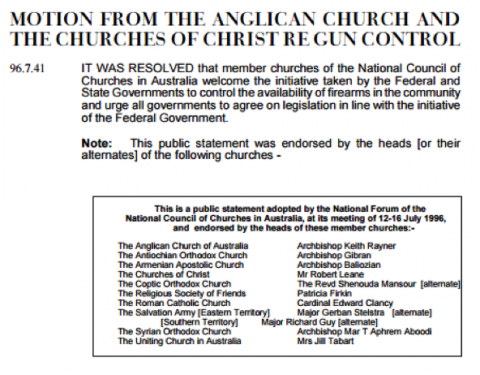
When changes to gun laws were first proposed, the member churches of the National Council of Churches welcomed the initiative and urged government to agree on and pass the legislation. 

right:  Minutes of The National Council of Churches in Australia (NCCA), Friday 12 July 1996


The New South Wales Farmers Association, with its high rate of gun owners, also gave its support for a total ban on semiautomatics firearms. And proving that you can have our guns but not our sense of humour, NSW Farmers pointed out that with reforming gun laws Australians will still be able to bear arms, such as: bolt-action, centre-fire military rifles; lever-action, centre-fire sporting rifles; pump-action, centre-fire sporting rifles; rim-fire rifles with bolt, lever or pump actions, and double-barrelled shotguns. Further, a farmer commented, “If a shooter cannot knock down a fox with one of the weapons I have mentioned, the solution is not a semiautomatic firearm but an ophthalmologist with a centre-fire laser or, alternatively, a return to basic training.”


No one was taking our guns — we were giving them up. The gun control question should not be prefaced by what you have to lose, but by what you have to gain.


Glenn Cumbers left the church in 2004. He could no longer work as a result of post-traumatic stress disorder that had not been supported. Pouring himself out to the community and addressing their healing was his job, but who was healing the healer? In 2008, Stephen Robinson published a practical guidebook called Ministry in Disaster Settings: Lessons from the Edge that investigates the experiences of ministers, like Cumbers, who have been on the ground for some of the worst disasters of Australian history. Cumbers says, “I found that book was really the first step on the long journey of healing for me.”


We always ask: What saves the next person from what happened to me? What does brave compassion look like where you are? I don’t know. But I do know that if I had a gun, I would say to any family touched by gun violence: “I cannot do much, but if the world is a better place with just one less gun, have mine.”


In the words of former Australia Premier Barrie Unsworth, who lost re-election in 1991 advocating for stronger gun law, “It is not too late to do something positive.”

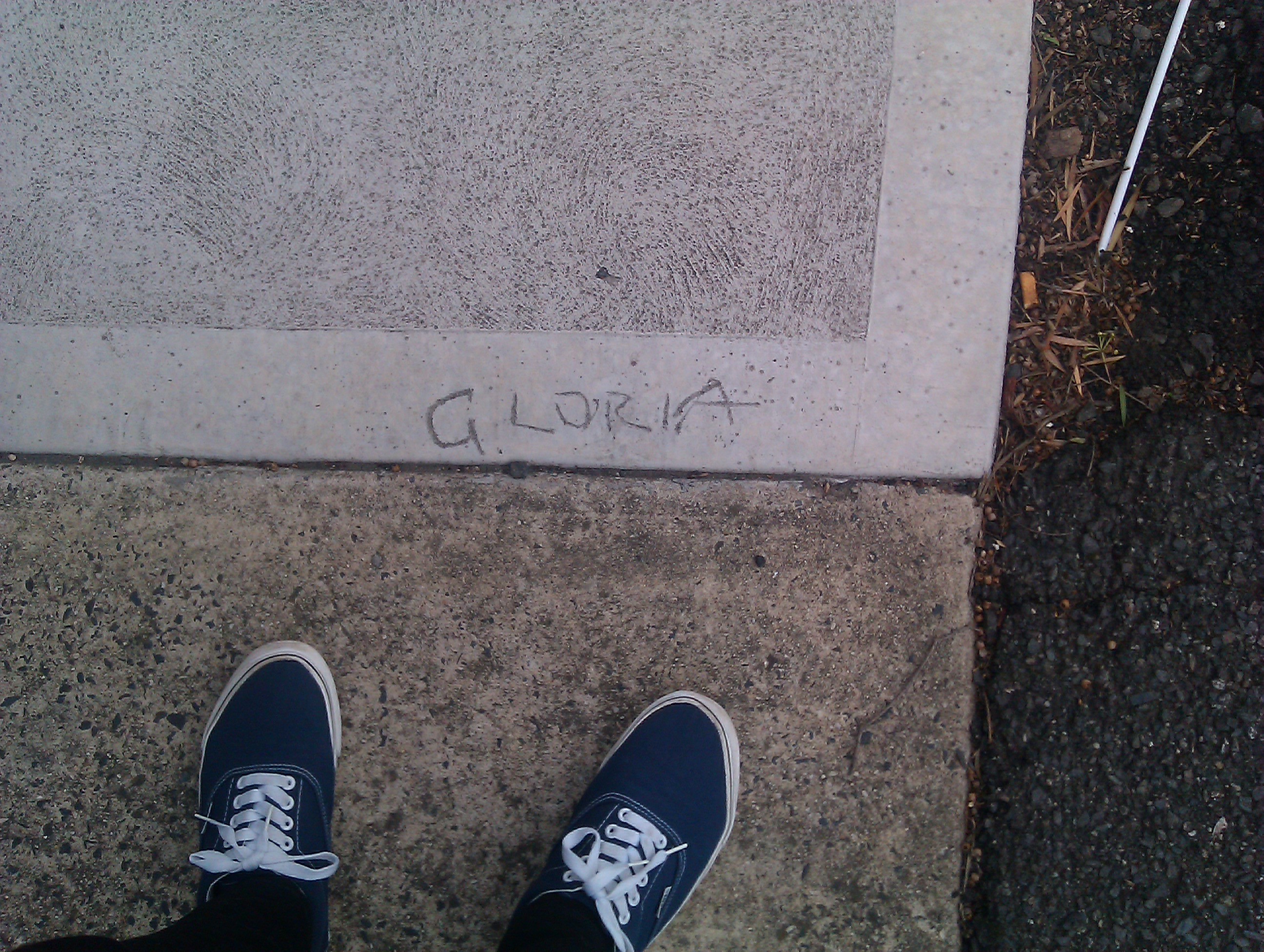
 

by Talitha Fraser

I will tell you something about stories
[he said]
They aren’t just entertainment
Don’t be fooled.
They are all we have you see.
All we have to fight off illness and death.

You don’t have anything if
you don’t have stories.
Their evil is mighty
but it can’t stand up to our stories.
So they try to destroy the stories.
Let the stories be confused or forgotten.
They would like that…
Because we would be defenceless then…

Leslie Marmon Silco – Ceremony

Stories are all we have – the hermeneutic approach of the Bartimaeus Institute.

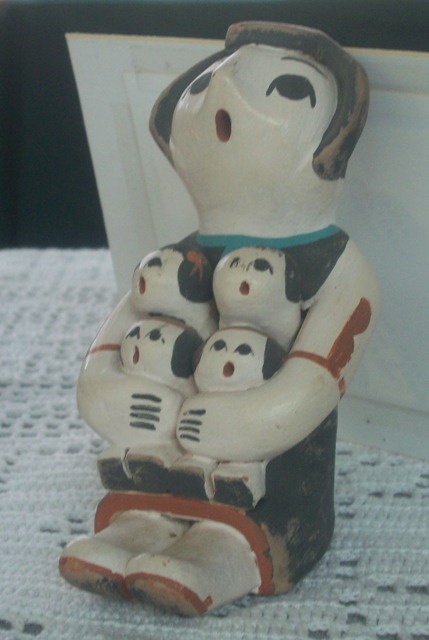
Native Americans make storytelling dolls out of pottery – collecting the clay is a spiritual and mindful process, native plants and minerals are used for the colours and designs, shaped and smoothed by hand, sanded, slip coats applied and then hand polished – a lengthy and involved process.  These beautiful artworks generally depict an elder with children in their lap,  honouring the oral tradition of the culture, validating the importance of each persons voice in family/community and the importance of the role of storytellers in society for keeping awareness alive.

MLK once said: the arc of the moral universe is long, but it bends towards justice.  That is to say that we need to draw on the wisdom of tradition, history and our elders to better understand ourselves and the world in which we live.

John 1:18 No one has ever seen God.  It is the Son, who is close to the Father’s heart, who has made God known (Greek: exegesato) – Jesus ‘decodes’ gives meaning to God.

Luke 10:25-30, 36f
A) What must I do to inherit eternal life?
B) What’s written in the Torah? How do you read it?
C) Love the Lord your God
D) Given right answer. Do this.
E) Who is my nieghbour?
F) Who was neighbour to the robbed man?
G) One who showed mercy.
H) Go and do it.

3 disciplines of interpretation: what stands? how do we read it? what do we do with it?

Who around you has stories you could be learning from?  Are you making space to hear them?
If you live a life trying to be like Jesus, what are the ways in which your life points to or gives meaning to God?
What ways does what you read influence/affect praxis in your life?

We need wisdom that is older, wider, deeper than we are – sacred stories provide that.  Listening to the old stories needs to be central to any expression of faith that is related to transformation. We need to have a practise of returning to the well of imagination.