Tag Archive: home


N.B. This post may be a negative trigger for survivors of physical and sexual abuse.

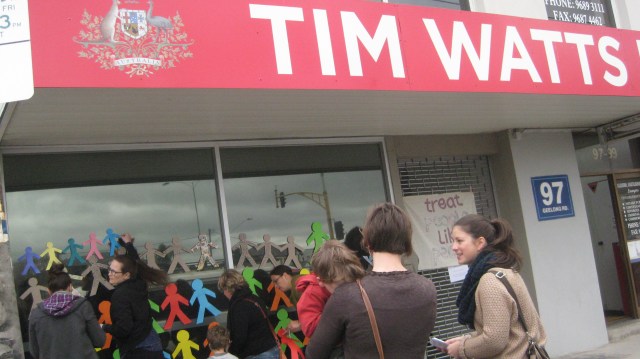
This morning we held a peaceful Love Makes a Way vigil outside Tim Watts office in Footscray as part of a bigger movement in response to the heart-wrenching incident reports leaked last week to The Guardian known as the Nauru Files. LMAW members and friends from a wide range of asylum seeker advocacy groups converged on over 45 MP offices and Immigration Dept offices across Australia in proIMG_0648test.
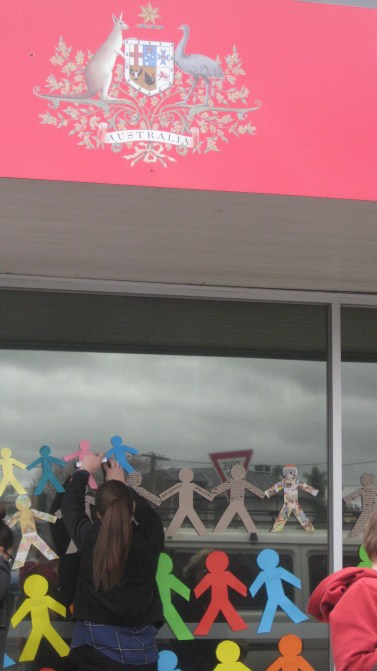
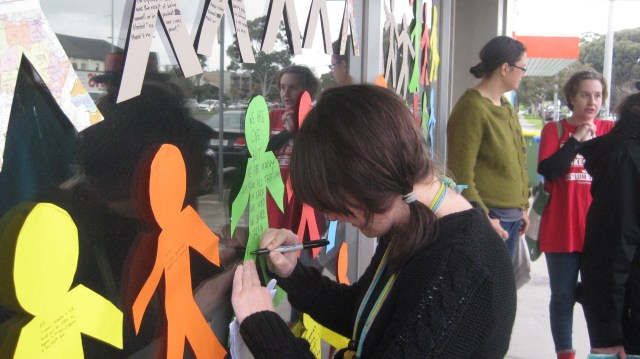
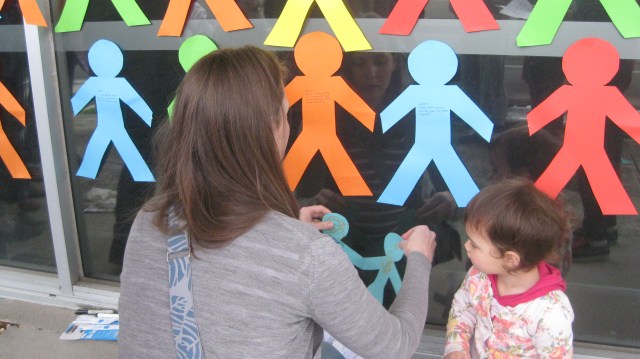
Armed with paper dolls to symbolise the men, women and children
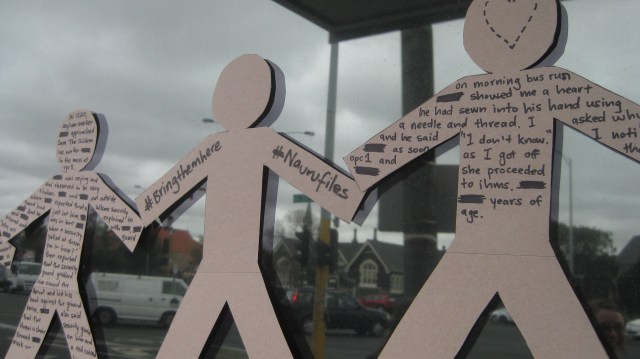
who have been abused and traumatised by offshore detention, these small groups read from the incident reports, heard poetry from former refugees and demanded the Government ‪#‎CloseTheCamps‬ and ‪#‎BringThemHere‬

Welcome. We acknowledge that we gather today, to sing and pray, on the land of the Wurundjeri people of the Kulin Nation.  

I’m sure most of you here are already across the Love Makes A Way movement and what it’s about, we don’t really have words to respond to these leaked Nauru Files. These dolls that you see here, we will be leaving them up and the reason for that is that it will mean someone here at Tim Watts office will have to physically engage in the act of taking them down. The lives of these children, or these people are in their hands. Written on some of these images are the words of case workers and people in detention centres – stories of sexual and physical abuse. We put these images here as a symbol of these people that are entrusted to our care, to our politicians care, and we don’t think they’re doing a very good job with the responsibility that has been entrusted to them.  In the tradition of the civil rights movement we want to sing some songs that inspire and speak to the world we want to live in and welcome these people to join us in.


There is room

There is room at the table (x3)
Bring them here, let them stay.

There is room at the border (x3)
Bring them here, let them stay.

There is room in our hearts (x3)
Bring them here, let them stay.

There is hope for a new tomorrow (x3)
Bring them here, let them stay.

We say love makes a way (x3)
Bring them here, let them stay.
IMG_0661


Hold on (Love Makes A Way)
(tune: Keep your hand to the plough/Keep your eyes on the prize)

They are coming across the sea,
From their homes they have had to flee,
We say, love will bring them here, hold on.

We are here to sing and shout,
Why you keeping God’s children out?
We say love will let them stay, hold on.

Chorus
Hold on, hold on,
We say, love makes a way, hold on.

We say welcome the refugee
We say set all the people free
We say, love will bring them here, hold on.

We have room in our hearts to care
We have plenty enough to share
We say, love will let them stay, hold on.


We shall bring them here
(words adapted from We shall overcome)

We shall bring them here, we shall bring them here
We shall bring them here some day
Oh deep in my heart, I do believe
We shall bring them here some day

We will not keep silent, we will not keep silent
We will not keep silent today
Oh deep in my heart, I do believe
We will not keep silent today

The truth shall make us free, the truth shall make us free
The truth shall make us free some day
Oh deep in my heart, I do believe
The truth shall make us free some day

We are not afraid, we are not afraid
We are not afraid today
Oh deep in my heart, I do believe
We are not afraid today

We shall let them stay, we shall let them stay
We shall let them stay some day
Oh deep in my heart, I do believe
We shall let them stay some day

IMG_0650

As I went down to Tims office to pray
(words adapted from As I went down to the river to pray)

1) As I went down to Tim’s office to pray
Welcome the refugee, let them stay
And who shall help us bring them here?
Good Lord show me the way!

O sisters let’s go down
Let’s go down, come on down
O sisters let’s go down
Down to Tim’s office to pray

2) As I went down to Tim’s office to pray
Welcome the refugee, let them stay
And who shall call for a change of heart?
Good Lord show me the way!

O brothers let’s go down
Let’s go down, come on down
O brothers, let’s go down
Down to Tim’s office to pray

3) As I went down to Tim’s office to pray
Welcome the refugee, let them stay
And who shall raise their voices here?
Good Lord show me the way

O mothers let’s go down
Let’s go down, come on down
O mothers let’s go down
Down to Tim’s office to pray

4) As I went down to Tim’s office to pray
Welcome the refugee, let them stay
And who shall work for a better plan?
Good Lord show me the way

O fathers let’s go down
Let’s go down, come on down
O fathers, let’s go down
Down to Tim’s office to pray

5) As I went down to Tim’s office to pray
Welcome the refugee, let them stay
And who shall share these boundless plains?
Good Lord show me the way

O people, let’s go down
Let’s go down, come on down
O people, let’s go down
Down to Tim’s office to pray

6) As I went down to Tim’s office to pray
Welcome the refugee, let them stay
And who shall help us bring them here?
Good Lord show me the way

IMG_0635

READING — ‘HOME’ (Warsan Shire)

no one leaves home unless
home is the mouth of a shark
you only run for the border
when you see the whole city running as
well
your neighbors running faster than you
breath bloody in their throats
the boy you went to school with
who kissed you dizzy behind the old tin
factory
is holding a gun bigger than his body
you only leave home
when home won’t let you stay.

no one leaves home unless home chases
you
fire under feet
hot blood in your belly
it’s not something you ever thought of
doing
until the blade burnt threats into
your neck
and even then you carried the anthem
under
your breath
only tearing up your passport in an airport
toilets
sobbing as each mouthful of paper
made it clear that you wouldn’t be going
back.

you have to understand,
that no one puts their children in a boat
unless the water is safer than the land
no one burns their palms
under trains
beneath carriages
no one spends days and nights in the
stomach of a truck
feeding on newspaper unless the miles
travelled
means something more than journey.

no one crawls under fences
no one wants to be beaten
pitied
no one chooses refugee camps
or strip searches where your
body is left aching
or prison,
because prison is safer
than a city of fire
and one prison guard
in the night
is better than a truckload
of men who look like your father
no one could take it
no one could stomach it
no one skin would be tough enough

the
go home blacks
refugees
dirty immigrants
asylum seekers
sucking our country dry
niggers with their hands out
they smell strange
savage
messed up their country and now they
want
to mess ours up
how do the words
the dirty looks
roll off your backs
maybe because the blow is softer
than a limb torn off
or the words are more tender
than fourteen men between
your legs
or the insults are easier
to swallow
than rubble
than bone
than your child body
in pieces.

i want to go home,
but home is the mouth of a shark
home is the barrel of the gun
and no one would leave home
unless home chased you to the shore
unless home told you
to quicken your legs
leave your clothes behind
crawl through the desert
wade through the oceans
drown
save
be hunger
beg
forget pride
your survival is more important

no one leaves home until home is a
sweaty voice in your ear
saying-
leave,
run away from me now
i don’t know what i’ve become
but i know that anywhere
is safer than here.

IMG_0657

Were you there?

Were you there when they turned the boats away?
Ohhh, sometimes it causes me to tremble, tremble, tremble,
Were you there when they turned the boats away?

Were you there when our nation turned its face?….

Were you there when the child was locked away?….

Were you there when the abuses came to light?…..

We will pray until love can make a way…..


Our hearts’ song is to close the camps and bring them here and we’ll keep singing, praying and turning up until love makes a way…


N.B. this story contains offensive language and swear words


The streets of Melbourne speak.  Buskers busk, beggars beg and people hand out pieces of paper offering good deals on diamonds, discounted burgers or advocating for autonomy of Tibet – everyone has something to say. Mostly we veer round them, but not me.  I have started a new job working with a Christian community development organisation supporting the homeless in Melbourne CBD – these people out on the street are my neighbours, my friends, and I am going to help them and I will make a difference in their lives.

Speak Melbourne, I am listening.

I hop on the 57 tram at Collins St. As it is standing room only, I loiter near the rear door and sitting side-on to me is a man holding a bottle in a paper bag already quite drunk.  He looks old but probably isn’t. A face weathered by life’s experiences and dirt. He clears people to the other end of the tram by being, loudly, verbally offensive to everyone around us.

To the Indian couple opposite chatting softly, “Can’t you speak English? Speak English! F-ing come to our country, you can speak our f-ing language.”

To the Chinese woman beside him, “I can speak your language, sushi! Chopsticks! Kamakaze! Karate!”

To a young Middle Eastern girl, “You’re quite pretty… how much would it cost to buy you? That’s what you do where you come from, right?”

Everyone on the tram pretends to ignore him and looks away – whatever you do, don’t make eye contact with the crazy guy. I felt angry, and ashamed, worried that all these people might think that by staying silent we agree as I find I look away too.  Eventually, a young white guy halfway up the tram calls out, “Keep your peace mate, no one wants to hear what you have to say.”

Crazy Guy stands quickly, “You trying to be a f-ing hero? Showing off for your girlfriend?  None of your f-ing business.”

He has pulled a broken bottle out of his bag and is waving it threateningly. Collectively everyone on the tram holds their breath, still not sure where to look.  Eventually Crazy Guy sits back down again but the ‘hero’ turns to say something to the guy behind him and he’s up again throwing candles at him from his bag shouting, “Shut up! I’m going to burn your f-ing eyes out you c-!”

All of this over a surreal twenty minute ride. I arrive at my stop in North Melbourne and hop off, relieved, so very relieved, the Crazy Guy does not.  I have done nothing, said nothing, and feel upset and guilty.  “Aren’t I meant to know how to do this?”

I ask a colleague Gin the next day, “What I could have done differently?”

“What was his name?”

“Uh, I didn’t exactly introduce myself….” my tone quavering somewhere between sarcasm and incredulity.

“…next time, try and find out what his name is, it really helps to connect with people if you know their name.”

Oo0oO


Some weeks later I am hosting dinner at my place unwinding with others from work. The share house I’m in doesn’t have much of a backyard and we have improvised with fish and chips in the middle of the 5-way roundabout where Haines, Dryburgh and Shiel Sts intersect.  It’s a beautiful Melbourne summer evening and we jockey for the minimal shade offered by the three yet-young eucalypts as summer light fades into dusk.  We’ve been there a while when a man crosses the road to ask us, “You got anything to eat?” and we share what we have.

He hangs with us a bit under the darkening sky, asks if we’re Aboriginal, if we’re sitting here because the land is significant to us, and asks my friends Christop and Mehrin when they are getting married, “I can just tell…” though they were only dating then.

Gin asks “What’s your name?”

“Gordy.”

“Where are you staying?”

He points to the flats across the road.

Crazy Tram guy is my neighbour, and now I know his name.

I wait till Gordy leaves to tell the others the connection.  My workmates have been helping me process the experience I had on the tram and it’s almost hard to credit this could be the same person. Calm, softly spoken, clean-shaven, friendly, interesting and interested in who we are.

Gordy is my neighbour, and now I know his name.

IMG_0835 - Copy

Oo0oO

homeless memorial service 005 - Copy
I go to the 10th Annual Homeless Memorial. Once a year a motley community gathers to remember those ‘streeties’ or ‘parkies’ who have passed away. You can get hot soup, a hot dog, and warm clothes are available to take away but it is about more than that. It offers an opportunity to reflect on those people with whom we create connections, those with whom we feel ‘at home’, regardless of any material shelter. We remember those who now, or have in the past, offered light or warmth to our lives. Voice is given to the pain of separation from parents, siblings, children, society. Voice is given to the pain of decisions that cannot be unmade, things which cannot be unsaid and knowledge that we cannot go back – only forward. A humble gratitude is offered to ‘the people from the organisations represented here’, supported with warm applause from the crowd in and around the marquee.

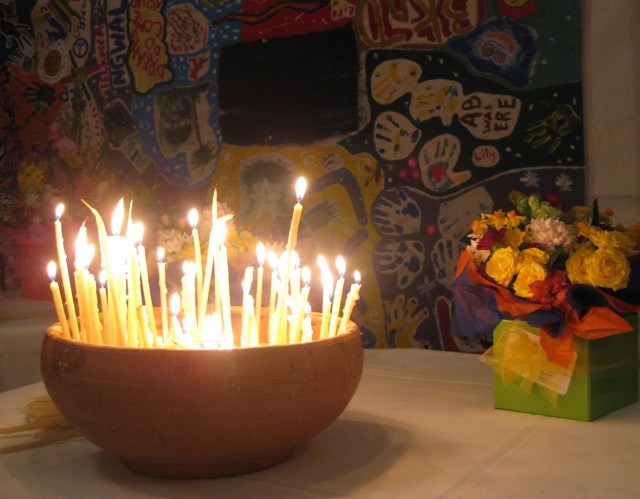
We sing. Songs we all know the words to, or hum, or make up. There are no song sheets. You  don’t have to have learned to read to belong here. Our hands are free to cradle lit candles and sprigs of rosemary.

Please swallow your pride
If I have things you need to borrow
For no one can fill those of your needs
That you don’t let show
For it won’t be long
‘Til I’m gonna need
Somebody to lean on


They say we stand for nothing and
There’s no way we ever could
Now we see everything that’s going wrong
With the world and those who lead it
We just feel like we don’t have the means
To rise above and beat it
So we keep waiting
Waiting on the world to change
It’s hard to beat the system
When we’re standing at a distance
So we keep waiting
Waiting on the world to change


We hold a minute’s silence, and it is deep and rich and full.

There are names unspoken…tears unshed…and hope unlooked for. We only need to look around to know we are not alone in this grief. We only need to look around to have more than our hunger fed, our coldness clothed… instead we know the truth.


We are not strangers to one another as we thought when we arrived.


And a last a cappella chorus rings out…


Amazing Grace, how sweet the sound
That saved a wretch like me
I once was lost but now am found
Was blind but now I see


Oo0oO

Another pleasant Melbourne evening, my housemate Freya and I are walking her gentle dog Nala to the oval for a play. We have an Ultra Grip Ball Launcher and even with both of us humans to the one of her we know well who will get tired of the game first.

We meet up with Gordy as we cross the road, he is heading home as we head out: “What kind of dog is that? Bitch looks like a dingo.  I’ve killed two dogs with my bare hands, they were coming at me and I just grabbed their front legs and ripped ‘em apart.”

Once he’s gone I try and explain how I don’t think he’s a risk to our pet but I think I make a bad job of it and there’s heightened awareness and extra company on walks in the weeks that follow.  I know enough to know now that Gordy was pretty level tonight.  Eyes clear and cleaned up, he must be in a good place.  He’s just making conversation.  Speaking his truth.  Why do we think about what we need to do to protect our dog and not think about what happened to Gordy that he’s in a situation somehow where he’s defending himself, his life, with his bare hands?

I used to look for the right answers once.  Now I look for the right questions.

Oo0oO

A stranger stops my friend Lyn and I, as we are walking down Swanston Street, to ask an inane question.   She and I do lunch now and then to catch up since I dropped off the corporate ladder. I say something harsh and unkind about him once he leaves. Gormless.

My friend smiles and says, “Sometimes you are very Christian, and sometimes you are so not.”  My smile twists and becomes wry, “No. I’m a Christian all the time,” I say, “…sometimes I’m better at it than others.”

I used to think that helping the poor would make me holy somehow. But I am as holy, and as human, as I have ever been.  Riding that 57 tram home later that day, I see Gordy again. He stands up to let a lady sit down and, when other women get on board, chastises other guys into giving up their seats too.  He flirts with a few girls and makes general conversation, “Hot ain’t it? Where you goin’?”

He says hello to me and I reply “Hi, Gordy, how are you?”

Confused, he answers “I don’t know you, I don’t know you”

I explain about meeting a few times, a long time ago and far apart but he just repeats, again and again, “I don’t know you”.  I get off at the stop after ours, cut home through the park, following the path that winds back and forth instead of cutting across the grass directly like I usually would.  It’s slower. I hold Gordy in my mind. I hold scared Gordy in my mind and slowly make my way home, hoping he’s made it ok to his.

Oo0oO


[Five years later…]

I am making my way to Coles to pick up some ingredients for dinner on the way home from work when I see Gordy sitting on the corner of Flinders and Elizabeth St with the cutest puppy sleeping on a blanket at his feet.  My momentum carries me past before my brain catches up and my spirit stirs.  I hesitate, and go back.  “Hey Gordy, I’m just heading into the Coles here, have you eaten? Can I pick up anything for you or the puppy?”

He says, “Nothing for me” proudly, “but some biscuits for the puppy would be great.”

I head in and dither over what to buy: puppy vs. adult food, large dog vs. small dog food, how big a bag if Gordy has to carry it around vs not being generous.  I finally get clear and head to the corner and… I can’t see them… oh.

My mind starts running, Gordy had sort of flinched when I used his name.  He never remembers me.  Maybe he felt suspicious of my motives, paranoid?  I check all directions from the intersection, check out the tram stops hoping to catch sight of him.  Damn it.  I just spent $15 on dog food I don’t have a use for.  Should I leave it here at the corner in case he comes back?  Did I take too long?  Did he assume I wasn’t coming back? Sigh.  The reasons for stopping in the first place were right.  It doesn’t matter that he isn’t here.

But it does.

I am disappointed by the ‘squandered’ generosity that goes unappreciated.

Oh well, Ray and Ben’s dogs will have a litter of puppies soon – it will be used eventually…

I cross to Flinders St Station and wait on the platform for the train. Last I know he lived in North Melbourne – I’m heading to Footscray where I live now – same line so I’m still scanning the platforms hoping to catch sight of him. Nothing. No sign. I find an empty seat on the train when it pulls up and slump down in the keep-to-myself-don’t-talk-to-me mode I generally assume on public transport.  The train moves off, the doors at the back of the carriage open and I idly muse on what it is people are looking for when they move down through the train while it’s moving when there are free seats everywhere? As I stare blankly at the dark tunnel walls slipping past.  The group, two guys and a girl, sit down across the aisle from me, and… beside me.  One of them is Gordy.

I very casually say, “Oh, could you pass this over for me?’

I see the surprise. Surprise I see them? That I will talk to them? That I will recognise Gordy without his hand out?  That I actually came through with the dog biscuits? Gordy moves to sit next to me with the puppy so ‘he’ (the puppy) can thank me, he is soft and adorable.  We chat all the way to Footscray, one of his mates eats the Snickers I threw in. Gordy says “I’ll definitely remember you this time.” I have my doubts and sitting together, sharing together, it feels entirely unimportant.  Though I have hope.

I’m still not holy.  Gordy isn’t a hero in this story, nor am I. We’re pretty much still the people we were at the start.  Still living.  I have learned that I can’t wait on the world to change. I have to start with myself.  Our conversation falls into silence, and it is deep and rich and full.

I don’t need Gordy to remember my name; that might be too hard or asking too much.  What I want him to remember is being reached out to, the mutuality of our exchanges. Equal parts in the same whole… it humbles and humiliates me.  I hope he feels looked for, I hope he feels found – as I have been.

The streets of Melbourne speak.  Buskers busk, beggars beg and people hand out pieces of paper offering good deals on diamonds, discounted burgers or advocating for autonomy of Tibet – everyone has something to say. Mostly we veer round them, but not me.  I’m in a different job these days, these are still my neighbours though and my friends – I know better now.  We help each other sometimes and our lives are different, better, for the knowing of each other. Listen Melbourne, I am speaking…

“What’s your name?”


Talitha Fraser


I wrote this piece a short story entry for the inaugural Brotherhood of St Lawrence Hope Prize “to encourage writing that transcends stereotypes of ‘the poor’ and reflects the resilience we know that people show in the face of poverty and testing times”. I didn’t win or anything so I can share my piece here – the years that I worked with the homeless community (largely through Seeds and Urban Seed) in Melbourne were transformative and it feels good to have an opportunity/ excuse to reflect on and share some learnings from that time. Thanks to Katherine, Susan and Sally for handholding me through the writing and editing process – this is noticeably tighter than my usual work thanks to you!

IMG_5810

Wake up

My alarm went off at 7.30am. “Wha-?” Snooze.

Why did I set it early again? Not work… Oh. I remember I need to walk to Maidstone via an ATM to collect a network repeater I bought off the local Buy/Swap/Sell Facebook group.

The alarm sounds again. Snooze.

This is not how I thought my weekend was going to go… I had Friday/Saturday clear – maybe to write and have some sacred space. One housemate is away at a wedding and school holidays have started, things will be quiet around the house.  Yet somehow a conversation has started up about supporting a family of refugees who are staying in two rooms at The Palms. They’re approved for housing but the waiting list could mean anywhere between days and months or, let’s face it, months and years before a 5 bedroom place with disability access comes up.  At the motel they will run through their income for a fortnight purely on accommodation leaving nothing for transport and food.  It seems on Monday they will move in with us.

I wonder whether anyone might imagine that this is some extraordinary thing?

The room swap for my shift-working housemates’ peace may now be a bit redundant.  We have four bathrooms between three units which felt very luxurious not to have to negotiate, though to cycle through 6 new others might take some negotiation, similarly with the use of the kitchen when dinner is in progress.  My head keeps going through the details – need: beds, bedding, another fridge…

The alarm sounds again. Snooze.

…and more internet, which means a wireless signal repeater, which means you have to get up now and go and collect it.


The signal repeater is in place.  The signal is extending further than it did before but it’s not any stronger.

These are the the basic tenets of our faith: I was homeless and you gave me shelter, hungry and you gave me something to eat, disconnected and you gave me connection.

This is what we are called to.

Is how it will inconvenience us the place to start our discernment about it?

I believe in Your ability to provide not only the practical and material things but also for the mental, emotional and spiritual needs of our community.

I do not need to be able to see the way forward as long as I can see You in what we are setting out to do – trusting that You know all that has been, is, and will be.

This is it. Are you ready?


I confess I cried a little today, re-packing and putting away boxes I had unpacked with such gratitude only days before, to make space for the others coming.  I go and walk it off: “Who is this space home for? It’s called a’share house’, what were you expecting? I want to build a foundation that is strong. Rooted.  I have lived here two weeks. Who am I to extend safety and stability to anyone else?”

I turn up a side street to get home only to realise it is a dead end. I double-back on myself and notice a cane basket of clothes out as hard waste on the verge.  I pick it up and carry it with me… a physical manifestation of providence… feel the weight of this, touch it, look at it, take it with you. Providence.  And, somehow, I feel better.

Reassured of my physical capacity for carrying things.


We try and create a sense of welcome.

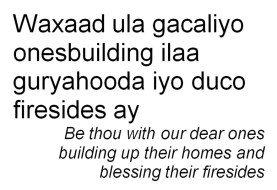
We know there’s limited language between us so we create a bi-lingual, pictorial noticeboard that will have all our names, where we are, what we’re doing. We clear out, clean and label the cupboards our new roommates can use in the kitchen and decorate with a Somali proverb we think speaks to the the sense of home we want to create.

IMG_5018  IMG_5021

somali welcome  somali proverb

And yeah.

They are not literate in Somali or English.

So, just in case anyone is ever wondering whether it is an extraordinary thing to live with a family of refugees, this is how it comes about: a series of small and ugly thoughts, some big, bright, beautiful thoughts, and some well-meaning but misguided good intentions.

Sometimes you say the wrong thing, sometimes you do the wrong thing.
Sometimes you say the right thing, sometimes you do the right thing.
You can do that in any family.

I am blessed in the trying.
My life is more noisy, more colourful, more crazy and I am the happier for it.
It starts when you stop pressing “Snooze”.

Hostility or hospitality?

059

I wake early on the second morning in my new house. I’m still learning the new sounds and lie half asleep trying to associate each noise to an action: that is a drawer opening, that is someone coming downstairs, that is someone going out the front door, that is someone being really careful to be quiet in the kitchen… How considerate. I roll up thinking: if I let them know I’m up, they can stop worrying about waking me.

The lights aren’t even on! How is anyone meant to get ready for work in the dark.  I flip them on to tease my housemate, “Thanks for being considerate but you don’t have to tiptoe around in the dark!”  and realise very quickly that this roughly-dressed man coming out of our pantry is not she.

I think we both froze and then I followed up with something stellar like, “Hey”

I follow that up with just what’s on the surface.

“Are you looking for something to eat?,” and continue babbling as I move into the kitchen, “Do you want toast? I could make toast. And coffee.  I can’t really function before I’ve had coffee.”

He says, “No thanks” and we move into a conversation about the purpose of the Footscray Community Outreach house.  He’s on the street and looking for housing but we’re really set up for families with children so he can’t stay here … “How did you get in?” I ask.  “Knocked”. He replies casually.

I talk about our open community dinner.  I don’t have housing referral information but if he comes back tonight I’ll print stuff out.  Eventually we run out of small talk and I indicate I need to start getting ready for work. “No problem,” he says, “I’ll show myself out.” But I follow him to the door anyway, see him out, check it latches, then check all the other latches. Just in case.

Later in the day I fire an email around: “Hey guys, think we need to be making sure the doors are secure at night. Found a community member in the kitchen at 6.30am!”

Aah, but, as it turns out, my new friend is not a known community member and I’ve been having a chat with someone whom I guess may have been casing the place looking for something to take.

There’s lots of different ways to respond to finding someone you don’t know in your kitchen at 6.30am.  Apparently, “What the hell are you doing in here? Get out!” {with optional further swearing for colour}, is a more common response…  and quite a confrontational one.

At the first point of contact, I am standing in the doorway that, as far as this guy might imagine, is the only way out of the room.  He will have to go through me to get out.

I’m in my pyjamas, I’m not wearing my glasses and (sorry to let the side down) I’m a girl.

I genuinely didn’t feel unsafe at the time.  My confusion was probably an advantage to him – had my housemate just let him in? was he known in the community? has he lived here before?  

What is your need?  I have just unpacked in the kitchen, bought some food… is there anything I would really miss? Anything I couldn’t give you?

It starts to sink in more as the community responds to my blithe email.  Housing referral information, sleeping bag, dinner, someone to be with me when he comes back to the house (it will be a bloke), clear boundaries to be communicated, all residents are informed and offered support – “How can we continue to make this feel like a safe space?”… it may have been out of the box, but as the story spreads beyond community to friends and work colleagues I am asked again and again “Why didn’t you tell him to get out!?”, I can only respond helplessly, “Well, if I’m choosing out of hostility and hospitality… I can back hospitality up yeah?”

In responding out of my pre-coffee and ignorant state I have possibly  dialed back a scenario that might have been unpleasant.  I’ll give you that.  But I am interested in what the factors were that made my response different from what it might have been  because it seems how spaces are set up and what our expectations are of those spaces purpose can impact the range of responses available to us when welcoming strangers:


  • I expected my home space to be a common one and for stranger to be welcome there
  • As a lead tenant of the house –  hosting folks who rock up is part of the position description
  • I expect people looking for something at 6.30am need it. I don’t do anything at 6.30am without a really good reason.


How can we make: “What is the need that brings you to this place?” our first consideration in responding to others? (whether that’s kids, partners, work colleagues, or randoms in off the street…)

Not a bad thing to pick up the first week on the job.


protest

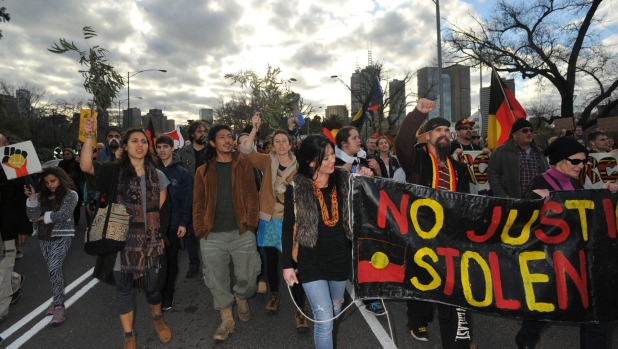
Protesters make their way across Princes Bridge. Photo: Joe Armao

This month the Government announced that they were going to turn off/stop maintaining access to water, electricity, etc. in multiple rural indigenous communities and this protest came very quickly in response.  We like to think that “taking the land away” or dispossession was something that happened long ago and far away and has nothing to do with me but then something like this happens to bring it front and centre and our willful blindness is confronted by the reality: this is still an issue and it is still happening.

These are the words the protestors called in chorus:

“Always was, always will be, Aboriginal land”

Talk to me about economics. Talk to me about closing the supermarket so people had to travel for food, closing the school so families with children had to travel or move, talk to me about closing the petrol station – it might be true that some of these communities have only 4 people living in them but there used to be many more.

“Always was, always will be, Aboriginal land”

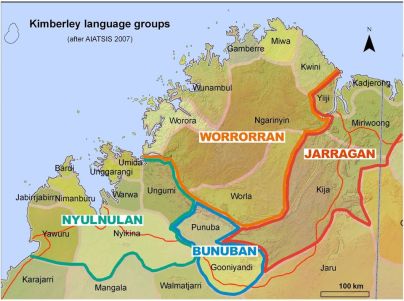
Talk to me about land and place.  There’s hardly any of them, why should they get special treatment? They can move to the nearest big town… to give you a sense of scale Kimberley is c. 3 times the size of England and has a population of 40-50K people.  The nearest town is, well, pretty darn far away – what we white fullas can forget is that indigenous Australia is a lot kimberleymore like Europe, made up of many different countries with their own language, and myths, and dances and traditions… this map on the left is rough overview of the First Nations Peoples and language groups in Kimberley.  This is their map of how they see the world –  we wouldn’t expect it to be reasonable to ask the Italians to move to the nearest town in France and give up everything that informs their own unique culture and identity and we should not ask it of Aboriginal people here either.
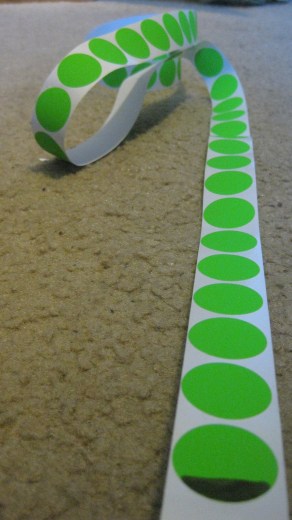
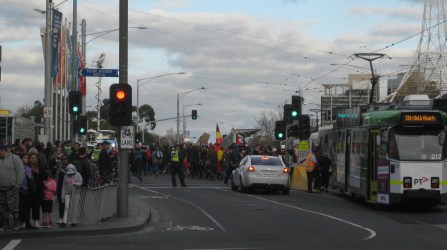
photo credit: kimberleyfoundation.org.au

“Always was, always will be, Aboriginal land”

Talk to me about civilisation.  We brought civilisation with us, did we not?  Are these people not better off because we bought them farming and livestock and tools and machinery they didn’t have before?  We brought in the piped water and wired electricity and overrode the old ways with our better new ways…?  There might not be many left who remember and could live by the old ways.  We’ve created a dependence and now you want to take the civilisation away? Did our civilisation include the law, and does the law include provision for human rights like access to water?  What is civilisation?

“Always was, always will be, Aboriginal land”IMG_5269

Tell me a story.  Tell me who your people are and where you are from.

At the start of some (too few) events, ceremonies or proceedings you might hear an Acknowledgement of Country… We acknowledge that we gather on the land of which the Peoples of the Kulin Nations have been custodians since time immemorial.  I went to a cultural awareness training day with Aunty Doreen Garvey-Wandin a few years ago and she did this activity with sticky dots to illustrate how Aboriginal people have lived here for 50,000 years – if each dot is equivalent to 1,000 years – then this black drawing, on the very last dot, represents the 200 years of contact/settlement with us white fellas.  We are a blip on a landscape that was here long before we came.  We need to understand and be reminded of our place in the story of things from Aboriginal peoples point of view. While, I’m here I’ll point out that this is what makes “Australia Day” also so hard.  It marks (and celebrates) the anniversary of colonisation over the culture that had existed here many thousands of years prior.  These acknowledgements should not be empty words.  We eat, we play, we gather, we work – on land where indigenous people were here before us – doing those things first – for many, many years.

“Always was, always will be, Aboriginal land”

Talk to me about belonging.  Do we “belong” here?  I think there is something in the psyche of all of us asking this question because at some level, perhaps we sense the truth of having displaced others to enjoy the space we now hold.  I am from New Zealand, and we have our own history and yet unfolding story of fair trade for land, foreshores and fish – and who should be the custodians of these things.  We need to respect Traditionally Acquired Knowledge more than we do because people lived and ate seasonably and sustainably and can probably teach us a thing or two about living well in this climate and speak wisely into other current social issues.  Do I belong here in this crowd? It can be easy to feel smug – Maori is taught in our schools, we had a treaty and are hearing settlement claims, we have a Ministry for Maori Development… but that is not enough: Te Whiti, a Maori Chieftain, exhorts us to “Ask that mountain” – the land itself bears 076witness to what takes place beyond any particular action of my lifetime whether we have done everything that we can to make things right.  How might the Great Barrier Reef answer? Or Uluru? or The Big Pit in Kalgoorlie? I was proud to see the Maori flag raised and carried alongside the Aboriginal flag in solidarity.  Others who have experienced displacement themselves – they do not forget.  We need to recognise that living in a world that has more languages, more dances, more patterns, more stories makes it a more enriching place for all of us and is worth protecting and defending by us all.

We chant it together.  We claim and proclaim it publicly:

“Always was, always will be, Aboriginal land”

“When you haven’t got a homeland or place to go, you lose your identity,and personality and you become sick.
Where are these communities going to go?”

Indigenous activist, Rieo Ellis

Thanks to ANTaR for this summary of the issue:

Announcement to discontinue funding essential services in remote communities

  • In September 2014 the Federal Government announced that it would no longer fund essential municipal services including supply of power, water, and management of infrastructure in remote Aboriginal communities in Queensland, Victoria, NSW, Western Australia, and Tasmania, despite having done so for decades.
  • The South Australian government refused to sign an agreement, and the Western Australian government signed an agreement with the Federal Government for funding of $90 million which would fund services until June 2016.
  • The WA government announced that it would not pick up the bill beyond that time and would instead close between 100 and 150 of the 274 remote Aboriginal communities in the state.
  • The decisions by both the Federal and the State Governments occurred without any consultation with Aboriginal people in the affected communities.

How many people live in these communities

According to the WA Department of Aboriginal Affairs, there are around 12,000 Aboriginal people currently living in the 274 communities in WA, with around 1,300 living in 174 of the smallest. In 115 of those communities, there are around 500 people in total, or an average of 4.4 people per community.

What will the impact be of shutting down communities

Premier Barnett himself acknowledged that closing communities would:

“…cause great distress to Aboriginal people who will move, it will cause issues in regional towns as Aboriginal people move into them.”

Professor Patrick Dodson, Yawuru man from the Kimberley, who authored a review of small homeland communities for the NTgovernment said closing down communities would:

“…be disastrous, increasing access to drugs and alcohol and exacerbating social tensions,  which would flow on to antisocial behaviour and incarceration. The immediate consequences would be to create an internal refugee problem for the indigenous people.

He also said that breaking people’s connection to land:

“…would threaten the survival of Aboriginal knowledge and culture, because in towns people were restricted from camping, lighting fires, hunting and fishing.” 

What criteria will be used to close communities

It is not known where any closures might occur, nor what criteria might be used.  In fact, there has been great anxiety and uncertainty over this, particularly as no consultation has occurred prior to the statement being made by Premier Barnett.

The Federal Government prepared a document in 2010 titled “Priority Investment Communities – WA” which categorised 192 of 287 remote settlements as unsustainable. The majority of those assessed as unsustainable are in the Kimberley, with 160 communities in the region.

Non-Indigenous communities

We could not find any examples of government decisions to refuse to fund essential municipal services for non-Indigenous communities, including small communities in remote areas in WA. For example, the non-Indigenous community of Camballin (of about 300 people) is located near Looma (an Aboriginal community of around 370 people) in the Kimberly. Looma will be assessed by the Western Australian government for funding whereas Camballin will not.

I give thanks

oak tree california

in a cocoon of dappled sunlight

I am embraced between the roots

and the arms of this oak tree

here I find You

and know I am not alone

I am not unwanted

I am not without purpose

You make me daily

and I give thanks

for this daily bread

Talitha Fraser

023 024 copy 025 copy

KNOW THE WORD

What is the kingdom of God like? To what can we compare?

Why do you not know how to interpret the present time?

What are you discussing as you walk along?…..What things?

Are you not misled because you do not know the Scriptures or the power of God?

022 copy

Queries What is our honest experience of Jesus Christ?
What are the stories that found and shape our lives, our locality, our culture?
How will we discern the Living Word who speaks to us through the biblical story, prayer and the people and situations around us?
How do the questions from the gospel stories shape our understanding?
 What are the connections between the story of the Bible, our world and ourselves?

019 copy

GROW HOME

Do you also want to leave? Did I not choose you twelve?

Have you anything here to eat?

If there were not (many homes in my Father’s house), would I have told you that I am going to prepare a house for you?

What were you arguing about as we travelled on the road?

015 copy

Queries Who are our kin/mob/family? (Mark 3) 
In what ways will we or will we not ‘be there for each other’ as ‘family’?
How do our families of origin and previous experiences of community affect us now?
How can we practice the disciplines of Poverty, Chastity and Obedience in this locality?
What are our economic necessities? (home, household, village…etc.)
What does it mean for us to be the body of Christ? Where am I putting my own body?

014

GO ENGAGE

When I sent you forth without a money bag or a sack or sandals, were you in need of anything?

How many loaves do you have?

Which one was neighbour to the robber’s victim?

Do you want to be well?

013 - Copy

Queries 
How does Jesus’ life, incarnation, death & resurrection shape our practice of mission?
Who is at our table? Whom are we offering hospitality?
 Are we dependent on those we serve? Are we experiencing hospitality from those we serve?
 What is my vocation/calling? What voices are shaping our choices?
 What is ‘good work’? 
In what ways can we put those considered least at the top of our priorities?
 How are we deepening our understanding and practice of Teaching, Healing and Exorcism in light of the Word?

 030 copy

obama in Foots 05.01.15