Tag Archive: homelessness


IMG_9876.JPG


God our creator, provider, and carer,

You are the best and fairest;

We are committed to searching out and living the way that you want us to.

Help us not to worry about the future,

and to share what we have with others.

Forgive us when we destroy life

and teach us to create life instead.

Give us courage to choose to

forgive those who hurt us.

Be with us in our time of need

and help us not to give up.

Our safety and life is in you.

Amen

Wake up

My alarm went off at 7.30am. “Wha-?” Snooze.

Why did I set it early again? Not work… Oh. I remember I need to walk to Maidstone via an ATM to collect a network repeater I bought off the local Buy/Swap/Sell Facebook group.

The alarm sounds again. Snooze.

This is not how I thought my weekend was going to go… I had Friday/Saturday clear – maybe to write and have some sacred space. One housemate is away at a wedding and school holidays have started, things will be quiet around the house.  Yet somehow a conversation has started up about supporting a family of refugees who are staying in two rooms at The Palms. They’re approved for housing but the waiting list could mean anywhere between days and months or, let’s face it, months and years before a 5 bedroom place with disability access comes up.  At the motel they will run through their income for a fortnight purely on accommodation leaving nothing for transport and food.  It seems on Monday they will move in with us.

I wonder whether anyone might imagine that this is some extraordinary thing?

The room swap for my shift-working housemates’ peace may now be a bit redundant.  We have four bathrooms between three units which felt very luxurious not to have to negotiate, though to cycle through 6 new others might take some negotiation, similarly with the use of the kitchen when dinner is in progress.  My head keeps going through the details – need: beds, bedding, another fridge…

The alarm sounds again. Snooze.

…and more internet, which means a wireless signal repeater, which means you have to get up now and go and collect it.


The signal repeater is in place.  The signal is extending further than it did before but it’s not any stronger.

These are the the basic tenets of our faith: I was homeless and you gave me shelter, hungry and you gave me something to eat, disconnected and you gave me connection.

This is what we are called to.

Is how it will inconvenience us the place to start our discernment about it?

I believe in Your ability to provide not only the practical and material things but also for the mental, emotional and spiritual needs of our community.

I do not need to be able to see the way forward as long as I can see You in what we are setting out to do – trusting that You know all that has been, is, and will be.

This is it. Are you ready?


I confess I cried a little today, re-packing and putting away boxes I had unpacked with such gratitude only days before, to make space for the others coming.  I go and walk it off: “Who is this space home for? It’s called a’share house’, what were you expecting? I want to build a foundation that is strong. Rooted.  I have lived here two weeks. Who am I to extend safety and stability to anyone else?”

I turn up a side street to get home only to realise it is a dead end. I double-back on myself and notice a cane basket of clothes out as hard waste on the verge.  I pick it up and carry it with me… a physical manifestation of providence… feel the weight of this, touch it, look at it, take it with you. Providence.  And, somehow, I feel better.

Reassured of my physical capacity for carrying things.


We try and create a sense of welcome.

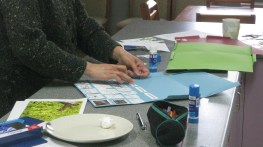
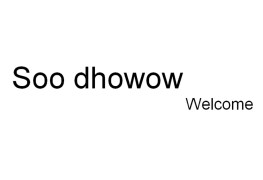
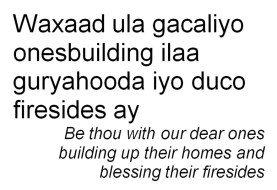
We know there’s limited language between us so we create a bi-lingual, pictorial noticeboard that will have all our names, where we are, what we’re doing. We clear out, clean and label the cupboards our new roommates can use in the kitchen and decorate with a Somali proverb we think speaks to the the sense of home we want to create.

IMG_5018  IMG_5021

somali welcome  somali proverb

And yeah.

They are not literate in Somali or English.

So, just in case anyone is ever wondering whether it is an extraordinary thing to live with a family of refugees, this is how it comes about: a series of small and ugly thoughts, some big, bright, beautiful thoughts, and some well-meaning but misguided good intentions.

Sometimes you say the wrong thing, sometimes you do the wrong thing.
Sometimes you say the right thing, sometimes you do the right thing.
You can do that in any family.

I am blessed in the trying.
My life is more noisy, more colourful, more crazy and I am the happier for it.
It starts when you stop pressing “Snooze”.

protest

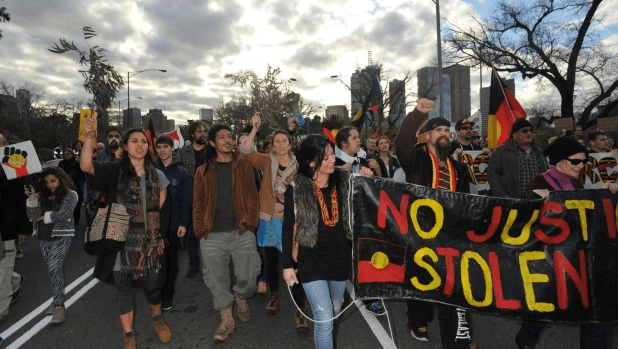
Protesters make their way across Princes Bridge. Photo: Joe Armao

This month the Government announced that they were going to turn off/stop maintaining access to water, electricity, etc. in multiple rural indigenous communities and this protest came very quickly in response.  We like to think that “taking the land away” or dispossession was something that happened long ago and far away and has nothing to do with me but then something like this happens to bring it front and centre and our willful blindness is confronted by the reality: this is still an issue and it is still happening.

These are the words the protestors called in chorus:

“Always was, always will be, Aboriginal land”

Talk to me about economics. Talk to me about closing the supermarket so people had to travel for food, closing the school so families with children had to travel or move, talk to me about closing the petrol station – it might be true that some of these communities have only 4 people living in them but there used to be many more.

“Always was, always will be, Aboriginal land”

Talk to me about land and place.  There’s hardly any of them, why should they get special treatment? They can move to the nearest big town… to give you a sense of scale Kimberley is c. 3 times the size of England and has a population of 40-50K people.  The nearest town is, well, pretty darn far away – what we white fullas can forget is that indigenous Australia is a lot kimberleymore like Europe, made up of many different countries with their own language, and myths, and dances and traditions… this map on the left is rough overview of the First Nations Peoples and language groups in Kimberley.  This is their map of how they see the world –  we wouldn’t expect it to be reasonable to ask the Italians to move to the nearest town in France and give up everything that informs their own unique culture and identity and we should not ask it of Aboriginal people here either.
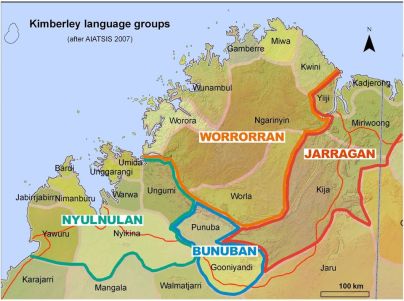
photo credit: kimberleyfoundation.org.au

“Always was, always will be, Aboriginal land”

Talk to me about civilisation.  We brought civilisation with us, did we not?  Are these people not better off because we bought them farming and livestock and tools and machinery they didn’t have before?  We brought in the piped water and wired electricity and overrode the old ways with our better new ways…?  There might not be many left who remember and could live by the old ways.  We’ve created a dependence and now you want to take the civilisation away? Did our civilisation include the law, and does the law include provision for human rights like access to water?  What is civilisation?

“Always was, always will be, Aboriginal land”IMG_5269
Tell me a story.  Tell me who your people are and where you are from.

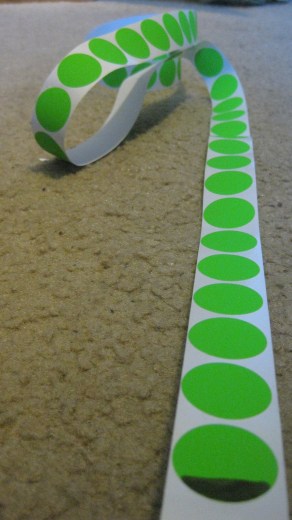
At the start of some (too few) events, ceremonies or proceedings you might hear an Acknowledgement of Country… We acknowledge that we gather on the land of which the Peoples of the Kulin Nations have been custodians since time immemorial.  I went to a cultural awareness training day with Aunty Doreen Garvey-Wandin a few years ago and she did this activity with sticky dots to illustrate how Aboriginal people have lived here for 50,000 years – if each dot is equivalent to 1,000 years – then this black drawing, on the very last dot, represents the 200 years of contact/settlement with us white fellas.  We are a blip on a landscape that was here long before we came.  We need to understand and be reminded of our place in the story of things from Aboriginal peoples point of view. While, I’m here I’ll point out that this is what makes “Australia Day” also so hard.  It marks (and celebrates) the anniversary of colonisation over the culture that had existed here many thousands of years prior.  These acknowledgements should not be empty words.  We eat, we play, we gather, we work – on land where indigenous people were here before us – doing those things first – for many, many years.

“Always was, always will be, Aboriginal land”

Talk to me about belonging.  Do we “belong” here?  I think there is something in the psyche of all of us asking this question because at some level, perhaps we sense the truth of having displaced others to enjoy the space we now hold.  I am from New Zealand, and we have our own history and yet unfolding story of fair trade for land, foreshores and fish – and who should be the custodians of these things.  We need to respect Traditionally Acquired Knowledge more than we do because people lived and ate seasonably and sustainably and can probably teach us a thing or two about living well in this climate and speak wisely into other current social issues.  Do I belong here in this crowd? It can be easy to feel smug – Maori is taught in our schools, we had a treaty and are hearing settlement claims, we have a Ministry for Maori Development… but that is not enough: Te Whiti, a Maori Chieftain, exhorts us to “Ask that mountain” – the land itself bears 076witness to what takes place beyond any particular action of my lifetime whether we have done everything that we can to make things right.  How might the Great Barrier Reef answer? Or Uluru? or The Big Pit in Kalgoorlie? I was proud to see the Maori flag raised and carried alongside the Aboriginal flag in solidarity.  Others who have experienced displacement themselves – they do not forget.  We need to recognise that living in a world that has more languages, more dances, more patterns, more stories makes it a more enriching place for all of us and is worth protecting and defending by us all.
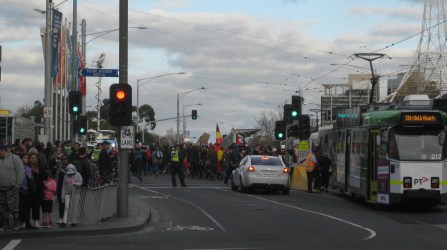
We chant it together.  We claim and proclaim it publicly:

“Always was, always will be, Aboriginal land”

“When you haven’t got a homeland or place to go, you lose your identity,and personality and you become sick.
Where are these communities going to go?”

Indigenous activist, Rieo Ellis

Thanks to ANTaR for this summary of the issue:

Announcement to discontinue funding essential services in remote communities

  • In September 2014 the Federal Government announced that it would no longer fund essential municipal services including supply of power, water, and management of infrastructure in remote Aboriginal communities in Queensland, Victoria, NSW, Western Australia, and Tasmania, despite having done so for decades.
  • The South Australian government refused to sign an agreement, and the Western Australian government signed an agreement with the Federal Government for funding of $90 million which would fund services until June 2016.
  • The WA government announced that it would not pick up the bill beyond that time and would instead close between 100 and 150 of the 274 remote Aboriginal communities in the state.
  • The decisions by both the Federal and the State Governments occurred without any consultation with Aboriginal people in the affected communities.

How many people live in these communities

According to the WA Department of Aboriginal Affairs, there are around 12,000 Aboriginal people currently living in the 274 communities in WA, with around 1,300 living in 174 of the smallest. In 115 of those communities, there are around 500 people in total, or an average of 4.4 people per community.

What will the impact be of shutting down communities

Premier Barnett himself acknowledged that closing communities would:

“…cause great distress to Aboriginal people who will move, it will cause issues in regional towns as Aboriginal people move into them.”

Professor Patrick Dodson, Yawuru man from the Kimberley, who authored a review of small homeland communities for the NTgovernment said closing down communities would:

“…be disastrous, increasing access to drugs and alcohol and exacerbating social tensions,  which would flow on to antisocial behaviour and incarceration. The immediate consequences would be to create an internal refugee problem for the indigenous people.

He also said that breaking people’s connection to land:

“…would threaten the survival of Aboriginal knowledge and culture, because in towns people were restricted from camping, lighting fires, hunting and fishing.” 

What criteria will be used to close communities

It is not known where any closures might occur, nor what criteria might be used.  In fact, there has been great anxiety and uncertainty over this, particularly as no consultation has occurred prior to the statement being made by Premier Barnett.

The Federal Government prepared a document in 2010 titled “Priority Investment Communities – WA” which categorised 192 of 287 remote settlements as unsustainable. The majority of those assessed as unsustainable are in the Kimberley, with 160 communities in the region.

Non-Indigenous communities

We could not find any examples of government decisions to refuse to fund essential municipal services for non-Indigenous communities, including small communities in remote areas in WA. For example, the non-Indigenous community of Camballin (of about 300 people) is located near Looma (an Aboriginal community of around 370 people) in the Kimberly. Looma will be assessed by the Western Australian government for funding whereas Camballin will not.

the things we plant

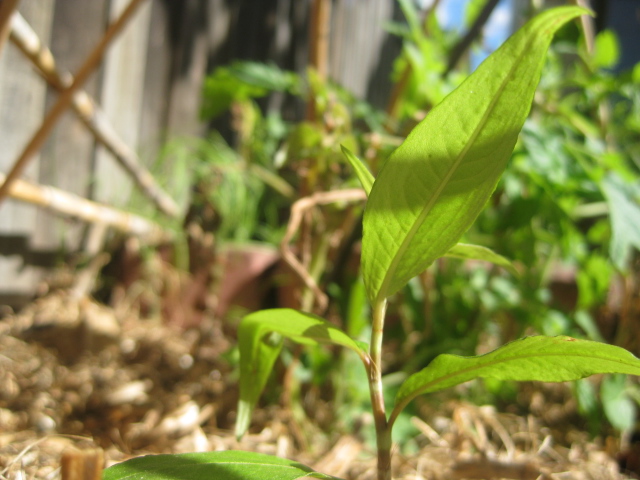
seedlings gardenReflecting today on the things we plant in the hopes of fruit to come.  We believe in planting so we do it but ultimately we have very little control over what grows and who it belongs to.  The pain is in our awareness of this and our discipline is planting anyway – even though we’re tired and someone else may receive the benefit of our careful tending, someone else may not like the plants we’ve chosen or where we positioned them and tear them out like weeds.  The thing that I value is only valued by others if they want it themselves.  What I grieve for, is not this house, much like another having four walls and a roof, but the harvest hoped for here that will not be realised by me.

There is a large harvest, but few workers to gather it in.  Pray to the owner of the harvest that he will send out workers to gather in his harvest.


welcome


This beautiful artwork is used with permission of  the talented artist Liz Braid www.lizbraid.com

As of April 2014 there are 1138 children in detention in Australia’s detention centres.  It has been hard to know how to respond in the face of Australia’s inhospitable and inhumane policies/treatment of refugees seeking asylum.

Our God is Undocumented, a book by Ched Myers, offers a biblical exegesis for the American context and is drawn on below to consider the Australian context through the use of reflective prayer stations.

map of 006the world – how can we identify with the journey of refugees, pin where we are from, our parents, our grandparents… use different coloured pins {Our God is Undocumented, p.10 “We should never forget that the first immigration “crisis” on this continent came as a result of European colonisation of the Americas. This resulted in three great disasters: the obliteration of First Nations sovereignty and cultures, the violent removal of millions of Africans to the Americas in the slave trade, and the impoverishment of countless people due to relentless resource and labor extraction… poor immigrants today are simply following the trail of wealth stolen from their land centuries ago.}

Australian has its own unreconciled history with its First Nations Koori people.  Koori people have lived on this land for 50,000 years, us white folk less than 250 years.  There is a bit of a “We outnumber you and ours is the dominant culture, why don’t you just assimilate/get with the programme”  Where do we belong? What right did our ancestors have to arrive by boat for resources such as land and gold or to avoid famine?  How can we use our own personal stories/history to develop a sense of compassion for those still arriving today?  As can been seen at the Melbourne Immigration museum there have been waves of refugees from Vietnam, Philippines, Africa (Ethiopian, Eritrean, Sudanese…), Middle East (Iran, Iraq, Lebanon…) – what is the role of Australia in conflict/securing resources in these areas?009

Say (or hear) Lords Prayer together in different languages.  Spirit of Pentecost Acts 2.6,8,11 …in their own tongue. Didn’t all understand Latin/Greek but heard scripture in their own language.   {Our God is Undocumented p.28 “Perhaps it recognises that language is one of the fundamental things that makes us human and that linguistic distinctiveness characterised the original forms of human organisation before the rise of imperial monocultures.  The ancient wisdom preserved in this story reminds us that cultural heterogeneity is as essential to human social ecology as species diversity is to a healthy biosystem… more than 95% of the world’s spoken languages have fewer than 1 million native speakers.  Half of all the languages have fewer than 10,000 speakers.  A quarter of the world’s spoken languages and most of the sign languages have fewer that 1,000 users… It has been estimated that 20-50% of the world’s languages are already moribund, and that 90% (possibly even more) may be moribund or will have disappeared by 2100.”}

Does your congregating community have members from other cultures who attend? If not, why not? What are some ways to acknowledge, celebrate and affirm the cultural differences within our community? Language/stories/songs, festivals, wisdom of prophets/spiritual leaders, colours/fabrics/flags, food at morning tea, clothing… we all of us are made in God’s image – male/female, brown/yellow/black/white, no matter where we’re born. How can we draw on the richness of diversity in the God we worship?

020share communion together {Our God Is Undocumented p. 200 “Remember what has been dismembered.  This exhortation lies at the heart of the church’s eucharistic ritual, repeated with each element for emphasis. It reiterates and sums up the deep wisdom of biblical faith, the product of a people all too familiar with distress, displacements and near disappearance.  Whenever you ingest this memory, said Jesus on the eve of his execution, you join yourselves to our historic struggle to make the broken body whole.  It was, and is, both invitation and imperative, equally personal and political.  If we refuse to heed it, we are doomed to drift forever on or be drowned by the tides of empire, refugees all.”}

This is one loaf of bread. One body.
It’s broken.

As Jesus’ body was broken on the cross for us.

this bit might be me…
this bit might be Jarra…
this bit might be Ahmed…
this bit might be Rajesh…
this bit might be Sam, or Maya, or Bob, or Shirley…

When we eat this bread it is a reminder that we are all part of one whole – we might be a different colour, we might be a different size of a different shape  – but we are all part of the same body… connected.  And we are all of us broken.  In each taking a piece, and eating it at the same time, we are invited back into wholeness with God and012 with each other.

Angels – paper cut out? Something we can take away with us/put somewhere prominant to remind us to welcome the other {Our God Is Undocumented p.67 “…account of the angel travellers similarly attacked in Sodom, a violation that also ended in that city’s destruction (Jgs 19:15-25-Gn 19:1-11). …cautionary tale… “Do not neglect to show hospitality to strangers, for by doing this some have entertained angels without knowing it” (Heb 13:2).

#LoveMakesAWay is a movement of Christians seeking an end to Australia’s inhumane asylum seeker policies through prayer and nonviolent love in action, you can see their Facebook page here.  This is high-level commitment advocacy but there are less “extreme” places to start…

There is an initiative in Switzerland that suggests putting stickers on your mailbox to let your neighbours know what is available to borrow – we used to be able to knock on our neighbours door but nowadays spend more time online than in realtime…

Communities like Urban Seed in Melbourne offer a free meal to those marginalised by homelessness in Melbourne – but here’s the thing, they don’t only offer food to people who are homeless, they offer food to anyone that shows up for lunch as they explore what it means to be good neighbours in a busy city of commuters and extend us the invitation/challenge to do the same through their Strangers Are Fiction campaign.

Who are your neighbours? Do you know their names? What might be one thing you could do that might lead you into connecting with them? [fruit or flowers from the garden you want to share, or baking, maybe you take the initiative to borrow something next time you realise you’re low on milk or the grass is getting tall…] …who knows where this might lead?

Dolls house – have sample forms and invite people to write their own and take them home as a way of symbolically creating space for the other in your home {Our God Is Undocumented p.107 In my fathers house there is lots of room (Jn 14:2)

I went to an art exhibition last week with some art works around the theme of showing welcome to refugees such as that by Liz Braid above – they had some mock forms on the wall that said things like:

ASYLUM SEEKER
PROCESSING FORM

Please come in. What a
terrible journey you’ve had!
I’m so glad you have arrived
safely and to imagine, once
you’re healed, how much you
have to offer us.  Let me help
you with your bags, we’ll have
you unpacked in no time…
You are welcome here. APPROVED

Invite people to write their own words of welcome, take them home and put them in a room of our own house with some intentionality and deliberation – symbolically creating space for the other is a good place to start and this can create some mindfulness to extending hospitality/welcome when an opportunity presents itself.


Anne Lamott has said, “Hope begins in the dark, the stubborn hope that if you just show up and try to do the right thing, the dawn will come.”

Let us hope. Let us try and do the right thing.


This morning made my way to Melbourne Town Hall at 4.15am for the StreetCount – it’s my third year now.
80 volunteers canvassing the city 4.30-7.30am counting those experiencing primary homelessness or “sleeping rough”
23 people were interviewed and 36 observed, down on the c. 100 of other years. A sign of improvement or do people avoid the count?

Indian Store manager at Macca’s on Swanston Street really engaged with us, pointing out people as they came in – “You need to talk to him.”  He knows who the regulars are – “he’s been here 6 months now”.  They are part of the rhythm of his work, the store is open 24 hours and they clean at c.6am.”Oh, they all leave while we clean and then they come back – give it twenty minutes. He asked us what the survey was for? what it was supposed to achieve? “I have offered to find them a job, I can find them a place to stay if they are willing to share but they say ‘I am okay’, I do not know how to help them if they do not accept my help. I will pray.”

I didn’t know what to think of such generosity and perhaps the punters don’t either…

Of the 7 counted by my partner and I, two were asleep, two we interviewed and three declined to participate – of these, only one wasn’t in/near Hungry Jacks/Macca’s.  It makes me think twice about  representative capitalist power of the 24 hour- junk food joints, for the person missing the last tram or who just has no where else to go these fast food meccas offer a haven of warmth and safety.

One man we interviewed in Hungry Jacks flinches as the street sweeper goes by, “it’s so noisy… I haven’t slept…”  This man is 55, his health is deteriorating – Type 2 diabetes, sleep apnoeia, high blood pressure and a heart condition. He was discharged from the hospital at midnight and has hung out here for the intervening hours.  Some have turned away from the formality of our fluro vests and clipboards before we even say hello but this man is eager, hungry even, to speak with us and share his story.  He has been married, had kids, was on the school board for 5 years and ran his own small business – his grief is palpable as our questions probe the reasons behind his circumstances – the questionnaire doesn’t ask particularly personal questions: age, type of shelter, how long have you been there… but this is his life.  He cannot understand how his life came to this. He does not understand how a society he has strongly felt a part of and contributed to now feels so far removed. I don’t believe I understand it either. “What is there for my demographic? It is easier for a woman to get housing, or if I had a drug or alohol problem I could get help tomorrow… I am none of these things. I pay my rent. What help is there for me?” A food voucher for $30 quarterly, a night of accommodation at the Gatwick – these are piecemeal placebos for the people searching for home.

The other night I went to the 10th Annual Homeless Memorial. Once a year this motley community gathers to remember those ‘streeties’ or ‘parkies’ who have passed away. You can get hot soup, a hot dog, and warm clothes are available to take away. But it is about more than that. We are offered an opportunity to reflect on those people with whom we create connections, those with whom we feel ‘at home’, regardless of any material shelter. We remember those who now or have in the past offered light or warmth to our lives. Voice is given to the pain of separation from parents, siblings, children, society. Voice is given to the pain of decisions that cannot be unmade, things which cannot be unsaid and knowledge that we cannot go back – only forward. A humble gratitude is offered to ‘the people from the organisations represented here’, supported with warm applause from the crowd in and around the marquee.

We sing: songs we all know the words to. We don’t need song sheets. We cradle our lit candles and sprigs of rosemary.

Please swallow your pride
If I have things you need to borrow
For no one can fill those of your needs
That you don’t let show
For it won’t be long
‘Til I’m gonna need
Somebody to lean on


They say we stand for nothing and
There’s no way we ever could

Now we see everything that’s going wrong
With the world and those who lead it
We just feel like we don’t have the means
To rise above and beat it
So we keep waiting
Waiting on the world to change
It’s hard to beat the system
When we’re standing at a distance
So we keep waiting
Waiting on the world to change


We hold a minute’s silence, and it is deep and rich and full. There are names unspoken…tears unshed…and hope unlooked for. We only need to look around to know we are not alone in this grief. We only need to look around to have more than our hunger fed, our coldness clothed… instead we know the truth. We are not strangers to one another as we thought. And a last a cappella chorus rings out…

Amazing Grace, how sweet the sound
That saved a wretch like me
I once was lost but now am found
Was blind but now I see

I shifted over from NZ in July & started connecting regularly with Seeds from about October 2007. I have spent a lot of time since then trying to figure out exactly what “community” is. Marcus regularly talks about this concept of “growing home”, meeting to prepare and share a meal together, to be neighbours and engaged in the community together – that’s where church happens.

This tapped into this greater struggle I already had going in my head: relating to missing family and friends back home, to feeling like I have no support networks here. In a new city nothing is familiar; the streets, street/place names, the skyline, the public transport system – going out, it feels like you need to arm yourself for a hostile environment.  Can feel vulnerable and insecure all the time.

When I started learning about the work of Urban Seed, I approached it based on the assumption that I would be on the ‘giving help to homeless people’ side of the service. I didn’t realise that actually, I am homeless myself…

“homelessness” is nothing to do with not having a house. Urban Seed doesn’t provide housing, Urban Seed provides an opportunity to be connected in a community. Feels like a really profound revelation for me – my definition of homeless was quite narrow:

Homeless: Without a home. Persons who lack permanent housing.

But in reality, homelessness is:

Homeless: ‘An inadequate experience of connectedness with family and/or community.

If we use the latter definition, does that change the number of homeless people you know?

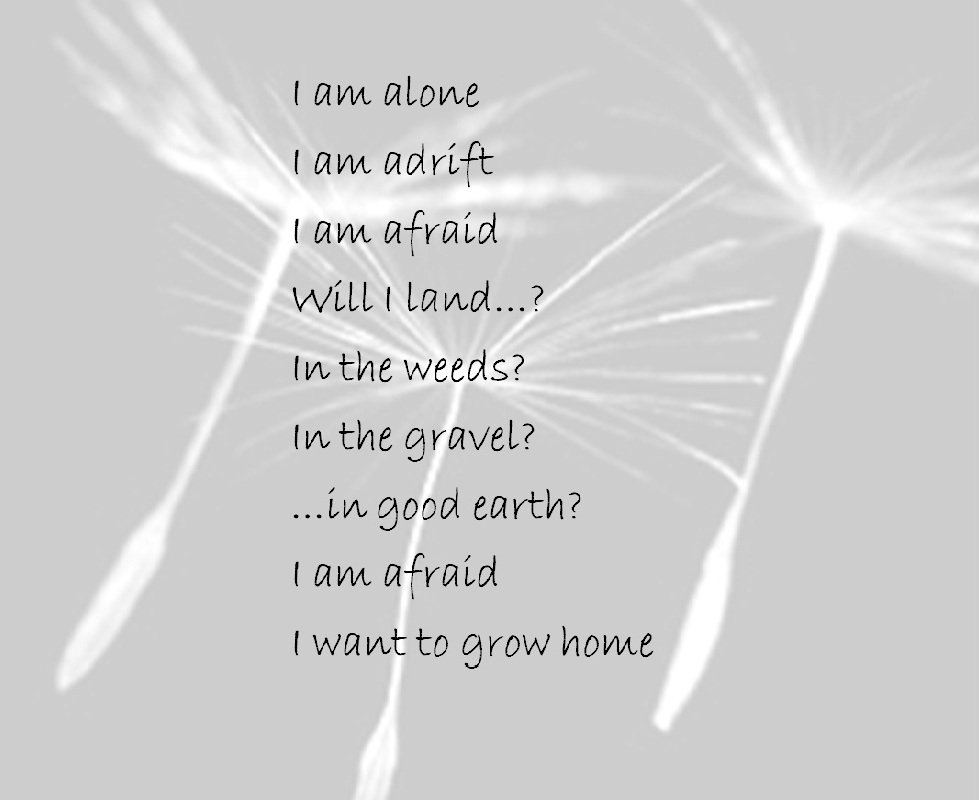
The picture at the top is a poem I wrote when in this space – trying to express something of my experience of the state of homelessness…

This is loosely based on the parable of the farmer in the gospels (Matthew), the farmer scatters seed and the stuff on the road gets eaten by birds, the seed in rocky ground grows but gets scorched and some landed in the weeds and got choked but some landed in good earth and produced 100/60/30x what was planted.

I have times when I wonder whether shifting here was the right thing to do. I keep waiting to see one of those big signs like you have on the highways here that say WRONG WAY, TURN BACK! I am afraid that I might not flourish here, that I might not find good earth I which to put down strong roots.

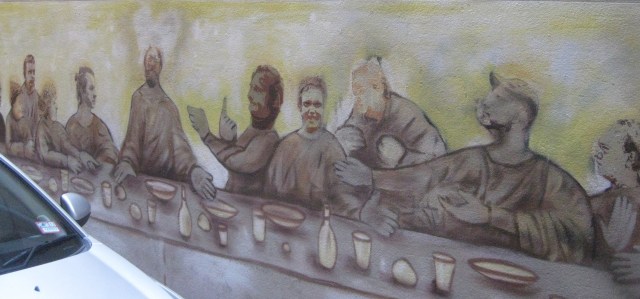
Marcus pointed out that we’re all homeless, all on a journey back to our heavenly home – having to leave the home we know, that’s part of our history.

This kingdom of faith is now your home country. You belong here… God is building a home. He is using you in what he is building. He used the apostles and prophets for the foundation. Now he’s using you, fitting you in brick by brick, stone by stone, seed by seed with Jesus as the cornerstone that holds everything together. We see it taking shape day after day…  (slight paraphrasing, Ephesians 2:19-22)

I was feeling adrift, like I wasn’t connected to anything, reading this was really grounding, it gave me something concrete to hold onto – it was such a relief to have something I felt certain about.

Maybe I’ve been homesick all my life, homesick for heaven, and because all of the things that made my life full I couldn’t see it as clearly.  Perhaps because my environment was known and familiar I could pretend that was enough, and it’s only through shifting to a new country that I’ve had to question what I think I know.

2 Corinthians 5:4 reads “For while we are in this tent, we groan and are burdened, because we wish to be clothed with our heavenly dwelling, so that what is mortal may be swallowed up by life.”  Perhaps the pursuit of happiness in this life is really part of the search for home, a search for heaven.  Maybe this life is never meant to be completely satisfactory, the passage goes on to say God has given us the Spirit as a deposit, guaranteeing what is to come. So we have this Spirit within us that is always longing for God, to be with God… longing for home.

For a lot of people in the pursuit of happiness, they express dissatisfaction with their tents by redecorating them or damaging them. Perhaps no one’s quite sure what our home’s supposed to be, we live by faith not by sight, but it seems we’re all agreed that it’s something other than what we have.  What we’re pursuing is change, what we long for is to grow home…

Now when I go back to NZ I found it very valuable in helping me to see how much progress I’ve made towards growing a home here. Urban Seed is helping me do that, helping a lot of people do that. That’s what Urban Seed/Seeds is about: It’s about providing good earth, where people can put down some roots and grow, it’s about providing spaces where people who feel homeless can experience connectedness while on the journey to grow home.