Tag Archive: hospitality


Nov13 004 - Copy


the toast rack of reproach
balefully squats
on the coffee table
that’s really for
tea and hospitality
and other nice things
the crooked bend
of things to do
that Newton’s forces of physics
are required to move
external impetus
gives momentum
the toast is shared out –
refreshments flow.


Talitha Fraser

Communion @ FCOC

075

This song was written reflecting on the Love Makes A Way movement which seeks to see children freed from detention. But even as I wrote it I felt a sort of grief – not just that of refugees heartsick for a safe refuge, a place at the table, but imagining God talking about a kingdom where this is not the way things were supposed to be.  It felt like God was saying “There is room here, let Me move…” whatever boundaries or limits or problems you are carrying today… maybe there’s a pattern of behaviour you’d like to see change, of your own or someone else.  A situation of your own or some else where you feel bound or stuck or like you don’t have any choices – whether you’re feeling that personally, for loved friends or family… for strangers on a boat… As we sing together – hear God saying “There is room here, let me move….”

Sing LMAW song:

There is room at the table,
there is room at the table
There is room at the table,
let me in, let me in…

In Luke, Jesus looks at his friends and says “I’m so glad we get to share this last Passover meal together ‘cos I’m not going to get to do this again with you until the kingdom of God comes.

The kingdom of God hasn’t come.

But part of why we do this ritual is to remember… to remember that resurrection is ours, God’s kingdom will come if we participate in building it and love makes a way.  Let’s eat and drink together… and take that promise in.

Sing about it until it can be realised” is a quote from Ched at the Kinsler Institute earlier this year… a call to write, play and sing the songs of freedom until freedom is won.  During Love Makes A Way (LMAW) actions some supporters stay outside to bear witness to the action – singing, praying and advocating for those within.  So far this draws heavily on the freedom songs of the Negro Spirituals, changing the lyrics to familiar tunes but what are the songs for and from our own context?

Started brainstorming how these songs are effective/communicate… says without saying, not religious language but accessible, short, call and repeat/memorable/simple/easy to pick up, capture sadness/grief…

Here’s a couple of goes at playing around:

Let me in

There is room at the table x3

Let me in, let me in

There is room at the borders x3

Let me in, let me in

There is room in our hearts x3

Let me in, let me in

There is hope for a new tomorrow x3

Let me in, let me in

[can make up your own variations: there is room for… the children, in the playground, in the classroom, etc.]

And who is already speaking for these issues? who are our own voices in the wilderness calling for a world that is different?  Michael Leunig is an Australian cartoonist, poet and cultural commentator, I’ve appropriated some of his words from a cartoon and arranged them so this can be sung as a round which is beautiful because when you’re looping “love is born” rings out through and over the “dark and troubled” and “when hope is dead”.

101

And because I write words not music the best I can offer is a basic recording to give a gist with my blessings and my apologies!

LMAW songs

210

206

012
Creating the Right Space – CBM (Panel)

Considerations for creating spaces that are inclusive of people with different levels of ability:

  • Want belonging and feeling treated the same/normal even though we know we’re not
  • Eye contact but NOT staring
  • Participation not about my disability – wanting to engage like everybody else
  • Fundamental dignity: each of us have something to share/contribute
  • Atmosphere – feel connected
  • Send lyrics/talk text in advance and can direct it into Braille or audio myself (needs to be communicated if this is available and PDFs aren’t readable by the programmes)
  • Everyone should be respected as a beloved son/daughter of God – I want to contribute to Christian community > able to share gifts
  • Talk to me not around me as if I’m not here e.g. “Will she have tea?”
  • Need space to be honest about how we feel – don’t pray away my feelings
  • Have communion where they do (with them) e.g. if someone can’t access the alter – don’t just bring them theirs but have yours with them where they are
  • Push in a little bit – there is fear (of being pushed away, rejected, condescended to…)
  • How do you know you’re “in”? On a roster, invited home for lunch, take the communion cup around in my wheelchair.
  • Regular time, place and routine for L’Arche rhythms (known and familiar)
  • Can’t find love, can’t find friendship. Government can’t do that > spiritual communities are REALLY important
  • Care-fronting sometimes with a conversation
  • Time “efficiency” need to allow room for the spirit… can’t plan things. Let it be what it is. Let [people be themselves in their fullness (where people might talk more slowly or move more slowly… let their pace be OK)
  • LABELS: Don’t freak out about it. Don’t let it be your barrier to talking with me. Have names for us too “sighties” and “Sight-trash” – it is a characteristic of who I am like having brown hair. Unhelpful…. handicapped, sufferer of…, carry a cross, disorder… use person-first language. “wheelies” and “cripps” like “queer” turning this language around to a positive framework named and claimed. If you have a relationship with me, let me use the word for myself and learn from listening. In safe space don’t need a label to feel safe but sometimes in public we do (paradox) – label can be the easiest way to get empathy/understanding when someone is behaving in unexpected ways.
  • We have outsourced care and compassion e.g. Cert IV in disability – what would it mean to engage with me directly.

Barriers

  • Physical things – steps/access/etc. and atmosphere
  • Bad theology praying for us to be healed/whole > need to confront that. What do you think that says about my lived experience?
  • “Perfect” Jesus still bore scars from the wounds on his body – perfect in imperfection.
 
Parables of Non-Violence – Transfiguration Community (Bible Study)

‘Making Things Right’: the call to be agents of reconciliation, peacemakers, restorers of broken relationships. How?

  1.  What/who are the obstacles, the enemies, the hindrances to peace and reconciliation? Ego, culture, systems, celebrity, technology…

BIBLICAL: Portrait of the Enemy – Do we even know it? Do we take the existence of evil seriously?

  1. How do we resist these?
  1. Contemplative practice:
    • first disarm your own heart
    • the wrestling is not with flesh and blood but spiritual (the aim in wrestling is not to bring your opponent down but to remain standing yourself)
    • the arena is within us
    • then change from the inside out will happen

BIBLICAL: Jesus’ Temptation in the Desert (in the desert you have to answer some questions)

  1. Danger of outer journey without inner journey
  2. Story of 3 brothers: 2 activist, 1 contemplative

How does the kingdom of God come? How does lasting change happen (repentance)? Not by programs, ideas, ideologies or our mind being in control.

  1. Slow
  2. Hidden, in secret
  3. Non-violent, harmless growth or gestation
  4. Internal
  5. Surprising and inevitable fruit, in the face of formidable obstacles

Like a joke, pint is in the last line – fruit comes at the end.

Non-violence and love are the same. Self-emptying love – no power or manipulation of any kind: mental, emotional, physical…

Using power “for the best” > controlling

  • Ask forgiveness (brothers and sisters don’t walk away from me, walk towards me)
  • Daily discipline
  • Have to listen

Being silent re-sensitises us to what is really happening, awareness, intuition, feeling… Going in to look at God leads you to look at others. Can’t only breathe in, have to breathe out.

017

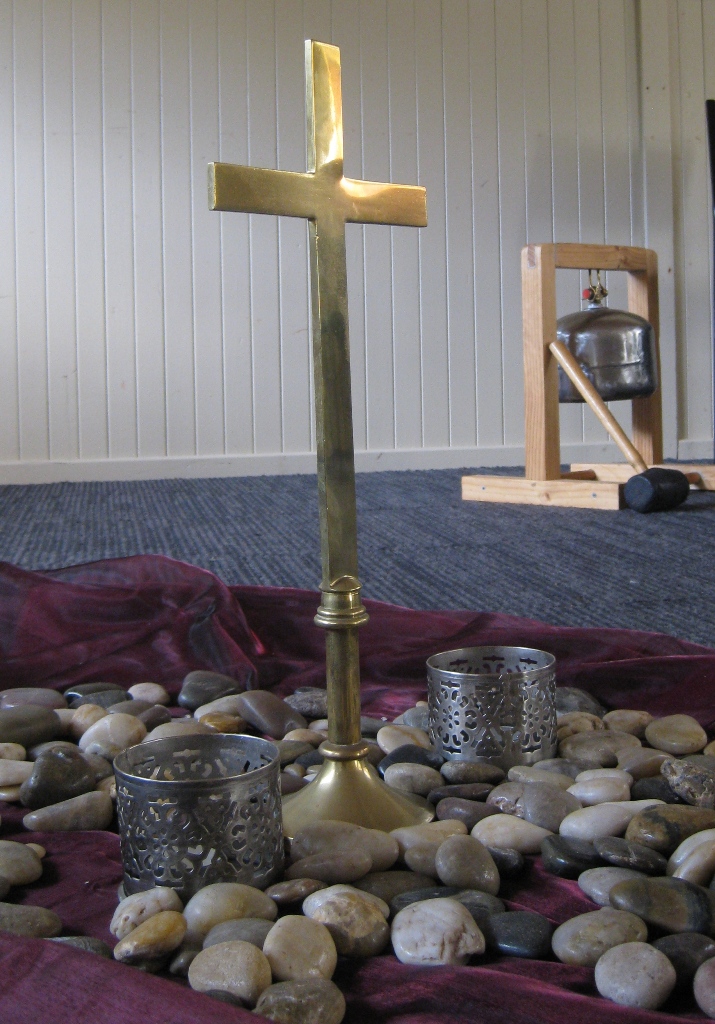
Contemplative Space: The Cave/Gregg Morris

A stoic mind and a bleeding heart
You never see my bleeding heart

And your light’s always shining on
And I’ve been traveling oh so long
I’ve been traveling oh so long

A constant reminder of where I can find her
Light that might give up the way
Is all that I’m asking for without her I’m lost
Oh my love don’t fade away

Mumford and Sons (lyrics)

004

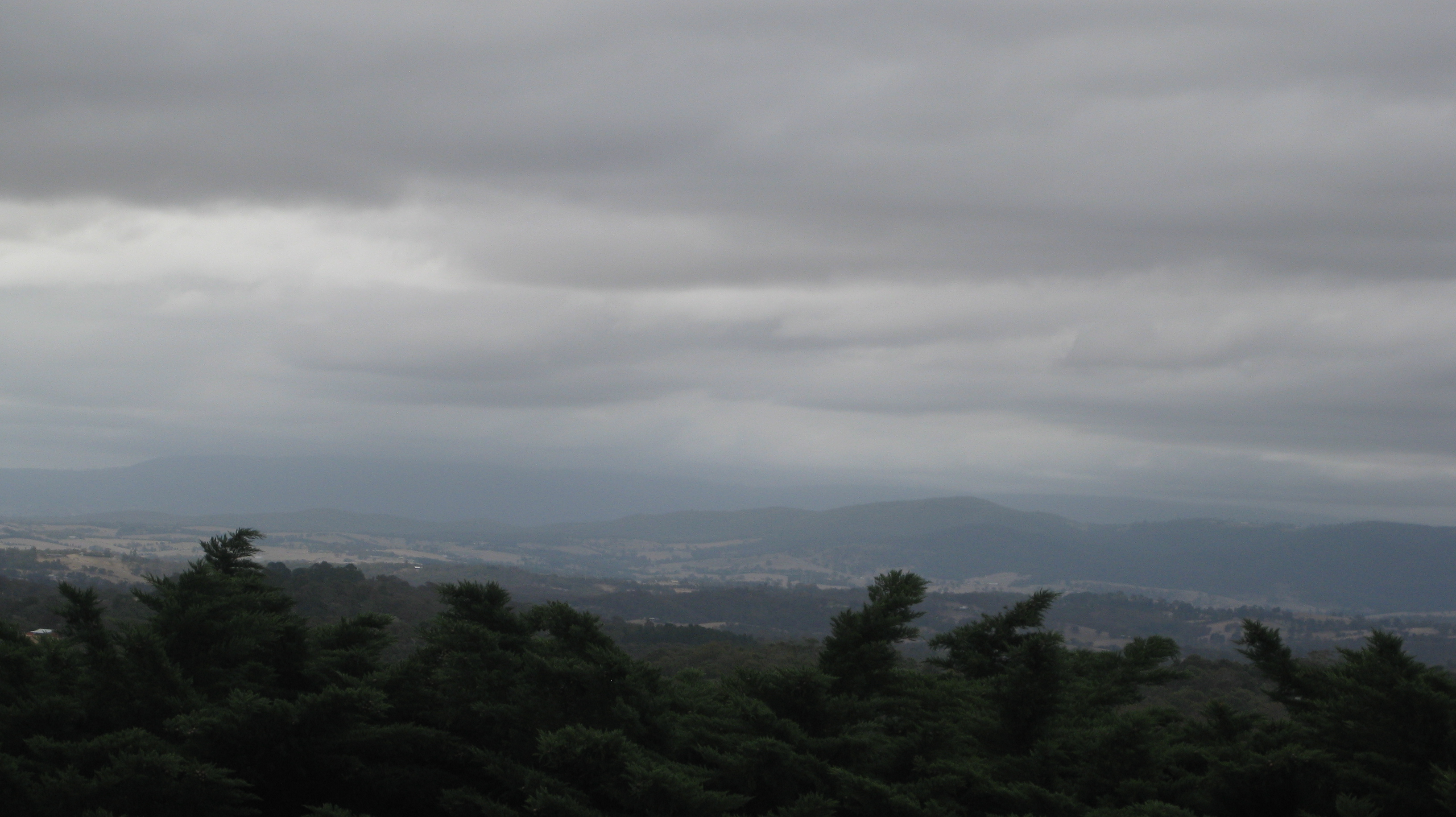
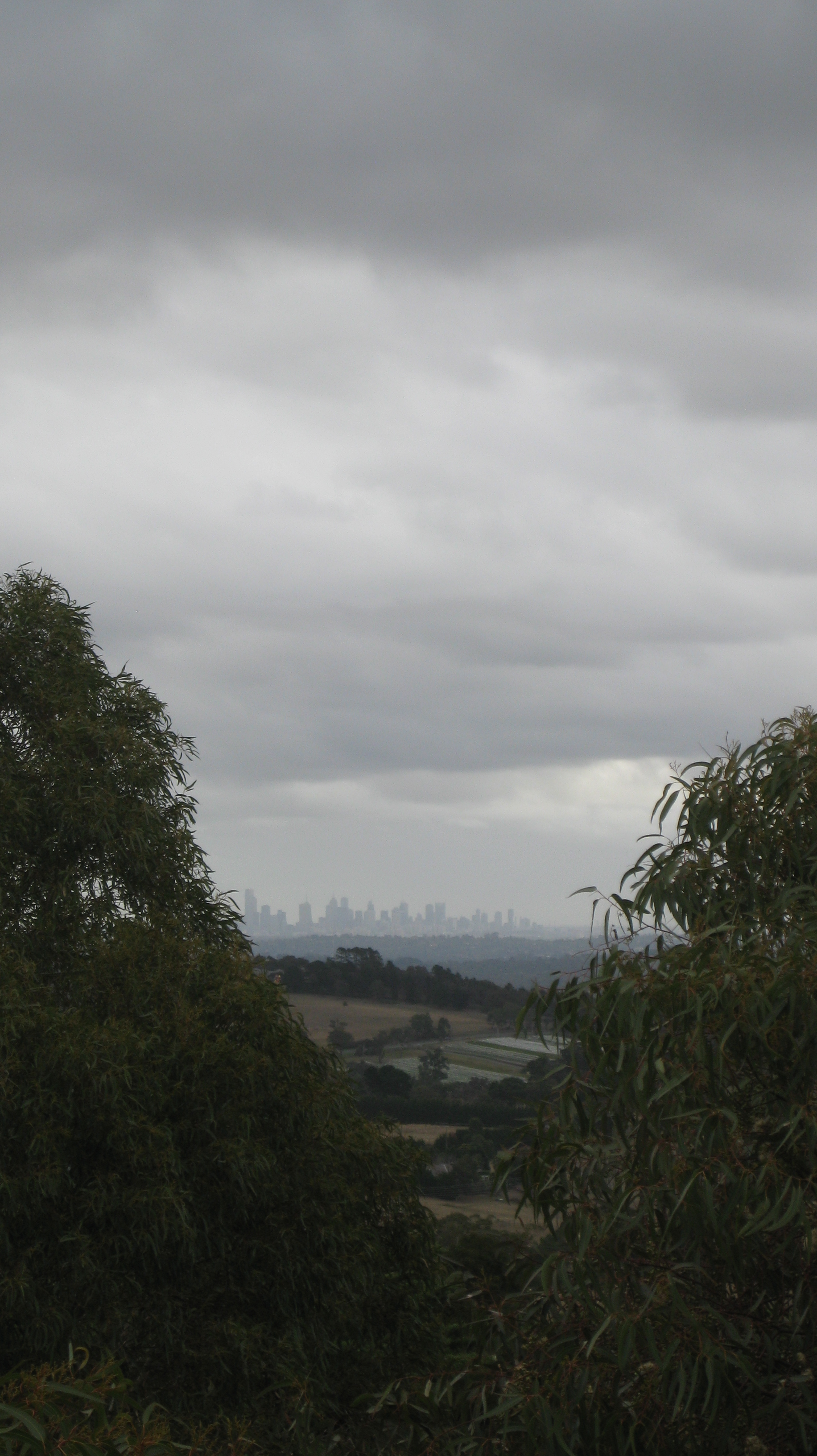
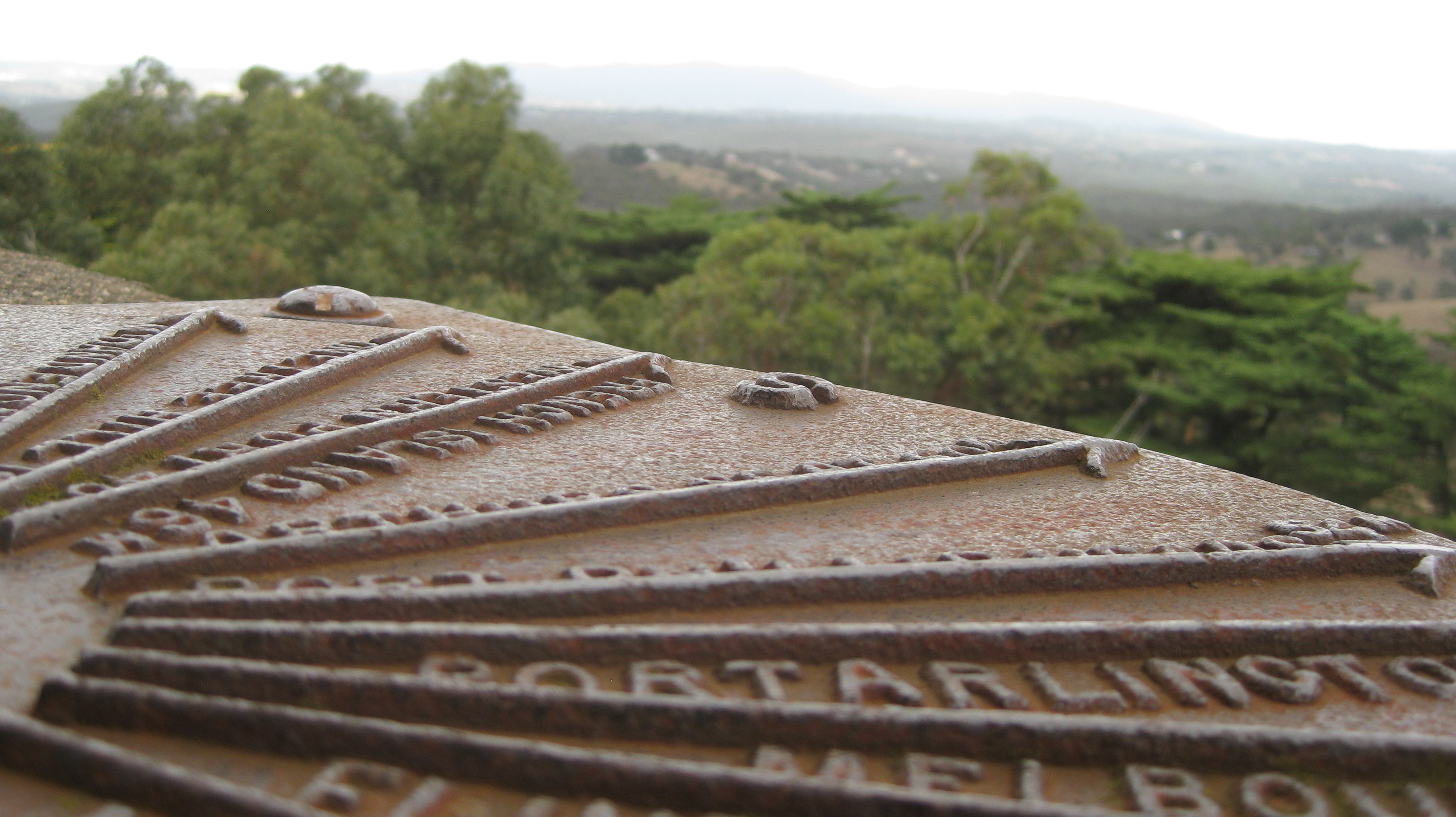
007012011Eltham War Memorial Tower & Park at Kangaroo Ground in Melbourne

What does it mean to look out?
How does/can it change your perspective to feel above things? to understand their size in the order of things?
Do you feel a sense of space and freedom when in the wilderness?

Try physically placing yourself where you need to be to get what you want in terms of headspace.

020

Western culture is at a turning point. Christendom forms of church (churches organised according to the machinery and mindset of empire) are dying, but spirituality increases.  What can Celtic models of spirituality offer?

Roots, rhythms and relationships
deep enough to provide common ground.

Jesus came to confirm what is true and purify what isn’t – Jesus does that, not you.
Are you spiritual or are you religious?
Church preaches kingdom but doesn’t model.  Homes model but don’t preach.  Need: little villages. CHurch that knows Sunday is not enough.

hub

Tribal leaders gave lands by the strategic highways of sea and river to church planters who established communities of daily prayer, education, hospitality and land care.  Peoples monastery churches served as daily prayer base, school, library, scriptorium/arts centre, drop-in, health centre.  They had farms with livestock and crops, workshops such as wood, spinning and milling. They were open to the world.  They offered soul friends, training and even entertainment.  Children, housewive, farm workers and visitors would wander in and out.  Visitors bought news from overseas.  They were villages of God.  Each had its wn flavour in worship and values (Rule) yet each was connected with the univvrsal church through common prctices, prayers, and priests ordained in the apostolic sucession.

today’s changing trends

Although our society is vastly different, changing trends again require churches that are more than single-building Sunday-only congregations.

  • A twenty four hour society calls for seven day a week churches
  • A cafe society calls for churches that are eating places
  • A travelling society calls for churchesthat provide accommodation and reconnect with the hostel movement
  • A stressed society calls for churches that provide spaces for retreat and meditation
  • A multi-choice society calls for churches that have a choice of styles and facilities
  • A fragmented socitey calls for holistic models and whole life discipling
  • An eco-threatened society calls for more locally sustainable communities.

“Can’t have deep ecology without deep spirituality” – John Phillip Newel.

The glory of God is seen
through the human life fully lived.

Need self-sustaining spiritual disciplines.
“Our hearts are restless until they find their rest in you Lord” – Augustine

139

On the 410 bus…

{for your entertainment, please note that font size denotes volume of the conversation happening on a crowded peak hour bus}

“How old are you?!”

“33”

“What?”

“33”

“Are you married?”

“No.”

“I’m looking for a woman!”

“…spoken for though”

“What?”

“Spoken for.”

“What?”

         “I’m not available!”

(silence)

“You dye your hair.”

“YOU DYE YOUR HAIR?!”

“Yes, yes, I dye it”

“What colour is that?”

“Red.”

“Oh. What colour will you dye it next time?”

“The same.”

“Oh. What colour is it underneath?”

“Blond”

“You follow footy?”

“No.”

“What’s your name?”

“Talitha, what’s yours?”

“Stanley”

#communityengagementinFootscray #onyastanley #thisismystop

blog 014

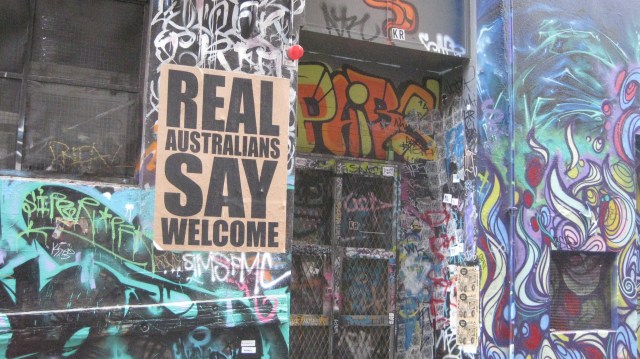
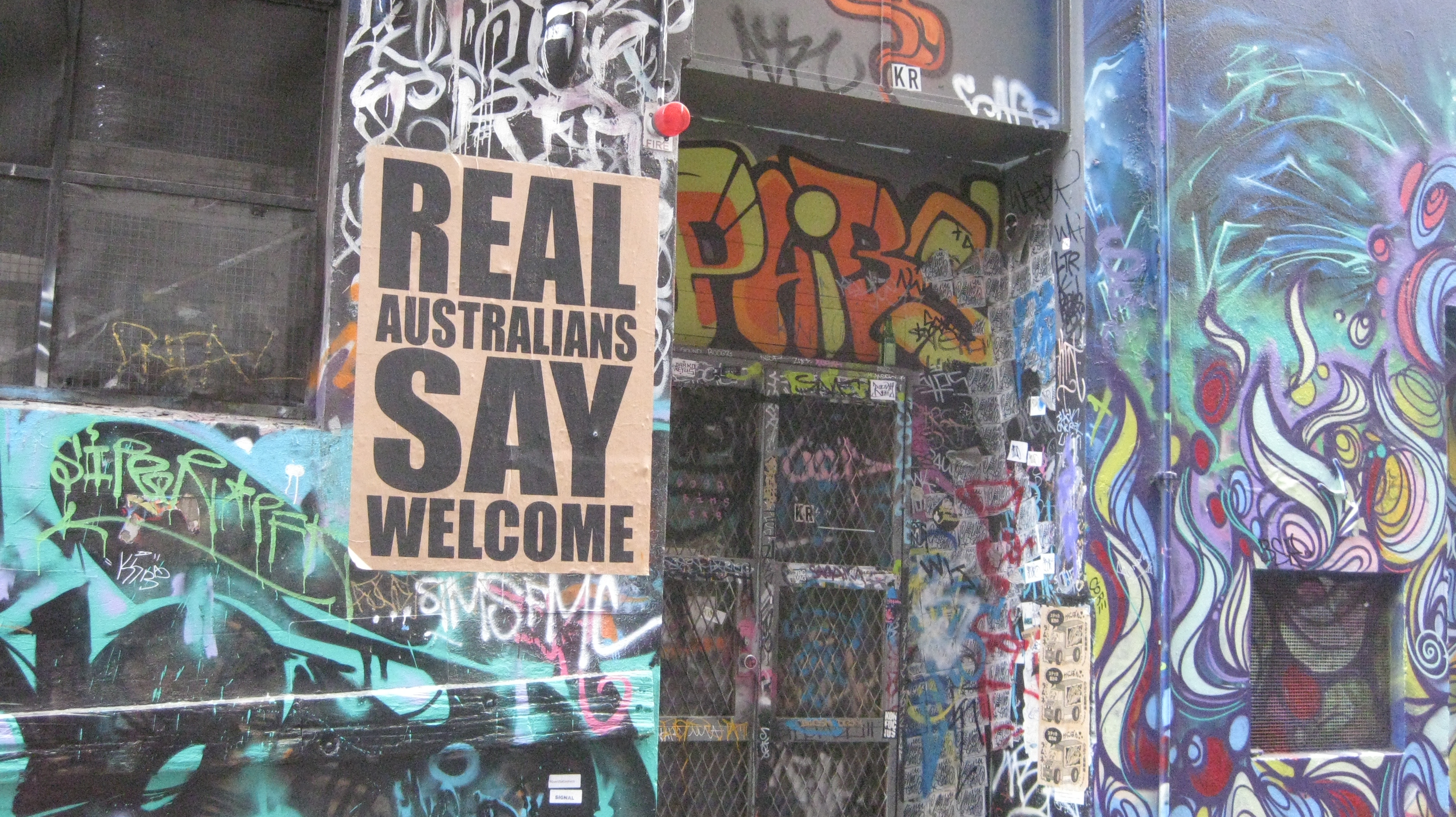
welcome


This beautiful artwork is used with permission of  the talented artist Liz Braid www.lizbraid.com

As of April 2014 there are 1138 children in detention in Australia’s detention centres.  It has been hard to know how to respond in the face of Australia’s inhospitable and inhumane policies/treatment of refugees seeking asylum.

Our God is Undocumented, a book by Ched Myers, offers a biblical exegesis for the American context and is drawn on below to consider the Australian context through the use of reflective prayer stations.

map of 006the world – how can we identify with the journey of refugees, pin where we are from, our parents, our grandparents… use different coloured pins {Our God is Undocumented, p.10 “We should never forget that the first immigration “crisis” on this continent came as a result of European colonisation of the Americas. This resulted in three great disasters: the obliteration of First Nations sovereignty and cultures, the violent removal of millions of Africans to the Americas in the slave trade, and the impoverishment of countless people due to relentless resource and labor extraction… poor immigrants today are simply following the trail of wealth stolen from their land centuries ago.}

Australian has its own unreconciled history with its First Nations Koori people.  Koori people have lived on this land for 50,000 years, us white folk less than 250 years.  There is a bit of a “We outnumber you and ours is the dominant culture, why don’t you just assimilate/get with the programme”  Where do we belong? What right did our ancestors have to arrive by boat for resources such as land and gold or to avoid famine?  How can we use our own personal stories/history to develop a sense of compassion for those still arriving today?  As can been seen at the Melbourne Immigration museum there have been waves of refugees from Vietnam, Philippines, Africa (Ethiopian, Eritrean, Sudanese…), Middle East (Iran, Iraq, Lebanon…) – what is the role of Australia in conflict/securing resources in these areas?009

Say (or hear) Lords Prayer together in different languages.  Spirit of Pentecost Acts 2.6,8,11 …in their own tongue. Didn’t all understand Latin/Greek but heard scripture in their own language.   {Our God is Undocumented p.28 “Perhaps it recognises that language is one of the fundamental things that makes us human and that linguistic distinctiveness characterised the original forms of human organisation before the rise of imperial monocultures.  The ancient wisdom preserved in this story reminds us that cultural heterogeneity is as essential to human social ecology as species diversity is to a healthy biosystem… more than 95% of the world’s spoken languages have fewer than 1 million native speakers.  Half of all the languages have fewer than 10,000 speakers.  A quarter of the world’s spoken languages and most of the sign languages have fewer that 1,000 users… It has been estimated that 20-50% of the world’s languages are already moribund, and that 90% (possibly even more) may be moribund or will have disappeared by 2100.”}

Does your congregating community have members from other cultures who attend? If not, why not? What are some ways to acknowledge, celebrate and affirm the cultural differences within our community? Language/stories/songs, festivals, wisdom of prophets/spiritual leaders, colours/fabrics/flags, food at morning tea, clothing… we all of us are made in God’s image – male/female, brown/yellow/black/white, no matter where we’re born. How can we draw on the richness of diversity in the God we worship?
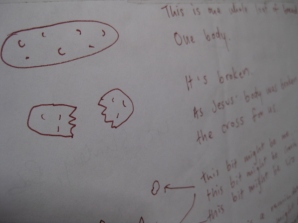
020share communion together {Our God Is Undocumented p. 200 “Remember what has been dismembered.  This exhortation lies at the heart of the church’s eucharistic ritual, repeated with each element for emphasis. It reiterates and sums up the deep wisdom of biblical faith, the product of a people all too familiar with distress, displacements and near disappearance.  Whenever you ingest this memory, said Jesus on the eve of his execution, you join yourselves to our historic struggle to make the broken body whole.  It was, and is, both invitation and imperative, equally personal and political.  If we refuse to heed it, we are doomed to drift forever on or be drowned by the tides of empire, refugees all.”}

This is one loaf of bread. One body.
It’s broken.

As Jesus’ body was broken on the cross for us.

this bit might be me…
this bit might be Jarra…
this bit might be Ahmed…
this bit might be Rajesh…
this bit might be Sam, or Maya, or Bob, or Shirley…

When we eat this bread it is a reminder that we are all part of one whole – we might be a different colour, we might be a different size of a different shape  – but we are all part of the same body… connected.  And we are all of us broken.  In each taking a piece, and eating it at the same time, we are invited back into wholeness with God and012 with each other.

Angels – paper cut out? Something we can take away with us/put somewhere prominant to remind us to welcome the other {Our God Is Undocumented p.67 “…account of the angel travellers similarly attacked in Sodom, a violation that also ended in that city’s destruction (Jgs 19:15-25-Gn 19:1-11). …cautionary tale… “Do not neglect to show hospitality to strangers, for by doing this some have entertained angels without knowing it” (Heb 13:2).

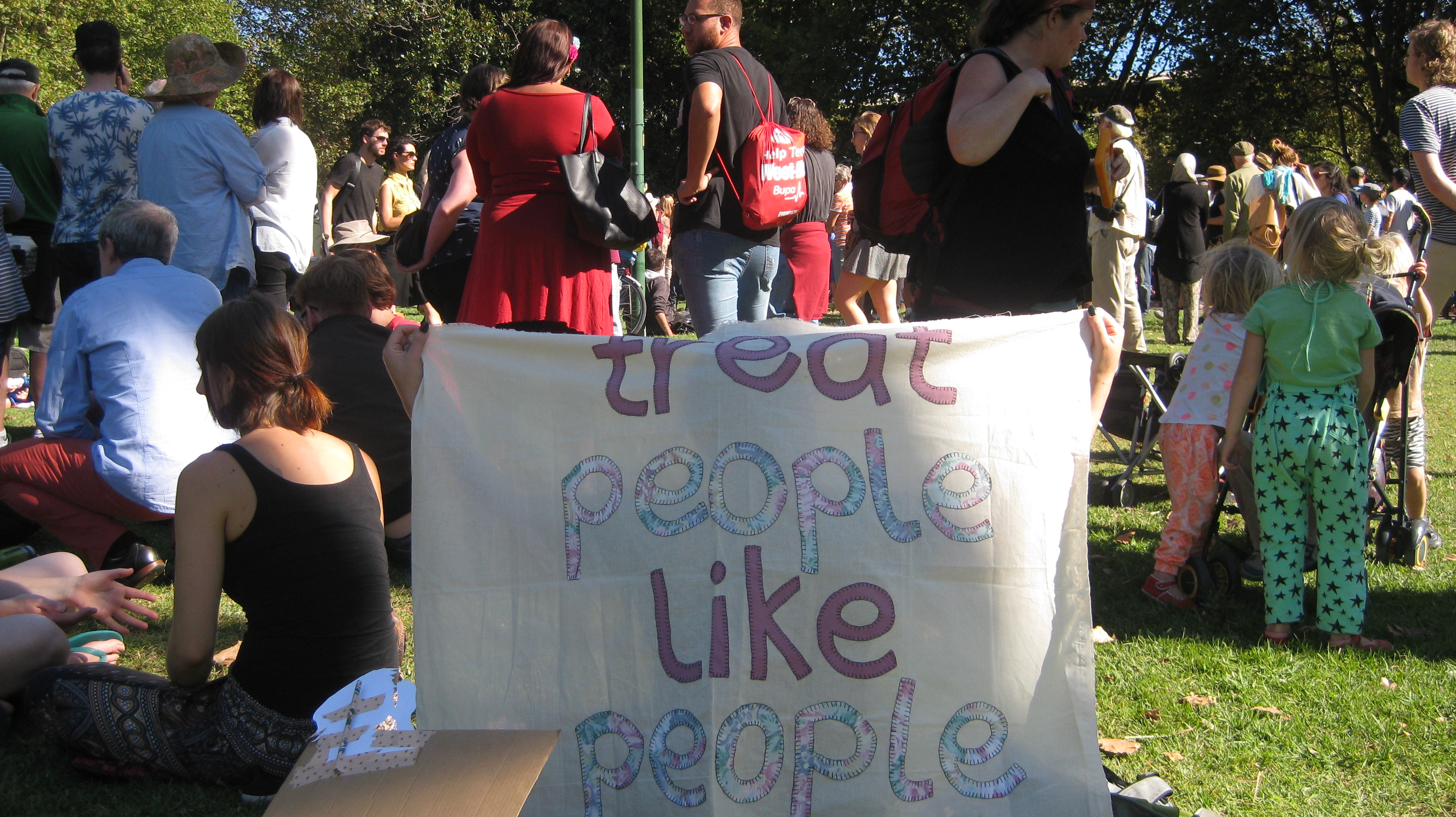
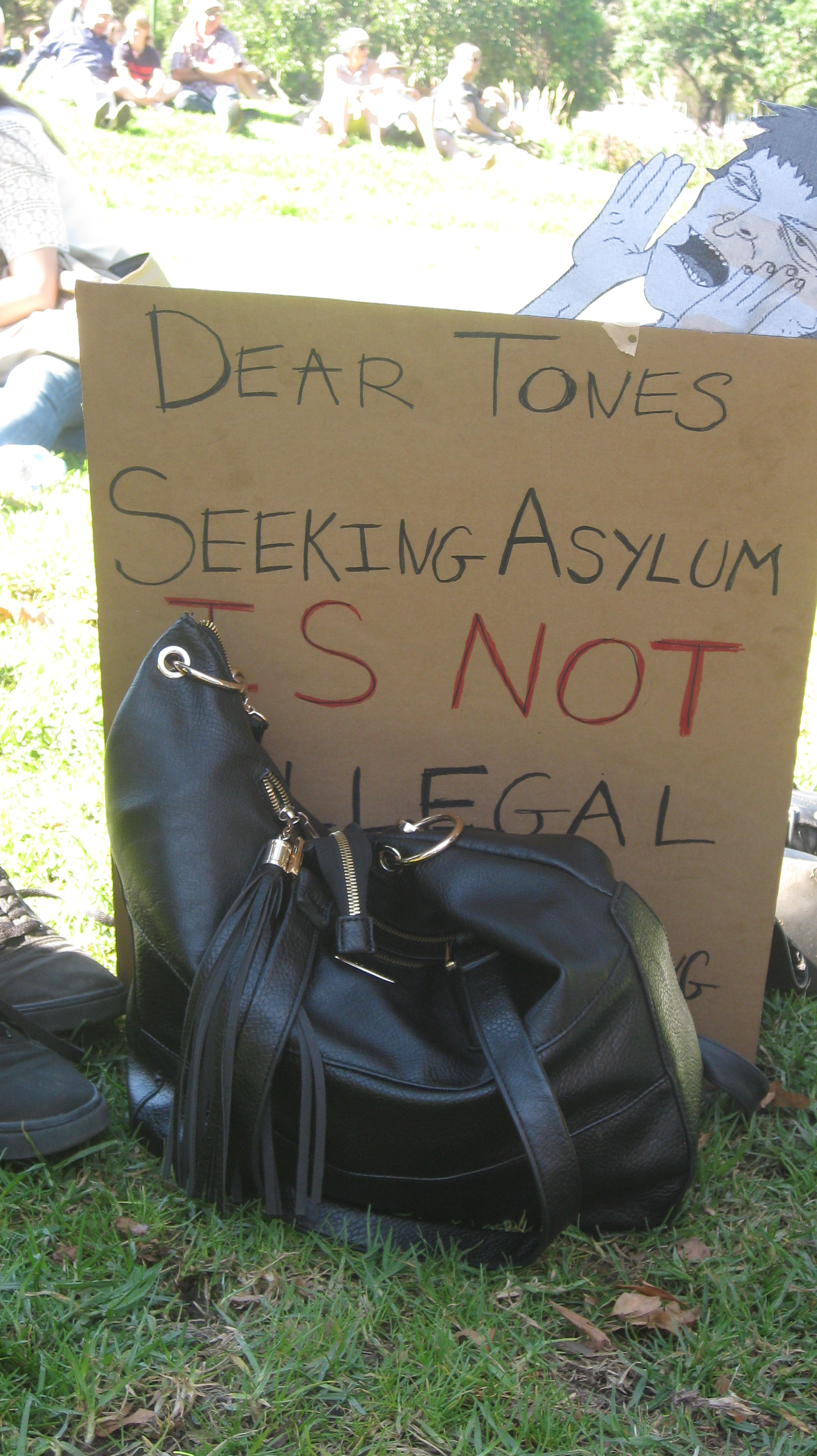
#LoveMakesAWay is a movement of Christians seeking an end to Australia’s inhumane asylum seeker policies through prayer and nonviolent love in action, you can see their Facebook page here.  This is high-level commitment advocacy but there are less “extreme” places to start…

There is an initiative in Switzerland that suggests putting stickers on your mailbox to let your neighbours know what is available to borrow – we used to be able to knock on our neighbours door but nowadays spend more time online than in realtime…

Communities like Urban Seed in Melbourne offer a free meal to those marginalised by homelessness in Melbourne – but here’s the thing, they don’t only offer food to people who are homeless, they offer food to anyone that shows up for lunch as they explore what it means to be good neighbours in a busy city of commuters and extend us the invitation/challenge to do the same through their Strangers Are Fiction campaign.

Who are your neighbours? Do you know their names? What might be one thing you could do that might lead you into connecting with them? [fruit or flowers from the garden you want to share, or baking, maybe you take the initiative to borrow something next time you realise you’re low on milk or the grass is getting tall…] …who knows where this might lead?

Dolls house – have sample forms and invite people to write their own and take them home as a way of symbolically creating space for the other in your home {Our God Is Undocumented p.107 In my fathers house there is lots of room (Jn 14:2)

I went to an art exhibition last week with some art works around the theme of showing welcome to refugees such as that by Liz Braid above – they had some mock forms on the wall that said things like:

ASYLUM SEEKER
PROCESSING FORM

Please come in. What a
terrible journey you’ve had!
I’m so glad you have arrived
safely and to imagine, once
you’re healed, how much you
have to offer us.  Let me help
you with your bags, we’ll have
you unpacked in no time…
You are welcome here. APPROVED

Invite people to write their own words of welcome, take them home and put them in a room of our own house with some intentionality and deliberation – symbolically creating space for the other is a good place to start and this can create some mindfulness to extending hospitality/welcome when an opportunity presents itself.


Anne Lamott has said, “Hope begins in the dark, the stubborn hope that if you just show up and try to do the right thing, the dawn will come.”

Let us hope. Let us try and do the right thing.


Sharing Hospitality

This week Simon Holt came to the Spiritual Reading group and read aloud from the first chapter of his latest book.

Here’s a teaser… “The quest for meaning, intimacy and community seems ever more urgent.  The table beckons. It beckons because, at its core, the table is about such fundamentally human things as intimacy and family, identity and communication, reconciliation and romance, covenant and community, redemption and friendship, sustenance and celebrations, beginnings and endings. The table beckons because it plays host to so much more than biological necessity.”

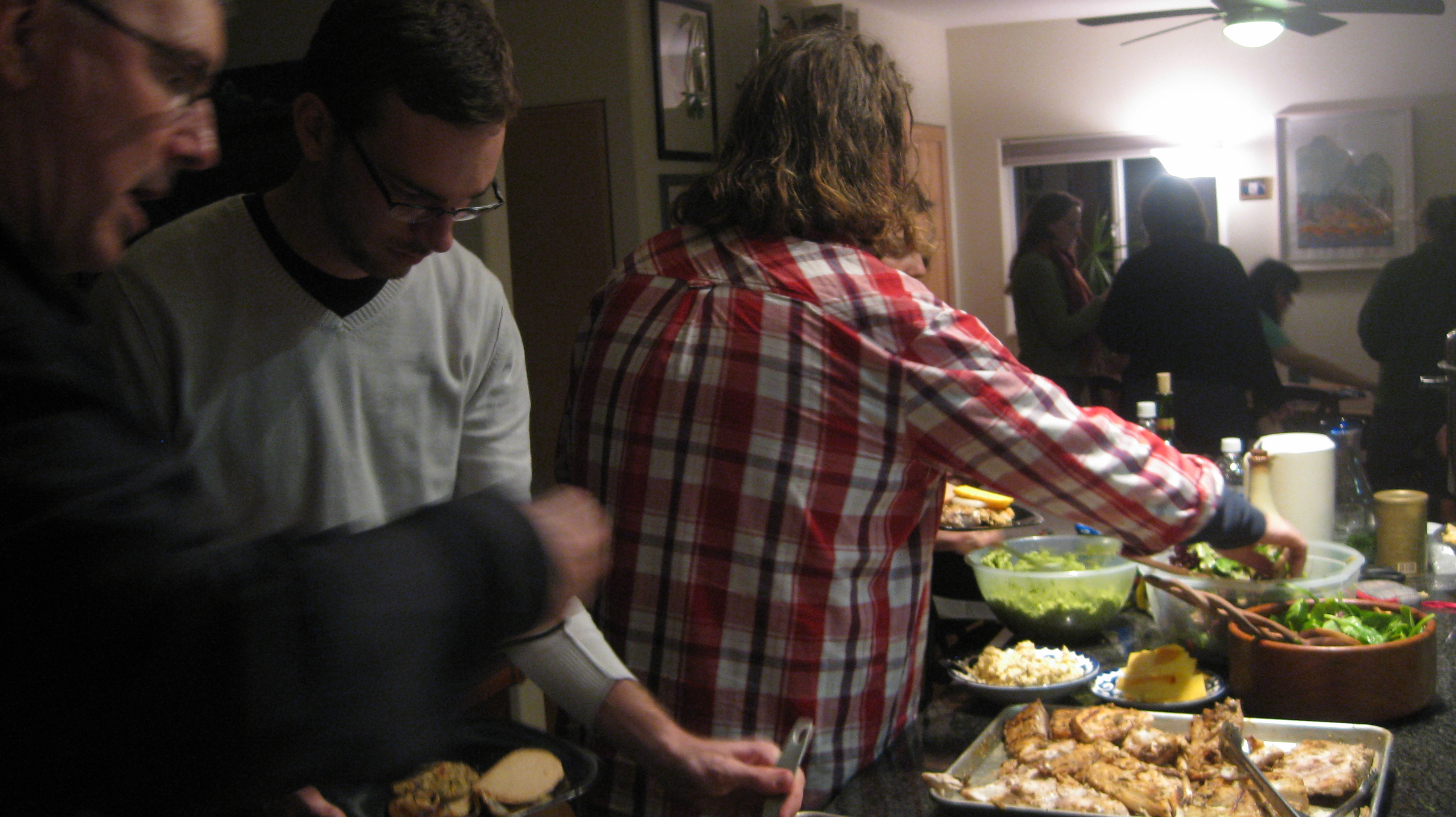
We went around the group and shared ideas of table from our family of origin – dinner at my house was often cooked sometime in the afternoon then people ate where they liked, when they liked, what they liked (you could always have toast or 2-minute noodles if you didn’t like what was on the stove) – this was not normative of the group where the table was a place of sharing food and daily life together, there might be rules that you don’t leave the table without saying something you are thankful for/doing a bible reading/everyone is finished…

One idea I found intriguing was the idea of not being allowed to ask for anything – training in mindfulness – the only way to get anything is to be aware of others needs and for them to be aware of yours expressed by a need to care for one another: Would you like any…?  Can I pass you the…?

These days I have next to no regular rhythms of food sharing. We are sharing hospitality but it is irregular… if, as Simon says “eating is a social and political act of profound consequence, one that expresses tangibly our communty identity and citizenship.  And as one of the most routine activities of life – one that marks the rhythm and flow of everyday – eating is embedded at the heart of what it means to be human.”

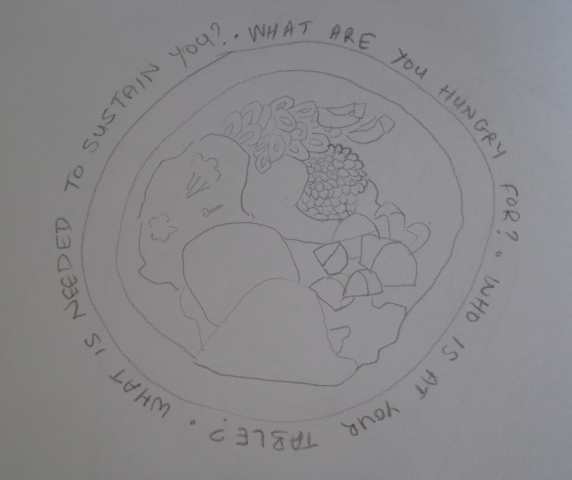
How can we make who we eat with, what we eat and when, more intentional?