Tag Archive: interconnectedness


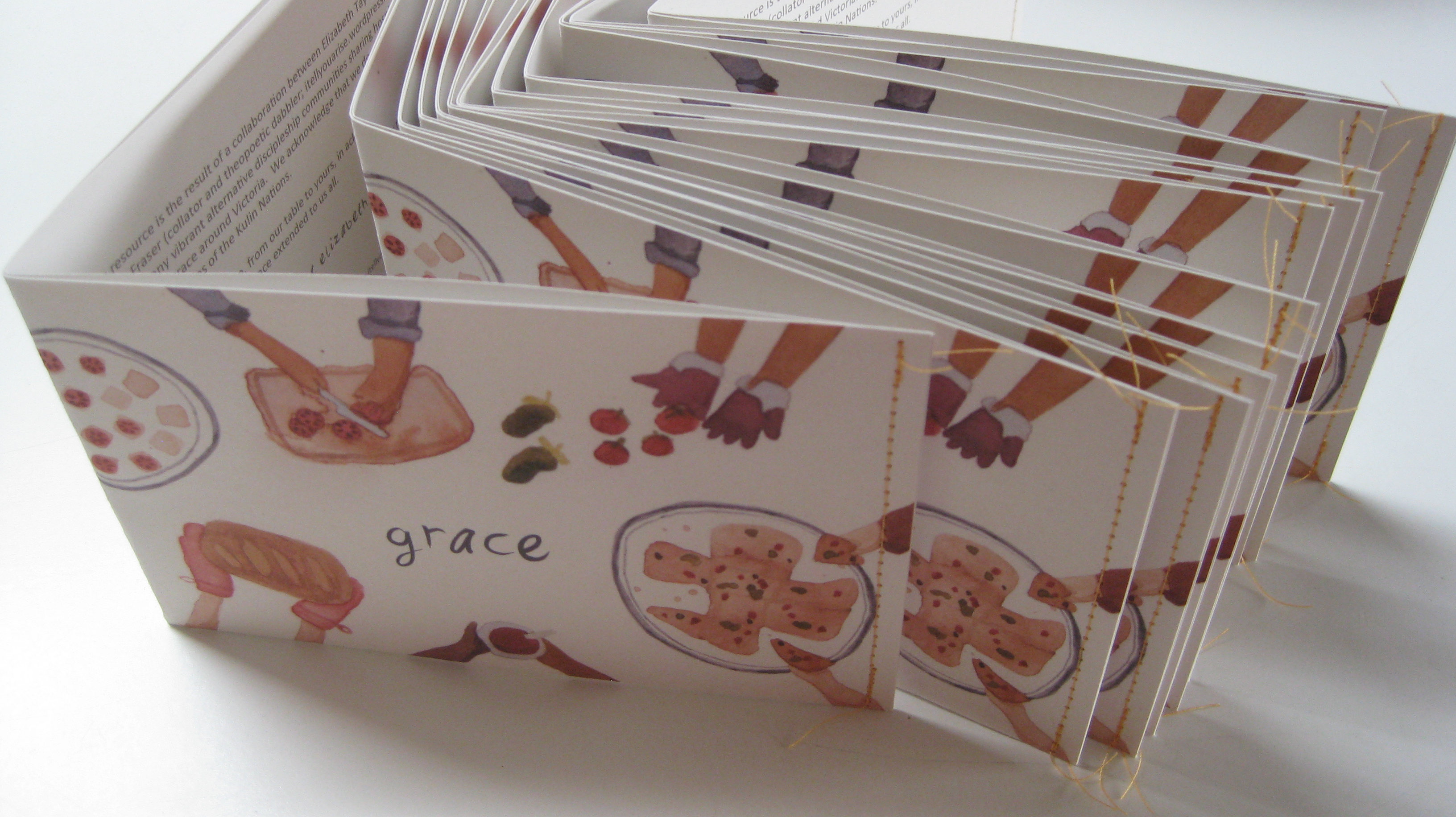
grace

“You should share communion together,
it has a unique power to unite beyond words”
Peter (Chappo) Chapman

Very pleased to present this little number…

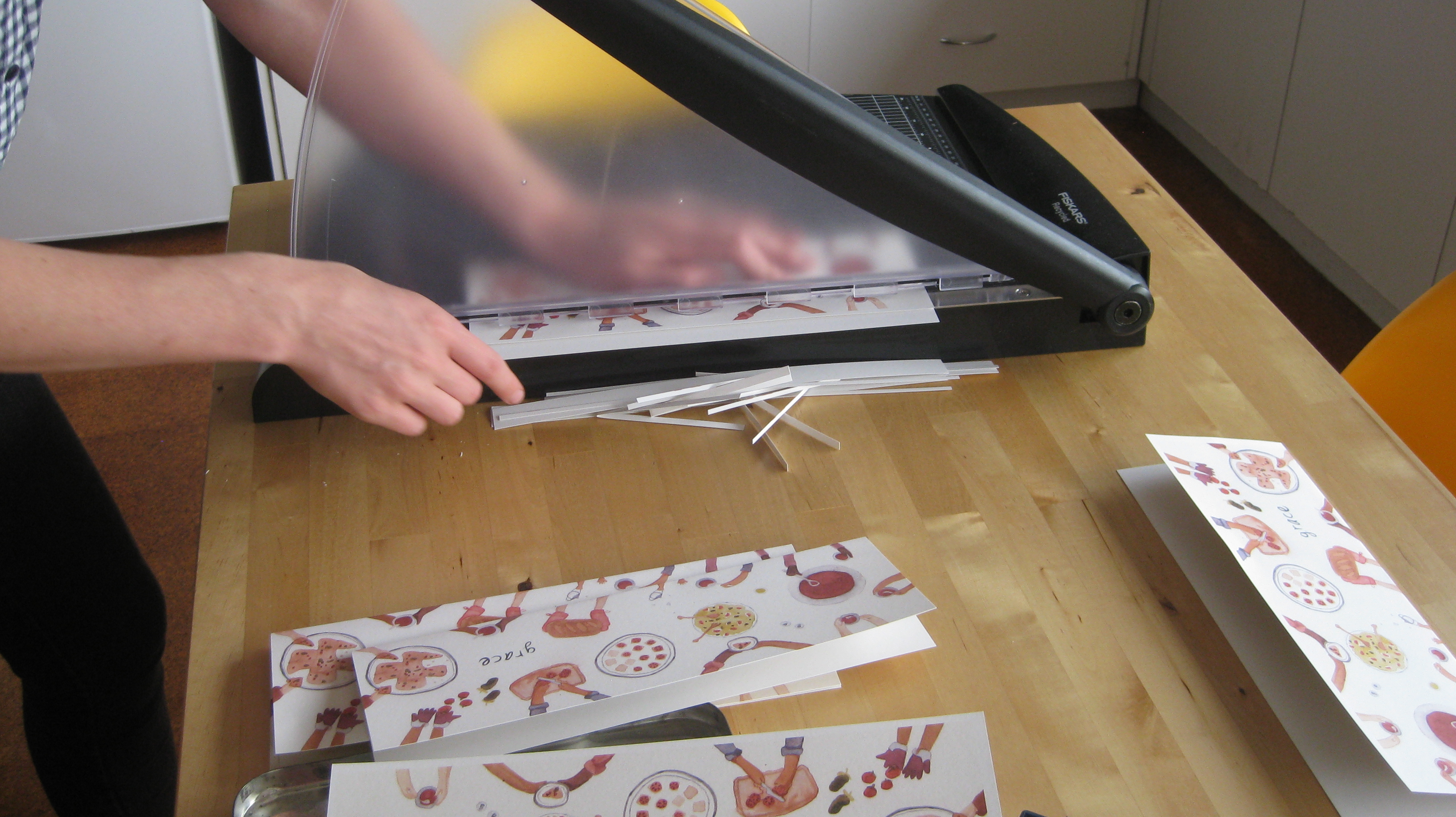
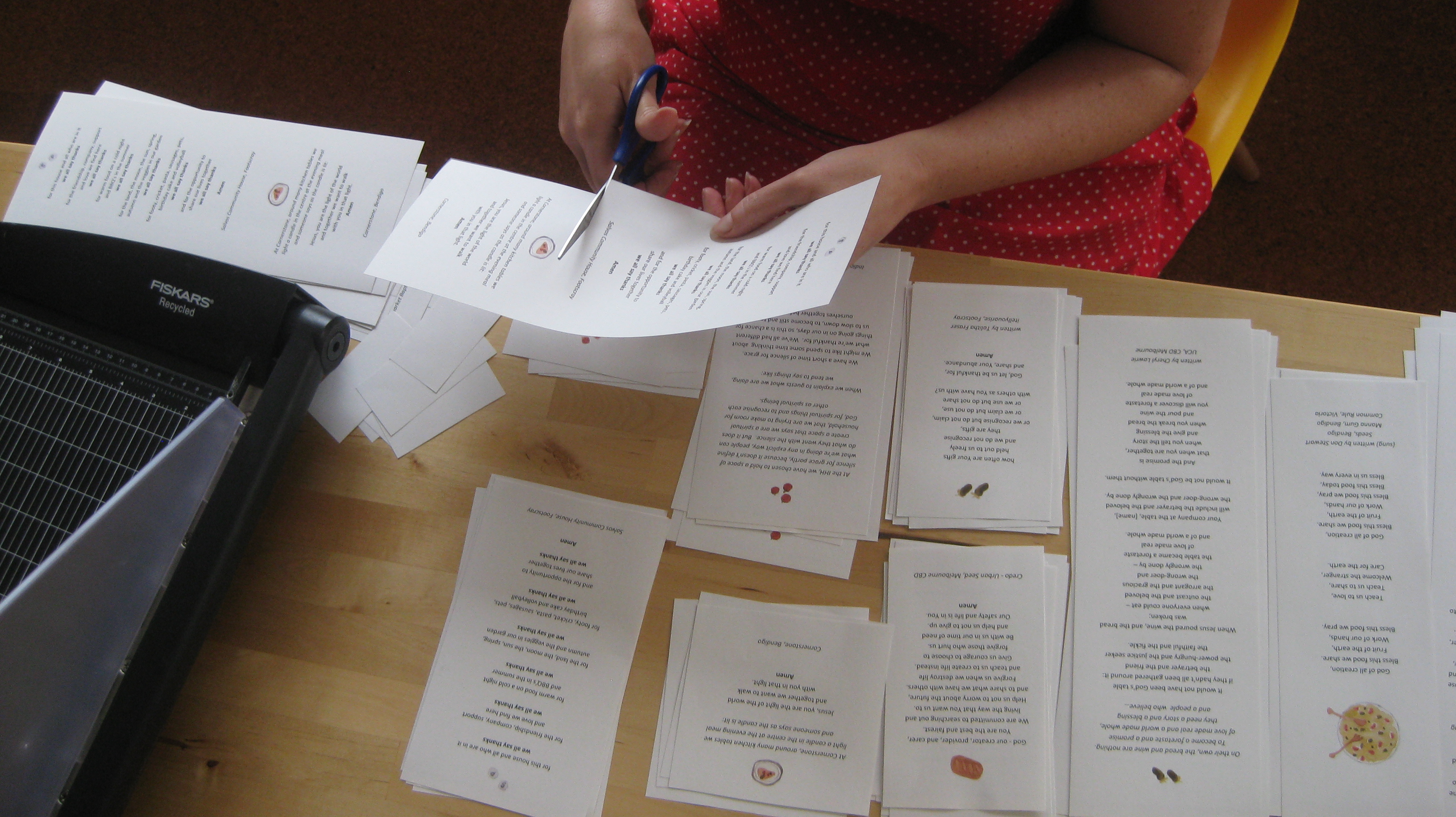
This resource is the result of a collaboration between Elizabeth Taylor, myself and the many vibrant alternative discipleship communities sharing hospitality and, indeed, grace around Victoria. Such as: Common Rule, Cornerstone, Footscray Salvos, GraceTree, Indigenous Hospitality House,  MannaGum, Missio Dei,  Newmarket Baptist Church, Seeds, The Cave & Transfiguration Community, UCA, Urban Seed and the many more who serve, share and speak grace spontaneously, silently or scarcely – you know who are.  We acknowledge that we do so on the land of the peoples of the Kulin Nations.

We decided to make this as a kind of snapshot in time of radical discipleship expression in and around Melbourne and to encourage one another – we don’t often get to get around the table together but we do go back to our separate spaces and share meals in community.

Elizabeth’s beautiful and colourful visual images were inspired by the language of the prayers, varied and lovely. Done in a loose watercolour style we are offered a birdseye view of a table full of food, with hands around the edges sharing and eating, different types of food, the hands that prepare and acknowledgement of the earth that produces.

We share this abundance, from our table to yours,
in acknowledgement and celebration of the bigger Grace extended to us all.

Free PDF (or LMS accessibility supported copy) available by request.

IMG_5172

IMG_5175

IMG_5173

IMG_5004Talitha Fraser

the horizon paints it all

032

the sea and sky are moody

much like me…

I came here for perspective

I came here to be free

the wild gives you scale

it is true that I am small

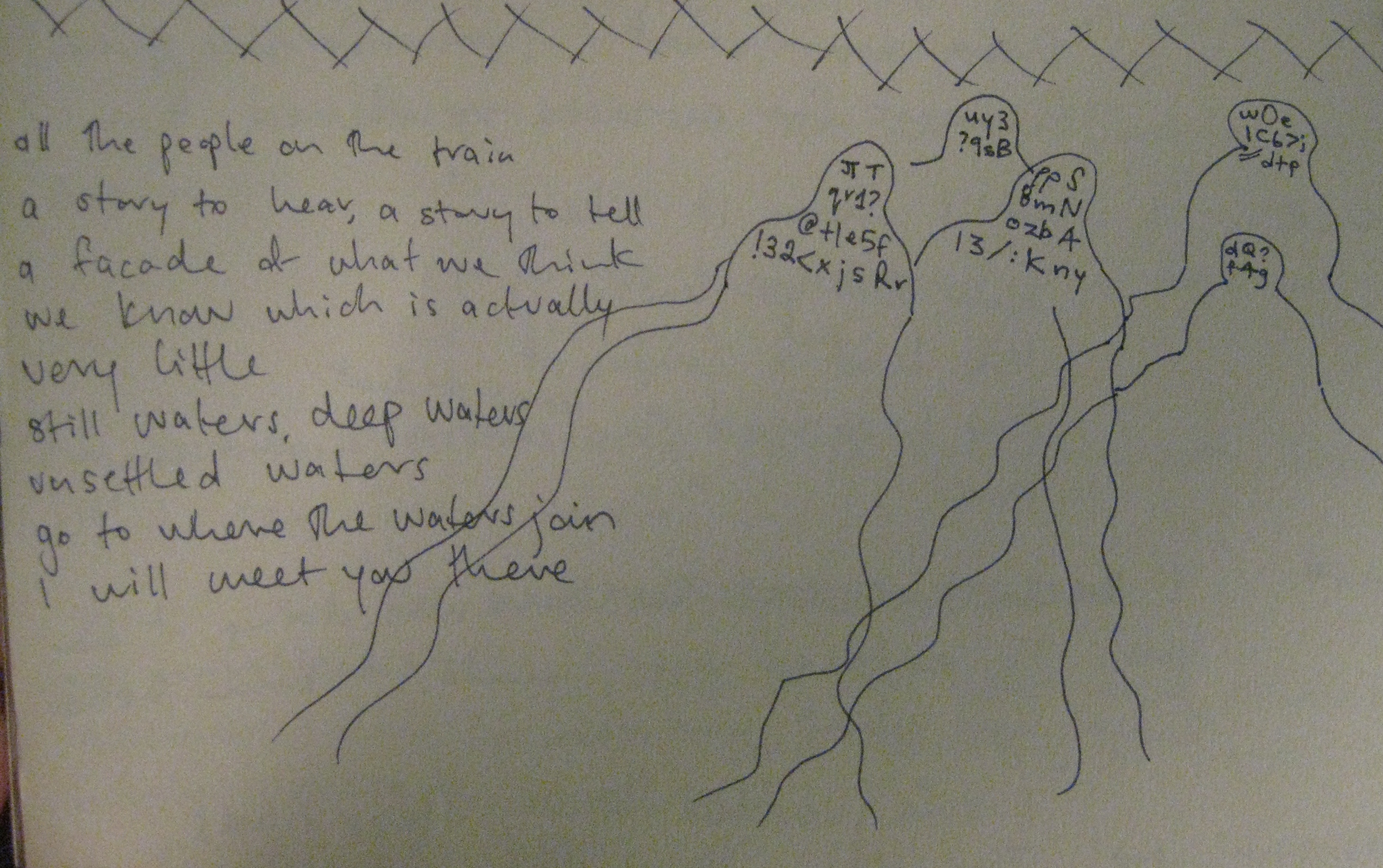
but also interconnectedness

the horizon paints it all

in the system that includes all things

I have a part to play

it is enough to be and do this,

today, and every day.

Talitha Fraser

012
Creating the Right Space – CBM (Panel)

Considerations for creating spaces that are inclusive of people with different levels of ability:

  • Want belonging and feeling treated the same/normal even though we know we’re not
  • Eye contact but NOT staring
  • Participation not about my disability – wanting to engage like everybody else
  • Fundamental dignity: each of us have something to share/contribute
  • Atmosphere – feel connected
  • Send lyrics/talk text in advance and can direct it into Braille or audio myself (needs to be communicated if this is available and PDFs aren’t readable by the programmes)
  • Everyone should be respected as a beloved son/daughter of God – I want to contribute to Christian community > able to share gifts
  • Talk to me not around me as if I’m not here e.g. “Will she have tea?”
  • Need space to be honest about how we feel – don’t pray away my feelings
  • Have communion where they do (with them) e.g. if someone can’t access the alter – don’t just bring them theirs but have yours with them where they are
  • Push in a little bit – there is fear (of being pushed away, rejected, condescended to…)
  • How do you know you’re “in”? On a roster, invited home for lunch, take the communion cup around in my wheelchair.
  • Regular time, place and routine for L’Arche rhythms (known and familiar)
  • Can’t find love, can’t find friendship. Government can’t do that > spiritual communities are REALLY important
  • Care-fronting sometimes with a conversation
  • Time “efficiency” need to allow room for the spirit… can’t plan things. Let it be what it is. Let [people be themselves in their fullness (where people might talk more slowly or move more slowly… let their pace be OK)
  • LABELS: Don’t freak out about it. Don’t let it be your barrier to talking with me. Have names for us too “sighties” and “Sight-trash” – it is a characteristic of who I am like having brown hair. Unhelpful…. handicapped, sufferer of…, carry a cross, disorder… use person-first language. “wheelies” and “cripps” like “queer” turning this language around to a positive framework named and claimed. If you have a relationship with me, let me use the word for myself and learn from listening. In safe space don’t need a label to feel safe but sometimes in public we do (paradox) – label can be the easiest way to get empathy/understanding when someone is behaving in unexpected ways.
  • We have outsourced care and compassion e.g. Cert IV in disability – what would it mean to engage with me directly.

Barriers

  • Physical things – steps/access/etc. and atmosphere
  • Bad theology praying for us to be healed/whole > need to confront that. What do you think that says about my lived experience?
  • “Perfect” Jesus still bore scars from the wounds on his body – perfect in imperfection.
 
Parables of Non-Violence – Transfiguration Community (Bible Study)

‘Making Things Right’: the call to be agents of reconciliation, peacemakers, restorers of broken relationships. How?

  1.  What/who are the obstacles, the enemies, the hindrances to peace and reconciliation? Ego, culture, systems, celebrity, technology…

BIBLICAL: Portrait of the Enemy – Do we even know it? Do we take the existence of evil seriously?

  1. How do we resist these?
  1. Contemplative practice:
    • first disarm your own heart
    • the wrestling is not with flesh and blood but spiritual (the aim in wrestling is not to bring your opponent down but to remain standing yourself)
    • the arena is within us
    • then change from the inside out will happen

BIBLICAL: Jesus’ Temptation in the Desert (in the desert you have to answer some questions)

  1. Danger of outer journey without inner journey
  2. Story of 3 brothers: 2 activist, 1 contemplative

How does the kingdom of God come? How does lasting change happen (repentance)? Not by programs, ideas, ideologies or our mind being in control.

  1. Slow
  2. Hidden, in secret
  3. Non-violent, harmless growth or gestation
  4. Internal
  5. Surprising and inevitable fruit, in the face of formidable obstacles

Like a joke, pint is in the last line – fruit comes at the end.

Non-violence and love are the same. Self-emptying love – no power or manipulation of any kind: mental, emotional, physical…

Using power “for the best” > controlling

  • Ask forgiveness (brothers and sisters don’t walk away from me, walk towards me)
  • Daily discipline
  • Have to listen

Being silent re-sensitises us to what is really happening, awareness, intuition, feeling… Going in to look at God leads you to look at others. Can’t only breathe in, have to breathe out.

017

Contemplative Space: The Cave/Gregg Morris

A stoic mind and a bleeding heart
You never see my bleeding heart

And your light’s always shining on
And I’ve been traveling oh so long
I’ve been traveling oh so long

A constant reminder of where I can find her
Light that might give up the way
Is all that I’m asking for without her I’m lost
Oh my love don’t fade away

Mumford and Sons (lyrics)

Communion at FCOC

I have been away in NZ recently for my foster sisters wedding, most of my family are non-Christian but this sister converted to Catholicism to be with her partner and accepted by his family. I read 12 Corinthians 13 in the ceremony – “love is patient, love is kind…” Weddings have a way of bringing lots of different people together and we all need to put aside our individual preferences in favour of these two getting married. She is Maori and he is Samoan so there were different parts of the reception in different languages and around the speeches we’re all trying to follow the correct cultural protocols. We arrive at the reception and realise that our Mum’s speech as Mother of the Bride requires a waiata following her words – we realise there’s one song we basically all know from primary school which echoes the reading – Mum leads off from the front and we have to stand and join in from where we’re sitting and move to stand behind her – it’s only as we get there that we realise other women, family and friends are standing and moving to sing with us also.

Te aroha – loveNZ_Mons wedding 112bw
Te whakapono – faith
Te rangimarie – peace
Tatou tatou e – all of these

This was profoundly significant… I thought attending the wedding was a bit like sharing communion: sometimes we need to speak a new language/learn a new culture to show love; participating in a covenant can mean putting aside our individual preferences – going out of our comfort zone – in order to achieve something bigger together.

In sharing this celebration cup together, we are reminded of the bigger call on our lives to walk a different way, of putting aside our individual needs to further the greater good we believe in – the kingdom of God. Let’s take a moment to sit in silence as the elements are passed around and reflect on where God is calling us into communion.

(silence)

When we toast a couple – linking their names, blessing their shared life together, wishing all good things… let us invoke God’s blessing on the life we share together and all the things we wish for for our world and for each other… to the kingdom of God!

Other Lives

175

The day before yesterday I sat in the NZ Poetry section of Arty Bees and there were lots of titles I didn’t have a chance to peek into and I thought I’d jot down some of the titles of books I didn’t get to read and use them as a springboard for my own imagination to follow the pathway of poems unread…

Have a crack at using the title of one of these books to write a poem or short story of your own!

Here’s my effort sitting on a park bench in the sunshine round Oriental Parade…

Other Lives

A pigeon and I shared morning tea,
coconut rough and brine of the sea
our feet rest on yellowed moss over stony cement
I think he talked, or perhaps I dreamt
“See these clouds, this sky, the fountain,
the roads, the houses and there a mountain…
these are connected but you cannot see
these must co-exist in harmony
you affect I and I affect you
in the ways that we go and the things that we do
some have plenty and some not a lot,
it seems that we ought to share what we’ve got.
It is clear as the water, firm as the ground
certain as sunrise, at least, I have found.”
“But pigeon,” I ask, “What can we do?”
“Next time,” he answered, “you might buy two…”


Talitha Fraser

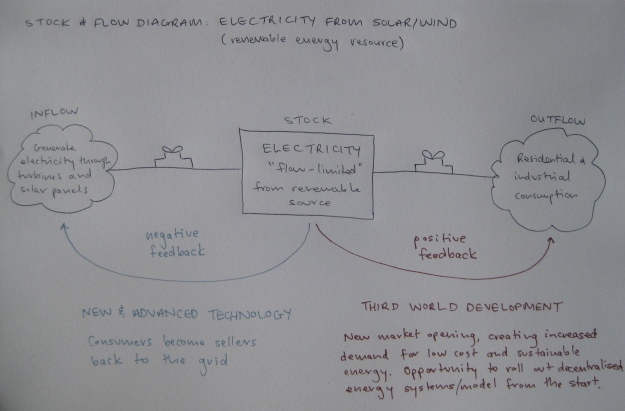
Sustainability in Practice

“When one tugs at a single thing in nature, he finds it attached to the rest of the world.” (John Muir, 1838-1914)

Definition of sustainability as meeting “the needs of the present without compromising the ability of future generations to meet their own needs” (Brundtland Commission, officially WECD 1983-1987)

Systems:

  1. Parts
  2. Connections
  3. Functions/Purpose
  4. A boundary

055

Teaching 12 – The Root of Suffering

What keeps us unhappy and stuck in a limited view of reality is our tendency to seek pleasure and avoid pain, to seek security and avoid groundlessness, to seek comfort and avoid discomfort.  This is how we keep ourselves enclosed in a cocoon.  Out there are all the planets and all the galaxies and vast space, but we’re stuck down here in this cocoon.  Moment after moment, we’re deciding we would rather stay down in that cocoon than step out into that big space.  Life in our cocoon is cosy and secure.  We’ve gotten it all together  It’s safe, it’s predictable, it’s convenient, it’s trustworthy.  If we feel ill at ease, we just fill those gaps.

Our mind is always seeking zones of safety.  We’re in this zone of safety and that’s what we consider life, getting it all together, security.  Death is losing that.  We fear losing our illusion of security – that’s what makes us anxious.  We fear being confused and not knowing which way to turn.  We want to know what’s happening.  The mind is always seeking zones of safety, and these zones of safety are continually falling apart.  Then we scramble to get another zone of safety back together again. We spend all our energy and waste our lives trying to re-create these zones of safety, which are always falling apart.  That’s the essence of samsara – the cycle of suffering that comes from continuing to seek happiness in all the wrong places.


Teaching 20 – Solgan: “All activities should be done with intention”

Breathing in, breathing out, feeling resentful, feeling happy, being able to drop it, not being able to drop it, eating our food, brushing our teeth, walking, sitting – whatever we’re doing could be done with one intention.  The intention is that we want to wake up, we want to ripen our compassion, and we want to ripen our ability to let go, we want to realise our connection with all beings.  Everything in our lives has the potential to wake us up or put us to sleep.  Allowing it to awaken us is up to us.


Teaching 37 – The Practice of Compassion

We cultivate compassion to soften our hearts and also to become more honest and forgiving about when and how we shut down.  Without justifying or condemning ourselves we do the courageous work of opening to suffering.  This can be the pain that comes when we put up barriers or the pain of opening our heart to our own sorrow or that of another being.  We learn as much about doing this from our failures as we do from our successes.  In cultivating compassion we draw from the wholeness of our experience – our suffering, our empathy, as well as our cruelty and terror.  It has to be this way. Compassion is not a relationship between the healer and the wounded. It’s a relationship between equals. Only when we know our own darkness well can we be present with the darkness of others. Compassion becomes real when we recognize our shared humanity.


Teaching 43 – Tonglen: The Key to Realising Interconnectedness

…when anything is painful or undesirable, breathe it in.  In other words, you don’t resist it.  You surrender to yourself, you acknowledge who you are, you honour yourself.  As unwanted feelings and emotions arise, you actually breathe them in and connect with what all humans feel.  We all know what it is to feel pain in its many guises.

You breathe it in for yourself, in the sense that pain is a personal and real experience, but simultaneously there’s no doubt that you’re developing your kinship with all beings.  If you can know it in yourself, you can know it in everyone.  If you’re in a jealous rage and you have the courage to breathe it rather than blame it on someone else, the arrow you feel in your heart will tell you that there are people all over the world who are feeling exactly what you’re feeling.  This practice cuts through culture, economic status, intelligence, race, religion.  People everywhere feel pain – jealousy, anger, being left out, feeling lonely.  Everyone feels it in the painful way you feel it.  The storylines vary, but the underlying feeling is the same for us all.

By the same token, if you feel some sense of delight – if you connect with what for you is inspiring, opening, relieving, relaxing – you breathe it out, you give it away, you send it out to everyone else… If you’re willing to drop the storyline, you feel exactly what all other human beings feel.  It’s shared by all of us.  In this way, if we do this practice personally and genuinely, it awakens our sens eof kinship with all beings.

Teaching 86: Six ways to be Lonely

Usually we rgard loneliness as an enemy.  It’s restless and pregnant and hot with the desire to escape and find soemthing or someone to keep us company.  When we rest in the middle of it, we begin to have a non=threatening relationship with loneliness, a cooling loneliness that turns our usual fearful patterns upside down.  There are six ways of describing thsi kind of loneliness:

1. LESS DESIRE is the willingness to be lonely without resolution when everything in us yearns for something to change our mood.

2. CONTENTMENT means that we no longer believe that escaping our loneliness is going to bring happiness or courage or strength.

3. AVOIDING UNNECESSARY ACTIVITIES means that we stop looking for something to entertain us or to save us.

4. COMPLETE DISCIPLINE means that at every opportunity, we’re waiting to come back to the present moment with compassionate attention.

5. NOT WANDERING IN THE WORLD OF DESIRE is about relating directly with how things are, without trying to make things okay.

6. NOT SEEKING SECURITY FROM ONE’S DISCURSIVE THOUGHTS means no longer seeking the companionship of constant conversation with ourselves.