
incohate rage
everything smash up
wordless shaking
unblinking stare into the abyss
of darkness that has swallowed you
falling
he only has the power that you give
him… him… him…
the words fall into silence unheard
incohate rage
everything smash up
wordless shaking
unblinking stare into the abyss
of darkness that has swallowed you
falling
he only has the power that you give
him… him… him…
the words fall into silence unheard

Sherlock: “I’ve lived most of my life with the firm conviction that romantic love is an illusion. It is a futile hedge against the existential terror that is our own singularity… …I feel liberated. I am now and forever post-love, and, as such, I am free to pursue a life of meaning.”
Holmes: “I think it’s sad you’ve given up. I think you have a lot to share if you cared to. You shouldn’t be the only one who knows you.”
Uncomfortable in my own skin
I imagine I am a shapeshifter
I read… watch movies… to embody
someone else to get relief from myself
I try to escape who I am as if that person bores me, annoys me,
repels me
I think to love someone more than myself is ridiculously easy,
to love myself as I love others…
that is a very daunting thing
to imagine.
Who might I become if I were loved?
Talitha Fraser“Me? I’ve been lonely my whole life for as long as I can remember, since I was a child. Sometimes being around other people makes it worse… When you’re young, you think its going to be solved by love. But it never is. Being close – as close as you can get – to another person only makes clear the impassable distance between you.”
“If being in love only made people more lonely,
why would everyone want it so much?”
“Because of the illusion. You fall in love its intoxicating, and for a little while you feel like you’ve actually become one with the other person. Merged souls, and so on.You think you’ll never be lonely again. Only it doesn’t last and soon you realise you can only get so close, and you end up brutally disappointed, more alone than ever, because the illusion – the hope you held onto all those years – has been shattered.
But see, the incredible thing about people is that we forget. Time passes and somehow hope creeps back and sooner or later someone comes along and we think this is the one. And the whole thing starts all over again. We go through our lives like that, and either we just accept the lesser relationship – it may not be total understanding, but its pretty good – or we keep trying for that perfect union, trying and failing, leaving behind us a trail of broken hearts, our own included. In the end, we die as alone as we were born, having struggled to understand others, to make ourselves understood, but having failed in what we once imagined was possible.
How to be alone, to remain free, but not feel longing, not to feel imprisoned in oneself. That is what interests me.”
He spoke of human solitude, about the intrinsic loneliness of a sophisticated mind, one that is capable of reason and poetry but which grasps at straws when it comes to understanding another,
a mind aware of the impossibility of absolute understanding.
The difficulty of having a mind that understands that it will always be misunderstood.
“But as it stands, true empathy remains impossible. And so long as it is, people will continue to suffer the pressure of their seemingly singular existence.”
“And mistreat each other, won’t they?”
Ray nodded. “Horrendously.”
(quote from “Man Walks into a Room” – Nicole Krauss)i sit
in a darkening room
candles extinguishing
sad.
internally
i quake
with a childlike
fear of the dark.
neither fight
unfeminine, besides the whole nonviolence thing
nor flight
i am where i am called to be
offers comfort
and i feel fury and fear again.
i wish i could be different than i am
or that you
could be different than you are
i do love you, you know
that actually makes the fact that i don’t like you much
harder
Talitha Fraserthe sweet
still
voice of the lord
says
“I love you”
into the turbulence of my mind.
the Creator Spirit
cradles me and croons
it in my ear
“I love you”.
she sneaks up on me
from time to time
puts it out there quickly
“I love you”
and darts away.
I hear her
but somehow the Voice
doesn’t reach
the cold places of my heart
and I cannot believe it.
On Monday I was able to sit in on Ched and Elaine running a webinar for a class on restorative justice (the students are studying their “Ambassadors of Reconciliation” publications) and they made moving reference to a trip they made to Birmingham where they were able to visit a memorial of the Children’s March a critical moment in the non-violent civil rights movement where “on 2 May, more than a thousand African American students skipped their classes and gathered at Sixth Street Baptist Church to march to downtown Birmingham. As they approached police lines, hundreds were arrested and carried off to jail in paddy wagons and school buses. When hundreds more young people gathered the following day for another march, commissioner Bull Connor directed the local police and fire departments to use force to halt the demonstration. Images of children being blasted by high-pressure fire hoses, clubbed by police officers, and attacked by police dogs appeared on television and in newspapers and triggered outrage throughout the world.”
Monday 16th January is Martin Luther King day here in the US, here is an article by Ched to inspire and challenge us to dream of creative ways to love…
“…to see what will become of his dream.”
Martin and Jesus
Ched Myers, January, 2005
Not long after Martin Luther King was killed, the great American rabbi Abraham Heschel asserted that the very future of our country might well depend upon how the legacy of this extraordinary man would be handled.
Unfortunately, the way King is officially honored on our national holiday has little to do with the leader of the most significant religious and political movement in U.S. history, which dramatically and permanently changed the landscape of American race relations. Rather, King is portrayed as a lovable, harmless icon of peace and tolerance. King’s legacy has been widely domesticated, captive to street names and prayer breakfasts. And his revolutionary message gets typically reduced to a vague and sentimental sound-byte—”I have a dream”—which apparently can mean anything to anyone.
King’s real public voice, however, was prophetic in every sense of the word. His oratory was often polarizing and upsetting to the status quo—and even moreso, his campaigns of militant civil disobedience. This “subversive” voice is perhaps best heard in his famous “Beyond Vietnam: A Time to Break the Silence” speech, delivered on April 4, 1967 at the Riverside Church in New York (for the text and an audio excerpt go to www.drmartinlutherkingjr.com/beyondvietnam.htm).
In this talk, King—who was by then a famous civil rights leader and Noble Peace prize recipient—publicly articulated his opposition to the Vietnam war for the first time. Government authorities—most notably FBI chief J. Edgar Hoover—were furious that King had joined his considerable moral authority to the anti-war movement. It is not surprising that exactly one year later almost to the hour, the prophet was gunned down in Memphis.
The Vietnam war was, of course, an earlier example of the U.S. trying to secure “regime change” in a foreign country, as is the current case in Iraq. Thus the real King is highly inconvenient for a materialistic, militaristic and racist nation that has canonized him and then ignored his clarion call to overturn those “giant triplets” of evil.
Interestingly, the same can be said of another prophet, Jesus of Nazareth. The portrait we get in the gospels—of an anointed man who ministered among the poor, relentlessly challenged the rich and powerful, and was executed as a political dissident—is a far cry from the stained glass window Christ we encounter in churches.
It seems to be a pattern in human culture: we are far more comfortable with dead prophets than living ones. We honor them publicly only after they are safely disposed of, after which they are put on display in museums and shrines. Jesus understood well this tendency: “Woe to you!” he exclaimed, “For you build the tombs of the prophets whom your ancestors killed” (Luke 11:47).
One of Dr. King’s colleagues, Rev. James W. Lawson, a Methodist minister who still works tirelessly for justice here in Los Angeles, likes to say that if you want to understand King you must look at Jesus. Yes, he means that King was a committed Christian disciple, who understood the call of the gospel to advocacy for the oppressed and nonviolent resistance to injustice. King prayed as he picketed, he preached to presidents, and he challenged Christians to take their faith out to the streets.
But Lawson means more than that. There are uncomfortable parallels between the Jesus story and the ministry of King. Both came from ethnic minority communities who suffered great discrimination. Both spent time listening to the pain of the dispossessed and broken. Both worked to build social movements of commitment and conviction. Both proclaimed God’s justice in ways that got them into trouble with the authorities. Both were involved in dramatic public protests that resulted in arrest and jail. Both were deemed a threat to national security, and had their inner circles infiltrated by government informers. And both were killed by the authorities because of their work and witness.
It seems to me , however, that the converse also applies: If you want to understand Jesus, look at King. That is to say, the more you study the history of the civil rights movement, the more the gospels come alive. Most Christians tend to think of Jesus in a highly spiritualized, even romanticized way, as if he was always bathed in light, clothed in white, everybody’s best friend. But Jesus didn’t get whacked because he was a nice guy and joined hands with folk singing “We are the World.” His times were as contentious and conflicted as King’s or ours, his choices were costly, the risks real.
If we take the time to learn about the challenges that Dr. King faced trying to build a social movement for integration in the teeth of the hostile system of American apartheid, it can help us re-imagine how difficult it must have been for Jesus. Jesus’ world was not the fantasy-scape we so often imagine the Bible to inhabit, but a terrain not unlike that of the U.S. in 1968, a world of government surveillance and conspiracy, of imperial “justice” meted out by good old boys who can hardly contain their glee when the prophet is killed, then issue stern calls for law and order in the wake of the “tragic death” that they engineered.
Jesus, too, was hemmed in by all the political factions of first century Palestinian society. He had to navigate death threats from without and dissent from within his movement; he had as colleagues only a tiny group of feckless, knuckle-headed and betrayal-bound companions. So let’s keep it real: struggling for the Kingdom of God in a world held hostage by tyrants, terrorists, militarists, and kingpins, a world that seems to merit only ambivalence from toothless religious leaders and insular academics and distracted young folks—it’s hard work.
Yet both Jesus and King believed that the movement for God’s justice is worth giving our lives to—which they invited us to do. It wasn’t that King was so peculiar, says Lawson; it’s that he seems that way to us because we haven’t yet found the commitment and courage to try to change the world . If Jesus or King seem like remote historical figures to us, it is only because we haven’t engaged in the struggle for which they lived and died (and in different ways, live still).
But everything they were trying to fix is still broken. And the kinds of folks they sought to heal and to liberate are still crying out for compassion and justice. King protested the war in Indochina because “the poor of America are paying the double price of smashed hopes at home and death and corruption abroad… The great initiative in this war is ours. The initiative to stop it must be ours.” The same case could be made of the current war in Iraq and the growing poverty in our own country. But how often was that message heard during the public paeans to King delivered by politicians and preachers over the recent national holiday?
Ultimately, then, a real encounter with Jesus or with Martin will call into question all our comfortable certainties about our selves and our society. For these prophets call us to defend the poor, but we instead lionize the rich; they tell us that our weapons cannot save us, but we instead watch with rapt fascination when bombs drop on Baghdad; they challenge us to forgo idolatry, but we instead keep looking for that next cool thing to buy. Above all, these prophets warn us that the only way of salvation in a world locked down by the spiral of violence is the way of nonviolent, sacrificial, creative love. That the only way to true transformation in a world of deadened conscience and numbing conformity is the way of committed discipleship.
Dr. King was gunned down on the balcony of the Lorraine motel in Memphis, which has been turned into the National Civil Rights museum. Just below that balcony is a memorial plaque (above). The only words inscribed on it are from Genesis 37:19-20, the taunt of Joseph’s scheming brothers: “Behold, here cometh the dreamer… Let us slay him… and we shall see what will become of his dreams.” Every time I stand before that plaque, I weep.
We do well to honor the real Martin Luther King, a child of the church and a treasure to the nation, who followed his Lord in life and death. The question of what will become of his dream, however, remains posed to us like an unresolved chord. It invites us to discipleship in a world still captive to racism, militarism and poverty.
This is an edited version of a talk Ched gave to students at Concordia University in Irvine, CA on Jan 21, 2005.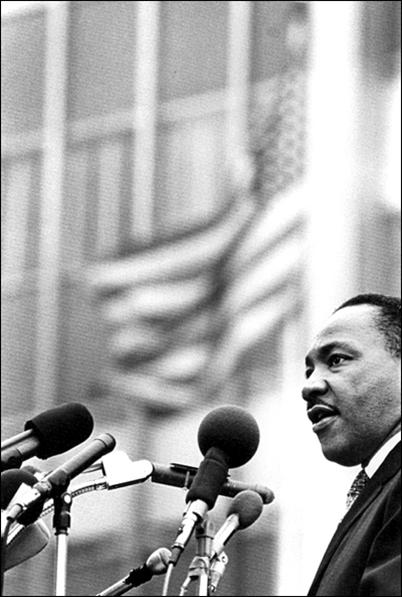

 Next open webinar: Jan 19, 5:45-7:15 pm PST: Webinar: Mark’s Call to Discipleship in Socio-political and Economic Context” only $9.50, you can sign up at http://www.chedmyers.org/blog/2012/01/03/2012-monthly-bcm-webinar-series-begins-jan-19-your-mark

Of all the virtues we’ve explored,
love is surely the most comprehensive,
the most all-encompassing,
and the most slippery of them all.
What is love?
The word is used so loosely,
widely and indiscriminately,
it’s hard to pin down.
so generic is ‘love’
its substance evaporates.
I love my wife,
I love my iPhone;
I love God,
I love coffee.
Love is all you need apparently.
Love rules,
love triumphs over all.
Love obligates,
love liberates;
love is fickle,
love is strong;
love is free,
love costs;
‘greater love hath no man that this,
that he lays down his life for a friend’
We fall in love,
we make love,
we search for it on-line.
We give it generously,
sacrificially,
resentfully,
inadequately,
tentatively.
We long for love,
we dream of it;
we crave it,
we weep for it.
Love compels us,
love eludes,
confounds and distracts us.
love fulfils us and makes us sad.
Love enrages,
infuriates,
intoxicates
and blinds us.
Love lets us down,
love fails,
loves end.
And when love is lost
it leaves an ache so deep it scars.
So love is many things.
But today we celebrate the love of God.
It is a different love, a holy love.
It is also a love of complexity,
but one of such depth
and breadth
and height
and length
it renders all other loves
insignificant by comparison.
At this table we hold love in our hands:
the bread and the wine,
the body and the blood of Christ.
it is a love of such pain
and cost and sacrifice,
it leaves us speechless.
It is a love that reaches into
the depths of human experience
in all its beauty and ugliness,
it glory and depravity.
It’s a love that knows no bounds,
no limits,
no exclusions.
There’s no fine print.
It is a love that confronts,
names honestly,
forgives completely,
heals and restores.
It is perfect love.
It is this love that
1 Corinthians 13 describes,
the perfect love of God.
It is this love
we are now called to emulate.
Quite frankly, it’s beyond us.
It’s a high calling,
a big ask, this love.
it’s always patient,
always kind,
never boastful,
envious or rude.
It’s eternally selfless,
without a hint of malice,
irritation or resentment.
It rejoices in truth and transparency
no matter what the cost.
It bears all things,
believes all things,
hopes all things,
endures all things.
It never ends.
All in all, impossible really;
yet possible in the smallest of ways.
We are not called to perfection,
but we are called to follow, to try,
to keep believing when we fail,
to rise again when we fall.
Through simple words of affirmation:
‘You are precious!’
Through warm embraces
and tender brushes of the cheek;
through daily actions of welcome,
surrender and service;
by giving preference
to the meek, and the poor and the sick;
by sitting with the marginalised
and the grieving;
by speaking against wrong-doing
and unfairness.
By cooking when we don’t feel like it
persisting when we would rather resign,
forgiving when we would rather keep a grudge warm,
serving others when we would prefer to sit alone.
In all of these ways
and a thousand others,
we give hands and feet to love.
Trifling efforts they may be,
fraught with mixed motives
and uneven results.
but in our feeble efforts
at love in daily life,
we touch a love so much deeper,
so much higher,
so much more all-encompassing
than anything we can conjure up ourselves.
‘For now we see in a mirror, dimly,
but then we will see face to face.’
‘And now faith, hope and love abide,
these three: and the greatest of these is love.’
Thanks for the blessing of these words Simon Holt, CSBC
I re-read “5 Love Languages” today by Gary Chapman. Trying to do some work on actively identifying and naming some emotional needs so can try and take steps to see them fulfilled. Think I’m predominantly fluent in ‘acts of service’ – certainly that’s what I speak. I don’t think I’m very good at asking for things. It doesn’t count if it’s something someone ‘has’ to do for me. I want them to want to do it. Even chocolate or baking, it’s the act of thinking of me and doing something for me that matters more than the gift itself. This is closely linked with the type-2 Enneagram also, the belief that I need to do things for other people to be deserving of their love. I am treating love like a commodity. I am subscribed to the Enneathought for the day and last week one was: Love is not a commodity and is not scarce – this is one of those fundamental truth things that I probably need to be reminded of every day because I find it so hard to believe. I know not everyone is into these frameworks/tools but I can certainly say for myself that they have been really helpful in giving me a language to talk about things I’d otherwise leave unsaid and taken me on a journey of self-awareness – how much of my disappointment in life/relationships is about my own issues and expectations that I haven’t communicated with anyone about? I need to take some responsibility for managing myself. Luckily, the trick, with the enneagram stuff at least, is that awareness is enough – the change and transformation will come just through being conscious of our own behaviour. There’s a Jean Varnier quote that discusses the difference between loving community vs. loving people and gaining community. These are tools for learning how to love people well, even yourself.

 itellyouarise