
You have to start
knowing you might not finish
You have to start
knowing you might not get very far
You have to start
knowing it might not make any difference
You have to start
You have to start
Talitha Fraser
You have to start
knowing you might not finish
You have to start
knowing you might not get very far
You have to start
knowing it might not make any difference
You have to start
You have to start
Talitha Fraser

Rest.
Lie back.
Dwell in your own skin.
Made by Me and belonging to Me.
Nothing and no one can take that away.
What I make, I see, and say that it is good.
Nothing knows its purpose but I know its Purpose.
Nothing knows its place but I know its Place.
Nothing knows itself but I know its Self.
You are as you were made to be –
no more or less than that.
No less Mine for that.
Rest.
Lie back.
Dwell in your own skin.
Talitha Fraser
God
all that I am
anything that I am
is what you made me to be
as much as I am broken,
I am made
as much as I am fallen,
I am raised
as much as I am wounded,
I am restored
as much as I am consumed,
I am made whole
I am drawn towards You, Creator Spirit
the seasons and the cycles
of transformation that are the
source of such wonder and dread
my doing and my undoing
are in You
Talitha Fraser
“Old words do not reach across the new gulfs, and it is only in vision and oracle that we can chart the unknown and new-name the creatures.
Before the message there must be the vision, before the sermon, the hymn, before the prose, the poem.
Before any new theologies however secular and radical there must be a contemporary theopoetic. The structures of faith and confession have always rested on hierophanics and images. But in each new age and climate the theopoetic of the church is reshaped in inseparable relation to the general imagination of the time.”
– from the foreword to Grace Confounding: Poems
Hey God,
We’re not down, we’re not out, but we’re hurting.
This vulnerability sits like an open wound and
every new hit jars it.
We breathe through it, lean into it,
listen for what the pain has to tell us.
Lend us quiet that allows us to hear
the harmonies of the universe that let
us know, even in this, as we are, we have
a place in the order of things.
Lend us space that allows us freedom
for those things that are tight to loosen,
those thoughts and events moving quickly
time to slow so that we can look and
see them clearly.
Lend us peace that allows us grace
to tell the difference between our internal
and external insecurities – our own and
also of those around us.
There is much that is unknown,
but You are not.
We are grateful for that.
Lead us. Teach us. Send us.
Amen
Talitha Fraser
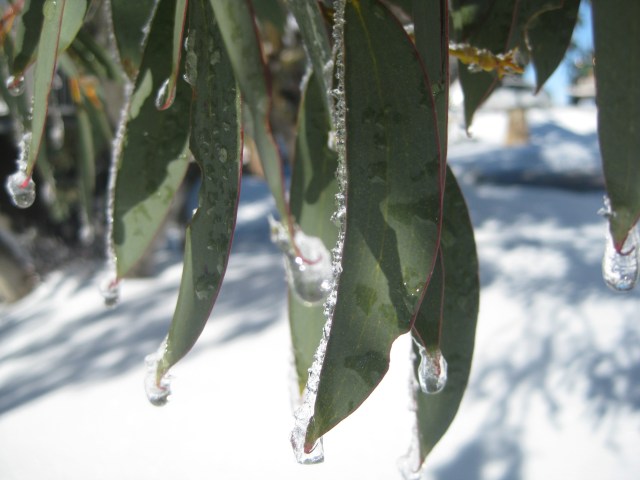
p.44
I do not trouble my spirit to vindicate itself or be understood
I see that the elementary laws never apologise…
I exist as I am, that is enough
If no other in the world be aware I sit content…
I know the amplitude of time
The pleasures of heaven are with me, and the pains
of hell are with me.
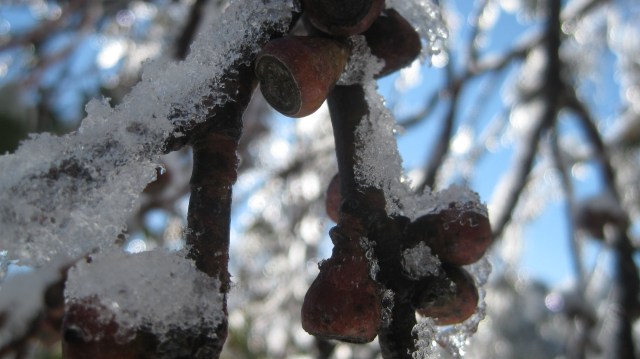
p.31
Who need be afraid of the merge?
Undrape… you are not guilty to me, nor stale nor discarded.
Walt Whitman – Leaves of Grass
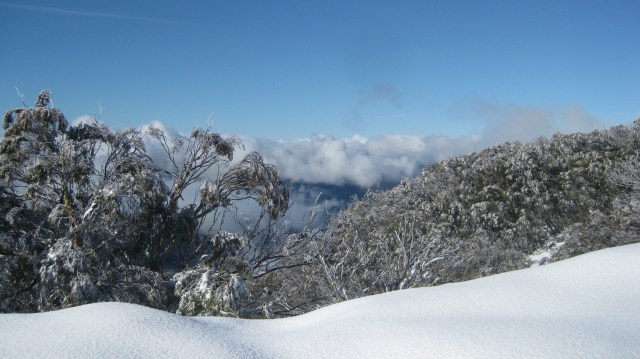

Artwork by Aysha Tufa
I’m spending my weekend popping in and out of varied sessions of the Footscray Arts Centres West Writers Forum – the description for a workshop I made it to today reflected on language:
As our world grows smaller and people become more familiar with one another through daily cross-cultural interactions, what stops us from finding ourselves or losing ourselves in each other’s stories? Is translation the final frontier in creative writing? Can we achieve fluid creative and cultural exchanges through the translation of stories? Or will some things always remain lost in translation? Join moderator Mridula Nath Chakraborty in conversation with academics Sanaz Fotouhi and Dr Nadia Niaz, Lily Yulianti Farid and Josiane Behmoiras for this panel.
Lots of different ideas came through –
The minute you write – let it go.
It will mean something different to every reader.
You can put forward your intention for the words
but that may or may not be picked up.
Josianne Behmoiras
Contextual translation is more important that word-by-word.
You need to translate meaning to a medium your audience can understand…
The interpreter makes their own “work”.
Dr Nadia Niaz
The original word in Buginese “Mukkunrai”
had to remain to carry the meaning – the English translation
“female” doesn’t capture all of the cultural meaning.
(on the title of her short story collection)
Lily Youlanti
All of us find ourselves constantly
translating and transitioning,
asking: “Where do I sit?”
Sanaz Fotouhi
This quote got shared; Charles Simic’s take on the magical absurdity of translating poetry: “It’s that pigheaded effort to convey in words of another language not only the literal meaning of a poem but an alien way of seeing things … To translate is not only to experience what makes each language distinct, but to draw close to the mystery of the relationship between word and thing, letter and spirit, self and world.” (and the article I found it in from The New Yorker mentions many of the panel-referenced works re the translation movement in Japan).
This panel of five had cultural tails in the following languages: French, Hebrew, Latino, Turkish, Kurdish, Buginese, Bahasa, Urdu, Bengali and more I’m sure… a lot of the focus of the session was around translating into English and how you break into, speak into, build an audience amongst English (white middle-class) readers (they are mostly the ones buying books/running the theatres/festivals/publishing houses, etc.).
I found myself thinking about Te Reo Māori (the native language of New Zealand where I am from) and how few speakers there are – there is a need to find reasons to use this language. What might it look like to translate poems – not word for word – but their meaning. This kind of interpretation lends itself to crafting something new. What does it mean to take the words I have written to be grounded back into where I come from? What might I discover through that process? Like the Treaty of Waitangi we will end up with 3 versions: original English, Māori translation and then a translation of the Māori back into English… apologies to anyone fluent in Māori who reads these as I’m bound to make gaffes in grammar and word choice… {if you want to collaborate on correct translations get in touch!}
i.
The river sits in the middle of me
Won’t you come and sit by the river?
Sit by the river awhile with me
ii.
Enoho au ki roto i te awa
Aparima enohoana ki roto iho
Haere tahi i roto ki te awa?
Haere mai ki te Mātāpuna a muri ngākau ahau
iii.
I sit down in the middle of the river
Aparima* sits always at the heart of who I am
Will you keep me company at the river?
You are welcome at the Source that sits at the heart of me
(* Aparima is the name of the river that I identify with in my mihi, it denotes the acknowledgment of place/where I am from)
i.
There is Room at the Table (originally written as a song to welcome asylum seekers/boat people coming to Australia, used at a Welcome Picnic outside a local detention centre)
There is room at the table x3
Let them in, let them stay
There is room at the border x3
Let them in, let them stay
There is room in our hearts x3
Let them in, let them stay
There is hope for a new tomorrow x3
Let them in, let them stay
ii.
He wāhi anō kai roto i te tēpu mo tētahi atu tangata?
Haere mai ra, haere mai ra, haere mai ra
Haere mai, nau mai, e ngā iwi e
He wāhi anō kai roto i te rohe mo tētahi atu tangata?
Haere mai ra, haere mai ra, haere mai ra
Haere mai, nau mai, e ngā iwi e
He wāhi anō kai roto i te to tatou ngākau mo tētahi atu tangata?
Haere mai ra, haere mai ra, haere mai ra
Haere mai, nau mai, e ngā iwi e
Nāu te rourou, nāku te rourou ka ora te manuwhiri
Haere mai ra, haere mai ra, haere mai ra
Haere mai, nau mai, e ngā iwi e
iii.
Is there space at the table for one more person?
Welcome, everyone is welcome
Is there space at the border for one more person?
Welcome, everyone is welcome
Is there space in our hearts for one more person?
Welcome, everyone is welcome
We will all contribute what we have and there will be enough to share
Welcome, everyone is welcome
Queries:
What is notable about the differences in the English translations?
What does such an exercise tell us about the significance of interpretation in translation?
If you look up mihi (tradition Maori introduction – reference in poem 1) and karanga (traditional Maori welcome – style observed in poem 2), does this change your understanding of these poems meaning? How?
Any reflections on Simic’s idea that: “To translate is not only to experience what makes each language distinct, but to draw close to the mystery of the relationship between word and thing, letter and spirit, self and world.”?
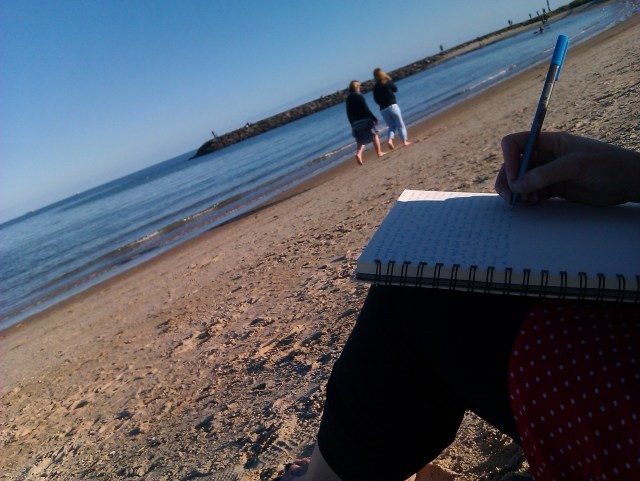
The water laps
soothing the disquiet
of all things unknown.
There are larger,
cycles and tides…
rhythms at work…
you will not ever
know the music to.
But you might,
if you are still,
hear an echo.
Talitha Fraser
 itellyouarise