Tag Archive: questions


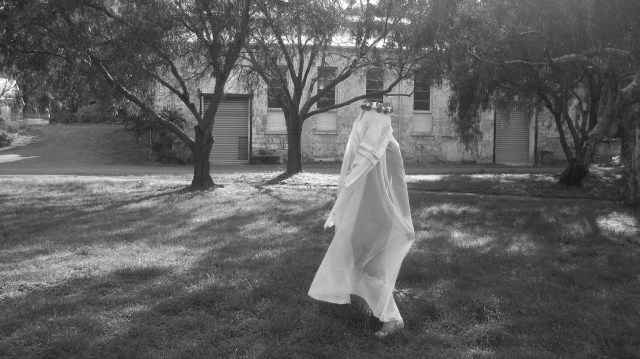
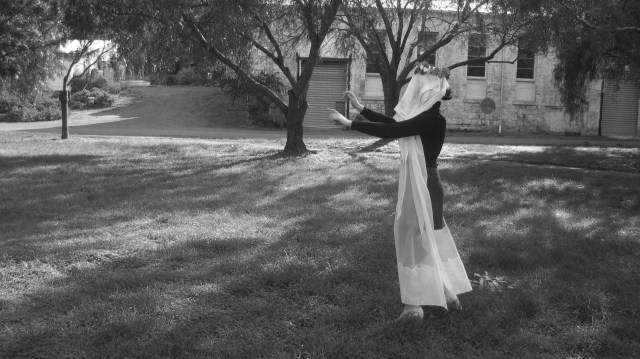
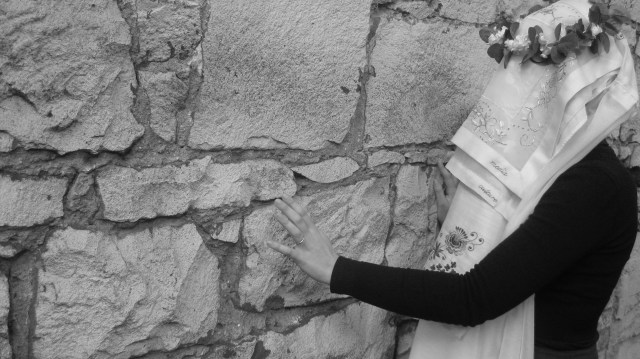
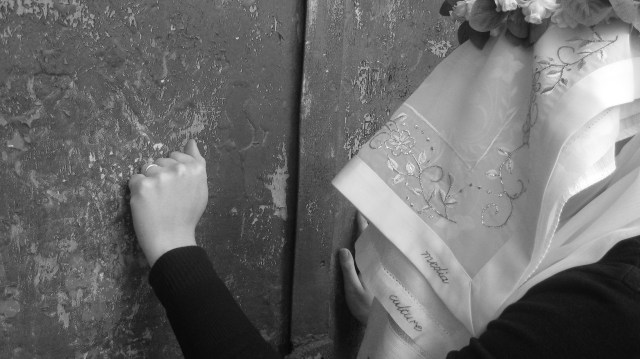
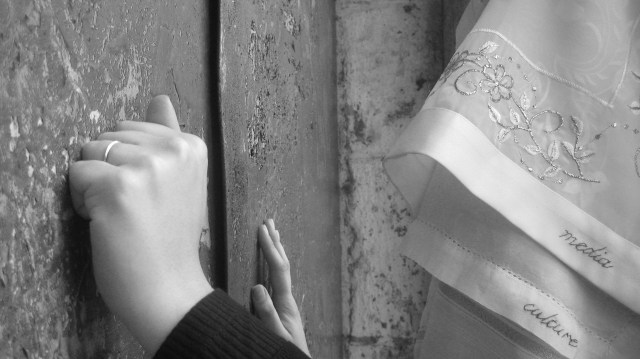
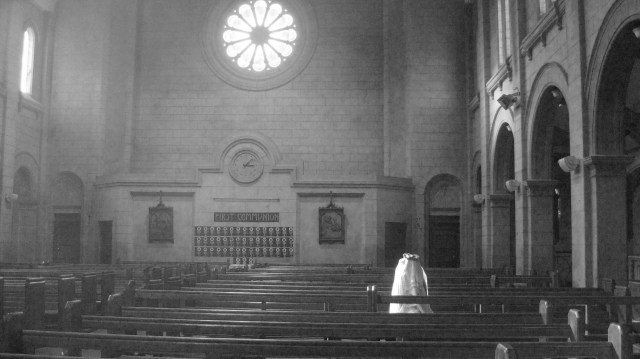
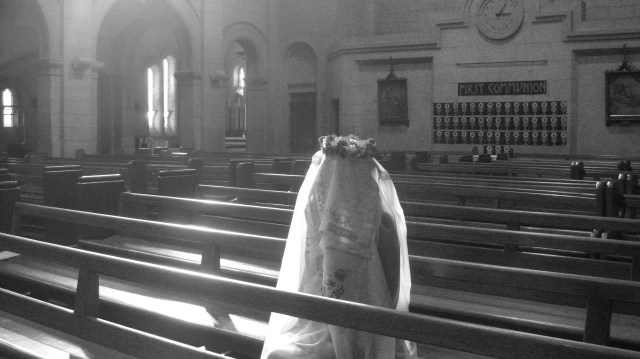
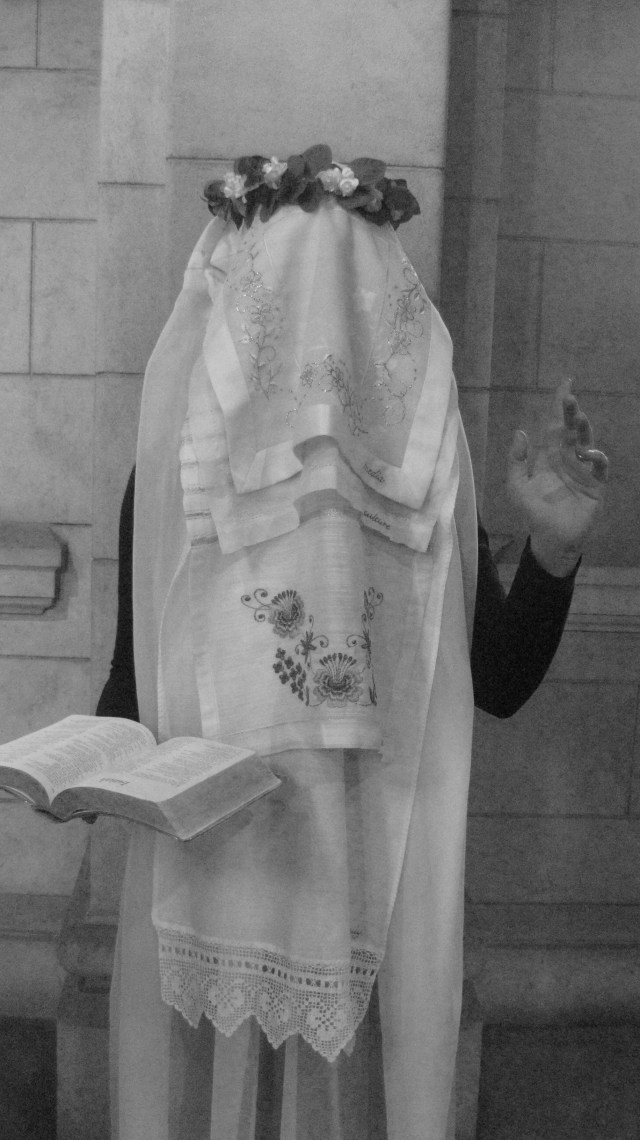
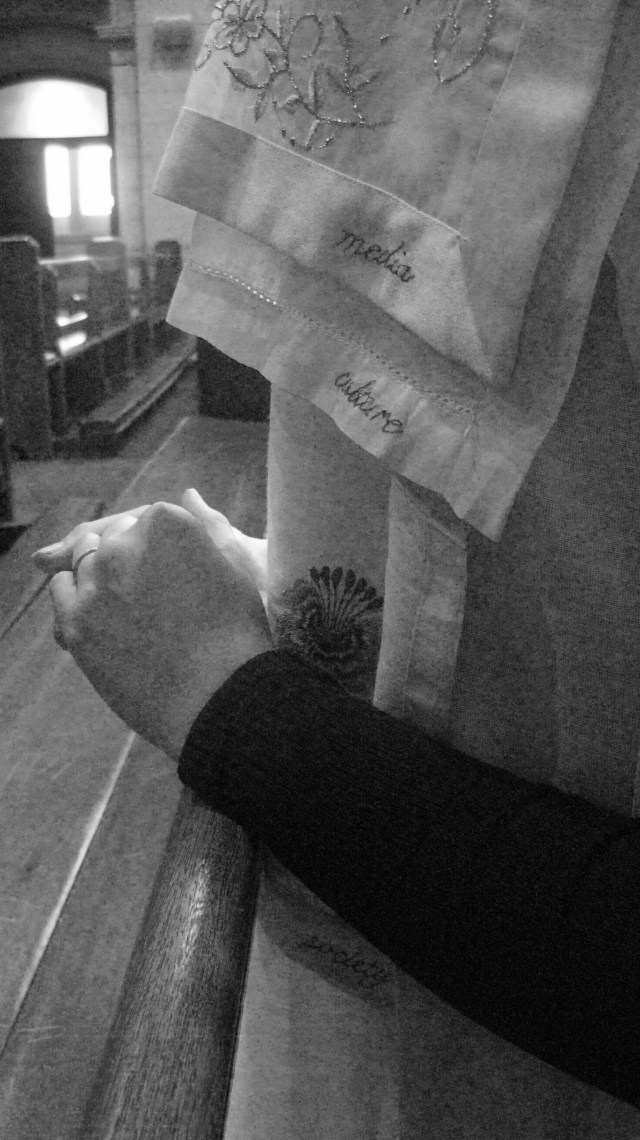
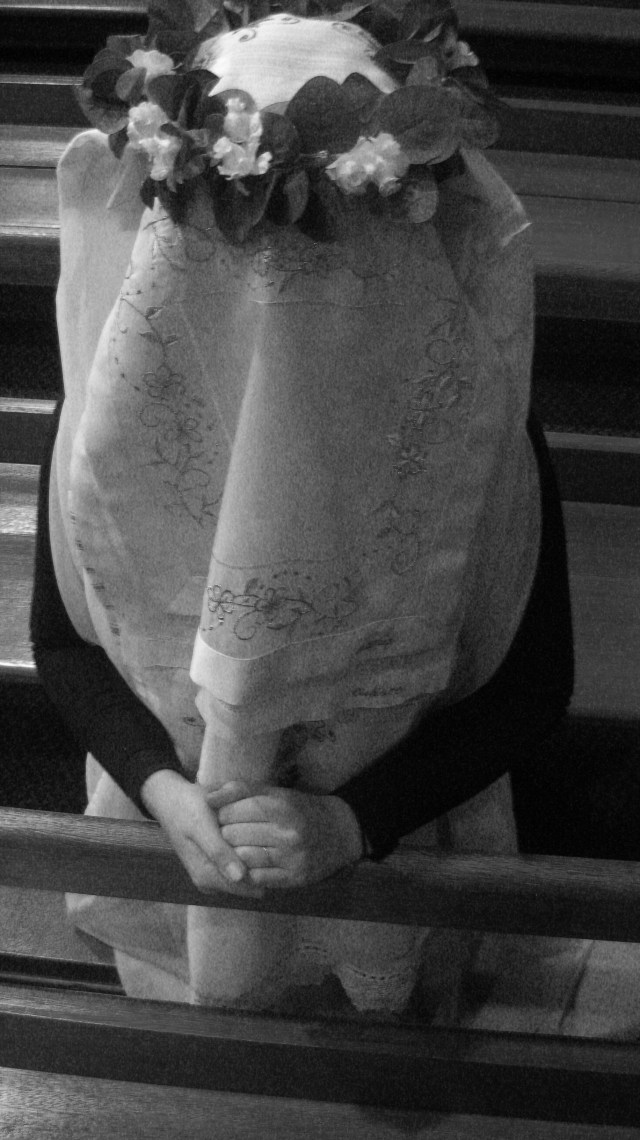
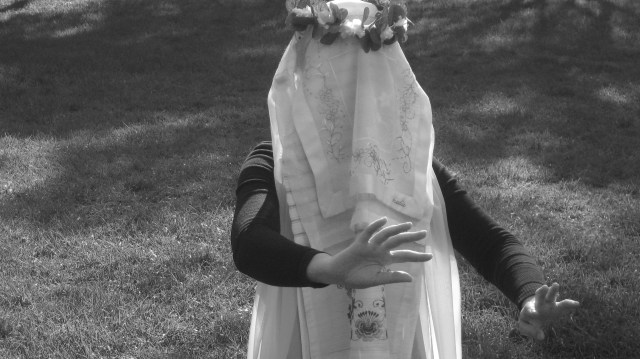
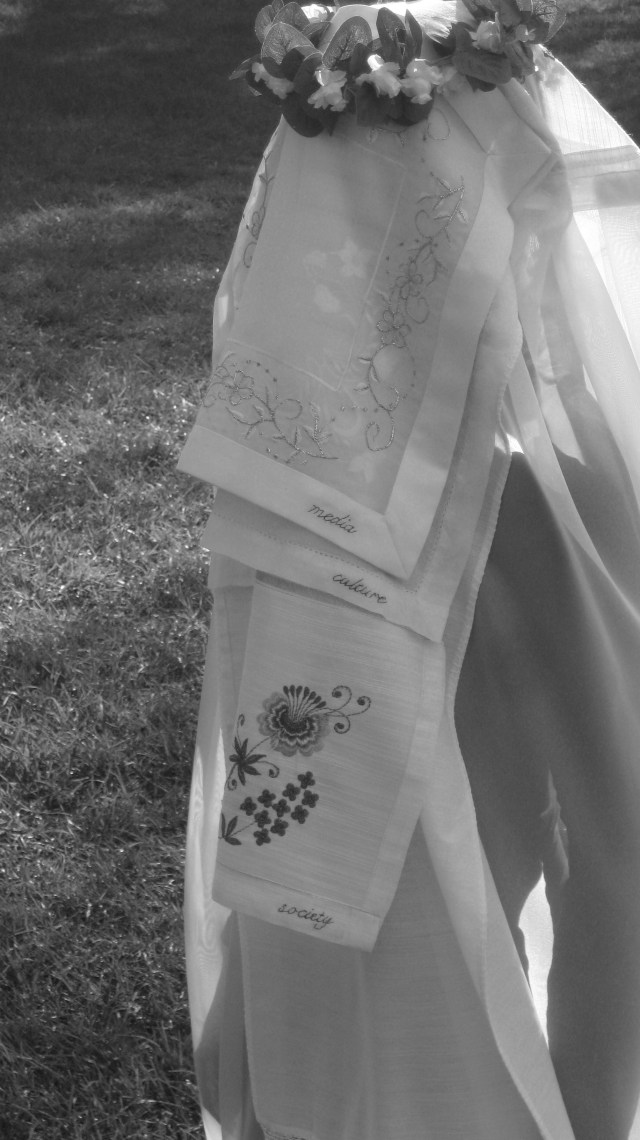
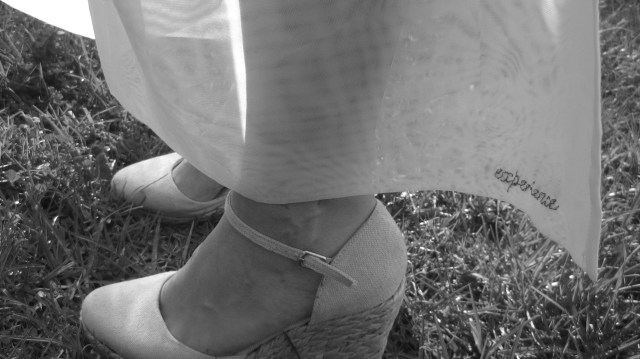
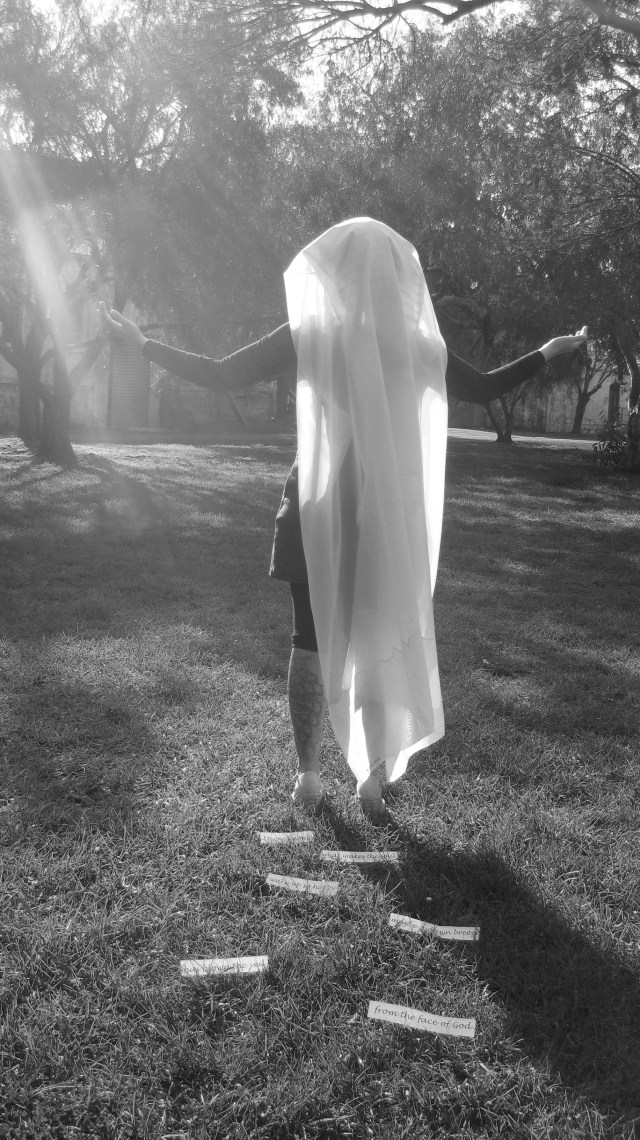
IMG_0063I have been struggling recently… just figuring out how to exist well in a world where so much feels obfuscated by the power of things unseen to influence and affect my life.  Things and people that seek to control my choices by limiting my choices. As a way of praying, personal confession and speaking to powers I wanted to somehow create a physical metaphor for the ideas circling in my head and this is how the idea for the veil came about.

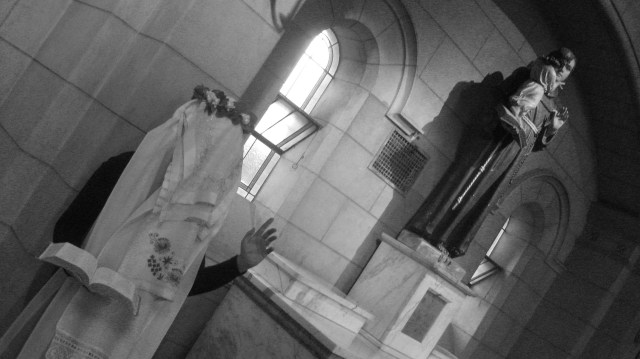
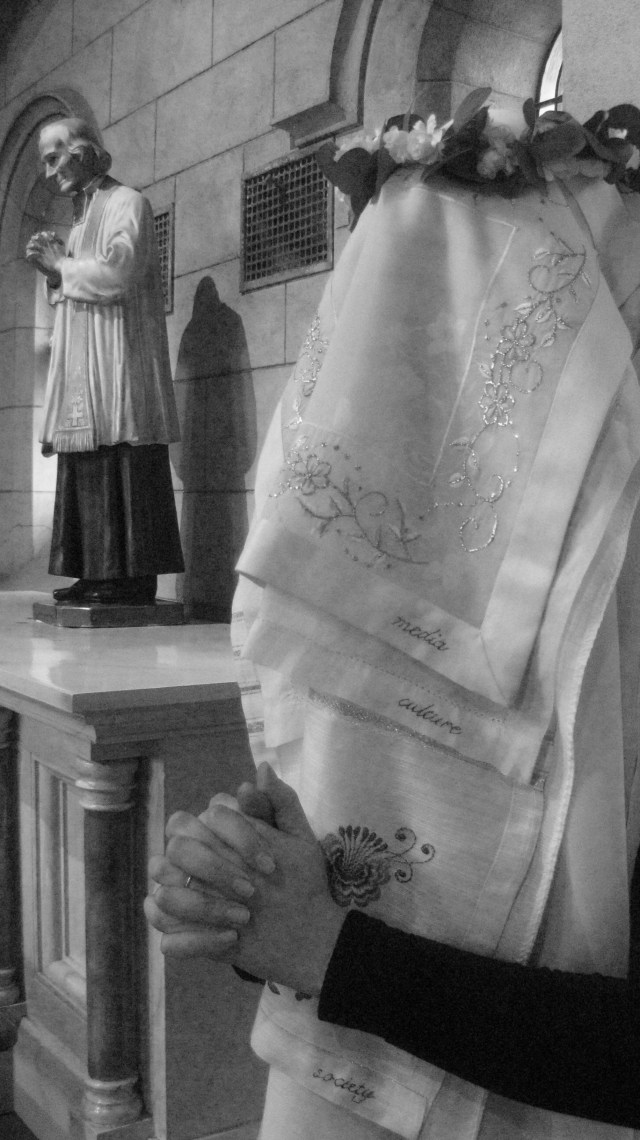
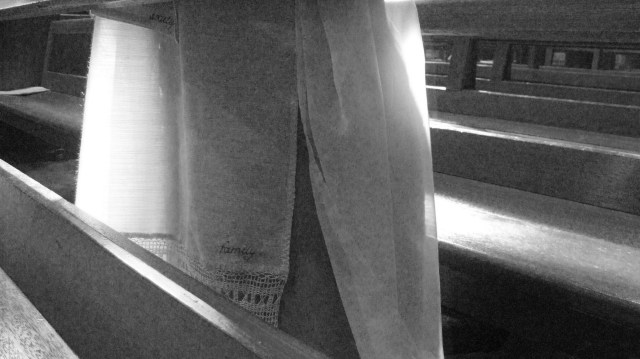
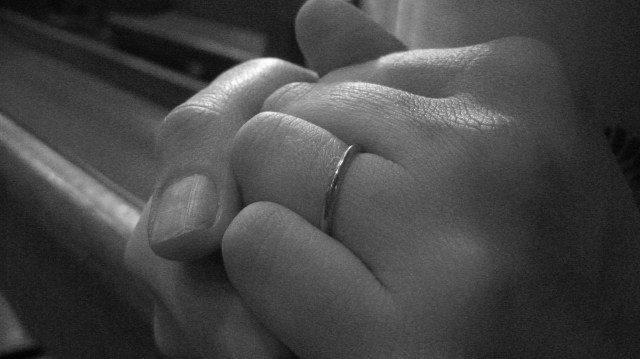
What follows here is a series of images that seeks to playfully and prayerfully explore, critique, live-into-being the answer to some of my own questions around this idea of what barriers are coming between us and being able to see God clearly…

Here are some of my queries:

In what ways does this veil shelter or smother me?

How can we know and be known through such thickness that clouds and blinds us?

At a recent team planning day, the facilitator mentioned that the church “as we know it” has 17 years left… it’s dying.  What does this mean if we reflect on the Church as the Bride of Christ? Is the church glorious? …holy and without blemish? ready?

Ephesians 5:25 Husbands, love your wives, even as Christ also loved the church, and gave himself for it; 26 That he might sanctify and cleanse it with the washing of water by the word, 27 That he might present it to himself a glorious church, not having spot, or wrinkle, or any such thing; but that it should be holy and without blemish.

Revelation 19:7 Let us be glad and rejoice, and give honour to him: for the marriage of the Lamb is come, and his wife hath made herself ready.8 And to her was granted that she should be arrayed in fine linen, clean and white: for the fine linen is the righteousness of saints.9 And he saith unto me, Write, Blessed [are] they which are called unto the marriage supper of the Lamb. And he saith unto me, These are the true sayings of God.

The Greek word ecclesia, for church, means “The called-out (ones)” i.e. the church is its people, if the institutional church as we know it dies – what does that mean for the called? Does God become a widower?

What does it look like to live with full access to God? How can we remove the veil that creates separation between God and humankind?

Covenant symbols in Christianity: BRIDAL VEIL
“Not only does the bridal veil show the modesty and purity of the bride and her reverence for God, it reminds us of the Temple veil which was torn in two when Christ died on the cross. The removing of the veil took away the separation between God and man, giving believers access into the very presence of God. Since Christian marriage is a picture of the union between Christ and the church, we see another reflection of this relationship in the removal of the bridal veil. Through marriage, the couple now has full access to one another. (1 Corinthians 7:4)” [from about.com]

How might we compare and contrast this invisible veil with a hijab or niqab? What is visible and what is hidden by them?

I first wore the headscarf at the age of 18 (with no pressure to wear it from parents at all even though they are very devout religious leaders in our community). My reason for wearing it was that I was at a point in my life where I was growing in my faith journey and wanted to make my surrender to God visible. For me the headscarf was an extension of my prayer (it is exactly what I wear when I pray).  The act of wearing a scarf had nothing to do with a man, whether it was my father, brother or husband. In fact, my husband did not see me without a scarf until we were engaged. This in itself raises an interesting function that many women who wear the scarf also acknowledge- that the scarf can liberate their bodies from the insistent objectification of women in the public space. It demands that people deal with them based on their intellect, values, manners, behavior, ideas, etc and not based on their looks. Quite a strong feminist statement.            – Dr Nora Amath

Is the Church lost? What is it looking for? What does it need? What does it pray for? Is it lonely? Is it static? Is it dead/dying?

IMG_0204

IMG_0206

IMG_0174

IMG_0180

IMG_0181

IMG_0295

IMG_0284


IMG_0337

IMG_0338

IMG_0343

IMG_0301

IMG_0335

IMG_0321

IMG_0314

IMG_0219

IMG_0220

IMG_0234

IMG_0275

IMG_0276

IMG_0278

IMG_0262

IMG_0265

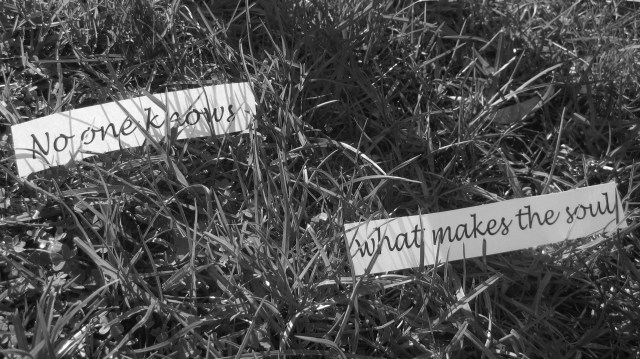
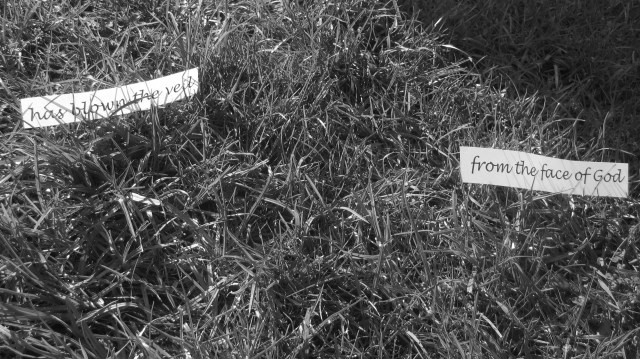
No one knows what makes the soul
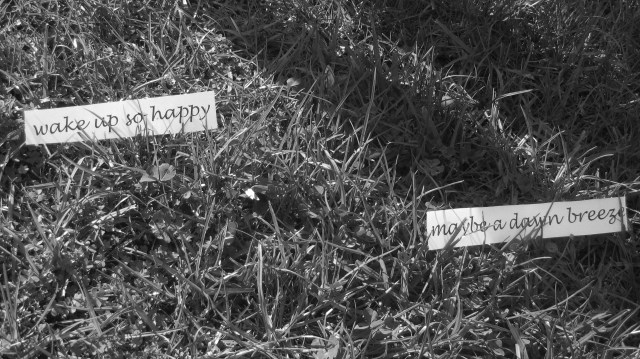
wake up so happy

Maybe a dawn breeze has blown the veil
from the face of God.

~ Rumi


N.B. this story contains offensive language and swear words


The streets of Melbourne speak.  Buskers busk, beggars beg and people hand out pieces of paper offering good deals on diamonds, discounted burgers or advocating for autonomy of Tibet – everyone has something to say. Mostly we veer round them, but not me.  I have started a new job working with a Christian community development organisation supporting the homeless in Melbourne CBD – these people out on the street are my neighbours, my friends, and I am going to help them and I will make a difference in their lives.

Speak Melbourne, I am listening.

I hop on the 57 tram at Collins St. As it is standing room only, I loiter near the rear door and sitting side-on to me is a man holding a bottle in a paper bag already quite drunk.  He looks old but probably isn’t. A face weathered by life’s experiences and dirt. He clears people to the other end of the tram by being, loudly, verbally offensive to everyone around us.

To the Indian couple opposite chatting softly, “Can’t you speak English? Speak English! F-ing come to our country, you can speak our f-ing language.”

To the Chinese woman beside him, “I can speak your language, sushi! Chopsticks! Kamakaze! Karate!”

To a young Middle Eastern girl, “You’re quite pretty… how much would it cost to buy you? That’s what you do where you come from, right?”

Everyone on the tram pretends to ignore him and looks away – whatever you do, don’t make eye contact with the crazy guy. I felt angry, and ashamed, worried that all these people might think that by staying silent we agree as I find I look away too.  Eventually, a young white guy halfway up the tram calls out, “Keep your peace mate, no one wants to hear what you have to say.”

Crazy Guy stands quickly, “You trying to be a f-ing hero? Showing off for your girlfriend?  None of your f-ing business.”

He has pulled a broken bottle out of his bag and is waving it threateningly. Collectively everyone on the tram holds their breath, still not sure where to look.  Eventually Crazy Guy sits back down again but the ‘hero’ turns to say something to the guy behind him and he’s up again throwing candles at him from his bag shouting, “Shut up! I’m going to burn your f-ing eyes out you c-!”

All of this over a surreal twenty minute ride. I arrive at my stop in North Melbourne and hop off, relieved, so very relieved, the Crazy Guy does not.  I have done nothing, said nothing, and feel upset and guilty.  “Aren’t I meant to know how to do this?”

I ask a colleague Gin the next day, “What I could have done differently?”

“What was his name?”

“Uh, I didn’t exactly introduce myself….” my tone quavering somewhere between sarcasm and incredulity.

“…next time, try and find out what his name is, it really helps to connect with people if you know their name.”

Oo0oO


Some weeks later I am hosting dinner at my place unwinding with others from work. The share house I’m in doesn’t have much of a backyard and we have improvised with fish and chips in the middle of the 5-way roundabout where Haines, Dryburgh and Shiel Sts intersect.  It’s a beautiful Melbourne summer evening and we jockey for the minimal shade offered by the three yet-young eucalypts as summer light fades into dusk.  We’ve been there a while when a man crosses the road to ask us, “You got anything to eat?” and we share what we have.

He hangs with us a bit under the darkening sky, asks if we’re Aboriginal, if we’re sitting here because the land is significant to us, and asks my friends Christop and Mehrin when they are getting married, “I can just tell…” though they were only dating then.

Gin asks “What’s your name?”

“Gordy.”

“Where are you staying?”

He points to the flats across the road.

Crazy Tram guy is my neighbour, and now I know his name.

I wait till Gordy leaves to tell the others the connection.  My workmates have been helping me process the experience I had on the tram and it’s almost hard to credit this could be the same person. Calm, softly spoken, clean-shaven, friendly, interesting and interested in who we are.

Gordy is my neighbour, and now I know his name.

IMG_0835 - Copy

Oo0oO

homeless memorial service 005 - Copy
I go to the 10th Annual Homeless Memorial. Once a year a motley community gathers to remember those ‘streeties’ or ‘parkies’ who have passed away. You can get hot soup, a hot dog, and warm clothes are available to take away but it is about more than that. It offers an opportunity to reflect on those people with whom we create connections, those with whom we feel ‘at home’, regardless of any material shelter. We remember those who now, or have in the past, offered light or warmth to our lives. Voice is given to the pain of separation from parents, siblings, children, society. Voice is given to the pain of decisions that cannot be unmade, things which cannot be unsaid and knowledge that we cannot go back – only forward. A humble gratitude is offered to ‘the people from the organisations represented here’, supported with warm applause from the crowd in and around the marquee.

We sing. Songs we all know the words to, or hum, or make up. There are no song sheets. You  don’t have to have learned to read to belong here. Our hands are free to cradle lit candles and sprigs of rosemary.

Please swallow your pride
If I have things you need to borrow
For no one can fill those of your needs
That you don’t let show
For it won’t be long
‘Til I’m gonna need
Somebody to lean on


They say we stand for nothing and
There’s no way we ever could
Now we see everything that’s going wrong
With the world and those who lead it
We just feel like we don’t have the means
To rise above and beat it
So we keep waiting
Waiting on the world to change
It’s hard to beat the system
When we’re standing at a distance
So we keep waiting
Waiting on the world to change


We hold a minute’s silence, and it is deep and rich and full.

There are names unspoken…tears unshed…and hope unlooked for. We only need to look around to know we are not alone in this grief. We only need to look around to have more than our hunger fed, our coldness clothed… instead we know the truth.


We are not strangers to one another as we thought when we arrived.


And a last a cappella chorus rings out…


Amazing Grace, how sweet the sound
That saved a wretch like me
I once was lost but now am found
Was blind but now I see


Oo0oO

Another pleasant Melbourne evening, my housemate Freya and I are walking her gentle dog Nala to the oval for a play. We have an Ultra Grip Ball Launcher and even with both of us humans to the one of her we know well who will get tired of the game first.

We meet up with Gordy as we cross the road, he is heading home as we head out: “What kind of dog is that? Bitch looks like a dingo.  I’ve killed two dogs with my bare hands, they were coming at me and I just grabbed their front legs and ripped ‘em apart.”

Once he’s gone I try and explain how I don’t think he’s a risk to our pet but I think I make a bad job of it and there’s heightened awareness and extra company on walks in the weeks that follow.  I know enough to know now that Gordy was pretty level tonight.  Eyes clear and cleaned up, he must be in a good place.  He’s just making conversation.  Speaking his truth.  Why do we think about what we need to do to protect our dog and not think about what happened to Gordy that he’s in a situation somehow where he’s defending himself, his life, with his bare hands?

I used to look for the right answers once.  Now I look for the right questions.

Oo0oO

A stranger stops my friend Lyn and I, as we are walking down Swanston Street, to ask an inane question.   She and I do lunch now and then to catch up since I dropped off the corporate ladder. I say something harsh and unkind about him once he leaves. Gormless.

My friend smiles and says, “Sometimes you are very Christian, and sometimes you are so not.”  My smile twists and becomes wry, “No. I’m a Christian all the time,” I say, “…sometimes I’m better at it than others.”

I used to think that helping the poor would make me holy somehow. But I am as holy, and as human, as I have ever been.  Riding that 57 tram home later that day, I see Gordy again. He stands up to let a lady sit down and, when other women get on board, chastises other guys into giving up their seats too.  He flirts with a few girls and makes general conversation, “Hot ain’t it? Where you goin’?”

He says hello to me and I reply “Hi, Gordy, how are you?”

Confused, he answers “I don’t know you, I don’t know you”

I explain about meeting a few times, a long time ago and far apart but he just repeats, again and again, “I don’t know you”.  I get off at the stop after ours, cut home through the park, following the path that winds back and forth instead of cutting across the grass directly like I usually would.  It’s slower. I hold Gordy in my mind. I hold scared Gordy in my mind and slowly make my way home, hoping he’s made it ok to his.

Oo0oO


[Five years later…]

I am making my way to Coles to pick up some ingredients for dinner on the way home from work when I see Gordy sitting on the corner of Flinders and Elizabeth St with the cutest puppy sleeping on a blanket at his feet.  My momentum carries me past before my brain catches up and my spirit stirs.  I hesitate, and go back.  “Hey Gordy, I’m just heading into the Coles here, have you eaten? Can I pick up anything for you or the puppy?”

He says, “Nothing for me” proudly, “but some biscuits for the puppy would be great.”

I head in and dither over what to buy: puppy vs. adult food, large dog vs. small dog food, how big a bag if Gordy has to carry it around vs not being generous.  I finally get clear and head to the corner and… I can’t see them… oh.

My mind starts running, Gordy had sort of flinched when I used his name.  He never remembers me.  Maybe he felt suspicious of my motives, paranoid?  I check all directions from the intersection, check out the tram stops hoping to catch sight of him.  Damn it.  I just spent $15 on dog food I don’t have a use for.  Should I leave it here at the corner in case he comes back?  Did I take too long?  Did he assume I wasn’t coming back? Sigh.  The reasons for stopping in the first place were right.  It doesn’t matter that he isn’t here.

But it does.

I am disappointed by the ‘squandered’ generosity that goes unappreciated.

Oh well, Ray and Ben’s dogs will have a litter of puppies soon – it will be used eventually…

I cross to Flinders St Station and wait on the platform for the train. Last I know he lived in North Melbourne – I’m heading to Footscray where I live now – same line so I’m still scanning the platforms hoping to catch sight of him. Nothing. No sign. I find an empty seat on the train when it pulls up and slump down in the keep-to-myself-don’t-talk-to-me mode I generally assume on public transport.  The train moves off, the doors at the back of the carriage open and I idly muse on what it is people are looking for when they move down through the train while it’s moving when there are free seats everywhere? As I stare blankly at the dark tunnel walls slipping past.  The group, two guys and a girl, sit down across the aisle from me, and… beside me.  One of them is Gordy.

I very casually say, “Oh, could you pass this over for me?’

I see the surprise. Surprise I see them? That I will talk to them? That I will recognise Gordy without his hand out?  That I actually came through with the dog biscuits? Gordy moves to sit next to me with the puppy so ‘he’ (the puppy) can thank me, he is soft and adorable.  We chat all the way to Footscray, one of his mates eats the Snickers I threw in. Gordy says “I’ll definitely remember you this time.” I have my doubts and sitting together, sharing together, it feels entirely unimportant.  Though I have hope.

I’m still not holy.  Gordy isn’t a hero in this story, nor am I. We’re pretty much still the people we were at the start.  Still living.  I have learned that I can’t wait on the world to change. I have to start with myself.  Our conversation falls into silence, and it is deep and rich and full.

I don’t need Gordy to remember my name; that might be too hard or asking too much.  What I want him to remember is being reached out to, the mutuality of our exchanges. Equal parts in the same whole… it humbles and humiliates me.  I hope he feels looked for, I hope he feels found – as I have been.

The streets of Melbourne speak.  Buskers busk, beggars beg and people hand out pieces of paper offering good deals on diamonds, discounted burgers or advocating for autonomy of Tibet – everyone has something to say. Mostly we veer round them, but not me.  I’m in a different job these days, these are still my neighbours though and my friends – I know better now.  We help each other sometimes and our lives are different, better, for the knowing of each other. Listen Melbourne, I am speaking…

“What’s your name?”


Talitha Fraser


I wrote this piece a short story entry for the inaugural Brotherhood of St Lawrence Hope Prize “to encourage writing that transcends stereotypes of ‘the poor’ and reflects the resilience we know that people show in the face of poverty and testing times”. I didn’t win or anything so I can share my piece here – the years that I worked with the homeless community (largely through Seeds and Urban Seed) in Melbourne were transformative and it feels good to have an opportunity/ excuse to reflect on and share some learnings from that time. Thanks to Katherine, Susan and Sally for handholding me through the writing and editing process – this is noticeably tighter than my usual work thanks to you!

There is love

imag0265


There is love and there is love.
What would You call me into?
What is love that does not
arc towards wholeness?
What is love unlived, unfamiliar, unrecognisable?
A strangers face.
I have been here before.
How will you help me stranger?
How will you help me know you
and, in the knowing, know myself?
Let us walk on a little way together yet
and speak of love.

Talitha Fraser

Droop St Dreaming

img_9865

“Shared belief and
shared thinking
requires a
shared language”

– with Rowan Castle

On Writing…

12615553_10208956638538959_4864462156527056558_o

Recently I had a look at the stats page of this blog and realised I had missed, if I had thought to consider it, a 5 year milestone of writing.  So and so number of posts, so and so number of visitors to the page over those 5 years – what do those numbers mean?  When I created this page in Feb 2011, it was September before I posted anything to it.  I felt like I had to know the answers to all these questions: who are your audience? why are you writing?

I suppose I still don’t really know the answers to those questions but I suppose I care less that I do not know.  I will confess I have been known to answer facetiously “I write because I get something out of it, if you get something out of it – it’s Gods fault”. Do what you want with that.

I think all I ever hold of anything are fragments.  One of the reasons I think I’ve found it hard to classify “what I’m writing” or “who for”, is that what I post here is so mixed – things I write, things other people write, stories, poems, quotes, photos… life.  These aren’t considered think pieces or articles, I don’t have any 5-point plans to answer any of your questions, I’m not here to teach you anything or be an expert about anything.

I write because…

I participated in a bible study session with my small group towards the end of last year… it’s small, and I’ve known some of them a long time but, despite this, as we’re introducing the topic for discussion I can sometimes get this hot flush through my body, a rising sense of discomfort, I’m not sure I agree with what you’re saying but I can’t articulate why.   In the interim, others weigh in: “I haven’t heard it put like that before…”, “I agree…”

What I have to express at this time is “I’m not sure I agree with that…” or “That isn’t how I would see it”.  The difficulty in expressing that, is that it begs the obvious follow up questions “How do you see it?” or “What do you think is happening in the passage instead?” I know I don’t have the answers for those questions yet.

What is the value in pointing out to someone you think there’s an alternative interpretation if you cannot articulate it? My silence is my mind working a mile a minute to process what I’m thinking but in the meantime the conversation moves on – there is further affirming of the original interpretation and as each layer/next question is applied to the text, they are read within the lens of this.

Now I am still working on what I think but there is increasing pressure – it was going to be awkward suggesting an alternative interpretation to one person (what if the ‘revelation’ of this study hangs on the basis of this suggested interpretation?) but now others have concurred and the conversation has moved on, jumping in now will actually be disruptive and, as others also agreed with the original interpretation, I feel as if need to ‘make a case’ solid or justifiable enough to de-rail the conversation.

I opt out of the chat, no new input until I can get my head around the initial idea. Session winds down and I take my journal and sit outside and scribble – it helps me to think about an idea to take it out and look at it.

I write to say the things unsaid and to know myself better.   We need to communicate in different ways, yes, and we need to listen in different ways and have different spaces to communicate in. I write to explore what all these might be and what I might be.


I write because…

Lydia Wylie-Kellerman wrote a beautiful sermon for Pentecost and also to honour her Dad’s 10 years of ministry at St Peter’s Episcopal Church in Detroit… asking what does it mean for us to be followers of a subversive Storyteller?  Some excerpts:

“Stories are about communication, about when to listen and when to speak, and understanding in our own language…”

“Storytelling spaces are disappearing.”

“Telling stories is an act of resistance. It is part of discipleship. It is movement work. Stories are provocative and powerful while at the same time nourishing. They hold us. They remind us who we are. They help us know who we want to become.”

With social media the world seems terribly small sometimes – just these past weeks my Facebook feed has been filled with the trial outcome of the rape of a woman at Stanford and now this terrible shooting at the gay bar Pulse in Orlando (on a Trans and Latino/Latinx night on Puerto Rican Heritage Day during Pride Month).  There would have been a time when such events were beyond the scope of knowing occurring far away but now, for days at a time, we are touched by layers of pain from such events.  I don’t personally know anyone impacted first hand by these events but I know many impacted by the ripples as each new headline flashes up like a neon sign advertising darkness.  “My FB feed has been filled”… I think of the native wisdom of the story of the two wolves  and wonder if I have not lost my appetite.  You see it’s not the stories of rescue, or redemption, or hope that seem to go ‘viral’ but the brokenness that seems to be replicated over and over again until it is part of the perpetuating harm itself.  Is there any way it could be different? What choices are we making about what stories, voices, news, good news, we are perpetuating?  What is in the ‘feed’ you are serving?

Jenny Peek at Yale Divinity School puts it like this: “I don’t want this fear to have the final word, because all too often fear is at the root of our hatred, disgust, and division. So instead I want to share a verse that continues to give me hope and direction even in times like this:

1 John 4:11-12 – Beloved, since God loved us so much, we also ought to love one another. No one has ever seen God; but if we love one another, God lives in us, and his love is made complete in us.”

I write because I want to read stories that nourish me (and I try not to ask of others what I’m not willing to do myself). I want us to understand and to love one another.  The world is inexplicably wounded and inexhaustibly good… tell me about that… don’t leave out the inexhaustibly good part.


I write because…

Last month I was privileged to meet Aunty Sharyn an Indigenous Christian leader from Brisbane and hear her story.  A vocation rising out of her own personal experience, Aunty Sharyn has started up B’ira – a significant community ministry addressing domestic violence and sexual abuse in Indigenous communities. Bir’a Women’s Ministry (Bir’a is Wakka Wakka Language for ‘High Spirit’) is all about when ‘Women meet Jesus’. They run yarning circles – providing a safe space to talk through grief, trauma, healing and relationships and do art therapy for when we can’t find, or just don’t have, the words to describe what has happened to us. I was put in mind of the women in Mark (5:21-43).

Jesus is walking along with his disciples  and a leader of the Synagogue comes along asking for healing for his daughter who is unwell. Jesus agrees to come, yet along the way a bleeding woman who, against all purity codes, reaches out to touch a Jewish man in the desperation and hope of being healed. This woman reaches out for and takes what will heal her.  v.29 “Immediately her haemorrhage stopped; and she felt in her body that she was healed of her disease.” but v.33-34 goes on to say  “the woman, knowing what had happened to her, came in fear and trembling, fell down before him, and told him the whole truth.  He said to her, “Daughter, your faith has made you well; go in peace, and be healed of your disease.”  She had already been healed of the physical symptoms (v.29), this second healing (v.34) addresses the mental anguish of what the disease had cost. Exclusion from temple which was a central part of life, if she had a husband perhaps he left – not being able to touch what she had touched or share intimacy, to spend time with her would be to take on the limitations of impurity and ritual cleaning yourself, perhaps people worried they might catch the disease, perhaps the priests tried various means and methods of cleansing or praying out demons… what isolation and exclusion had this woman known over these 12 years?  How long does it take to pour out this tale of grief, fear and loneliness?  Long enough for the Synagogue leader’s daughter to die – does one person’s healing come at the cost of another’s? No.

I write because I want to encounter God, I want to be heard and healed and whole, and for others to have that too.  What part does truth telling have to play in our healing? {personal, family, community, political…?} We need times and spaces to hear the whole truth, we need to be willing to tell our truth, we need to be willing to listen.

You see.  All I have are fragments. Fragments of listening, voices – others and my own – word weaving or stitching together some patchwork of understanding from stories…

I don’t know that you can call this “feminist theology”.  This is only what theology has ever been – codified collective human experience – stories, poems, liturgy, literature, prophecy and cultural influences trying to understand the shape of something bigger and beyond ourselves.

It is not finished.

IMAG0180

God to whom I am but a wrinkle in time
Be a light for me when all other lights go out
Be love for me when all other loved seems unsecured
Can it not be enough to be known by You?
Called by You?
Loved by You?
Give me Your perspective that sees and weighs
what is truly important
I have no control here.
No plan.
Help me trust to Your unfolding.
What will You make?
Give me curiosity, give me wonder, give me You
so that I might never feel alone.

Talitha Fraser

IMG_7876

Doing the BCM Restorative Justice unit, here’s a link to one of the articles.

“This theology of radical inclusion was disconcerting to both Jewish ethnocentrism and Hellenistic ideologies of superiority.  In Greco-Roman antiquity the cultural, economic and political enmity between Jew and Gentile was profound. These two communities were institutionally and historically alienated—not unlike the modern legacy of racial apartheid or the protracted struggle between Israelis and Palestinians or Protestant Loyalists and Catholic Republicans in Northern Ireland. But Paul refused to abide by the social divisions around him, instead trying to build bridges called churches.”

So here I sit with:

  • who is reconciliation to be accomplished by?
  • what do we refuse to abide by?
  • who/where are the bridge builders? (or alternative societies being modelled)?
  • what are we called to be fools for?

IMG_6825

IMG_6826

IMG_6828

IMG_6831

IMG_6832

IMG_6833

IMG_6834

IMG_6174

Christmas: A story about a Middle East family seeking refuge.

Tonight we will share together time singing carols and at contemplative stations that invite us to engage in reflection around and respond to this Christmas message. We will reflect on ideas of welcome, hospitality, divinity and explore those gifts extended to us in those advent ideas of hope, joy, peace and love in our troubled times.

Prayer stations are essentially several points of “focus” that invite you to encounter God in some way. You can spend all your time at one or make your way around several, or all of them, as you like – spending as much or as little time at each of them as you like. They are not in any special order.

This space is for silent, personal reflection. Each station generally has something to read and something to do that invites you to respond to what you have read, such as lighting a candle.

Using the charming children’s story by Mem Fox called Wombat Divine, we look at the roles that we are called to play in this Story we all participate in. What role can you play?


As we receive cards from distant friends and family, and our papers and social media are filled with what might be deemed bad news, it can be hard to know how to respond – let’s take a moment to hang those words, phrases and images that feel meaningful, for ourselves, our neighbours, our country, our world. What has been weighing on you lately?


At the set table we can “meet” some of those guests who show up in Luke’s narrative of the nativity – relatives, shepherds, angels… These guests are interspersed with images from the recent Beyond Borders photo exhibition documenting unique stories of asylum seekers and refugees.  How do you respond to unexpected guests?


We come together for more carols by the nativity scene in the Chapel when there is an opportunity to make a gift in support of the work of the staff and patients at the Al-Ahli Arab Hospital, the only hospital serving the 1.4 million population of Palestinians living in the violence-devastated Gaza Strip.  Hope where there is seemingly no hope.  An image of a mother and her child in juxtaposition to the nativity.


IMG_6226

love is born

Leunig

The most significant religious events recounted in the Bible do not occur in ‘temples made with hands.’ The most important religion in that book is unorganized and is sometimes profoundly disruptive of organization. From Abraham to Jesus, the most important people are not priests but shepherds, soldiers, property owners, workers, housewives, queens and kings, manservants and maidservants, fishermen, prisoners, whores, even bureaucrats. The great visionary encounters did not take place in temples but in sheep pastures, in the desert, in the wilderness, on mountains, on the shores of rivers and the sea, in the middle of the sea, in prisons…. Religion, according to this view, is less to be celebrated in rituals than practiced in the world.