Tag Archive: radical discipleship


IMG_5058

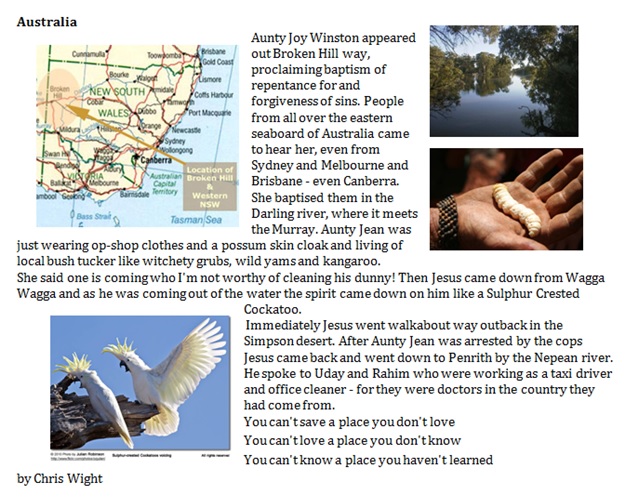
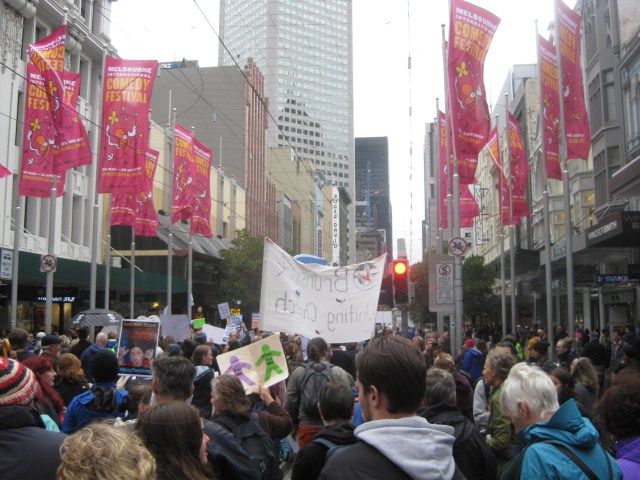
The Walk for Justice for Refugees is about standing up for the human rights of those seeking asylum in Australia. This largely secular action is held on Palm Sunday – as people of faith, knowing there is a way where it seems there is no way – how might we hold a space to liturgise and lament and to sing within this broader movement? The following is a bit of a photo essay from the day with some of our thinking around what we are trying to create and hold space for by participating in events like these.

IMG_5046

Welcome is a complex issue on un-ceded land. Although palms might be the branch of Welcome in Jerusalem in this country gum leaves have a lot of symbolism – burned they are said to have healing and cleansing properties of bad spirits. How spirit-sore and shadowed are refugees arriving in Australia? If a member of the Wurundjeri offers you gum leaves they are indicating that you are welcome to everything from the tops of the leaves to the roots of the earth, we are symbolically linked and share in honouring the ancestors that have tended the land for many, many thousands of years. Is it appropriate to carry gum leaves in the walk? Or both gum leaves and palm fronds to acknowledge this complexity?
IMG_5051

This group is about attending the Palm Sunday march as a cohort – how might we want to distinguish ourselves within the broader crowd? what message of kingdom-on-earth do we have to communicate? One example is that often the crowd chants at these configure themselves as “anti” something and can communicate negativity, what might a message be that communicates hope and indicates what we are “for”?

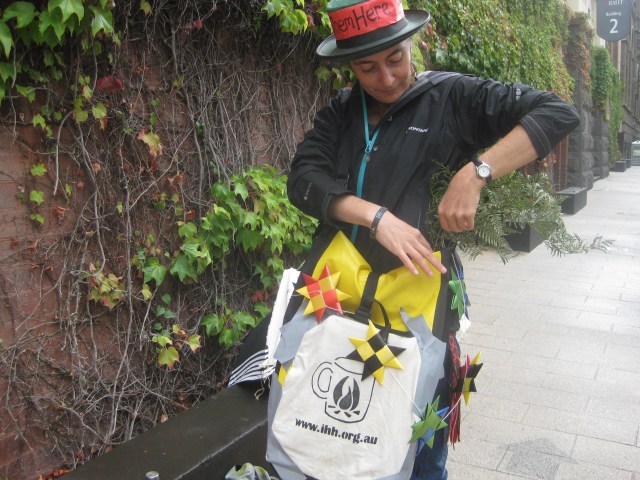
Above Sam has an IHH bag, her LMAW #Bringthemhere hat, some of the Million Stars Against Violence and bracken from Gembrook Retreat as her foliage.
IMG_5052

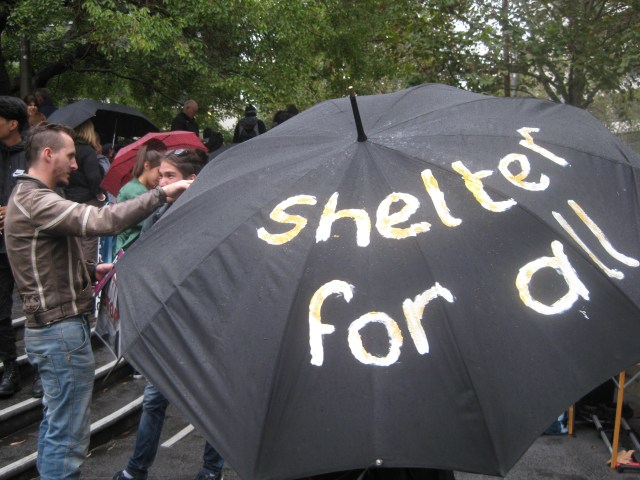
Welcoming people from other countries since time immemorial. Responding to “boat people” since 1788. The walk is coming up this Sunday – what do you want to say about welcome this weekend? Is it short, percussive and meaningful? How about: “Bring them here. Let them stay. We believe love makes a way”? What is the sound bite and deep heart’s call to justice you want to hear called out?
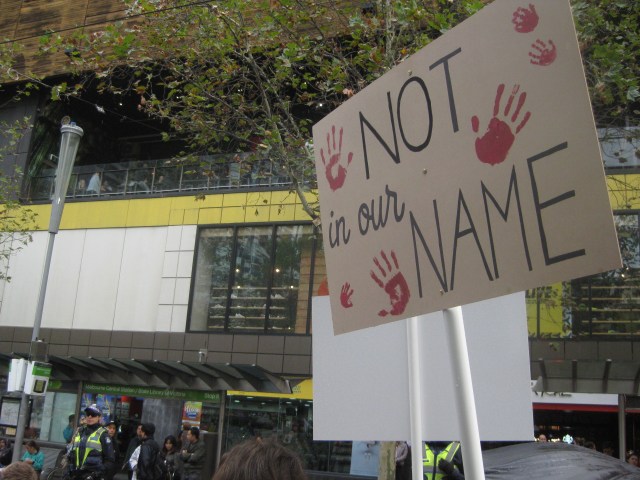
IMG_5055

Here’s some feel-good clickbait if you haven’t already seen it (watch it again anyway), when we stop using labels that create designations of ‘them’ and ‘us’ we might have more in common than we know. I was listening to Fly My Pretties yesterday, the lyrics of the song are “We can make a life, we can make a life worth living”. That is a hope of people arriving here and for all of us who see the image of God in every person we meet and want to see God’s kingdom here on earth – let’s make the world we want to live in.
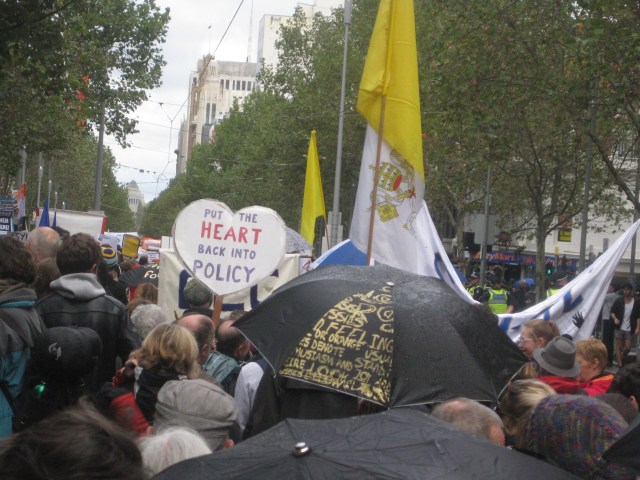
IMG_5057

Anne Lamott has said, “Hope begins in the dark, the stubborn hope that if you just show up and try to do the right thing, the dawn will come.” Here are some examples of prayer stations that explore this idea of “You are welcome here” using scripture references from Ched Myers book Our God is Undocumented” – whose voices set and shape the ways you show welcome?
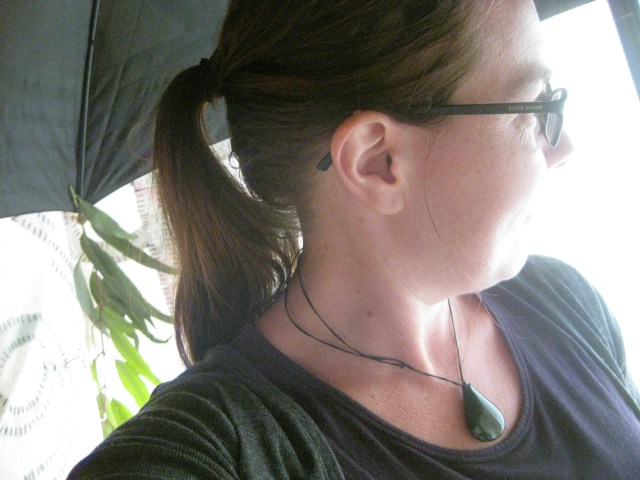
IMG_5038

What is your cultural tail? 28% of Australians were born overseas (Census 2016), many more would have parents born overseas. When we say things like “I’m nothing” or “I have no culture” it’s worth noting that only the dominant-culture can say that, this white-washing language (pun intended) at best colonises existing culture and at worst ignores it: the legacy of Terra Nullius continues. Naming our own cultural tail is significant for relating well to the culture that was and is already here as well as affirming and celebrating cultural diversity generally in Australia. Is there something you can wear to the Palm Sunday march that could celebrate cultural diversity? An item of clothing or jewellery, a badge or flag that celebrates your cultural history and thereby all culture – past and present?
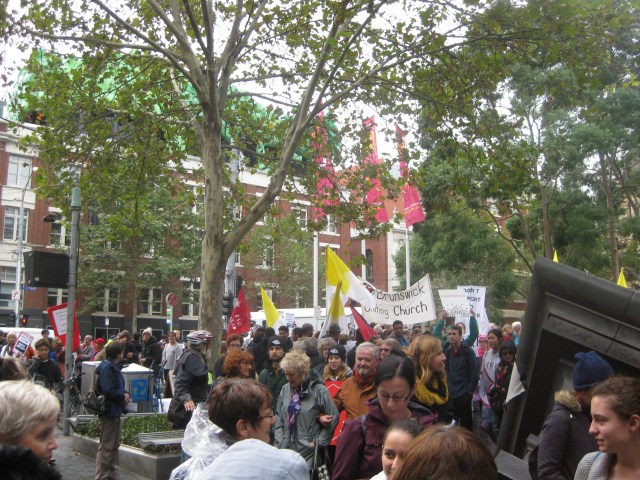
IMG_5054.JPG

On singing: many songs we might sing together are short, rounds, call and repeat don’t worry about song sheets or knowing the words… please bring your own too – we love learning new ones so that we can sing about it until it can be realised!
you give

IMG_4048

you give
and you give
the emptying
is what fills you
you give
and you give
stretched and
outstretched and
enfolded
you give
and you give
and there is more
there is always more

Talitha Fraser


An effective social action will operate at a deeper level where the wrestling is with the loyalties, barriers and spells that rule a way of life and its institutions.  In such an arrangement no doubt occasions of public confrontation will arise.  When they do Christian action will have a symbolic or dramatic character, enforcing its deeper persuasions.  Early Christianity was more like guerilla theater than social revolution, but it overthrew principalities and powers.

A revitalised message comes out of drastic involvement in the life-options of the situation… there are many areas of solidarity with human scandal and many forms of private and costly wrestling with pervasive tyrannies old and new… but imaginative solidarity with our modern disorders informs all such resistance both public and private.  It is in this crucible that the powerful new rhetoric and witness are forged, and the revolution of images.

p. 27-29, Theopoetics

N.B. This post may be a negative trigger for survivors of physical and sexual abuse.

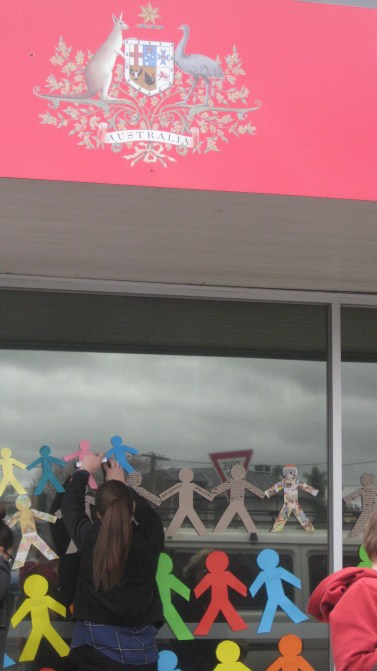
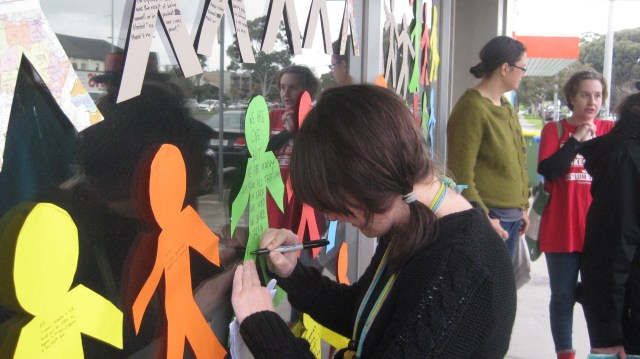
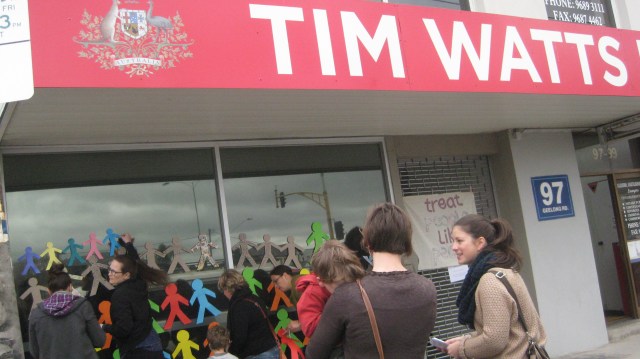
This morning we held a peaceful Love Makes a Way vigil outside Tim Watts office in Footscray as part of a bigger movement in response to the heart-wrenching incident reports leaked last week to The Guardian known as the Nauru Files. LMAW members and friends from a wide range of asylum seeker advocacy groups converged on over 45 MP offices and Immigration Dept offices across Australia in proIMG_0648test.

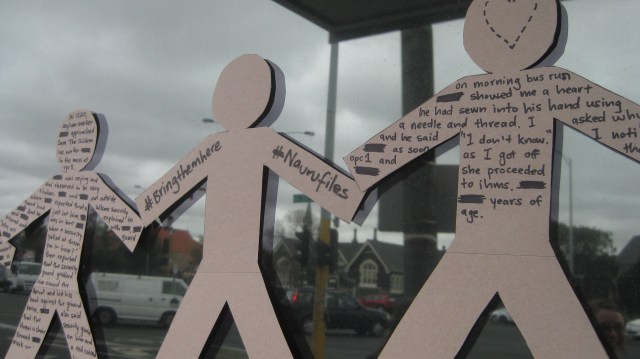
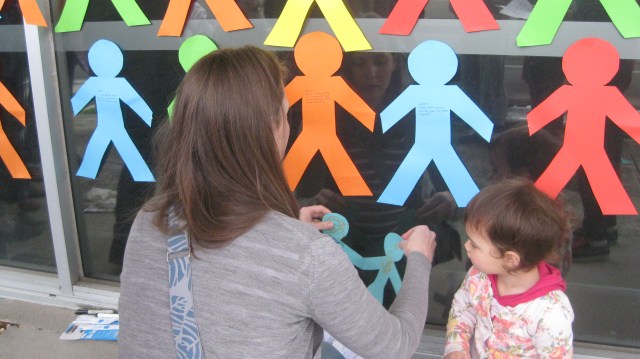
Armed with paper dolls to symbolise the men, women and children
who have been abused and traumatised by offshore detention, these small groups read from the incident reports, heard poetry from former refugees and demanded the Government ‪#‎CloseTheCamps‬ and ‪#‎BringThemHere‬

Welcome. We acknowledge that we gather today, to sing and pray, on the land of the Wurundjeri people of the Kulin Nation.  

I’m sure most of you here are already across the Love Makes A Way movement and what it’s about, we don’t really have words to respond to these leaked Nauru Files. These dolls that you see here, we will be leaving them up and the reason for that is that it will mean someone here at Tim Watts office will have to physically engage in the act of taking them down. The lives of these children, or these people are in their hands. Written on some of these images are the words of case workers and people in detention centres – stories of sexual and physical abuse. We put these images here as a symbol of these people that are entrusted to our care, to our politicians care, and we don’t think they’re doing a very good job with the responsibility that has been entrusted to them.  In the tradition of the civil rights movement we want to sing some songs that inspire and speak to the world we want to live in and welcome these people to join us in.


There is room

There is room at the table (x3)
Bring them here, let them stay.

There is room at the border (x3)
Bring them here, let them stay.

There is room in our hearts (x3)
Bring them here, let them stay.

There is hope for a new tomorrow (x3)
Bring them here, let them stay.

We say love makes a way (x3)
Bring them here, let them stay.

IMG_0661


Hold on (Love Makes A Way)
(tune: Keep your hand to the plough/Keep your eyes on the prize)

They are coming across the sea,
From their homes they have had to flee,
We say, love will bring them here, hold on.

We are here to sing and shout,
Why you keeping God’s children out?
We say love will let them stay, hold on.

Chorus
Hold on, hold on,
We say, love makes a way, hold on.

We say welcome the refugee
We say set all the people free
We say, love will bring them here, hold on.

We have room in our hearts to care
We have plenty enough to share
We say, love will let them stay, hold on.


We shall bring them here
(words adapted from We shall overcome)

We shall bring them here, we shall bring them here
We shall bring them here some day
Oh deep in my heart, I do believe
We shall bring them here some day

We will not keep silent, we will not keep silent
We will not keep silent today
Oh deep in my heart, I do believe
We will not keep silent today

The truth shall make us free, the truth shall make us free
The truth shall make us free some day
Oh deep in my heart, I do believe
The truth shall make us free some day

We are not afraid, we are not afraid
We are not afraid today
Oh deep in my heart, I do believe
We are not afraid today

We shall let them stay, we shall let them stay
We shall let them stay some day
Oh deep in my heart, I do believe
We shall let them stay some day


IMG_0650

As I went down to Tims office to pray
(words adapted from As I went down to the river to pray)

1) As I went down to Tim’s office to pray
Welcome the refugee, let them stay
And who shall help us bring them here?
Good Lord show me the way!

O sisters let’s go down
Let’s go down, come on down
O sisters let’s go down
Down to Tim’s office to pray

2) As I went down to Tim’s office to pray
Welcome the refugee, let them stay
And who shall call for a change of heart?
Good Lord show me the way!

O brothers let’s go down
Let’s go down, come on down
O brothers, let’s go down
Down to Tim’s office to pray

3) As I went down to Tim’s office to pray
Welcome the refugee, let them stay
And who shall raise their voices here?
Good Lord show me the way

O mothers let’s go down
Let’s go down, come on down
O mothers let’s go down
Down to Tim’s office to pray

4) As I went down to Tim’s office to pray
Welcome the refugee, let them stay
And who shall work for a better plan?
Good Lord show me the way

O fathers let’s go down
Let’s go down, come on down
O fathers, let’s go down
Down to Tim’s office to pray

5) As I went down to Tim’s office to pray
Welcome the refugee, let them stay
And who shall share these boundless plains?
Good Lord show me the way

O people, let’s go down
Let’s go down, come on down
O people, let’s go down
Down to Tim’s office to pray

6) As I went down to Tim’s office to pray
Welcome the refugee, let them stay
And who shall help us bring them here?
Good Lord show me the way


IMG_0635

READING — ‘HOME’ (Warsan Shire)

no one leaves home unless
home is the mouth of a shark
you only run for the border
when you see the whole city running as
well
your neighbors running faster than you
breath bloody in their throats
the boy you went to school with
who kissed you dizzy behind the old tin
factory
is holding a gun bigger than his body
you only leave home
when home won’t let you stay.

no one leaves home unless home chases
you
fire under feet
hot blood in your belly
it’s not something you ever thought of
doing
until the blade burnt threats into
your neck
and even then you carried the anthem
under
your breath
only tearing up your passport in an airport
toilets
sobbing as each mouthful of paper
made it clear that you wouldn’t be going
back.

you have to understand,
that no one puts their children in a boat
unless the water is safer than the land
no one burns their palms
under trains
beneath carriages
no one spends days and nights in the
stomach of a truck
feeding on newspaper unless the miles
travelled
means something more than journey.

no one crawls under fences
no one wants to be beaten
pitied
no one chooses refugee camps
or strip searches where your
body is left aching
or prison,
because prison is safer
than a city of fire
and one prison guard
in the night
is better than a truckload
of men who look like your father
no one could take it
no one could stomach it
no one skin would be tough enough

the
go home blacks
refugees
dirty immigrants
asylum seekers
sucking our country dry
niggers with their hands out
they smell strange
savage
messed up their country and now they
want
to mess ours up
how do the words
the dirty looks
roll off your backs
maybe because the blow is softer
than a limb torn off
or the words are more tender
than fourteen men between
your legs
or the insults are easier
to swallow
than rubble
than bone
than your child body
in pieces.

i want to go home,
but home is the mouth of a shark
home is the barrel of the gun
and no one would leave home
unless home chased you to the shore
unless home told you
to quicken your legs
leave your clothes behind
crawl through the desert
wade through the oceans
drown
save
be hunger
beg
forget pride
your survival is more important

no one leaves home until home is a
sweaty voice in your ear
saying-
leave,
run away from me now
i don’t know what i’ve become
but i know that anywhere
is safer than here.


IMG_0657

Were you there?

Were you there when they turned the boats away?
Ohhh, sometimes it causes me to tremble, tremble, tremble,
Were you there when they turned the boats away?

Were you there when our nation turned its face?….

Were you there when the child was locked away?….

Were you there when the abuses came to light?…..

We will pray until love can make a way…..


Our hearts’ song is to close the camps and bring them here and we’ll keep singing, praying and turning up until love makes a way…


strategies-in-conflict-transformation

I’m puddling my way through the Bartimaeus Institute Restorative Justice online course – and am struck anew by what it means to have teaching that holds the bible in one hand and the newspaper in another, historical contextual interpretation and current relevance… Ched and Elaine re-frame the above tool in such terms as peace keeping, peace making, peace building and peace waging.


When Jesus saw the city he wept over it, saying,
“Would that you knew the things that make for peace!”
Luke 19:42

This is good theological meat and you should eat some.  Lots of free access articles and webinars on their website too…

berrigan blog(photo credit: chedmyers.org)

(to the Plowshares 8, with love)

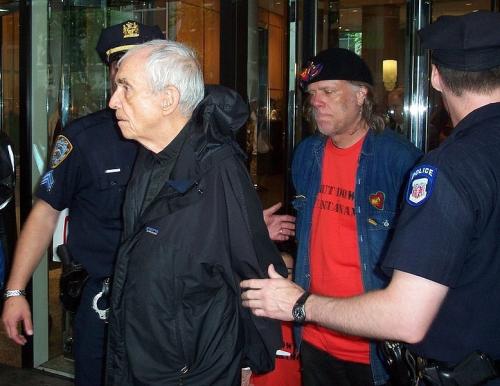
by Daniel Berrigan

Some stood up once, and sat down.
Some walked a mile, and walked away.

Some stood up twice, then sat down.
“It’s too much,” they cried.
Some walked two miles, then walked away.
“I’ve had it,” they cried,

Some stood and stood and stood.
They were taken for fools,
they were taken for being taken in.

Some walked and walked and walked –
they walked the earth,
they walked the waters,
they walked the air.

“Why do you stand?” they were asked, and
“Why do you walk?”

“Because of the children,” they said, and
“Because of the heart, and
“Because of the bread,”

“Because the cause is
the heart’s beat, and
the children born, and
the risen bread.”


Reflecting these past weeks on the life and works of Daniel Berrigan who died 30 April 2016, he is now among that cloud of witnesses (Heb 12:1) that ask us to ask of ourselves: “On what will you spend your life?”. I think it is fair to say that he knew something of endurance, on the cost of that he commented: “I think it’s kind of the price you pay for the bus ride”.

In his book Seven Habits of Highly Effective People, Covey suggests writing your own eulogy – what do you imagine you want to hear said about you by family, friends, colleagues… are you making the choices now… living the life now… that will lead you where you want to go? …that will see you develop and grow up to be the best you can imagine? I don’t imagine Daniel Berrigan did this exercise but I do not doubt he was effective. Why did he live as he did? Make the choices that he did?

“Because the cause is
the heart’s beat, and
the children born, and
the risen bread.”

What will you live for?

What makes your life meaningful will give you a meaningful life.
Do not wait until you are dying to start.

The most significant religious events recounted in the Bible do not occur in ‘temples made with hands.’ The most important religion in that book is unorganized and is sometimes profoundly disruptive of organization. From Abraham to Jesus, the most important people are not priests but shepherds, soldiers, property owners, workers, housewives, queens and kings, manservants and maidservants, fishermen, prisoners, whores, even bureaucrats. The great visionary encounters did not take place in temples but in sheep pastures, in the desert, in the wilderness, on mountains, on the shores of rivers and the sea, in the middle of the sea, in prisons…. Religion, according to this view, is less to be celebrated in rituals than practiced in the world.

IMG_5514


“For me, the activist poem is a performative activist poem: one in which action is an implicit part of the writing, delivery, and hopefully the reception of the piece… the poem becomes a literal act with cause and effect. Its action cannot be denied because it is an implicit part of its creation (and delivery).”

John Kinsella

IMG_5264

Welcome, we acknowledge that we gather on the land of which the people of the Kulin Nations have been custodians since time immemorial.

This is our third in a series called The Art of Discipleship where we showcase the material of different books and engage with their material creatively.

WEEK THREE

The activity this week is taken from:

Binding the Strong Man: A Political Reading of Mark’s Story of Jesus


This book by Ched Myers looks at the book of Mark as a manifesto for radical discipleship — i.e., Jesus as exemplar of nonviolent resistance to the powers-that-be in his day, and ergo in ours.  We will be reading Mark, all of it, in one go and sitting in the queries; “What do the questions Jesus poses to the disciples have to say to us today?”

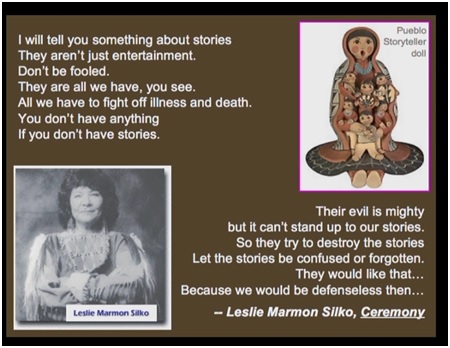
The Word is removed from us in time and space. We all tell stories and know how to tell stories. It is a common language that bridges other cultural gaps between us. These stories are not just entertainment but they actually educate and nourish us. BUT because they are good and healing stories, there are powers out there that will try to destroy them or… “let them be confused or forgotten” – BUT these evil powers cannot stand up to these stories (a statement of faith – conviction -hope that there is a power greater than what we face).  So what we are doing, reading scripture is counter cultural – sitting down and sharing, taking time.

silko

Radical – arising from or going to a root or source. From latin radicalis, having roots.

Radical simply means to go to the roots. Twin task of going to roots of tradition in scripture and in spirituality and in social solidarity and in roots of our contemporary pathologies to deal with root causes and not symptoms.

What are the current issues these stories could be informing?

  • War Israel/Palestine/Afghanistan/Syria/Russia
  • Riots/protests throughout middle east – for democracy and Europe/America in relation to global financial crisis.
  • Isaiah 14.:8: strategic asset Cedars of Lebanon, oil of the ancient times. What was empire then and what is it now? Phonecia, Babylon, Rome – clear cut the cedars for masts for ships and bearing poles for temples. Ecological justice.
  • Matt 1-2, Luke 1-2 Christmas story sentimentalised – imperial violence and human displacement, infanticide as a matter of domestic policy.
  • Road to Emmaus – story of courage and resistance, within a few days of crucifixion. Easter Luke 16:31 – under the shadow of death, not a zen walk down a country road. What is the meaning of the death of our leader for our movement.
  • Immigration/boat people – Isaiah 56, scripture and restorative justice – right using the bible to exclude immigrants and gay people. Radical
  • Matthew 18 restorative justice, ambassadors of reconciliation 2 Corinthians 5:16-6:2.

Draw parallels and analogies with our current context.

  • Ambassadors in chains Ephesians 2-3 & MLK letter from a Birmingham jail (Eph 3:10, 6:1)

How does the story read in our own context?

allegory

As we read be mindful of the following:

  • Oral tradition – uses language to set the scene – are we at the seaside or in the city now?  Look for introduction of new characters, new settings, changes in plot.  Often read the bible like a 5 minute segment out of an entire movie  – how can you understand what’s going on when you come in part way through the story? Need to rebuild critical literacy.
  • We can romanticise the Roman Empire – nothing nice about it.  I am a descendant of the colonising empire – British Empire, conquest, world sovereignty, racial superiority and global management.  Empire looks very different from the bottom IMG_5266up, than the top down – victims are always reminded of their vassalage. Money replaced with that with an image of Emperor or Queen.  The Romans were driven out of Judea and then they struck back. Jerusalem was laid siege, conquered and burned.  The book of Mark was written during this war.  Empire can be defined as the rule of the centre over the periphery.
  • Mark 1:7 baptiser – One is coming who is stronger than I am.  Power contesting power.  Not baptised with only water but the holy spirit and fire.  Baptism was and is a personal and political statement in a social context calling on the Holy Spirit of water and fire out in the undomesticated wilderness against the struggle of empire.
  • “True evangelical faith cannot lie dormant. It clothes the naked, it feed the hungry, it comforts the sorrowful, it shelters the destitute, it serves those that harms it, it binds up that which is wounded, it has become all things to all people” Menno Simons 16th century.  This is a discipleship of struggle and resistance as well as renewal.  Will it have a cost?  Baptism into Christ and into Christs death.  When Jesus was baptised he went right under into the Jordon, shedding  everything of socialisation – rises up completely unobligated to empire.  Jesus was baptised into a specific watershed/river, a specific story, a specific (un)kingdom.


Working from the same copy, read the – whole – book of Mark aloud in one session. The document below, to help with the sense on one whole flowing story (as the oral tellers would speak it), has had all chapter and verse numeration and story “titles” removed.

Mark stripped back

First thoughts?
Sound/feel different than it usually does? What stands out?
Have some general discussion around the ‘mindful’ notes re our ideas about – stories, empire, baptism, discipleship…

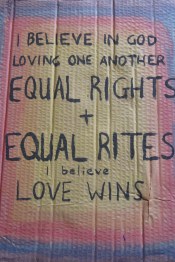
i believe love wins

007

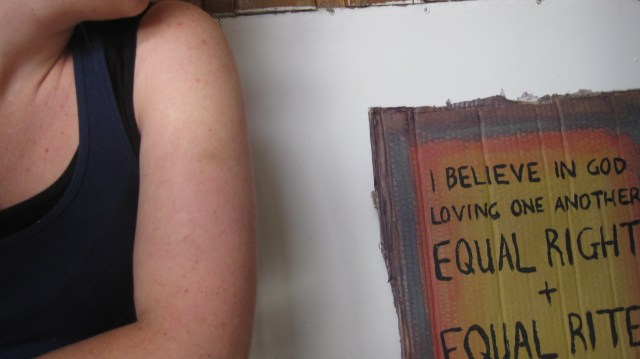
Today feels like a day for bright colours.  Uncharacteristically I am wearing one of the skirts I have made – full and colourful, no one around today to comment on it and I love that – what would we wear any given day if we thought no one would ever say anything?

I feel nervous carrying my homemade 009signs to the marriage equality march – do I  carry them facing inwards until I get there?  Am I going to draw negative attention from people that are anti-gay or anti-Christian? You are making a choice, to set yourself out, apart, from ‘normal’ people going about their ‘normal’ day, doing ‘normal’things.
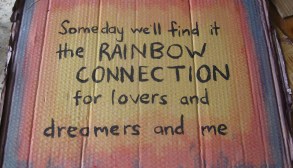
To be contrary, I line them up beside me on the seat at the bus stop while I wait – people idling in the weekend traffic read them but no one says 005anything and I am almost disappointed… let’s do it, let’s talk about how we’re treating one another.  People see the signs – rainbow broadcasting
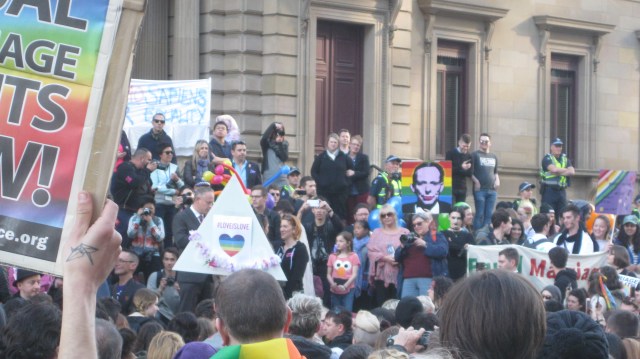
makes the topic clear – no one says anything… aah, I have found a new way to be invisible.

Now at the train station, I put in my headphones as I step into the train carriage, block out an uncaring world and I am tapped on the shoulder…

“Hey, you want to join us here in the marriage equality corner?”

…I am welcomed in, a place, a space made for me and my signs.  they look me over assessingly, am I like them?

“I haven’t ever been to a rally before, But I have been to the Sydney Mardi Gras – I hope it’s like that – there’s a power in people coming together from all over, no matter what their age, race, religion, gender orientation is… there’s something really powerful about that, ay?”

Yes.  Yes there is.

How much riskier must it be if your clothes or mannerisms or something “give you away” and make you feel like you’re carrying a rainbow coloured banner with you everywhere you go… I’m embarrassed of the fear I felt of some kind of retaliation for sticking my neck out… is this a fear people live with going out their door every day?

The act of solidarity isn’t just showing up at the parade but being willing to put yourself in a position to share the experience of the person being marginalised – so what if someone did yell something out of a car on the way past or defaced the sign or comes into my personal space with aggression.  Is this something gay people ask of themselves every day? “Do I wave the banner today or mute something of who I am so I don’t attract attention?” As with all movements perhaps it requires some to be be ‘extreme’ with it to broaden the range of what’s ‘normal’… maybe that’s literally carrying a rainbow banner – drawing some of the attention away from you over there to me right here.

It’s not the same, hating me when it’s not my lifestyle choice.  You have to have a conversation with me to  find out why I’m doing it – and I’ll have a conversation with you about why you aren’t.


014