Tag Archive: sabbath economics


img_2725

We are running a fortnightly bible study following our community dinner looking at the exegesis (interpretation) of the bible passages that underpin each of our community values. You can read the list of Values here so you know what’s coming up next.

These values can be relevant whatever context you live and work in just make the Word you own.


Value 8: Travelling light

We value the difference that can be made when we sacrifice personal gain, pouring out our rich resources in an act of worship.  Through simplicity, good stewardship and a common commitment to sharing our lives with others, we seek to lessen the power imbalance in Footscray.

Biblical basis: Luke 9:23-24


Let’s read the value together. What stands out?

Basically the whole thing! Timing of this value feels significant when we are losing what has been our community home base and are working out what we can bring with us and what we can’t.

Giving out itself is worship

Don’t have a lot. Doesn’t matter whether it’s big or small, pouring out of what we have is the act of worship.

“Power imbalance” good to name, not only our power but our desire to share it.


Luke 9:23-24

Then he said to them all, “If any want to become my followers, let them deny themselves and take up their cross daily and follow me. For those who want to save their life will lose it, and those who lose their life for my sake will save it. What does it profit them if they gain the whole world, but lose or forfeit themselves? Those who are ashamed of me and of my words, of them the Son of Man will be ashamed when he comes in his glory and the glory of the Father and of the holy angels. But truly I tell you, there are some standing here who will not taste death before they see the kingdom of God.”

 NRSV


Read the bible. What words/ideas stand out? What can we learn from the bible about living the Value of “Doing the hard yards”?


“deny themselves” is another way of saying “living simply”

“will not taste death” we experience the privilege of glimpsing the kingdom (heaven) right here, before dying –  we see it at our community dinners, John reading grace, all the different people who come together around that meal, seeing the kids grow up in this environment that includes so much diversity.

No division between people – lovely watching Balal and Alex together…

We all of us have a desire for appreciation. But what comes from your heart, the value of that is more e.g. Kim could buy a cake but instead takes the time to make one and personalise it thoughtfully.  She uses her own money to buy wool – makes things that take time and money to create… we choose to value/appreciate that more.

If you’re not giving something from you heart then you’re not giving for the right reasons.

I think it’s worth contextualising this passage and reading it again – the birth of John is foretold, the birth of Jesus is foretold, John is born, Jesus is born… Jesus speaks out in the temple at 12 years old, he gets baptised by John, he gets tested in the desert, then his ministry kicks off  – healing lepers, paralytics and possessed – he calls his disciples. He teaches and preaches, we’re given parable and beatitudes. The 12 are given their mission and Jesus feeds 5000 when it seems like there is not resource enough to do it… who do you say that I am?  The disciples want to lift him up, want to exalt him, put him on a pedestal and give him titles and Jesus says nah… that’s not what I’m about.

 “If any want to become my followers, let them deny themselves and take up their cross daily and follow me. For those who want to save their life will lose it, and those who lose their life for my sake will save it. What does it profit them if they gain the whole world, but lose or forfeit themselves? Those who are ashamed of me and of my words, of them the Son of Man will be ashamed when he comes in his glory and the glory of the Father and of the holy angels. But truly I tell you, there are some standing here who will not taste death before they see the kingdom of God.”

We’re not in this for the titles, appreciation or recognition; or using power for our own gain, to gain a position of authority, or to act out of our own power instead of trusting God’s. Jesus says I’m not going to value those things the world values and invites us to make that choice too.

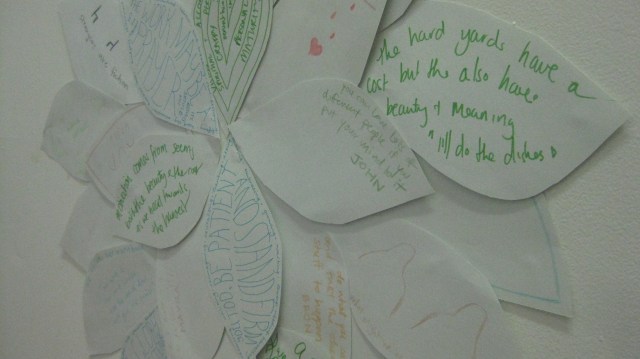
Taking this idea of “travelling light” – we are very directly in a place of needing to let go of some material things that have meant a lot to us: this house, its garden, the soccer pitch… a band called Invisible Boy out of Tasmania have a song “I’m going to hang your picture high” it’s about who and what you value  and hanging them high like photos of our family that are special or posters and pictures of what we like. If you look around the walls of this house you can see everywhere what and who we value in the pictures – who our family are and what we like. Let’s capture some of those ideas of what we want to “hang high”, of what we value that sometimes others don’t and capture it on bunting we make together – something light we can take with us!


Closing prayer

Dear God, we’re waiting

Let us wait with hope

We’re waiting for things to seem clearer

Let us wait with peace

We’re waiting for the world to feel safer

Let us wait with joy

We’re waiting for the love our hearts cry out for

Let us wait with love

May we be kind to one another.

May we strive to be the answers to some of our own questions.

Amen

Perspective

img_2675img_2676img_2680img_2681img_2684img_2688img_2698


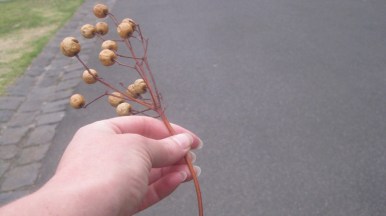
Hey, here… I brought you something.


What is it?


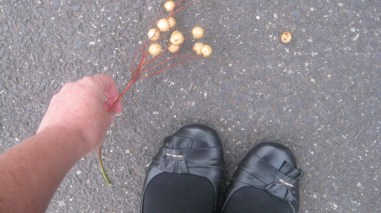
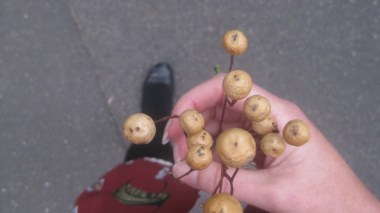
It’s just a little branch I picked up. I think it’s beautiful.


Some trash you picked up somewhere?


One man’s trash is another…
Oh. You don’t want it?

No. Why would I?


Then I’ll keep it.

What for?!


That’s what I do.


Look for the beauty in things no one wants.

Look for the beauty in things that seem broken and useless and try and find a place for them.

It’s the way you see things that makes them matter.

img_2614

We are running a fortnightly bible study following our community dinner looking at the exegesis (interpretation) of the bible passages that underpin each of our community values. You can read the list of Values here so you know what’s coming up next.

These values can be relevant whatever context you live and work in just make the Word you own.


Value 7: Doing the hard yards

We value servanthood in the big and the small – choosing to do the “crappy” stuff.  We want to be people of personal and spiritual maturity (enduring personal cost) in order that the vision is accomplished.

Biblical basis: James 5:7-11


Let’s read the value together. What stands out?

“We value” – this is about making personal choices to value things differently than most of the rest of the world… not a flashy project, it doesn’t attract attention.

Trusting there is purpose in the crappy stuff.

 Need to acknowledge the way our current situation impacts my approach to this value, how would my/our interpretation differ if we weren’t crisis.

Is it ‘given’ that in order for the vision to be accomplished, it needs to cost me?


James 5: 7-10

My friends, be patient as you wait for the Lord to return. Be as patient as the farmers. Farmers sow their crops and then have to wait patiently, hoping for good seasonal rains, because the harvest that pays their bills ripens in its own good time. There is nothing they can do to hurry it up. You can’t hurry the Lord up either, so be patient. Stay focused though, and condition yourselves, because the arrival of the Lord is not far off.

My friends, don’t go whinging and putting each other down. If you do, you’ll find yourselves having to answer for it. The judge could reopen the case against you at any moment.

Take as your role models the prophets who brought us God’s message in the past. They really suffered for their stand, but they hung in there, never giving up, and their patience paid off.  11 That’s because God cares, cares right down to the last detail.

©2002 Nathan Nettleton LaughingBird.net


“This work could be a prayer; its results should not concern me”

Thomas Merton


“There are two basic motivating forces: fear and love. When we are afraid, we pull back from life. When we are in love, we open to all that life has to offer with passion, excitement, and acceptance. We need to learn to love ourselves first, in all our glory and our imperfections. If we cannot love ourselves, we cannot fully open to our ability to love others or our potential to create. Evolution and all hopes for a better world rest in the fearlessness and open-hearted vision of people who embrace life.”

John Lennon


Read the bible. What words/ideas stand out? What can we learn from the bible about living the Value of “Doing the hard yards”?

Being patient sounds passive – I’m bad at that!

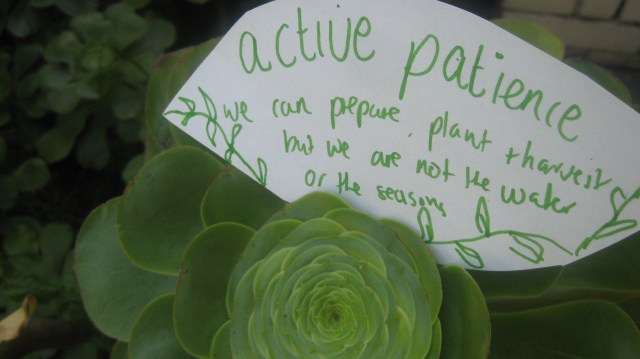
It’s not passive it’s active! “stay focused”… “condition yourselves”… farmers till, plant, fertilise, prepare the soil… still required to exercise what is within your ability to influence, power, control. There are things we can do but then there are things we can’t… we have to rely on God for those.

Begin work or make choices with an outcome in mind but often things don’t go as we plan, despite this things work out.

You have to do what you can and trust the other stuff to happen. 

Often in Christian circles the personal cost component can become competitive and be worn as a badge-of-honour.

Perspective makes a difference – choosing, for example, to work part time could be perceived as a ‘cost’ but for us, from our perspective it feels like an opportunity.

You can love different people if you put you mind to it. A lot of people don’t go out of their way… instead they love to put people down.

Standing up for someone when you notice the truth. When they can’t stand up for themselves.


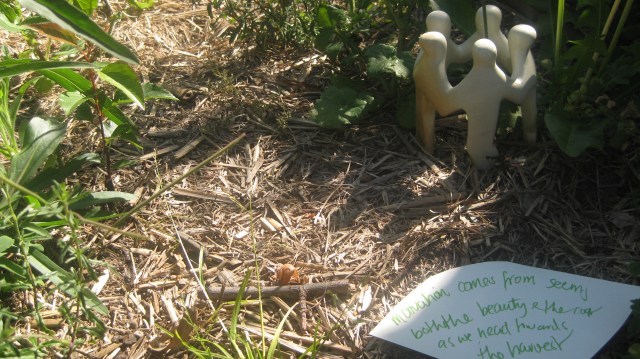
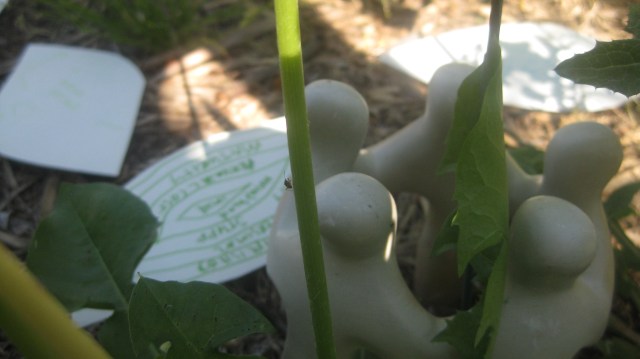
Taking this idea of where our influence ends and God’s begins let’s write down on these “seeds” what we know and what we don’t know, doing what we can, planting them and leaving the growing to God remembering “we need to learn to love ourselves first, in all our glory and imperfections”

img_2596

…all we can do is plant our seeds and trust that the outcomes that come, while not what we might imagine,  work toward the vision of God being accomplished.


img_2560


img_2627

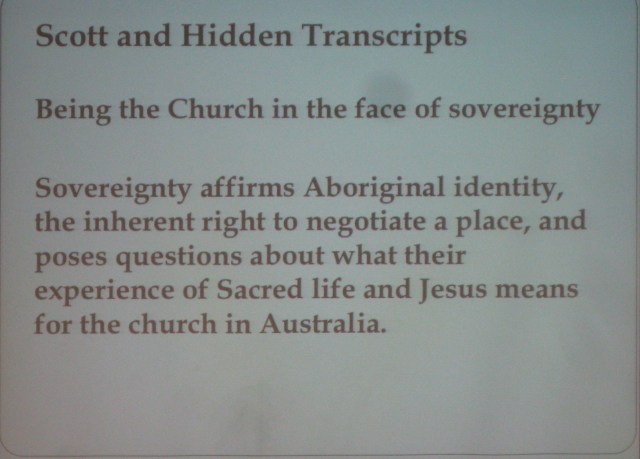
On the weekend of 24-25 September Whitley College hosted a conference called Constitutions and Treaties: Law, Justice, Spirituality – these are notes from session 6 of 9. We acknowledge that this gathering, listening and learning occurred of the land of the Wurundjeri People of the Kulin Nations and offer our respects to their elders past and present, and all visiting Aboriginal and Torres Strait Island visitors present.


“Wrongs to Rights”

i ways we talk about sovereignty

ii Treaty

iii acts of resistance

iv identity of the church


WAYS WE TALK ABOUT SOVEREIGNTY

Ask what does it mean for the identity of the church to recognise First People? Always about wealth: land, labour, wealth… when talking of treaty/constitutions always become justifying narratives. We cannot ignore the material component.

 Sovereignty? People aren’t sure about what the word means.

Confuses meaning when indigenous people are asking for it.

Rights and claims continuously negotiated e.g. human rights (allows some limits/accountability)

Four themes:

i ‘external’ or ‘internal’ authority. Boats vs. states/federal government.

ii power of institutions or powers of people

iii be sorted out legally or negotiated politically e.g. State of Victoria negotiating a Treaty.

iv sovereignty is capable of being shared > not absolute (Pakeha and Maori)


  1. separate and independent nation
  2. starting point to achieve rights and social inclusion
  3. authority inherent in them as individuals and as a people


Assertion: sovereignty reframing ongoing negotiating of claims in the community > nature of our settlement and how they live here.

Not disadvantage or reparations but ‘ancestral occupation’.  Not a gift of ours to give.

Recognises First People are a people with their own culture, land, language… have inherent rights.  Opens up a new negotiation for settlement.


img_1454


TREATY

‘shared house’ analogy… if you move in to a share house together there are rules – have to pay your share of rent, food, utilities… if some random moves in and uses everything. Eventually someone will say, we were here first – pay the board or move out.  There is a need to recognise our sovereignty.


img_1456

ACT OF RESISTANCE

Narrative of explanation (public ideology that justifies current system e.g. invisible). Can’t critique publicly. Another narrative told in private places.

Did Jesus tell stories in public areas – in ways that didn’t threaten powers (used language and metaphors they didn’t understand) but reaches ‘those with ears to hear’. [hidden transcript]

Worth doing things people don’t understand – not taken seriously by Government but gives hope to those in the know.

What are you trying to fit into?


img_1457

ISSUES FACING CHURCH

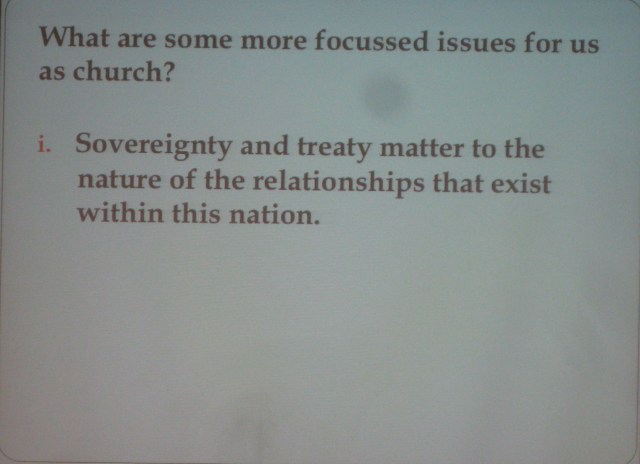
i   church needs to weigh in on issue of sovereignty

ii   church came in with the invaders – there is an existing sacred relationship with the land (invite us to share that story)

iii   church needs to confront issues of land and reparation – material reparation (Zacharius)

iv   recognition challenges ideas of how we speak of faith and salvation.  Creation/sinned message makes indigenous relationship to land (sinful) need salvation/assimilation of this idea into church à trusted. Make it personal…

How does recognition of indigenous people alter my understanding of gospels?

Understand gospels in relation to /context of existing indigenous relationship to land not politicising the gospels with a liberation theology that retrospectively tries to make sense of that, this is not “special interest group theology” (black, feminist, etc.)

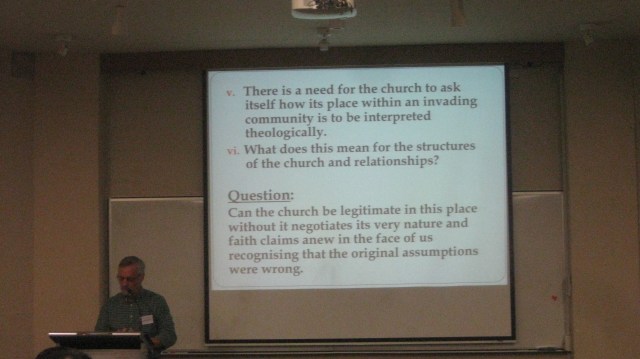
v   churches places within or on invading community is to be interpreted theologically .

vi   what does this mean for the structures of church and relationships?

vii   still a need to hear and honour history as a foundation for present and future relationships… own/confess/change it…

img_1458


IMG_9515

IMG_9517

IMG_9518IMG_9523

062077081084091 087

101

one might imagine
that not getting
what one wants
is some sort of
punishment but,
in fact,
it is merely life
the trick of it
is to want less
then when expectations
are exceeded there
is a margin for joy

SABBATH ECONOMICS #1

step1: consult and consider
step2: discern and decide
step3: imagine and implement
step4: get on with it
step5: falter and fail
step6: try and terminate
step7: substitute and subvert
step8: outcomes unanticipated

SABBATH ECONOMICS #2

16.11.15