


Aotearoa Festival 2017, Immigration Museum
On the weekend of 24-25 September Whitley College hosted a conference called Constitutions and Treaties: Law, Justice, Spirituality – these are notes from session 8 of 9. We acknowledge that this gathering, listening and learning occurred of the land of the Wurundjeri People of the Kulin Nations and offer our respects to their elders past and present, and all visiting Aboriginal and Torres Strait Island visitors present.
Terrific to be part of the Minutes of Evidence project – collaborative performance sparking conversations about structural justice.
British colonisers ran a “Paper Empire” – numbers, counting surveillance… combined with counter-archives (other ways of knowing) can be used to create sources/proofs. Presumption of colonisation (denial of sovereignty) complicit and absolutely imbued in statutes and policies.
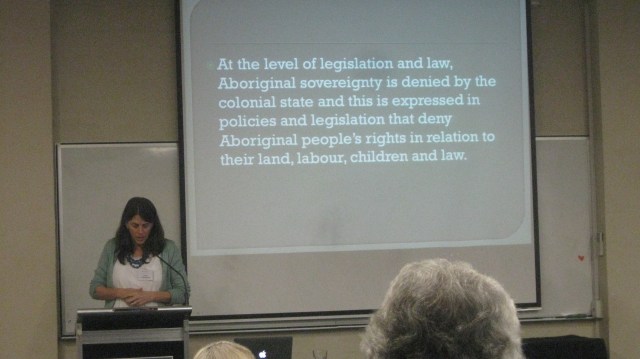
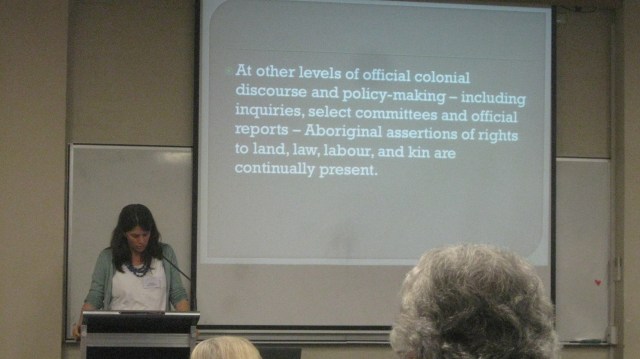
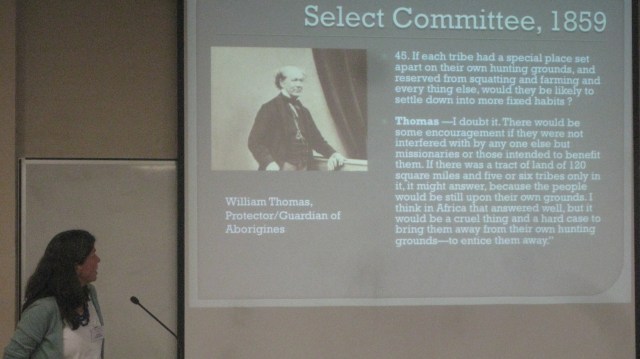
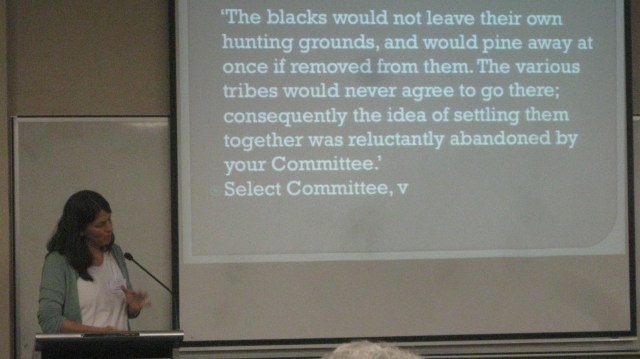
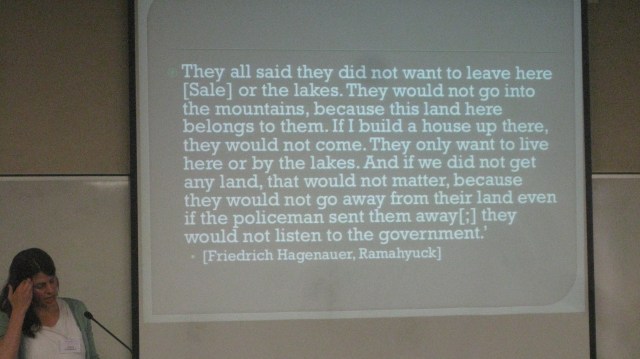
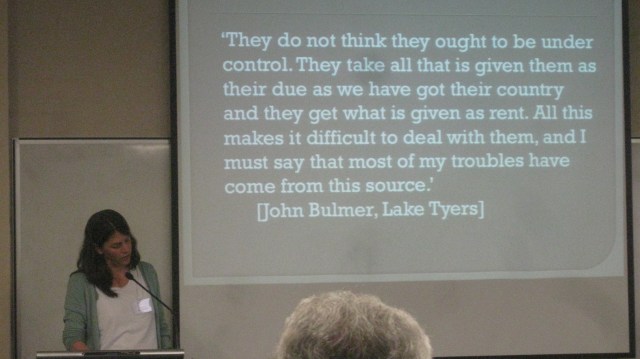
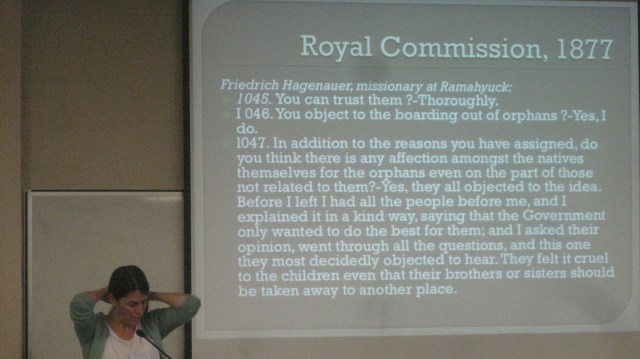
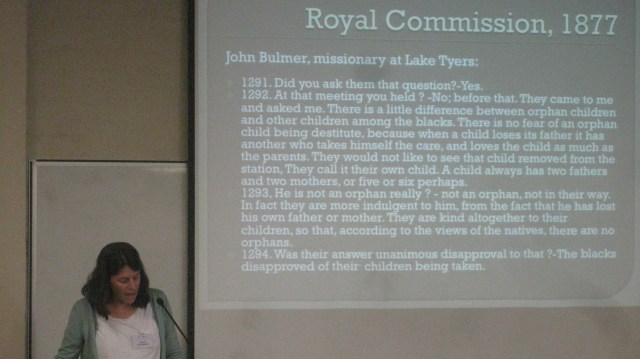
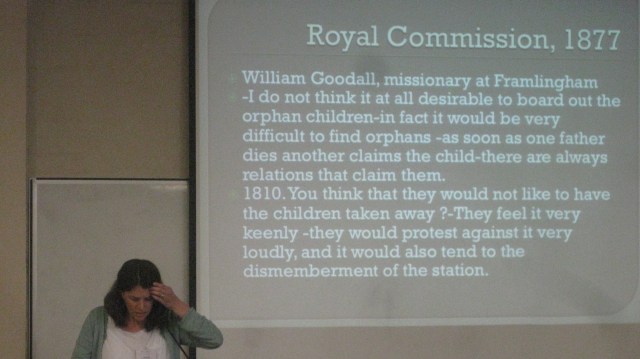
On the subject of children being taken away, missionaries testified that: Those on the Missions knew of all the children in their District when a white couple adopted a girl then no longer wanted her – they were going to send her to Sydney, the Aboriginal people on the Mission appealed to take her in. There is no such things as orphans… every child had two parents. 100s of letters written by Aboriginals exist speaking to self-determination, religious freedom and for rights.
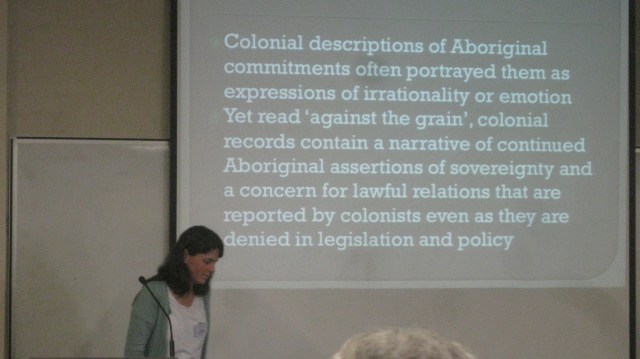
Political activism was happening pre-1920s. Is it racial prejudice that dismisses testimony of “pining away” or “affection” for the land as irrational/emotional but this speaks to the depth of feeling of cultural belief/commitment, assertion of rights, sovereignty and justice. Not able to recognise the implications of what you ‘see’ in front of you but providing testimony of it jsut the same.
Randomly yes, I am bringing you the graffiti from the women’s toilets of a well-known Melbourne pub as a juxtaposition to the Leunig and Mother Teresa and such… from promoting social justice issues, expressions of love/hate, to relationship advice… it’s arguably, not that different – you can learn a lot from this type of bathroom wall wisdom… you might not like it all or agree with it… but you will assuredly learn something.


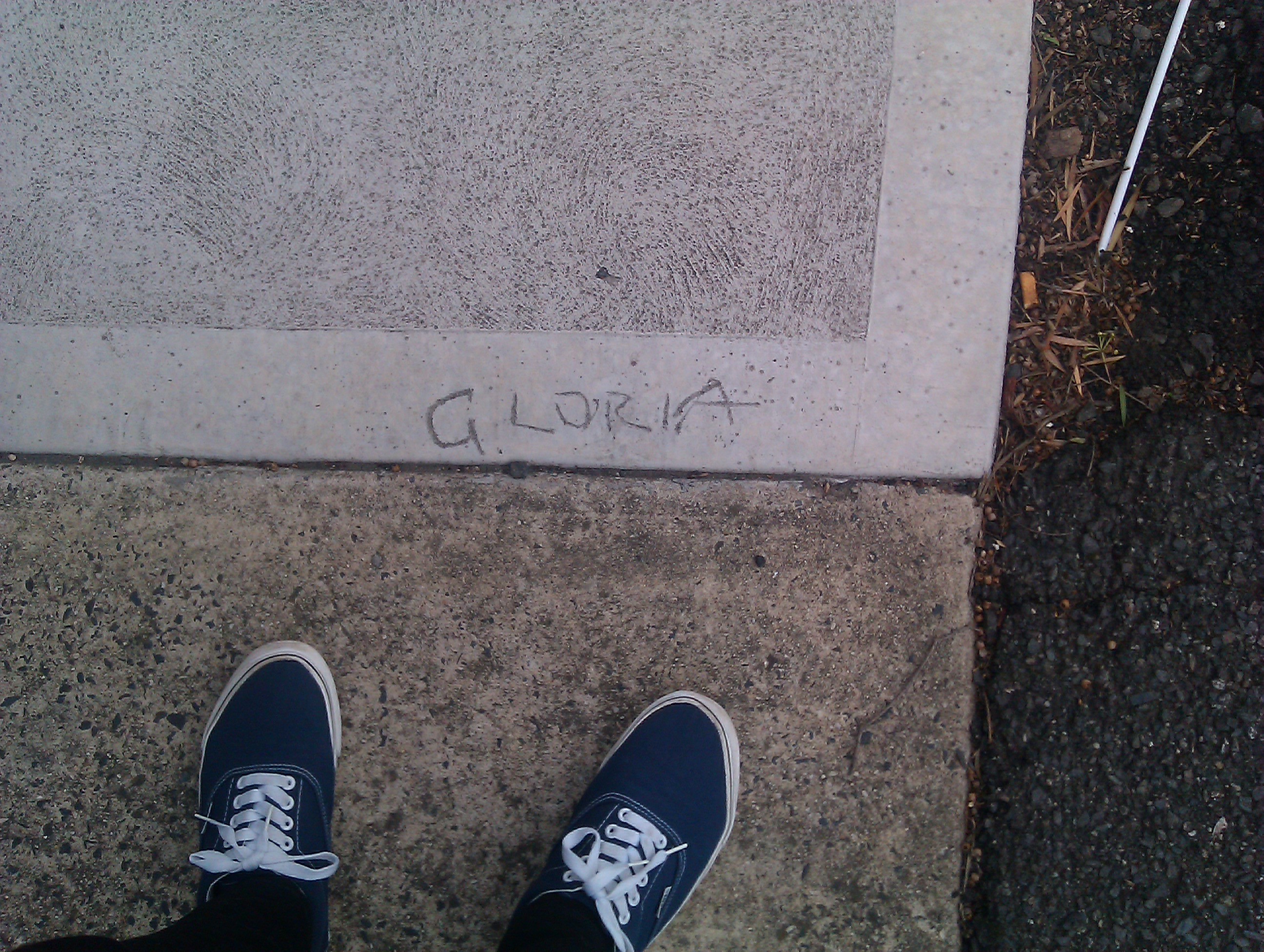
There is love and there is love.
What would You call me into?
What is love that does not
arc towards wholeness?
What is love unlived, unfamiliar, unrecognisable?
A strangers face.
I have been here before.
How will you help me stranger?
How will you help me know you
and, in the knowing, know myself?
Let us walk on a little way together yet
and speak of love.
Talitha Fraser
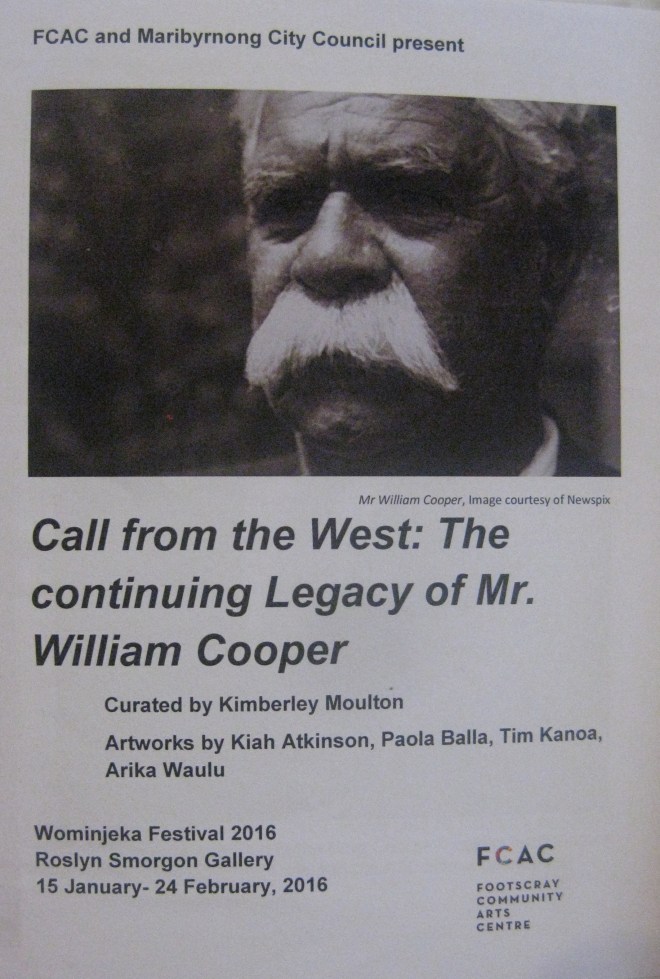
As a nation we have not been taught about our own black heroes, we learn about great civil rights leaders from around the world. Dr Martin Luther King and Rosa Parks are familiar within our vernacular however the black freedom fighters of our own country are left out of the history books. From first contact through to today we have Aboriginal leaders like William Cooper that have shifted the course of history, that have resisted the colonial order of the nation and have led us in the ongoing goal to de-colonise our space, for equality, for better living condition, for health and legal care, for land rights. These are the legacies that are left to be continued by the next generation of Aboriginal women and men.
The ‘tide of history’ has not washed away our connections to country or culture, it is our sovereign right and it is our obligation to our old people to maintain these.
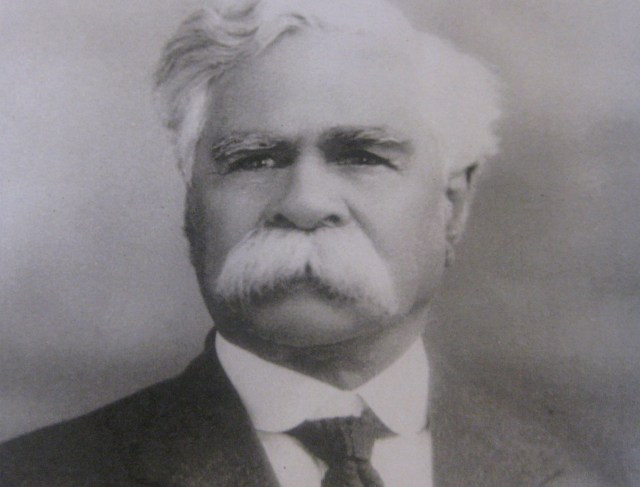
William Cooper
Source: Museum Victoria
Yorta Yorta man Mr William Cooper had a vision for his people to live a better life, to be treated as equal citizens in a land that as he stated, by ‘divine right’ was theirs. His story is remarkable and of great courage and strength, he fought for not only his people but for others around the world being persecuted. William was a humanitarian on a mission to create change.
Born on the banks of the Dungala (Murray River) in 1861 William lived his youth witnessing the frontier of change. He saw the destruction of his homelands and the dispossession of Aboriginal and Torres Straight Islander people across the country but his strength as a proud Yorta Yorta man could not be taken and he dedicated his life to fighting for better rights of his people.
William had many hardships in his life, losing two children including Daniel Cooper who lost his life fighting in the First World War and also two wives, in this time raising his family in regional Victoria and NSW travelling to where he could work. As an elderly man he moved from Cummeragunja mission to Melbourne to be able to receive the old age pension. This was a time where many Aboriginal people were fleeing missions across the state, walking off in the hope for better living conditions and making their way to Melbourne. The West, Fitzroy and Northcote were community hubs of Aboriginal people congregating, building a life in the city.
In this time he formed the Australian Aborigines League (AAL) and they would meet at his house in Footscray. The AAL demanded that Aboriginal people should enjoy the same rights as all Australians. William became secretary and began writing many letters and petitionings to government on behalf of the AAL calling for civil rights and changes in government policy. In this time he led many significant protests including a petition to King George V calling for Aboriginal representation in parliament. He and the AAL also supported the Cummerangunja walk off in protest of the appalling living conditions and brutality inflicted on the community. In 1938 William led a deputation from Footscray, walking into the city where thy presented the German Consulate with a letter demanding the Nazi government stop the ‘cruel persecution of the Jewish people’, this is the only known protest of its kind recorded in the world at that time. Both his petition to the King and the deputation’s letter to the German government were refused. William in his life time wrote over eighty letters petitioning for Aboriginal rights, equality and human rights and he never gave up the fight and his vision for a better future for his people.
This legacy has been carried on by his descendants including his grandson Uncle Alf ‘Boydie’ Turner who in recent years has accomplished his grandfathers work getting a new petition to Queen Elizabeth. With his great nephew Kevin Russell and other family and supporters, he re-enacted the deputation to the city, marching to the German Consulate and handing over the letter that his Grandfather had tried to do many years before.
Four Koorie artists in this exhibition respond to notions of legacy and current political realities for our community.
Kiah Atkinson is an emerging artist and a relative of Mr William Cooper, Kiah’s sound piece tracks William’s journey from Yorta Yorta country to Footscray, creating an audio journey.
Paola Balla is an artist, writer and activist whose work ‘the homes that we had known’ is a personal story of connection to William through her Great Grandmother Mariah or ‘Puppa’ as she was known, who travelled 1500km on her own to attend the Day of Mourning in 1938. Paola’s installation includes a bed frame with earth, leaves and flowers from her country; a poetic reflection to the hardship of mission life that her grandmother Rosie describes in a poem. Paola commemorates the struggle of our ancestors whilst highlighting the strong Aboriginal women who were protesting and raising families in some of the most challenging conditions.
Tim Kanoa is a photographer who has been capturing the recent rallies against the forced closure of Aboriginal communities in WA. Tens of thousands of people gathered to protest in 2015 and Tim’s work Ignite looks at how the legacy of protest and standing up continues to burn strong.
Arika Waulu’s work legacyliveson is a powerful meditation on sovereignty and the next generation of activists. Arika’s projection of the 2015 rallies led by the Warriors of Aboriginal Resistance along with an illustrated portrait of William is projected onto a wall of paper bark visas which are representations of sovereign nations.
The ‘tide of history’ has not washed away our connections to country or culture, it is our sovereign right and it is our obligation to our old people to maintain these.
Reflection questions:
What does the term ‘legacy’ evoke?
What is the significance of the actions of Uncle Alf ‘Boydie’ Turner and Kevin Russell?
What do you think Uncle Turner means when he refers to a ‘greater purpose’?
What ways do you/do you not feel connected to country and culture?
What vision do you have for a whole or healed world?
What could/are you doing to participate in building that vision to be a reality?
Do you think Aboriginal people have the same rights as other people in Australia now?
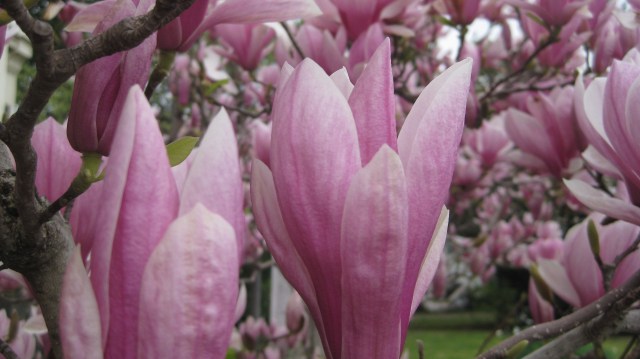
I have just collected my sister at the airport and Melbourne is flourishing with flowers to mark the occasion.
We’re walking home through the city following dumplings in Little China town on our way to the station, we go to cross Swanston Street near the State Library and we hear a voice exhorting in a microphone.
“What’s going on there?” asks my spiritual-not-Christian sister.
We have wandered along Southbank earlier tonight and watched the Crown flames shooting high against the dark night sky, seen a jugglers routine, listened to a buskers rendition of an Elton John classic… the city is in fine form but I sigh to see Cross Cultures church steps covered in handpainted signs saying:
“Repent!” and “Jesus gave his life for you!”
“Sorry,” I say, “someone soap-boxing repentance.” (I can’t even ad-lib here for you because I don’t remember what the words were they seemed so empty to me, I couldn’t hold them)
“Why are you sorry?” she asks.
“It offends me he can stand there and assume we don’t know God. Everyone here (sweeping arm canvasses Melbourne nightlife) was made by God, in the image of God and is in a relationship with God whether they acknowledge it or not – his God is small, static, fixed and I imagine he puts more people off than he draws in… it puts me off!”
“Doesn’t any of it connect with you, speak to you,
remind you of old times?”
“No.” I respond flatly. But words of old times prompts the tune of Be Thou My Vision to mind and I lose track of the conversation for several metres… naught be all else to me save that Thou art, Thou and Thou only, Thou first in my heart, O be Thou my vision…
That was a close-ended answer. Answered for myself, out of my own filter and judgmental in its own way. You have to think about what prompts a question and, defensive of potential association with street-side evangelisation, I did not inquire “Did any of it connect with you?”
ooOoo
I don’t suppose that an old man on the steps with his carefully handpainted signs and fervent faith is any threat to me so I don’t know why I need to set myself in opposition per se… are we ‘fighting for the same side’ or am I taking him down with ‘friendly-fire’? That has sometimes been the difference between good and evil winning in some significant cultural narratives. Ambitious in-fighting on the dark side vs. a coalition of goodies working together – Star Wars; The Lion, The Witch and the Wardrobe; Lord of the Rings… do you believe in fairytales? Do I? Is that where I would look for answers? for truth? Jesus set himself against the Pharisees, hanging out with Samaritans offended the Jews… he set himself against things as an outsider, ignored class rules and hung with homeless people and lepers. Some of these stories have someone on the darkside who turns at an epiphany moment – Anakin Skywalker, Edmund, Boromir… and heroes that will die to achieve a greater good in Aslan and Frodo (although he doubts himself there at the end of all things)… at different points each lead has a mission they have to fulfill on their own, their own battle to fight in the bigger picture. Does it seem silly to try and use stories and ideas we already have to try and understand another Story?
We all choose stories to live by – from our families of origin, from our friends, gang, from TV/movies, books… but how many of us consciously choose what story we want to live by?
I went to see The Desolation of Smaug with friends and one commented upon coming out their frustration that “there’s no one in that film to look up to!” Thorin refuses to keep his promise to the people of Laketown, the people of Laketown get angry about that and side with the Elves who bring them food and supplies, the King of the Elves wants some of the treasure under the mountain for himself… the hero is the Hobbit yeah? Bilbo may be keeping the heart of the mountain to himself (albeit not for himself) so he’s not looking that good either… what a responsibility to have rest on individual people to see and work for a greater good that isn’t apparent to others and will cost you friendships and family along the way.
How do you know if your version of the truth or what you believe in will come to pass? There must be a moment of risking everything, not knowing what will come of it, but knowing you have to make the next choice because it is necessary right in that moment and whatever comes next is beyond that.
What stories will you live by?
What stories will you choose by?
ooOoo
I followed up with my sister the next day:
“That guy, from the steps last night, did any of that connect with you?”
“Nah, I think I counted the word hell seven times
and didn’t see the word love once”

I followed the three
through the gate
past the roadworks
down the track
imagining they led the Way.
They climbed a fence.
I spoke from my side:
“I thought you knew the Way!”
“We know a Way.”
“Oh. Well, I supposed I should follow?”
“Here. Let us help you.”
Holding my sandwich and handbag
they politely look aside as I clamber
awkwardly to where they are standing.
“A ten for execution?”
We laugh and go On.
Talitha Fraser
Swap Super funds, make a giving budget, recycle water for flushing… these are some great commitments not achieved by my Household Covenant.
It’s 2012: I’ve just finished up at a proper job and Marita and I have taken in an Iraqi refugee, a young woman, named Shahad. We have scored a sweet deal on a low rent run-down Footscray house and I’ve just had a three month sabbatical visiting Bartimaeus Co-operative Ministries (BCM) in LA and returned home dreaming “What next?”
This expressed itself in the following, I’m sure annoying, way:
“At BCM I learned about cover crops and installed a timed irrigation system. At BCM they shower over a bucket then use that water to flush. At BCM leftovers were upcycled into a new and different meal the next day so nothing was wasted. At BCM they don’t let you watch TV… they don’t even have a TV!”
…when the Household Covenanting series came up it seemed like a good way for my housemates and I to go on a journey together exploring ways of living sustainably and agreeing together on what some expressions of that might look like.
Where to start? Find meaningful part time work. One day per week in Footscray, no car, no screens. I don’t know about meaningful but I got an ABN and did contract administration – talk about part time – some weeks I had six days to be present in Footscray! While this part time lifestyle opened up opportunity for great projects (do maintenance on rental property – exceed minimum obligation, support Shahad, plant daffodils and tulips) it also wrought huge changes, suddenly go dumpstering is a weekly economic necessity, get piano lessons (subject to someone else’s expertise) isn’t financially viable and Marita’s family tradition of donating first income (giving this away as first fruits as gratitude to God) seems naive in the face of my irregular income. We imagined this spreadsheet tracking the-real-coffees-I-didn’t-drink forming, in part, the budget for our sustainability initiatives but I am instead dependent on the beneficence of my own friends charity to pick up my tab if they want a cafe catch up… This, THIS was in some ways where the real work/learning on savings, debt and poverty took place as I came to have a real and personal understanding of doing without – doing without ‘real’ coffee and inviting people to my home instead; doing without the safety buffer in my savings account led me, in fear and desperation, to rely on God’s providing and I received it in many ways and from sources I could not have imagined; doing without eating whatever I wanted when I felt like it and instead connecting with food seasonally by consuming food grown ourselves, sourced from Sharing Abundance[1] and dumpstered… I had to learn preserving methods, humble myself to let others pay for coffee, and give even though you don’t know where your next income is coming from. These are some great commitments achieved by my Household Covenant …and I didn’t even have them written down.
I could not have foreseen that supporting Shahad might mean leaving lights on across the house overnight to manage her fear of the dark over my desire to reduce power consumption (darn that was meant to be one of my easy ones). That my aim to buy second hand is overruled by her desire to have nice, new things that are her own for the first time in her life (we took her to IKEA for her birthday last year and she LOVED it!). Now I could understand what Jon meant when he told us ‘…the rule serves me, not me it’. My middle-class, educated reasoned choices to dabble in downward mobility cannot mean much to someone who has never had many of the choices and opportunities I have been given and part of my covenant should be to work to redress that imbalance. Perhaps I have not strictly achieved everything I set out to do but I am not unhappy with where I’ve ended up instead.
I do not know what will happen if you attempt a Household Covenant but I doubt you will be disappointed or find the attempt uninteresting… we plant daffodils and tulips every year now, although we moved house just last month and the bulbs were just tips pushing through the ground and we won’t be there to see them bloom, I wrote this: 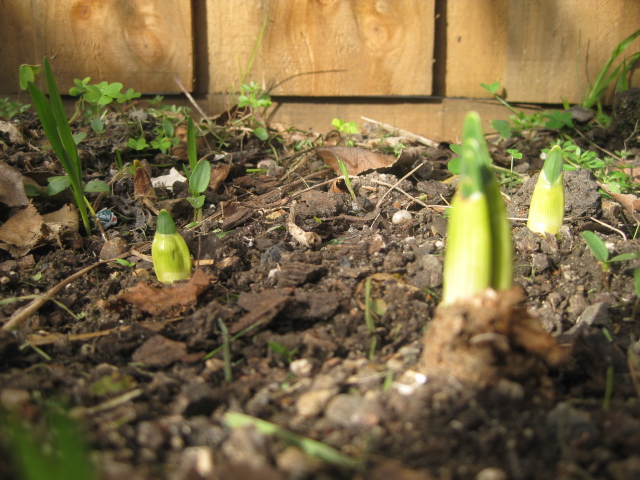
“Reflecting today on the things we plant in the hopes of fruit to come. We believe in planting so we do it but ultimately we have very little control over what grows and who it belongs to. The pain is in our awareness of this and our discipline is planting anyway – even though we’re tired and someone else may receive the benefit of our careful tending, someone else may not like the plants we’ve chosen or where we positioned them and tear them out like weeds. The thing that I value is only valued by others if they want it themselves. What I grieve for, is not this house, much like another having four walls and a roof, but the harvest hoped for here that will not be realised by me. There is a large harvest, but few workers to gather it in. Pray to the owner of the harvest that he will send out workers to gather in his harvest.”
Those little shoots felt like a metaphor for walking away from the sense of home we created in that place and the practices started that we now wouldn’t follow through. I hope God is sending me you, you know, not to go round and pick my ACTUAL daffodils, but to be a fellow worker in the field.
New housemates, new street, new garden… perhaps it is time for a new covenant.
“Hey, …Marita? …Shahad? …Ana & Atticus? You guys want to head to Ceres for some bulbs?!”
[1] www.sharingabundance.org is a food rescue initiative whereby produce is rescued from backyards and shared between homeowners, volunteers who pick and local community food programmes.
{a nicer – edited! – version of this article appeared in the Dec14 Manna Matters newsletter. Go straight to the source and find out more about Household Covenants at the Manna Gum website}
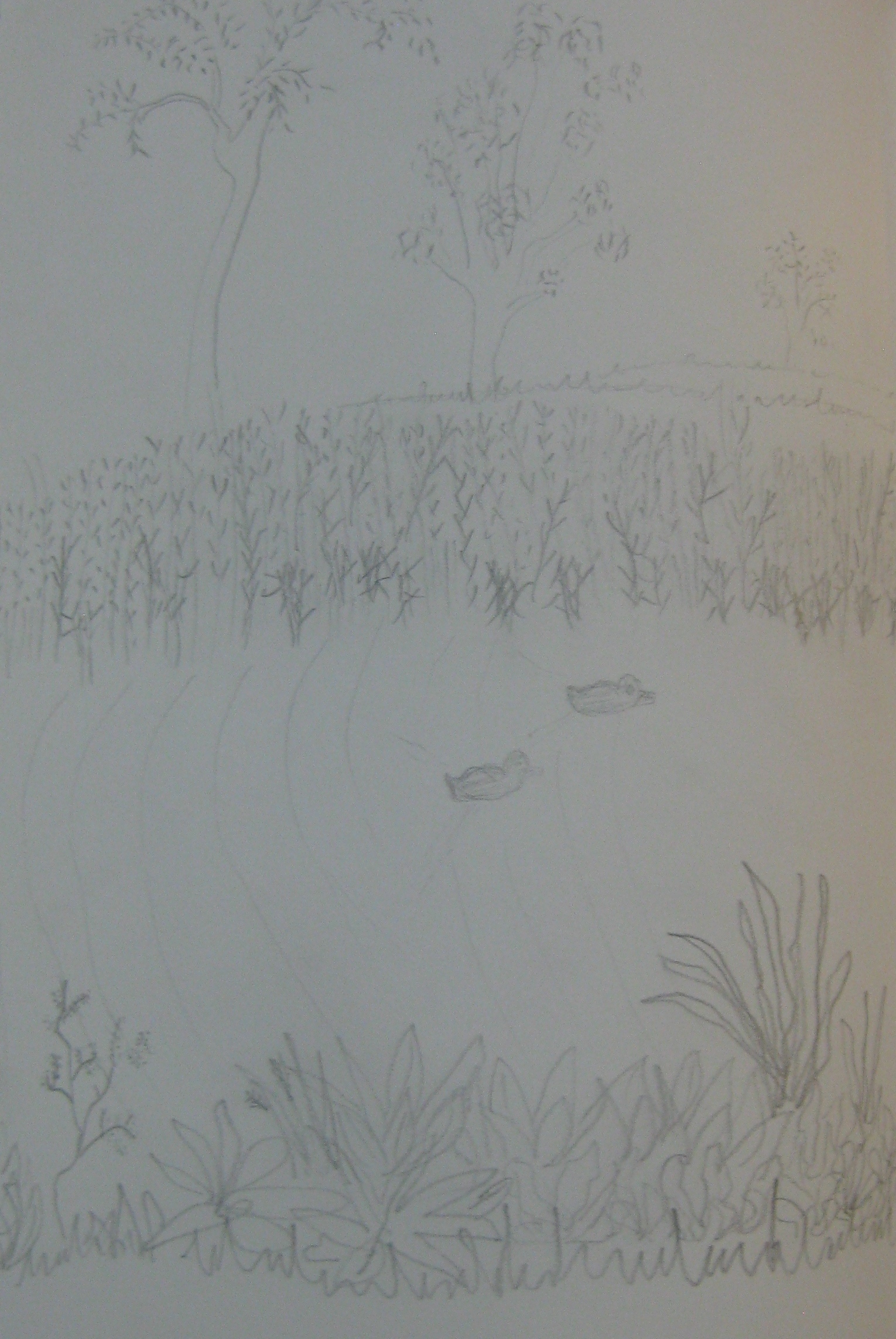
We rest in the grass
we rest in You
cool breeze stirs
bringing movement
the yellowing sun on closed lids
bringing reassurance, stillness
we seek – what will we find?
we listen – ducks on the pond, frogs in the reeds
the sh-ssh of wind in the eucalypt strands
to the sacred ordinariness of things
the answers are in you
the answers are in ourselves
the answers are in the story and
the story is still unfolding
Talitha Fraser
 itellyouarise