Tag Archive: truth


img_3578

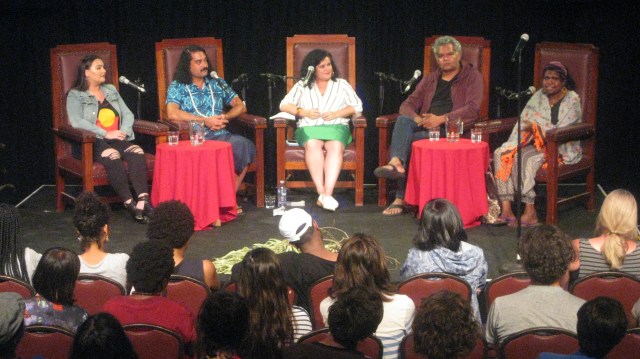
Panellists Rosie Kilvert, Léuli Eshraghi, Paola Balla,  Kamahi King
and Miliwanga Wurrben in conversation


Sovereignty is my inalienable right.
It cannot be taken away from me.
– Paola Balla

I try to stay strong within myself. Decolonising for myself.
I am a Wemba-Wemba and Gunditjmara woman, not “aboriginal”.
– Rosie Kilvert


I know where I come from – that gives me strength.
Concertina Bush stands for my people.
She only speaks Kriol, people have to understand it.
She is my Voice for the expression of my Gurindji sovereignty.
– Kamahi King

Grew up in the bush. My freedom. My school. Everything I was taught given by mothers, aunties, grandmothers – bound together by respect and as indigenous women.  I was illiterate. Taught by a missionary-lady at a community school.  Such patience teaching us Western ways.

Broke so many protocol. First, I had a male teacher. We’re not allowed to look at/make eye contact with men. “Look at me! Look at me in the eyes when I am speaking to you!” This was one of my first experiences at school. I could not understand what I had done but it must have been something more than I could imagine – I thought of my mother, aunties, cousins… what would they say when they heard this? My sovereignty is as an indigenous person, it’s in my culture, with my people. I found balance… took a very, very long time. Didn’t take away what I had, it’s still in me.
– Miliwanga Wurrben


Where you are uninvited you have to make sure you
have first relationships… there is no treaty here.
You have to locate yourself in relationship.

…Every structure is illegal that
doesn’t have treaty/relationship.
– Léuli Eshraghi

Beauty was always very sacred for our women. Scarves, paint… essence, dignity, respect… beauty is the essence of that love. Love yourself for who you are – that is one of our protocols. “Too fat! Eat more!” we have none of that. There is a beauty and grace of being an indigenous woman.  Those who come to work in the clinic and court – they can’t wear short shorts, jeans, tight singlets. We dress in a way that respects the other women. If one doesn’t have those things, we can’t have it either. The young girls like and wear makeup but not when they come home. Nakedness is part of us.  Scarring and painted body.
– Miliwanga Wurrben


Q: What will you do on January 26th?
(note: I’ve deliberately chosen not to attribute these quotes as I feel, although they spoke in their own voice, the panelists also spoke as one Voice and I want to express that if I can)

Don’t celebrate either way. I do nothing to give it energy. Day we lost all hope really. I wish that the stamp duty of from the sale of every house would go to local Aboriginal people. To my own mob. This is an example of how we could get past “eating out of the white man’s hand”. I mourn.

Refuse to call it that [Australia Day]. It’s celebrating genocide. I pay thanks to the ancestors and their resilience. Put out a reminder: We’re still here. Surviving and thriving.

I might go to Share the Spirit or a protest. Send prayers to those who have passed and shouldn’t have.


The Weaving Country exhibition will run at Footscray Community Arts Centre until 1 April, 2017 and I encourage people to check it out, many of these beautiful pieces are available to buy.

Artists include Sandra Aitken, Eileen Alberts, Donna Blackall, Lee DarrochDebbie Flower, Gail Harradine, Cassie Leatham, Denise Morgan-Bulled, Greta Morgan, Glenda Nicholls, Kathy Nicholls, Marilyne Nicholls, Eva Ponting, Bronwyn Razem and Lisa Waup.

Weaving Country

Weaving Country is a story of weaving and fibrecraft across Aboriginal Victoria from the Victorian Aboriginal Weavers Collective.
In this exhibition we have aimed to create a woven narrative, beginning with baskets as vessels for gathering and fibres as the threads that knit together family and kinship ties.

In this way we liken our first collaborative curatorial journey together as a journey of gathering and collecting.  Having gathered the weavers works into our metaphorical curatorial basket, we have then bought these works together to create a cohesive and beautiful body of work.

Weaving Country is about Country and place.
Each weaver’s generational knowledge of grasses, fibres, harvesting and process is inherent in their practice.  What is not always apparent, and is the idea this exhibition aims to provoke, is the impact environmental changes have on the grasses ad fibres used by the weavers and therefore on the overall health and wellbeing of COuntry and People.  This is reflected in the diverse use of materials and the incorporation of found objects.
The Victorian Aboriginal Weaving Collective speak with one voice through their diverse woven and sculptural forms to the strength and vitality of this continuing and unbroken tradition. These contemporary works demonstrate their innovation yet retiran cultural integrity and truth.

By Vicki Couzens and Hannah Presley

img_2252

We are running a fortnightly bible study following our community dinner looking at the exegesis (interpretation) of the bible passages that underpin each of our community values. You can read the list of Values here so you know what’s coming up next.

These values can be relevant whatever context you live and work in just make the Word you own.


Value 6: Being honest about who we are

We value the humility and forgiveness required to live transparent lives in community.  We want to submit to each other in accountability and honesty, allowing Christ to use our weaknesses and failings.

Biblical basis: 2 Cor 12:9-10, 2 Cor 3:18


Let’s read the value together. What stands out?

All of those words – humility, forgiveness, transparency, submission, accountability, honesty elicit an emotional reaction – they’re strong words, they’re challenging words.

Not only are we often not rewarded  for being honest ,  we can be penalised for speaking up.  

It often requires vulnerability in the first place ‘weaknesses and failings’  are on display so then you’re open to a “hit”.

Once you start hating people it keeps going. Sometimes you have to forgive people and walk away.


2 Cor 12: 9-10

…there is no reason to think I’d end up with egg on my face if I did talk big about my own experiences. It would be the whole truth and nothing but the truth, but don’t get me started! I’d rather let my actions do the talking for me. Let me be judged simply by the value of what I teach and what I do. Any spectacular revelations I may have experienced in the past should not inflate your opinion of me.

……..And believe me, God has seen to it that they haven’t given me an over inflated opinion of myself. To balance them out and keep my feet firmly on the ground, I have been given a special gift — a real thorn in the flesh, a condition that torments me and causes great anguish in my body. Satan used it to try to derail me, but it is probably what has kept me on track. Of course I couldn’t see that at first. Three times I put everything else aside and gave all my time and energy to seeking the Lord for healing and deliverance. But the Lord said to me, “My generous love is enough for you. Your weakness clears the deck and opens you to my strength.”

……..So then, if it means that Christ’s strength will be all the more active in me, I will gladly wear my weaknesses like a badge of honour. Indeed, given the opportunity to talk about them, you can’t shut me up! So nowadays, whatever comes my way — failure, bad-mouthing, tough times, harassment, tragedy —I take it all in my stride and just allow Christ to come to the fore. You see, it is when I am at my weakest that I find the greatest strength.


2 Cor 3.10-4.3

The people back then were as thick-headed as the people of our own day — they could hear the words of God’s law read out, but it never seemed to penetrate their hearts and minds. It’s as though the scarf has stayed in place ever since to prevent anyone from catching sight of the glory revealed by the words. Only Christ can uncover what is hidden. It’s the same for anyone who reads the scriptures without opening themselves to the Lord for insight: it is as though the wool has been pulled over their eyes and nothing gets through but the bare words. It all changes when we turn to the Lord, though, because the Lord is a real eye-opener. The Lord and the Spirit are one and the same, and wherever the Spirit of the Lord is, there is the freedom to see clearly. The wool is pulled away from our eyes and we come face to face with the glory of God. This experience is truly transfiguring! We are set ablaze by the Spirit — lit up like the Lord — so that more and more we become like mirrors reflecting the glory of God.

……..We have nothing to hide then, and no reason to lose our nerve, for God has been incredibly generous in trusting us with a share of this work. We have sworn off any methods that we’d be ashamed to have brought to light. We don’t hide behind masks; we don’t do anything shifty or manipulative; and we don’t twist God’s word to promote our own agendas. Instead, we simply lay all our cards on the table and let our integrity speak for itself. By stating it plainly and living it openly in the sight of God, we give everyone the opportunity to make up their own minds about the truth.


©2002 Nathan Nettleton LaughingBird.net


Read the bible. What words/ideas stand out?  What can we learn from the bible about living the Value: Being honest about who we are?

“We have nothing to hide then, and no reason to lose our nerve. for Go has been incredibly generous in trusting us with a share of this work…” in our current situation this feels like an important reminder – encouraging, challenging and comforting.

“To balance them out and keep my feet firmly on the ground, I have been given a special gift – a real thorn in the flesh…”  radical idea to reach for, being grateful for the thing that gives you pain and seeing it as a gift. Thanks… thanks SO much for this pain.

“…failure, bad-mouthing, tough times, harassment, tragedy – I take it all in my stride and just allow Christ to come to the fore” Paul was a bit smug wasn’t he?

Sometimes to try to please people we can try to be something we aren’t but we have to be true to ourselves.

img_2322

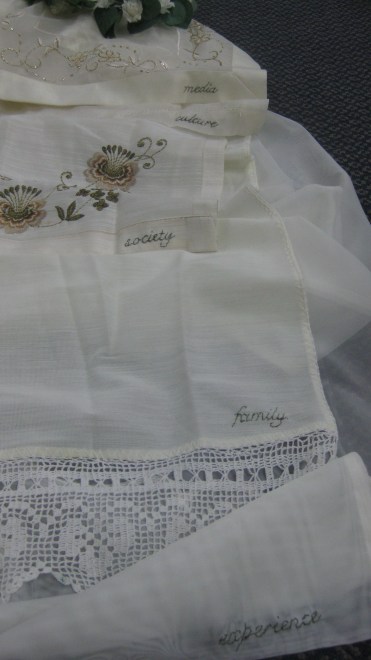
The reference in the passage to the scarf/wool being over our eyes and nothing being able to get through felt like a good excuse to pull out the veil I made – “…wherever the Spirit of the Lord is, there is the freedom to see clearly. The wool is pulled away from our eyes and we come face to face with the glory of God… we are set ablaze… lit up… we become like mirrors reflecting the glory of God.

These layers of the veil represent some of what I need to peel back (expectations, tradition, learned/taught behaviour, fear…) to be living as I was made to be.

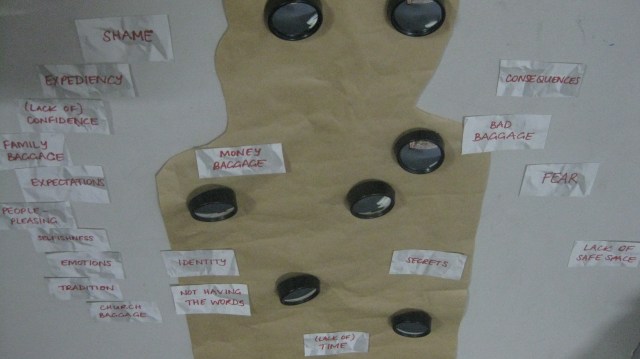
What stops us from being able to be transparent?


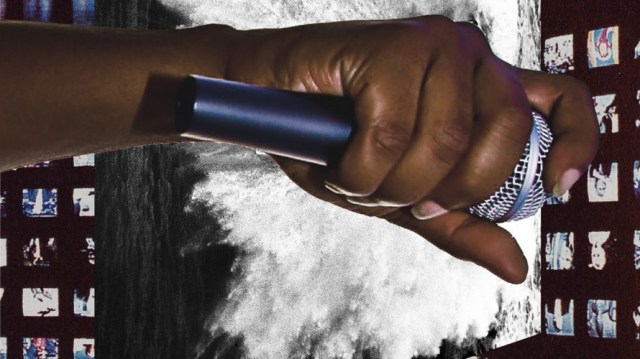
Activity: The People’s Mike

Drawing on the idea of being one body – what holds you back is what holds me back. The People’s Mike is an exercise in naming and holding together.  As people call out words (anyone can have a go), the rest of the people in the crowd repeat the word in chorus affirming the speakers truth (perhaps our own) and confessing our own culpability because what harms you harms me – what is holding us back from being honest about who we are? What are we afraid of? One person calls it out and then we all repeat it together in chorus.

 img_2249


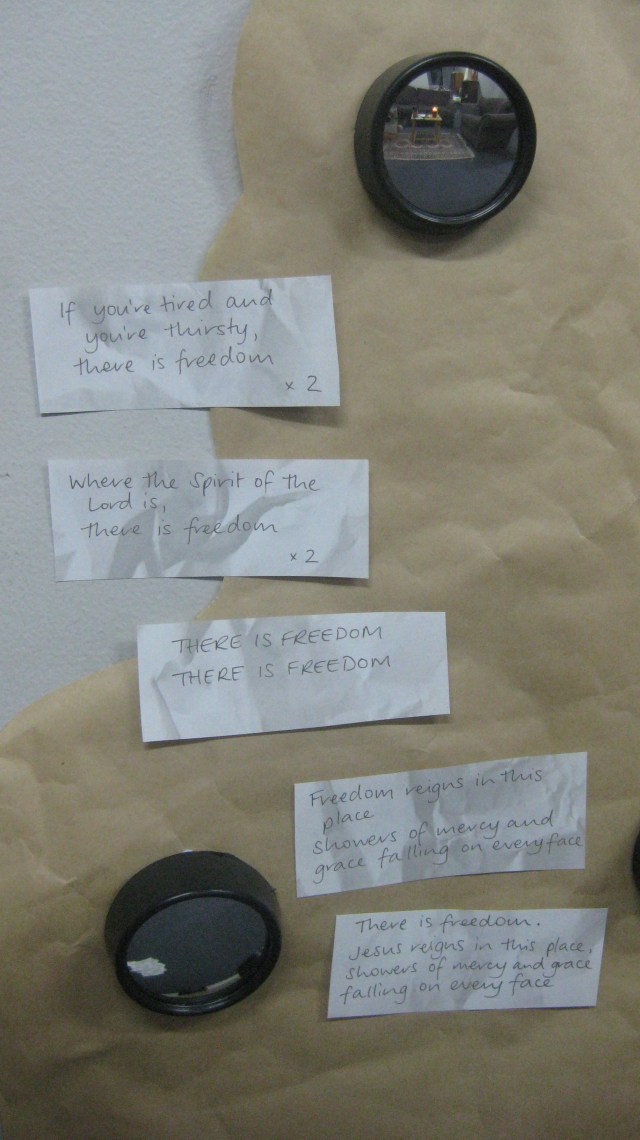
Similarly, what leads one of us to wholeness might lead us all,  what makes it easier to be transparent? What helps us to feel ok about being honest about who we are? One person calls it out and then we all repeat it together in chorus affirming the speakers truth (perhaps our own) and calling ourselves into the community we seek to create.

img_2296


Closing prayer

Dear God, we’re waiting

Let us wait with hope

We’re waiting for things to seem clearer

Let us wait with peace

We’re waiting for the world to feel safer

Let us wait with joy

We’re waiting for the love our hearts cry out for

Let us wait with love

May we be kind to one another.

May we strive to be the answers to some of our own questions.

Amen


img_2329

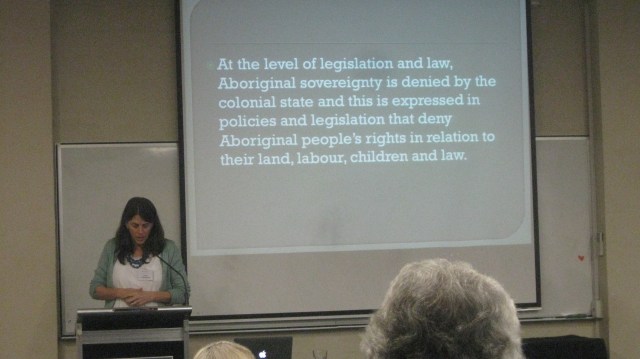
On the weekend of 24-25 September Whitley College hosted a conference called Constitutions and Treaties: Law, Justice, Spirituality – these are notes from session 8 of 9. We acknowledge that this gathering, listening and learning occurred of the land of the Wurundjeri People of the Kulin Nations and offer our respects to their elders past and present, and all visiting Aboriginal and Torres Strait Island visitors present.

Terrific to be part of the Minutes of Evidence project – collaborative performance sparking conversations about structural justice.

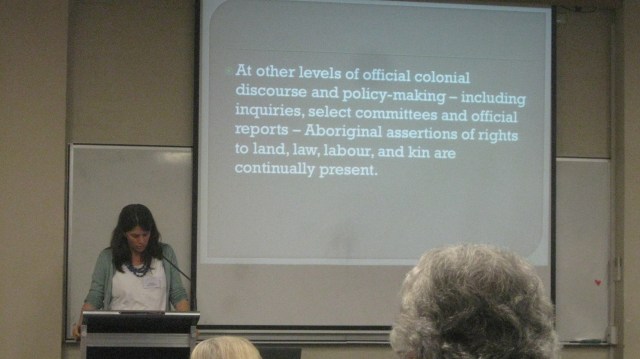
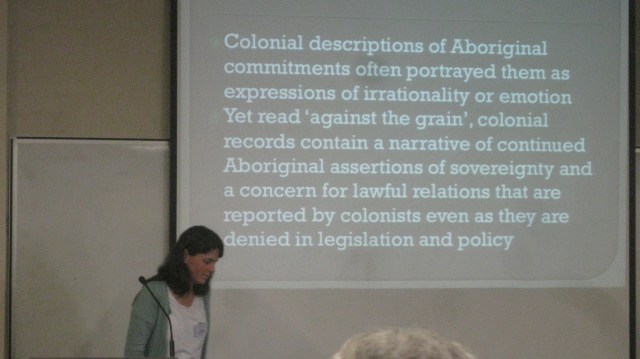
British colonisers ran a “Paper Empire” – numbers, counting surveillance… combined with counter-archives (other ways of knowing) can be used to create sources/proofs. Presumption of colonisation (denial of sovereignty) complicit and absolutely imbued in statutes and policies.

img_1479img_1480

img_1481

img_1482

img_1484

img_1485

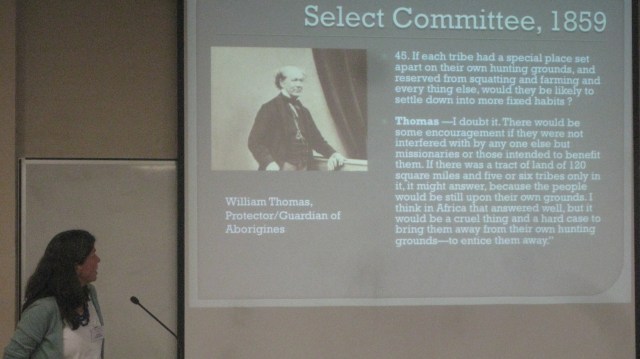
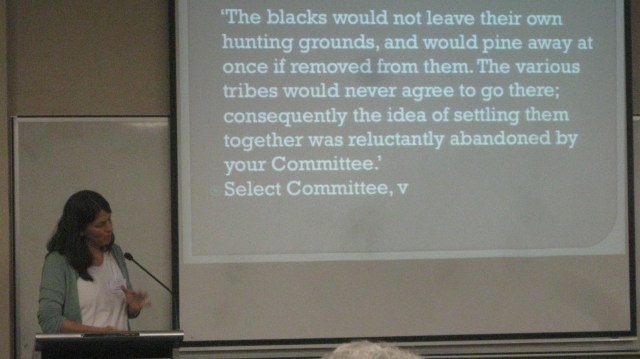
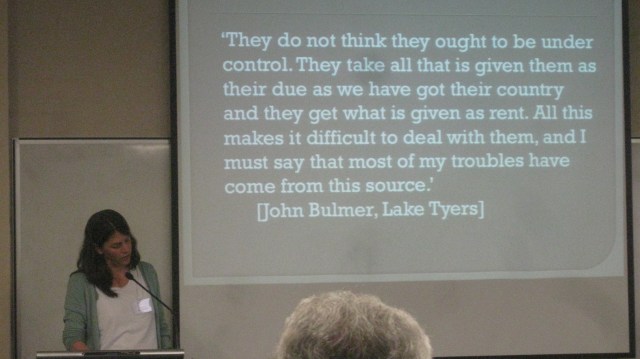
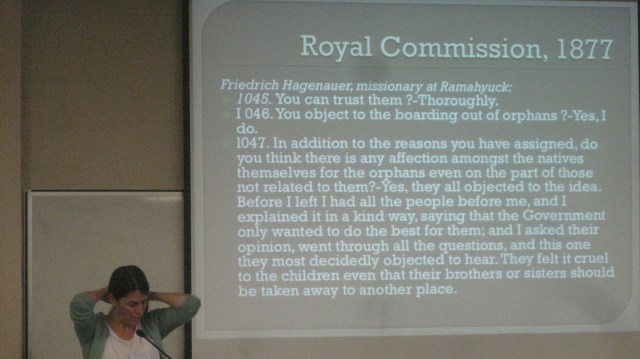
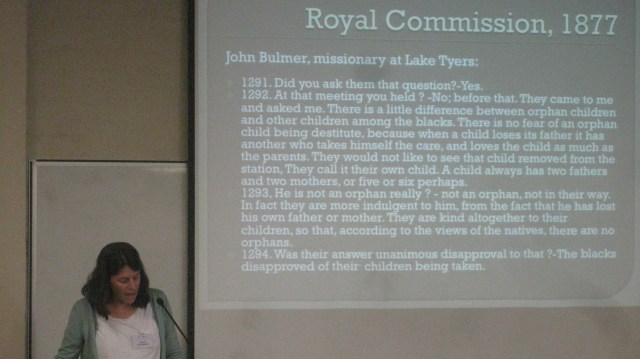
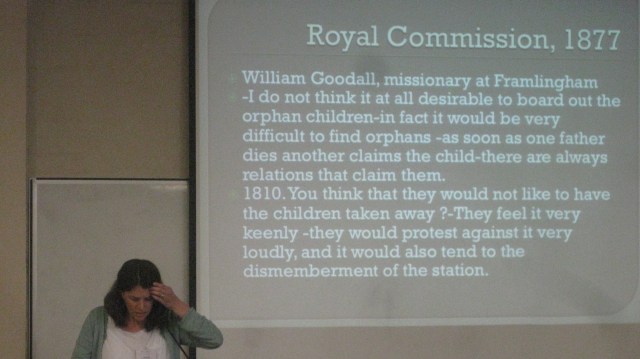
“…powerfully committed to hunting grounds” the Committee couldn’t break or deny this connection to Country… this is why the regional system of Missions was put in place.  The testimony of these men changed the political “solution”/outcomes. Although 50 years later the missions were closed after all and people were centralised.

img_1486

img_1487

img_1488

On the subject of children being taken away, missionaries testified that:   Those on the Missions knew of all the children in their District when a white couple adopted a girl then no longer wanted her – they were going to send her to Sydney, the Aboriginal people on the Mission appealed to take her in. There is no such things as orphans… every child had two parents. 100s of letters written by Aboriginals exist speaking to self-determination, religious freedom and for rights.

img_1489

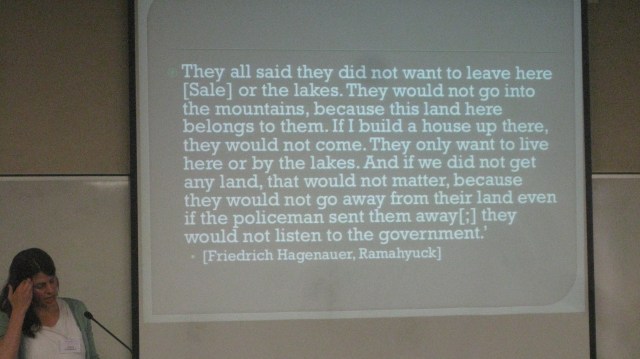
Political activism was happening pre-1920s.  Is it racial prejudice that dismisses testimony of “pining away” or “affection” for the land as irrational/emotional but this speaks to the depth of feeling of cultural belief/commitment, assertion of rights, sovereignty and justice.  Not able to recognise the implications of what you ‘see’ in front of you but providing testimony of it jsut the same.

img_1396

On the weekend of 24-25 September Whitley College hosted a conference called Constitutions and Treaties: Law, Justice, Spirituality – these are notes from session 1 of 9. We acknowledge that this gathering, listening and learning occurred of the land of the Wurundjeri People of the Kulin Nations and offer our respects to their elders past and present, and all visiting Aboriginal and Torres Strait Island visitors present.


Purpose: How to get somewhere

Constitutions: Tell us what to do and how to get there

Why?: Need to ask, where are these taking us to? What are we going to do with it?

The German word grundnorm (basic norm) combines big + what is normal.

American Constitution says: “We hold these truths to be self-evident: that all men are created equal…” this is a basic norm of their constitution and yet there was slavery at the time.  What is constitutional for one group is not for others.

Is constitutional recognition worth fighting for in the Australian context?

If you are given a legal personality this gives you a legal identity/makes you an entity (you can transact).  Constitutional recognition would give Aboriginal people legal personality.

Here we use a Westminster/Western model of constitution – a link back to the UK. White men put the document together – it represented their idea of society then and for the future.  Section 128 allows for the constitution to be changed (function for change provided for in its creation).

What are the founding values and guiding principles?

Cooper vs. Stuart Crown gave 40 acres then wanted to take 7 acres back – appealed to the Privy Council in the UK.  Land that was not “cultivated” was considered not claimed.

Aboriginal people are currently mentioned in only 2 sections of the Constitution. For the purposes of counting in the Census they will have a value of “0” (zero) and in the Exclusion Clause which allows for Parliament to make laws specific to race (applying to anyone not white). This is legalised discrimination. The law makers had the view that Aboriginal people would disappear – either by dying off or being bred out… we are still here!

Following WW2 there was a movement to say collectively we cannot allow for the extermination of an entire people.  Some human values are UNIVERSAL regardless of what some countries and governments might do.  UN developed International law which includes a convention against racial discrimination “No legal or moral authority for laws based on race”.  Australian law has vetoed land purchase in Queensland, High COurt MABO decision recognised Native title in 1992 > Aboriginal people exist.  There is a fundamental clash between the constitution and the law – it is at odds with itself and it needs to be synchronised.

How are we getting there? What will we do when we get there?

I want to see… language, law, culture, spirituality, kindness, interconnectedness to land and animals, respect for neighbours, storytelling and learning… survive.

Recognising is the first step.  We can’t have a conversation if you can’t see me.

The State of Victoria is looking into making a treaty.Section 109 of the Constitution allows for laws that are inconsistent but if it comes to a ruling Federal law would prevail. If the vehicle we take is a treaty – what is in it? protecting/including what?

When applying law there is a sense that we should be able to go back to the original ‘intent’ of the law (read it in context) – it is a legal fiction that we can know or that we do know what that is. “Democracy” when it arrived was for landed white men, then all white men, white men and white women, now voters (excluding prisoners)… what democracy means has changed over time.


Te Tiriti O Waitangi and Pakeha-Maori Conversations: What Hope for Change? – Maria Bargh

Strong Spirit in Community Development – Grant Paulson

Repentance and Treaty? – Ray Minniecon

Primal Faith and Ancient Treaty: Precedents on the Abraham Trail – Norm Habel

What might the Australian Church look like in the face of the sovereignty of the First Peoples? – Chris Budden

A Paradoxical Hospitality – Robert Hoskin and Naomi Wolfe

Aboriginal sources and Aboriginal sovereignty – Joanna Cruickshank

Pulling together the threads – Mark Brett


On the weekend of 24-25 September Whitley College hosted a conference called Constitutions and Treaties: Law, Justice, Spirituality – these are notes from session 6 of 9. We acknowledge that this gathering, listening and learning occurred of the land of the Wurundjeri People of the Kulin Nations and offer our respects to their elders past and present, and all visiting Aboriginal and Torres Strait Island visitors present.


“Wrongs to Rights”

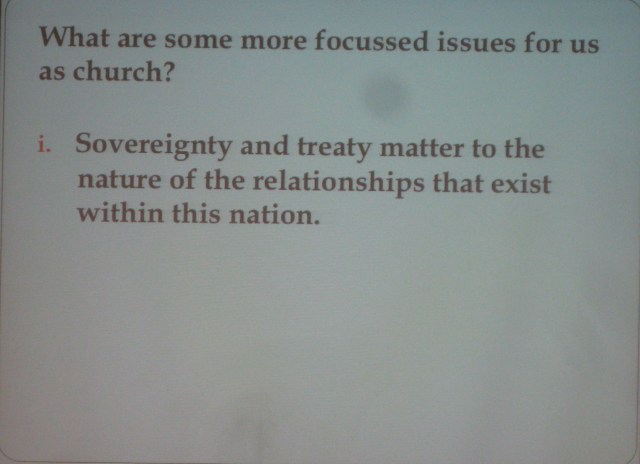
i ways we talk about sovereignty

ii Treaty

iii acts of resistance

iv identity of the church


WAYS WE TALK ABOUT SOVEREIGNTY

Ask what does it mean for the identity of the church to recognise First People? Always about wealth: land, labour, wealth… when talking of treaty/constitutions always become justifying narratives. We cannot ignore the material component.

 Sovereignty? People aren’t sure about what the word means.

Confuses meaning when indigenous people are asking for it.

Rights and claims continuously negotiated e.g. human rights (allows some limits/accountability)

Four themes:

i ‘external’ or ‘internal’ authority. Boats vs. states/federal government.

ii power of institutions or powers of people

iii be sorted out legally or negotiated politically e.g. State of Victoria negotiating a Treaty.

iv sovereignty is capable of being shared > not absolute (Pakeha and Maori)


  1. separate and independent nation
  2. starting point to achieve rights and social inclusion
  3. authority inherent in them as individuals and as a people


Assertion: sovereignty reframing ongoing negotiating of claims in the community > nature of our settlement and how they live here.

Not disadvantage or reparations but ‘ancestral occupation’.  Not a gift of ours to give.

Recognises First People are a people with their own culture, land, language… have inherent rights.  Opens up a new negotiation for settlement.


img_1454


TREATY

‘shared house’ analogy… if you move in to a share house together there are rules – have to pay your share of rent, food, utilities… if some random moves in and uses everything. Eventually someone will say, we were here first – pay the board or move out.  There is a need to recognise our sovereignty.


img_1456

ACT OF RESISTANCE

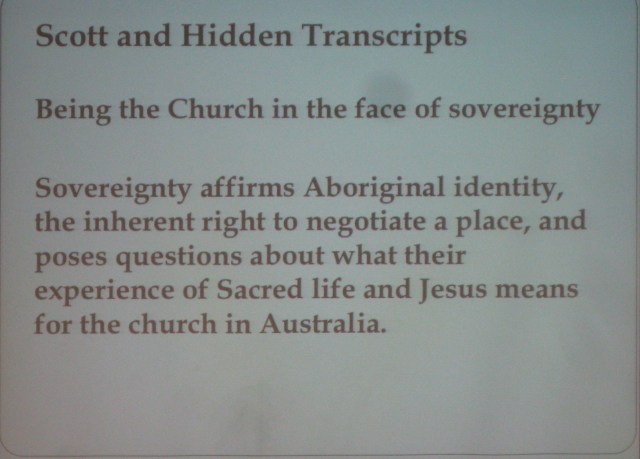
Narrative of explanation (public ideology that justifies current system e.g. invisible). Can’t critique publicly. Another narrative told in private places.

Did Jesus tell stories in public areas – in ways that didn’t threaten powers (used language and metaphors they didn’t understand) but reaches ‘those with ears to hear’. [hidden transcript]

Worth doing things people don’t understand – not taken seriously by Government but gives hope to those in the know.

What are you trying to fit into?


img_1457

ISSUES FACING CHURCH

i   church needs to weigh in on issue of sovereignty

ii   church came in with the invaders – there is an existing sacred relationship with the land (invite us to share that story)

iii   church needs to confront issues of land and reparation – material reparation (Zacharius)

iv   recognition challenges ideas of how we speak of faith and salvation.  Creation/sinned message makes indigenous relationship to land (sinful) need salvation/assimilation of this idea into church à trusted. Make it personal…

How does recognition of indigenous people alter my understanding of gospels?

Understand gospels in relation to /context of existing indigenous relationship to land not politicising the gospels with a liberation theology that retrospectively tries to make sense of that, this is not “special interest group theology” (black, feminist, etc.)

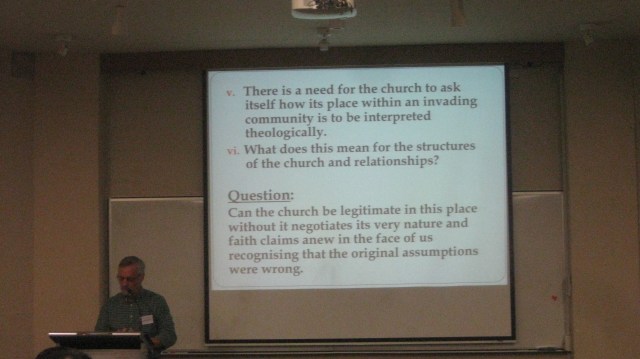
v   churches places within or on invading community is to be interpreted theologically .

vi   what does this mean for the structures of church and relationships?

vii   still a need to hear and honour history as a foundation for present and future relationships… own/confess/change it…

img_1458


2016-wwf-artwork-by-aysha-tea_02_web-890x500

West Writers Festival Artwork by Aysha Tea

When they speak, it is scientific; when we speak, it is unscientific;
When they speak, it is universal; when we speak, it is specific;
When they speak, it is objective; when we speak, it is subjective;
When they speak, it is neutral; when we speak, it is personal;
When they speak, it is rational; when we speak, it is emotional;
When they speak, it is impartial; when we speak, it is partial;
When they speak, they have facts; when we speak, we have opinions;
When they speak, they have knowledge; when we speak, we have experiences.
These are not simple semantic categorizations; they possess a dimension of power that maintains hierarchical positions. We are not dealing here with simple semantic, but rather with a violent hierarchy, which defines who can speak.

Grada Kilomba

Epistemic struggle

  • imperial based identity
  • colonised
  • don’t think of themselves as “indigenous”, they don’t need to
  • needs to critique; not only the centre but different voices (otherwise issues remain invisible)
  • speak to defining powers
  • theorising as a community member not for. Invited to participate for skills not your cultural identity.
  • protect space – doesn’t respect all knowledge and doesn’t deserve all knowledge


Decolonising the Narrative

Characteristics

  • is an epistemic struggle
  • not answering set questions, it sets the questions
  • changes terms of the enunciation/conversation
  • process not fixed point
  • creates pluriversality, rather than universality
  • makes visible the epistemological zero-point*


* EPISTEMOLOGICAL ZERO-POINT “Europeans are people who do not know their place because they have not explored it yet. People living there have situated knowledge and knowledge grounded in their experiences… Operating under the hubris of zero-point blinds you to the fact that other people, with their own existence and knowledges, do not have the same problems that you have and therefore could care less about your knowledge, until the moment that you impose it on them and tell them they do not know about themselves what you know about them.  You conclude that they are inferior and ignorant, that their reasoning is defective, that their sense of beautiful doesn’t exist. You do not stop to think that they are as ignorant of your interests and values as you are of theirs. However, you assume you “know” them because you describe them and include them in your system of knowledge and in your epistemic architectonic.” – Walter Mignolo

example:

“What are you?”

 “I’m Vietnamese. What are you?”

“Nothing”

Vietnamese can’t be “nothing” without white people. White is the canvas of the world.

Who has the imperial power to “welcome”? We need to decolonise our aesthetic.  Initiatives must critique to be de-colonising.

e.g. “Real Australians say welcome” – posters do not critique or #RefugeesWelcome these are not decolonising initiatives.


Walter Mignolo on Decolonial Thinking

  • who is the knowing subject? What is his/her material apparatus on enunciation? (Who gets to say who can speak or when?) Construction of visibility.
  • what kind of knowledge/understanding is s/he engaged in generating, and why?
  • who is benefitting or taking advantage of such-and-such knowledge or understanding
  • what institutions (universities, media, foundations, corporations) are supporting and encouraging such knowledge and understanding e.g. Rhodes scholars – took the statue down. Yale cafeteria staff smashed a window depicting slaves.


Being an advocate is speaking to my cohort…
awareness brings change


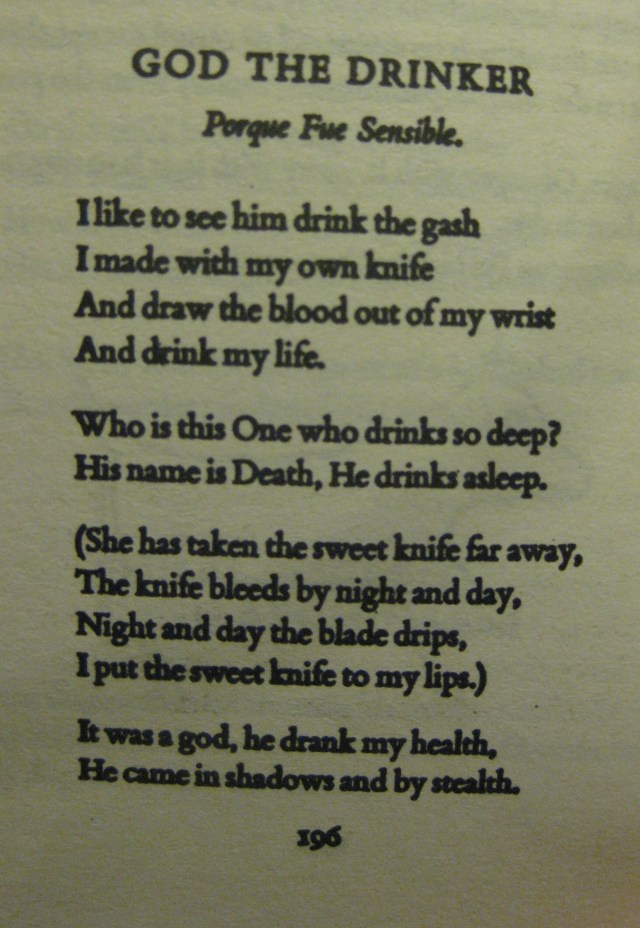
Randomly yes, I am bringing you the graffiti from the women’s toilets of a well-known Melbourne pub as a juxtaposition to the Leunig and Mother Teresa and such… from promoting social justice issues, expressions of love/hate, to relationship advice… it’s arguably, not that different – you can learn a lot from this type of bathroom wall wisdom… you might not like it all or agree with it… but you will assuredly learn something.


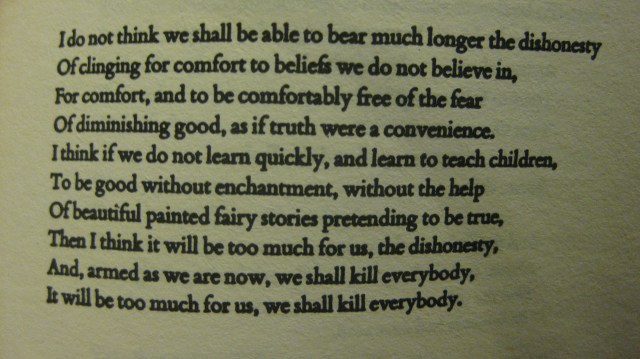
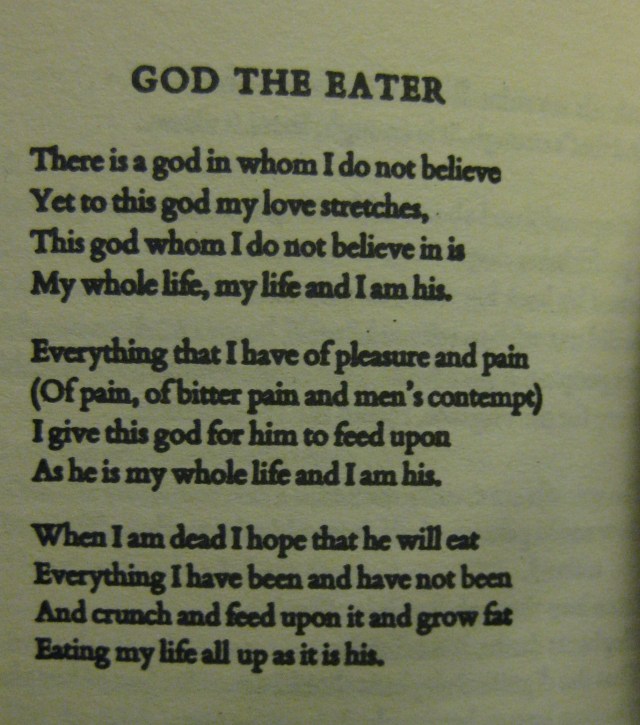
Housesitting and off the shelf of an extraordinary library I discover the poetry of Stevie Smith… I think she and I have become friends and I just may have to visit again…

img_9980

img_9974

img_9975

img_9979

img_1764


What Goes Unsaid

In each mind, even the most candid,
there are forests, where needled haze overshadows
the slippery duff and patches of snow long-frozen,
or else where mangroves, proliferant, vine-entwisted,
loom over warm mud that slowly bubbles.
In these forests there live certain events, shards
of memory, scraps of once-heard lore, intimations
once familiar – some painful, shameful, some
drably or laughably inconsequent, others
thoughts that the thinker
could never hold fast and begin to tell.
And some – a few – that are noble, tender,
and so complete in themselves, they had
no need of saying.

            There they dwell,
no sky above them, resting
like dragonflies on the dense air, or nested
on inaccessible twigs.
It is right that there are these secrets
(even the weightless ones have perhaps
some part to play in the inconceivable whole)
and these forests; privacies
and the deep terrain to receive them.
Right that they rise at times to our ken,
and are acknowledged.


and other excerpts…

img_9926

Primal speech

If there’s an Ur-language still among us…
then it’s the exclamation,
universal whatever the sound, the triumphant,
wondering, infant utterance, ‘This! This!’,
showing and proffering the thing, anything,
the affirmation even before the naming.


img_0011

Primary Wonder

…once more the quiet mystery
is present to me, the thong’s clamor
recedes: the mystery
that there is anything, anything at all,
let alone cosmos, joy, memory, everything,
rather than void: and that, O Lord,
Creator, Hallowed One, You still,
hour by hour sustain it.


img_9136

The Servant Girl at Emmaus

…Those who had brought this stranger home to their table
don’t recognise yet with whom they sit.
But she in the kitchen, absently touching the wine jug she’s to take in,
a young Black servant intently listening,

swings round and sees
the light around him
and is sure.