Tag Archive: welcome


IMG_7321

Of communion, Jesus says I will not take this drink again until
I drink it new with you in my Father’s kingdom.

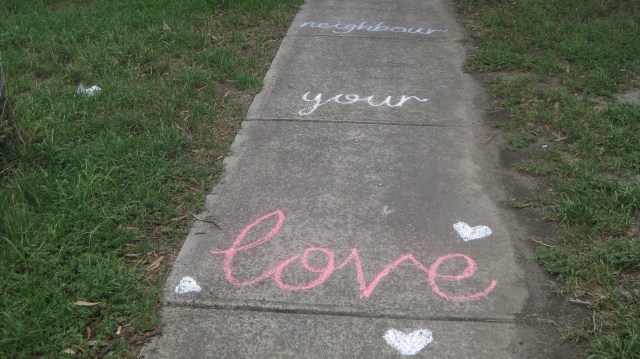
On Sunday 14 February we held a picnic lunch at the immigration detention centre in Maribyrnong. The first Sunday of Lent (and Valentines Day- let’s show the love) would often have a focus theme of a continued call to conversion the intention of the picnic was to physically create the space we would like to live in – that kingdom where Jesus might join us for a drink – even if only for an hour. How can we make that grass verge feel like space of celebration and welcome? How can we extend the expression of hospitality and welcome that we would like to see shown to refugees and asylum seekers?

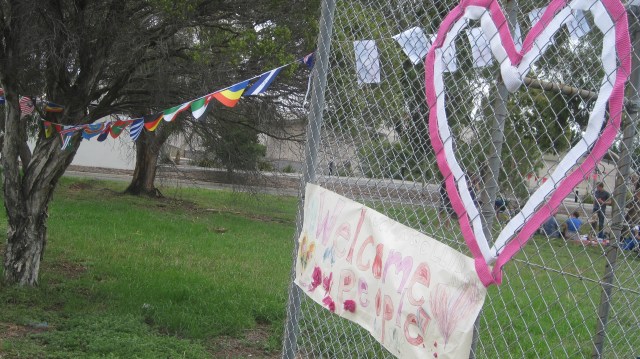
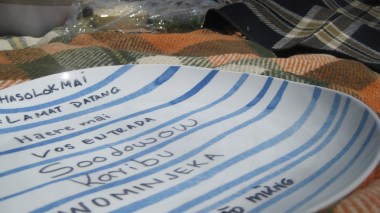
With yarn bombing, banners, different flags, welcome in different languages, families and at each picnic blanket a spare place set at the table – a visual demonstration that there is room at the table for the ‘other’ and enough food to share.

In the face of the continued and indefinite detention of refugees and asylum seekers including children and New Zealanders now the second highest number of those held in off-shore detention – we seek to respond with an act of hospitality, an act of welcome, and act of love – witnessing there is room at THIS communion table.

***
IMG_7367

Wominjeka, we acknowledge that we gather on the land of which the Wurundjeri people of the Kulin Nation have gathered since time immemorial to tell stories, sing songs and share food together. We are gathered here today to do a little of all these things ourselves: tell stories, sing songs and share some food together around this idea of showing welcome to refugees and asylum seekers and we have chosen a specific place, time and context in which to do that.
IMG_7364

We are standing here in the carpark of what is now the VicUni Student Village…this used to be the site of the Pyrotechnic Section of an Explosives Factory (1942) which was built to produce flares, tracers and smoke grenades during the Second World War… a section of this was converted to the Maribyrnong Migrant Hostel (1966). Over here behind us is the new purpose-built Maribyrnong Immigration Detention Centre (1983) – we are standing where refugees and migrants have been arriving for the last 50 years.

We are standing here at a particular time.  Today is Sunday 14 February, the first Sunday of Lent and Valentines Day – let’s show the love! The first Sunday of Lent would often have a focus theme of a continued call to conversion and the intention of this picnic is to physically create the kingdom space we would like to live in – demonstrating the kind of welcome and abundant hospitality we as Christians believe Jesus might extend and asking of our own discipleship how we feel called to respond.
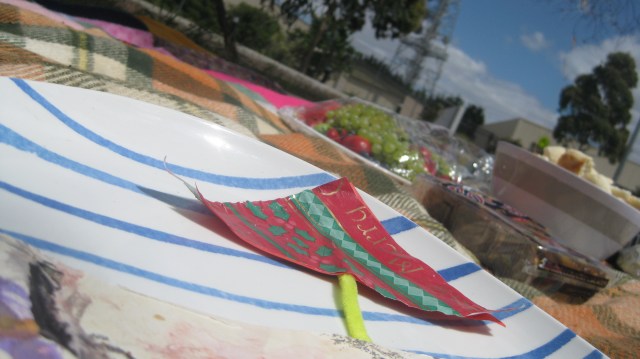
IMG_7346

We are gathering during a particular context.  The Premier of our own state has come out against the federally legislated law, medical practitioners are refusing to sign off of returning patients to off-shore detention and the UN has condemned the treatment of refugees as breaching human rights… the government, media, society are all sending strong messages – in an environment that seems more focused on reacting out of fear than love, how might we respond with clarity and compassion?IMG_7334
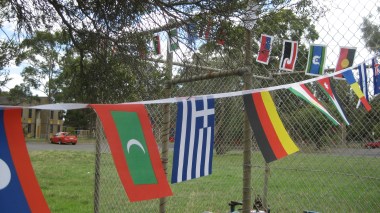
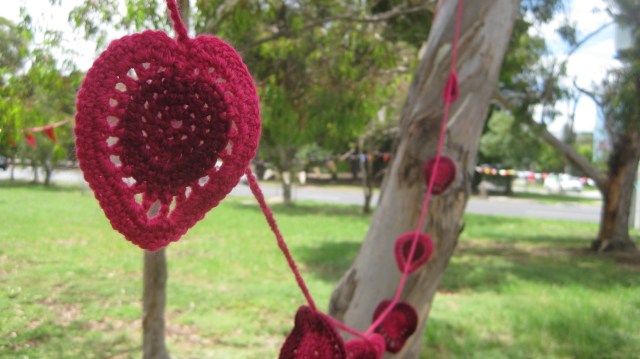
We have folded layers of symbolism into our picnic today… you can see the crocheted heart bunting by Bron for Valentines Day, we have flags representing some of those countries and cultures making up the population of those in our detention centres, and we have empty plates – places set at the table for the ‘other’.  We live with asylum IMG_7343seekers and refugees, we invited them to write the word WELCOME in the language of their cultures on one of the plates and symbolically be represented here and we remember those stories that are still unfolding.
That is about as much story as there is from me, so let’s move on to the singing! We’re very lucky to have Sam here to be the lead liturgist today so look to her for any cues – we’re not going to sing these through a set number of times or anything, we’ll just keep going until she signals otherwise.

So, I will invite you to stand if you want to, in this place, at this time in this context and sing with me, this is not a new idea… we sing in the tradition of so many justice movements: civil rights, suffragettes, apartheid, slavery…in the words of Ched Myers to “Sing about it, until it can be realised”.

This first one is from the Ngatiawa River Monastry, up the Kapiti Coast of New Zealand, a contemporary contemplative community retreat centre.


Given for you  [link here to original version on the Ngatiawa website]

 This is my body given for you

Remember me.

This is my blood of forgiveness,

Remember me.


Tricia Watts is an Australian singer, composer, she’s used singing and dance for advocacy and therapy and to call people to unite in heart and voice. This next song is from her resource titled ‘Sanctuary’.   We want to offer Sanctuary, we want to link hand in hand, we want to hear the voice of justice cry.


Justice Cry

Hear the voice of justice cry,

Moving through our land,

Ringing out oer hills and plains,

Linking hand in hand.


Well, I guess the credit or the blame for this one is on me… many of you will have heard of the Love Makes A Way movement. They have undertaken a variety of actions but in particular sitting in politicians offices and praying for them has attracted media coverage. What might be less known, is that while the actions are being undertaken inside, there is a support team outside praying, singing and bearing witness to, and holding vigil with, what happens within. Samara has been one of the people playing that part and collating a Love Makes A Way song book. And as we were talking about it once we remarked the we were drawing heavily on the Freedom songs of the civil rights movement but their style and language were written for a particular context and a particular time – certainly we can borrow their songs but Samara posed the questions “Where are our songs? Where is the style or the voice arising out of our own context?” This song came out of trying to answer that… as I looked at the Freedom songs I felt like they communicated grief but called for hope, they were often short and memorable because as your walking around you need songs people can just pick up even if they don’t have the words in front of them. I wrote this trying to find words for a situation I don’t have words to explain. You might feel moved to offer your own words here in a verse … there is room for the children, there is room in our playgrounds… feel free to lead us! Speaking specifically to context, this was originally written “Let them in, let them in” but with the Sanctuary #LetThemStay initiative just this past week as we were rehearsing we changed it to read “Let them in, let them stay”


There is room

There is room at the table (x3)

Let them in, let them stay.


There is room at the border (x3)

Let them in, let them stay.


There is room in our hearts (x3)

Let them in, let them stay.


There is hope for a new tomorrow (x3)

Let them in, let them stay.


Flowing on from the last song and our desire to have local songs coming out of our own context, I had a look around for who might already be producing words that hold this sense of lament and hope, short and memorable… this led me to make up the melody for the round you’re about to hear to Leunigs Love Is Born.  I think Leunig is a bit of a prophet, speaking out of hope and darkness, on behalf of many voices… I think “love is born”.


Love is Born [link here to a recording by Nathan Brailey]

Love is born with a dark and troubled face

When hope is dead and in a most unlikely place

Love is born,

Love is always born.

Love is born,

Love is always born.

This little ‘set’ wouldn’t be complete without a rousing Hallelujah chorus from the Freedom songs of the civil rights movement – it’s hard to know who to give credit to because groups of musicians gathered for “Sing for Freedom” workshops and wrote them together.  These songs were written to be a call for integration and confrontation of the status quo.  African-Americans in the 60s in the South were singing “Were gonna sit at the welcome table”, today we have to acknowledge that we’re already sitting at the welcome table, or the welcome picnic blanket… Again, you might be moved to call out a chorus of your own making! {e.g. We’re gonna share our songs and stories} By Samara’s hand now we will sing “they’re” as we aspirationally hold space and hope that those inside will one day come outside and join us at this table.


They’re gonna sit at the welcome table

They’re gonna sit at the welcome table

They’re gonna sit at the welcome table one of these days (hallelujah)

They’re gonna sit at the welcome table

Sit at the welcome table one of these days (one of these days)


They’re gonna feast on milk and honey

They’re gonna feast on milk and honey one of these days, (hallelujah)

They’re gonna feast on milk and honey

Feast on milk and honey one of these days (one of these days)


A-ll God’s chil-dren gonna sit to-gether

Yes, a-ll God’s chil-dren gonna sit together one of these days (hallelujah)

A-ll God’s child-ren gonna sit to-gether

All God’s children gonna sit together, one of these days (one of these days)


They’re gonna sit at the welcome table

Yes, they’re gonna sit at the welcome table one of these days, (hallelujah)

They’re gonna sit at the welcome table

Sit at the welcome table one of these days (one of these days)

Sit at the welcome table one of these days, (one of these days)

Gonna sit at the welcome table one of these days (one of these days)


Thanks so much for making the time today to come here – to stand, to sing, in a particular place, at a particular time, in a particular context to say something.

Let’s enjoy the picnic!
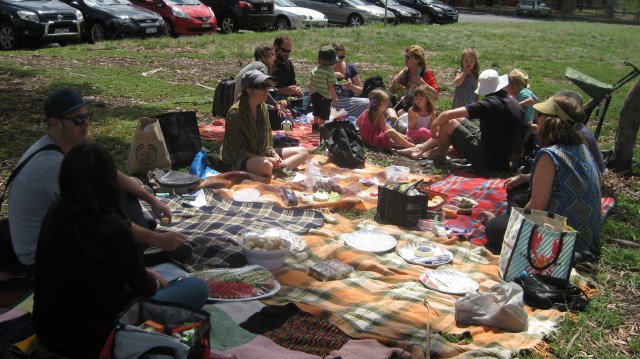
IMG_7347


Further rough notes for those interested in the background of how this picnic came about:

Last year, Mayra and I went to a conference called the Kinsler Institute and heard an amazing activist and speaker Bill Wylie-Kellerman doing a session on ‘Liturgy as Activism’.  He is the Minister of an Episcopal Church in Detroit where they’re experiencing some severe water cut offs and he described a Good Friday Stations of the Cross walk where they stood outside the water company, at the river, at block where there is only one house with people still living in it… there was something about singing or praying or standing in a particular place, at a particular time, in a particular context to say something that made it more powerful.

We came back from that conference inspired to imagine what a Stations of the Cross walk  might look like for our own context here in Footscray – we went to the Palms Motel where they provide crisis accommodation for people experiencing homelessness, we went to the river and reflected on the impacts of climate change, we came here to the Maribyrnong detention centre … most of you will know of the Christian tradition of communion, sharing bread and wine together, this is done symbolically because Jesus says ‘I won’t eat this again with you until I see you in my Father’s kingdom’. In a church we have communion and we eat it as a reminder of that promise… well, we came here and compared what it must feel like for refugees who take a long and dangerous journey to get here, who expect to find shelter, and safety and hospitality and instead…  we passed around an empty cup and an empty plate as a symbol of the kind of hospitality people have experienced arriving here.

Of communion, Jesus says I will not take this drink again until
I drink it new with you in my Father’s kingdom.

We decided on Sunday 14 February we would hold a picnic lunch at the immigration dentention centre in Maribyrnong.

The first Sunday of Lent (and Valentines Day- let’s show the love) would often have a focus theme of a continued call to conversion the intention of the picnic was to physically create the space we would like to live in – that kingdom where Jesus might join us for a drink – even if only for an hour. How can we make that grass verge feel like space of celebration and welcome? How can we extend the expression of hospitality and welcome that we would like to see shown to refugees and asylum seekers?

With yarn bombing, banners, different flags, welcome in different languages, families and at each picnic blanket a spare place set at the table – a visual demonstration that there is room at the table for the ‘other’ and enough food to share.

In the face of the continued and indefinite detention of refugees and asylum seekers including children and New Zealanders now the second highest number of those held in off-shore detention – we seek to respond with an act of hospitality, an act of welcome, and act of love – witnessing there is room at THIS communion table.

Why here? A conversion of the New Pyrotechnic Section of the Explosives Factory Maribyrnong established in 1942 to produce flares, tracers and smoke grenades – the Maribyrnong Migrant Hostel first opened in 1966. Part of an ambitious assisted migration scheme that was implemented by the Commonwealth government in the late 1940s in order to increase Australia’s population. Until it was discontinued in 1981, this program saw thousands of British, European and Asian migrants start a new life in this country, temporarily accommodated in government hostels until they were able to buy or rent a house of their own. The Hostel has accommodated migrants from almost every national group that has arrived in Australia since World War II. Initially these were people from Britain and Europe but the later migrants arrived from Asia and South America and people escaping political upheavals in places such as Hungary, Chile and Vietnam. The hostel at various times also accommodated naval personnel, apprentices and evacuees from Darwin after Cyclone Tracy in 1974. Attempts by migrants to personalise their surrounding are apparent in a mural of windmills and tulips by Dutch migrants painted on the side of one of the surviving concrete bunker structures and a mural of an Asian scene that appears to have been painted by Vietnamese migrants on a section of wall of one of the ammunition stores located next to the Phillip Centre. This building also includes a number of paintings by children on its walls. Staff of the migrant centre also erected a large aviary attached to the former electrical substation that was part of the pyrotechnic works. (onmydoorstep.com.au/heritage-listing/35583/former-maribyrnong-migrant-hostel).  These site spaces are now occupied by Victoria University and in the last few years used predominantly for student accommodation.

The current, purpose-built, Maribyrnong Immigration Detention Centre (IDC) was opened in 1983, set up for people who have over-stayed their visas, had their visa cancelled, or who have been denied entry into the country through international airports and seaports.  Unlike the Broadmeadows IDC which has been home to families and children, Maribyrnong IDC has been home for mostly adult single male detainees identified as medium/high risk and therefore it is a site that has had higher security.

In June, the Australian Citizenship Amendment (Allegiance to Australia) Bill 2015 was passed.  The Citizenship Act has always said that if a foreign citizen or foreign national fights for a foreign country at war with Australia, they automatically cease to be an Australian citizen. Fair enough. The Bill adds three new categories of circumstances which will bring about the same result.

  1. Fighting for a terrorist organisation – still with you…
  2. Convictions for certain offences – if you’re a foreign citizen or national and you are convicted of any of a long list of criminal offences, your citizenship will automatically cease.
  3. Acting inconsistently with your allegiance to Australia – what does that even mean?

The protocol is that ASIO notices you’ve done a particular thing and tells the Immigration Minister who deports you. To do that, he has to accept that the factual allegations are correct. You have no right to be heard before he does so. You can contest it later but by this time you’re already on a plane.

(you can read more about this here if you’re interested: abc.net.au/news/2015-06-25/bradley-how-you-could-lose-your-citizenship/6572382)

At 30 December 2015, there were 1,792 people in held immigration detention facilities. Of these 1,792 people, around 18.6 per cent were from Iran, 10.2 per cent were from New Zealand, 8.0 per cent were from Sri Lanka, 6.5 per cent were from China and 6.3 per cent were from Vietnam. (Department of Immigration and Border Protection).

New immigration laws brought into effect back in December 2014 mean that anyone who has served a jail sentence of 12 months or more in Australia could be deported.  “We don’t want people who get into trouble, who have a criminal record, and those who fit into that category will have their visas cancelled and sent back to where they came from,” Australian senator Ian Macdonald said, saying that New Zealanders can’t expect special treatment.
“We love our cousins across the ditch but they must be subject to the same laws as everyone else.” [ The Australian, 29 Sept 2015]

It may be that New Zealanders thought they were being treated by the same laws as everyone else when they were convicted, served time and released just as an Australian might be.  That once they had observed due process and due punishment they were free to resume normal life, 5000 New Zealanders have done time in the last 10 years and these changes mean they can retrospectively be sent home.  I’m not trying to be permissive or whitewash anything these people have done. Clearly they are convicted criminals all. But surely we must ask whether it is fair to punish them now, again, a new law applied to an old crime?  These who might have family here, work here, barrack for an AFL team here… is it justifiable?  Is it justice?

With all these legislative changes, the population of the Maribyrnong IDC has housed both of these groups – convicted criminals whose visas are cancelled and are being sent back to where they came from side by side with refugees seeking asylum and safety.  I can’t find a number for 2015 but between 2010-2014 the number of “boat people” identified as legitimate refugees is over 90% in each year.  The treatment of the asylum seekers and the treatment of the criminals is the same. “Hard-line” centre managers from the prison system have been brought in – ex-prison guards who have a very different culture and mentality to officers who have been trained to guard asylum seekers amidst outbreaks of racial violence and hunger strikes .

People come to Australia with the hope of a better life but they are kept in the same place, and in many ways treated similarly, as criminals.  A friend of ours who has visited here – a refugee herself – has shared stories of the intimidation to herself of the conditions of entry; the boredom, the frustration, the fear, the hopelessness, the despair of those she met inside. She had her own complex needs but returned again and again not only to meet the hunger for Arabic home cooking, but for stories and news of life outside.

The latest development is this: all refugees in Maribyrnong are due to be moved to Broadmeadows which has recently had a high security upgrade. They were due to be moved already but it hasn’t happened yet – we have no way of knowing if this will occur prior to 14th of February.  This comes at a high cost to those at Broadmeadows IDC because along with the higher fence, more guards and greater security screening, comes heavier dehumanisation.

And, you know, some of the symbolism of our picnic is lost.

Or is it?

What a contrast over fifty years between a hostel and a prison, between encouraging people to move to Australia and border control to keep them out… but this place, this space, is where weapons were made that were used during World War II then offered a new start to some of the refugees of that conflict.  What has been used for building harm in this place has been transformed for building hope before… maybe we can build it again.

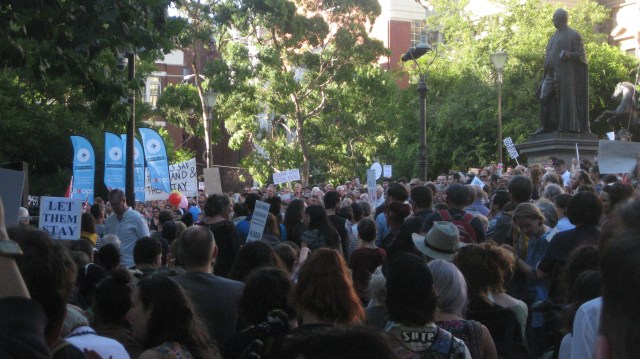
#LetThemStay

4 FEB – BREAKING: The High Court has just ruled in favour of the Government over the legality of offshore detention centres.

Right now, Peter Dutton is planning to deport 267 people seeking asylum – including 38 babies born right here in Australia – to Nauru and Manus Island: sites of scores of assaults, sexual assaults, self-harm and suicide attempts, and constant despair.

Love Makes a Way and a bunch of other refugee advocacy groups are campaigning together in response to the recent High Court decision that says that it is not illegal to send people off shore, making it more likely that the 267 on the mainland at the moment will be sent to Nauru. LMAW are inviting people to run their own non-arrestable actions in whatever way they like, using the slogan #LetThemStay.

sanctuary

IMG_7306


IMG_7304


Let them in and let them stay.


IMG_6111

IMG_6119

IMG_6117

IMG_6116

IMG_6122

IMG_6121


210

206

054sml

[Earlier this year I had the great privilege and profoundly impacting experience of attending the BCM Kinsler Institute in Oak View, California – a.k.a a clusterfest: part birthday party, part conference, part church, part action planning meeting… – it’s worth noting that I can/am only speaking to my own notes from those sessions I attended and there were generally 5-6 options for every devotional and workshop spot so this is not conclusive coverage and the mistakes are my own. If you’re interested in this kind of reading there’s many more resources, articles and stories at the Bartimaeus Cooperative Ministries (BCM) and Radical Discipleship websites]


Bible Study: Jesus, Disciple of the Story – Ched Myers

Need to be literate in the story.

Jesus underwent formation and had to discern call. Jesus was shaped in/knew his tradition – quoting, embodying, referencing… informs his consciousness and animates his imagination. “As it is written…” rooted in the story.

I will tell you something about stories,
[he said]
They aren’t just for entertainment.
Don’t be fooled
They are all we have, you see,
all we have to fight off illness and death.
You don’t have anything
if you don’t have the stories.
Their evil is mighty
but it can’t stand up to our stories.
So they try to destroy the stories
let the stories be confused or forgotten
They would like that
They would be happy
Because we would be defenseless then.

Silko, Ceremonies

If we forget the stories, we are defenceless. If you aren’t grounded in this story, what are you grounded in? Land you are on is filled with stories – do you know them? Conquest, pain, animals… to be part of restorative justice in that place, need to know the stories.

Jordan is a river of stories (Red Sea) Exodus, Joshua 304. River is flooding, ford to cross. Israelites/Canaanites – Semitic tribes politically, socially and economically aligned with Egypt > tribute to pharaoh. Much as America don’t rule South America but control it through strategic leaders politically, socially and economically. Israel just got free, trying to be free of empire, the land they want is under empire/occupied.   This is why they go the long way round. Main roads controlled by Egyptians – undocumented immigrants finding another way >> old story. US Border Patrol, “boat people” in Australia. Chasing them or keeping them out. “The Man” holds the roads, bridges, fords…believe in a God who troubles the water. Ch.3 full chapter of ritual. The ark has to go first – carrier of the tablets. Instructions on how to be non-Egyptian. We are following a Way. Symbol – religious, social, cultural… Cherubim holding up a seat, empty, un-king. Manna economics, non-hierarchal structure of mutual aid. Ritual. Dip feet. Pick up stones, 12 stones, take them to the other side and build a cairn, 12 tribes. Alternative body politic with no king. Build a cairn on the Jericho side. Statement > attack Jericho. Dancing in the teeth of empire – started with going down to the river and getting stones. When Jesus goes down to the river – he dives down into the river – diving for stones. Lost the symbols because we’ve forgotten the stories or gotten confused about them. Elijah passing the mantle to Elisha (discipling) > first thing Jesus does is call disciples like Elisha did.

Apprentice of kingdom, land and story. Need to go into the left side of our bible to make sense of the right side – which constantly references the first half. New Testament stories are re-placed and re-grounded in the Old Testament.

Invites us as disciples to do the same. Let us be disciples of the kingdom as Jesus was, of land as Jesus was, of story as Jesus was. Scripture study informing out political and theological practice.


Walking Meditation: Charletta Erb & Todd Wynward

Mayra 11016722_10153155574714715_3033034683319964493_n (4)


Artist Manuel Cisneros, a native of Guanajuato, Mexico, came to California 12 years ago. The physical labor of moving large boulders around was satisfying, and the contemplative nature of balancing and composing his sculptures fed his soul. Often, he doesn’t know what a sculpture is going to look like until it’s finished; he enjoys the way the rocks, wind and ocean waves work their own magic on him. (quote from the Ventura County Reporter, 12/24/2014)


(photo credit: Mayra Stark)


Song:
Siyahamba (Zulu, we are walking in the light of God)
Siyahamba ekukhanyeni kwenkos yoyo’,
Siyahamba ekukhanyeni kwenkos’.
Siyahamba ekukhanyeni kwenkos’,
Siyahamba ekukhanyeni kwenkos’.
[ekukhanyeni kwenkos’]
Siyahamba… ooh
[Siyahamba, hamba, Siyahamba, hamba]
Siyahamba ekukhanyeni kwenkos’.
[ekukhanyeni kwenkos’]
Siyahamba… ooh
[Siyahamba, hamba, Siyahamba, hamba]
Siyahamba ekukhanyeni kwenkos’.


Song:
Christ came down that we might have love x 3 (hope, peace, joy…)
Hallelujah forever more


Song:
We shall not give up the peace
We have only started x3
Together we can work it out
If we only listen
Together we find victory
Hand holding hand


Song:
You shall be like a garden
Like a deep spring
Whose waters never fail
        (Isaiah)


Preacher: Rev. Jin Kim -“Wasting our life for Christ’s sake”

Mark 14: wasted ointment – waste/efficiency/frugality – breaking in with intimacy?

‘To waste’ and ‘to lose’ come from the same word…
whoever loses their life…
“wastes” their life.

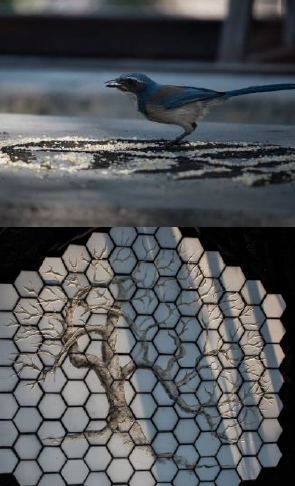
birdThink about making something of ourselves or making ourselves nothing. Called to “be a loser”. Exodus: survival – significance – justifies the risk. I am now privileged. Christian domain – homeless, penniless… What are we leaving for our children that matters? Can’t crap in the living room, that will affect the whole house. We’re all dirt. All full of shit. Good soil or bad? Loving God and loving neighbour – generosity and hospitality.

Seriousness is a symptom of empire. Unless you have lightness, levity, joy, self-deprecating humour… your software has taken on the operating system of empire > fruits of the spirit (live in THAT!). Need to detoxify ourselves of empire. THEN reach out – physically, emotionally, spiritually… was Jesus a great prophet but failed evangelist? Message of surrender that no one wants to hear.


Song:
Guide my feet while I win this race x3
Oh I don’t want to run this race in vain
Light my path…
Hold my hand…
Set my feet…

(Kinsler Institute photo essay)
This emphemeral art piece was created by Ted
Lyddon Hatten:”…when you are looking at something
you know isn’t going to last from bud to bloom or a
baby that will grow… you appreciate it differently”


Plenary panel: Radical and Integrative Theological Education – Eric Brown and Ndume Olatushani (Proctor Institute); Jin Kim (Underground Seminary); Dee Dee Risher (Alternative Seminary); Solveig Nilsen-Goodin (EcoFaith Recovery); Kate Foran (Word & World); Rebecca Stelle (Church of the Savior)

Opportunity to hear from a variety of grassroots theological education initiative practitioners – use/addiction recovery model, small mission-minded groups, mentors + mission with intensives…

Seminary – comes from the word ‘seed’

Borders – places of convergence.

There’s a higher degree of diversity
and richness at the edges.

If we do our job properly then we should not be sure if we are in church or a classroom or at an organising meeting or in a field. Welcome to the “clusterfest”. Planting, reaping, harvesting > movement building, church renewal or social uprising?

  • Alternative publishing and seminary
  • Can’t learn the new construct from the old construct. What is full immersion? Enter into what is new.
  • Freedom Circle (12 steps) addict to the worlds sick way of being. Theological reflection happens later. Surrender is counter-cultural: full disclosure of finances, surrender authority to one another e.g. can I attend this conference?
  • Dorothy Day wasn’t just sitting around talking. Alternative Seminary: Credo (belief) and contextualisation of that is important, met in a homeless shelter, had a sliding pay scale, connect ecumenically – progressives from each tradition, can’t feel like school (competitive) or be disparaging of one another.
  • Word and World – how do you read? Learned in Greensboro (at the Beloved Community). Understand t agenda of people trying to preserve power > then hear stories and perspectives of others re-placing the stories. Be the student/intern – change the conversation. Too religious for political people and vice versa.
  • In cell – started to paint the things I wanted to see. Listen to what was within – I was fortunate. Chose not to have a TV for the first 10 years in prison (a lot of inmates live in/through that).

Knowledge makes us responsible

(cont.) …I had to educate others. Survival – keep getting up and moving forward. Always a chance to change the world around us. I couldn’t say that to others if I wasn’t doing – want to disrupt the system have to allow my voice at the table to describe what it looked like from the inside. Have to do everything I can so it doesn’t happen to anyone else. ‘Children’s Defence Fund’.

  • Poverty not only economic but internalised. Need to work on both generationally. First African American lawyer and founder of the Children’s Defence Fund. Civil rights pedagogy – not just talking but singing and preaching it and erupting and disrupting onto the streets.
  • Underground seminary: Took graduates – do an internship to undo/detoxing from professionalism. Between 20-40 years old, in debt, over-leveraged – everyone paid what they could afford. Made them live together 8-9 houses. Interns live 4 doors from church intentional. Philosophical and ideological text polluted by smog – if you don’t go to the mountains or fly above it then you can see/don’t know there is smog. As much about unlearning as learning. This way of understanding is integrated into my church and family life. It’s a natural part of our lifestyle – would happen even there were no students. Invigorating. Church gives time to it but holds it lightly. Like a flash mob. When needed, will happen; when not needed, won’t. Traditional in Asian culture to go to a school of “{person}” – personalised authority rather than a school.
  • People and churches going into “recovery”. Individualised recovery vs. communal. Have a grant that funds interns and mentors. Learn from students/cycles. Ecofaith recovery asks “what can we do?” Grief work. Part worship, part movement, self-work… A lot of people might think “I can’t give up my car so I can’t criticise petrol companies” – what are other ways we can engage with the environment?

Imagination lies underneath our grief.

Teach leadership development that is spiritually grounded and organisational skills.


conf

Workshop V: Immigrant Rights Organising – Guillermo Torres

We do advocacy. When undocumented people are picked up they are held by the police and then turned over to Immigration. Police are not qualified to make decisions about immigration.   Principles like these get used to abuse day labourers: utilise them then don’t pay them – they have no protection or right of redress.

What is the faith response to the crisis of children coming from South America? Have a vigil. Visit them and check the conditions where they are being held. Want to do more than pray… got together key faith leaders, politicians, service provision stakeholders and a refugee to tell her story. People that came to the US and were arrested for crimes then were sent home to Honduras and El Salvador – her house was in the middle of a gang shoot out… hunger… coldness… two days on a bus… rash… boy fell off the raft she was on and a another woman went into the water to get him… family were separated… father sent back to Honduras, they had no money and he is the main provider for their family… makes no sense? Kids who arrive in the US under 18 years of age get fast tracked and are given 7 days to make a case for why they should be allowed to stay.  Waves of immigration during the wars > became gangs in LA (shared language and friends) > deported back to El Salvador and keep gang structure.


(Kinsler Institute photo essay)

How do we connect to the children who have arrived? To their faith? To lawyers? To supplies? What if we created a collective network?

How do we find out where the kids are when this is confidential? Invited the people who might have that information to come to the meeting. What are the biggest needs?

  • Legal protection/services > Guardian Angels
  • Mental health services that can be used to build a case for asylum: violence, poverty, abandonment, sex trafficking (give me your daughter r we will kill the entire family)
  • Chaplaincy: sponsor, hospitality, integration into community, links to food/clothes/transportation, navigation.

250 kids were funded to get legal support, only operating at 40% because couldn’t reach more kids/families.

  • Accompany-er who is screened and trained who is with them through the whole process. Calls weekly. Moral and spiritual support.
  • Distribution centres for pallets of shoes, clothing, food, grant for $25K, vouchers for school uniforms.
  • Welcome centers/congregations – food, clothes, school supplies
  • Serving supplies (re job skill training)
  • Raise funds for legal aid
  • Skill/job training – sewing, welding…
  • New furniture

Doing all these things and haven’t
even named the coalition.

What can the church offer as special/unique gifts?

Love, compassion, justice – what moves you? …need to know what motivates groups.

Moral authority “self-interest” motivated by love and call of God on hearts – how are we awakened to our deepest connections? John 17:21 strategy > hope and compassion. Eph 2 implicit and explicit – explain and if you have to, use words. Immigrants become involved in advocacy and non-immigrant partners. Some politicians identify as religious – an interfaith response might canvas that, clergy bring influence and members bring influence.

Anyone plus God is a majority

Further reading on the Faith Communities Contribution to Unaccompanied Migrant Children see: Guardian Angels, Clergy and Laity United for Economic Justice of Los Angeles (CLUE-LA).
See also Our God is Undocumented – Ched Myers


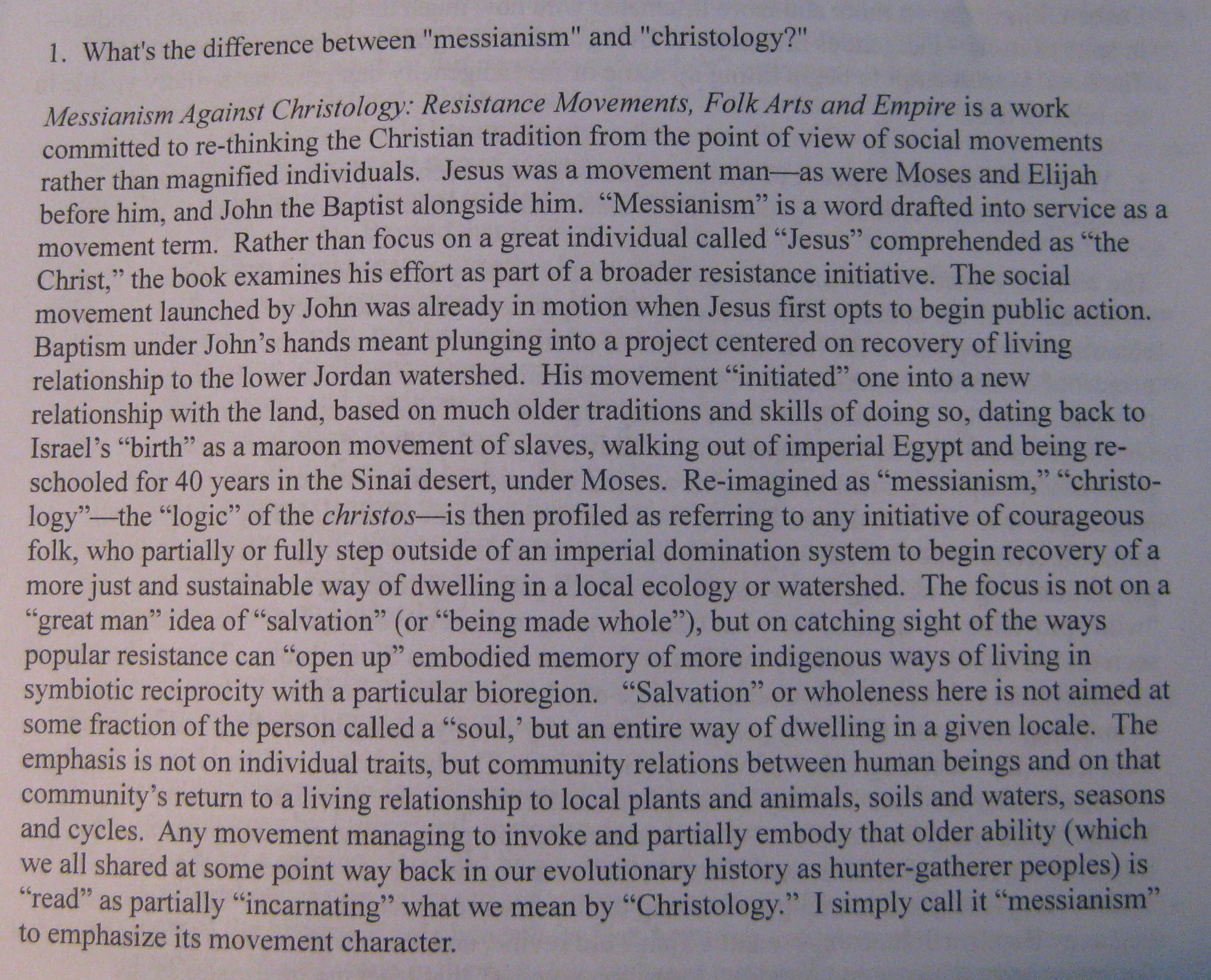
Workshop VI: Messianism vs. Christology – Jim Perkinson

025

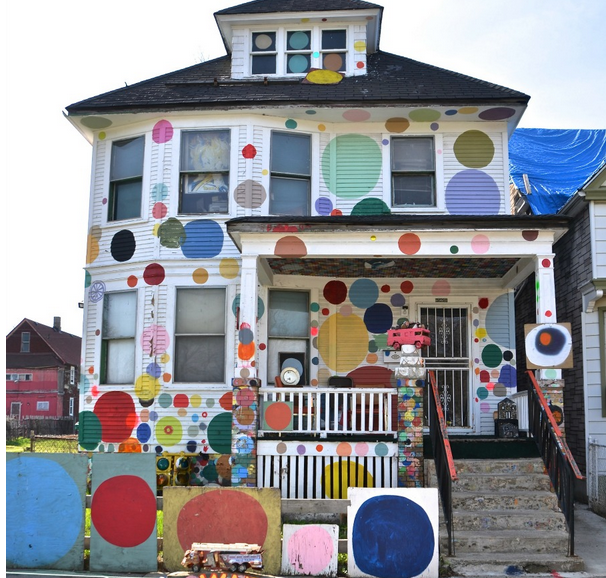
heidelberg project
Christianity needs to be redefined, transformed, reframed…

Make desperation yield beauty
in spite of itself

Google image search “The Heidelberg Project” – economic decline saw many factories closing and abandoned housing > lots of rubbish. This project using refuse as art attracts 2000 people a year – a community art project that is constantly evolving. Step out of art protocols – make people and places speak beauty. Utilises non-human actors: stones, water, clouds, doves, snakes… what is indigenous to the area. Detroit taught me to speak in tongues – use a difference vocab than your cognisance recognises. An African dance has motion/rhythm/call and response/exchange and a heightening of energy – they are learning how to speak the land, let them have space inside our bodies. The totem animal/plant has been there longer and knows how to survive. What voice is speaking in you? Big question. We are what we eat – is my ancestor my grandfather or possum or grubs? More honest to tell the story that way.

Domesticating ecology and dominating… 10,000 years domesticated plants, 500 years later domesticated animals to help with domesticating plants, now mostly metal technologies through fossil fuels. Functioned in band societies of c.150 people or less (most of us still only engage with about that number of people). We are not hardwired to violence – when have we lived not destructively? What do we have to learn from that period? Pastoral nomadism as resistance… Genesis 1-2-3… domestication happened as a result of the Fall not “advancement”, Cain and Abel – the farmer kills the pastoral nomad then builds the first city. Replacement for Abel is Seth (replacement), Inosh (vulnerable one) and Inoch (full metal jacket) > two lines out of Eve. Son of Man/Human One not Christ or Rabbi. Kibor Inosh in Daniel (one like the vulnerable one)… history of empire and kingship – Samuel – you will come to regret this… Saul, David, Solomon… 1&2 Samuel/1&2 Kings = forced labour of men and harems of women. Pastoral nomadism has counter imperial values. Abram first thing, leave the city, take animals, become herder, trees of Moray…

hospitality is how you hear
what’s going on in the next watershed

3 angels visit. Urban Sodom is degrading visitors.

David/Daniel/Isaiah – how does Jesus talk about them? Messianism

Abraham – hospitality
Moses – lives off the land
Elijah – fed by ravens > hunting
David – on the run renegade shepherds, playing the lyre, shamanic tradition
Paul – Galilean movement

We have enslaved matter.

Indigenous people are calling us to return not for in a forward spiral. To them space – organic life and everything else – squirrel and a rock have the same vitality.

Further reading: Principalities and Powers – Walter Wink

Building in cities represent the harnessed energy of animals, minerals, humans – they are still energised but they are warped. Bloated and starving. Hungry ghosts. “I am Legion” complexity of singular and plural. Internalised scribal principalities. Exorcises the people and the first thing that happens is people start asking “What was that? Haven’t seen that before!” >start asking questions.

Me. You. God has hundreds of faces. Return wild vitality to them. Jesus puts mud and spit on blind eyes and asks: “Can you see?”. Artists take mud caps and paint and ask us “Can you see?” The project was bulldozed twice and burned nine times – not everyone thinks it’s beautiful. Folk art marking it out as beautiful – as vital. Shocks you into recognition of where you are. Ethnic cleansing is happening through tax/mortgage/water cut offs. Detroit is seen as a blight and a problem. A deep weapon for surviving is codifying beauty out of pain: spirituals/blues/jazz/R&B/gospel/soul/funk/techno/hiphop… old school and underground forms… tagging, breakdancing, turntabling…Pain made into beauty.


Reflections from our chaplains

Lots of tensions/paradoxes:

Take seriously – not too seriously
Local – global
Find voice – listen
Be still – dance
Articulate – sit in silence
Doing a lot – not doing enough

 Isaiah 37:31 root downwards, fruit upwards.

Sometimes find ourselves with less time, less money, less love, less support than we would want. Not called to imitate as they did but the way they incarnated the Word/Spirit of God in their lives.

Digging down deeper – public acts of liturgy might encourage someone to go a little further.

Imaginative capacity – how do we expand this for ourselves and our imaginations. Easier to imagine another world than our own neighbourhood being radically different, incarnating a deeper imagination.

Moving from strength to strength:

  • Gifts of young ‘uns: new ways of seeing, energy, acontextual, less baggage
  • Keeping it real
  • Connections: art, music, cross denominations, people, creativity
  • Entrepreneurship
  • Manifestation of spirit
  • Ched’s jokes

The main thing is to keep the main thing the main thing – fuel, safe space, fresh air, spark rekindled.

Celebrate and nurture faithfulness.  Courageous is the loving thing to be.

We share with you
what we have received.

Movement – called to shine light not be stars, workers not heroes, move justly and lightly on the earth. “The world seen clearly, not sharp eyes but eyes moistened with tears…” Margaret Atwood.

Passion and compassion that leads us. Themes: touch my wound, leave sorrow behind >go to lead and feed.

We are enough.
Scattered but not alone.

Pick up seed and carrying it away – store, feed family, drop… grow

love makes a way

in the face of unwelcome
love makes a way
against powers politic
love makes a way
counter to public feeling
love makes a way
to closed fist, reach open hand
love makes a way
traveller greeting fellow traveller
love makes a way
love makes a way

 
Talitha Fraser

I’m sure this is a time of year when everyone feels a lot of pressure – things to finish off before the end of the year, things to do, people to see, the quandary between the things I think/feel and the things I think I’m supposed to think/feel at this time of year…

I couldn’t sleep last night so I got up and started baking, found something soothing in following basic instructions, getting my hands dirty, feeling like I was making something – tangible evidence of results from work which I can sometimes be frustrated by not feeling day to day, I knew I was on prayers today but I felt like my head was in such a clamour that even if God were guiding me to some words of inspiration here – I couldn’t hear them.

It’s tempting to want to retreat from everything – get away from the commercialisation and the crowds, and family responsibilities – then my Christmas could be “holy”.  But then I’m also running away from the lesson of Incarnation, the enfleshing of God —the lesson that we who are followers of Jesus don’t run from the secular stuff; but rather we try to transform it.

a book called…

The Whisper of Christmas . . . . . . . . . . . Joe E. Pennel, Jr., Nashville, Upper Room, 1984, p. 61

says     “There is no evidence of any kind regarding the date of Jesus’ birth. His nativity began to be celebrated on Dec. 25 in Rome during the early part of the fourth century (AD 336) as a Christian counterpart to the pagan festival, popular among the worshipers of Mithras, called Sol Invictis, the Unconquerable Sun. At the very moment when the days are the shortest and darkness seems to have conquered light, the sun passes its nadir. Days grow longer, and although the cold will only increase for quite a long time, the ultimate conquest of winter is sure. This astronomical process is a parable of the career of the Incarnate One. At the moment when history is blackest, and in the least expected and obvious place, the Son of God is born…”

…a wiry tree growing up strong in a place where a tree shouldn’t be

Invite you to take something from the plate and to find something sustaining in something simple and home made, to smell the ginger, cinnamon, vanilla and chocolate.

I thought we could sit in silence, however you feel comfortable, and just “be”…    after a minute or two, I’m going to play something instrumental  –  invite you to slow your breathing….                   let everything that’s in your head, everything going on, rise up and then let it go…       I invite you to be open to the advent of God.

Perhaps try and recapture some of the wonder… mystery… and believing in fragile miracles that can make this time of year meaning-full  and transforming for us.  Once the music is going feel free to light a candle, or speak prayers aloud if you like…

Wominjeka, Haere mai, Maliu mai, Dynnargh… w elcome our God of wonder…