Category: influential reading material


IMG_5009To know the gaze of God – Sister Miriam
St Teresa is convincing because she is speaking out of her experience.  We don’t have to guess about her interior life.  She is anxious to explain herself truthfully – hard on herself – a light fault is serious if it goes against His Majesty.  She would see herself as like the Samaritan Woman and pray “God, give me that water”.  She was dedicated to hours of prayer – even when praying hour would be over. “more enabled to bear the beams of love” – Blake. Saw prayer as the only way to deeper connection – God did in a moment what she could not have done in years on her own.  Stick with it, Godwards (inward) our centre whether we know it or not.

Prayer consists not in thinking much
but in loving much.

Each person inexhaustible – there are many rooms in our interior castle.  There is a call to growth – face to face encounters with the living Christ.  Steady unwavering gaze of God kindles love.

In the measure you seek Him, you will find Him.

Hone focus and choices > prayer fosters “presence” to unfathomed, unconditional love, Under His gaze, joys and sadness are given perspective.

 St Teresa had a spontaneity and gladness to her interior life > personal gratitude.  You must put on the new self that is clothed in God’s likeness. Mystical experiences ‘more’ real than ‘normal’ life > reformer.  Energy/capacity to write, correspond despite illness… by their fruits shall you know them.  Her way, her truth, her life.

Sips of what we hope for.
Lives with very determined determination.

He who lives in God, lives in love and God lives in him.

St Teresa’s gift of wisdom – Sister Paula

Wisdom illuminated her life and vision.  Learned through fidelity in prayer.  Knowledge and understanding acquired in life brought to thoughts.  Trustful confidence and hope.  Listened to voice of God in her heart > sought counsel.  So enriching, longed to share it… this is possible for everyone.  Practical and idealistic.  Lived simply and appreciated beauty.  Wrote hundreds of letters – family, convents, business, books… 1562 St Jospehs of Avila dedicated to prayer and contemplation, 3 essentials:

  • love for one another
  • detachment
  • humility

Pure love without self interest does not lower itself to seek recognition.
For love you were fashioned.

“This is the love wisely sought IMG_5008by the pure of heart”
God/Trinity always to be found in human heart, a familiar homeliness not a remote establishment. Captivates soul with fresh encounters.

Love is complete in giving itself
and serving.

Appreciated holiness and integrity in others.  Priceless treasures with glimpses of eternity.  Everyday common sens and compassion.  Let down by friends > loneliness > let nothing bother you because God alone suffices.

There was no  conflict between her inner life and actions because all was one.  If noticed foibles in others, looked beyond to how God saw them.  Fostered friendship, encouragement, support between sisters. Contemplative but enmeshed in practical affairs.

“Seek yourself in Me,
seek Me in yourself”

Know sublime truths.  New depths of human capability, certainty from her own experience.Love at the beating heart of the universe enables us to participate in the resurrection. It is not the greatness of the works that are done but the love with which they are completed.  Each person is gifted individually and has something unique to share.  Gifts are multiplied when they are shared.


Jesus Christ, St Teresa’s true friend and companion: Her definition of prayer – Sister Angela

Loneliness and longing for God.  Desire for love and wholeness > struggle fraught with conflict.  Minority: Jewish blood/conversas (objects of hatred and suspicion); woman; ecstatic experiences and wrote books > threat/pollutant. Despite obstacles – pursued goals determinedly. Sought advice from highest theologians – proof. Love, affection, legitimacy, acceptance: she was warm and extroverted.  Shadow: crippling dependent relationships at the expense of inner truth and full Surrender to God.

Defines prayer in terms of love: frequently and secretly sharing with Him …grew in intensity and Presence.  Human personality caught up in Christ.

Forsaken moments alone and afflicted – Gethsemane/cross.  Could accept her in brokenness and poverty. Consoling Him.  Consoling each other. This became habitual. “Tried to keep God present within me.”  That was my method of prayer…

I’m not asking you to do anymore than look at Him.
The truth of who He is will be imprinted in us.

Humble ourselves and delight in the Lords presence.

Maintained presence:

  • identifying with people in gospels
  • those who needed redemption – Mary Magdalene, Peter in tears after denying Jesus, John at the foot of the cross, Samaritan woman…
  • moment after receiving eucharist, receive divine gift within her.
  • Not just inner prayer but human limitations and conflicts > see transformative power of Jesus at work.  Battle between being friends with the world and friends with God (stalled growth for 20 years).

St Teresa felt an inner conflict/fragmentation – unable to commit herself fully to God.  Likened it to a voyage on tempestuous seas and sought a remedy.  “Life I was living was not life”. Let go of trusting herself > trust God.  39 years old when she had a conversion experience.  God lived in her – act of surrender, discovered Christ, healing and transforming her.  Desired by God, in her entirety, as she was.  Set free of needing to be ‘approved’, rooted in Jesus Christ. “Jesus As Friend And Liberator” permeates her Christian life.  Satisfied all desires.  All sufferings and trials – related back to his humanness and limitations.

Body needs to be integrated in our search for God.  Life is hard.  Need example and companionship of one who has gone before.  Reality and weakness of human experience… could converse continually.

God understands our miserable make up.  Flesh and blood, life and death, joy and sorrow – embrace this reality with trust and love.  Freed to live more fully.  Obedience to life under God’s conditions. The will of the Beloved became her sole compass.


St Teresa’s writings – Sister Teresa

“I am yours born for you, what do you want from me? …move me from here to there… sorrowing or exalting… what do you want form me?”

Living and developing her great gifts.  Asked friends to pray she would do God’s will.  Moved by servile fear – then had her conversion – served by love.  Receive s graces, calls within herself, encounters to follow vocation .

“Those things of God made me happy,
the things of the world made me bound”

Self judgement critiquing her earlier life.  Had darkness and dryness, moments of light. Mental prayer – intimate sharing between friends with Him who we know loves us.  Vocal prayer – liturgy – not thoughtless recitation but mindful.  Come to prayer with self-awareness of our brokenness and need for grace.  Adamant of building solid foundation of prayer – virtues: detachment, humility, charity and obedience. Don’t stand still! Don’t be dwarfs! Space in her teaching – desire that all will reach prayer God is offering.  Criteria for holiness in doing God’s will and charity.  Call addressed to everyone not just religious.

 Grace always costs.

Gave writings to mentors and confessors – anything wrong, cut it out!  Resolve to do the little I can do (as a woman, scope was limited).  Reform of Carmel (hermits 1200s) solitude and space.  Value silence and solitude and live in continual prayer.  Liturgical prayer (church), contemplative prayer (individual). Small in number.  All in house must be friends with each other “all made of the same clay”. United in love of God and prayer for the church. Peace and joy in community and life.  God spare us from sorry saints! Give me Calvary or Tabor.  The castle is the masterpiece of the interior journey.  The soft whistle of the Shepherd can be heard through all the spaces.  My daughters, good work, my God wants good works.

Yours I am…


St Teresa’s Conversion: The movement from performer to beloved – Adrian Jones

Live out of a role – profession/family/community… the way we are socialised to behave.

1538-1565 move beyond ‘role’ to her loved self.  Feisty and an adventurer.  Loved by her family and she loved them.  Didn’t want to married (one of ten children herself).  Family of faith > raised in that atmosphere.  Her father didn’t want her to join the Carmelites.  Ran away at 20 to join.  Lived faithfully and with energy > liturgical prayer and community life.  Individual prayer not at the fore (Latin/couldn’t read… not easily accessible). “midlife crisis” had become burdensome – plateau.  Felt torn between the satisfactions of life and the stirrings of God.  Best reminded about what was going on during prayer life… continually checking in… being present to God.  18 years trying to hold the middle road.  Tried to have effective control, everything under her control, God wanted affective control – trusting God and things find their own place.  Know depths of God’s love and her own hearts desire… invitation to come close to God.  Call to religious life not questioned but can I let God be God?

Absorb story through immersion.
A living in Christ.

Loving God drew her to the centre to “be” with God.  “We” might have a good book with us > she and God hanging out together.  The Samaritan Woman and Mary Magdalene (in John) had strong conversion experiences with strong emotions.

Turned by love.

Only wrote after 1565 had established ideas  and experiences.  The reality of God, the presence of God, not doctrine (in Teresa we stand in the presence of God) – trying to describe/explain that.  Time between rising something new and familiar practice.  Not here or there.  In the middle is where we’re supposed to be.

1st mansion – become aware of God in our life. Self-awareness.

2nd mansion – awareness of that.  Must answer, become aware of implications too.

3rd mansion – taken or living for God, “perfect” Christian. Downside, miffed with god (entitlement). God: love yourself or do you love me?

4th mansion – God wants to wound us.  Doing things for God.  Can’t avoid.  Struggle living with it.  Let go of control, let God be in charge > be grateful.


St Teresa approach to community living – Richard Hallett

Teresa wrote constitutions for the communities she established.  Teresa, Paul and Alberts constitutions for sustainable community (handout). Doing very poorly at Sundays in our communities > 12 years a minister.  Work in Catholic schools and talk to families who can’t connect to Sunday services.  “ekklesia” means the group who gathers.

If the quality of inter-personal relationships among those who gather are weak, the ekklesia is weak, weak in the quality and scope of its service; weak in its power to transform and save lives.

Whether she was explicitly aware of it or not, Teresa established her communities on the same model employed and developed by Paul of Tarsus:
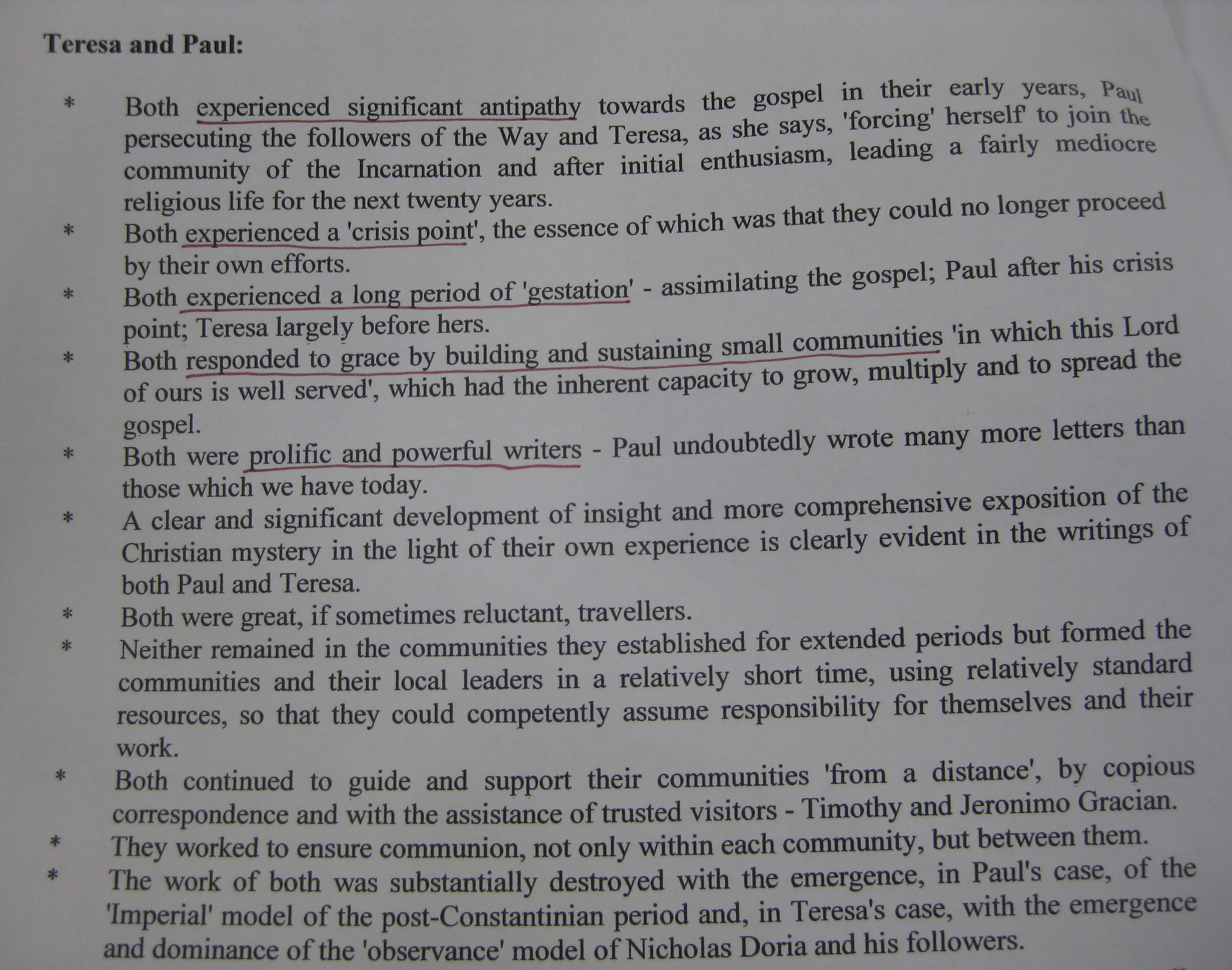
IMG_5068


Teresa did not consider that she was doing anything particularly original. Her aim was to establish and sustain an environment in which her contemporaries would have the opportunity to respond to divine Grace in the greatest liberty of spirit and to live life to the full.  She recognised that her Carmelite history, if honestly implemented, provided just such an opportunity.

p.314 St Teresa ‘The Constitutions’

What stands out in the guidelines for the Teresian life is balance. We find an interweaving of eremitism and cenobitism, or work and contemplation, of liturgical and extra-liturgical prayer.

Eremite: hermit of recluse
Cenobite: member of monastic community sharing common life.

p.324

#18 The Sisters should pay no attention to the affairs of the world, nor should they speak about them.  They may do so if the matter concerns something for which they can offer a remedy or help those with whom they are speaking, assist them in finding the truth, or console them in some trial.  If no effort is being made to make the conversation a fruitful one, they should bring it to a quick conclusion, as was said.  It is very important that those who visit us leave with some benefit, and not after having wasted time, and that we benefit too.


A Bernard McGinn retrospective – Philip Harvey

Inner life and connection with God.  First female ‘doctor’ of Catholic church.  “New mysticism” actively going out and doing things.  Democratisation, mysticism for everyone/anyone, vernacular (not just in Latin).

Read widely: Augustine… Jerome…

Creating new: Prayer of Quiet, sleep of the faculties…

Mystical theology – whole of life, hidden presence of God. [Teresa was the last of the old line not early in the new]

Def. That part of religion deepening consciousness of God in our life and lives of others.  Not intellectual, found in other religions, in eucharist, etc.  Thousands of rooms (Teresa only writes about the ones she knows about).

  • Thinking, knowing, acting, deciding out of context with
  • Personal and transpersonal
  • Absence as well as presence of God

Every baptised Christian called to mystical life.  To love God and neighbour.

Cataphic and ataphatic/positive and negative.

Dedicated to outreach of spiritual life.

A mystic doesn’t need to be a ‘drop out’ of society. Confined to cloister not ends but means > to love God and love others.  True active contemplative.

 “do not be sad
for I will give you an inner book”

Liber experienciae.

  1. The Slacker
  2. The Contemplative
  3. The Contemplative in Action

Others wrote their own spiritual expression or related them to confessors but never combined with apostolic action.  Union of inner and outer worlds.  Reactive > social reform.  Teresa: political, fundraising, leaders of reform (training others to continue her work), participation in community.  No rank within monasteries.

Mary & Martha//Raptures?? Grace of spiritual marriage. Need a uniting of Mary and Martha to host the Lord well.  Prayer will be more powerful for its responsibility/relationship > pray for those you know.

Action and contemplation not opposed but mutual.  Two lives are equal and active ways of loving God.  We should not build castles in the air but work with love.


For whom did Teresa write?  Reading the Interior Castle today – Father Greg

Like the ocean – shallow enough anyone can walk in, deep enough for anyone to swim in.

Teresa was not writing a DIY manual for mystics.

  • For drunks and prostitutes, drug users, alcoholics anonymous, AIDs clinics, out where my people are.
  • 12 steps not n alcohol or self but higher power of God > sobriety of life.
  • 7 steps – realisation one is loved and worthwhile, self worth given as a gift to be received gratefully. Love and therefore loveable – changed how she understood God. Response of a person loved by God/freedom/love God/love others/love church.

Humility aka authenticity.  Detachment aka spiritual freedom > moved to love others.

That which makes me most me is also that part which I’m to share with everyone else > dignity of the human person.  Sense of the importance of her own experience.  What she understands a mature Christian to be – submitting wholly to God.  Just read the 7th dwelling place… know where you’re going.  Within each dwelling place are sets of relationships:

  • Others
  • God
  • Action
  • Prayer

First 3 dwelling places – co-operation with God’s grace in our lives:

  1. God exists
  2. Following
  3. Well ordered – judgemental

Next three dwelling places – lose control, God works without us planning or co-operating:

  1. Praying not praying
  2. Rest and work
  3. Grace and receiving

Invalid>dynamic/active.  Visions, locutions, shadow of the cross. Changing memories and hope and how and who we love… LONG JOURNEY

Last/7th dwelling place – profound transformation, live in a different way.  God working with us in our lives.  Moat outside filled with vipers, toads and vermin >> do not know that you are loved.  Knock on the door through prayer, reflection on self, scripture, liturgy of the church.  Parents have seen who you will marry – caught sight of your “intended”. SEEING/BETROTHAL/CONSUMMATION commit to each other.

  1. Sharing the passion

Encounter God as Trinity. Christ-centric >Trinitarianism (with others) ekklesia.


God is not static. Creation still happening now.  Species just beginning to understand now.  Incarnation happens in us, death in us and ascension >> Marriage and the House of Divine Love.  God doesn’t give Teresa a wedding ring but a nail from the cross.  Pray with eyes open.  Prayer for others… good works, called beyond ourselves to hospitality of others > most mature and developed human/Christian. Hungry, cold, poor, excluded >> wok for the benefit of others is to be alive. “Seek yourself in Me”.

Seeking God would be very costly if
we could not do it until
we were dead to the world.


–ooO0Ooo–


SUMMARY RESONANCE

God give me that water

For love you were fashioned

Seek yourself in me,

Seek Me in yourself

Set free of needing

to be approved

Tried to keep God

present within me

Grace always costs

God spare us from sorry saints

Yours I am, I am Yours

A living Christ

Do not be sad for I will

give you an inner book

Sense of the importance

of her own experience

Seeking God would be very costly if

we could not do it until we

were dead to the world.
IMG_4995

This story has become a strong (repeating) narrative, or metamessage, in my life – coming to mind at particular crossroads between easy, straight paths and narrow windy ones. Seemingly simple points of decision making around how I spend my money and how I spend my time that can feel weighted with symbolic meaning.  These are the resources I have, where do I invest them?  Every day that we live is an opportunity to invest in where our hope lies, to build – with whatever we have – the world we wish we lived in. At times the pull to do what is easy, to do what is accepted and expected can be so strong…

“I have seen too many stars to let the darkness overwhelm me”
– Macrina Wiederkehr

“What in me is dark, illumine” – John Milton

(7 Sacred Pauses)

028

“One does not discover new lands without consenting to
lose sight of the shore for a very long time”

Andre Gide

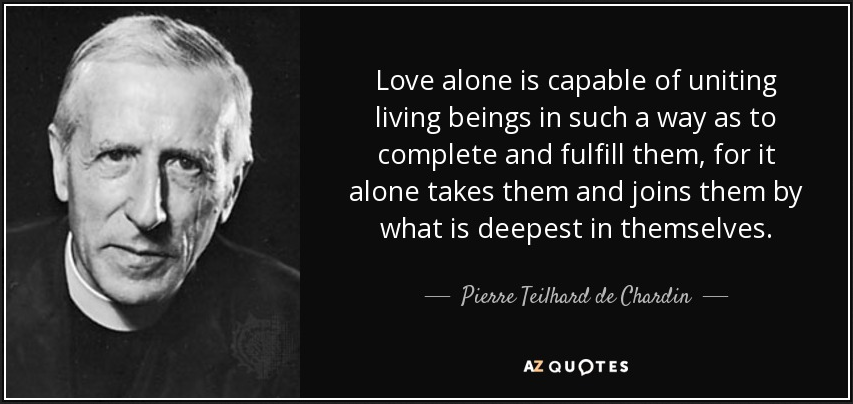
teilhard 2

THE SPIRITUAL PROBLEM (diagnosed for the Western church)

  1. Christian confession has rendered Christ as static figure
  2. Christ’s principal business is judgement
  3. Christ has become a law of life, instead of being a way of life
  4. Christ is portrayed as single, individual existent – static and absolute in space and time/ permanent and fixed
  5. The mystery of God has been locked into an externalised, single individual human person
  6. This individual, Jesus of Nazareth, has been rendered as the single individual superhero
  7. This reduces the rest of humankind as mere spectators to the divine drama
  8. The consequent doctrines of Original Sin and the Fall, have induced the Christian fixation on rescue religion and the need to be saved
  9. Which has created the radical and complete separation between God and creation

4 things:

  • Expansiveness, large heart
  • Decision to be faithful to the church despite harm – repeatedly blocked him from sharing philosophical writing
  • Church is about transformation not legalism
  • Vision is experiential – trusting his own experience

Mystical theology – full acknowledgement of revelation and full acknowledgement of personal experience across all sensory perceiving. Goal to be immersed in God like a drop in an ocean… guiding preoccupation with listening, personal experience of divine love… liberates!

Teilhard was a French palaeontologist and a Jesuit priest > stretcher-bearer “writings in time of war” Gave his spiritual works to a lay woman who published them! Teilhard was deeply distressed by the one sidedness of both science and religion, and by the unnecessary and tragic consequences of their bifurcation. .. devoted equal commitment to internal and external facts. His writing has had a profound effect on 20th century thinking across many disciplines: science, history, international development. Critiques: didn’t engage with other faiths, didn’t go ‘far enough’ into consciousness.

Genesis is an ongoing state of becoming > what is Christs role then? Christ is the driving loving energy of cosmogenesis. Teilhard: looking for Christ the evolver. Not King and Master outsider/adjudicator but Christ who fills and moves all things.

“By means of all created things, without exception,
the divine assails us, penetrates us, and molds us.
We imagine it as distant and inaccessible,
when in fact we live stepped in its burning layers.”

Evolution is the process if suffering > creation is groaning > has casualties. At cosmos and individual level (stars explode and new ones are born).

“Someday, after mastering the winds, the waves,
the tides and gravity,
we shall harness for God the energies of love,
and then, for a second time in the history of the world,
man will have discovered fire.”

‘to bear the sins of the guilty world’ means precisely, translated and transposed into terms of cosmogenesis, ‘to bear the weight of a world in a state of evolution. (Christianity and Evolution, p218-219)

The recognition that ‘God cannot create except evolutively’ provides a radical solution… to the problem of evil (which is a direct ‘effect’ of evolution), and at the same time explains the manifest and mysterious association of matter and spirit. (Christianity and Evolution, p179)

Christ must no longer be constitutionally restricted in his operation to a mere ‘redemption’ of our planet. (Christianity and Evolution, p241)

If a Christ is to be completely acceptable as an object of worship, he must be presented as the saviour of the idea and reality of evolution. (Christianity and Evolution, p78)

I can only be saved by becoming one with the universe. (The Heart of Matter, p78)

Development of consciousness – choice and decision-making > ethics

Something is wiped out and something else comes? Way we are broken open that are impelling is to grow. Earthquake – want to hold onto everything, for it to stay the same (building), cosmos says “No”, need to re-build, change, evolve. Progression vs. regression – want to lock it down to earlier ‘known’ state. Christianity wants to find a culprit, aggression and blame with preaching love that does not make sense to people outside the church. Not merely – sin will be made clean but an invitation to participate in the ascent of creation.

Have to experience something that will actually change us.
We are star dust.

stardust

Hubble Heritage Team/NASA/ES

“Above all, trust in the slow work of God.
We are quite naturally impatient in everything
to reach the end without delay.
We should like to skip the intermediate stages.

 We are impatient of being on the way to something
unknown, something new.
And yet it is the law of all progress
that it is made by passing through
some stages of instability –
and that it may take a very long time.

 And so I think it is with you;
your ideas mature gradually – let them grow,
let them shape themselves, without undue haste.
Don’t try to force them on,
as though you could be today what time
(that is to say, grace and circumstances
acting on your own goodwill)
will make of you tomorrow.

 Only God could say what this new spirit
gradually forming within you will be.
Give Our Lord the benefit of believing
that his hand is leading you,
and accept the anxiety of feeling yourself
in suspense and incomplete.”

038


  • Puts recommended reading lists in the back of his books – framed withn broader context.  Uses quotes and stories
  • Writes out of an experiential way of living
    • find God in place and memory
    • apprehend not truth about God but truth of God.

Six ideas about John O’Donahue’s writing:

  1. Circular ideas/prose.  Has one main theme with smaller ones around it like a celtic knot “eye of imagination follows a circle” not logical/rational/linear > miss the gift.  Risk/openness of circular way subverts this.  Won’t bear the scrutiny of reason.
  2. Not interested in reason but contemplation.  Always a movement away from itself.  Series of non-sequiturs. Read a little then pause and reflect.  Not along >>> but down. Quarter mile long, fathoms deep. “the eternal is at home within you”
  3. Contemplative world waits on the edge of things/imagination (light/dark, edge/centre). Realm of invisible. “Hidden 7th chapter” is silent and hidden within ourselves > a longing never stilled. “invests every action with possibility and pathos…” Prayer is an invisible world and contemplative.

Listen in the abyss of nothingness
for the whisper of the beautiful

4. Made up of these elements: body/landscape/transcience/memory. Body (trust/belonging); landscape (location, know and approach things and people); transcience (always passing away); memory (body, place and passing held together where our vanished lives remain alive – selective transfiguration)

5. Encourages us to break open and unpack internal and external landscapes e.g. root words. Break open familiar and see afresh. When we’re locked/blocked > impoverished. Remove the wall you have put between yourself and the light.

6. Seeks to find blessing. Invocation- calling forth… Calls for change and transformation.

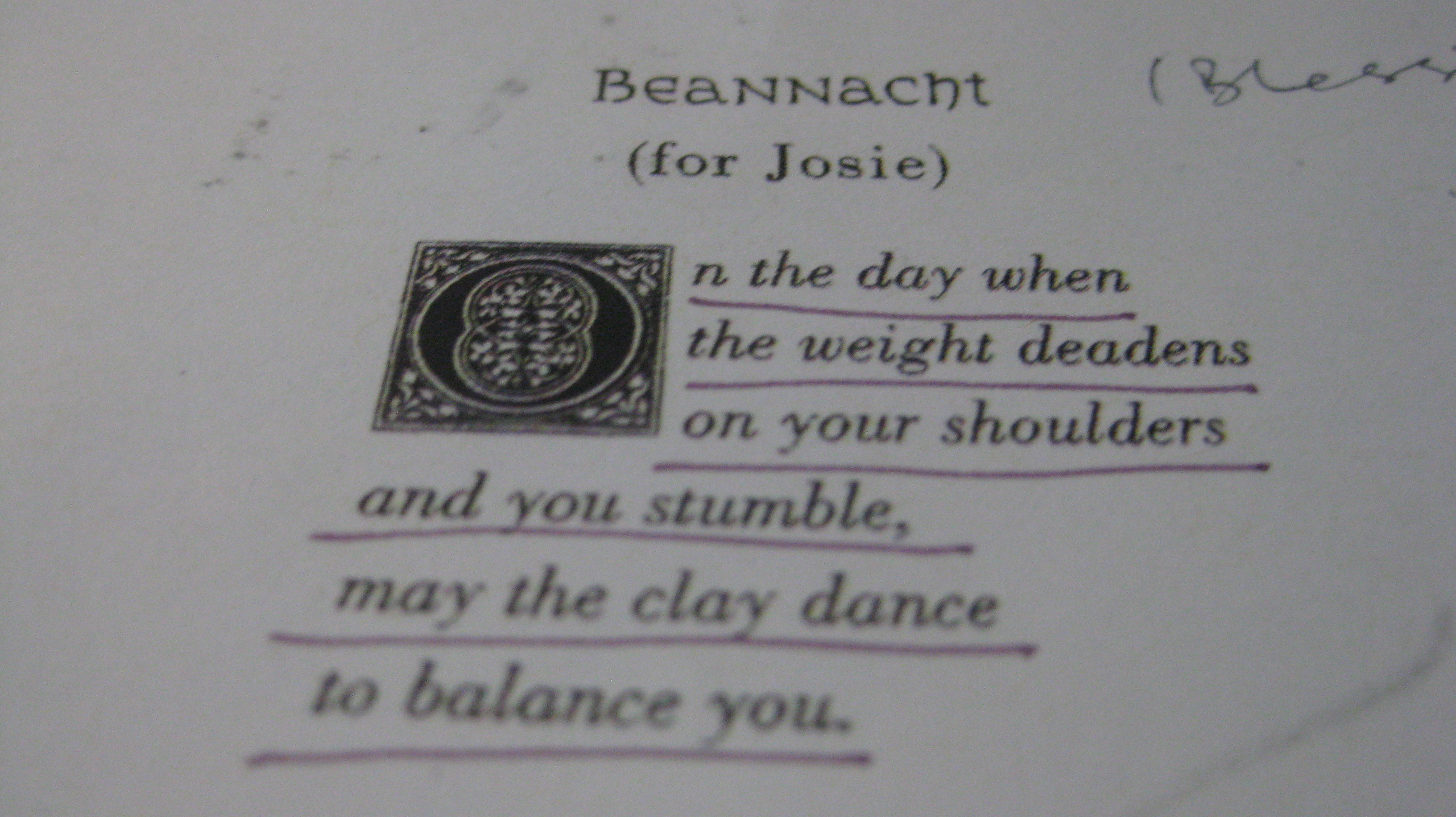
Beannacht

Summer 12-13 058On the day when
the weight deadens
on your shoulders
and you stumble,
may the clay dance to balance you.

And when your eyes
freeze behind
the grey window
and the ghost of loss gets into you,
may a flock of colours,
indigo, red, green
and azure blue
come to awaken in you
a meadow of delight.

when the canvas frays
in the curach of thought
and a stain of ocean
blackens beneath you,
may there come across the waters
a path of yellow moonlight
to bring you safely home.

May the nourishment of the earth be yours,
may the clarity of light be yours,
may the fluency of the ocean be yours,
may the the protection of the anscestors be yours.

And so may a slow
wind work these words
of love around you,
an invisible cloak
to mind your life.


A philosopy of Ducas

“The longing of a people is caught in the web of their language. Dreams and memories are stored there. A language in the inner landscape where a people can belong. When you destroy a people’s language through colonisation or through the more subtle, toxic colonisation of consumerism, you fracture their belonging and leave them in limbo.  It is fascinating how a language fashions so naturally the experience of a people into a philosophy of life. Sometimes one word holds centuries of experience; like a prism you can turn it to different angles and it breaks and gathers the light of longing in different ways… the phrase ‘ag fillead ar do ducas‘ means returning to your native place and also the resdicovery of who you are.  The return home is also the retrieval and reawakening of a hidden and forgotten treasury of identity and soul.  To come home to where you belong is to come into your own, to become what you are, to awaken and develop your latent spiritual heritage… Ducas also refers to a person’s deepest nature. It probes beneath the surface images and impressions of a life and reaches into that which flows naturally from the deepest well in the clay of the soul. It refers in this sense to the whole intuitive and quickness of longing in us that tells us immediately how to think and act; we call this instinct… You belong to your ducas; your ducas is your belonging. In each individual there is a roster of longing that nothing can suppress.”

Summer 12-13 052


The Stranger (Eternal Echoes)

“It is impossible to be on the earth and avoid awakening.  Everything that happens within and around you calls your heart to awaken.  As the density of night gives way to the bright song of the dawn, so your soul continually coaxes you to give way to the light and awaken.  Longing is the voice of your soul; it constantly calls you to be fully present in your life: to live to the full the one life given to you.  Rilke said to the young poet: ‘Live everything’. You are here on earth now, yet you forget so easily. You have travelled a great distance to get here.  The dream of your life has been dreamed from eternity. You belong within a great embrace which urges you to have the courage to honour the immensity that sleeps in your heart.  When you learn to listen to and trust the wisdom of your soul’s longing, you will awaken to the invitation of graced belonging that inhabits the generous depths of your destiny.”

Summer 12-13 133

MATINS

I.

Somewhere, out at the edges, the night
Is turning and the waves of darkness
Begin to brighten the shore of dawn.
The heavy dark falls back to earth
And the freed air goes wild with light,
The heart fills with fresh, bright breath
And thoughts stir to give birth to colour.
II.
I arise today
In the name of Silence
Womb of the Word,
In the name of Stillness
Home of Belonging,
In the name of the Solitude
Of the Soul and the Earth.

I arise today

Summer 12-13 160
Blessed by all things,
Wings of breath,
Delight of eyes,
Wonder of whisper,
Intimacy of touch,
Eternity of soul,
Urgency of thought,
Miracle of health,
Embrace of God.
May I live this day
Compassionate of heart,
Gentle in word,
Gracious in awareness,
Courageous in thought,
Generous in love.


Non violence is a weapon for the strong – Mahatma Ghandi

Non violent communication (NVC) is base don the principles of nonviolence – the natural state of compassion when no violence is in the heart.

NVC begins by assuming that we are all compassioante by nature and that violent strategies –  whether verbal or physical – are learned behaviours taught and supprted by the prevailing culture.  NVC assumes that we all share the same basic human needs, and that each of our actions are a strategy to meet one of more of those needs.

People who practice NVC have found greater authenticity in the communication, increased understanding , deepening connection and conflict resolution.

(Further reading: Non-violent Communication by Marshall B Rosenberg)

We are made in the image of God > compare Christian creations story with others.  We are created in the image of a Creator. This has been co-opted by empire – trying to sell clothes, make up, some ideal image – they are trying to sell something I already have.  The world and earth are alive and creating always. There is a scientific link between art/creativity and healing… when you are writing a story, cooking, drawing, gardening… we are not functioning out of the survival part of our brain.  Importance isn’t what is made but the process of creating.

024

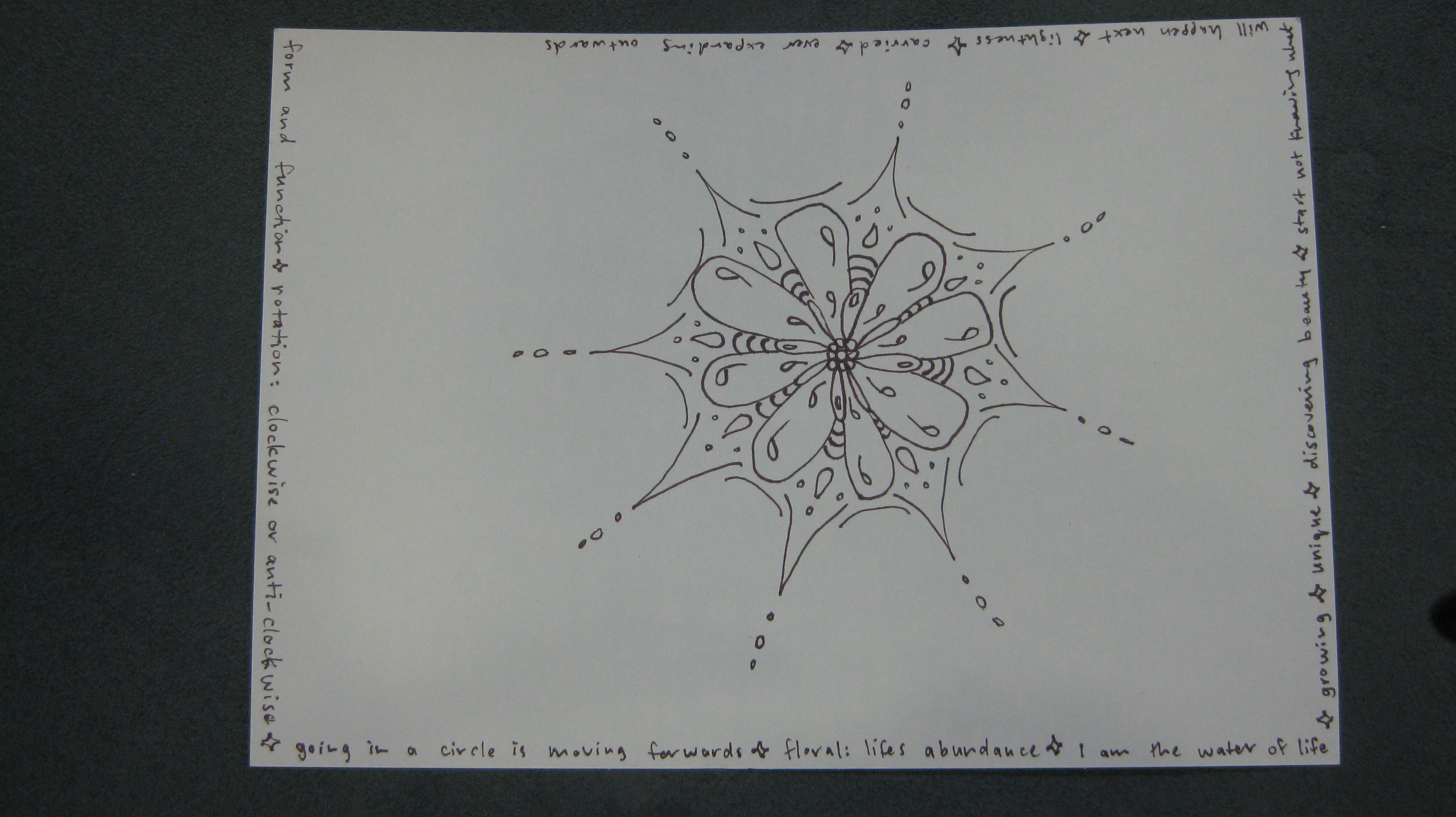
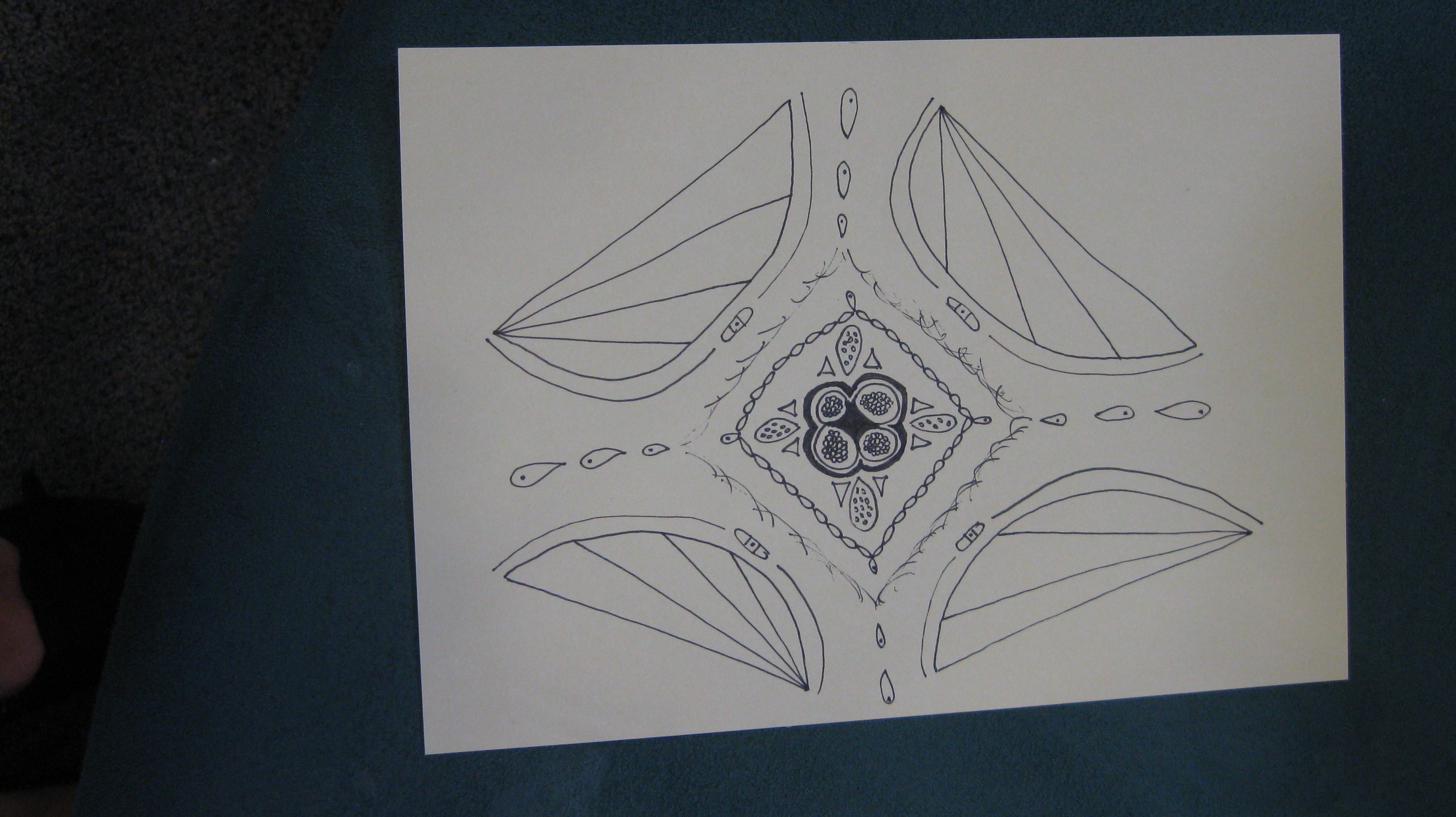
MANDALAS

The Mandala (Sanskrit for circle or completion has a long history of being recognised for a deep spiritual meaning and representation of wholeness.

The very nature of creating a mandala is therapeutic and symbolic.  The shapes and colours you create in your mandala will reflect your inner self at the time of creation.  Your instinct and feeling should inspire and guide you through the process of creation.  Ultimately, you will be creating a portrait of yourself as you are when creating the mandala.  So whatever you are feeling at the time, whatever emotions are coming through, will be represented in your mandala.027

So then, how shall we live?

Practices and principles for compassionate, non-violent communication

Proposition: We are made in the image of God, therefore if I am careful and I am creative, exploring who you are and revealing who I am can be an act of worship (our communication)

First issue is realising our reaction to what we perceive as agression or conflict… this is not right or wrong this is just how we are made:

  • fight or flight
  • non-verbal agression
  • tone and inflection

Colossians 1:18-20

He was supreme in the beginning and – leading the resurrection parade – he is spreme in the end. From beginning t end he’s there, towering far above everything, everyone.  So spacious is he, so roomy, that everything of God finds its proper place in him without crowding.  Not only that, but all the broken and dislocated pieces of the universe – people and things, animals and atoms – get properly fixed and fit together in vibrant harmonies, all because of his death, his blood that poured down from the cross.

Basic technique:

  1. Observe (without judgement)
  2. Share our feelings
  3. Sharing what needs, values or desires have created our feelings
  4. Requesting (a concrete action we are requesting to enrich our humanity)

Stumbling blocks: judgements, comparisons, denial of responsibility, demanding.

004

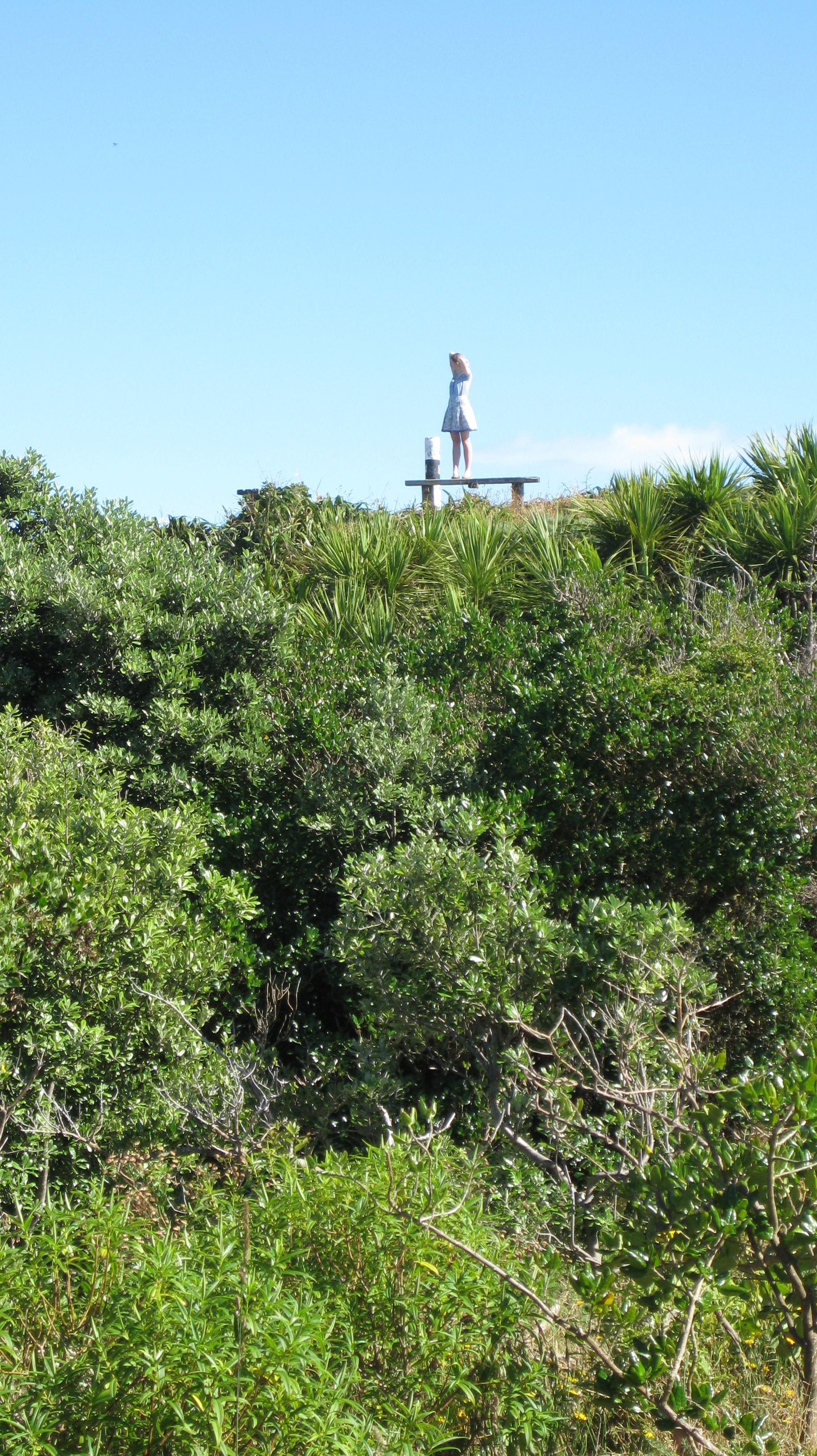
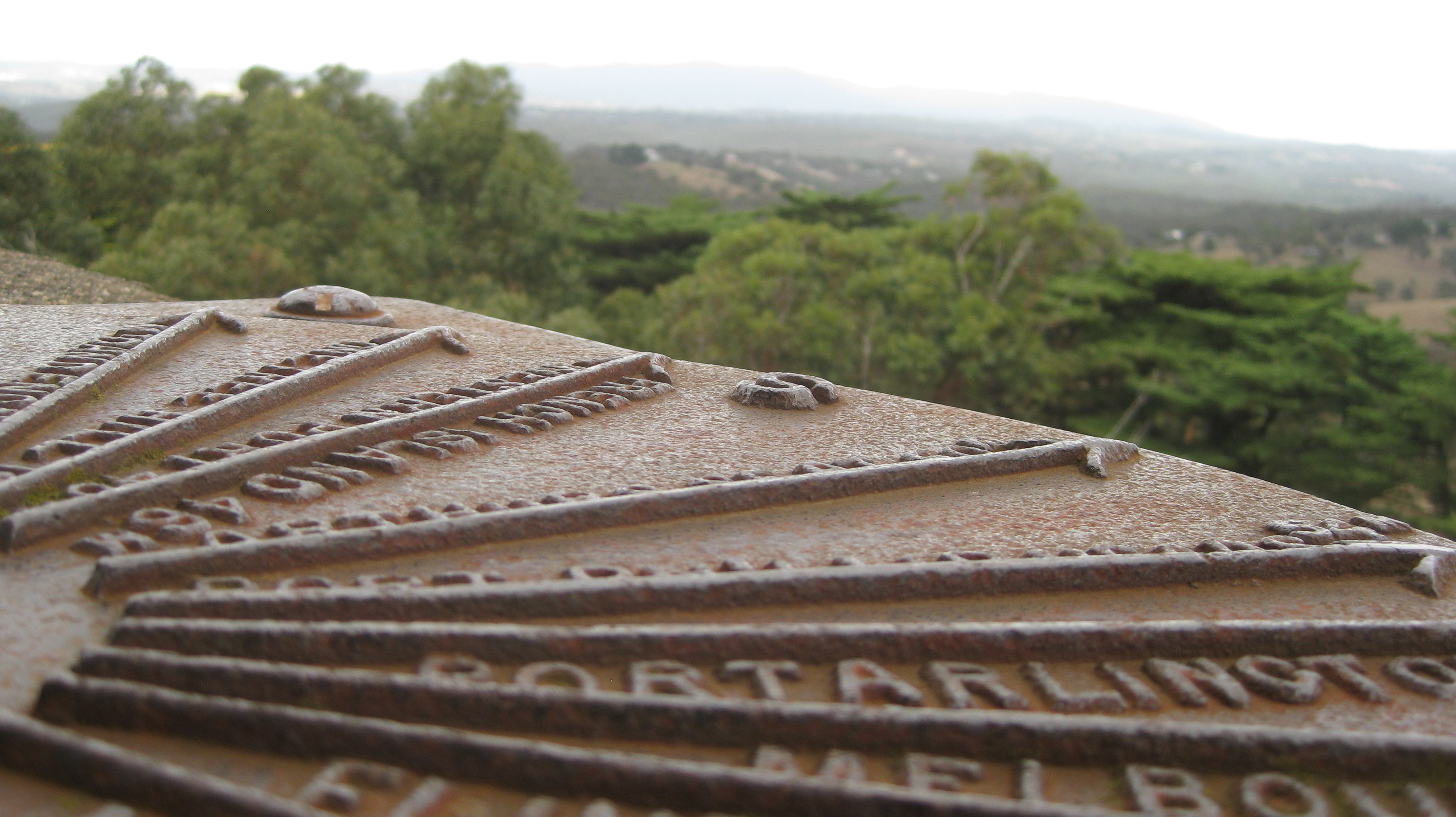
007012011Eltham War Memorial Tower & Park at Kangaroo Ground in Melbourne

What does it mean to look out?
How does/can it change your perspective to feel above things? to understand their size in the order of things?
Do you feel a sense of space and freedom when in the wilderness?

Try physically placing yourself where you need to be to get what you want in terms of headspace.

020

Western culture is at a turning point. Christendom forms of church (churches organised according to the machinery and mindset of empire) are dying, but spirituality increases.  What can Celtic models of spirituality offer?

Roots, rhythms and relationships
deep enough to provide common ground.

Jesus came to confirm what is true and purify what isn’t – Jesus does that, not you.
Are you spiritual or are you religious?
Church preaches kingdom but doesn’t model.  Homes model but don’t preach.  Need: little villages. CHurch that knows Sunday is not enough.

hub

Tribal leaders gave lands by the strategic highways of sea and river to church planters who established communities of daily prayer, education, hospitality and land care.  Peoples monastery churches served as daily prayer base, school, library, scriptorium/arts centre, drop-in, health centre.  They had farms with livestock and crops, workshops such as wood, spinning and milling. They were open to the world.  They offered soul friends, training and even entertainment.  Children, housewive, farm workers and visitors would wander in and out.  Visitors bought news from overseas.  They were villages of God.  Each had its wn flavour in worship and values (Rule) yet each was connected with the univvrsal church through common prctices, prayers, and priests ordained in the apostolic sucession.

today’s changing trends

Although our society is vastly different, changing trends again require churches that are more than single-building Sunday-only congregations.

  • A twenty four hour society calls for seven day a week churches
  • A cafe society calls for churches that are eating places
  • A travelling society calls for churchesthat provide accommodation and reconnect with the hostel movement
  • A stressed society calls for churches that provide spaces for retreat and meditation
  • A multi-choice society calls for churches that have a choice of styles and facilities
  • A fragmented socitey calls for holistic models and whole life discipling
  • An eco-threatened society calls for more locally sustainable communities.

“Can’t have deep ecology without deep spirituality” – John Phillip Newel.

The glory of God is seen
through the human life fully lived.

Need self-sustaining spiritual disciplines.
“Our hearts are restless until they find their rest in you Lord” – Augustine

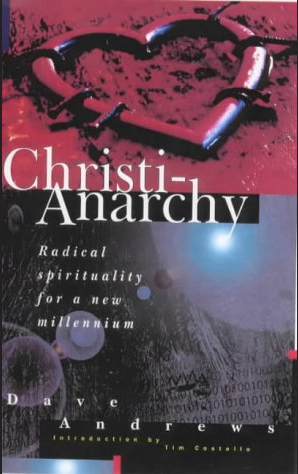
christianarchyJesus Christ preached a gospel of love and peace with justice. But the history of the Christian religion is littered with every kind of evil. What went wrong?

If you have ever wondered – how can anyone choose to be “Christian” when so much harm has been been done in the name of the church? I can only say 1) that’s a very good question and 2) Dave Andrew’s has creditably tried to answer it.  It’s not enough to say: “Well, I didn’t do those things…” these stories form part of the history we are a part of and it is only when we know and accept that story that we can understand and speak for our place in it.

Literally, “Chapter 1 – A History of Christianity: A History of Cruelty” is a history of the faith spanning 4 eras:
-Councils, Creeds & Coercian: ca. AD 100-500
-Emperors, Popes & Power: ca. AD 500-1000
-Crusades, Inquisitions & Control: ca. AD 1000-1500
-Worldwide Evangelism, Witch Hunts & Genocide: ca. 1500-2000

Dave Andrews also talks about how his connection with the YWAM community broke down.

If you are working to reconcile brokeness with grace, to understand why you should (or anyone would) persist in the pursuit of faith when church/religion/community can disappoint you and let you down then this is a good read albeit a confronting one because it goes there, looking at the ugliness… (I’d recommend reading it with others or at least at time you are feeling strongly rooted/centred in your faith because it IS confronting)

(p.152) “When Christ was crucified, the hope of his diciples, that they actually might have been able to build a better world together, was totally shattered… Jesus was dead.  And all their hopes were buried with him.”

In a complete plot spoiler, I’m about to tell you how it ends (so feel free to skip this and buy the book) with Dave Andrew’s conclusion and call to live the Way of Christ as it was intended:

(p.167-169) “Christ calls us to be a network of residents working towards community in the localities where we live, so as to realise the love of God for all people, particularly those on the fringes of our society. Christ himself is our example, and his spirit serves as the inspiration for the simple, practical, compassionate path he wants us to take, regardless of the difficulties along the way.
His expectation is that we would not slavishly copy him, but voluntarily make the same kind of choices that he made, and that he encouraged his diciples, like Peter, to make: to accept life, to respect life, and to empower people to live life to the full.
Christ calls us to know God, the surce of all life, more fully, and to cultivate the disciplines that will help us to develop a relationship to God in the midst of our ordinary everyday lives.
He calls us to live in sympathy with the heart of God, sustaining ourselves, supporting one another, and serving those around about us, in an increasingly steadfast, faithful and life-affirming manner.
Christ calls us to be aware of ourselves, and the gift of life, that each of us can bring to the community.
He calls us to scknowledge not only the reality of our brokenness, but also the potential for wholeness in our relationships, and our responsibility to grow collectively as people, in our capacity to speak truthfully, listen attentively, and work co-operatively, for the sake of the community.
Christ calls us, over and over again, particularly to remember those people in the community who are forgotten, who are rejected, neglected and ignored.
He calls us to affirm our commitment to the welfare of the whole of the human family, and to make ourselves available to brothers and sisters who are marginalised, in their ongoing struggle for love and justice.
Christ knows we disagree about many things, if not most things, but he wants us to agree on at least oen thing: the need for us to join together to develop communities in our localities that reflect his compassion by being more devoted, more inclusive and more non-violent.”

010– poetry + aesthetics + theology = theopoetics
– if theology is logical applied to God then theopoetics is poetry applied to God
– sense of place and spiritual quest = songlines

Poetry is ontology – Rowan Williams

Work of love. Poet is a seer/prophet/the songman > the paths we must take and sing in order to renew the world. “This becomes obvious the closer you are to death… I do not aspire to anything anymore except to be invaded by the roses in the garden”.

In the end end it’s a journey of imagination.

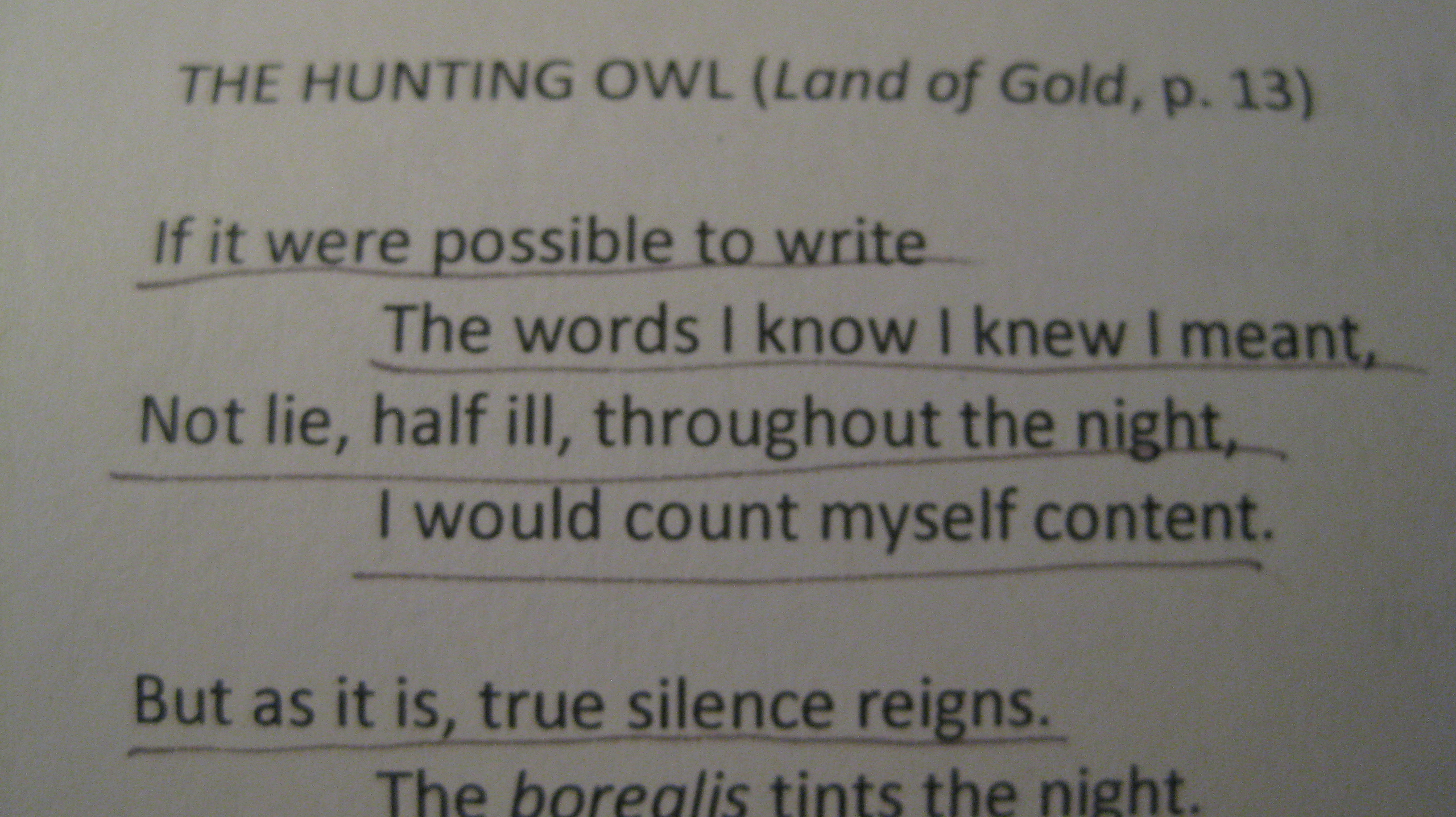
HOMO SAPIENS (Land of Gold, p.21)

If, to be alive, I am alive,
And if the witness to this
Is I, myself, watching the grass grow,
What is the meaning of the river?

Why does it sparkle, why does it twist?
In a slow meander, why do the weeds
Grow into islands, why is the sun
Sucking it into the sky?

Long have I dreamed
On the borders of creation
But seldom have I seen
The meaning of the river.

Now it is clear,
Established by the ages,
The river is myself,
An artery of the sky.

Sebastian Barker

005The Purpose behind questions is to intiate the quest ~ Phil Cousineau

Think of a question to ask your inner monk, your inner artist, and the two of them together.

  *   *   *

I am going to start living like a monk…

My body will be attuned to the rhythms
of the seasons and the sacred
Grace will be found in simplicity
and in profound complexity too
the flowers will be my incense and
the canopy of dappled shade the
high arches of my chapel
I will kneel there – in good earth
daisies to dust


I am going to start living like an artist…

I will listen to my body more –
not only my doing-hands but
my dancing-feet, my oustretching-arms,
my glad-heart…
I will live in and move to the
resurrection given to me new
every morning I will learn to move
like water, like butterflies and
be still like stones and breeze-stirred flowers
asking for nothing except to be accepted
for what we are.
I will learn new ways to find You,
new ways to follow You,
I will learn anew.

I am going to start living like a mystic…

In the beginning was the Word and
the Word was made flesh, my body
broken for You will speak more
loudly than my lips could ever argue
my silence in solidarity will speak more
than my suppressed, silent sexuality.
The prayers are my knowing You and
You knowing me and give shape to
the extent of my ignorance…
this will burn on a cairn made in
my watershed with these two hands
an offering, a confession, a covenant.