
This weekend some friends and I did a hike in Kinglake National Park finishing at Mason Falls. The conversation was as wide ranging as our footsteps, as we were washed by rain and the knowing that the world is beautiful… beautiful.


This weekend some friends and I did a hike in Kinglake National Park finishing at Mason Falls. The conversation was as wide ranging as our footsteps, as we were washed by rain and the knowing that the world is beautiful… beautiful.
Submissions to the Australian Collaborators in Feminist Theologies call for papers are due tomorrow and the words for the theme play over in my brain, “Power, Authority, Love: Write, Rite, Right”.
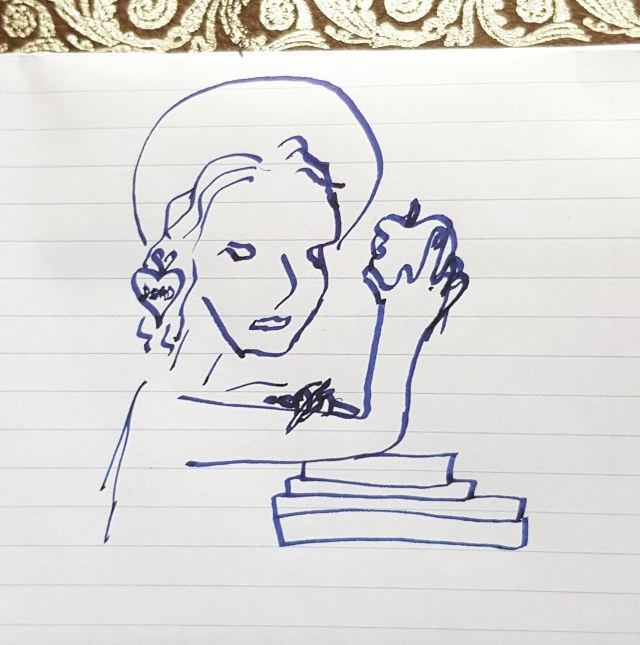
I’m not great at drawing but this sketch came to me this morning… my first attempt at icon arrives as an Eve figure with attitude.
She’s not taking any of your crap or blame and she hates it when people say: “I’ve never thought about it like that before” in a condescending tone as if a woman doing theology was as much a marvel, or as clever, as a dog learning to rollover. She is smart, she is strong, she sees right through you and in her deep well of silent appraisal is your sinking self-awareness. Check it – those earring are available from Haus Of Dizzy.
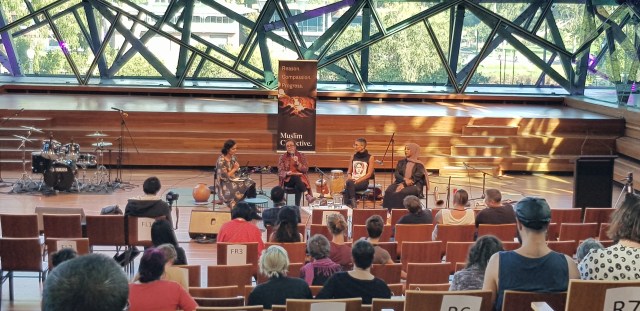
Salam Fest 2019 Artist Panel: Hanifa Deen award winning author, visual artist Ms Saffaa and Asia Hassan, creative director of ASIYAM clothing.
Hanfia Deen
Ms Saffaa
Hanifa Deen
Hanifa Deen
Ms Safaa
Asia Hassan
Hanifa Deen
Asia Hassan
Hanifa Deen
Asia Hassan
Ms Safaa
Any advice?
Asia Hassan
Ms Safaa
Hanifa Deen
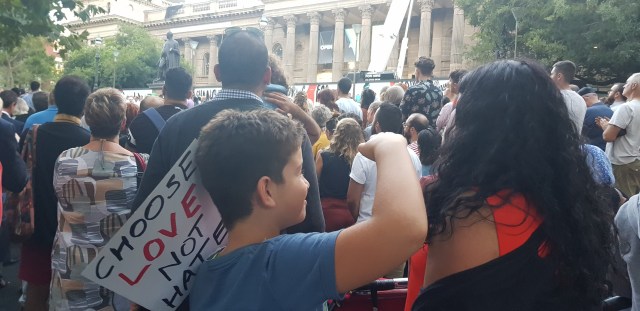
Images and moments from the Christchurch vigil in Melbourne hosted by the Islamic Council of Victoria at the State Library… #chooselovenothate
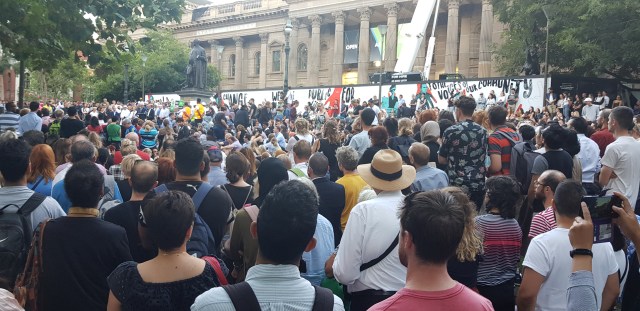
Muslim, Jewish, Sikh, Buddhist, Christian, Hindu and other religious leaders led those gathered in prayer.
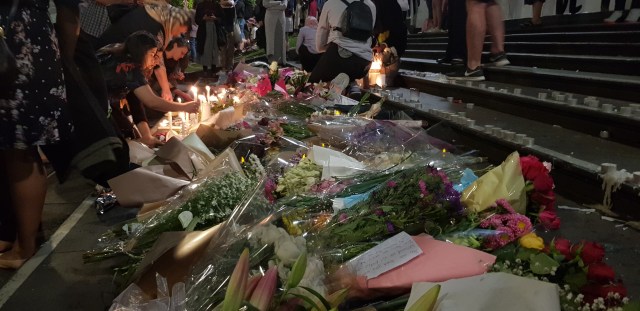
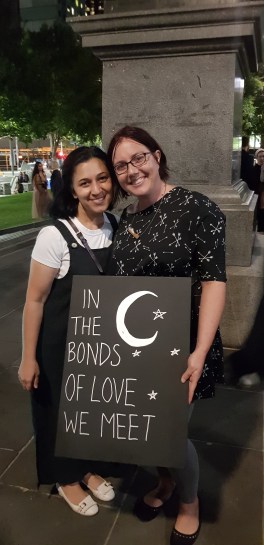
K and I meet early in the vigil when she invites me to stand with her family.
K: I think New Zealanders are taking it harder actually. Muslims… we’re used to it. When I first heard, I assumed it was Muslims against Muslims. I guess we’re desensitized maybe. Things like this happen to Muslims all the time.
T: But how awful… that this should happen so often that you could become desensitized to it. Things like this rarely happen in NZ.
K: For us, they are all martyrs.
T: Is it an honour, to die this way?
K: No… It is still a pain. It means a lot that New Zealanders feel that with us… are you from Christchurch?
T: No, Wellington. But I still feel it. What you need to understand about us is that once you’ve welcomed someone onto the marae, they’re not a guest anymore – they’re family. I don’t need to have ever met them. This week all New Zealanders grieve because we have lost members of our family.
…we hug, and stand together through the vigil.
They say from the front, if you’re comfortable, hug or shake hands with the people nearest you, and in this moment: all Muslims are hugged, all Kiwis are hugged. I hope you feel that.
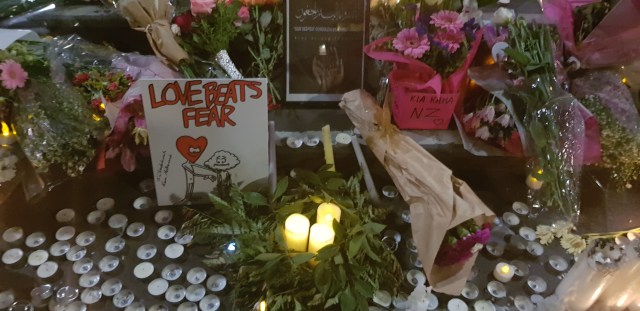
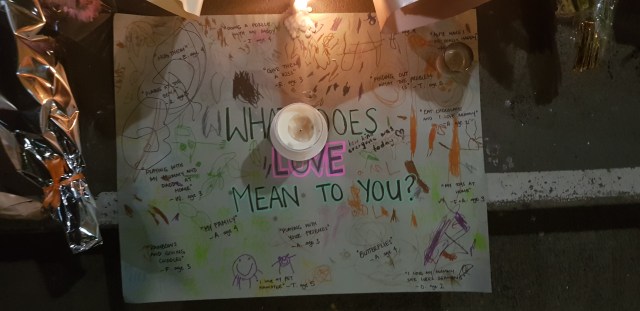
A group of us sing – Muslims and Kiwis together… Te aroha, the national anthem in English and Maori “…in the bonds of love we meet“, Dave Dobbyn’s Welcome Home and John Lennon’s Imagine… what an extraordinary and beautiful thing to come of something so awful.
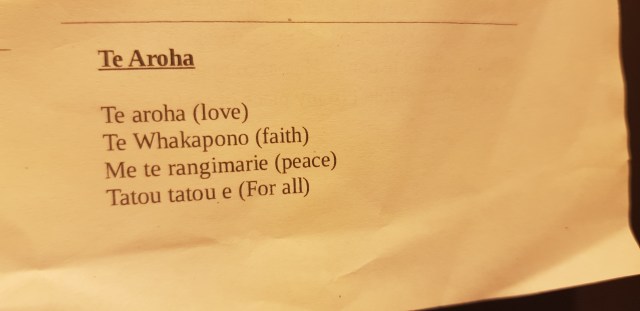
Tutira mai nga iwi, (Line up together, people)
tatou tatou e (All of us, all of us)
Tutira mai nga iwi, (Stand in rows, people)
tatou tatou e (All of us, all of us)
Whai-a te marama-tanga, (Seek after knowledge)
me te aroha – e nga iwi! (And love of others – everybody!)
Ki-a tapatahi, (Be really virtuous)
Ki-a ko-tahi ra (And stay united)
Tatou tatou e (All of us, all of us)
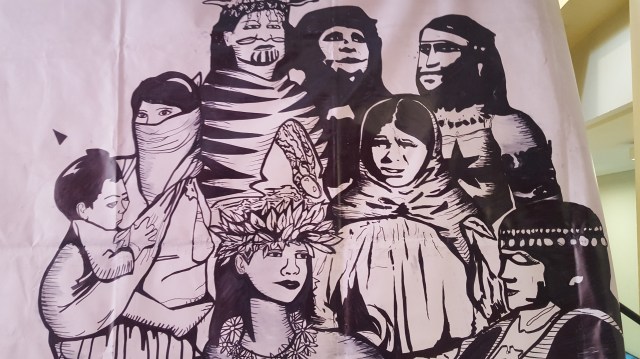
MASIL is a historic exchange between Indigenous Mapuche activists in Chile/Argentina and Aboriginal activists in Australia.
The goals of the MASIL Project are:

![20181103_133719[1]](https://i0.wp.com/itellyouarise.com/wp-content/uploads/2018/11/20181103_1337191.jpg?w=316&h=178&ssl=1 "20181103_133719[1]")


I don’t much like looking in mirrors. I find them critical, unkind and discomforting because the image there seems to confront me with all the things I am not: skinny enough, beautiful enough, skin imperfection-free, hair-free… the world tells me in a myriad of ways this is my truth. In fact, the capitalist economy relies on me believing this. The reflection I see seems so distorted – how am I to know myself as holy and whole? I’m not called to a deficit existence but one of abundance. Made by God and belonging to God. Cheryl Lawrie’s beautiful poem invites us to remember and re-member ourselves through the power of raw grace.
We are each of us made in the image of God. God knitted us together and we are made as we were intended to be. A special mention here to those LGBTIQ+ identifying whose personhood has experienced base-abnegation by the church, particularly throughout the recent plebiscite debacle. I would pray for your wounds but its really not you I think are broken. Please don’t ever doubt that you are wanted and loved.
In his book, Our God Is Undocumented, Ched Myers tells us to share communion in order to “Remember what has been dismembered. (p.200) Whenever you ingest this memory, said Jesus on the eve of his execution, you join yourselves to our historic struggle to make the broken body whole. It was, and is, both invitation and imperative, equally personal and political. If we refuse to heed it, we are doomed to drift forever on or be drowned by the tides of empire, refugees all.”
I don’t go to church or and belong to a community, in this way I am perhaps a refugee, but I enjoy regularly observing the ritual of communion by myself at home, 1) because I believe absolutely in this invitation to wholeness – for myself and others and 2) I frequently garnish my communion with cheese. I f**ken love cheese.
As with most queries for which I have no answer, I try and pray my way through and that went a little something like this…


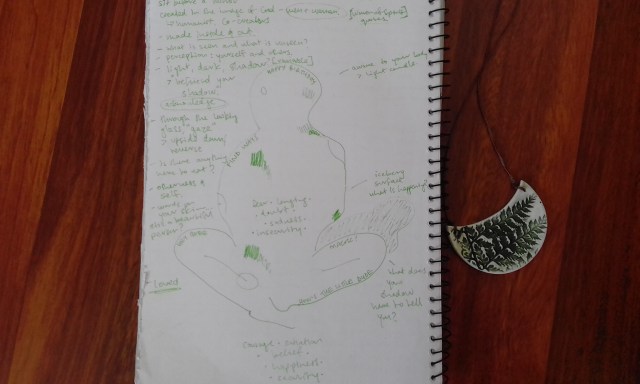
As I reflected on my culturally and societally-imposed, as-is, identity I found myself focusing on those imperfections – the scars, the stains, the marks… it felt powerful to name those things that sit at the centre – fear, longing, doubt, insecurity, hunger, desire, hope… I juxtaposed this with some bible text to explore how it might reframe some of that thinking and was pleasantly surprised by the strength of the invitation to raw grace. I remember and am re-membered.
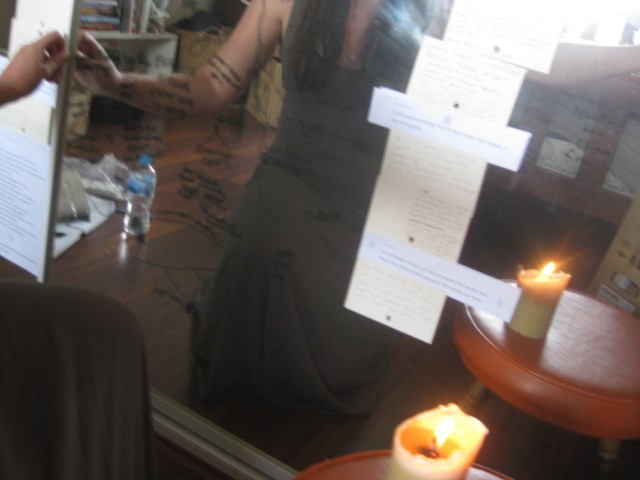
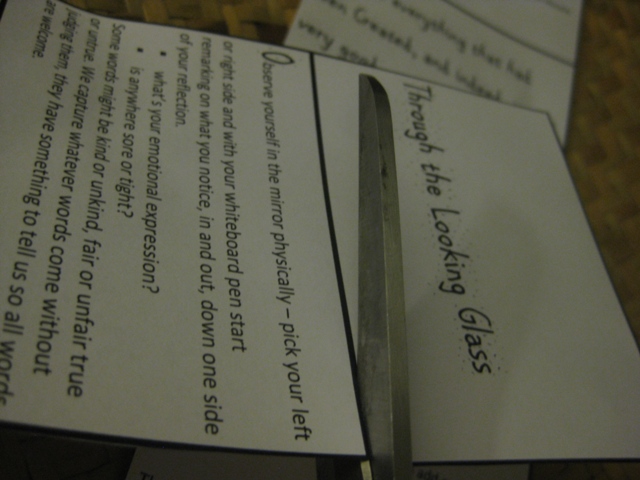
I’ve had a bit of a go at packaging this up as a DIY reflection activity… get in touch if you want to be a guinea-pig. The beauty of the invitation to the communion table is not being limited to a plus-one.
Let me leave you with a psalm by New Zealand author Joy Cowley by way of benediction:
Dear God,
I need to see myself
as you see me.
My own vision is fragmented.
I try to divide up my life
and reject those parts of me
I consider to be weak.
I waste time and energy
in the battle of self against self
and Lord, I always end up the loser.
Dear God,
help me to see myself
as you see me.
I forget that you made me just as I am
and that you delight in your creation.
You do not ask me to be strong;
you simply ask me to be yours.
You do not expect me to reject my weakness,
merely to surrender it to your healing touch.
Dear God,
when I can see myself
as you see me,
then I will understand
that this frail, tender, fearful, aching, singing
half-empty, shining, shadowed person
is a whole being made especially by you
for your love.


 itellyouarise