Latest Entries »

IMG_5825

IMG_5826IMG_5821


IMG_5824


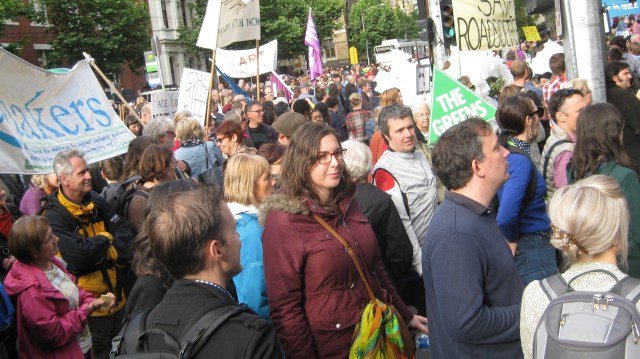
All the signs, front and back, seem to be indicating this climate change thing is something that anyone and everyone can get behind.  That everyone should get behind.  Action on climate change is a demand for justice for our children, grandchildren and future generations and also, here in this place, I think, a demand for justice for the indigenous people of this land who have lived in tune with and attuned to country since time immemorial.  The traditionally acquired knowledge of our elders, their understanding of the interconnectedness of things, must surely have wisdom to offer and we must humble ourselves to the wilderness that cries out against its bondage to decay.

I imagine a time in the future when talking about flushing potable water sounds like heresy, when running under sprinklers in the summer sounds like a fairytale, a time when a child asks me:  “But if you knew, why didn’t you do anything?”

It is little enough.

Today: “Across the globe, 785,000 people in 175 countries hit the streets at more than 2,300 People’s Climate March events. That’s three quarters of a million people. And in Australia, we came together in record breaking numbers in more than 50 towns and cities right across the country to show the world just how much we care.” (www.peoplesclimate.com.au)

With our bodies, with our feet, outside, we seek to be a face to and give a voice to creation at the UN climate change summit in Paris, to our own government and politicians, to those who don’t believe its real. …that will sound like the start of a joke but it isn’t.

It is little enough.  Too little probably.  The least we can do, certainly.

IMG_5822

IMG_5810

IMG_5802

IMG_5804

IMG_5678

Welcome, we acknowledge that we gather on the land of which the people of the Kulin Nations have been custodians since time immemorial.

This is our fourth in a series called The Art of Discipleship where we showcase the material of different books and engage with their material creatively.

WEEK FOUR

The activity this week is taken from:

Women of Spirit: Woman’s Place in Church and Society

This Australian book by Janet Nelson and Linda Walter looks at how church and society both have ways that they tells us what  we are and aren’t supposed to do and how we are and aren’t supposed to look.  How can we reinterpret our self-esteem and identity understanding ourselves to be made in the image of God?

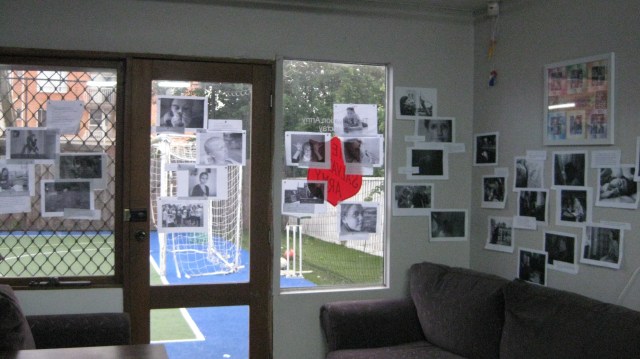
As has been done before, in a Seeds small group and a Women’s Circle at Surrender, images of women doing sacred ordinary things are blu tacked around the room with bible verses referring to women, where God is speaking to women and where “feminine” metaphors are applied e.g. God: “As a mother comforts her child, so I will comfort you; you shall be comforted in Jerusalem.” (Isaiah 66:13) or “How often have I desired to gather your children together as a hen gathers her brood under her wings, and you were not willing!” (Matthew 23:27).

This time we also had images of men juxtaposed with this “feminine” language and imagery.

So we had a time of some music playing while people walked around the room ( a reflection space created with pictures, bible passages, mirrors) immersed in these images and words and people were invited to grab a verse or image if it spoke to them and bring back and sit when they were ready.

  • What stands out?
  • What jars? What resonates?
  • What image/text do you have? – tell us about it

Read the story of The Bunyip of Berkeley’s Creek (a theme of the main book)

  • What does it mean to dwell in this idea that: God delights in you!!?
  • Where do you look for your identity? Sense of self?

“If this is my experience, it means that something of the greatest importance is happening.  It means that God is inviting me to discover “Him” no longer as another beside me but as my own deepest and truest self.  He is calling me into the experience of meeting Him to the experience of finding my identity in Him.  I cannot see Him because He is my eyes.  I cannot hear Him because He is my ears.  I cannot walk to Him because He is my feet. And if apparently I am alone and He is not there that is because He will not separate His presence from my own.  If He is not anything at all, if He is nothing, that is because He is no longer another.  I must find Him in what I am or not at all. (Williams 1976)” p.171

How might seeing yourself in the image of God change your life/the way you live?

Using a camera, take some pictures of yourself – not a “selfie” that is about looking your best/who you’re with/what you’re doing but perhaps some part of your body you feel critical of, somehow a part that captures your ‘self’that you might feel critical of – scroll back through the images you have taken and prayerfully try and hear what God is saying to you in the mix of how you feel about yourself.

IMG_5679.JPG

IMG_5115

People can share their photos (if they feel comfortable to do so).
Discuss how the exercise makes you feel or what it gets you thinking about.

Close with the ‘Greeting Circle’ from p.194  – go around the circle blessing each person.

Blessed are you among wo(men) ____________________ [name]
For you have found favour in God’s sight.


IMG_5514


“For me, the activist poem is a performative activist poem: one in which action is an implicit part of the writing, delivery, and hopefully the reception of the piece… the poem becomes a literal act with cause and effect. Its action cannot be denied because it is an implicit part of its creation (and delivery).”

John Kinsella

Aunty Carolyn did the Welcome to Country at the Emerging Cultural Leaders event at Footscray Community Arts Centre tonight.  She said:

“This is sacred land. One of the oldest existing.  Watched over by Bunjil the Eagle on land and Waa the Crow protects the waterways.  We are to respect the land, not destroy, and respect those to whom this country belongs.  Creation itself is sacred, so when we participate in right relationship, we participate in what is sacred… profanity is setting yourself against Creation. In being willfully blind we are supporting what is profane. By wasting food and water when others have none.  We don’t want to be discomforted or put out… there’s something sacred in being discomforted rather than doing what everyone else does.  Assimilation is just another word for massacre.”


emerging cultural leaders

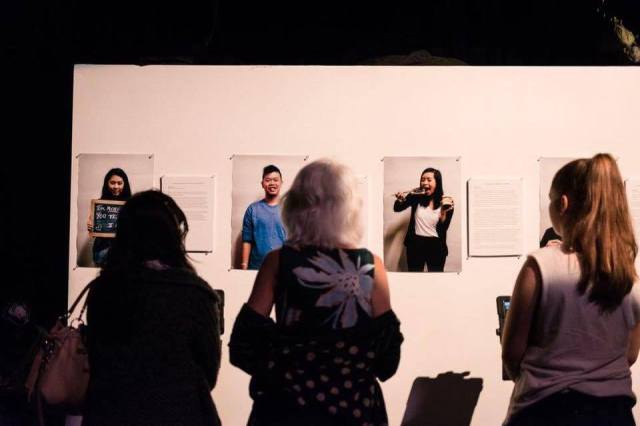
Photo credit: Minh Nguyen

Loved to have this introduction and ideas of belonging, culture, identity and place in shared space with my friend Minh’s installation piece…

BIO:  Minh Nguyen is currently completing her Masters of Applied Psychology. Her dissertation research explored constructions of ethnic identity amongst second generation Christian-affiliated Vietnamese in Melbourne. She found that through the negotiations between social relationships, and within one’s location in society, participants created a ‘different kind of Australian’ identity that accessed resources from the surrounding environment, their parent’s culture and experiences of racism and exclusion. This study provided an account of Vietnamese Christian identity construction, a particular historical, cultural, and social location within the complex world.

PROJECT: Immigrants are continually challenged by issues of settlement, sense of belonging, exclusion and identity construction.  These issues are also important life challenges for the children of immigrants, the second generation and the generation thereafter.  Chopsticks and Vegemite explores the identity construction of four people from a young Christian affiliated Vietnamese called Night Church.  Unlike their parents, they create their identities and evaluate themselves in relation to the structures and ideologies of the new society, in addition to the memories retold of their parents’ birthplace.  

IMG_5798


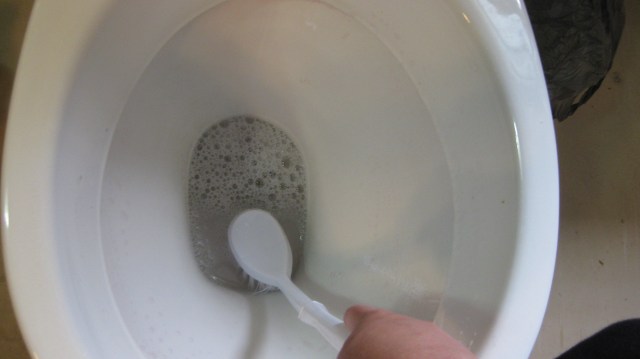
If cleanliness is next to godliness then I am a sinner indeed.

There is is difference between cleaning out of a sense of duty and as an act of love.  When its an act of love it’s a lot less unpleasant for one thing, you approach it differently because it’s an opportunity not a chore.  How can I show you that I love you well today?  How often do people ask themselves that question?

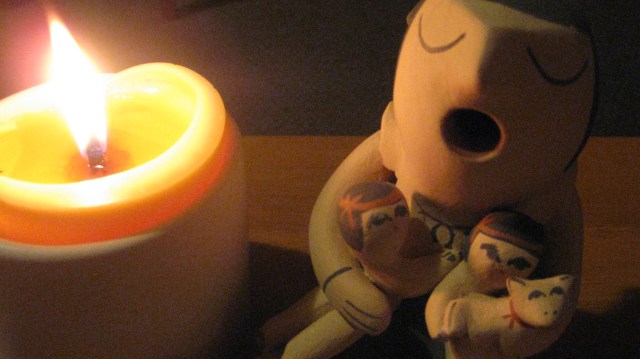
I was thinking today that if my body is not sacred or profane then I make it an object… a gun is not sacred or profane in and of itself but how it is used.  If you asked me to think of a sacred object I think I would struggle.  It seems a word belonging to past times when a church or an icon of some kind might be called sacred.  What is “sacred”?  Something employed only for the glory of God?  What is “only”?  What is the glory of God?  Credo was sacred – not clean, tidy or holy necessarily but sacred.  Are the churches that hire out as function spaces more profane?  As long as >50% is for the glory are we doing ok? Cleaning the bathrooms can be a sacred act if it is done as an act of service and expression of love.  Nothing I eat or drink can profane my body… there is a new law.  What else can I do, or not do, that might make my body more sacred? Or profane?  I pray but I don’t think that makes me sacred.  I might light a candle – the candle itself is not sacred but my intent in lighting it… if I follow that logic then You are sacred, and also those spaces we might encounter You.  I do not encounter You often in church these days and that make my heart glad because it makes the trees, the birds, the sky, the water, the blank A4 page sacred if that is the intent I bring to it.

Water on the counter and the floor, then we walk across the floor, so over the day a trail of muddy footsteps back and forth develops. Have you made my bathroom dirty? Am I unclean amidst your preparations for prayer?

What is sacred? What is profane?

Is there not love in the hands that change the nappy and soothe tears?  In the hands that shower a disabled father and wash the incontinent sheets? Is there not love in the hands wielding cleaning cloths and assembling shelves?  So humbling such a love as this and I expect good work if it can be seen for what it is.

Where my thoughts are on God, I encounter God.


something bigger and beyond

IMG_5328

with each lap of water
something gets washed away
until I can be only myself

when you pick up a shell
and hold it to your ear
and it seems an echo of
all the ocean is held within it

I wish I could be that

some empty vessel
that, picked up, points to
something bigger and beyond myself

Talitha Fraser

IMG_5264

Welcome, we acknowledge that we gather on the land of which the people of the Kulin Nations have been custodians since time immemorial.

This is our third in a series called The Art of Discipleship where we showcase the material of different books and engage with their material creatively.

WEEK THREE

The activity this week is taken from:

Binding the Strong Man: A Political Reading of Mark’s Story of Jesus


This book by Ched Myers looks at the book of Mark as a manifesto for radical discipleship — i.e., Jesus as exemplar of nonviolent resistance to the powers-that-be in his day, and ergo in ours.  We will be reading Mark, all of it, in one go and sitting in the queries; “What do the questions Jesus poses to the disciples have to say to us today?”

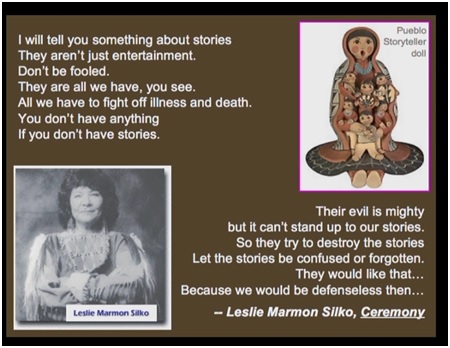
The Word is removed from us in time and space. We all tell stories and know how to tell stories. It is a common language that bridges other cultural gaps between us. These stories are not just entertainment but they actually educate and nourish us. BUT because they are good and healing stories, there are powers out there that will try to destroy them or… “let them be confused or forgotten” – BUT these evil powers cannot stand up to these stories (a statement of faith – conviction -hope that there is a power greater than what we face).  So what we are doing, reading scripture is counter cultural – sitting down and sharing, taking time.
silko

Radical – arising from or going to a root or source. From latin radicalis, having roots.

Radical simply means to go to the roots. Twin task of going to roots of tradition in scripture and in spirituality and in social solidarity and in roots of our contemporary pathologies to deal with root causes and not symptoms.

What are the current issues these stories could be informing?

  • War Israel/Palestine/Afghanistan/Syria/Russia
  • Riots/protests throughout middle east – for democracy and Europe/America in relation to global financial crisis.
  • Isaiah 14.:8: strategic asset Cedars of Lebanon, oil of the ancient times. What was empire then and what is it now? Phonecia, Babylon, Rome – clear cut the cedars for masts for ships and bearing poles for temples. Ecological justice.
  • Matt 1-2, Luke 1-2 Christmas story sentimentalised – imperial violence and human displacement, infanticide as a matter of domestic policy.
  • Road to Emmaus – story of courage and resistance, within a few days of crucifixion. Easter Luke 16:31 – under the shadow of death, not a zen walk down a country road. What is the meaning of the death of our leader for our movement.
  • Immigration/boat people – Isaiah 56, scripture and restorative justice – right using the bible to exclude immigrants and gay people. Radical
  • Matthew 18 restorative justice, ambassadors of reconciliation 2 Corinthians 5:16-6:2.

Draw parallels and analogies with our current context.

  • Ambassadors in chains Ephesians 2-3 & MLK letter from a Birmingham jail (Eph 3:10, 6:1)

How does the story read in our own context?
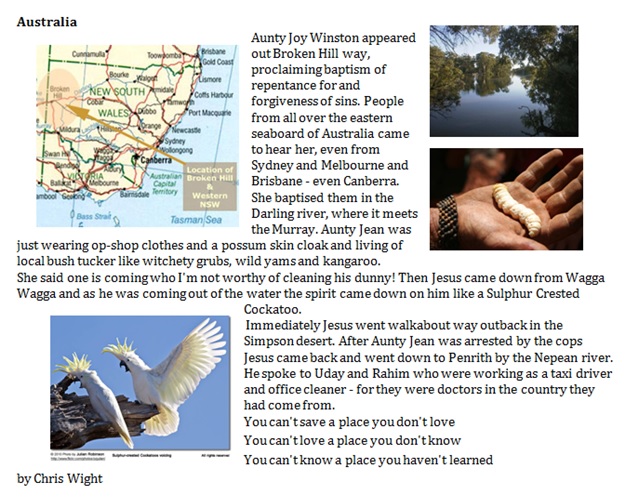
allegory

As we read be mindful of the following:

  • Oral tradition – uses language to set the scene – are we at the seaside or in the city now?  Look for introduction of new characters, new settings, changes in plot.  Often read the bible like a 5 minute segment out of an entire movie  – how can you understand what’s going on when you come in part way through the story? Need to rebuild critical literacy.
  • We can romanticise the Roman Empire – nothing nice about it.  I am a descendant of the colonising empire – British Empire, conquest, world sovereignty, racial superiority and global management.  Empire looks very different from the bottom IMG_5266up, than the top down – victims are always reminded of their vassalage. Money replaced with that with an image of Emperor or Queen.  The Romans were driven out of Judea and then they struck back. Jerusalem was laid siege, conquered and burned.  The book of Mark was written during this war.  Empire can be defined as the rule of the centre over the periphery.

  • Mark 1:7 baptiser – One is coming who is stronger than I am.  Power contesting power.  Not baptised with only water but the holy spirit and fire.  Baptism was and is a personal and political statement in a social context calling on the Holy Spirit of water and fire out in the undomesticated wilderness against the struggle of empire.
  • “True evangelical faith cannot lie dormant. It clothes the naked, it feed the hungry, it comforts the sorrowful, it shelters the destitute, it serves those that harms it, it binds up that which is wounded, it has become all things to all people” Menno Simons 16th century.  This is a discipleship of struggle and resistance as well as renewal.  Will it have a cost?  Baptism into Christ and into Christs death.  When Jesus was baptised he went right under into the Jordon, shedding  everything of socialisation – rises up completely unobligated to empire.  Jesus was baptised into a specific watershed/river, a specific story, a specific (un)kingdom.


Working from the same copy, read the – whole – book of Mark aloud in one session. The document below, to help with the sense on one whole flowing story (as the oral tellers would speak it), has had all chapter and verse numeration and story “titles” removed.

Mark stripped back

First thoughts?
Sound/feel different than it usually does? What stands out?
Have some general discussion around the ‘mindful’ notes re our ideas about – stories, empire, baptism, discipleship…