Latest Entries »

sarah2

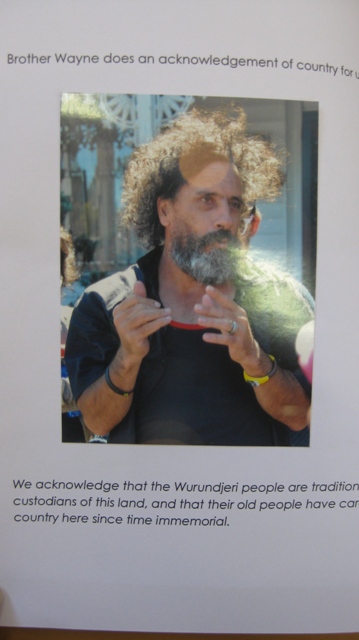
Apologies for my bitsy notes my hand wasn’t keeping up very well! Premise is this: What if our experience of the declining position and viability of the Western Church were good news?  What if the confusion, failure, and ‘lost-ness’ of this ecclesial ‘dark night’ could be inhabited as a space where new ways of being church and of engaging the needs of the world might be revealed and lived into?  This lecture will explore how the practice of contemplation might enable us to embrace rather than resist this experience, reconnect with the gospel dynamic of death and resurrection, and also be renewed for participation in divine liturgy, mission and justice.

photo source: http://www.eremos.org.au

Late 20th century saw a resurgence of contemplative practice, Merton, Keating, John Main – disciplined practice of silent prayer – waiting on God in deepening receptivity.

Not our own thoughts, even spiritual ones.  Contemplative practice is healing for our culture – slowness, connectedness, way/method of prayer – grow into a personal relationship with God. Mystic = personal experience of God.  Not a passing emotional state or passed down from leaders.  In meditation we verify the truths of our own faith.  What can mediation offer to the whole church body?  Reconnects to gospel death and resurrection – engaging the decline and disorientation.  “Emptiness” in he life of faith.  Meditation – laying aside thought and waiting on God – demanding practice.  Planning, worrying, daydreaming… need to lay aside self-consciousness itself.  Thoughts carry egoic identification with it.  Deep subversion of the self.  It takes nerve to become quiet.  Radical self-forgetting.  Described by Cassian – “complete simplicity that demands not less than everything”;  Buddhist – “eye that sees everything but not itself”;  Main – “hand yourself over and hold nothing back, become self-dispossessed so as to receive our life back as a gift”.  Experienced differently as individuals, how will it be experienced as a church?  Jesus gives self to God.  We claim vocation to be like Christ.  Church won’t give it’s life/identity over – seeks to secure its identity – doesn’t like questions or change.  Fails to realise the transformation it proclaims.  What does ecclesial emptying look like?

liturgy

In ‘Writing the Icon of the Heart’, Ross describes being on a boat surrounded by icebergs and glaciers “stupefied by glory” – went to do communion.  Inadequate to where they were. Cup and wine were an intrusion.  Would have been okay if reached for our hands in silence or to pass elements but no, pulled out the book and started to read the words I usually loved. Words that shrank rather than grew…Distraction.  Not illuminating.  Need to get in touch with alienation…  playacting.  Not in touch with God, or my sin, or grace – went home frustrated.

Liturgy needs to point beyond itself, not be – or try to make itself – at the centre.  Needs to emerge from deep listening and pre-packaged agenda is IN the way not OPENING up a way.  our lives are already sacred and liturgy tries to remind us of that (doesn’t give us/make us sacred).

Words affect who we are and our becoming – affect our formation.  Liturgy can’t be an end to itself.  Must be willing to talk about self-dispossession and be willing to be dispossessed… not more relevant or ‘contemporary’ – a liturgy will be effective only insofar as it effaces itself.  Every true sign must be self-effacing.  Must start in silence and be listening and responding to what is given.

mission

does your church have meetings about getting new people to come and how to make them stay?  do we extend good hospitality?  is our community growing?  sustaining? are we seen as welcoming? are we living up to our own idea of how welcoming we are?  Genuine desire to do justice and be justified (confirmed we’re doing the right thing). Self-referencing and self-conscious… self-centred instead of “just”.

Genuine desire to welcome, but also desire to be ‘seen’ as “most inclusive parish” >> this is death dealing.  Reassured not to see identity as “good”,  give ourselves wholly, handing over ecclesial consciousness instead of wondering how we’re doing it >> get on with it.

Other experiences of Benedictus:

Community made up of secondary teachers (high needs students: drugs), climate change scientists, paediatrician, counsellors, lawyers, healthcare workers… don’t want to take energy from their vocation.  Encourage and resource them to do the good work they are already called to… church might not “socially engaged”.  Freedom, integrity and passion to love.

Encourage formation in contemplative ways – engage the world in different ways.  Reflective peer groups.  Signs of life and new ways of being.  Relate to unhelpful patterns with awareness.  “Why do I have this conversation with my mother every time…” , complaints about work but not making change… structured formation, how can you be liberated?  Church calls us to this.   Formation… in God’s work in the world, lay formation/lay ministry… not calling people into church building but equipping and sending out.  Take these vocations as seriously as it takes its own.  Can the church serve people as they serve the world?  Not a church trying to preserve its own place and identity.  But one that consents to its own self-effacement – we might not know if this group makes a different in individuals visiting once or regulars going back to their work… we might never know.  Faithful communities point away from themselves.  Well-meaning/patronising/complacent when needing the accolade of knowing the difference its making.  Church needs to be faithful to its own vocation, as it discerns.

There is still gender related injustice.  Anglican delegation of women in ministry “keep agitating”, lots of energy but little progress.  Agitating a sign of false spirit.  Agitating is a block to healing – avoiding what was necessary.  Stop.  Risk being fully present to the worlds pain and our response to it… discern your response out of that.  Social action… not saying ‘do nothing’ but Rowan Williams ‘internal contemplation, makes space for truth, for Gods’s reality to come through.’

Depth, broken openness required of us as individuals and communities.  Transformation of imagination and relationships – climate change, reconciliation with indigenous, gender… need to become aware of what we resist and fear.  Let our hearts break open to receive larger vision.  UN: St George slaying the dragon/Isaiah weapons to ploughshares… Leunig does this through prophetic invitation that inspires a bigger imagination.

what can we do?

Prayer of the heart: poverty/listening.  Formation/contemplative action.  Gift of our present ecclesial circumstances (moments of unintentional contemplation – moment of truth/revelation, stripped of illusion) inner alien and unsettling truth.  Discovering ourselves to be less than we thought.  Inadequacies.  Deprived of familiar comforts – social status, political power… running on empty.  Stave off descent into emptiness.  What if rather than resisting we embrace the empty space?  Disciples – didn’t know what they were hoping for.  Poverty o spirit – reaching of our boundaries of being (can’t go on by ourselves) – made bigger.  Be with broken-heartedness and poverty… live into the gift of new and expanded life.  Not all at once… but little bits.

Need to be adequate to depths of worlds need, let go of limiting identity – let ourselves go – fall empty-handed into the hands of the living God.  Follow Jesus into depth of death and chaos.

 Become uncreated to be created.  Broken to be a blessing to all.

Anabaptist/Quaker traditions haven’t had the identity/power in the same ways – what can these traditions offer us?  Still need to be accountable to self.  Still ways to manipulate e.g. silence can be wielded to mean something.  Is the leader and the liturgy connected to deep ground?  Not about individual preference/styles or arguing against communal worship.  Sign is the vehicle that takes us to the encounter.

The church has no place of its own to secure and no need to be defensive.


Yesterday I attended the book launch of “The Jihad of Jesus” by Dave Andrews… that’s a title that’ll get your attention…

I feel it takes a little explanation so I’m going to take the liberty of including Dave’s Preface here so that he is introducing the material in his own words…

“I do not write this an an expert. I am not.

I do not write this as a specialist. I am not.

I simply write this as a Christian, in conversation with Muslim friends, seeking to find a way we can struggle for love and justice that is true to the best of our traditions.

I am writing this for Christians who are concerned about the way Jesus has been (mis)represented by well-known crusading combative pastors, like Mark Driscoll.

I am writing this for Muslims who are concerned about the way jihad has been (mis)represented by well known militant extremist preachers, like Abubakar Shekau.

And I am writing this for people who subscribe to neither religion, but watch with horror, as Christians and Muslims slaughter one another in the name of God.

For many people jihad and Jesus are totally contradictory, mutually exclusive options.  You must choose the one or the other.  You cannot have both.  Given our present situation, Muslims would tend to choose jihad, Christians would tend to choose Jesus.

But it is my contention that – rightly understood -you can’t have one without the other.  in spite of the fact this may seem heresy to Muslims and/or Christians, I contend you cannot rightly pursue jihad without Jesus, or rightly pursue Jesus without jihad.

Reza Aslan’s book Zealot sets forth the case that Jesus was not simply a pious spiritual teacher, but actually a radical messianic activist. Of this there is no doubt.  Both Muslims and Christians believe Jesus was the Masih or the Messiah.  The debate is about what his radical messianic activism meant in the context of his time and what his radical messianic activism means in the context of the violence and counter-violence in our time.

If, as some would argue, Reza Aslan is right, Jesus could be a model for violent jihad.  But if, as I argue, Ahmad Shawqi is right, Jesus would be a model of nonviolent jihad: as

Kindness, chivalry an humilty were born on the day Jesus was born.  No threat, no tyranny, no revenge, no sword, no raids, no bloodshed did he use to call to the new faith.

The Jihad of Jesus is the sacred nonviolent struggle for justice.”

Dave Andrews, Bribane 2015

http://www.jihadofjesus.com

daveandrews.com.au

Nora (short, coloured, Muslim, woman) speaks first which is an important signal I think – the medium is the message.  She and her family build their home in a new development and meet with the neighbours regarding fence options and collectively decide not to have them but have the children stay, play, eat together… different religions, different cultures… five months later 9/11 happened.  She said “The fences will go up now” and they didn’t. Not until many years later when the family was to move.  They were known and, known, they were accepted.  Muslims make up 2.2% of the population in Australia (2011 census) – not likely to meet one but the culture of fear is being fed.  Nora felt called to speak out but Christians wouldn’t listen – “You won’t be accepted if you don’t remove your scarf”, serving her pork and giving her copies of the bible… someone suggested she meet Dave and she didn’t want to, this books captures 7+ years of the shared conversations that followed.

Dave (yes… tall, white, Christian, male) speaks second.  We believe in the same Abrahamic God- need to start where we agree and then explore other areas.  When 9/11 happened, Dave went to his local mosque and said “I’m sorry, they’re going to try and make it them and us (set us against each other) may I come in and join you in prayer as an act of solidarity?”

He gave Nora a copy of this books manuscript and has included her comments in footnotes where she has disagreed with him – minority/dissenting voice included.

Steps forward:

(Buy and read this book I reckon’!)

  • talk about it
  • live it out yourself
  • tell stories
  • invite others in
  • celebrate the wins


Sacred solitude

010

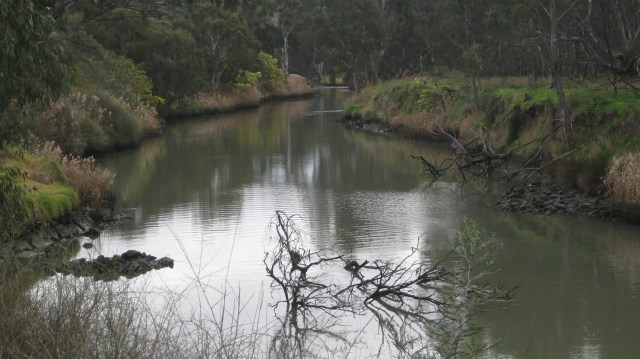
the river
invites you
not to be
anywhere
but here

021

yellow pollen blossoms
seeds and pods
spring blooming
all along the riverbank
spring
and blooming

023

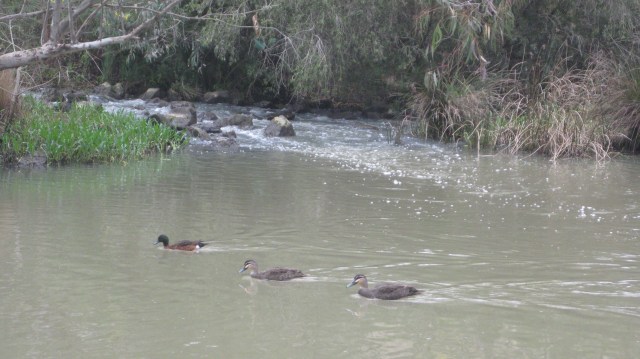
quack says the duck
quack at once mournful
and warning
a calling or a sending
listen…
quack says the duck
quack at once guarding
and guiding
a calling or a sending
listen…


Talitha Fraser

IMG_5589

My blog posts almost feel like signposts, pointing out the way to You that I have followed but it would look like this… The thing with You being everywhere, the centre and the edges, maker of all things… Your fingerprints are all over everything and everyone who has ever been. It really isn’t all that hard to find You if people are truly willing to “look”.  I don’t want people to focus on reading the signposts.  I want them to commit to “looking.”

IMG_5585

IMG_5582

IMG_5580

IMG_5574

IMG_5573

Dr Bronwyn Hughes, stained glass artist and historian

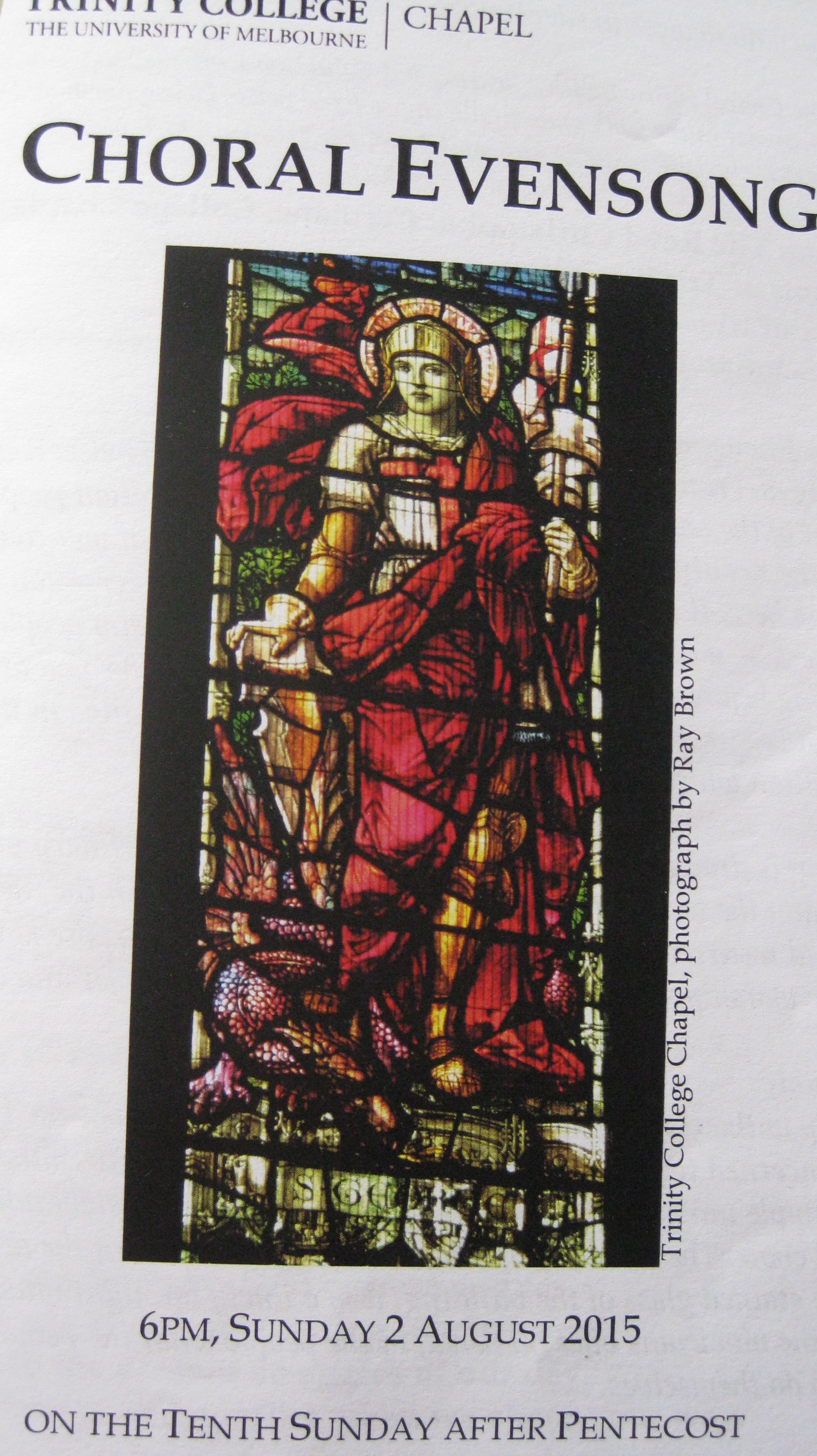
Being creative can be difficult if I approach a project intellectually, but then let go of the idea and let the art speak to me, become a conduit, become reflective and contemplative.  This also happens when I write, I can get stuck but trust that something meaningful will come. I watched the stained glass windows while at church when I was a child. I assumed the windows were ‘old’ but they were in fact ‘new’.  Eyes were known as the window of the soul so craftsmen made the eyes of stained glass images larger. The windows live in the light, illuminate, narrates and alters the light that comes into the church – this art dies in the dark.  Trinity chapel was built at the same time as the war broke out so it memorialises some students and staff who fought.  Plans changed to incorporate imagery of “warrior” saints over the next twenty years. The last panel, the crucifixion, went up once the second war had started.  These windows became memorials of prayer to visit where there was no body and no grave of loved ones lost.  Good, one hundred years on, to still gather here.

begin

014

begin
begin
begin anywhere
set out
step out
that is where to start
one day you do it
different than yesterday
ever so slightly
and it changes the world

Talitha Fraser

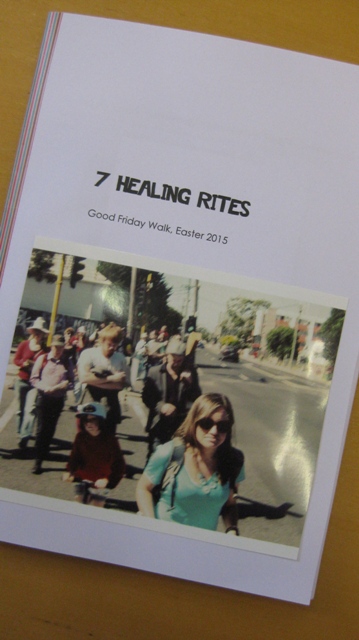
Further to our Stations of the Cross walk on Good Friday I made a lift-the-flap book for each of the families that participated.  How can we bring the messages of the high holidays into the everyday?  Kids know who cartoon and TV characters are because they are shown images of them, if we want them to learn to recognise our elders we must show images and share the words of these people… you cannot know what you haven’t learned, what you haven’t learned you cannot love.

007 - Copy

008 - Copy

009

012 - Copy

offwego[A short paper presented to the Spiritual Reading Group 21 July 2015 on Michael Leunig]

So… Leunig… one of the questions he is most often asked and is always baffled by, is what does a particular cartoon mean? “People will say, ‘I don’t know what it means but I like it.’ Leunig replies… “I don’t know either but I like it too. I’m not trying to say anything but I hope it awakens something in you.”

Michael Leunig was raised listening to Oscar Wilde stories on the radio. He read Enid Blyton, Biggles and Childrens Encyclopaedias… he went to Sunday  school and always said he found it, “not full of God but full of stories.” It was lyrical and what was lyrical made him happy – Leunig heard Psalms and asked of himself “What can I do like that?”

Though born in East Melbourne in 1945, Leunig grew up in Footscray going to Footscray North Primary School and Maribyrnong High School. Many of Leunigs friends, and many of his teachers when he grew up in the 1950s were war refugees or were the children of people from Germany, Russia, Poland. It was a very industrial area –ammunitions factory with machine guns firing, meat works, cannery… it smelt awful and drained into the river… for Leunig this wasn’t bleak but held lots of peace and space. Not a lot of nature around, but then you appreciate and give more significance to what you have… a duck and the moon.

A duck bought from the market while doing the family shop imprinted on Leunig following him around everywhere, coming home from school he’d turn the corner and the duck would see him and come running. So he always got ducks after that considering them playful and good-humoured and innocent with those rounded beaks.

A formative misadventure at eight years, occurred while playing at the rubbish tip Leunig stepped up to his thighs in hot coals and wires – receiving horrible and incredibly painful burns with fear of gangrene and amputation – for five months he couldn’t walk and had long periods of feeling cut off from others and lost.

From paper boy to making sausages at butchers on Barkley St, Leunig didn’t do well at school, repeating his last year, and came to work in the meatworks himself. This was great thinking time and Leunig advocates manual work that keeps your hands moving and your mind free. He said: “Working in such places either toughens or sensitises you” and it sensitised Leunig… he became a humanist (is now nearly vegan) and finely honed his earthy working class sense of humour. Leunig was conscripted for the Vietnam war in 1965 – he was going to fight it, a conscientious objector, but was rejected regardless when found to be deaf in one ear.

In Curly Stories, Leunig talks about it “Being an advantage to grow up without art consciousness… nothing to aspire to but things to find and create”. Homeschooling his own four children would have allowed him to foster a similar environment for them believing “Natural ideas exist within children… their play should be “utterly free” and they must be allowed to be bored – they feel free to explore and discover and the world is new to them and there’s this sense of wonder” Leunig refers to childrens ability to ‘blank out’ looking at a teapot spout or light through a window being present to what is right in front of them, commenting: “The loss of that beauty is appalling… how do I address that as a communicator? How can I express what everyone is feeling?” The prophet expresses the grief of the people. The artist expresses what is repressed.

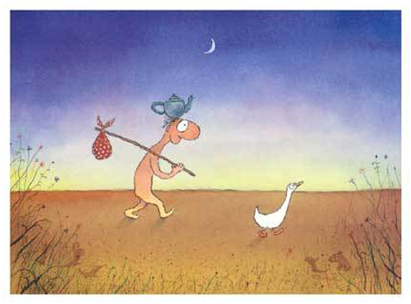
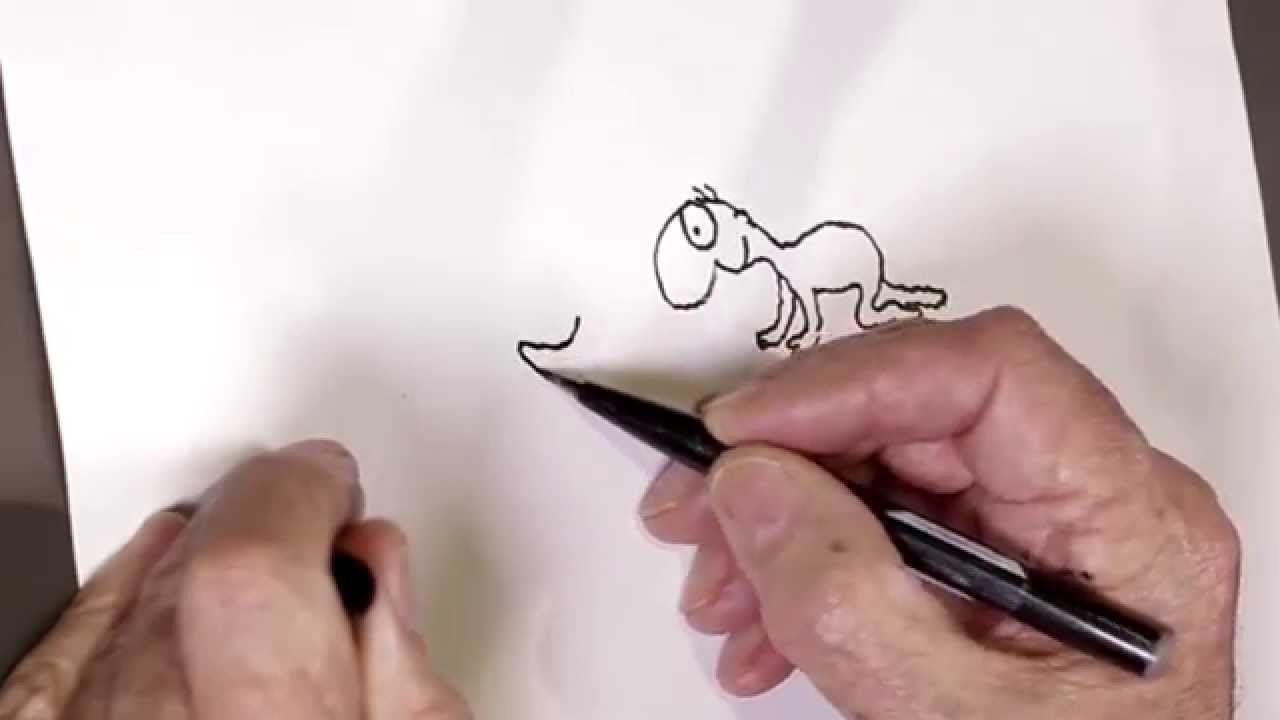
maxresdefaultWalking out of his 3rd year at Swinburne Film and Television School, it was 1969 when Leunig first began to work as a political cartoonist at Newsday, while the factories might have taught him to use humour – intellectual, witty, cynical – to deflect serious things, Leunig says “I was sung sentimental songs. Part of my first language. Fluent in that emotional language” His Grandma used to tell him: ‘All the world is bad, except for you and me, but even you’re a little strange.’ …perhaps this is where we meet The Creature… The Holy Fool– scribbled in the margins since school – amusing to his slightly hungover Editor, with a teapot on his head and riding a duck into the sunset, the image was put to print. Subhuman, primal, foetal, without gender. Leunig is somehow able to speak to our soul. To take small things and make them large, domestic things and make them sacred. For his own discipline he talks about the paradox of art theory – rules to follow, teachers to emulate >> how this stifles creativity. It’s about earning money, systematic success, built for efficiency, for velocity but you lose much, Leunig believes: “[You] cannot love or appreciate beauty at speed. How do you talk about it in ways that are unsuppressed and real? Might make a bridge with love, make a sandwich with love – it’s passed on to others. Love is what we go to bed thinking about.”the kiss by leunig

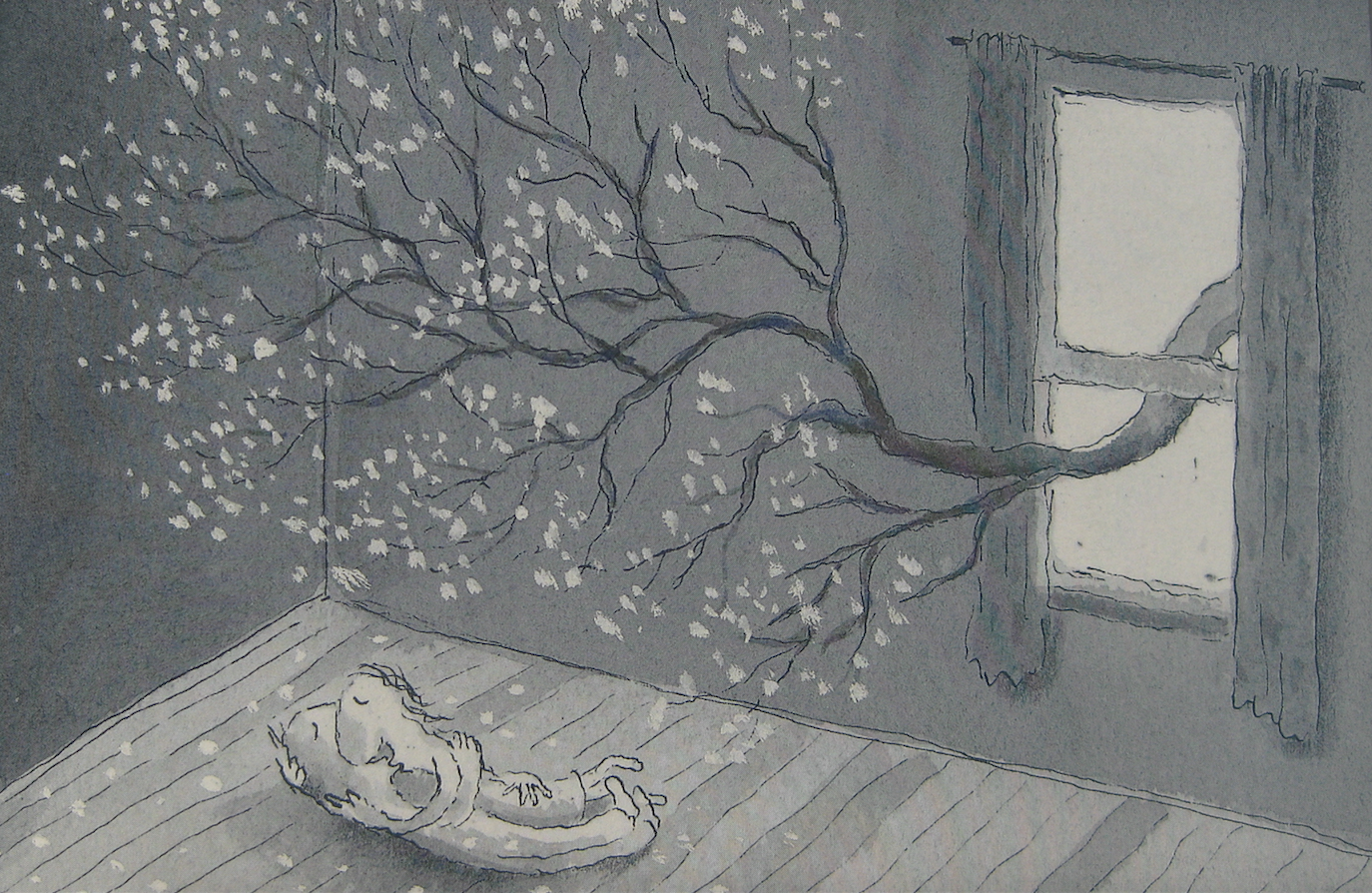
Since his first book in 1974, Leunig has produced 23 more – books of newspaper columns, poetry and prayer in addition to his prints, paintings and drawings. Leunig shares intimacy with us, personal and confessional – e.g. The Kiss. We are invited into the privacy of his love life, his soul searching… Leunig makes the private public. He takes the small dark fearful things and brings them out where we can look at them “crying with the angels for a world that is different – this is not fatalistic but hopeful”. Perhaps it is because he has offered his own soul first that we are willing to listen to him expound on many themes:

>> loneliness >> the 9 to 5 grind >> war >> sex >> consumption >> love >> god >> media >> religion >> politics

It was being asked to contribute a cartoon to a new paper in 1989, The Age, that Leunig started writing prayers to the horror of his friends… Rather than born-again Christian Leunig’s interpretation lay in the realm of John Keats’s “negative capability”, a word for the unsayable and profound in life. He wanted to say the words publicly as another way of addressing the problems of our time, of our society, of our psyche, of people’s personal suffering {1998} His friends reactions sort of egged Leunig on, wanting to see how much he could push believing that “until a man discovers his emotional life and his gentle, vulnerable side, until he gives it expression, he never will find his women or his soul, and until he does find his soul he will be tortured and depressed and miserable underneath a fair bit of bullshit”.

From Archbishops to Presidents, the Opera House, Australian Chamber Orchestra, National Theatre in London to clay figure animations for SBS and remote communities in northern and central Australia – Leunig has Gone Places and Done Things. Declared a national living treasure by the National Trust in 1999 and awarded honorary degrees by 3 universities for his unique contribution to Australian culture.

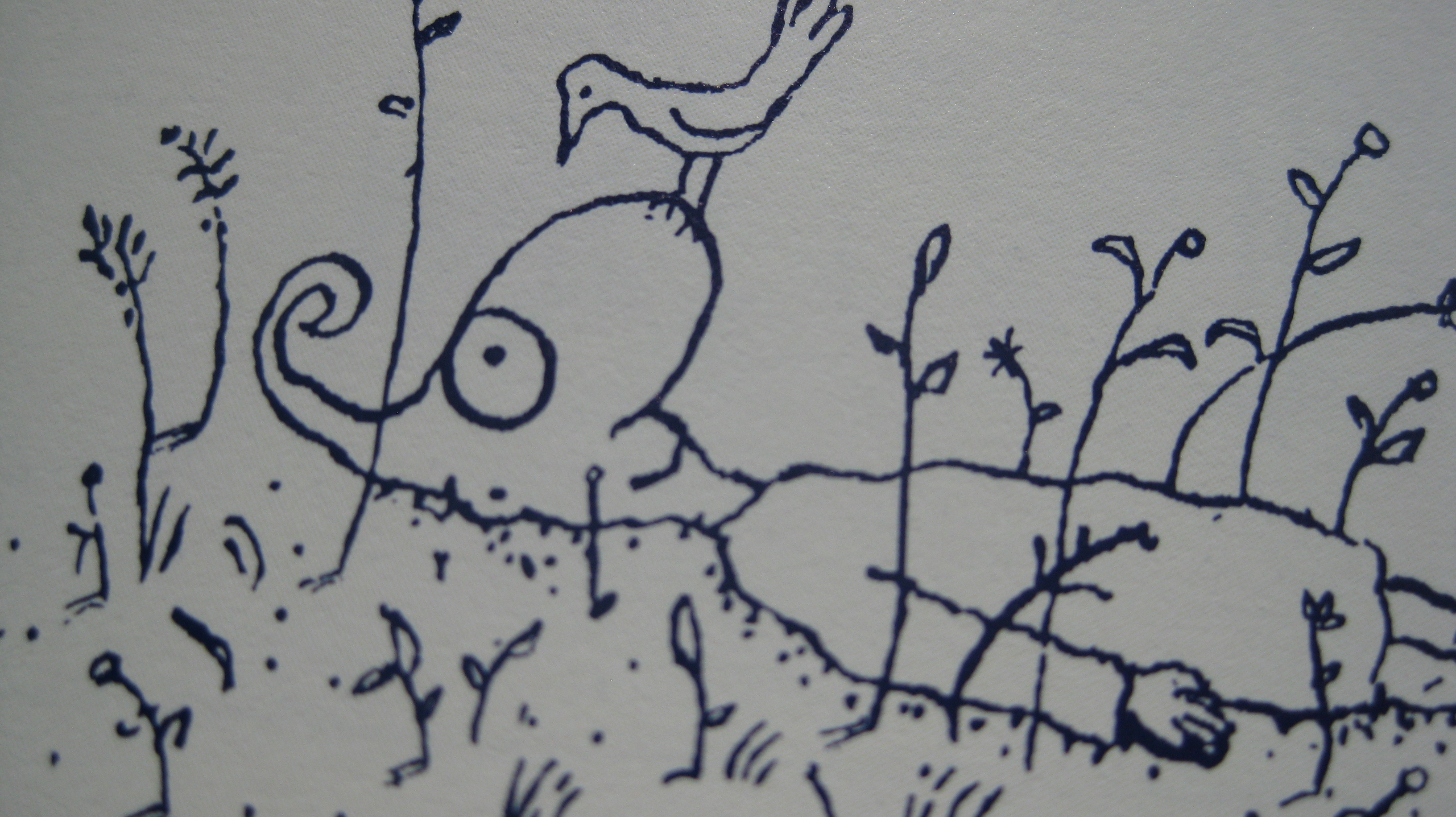
094The ‘war on terror’ following 9/11 was a watershed moment in Leunig’s cartooning work where, opposing the war and invasions of Afghanistan and Iraq, he was at odds with many editors, commentators and members of Australian society – there became less gentle and lyrical themes and he stopped drawing the whimsical characters Mr Curly and Vasco Pyjama as often although the duck and the moon have still faithfully remained. Adding curls arose out of Leunig’s desire to communicate that “What makes you feel so alone and strange is in fact normal. There’s a lot of curliness in life and you can have a homecoming – there is a place for you and for that aloneness, that eccentricity, and there’s a fulfilment of it eventually, it’s no longer the cause of your outcastness. So that’s the curl. It’s the curious, unique self and, if you find that, you find the connection to the whole world because the world is curious and unique and authentic at its best level.” You might say the war, not understanding how people can fight other people this way, has been a breach to Leunigs sense of connection to Australian society and thereby rest of the world.

These days, Michael Leunig has 3 small dogs but no ducks. He enjoys talking to strangers and going to bed at night. He is a devout nature lover and spends his time between the solitude of the bush in Northern Victoria and a home in Melbourne where he enjoys walking in the local park, morning coffee in the café, chamber music in the concert hall, and attending to work in his studio .

When asked: “What is the meaning of life?” Leunig replied: “For humans as for all the plants and creatures: know yourself, grow yourself, feel yourself, heal yourself, be yourself, express yourself”… “I want to be a voice of liberation”. Leunig speaks not only for the wealthy or the poor but both, not only those armed and those without weapons but both, not only the pretty people or only the ugly people but both – he enjoys this inconsistency and variety. As Barry Humphries says “through the vein of his compassion and humanity and his humour – illuminating many a darkling theme”

Like Jesus with his parables and questions – Leunig doesn’t present us with solutions or easy answers but an invitation. He sees his vocation as cracking what is stoic and cold in society – to make us feel anger, grief, joy, sadness… Leunig believes we have something to discover in the wrongness… “Live without ‘knowing’, in mystery. Find things. Unlearn. Get lost. Get primal, getinfantile. When you have lost all hope – start to play. You have nothing to lose. Stay with it and don’t take it too seriously…”

I hope maybe it awakens something in you.”

Gilead I

p.34-35200px-Gileadcover

She makes an unlikely preacher’s wife.  She says so herself.  But she never flinches from any of it.  Mary Magdalene probably made an occasional casserole, whatever the ancient equivalent might have been… I mean only respect when I say your mother has always struck me as someone with whom the lord might have chosen to spend some part of His Mortal time… There is an earned innocence, I believe, which is as much to be honoured as the innocence of children… When the Lord says you must ‘become as one of these little ones’ , I take Him to mean you must be stripped of all the accretions of smugness and pretense and triviality.  “Naked I came out of my mother’s womb’, and so on… It has pleased me when I have thought your mother felt at home in the world, even momentarily.  At peace in it, I should say, because I believe her familiarity with the world may be much deeper than mine.  I do truly wish I had the means to spare you the slightest acquaintance with that very poverty the Lord Himself blessed by word and example… still it shames me to think that I will leave you and your mother so naked to the world – dear Lord, I think, spare them that blessing.


p.45

I get much more respect than I deserve.  This seems harmless enough in most cases.  People want to respect the pastor and I’m not going to interfere with that. But I’ve developed a great reputation for wisdom by ordering more books that I ever had time to read, and reading more books, by far, than I learned anything useful from except, of course, some very tedious gentlemen have written books.  This is not a new insight, but the truth of it is something you have to experience to fully grasp.

                                Thank God for them all, of course, and for that strange interval, which was most of my life, when I read out of loneliness, and when bad company was much better than no company.  You can love a bad book for its haplessness or pomposity or gall, if you have that starvling appetite for things human, which I devoutly hope you will never have.  ‘The full soul loatheth an honeycomb; but to the hungry soul every bitter thing is sweet.’ There are pleasures to be found where you would never look for them.

 p.51

A good sermon is one side of a passionate conversation.  It has to be heard in that way.  There are three parties to it, of course, but so are there to even the most private thought – the self that yields the thought, the self that acknowledges and in some way responds to the thought, and the Lord.  That is a remarkable thing to consider.

p. 54-55

I read somewhere that a thing that does not exist in relation to anything else cannot itself be said to exist.  I can’t quite see the meaning of a statement so purely hypothetical as this, though I may simply lack understanding… My grandfather had nowhere to spend his courage, no way to feel it in himself.  That was a great pity.

…I can’t tell you though, how I felt, walking alon

g beside him [my father] that night, along the rutted road, through that empty world – what a sweet strength I felt, in him, and in myself, and all around us.  I am glad I didn’t understand, because I have rarely felt joy like that, and assurance.