
While I was away Ched had me reading Maori prayers everynight from the English-Maori NZ Liturgy 1970 – thought I’d have a play reading one of our favs aloud, pic is from a spot along the Wellington City to Sea walk, and the background is a recording of birds singing from silver beech trees in Abel Tasman National Park (thank you to the Dept of Conservation).
Latest Entries »
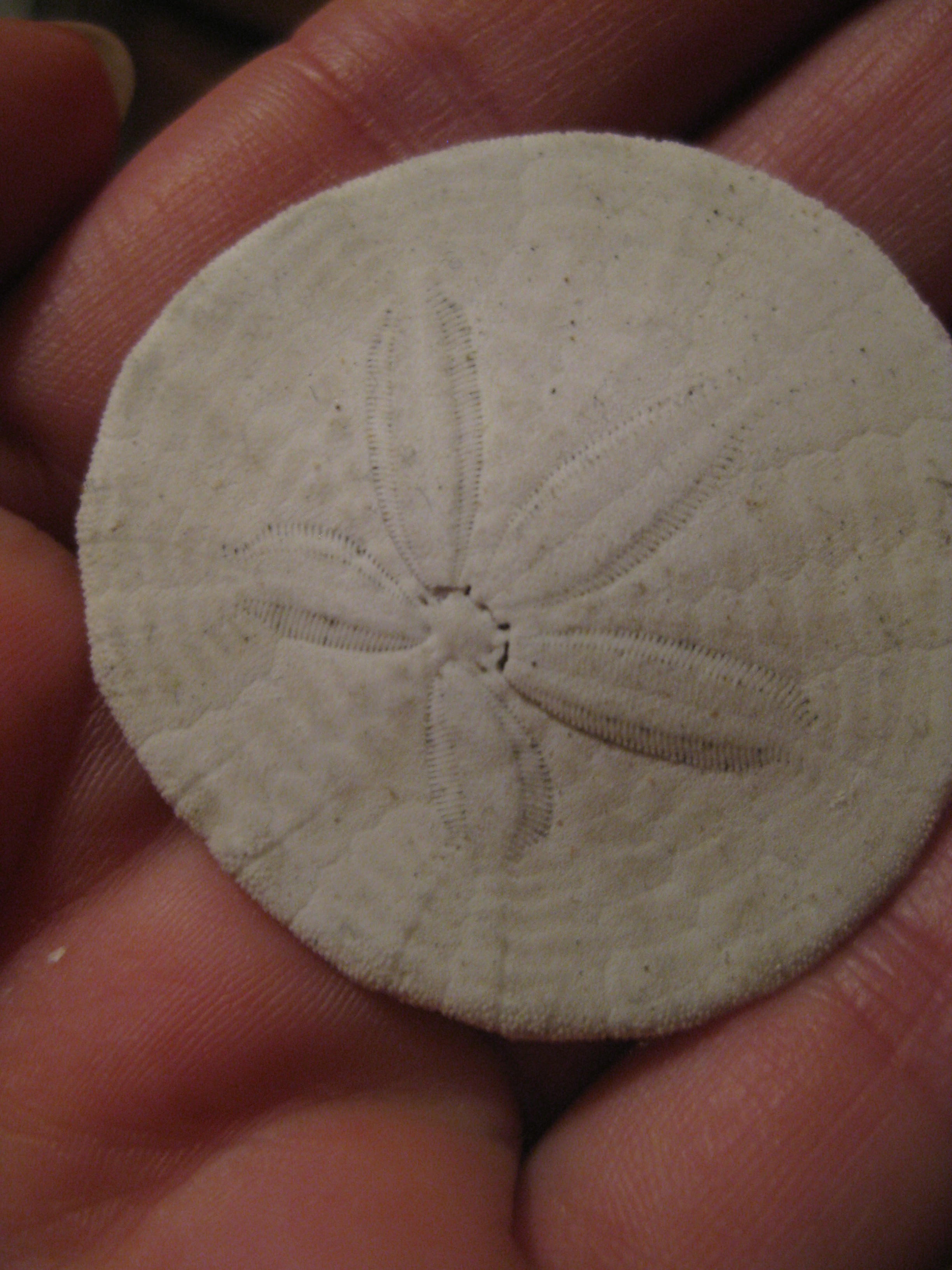
This is a picture of a sand dollar which we picked up in the car park of a garden nursery (not sure how it got there!). Similar to snowflakes and fingerprints each one is said to be unique…
Mum sent through this whakatauki today (Maori proverb) that she uses in her kindergarten. These were her words for me as her child, an encouragement of my specialness and value as a one-of-a-kind individual. Just want to share the positive affirmation –
You are important. What you have to say, what you think and what you feel are important and worthwhile.
kia maumahara ki toou mana aahua ake
cherish your absolute uniqueness
i sit
in a darkening room
candles extinguishing
sad.
internally
i quake
with a childlike
fear of the dark.
neither fight
unfeminine, besides the whole nonviolence thing
nor flight
i am where i am called to be
offers comfort
and i feel fury and fear again.
i wish i could be different than i am
or that you
could be different than you are
i do love you, you know
that actually makes the fact that i don’t like you much
harder
Talitha Fraser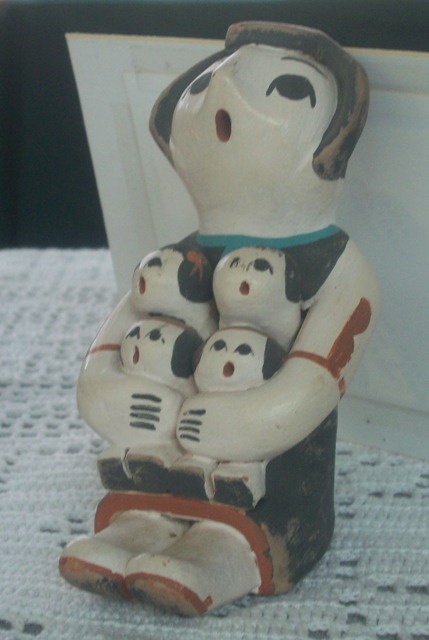
I will tell you something about stories
[he said]
They aren’t just entertainment
Don’t be fooled.
They are all we have you see.
All we have to fight off illness and death.
You don’t have anything if
you don’t have stories.
Their evil is mighty
but it can’t stand up to our stories.
So they try to destroy the stories.
Let the stories be confused or forgotten.
They would like that…
Because we would be defenceless then…
Leslie Marmon Silco – Ceremony
Stories are all we have – the hermeneutic approach of the Bartimaeus Institute.
Native Americans make storytelling dolls out of pottery – collecting the clay is a spiritual and mindful process, native plants and minerals are used for the colours and designs, shaped and smoothed by hand, sanded, slip coats applied and then hand polished – a lengthy and involved process. These beautiful artworks generally depict an elder with children in their lap, honouring the oral tradition of the culture, validating the importance of each persons voice in family/community and the importance of the role of storytellers in society for keeping awareness alive.
MLK once said: the arc of the moral universe is long, but it bends towards justice. That is to say that we need to draw on the wisdom of tradition, history and our elders to better understand ourselves and the world in which we live.
John 1:18 No one has ever seen God. It is the Son, who is close to the Father’s heart, who has made God known (Greek: exegesato) – Jesus ‘decodes’ gives meaning to God.
Luke 10:25-30, 36f
A) What must I do to inherit eternal life?
B) What’s written in the Torah? How do you read it?
C) Love the Lord your God
D) Given right answer. Do this.
E) Who is my nieghbour?
F) Who was neighbour to the robbed man?
G) One who showed mercy.
H) Go and do it.
3 disciplines of interpretation: what stands? how do we read it? what do we do with it?
Who around you has stories you could be learning from? Are you making space to hear them?
If you live a life trying to be like Jesus, what are the ways in which your life points to or gives meaning to God?
What ways does what you read influence/affect praxis in your life?
We need wisdom that is older, wider, deeper than we are – sacred stories provide that. Listening to the old stories needs to be central to any expression of faith that is related to transformation. We need to have a practise of returning to the well of imagination.
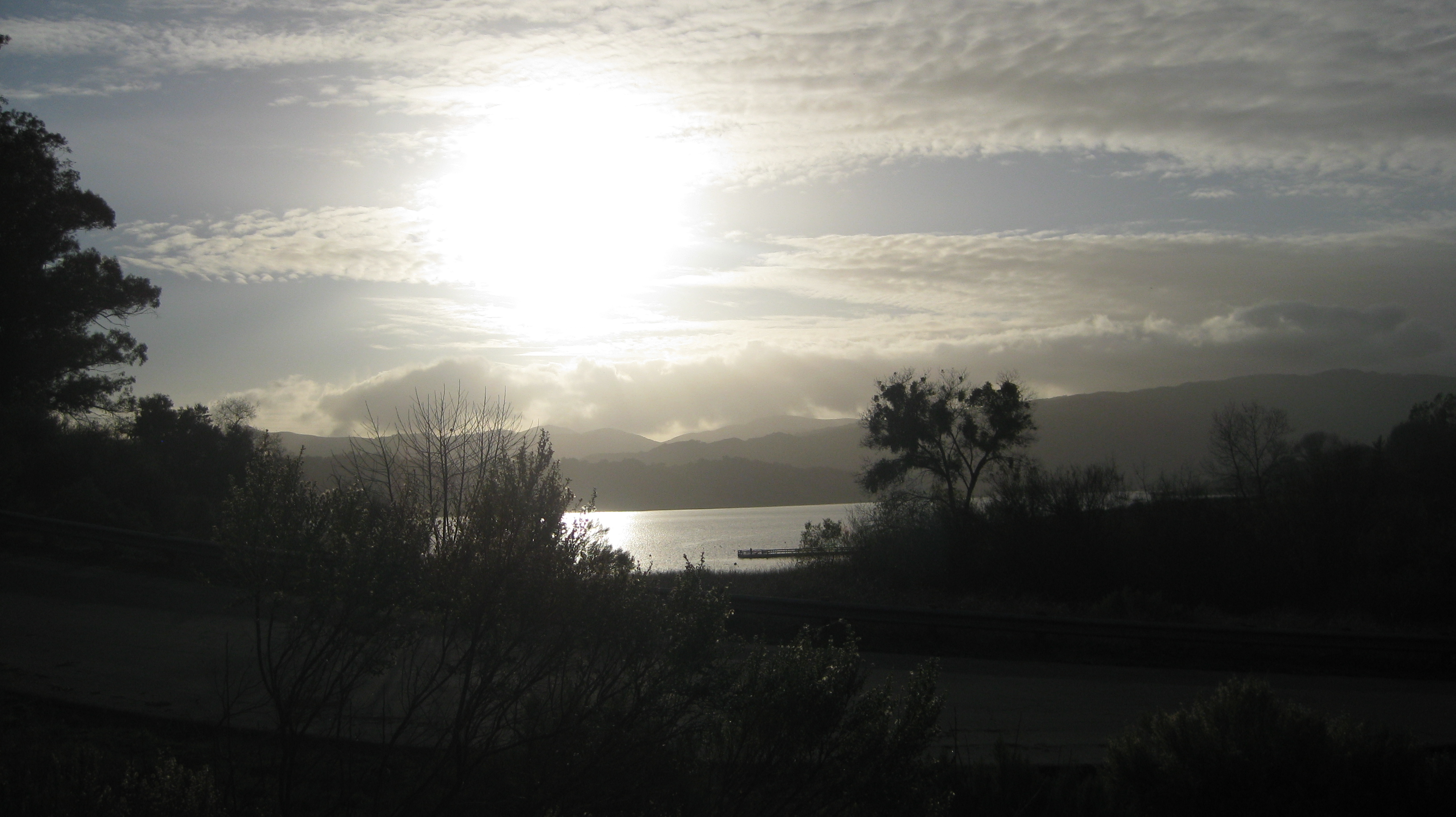
There is something to the rhythm of life here. Our days are shaped by liturgy at breakfast, lunch and dinner (most days), from organic food brought at the local farmers market where we know the vendors by name, to a walk through the chaparral countryside recognising the oak trees, mallow, sage we tend in the garden (Ched has learned to take cuttings from natives). We check the weather report daily – checking for rain (the river is empty), frost (protect the citrus and avocado trees) and while we’re there, we check the surf forecast also – checking tide, temperature and wind direction. We do a lap of the yard almost daily – remarking on developments new buds, early blossom, pruning requirements…
I’m living more in the ‘present’ than I can remember in a long time.
In the evening we sit out by the horno (clay oven) and can see the North Star and Milky Way…
My heart is ready, O God;
I will sing your praise.
Your steadfast love is higher than the heavens,
And your faithfulness reaches to the clouds.
Be exalted, O God, above the heavens,
And let your glory shine over all the earth. (Psalm 57:5)
What does that mean? Let your glory shine…? We talk back and forth, about animism and anarchical primitivism, I learn the difference between pantheism and panentheism and for a moment I think to myself, “what a wonderful world…”
Webinar is available at chedmyers.org but here are some snippets…
There is a “trialectic” biblical narrative concerning God’s relationship with human beings in the bible.
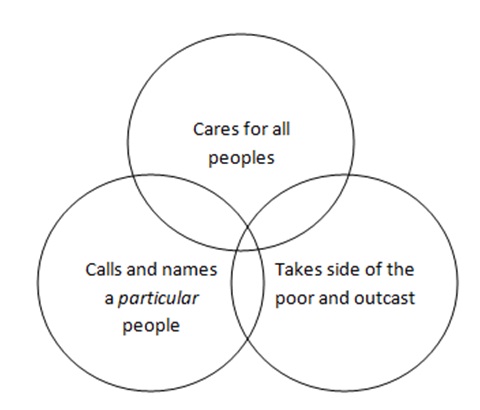
Jesus embraces all three characteristics: loving both national enemies and intimate betrayers, calling disciples and living among the marginalised.
Isaiah I (Ch. 1-39) Isaiah II (Ch. 40-55) Isaiah III (Ch. 56-66) – different authors.
(p.96-97) But third Isaiah goes on to address specifically those parts of the community that are being legally and socially targeted:
Let not the foreigners say…
Let not the eunuch say…
For this is what God says… (Isaiah 56:3f)
This verse seeks to animate the voices of those who have internalized their rejection by the dominant culture because of how they are perceived and publically caricatured. “The LORD will surely separate me from his people,” says the inner voice of the foreigner; “I am just a dry tree,” intones the introjected contempt of the eunuch. Second-class citizens in our own history know all too well this self-hatred. Black children have tried to scrub their skin white, immigrants have changed their names, women have kept silent, and gays and lesbians have stayed deep in a destructive closet – all to avoid the contempt of a society that barely tolerates them. Internalised self-negation and external oppression are like a constant “acid rain”, as psychologist William Grier and Price Cobbs famously put it in their landmark study Black Rage (1968). It is time, says Third Isaiah, for such dehumanisation to stop – because YHWH says otherwise.
What does this mean as a visitor, first-, second-, third-generation Australian?
Reflect on Australian immigration policy and response to “boat people”.
“Reconciliation” with indigenous First People of these Nations.
Not only called to like pretty/smart/?/people, or people like “us” but specifically to welcome the hungry, the stranger, the ill…
Reflect on this: the maker of the outside also made the inside.
What credit it is it to you to only love those who are like you, to only love those who love you back, to only lend to those from whom you expect repayment – we are called to and Jesus role-modelled generous discipleship.
* I have purchased a copy of this book!
Maori continued with the task unarmed and, to a person, they declined to respond to aggression when removed. Go, put your hands to the plough. Look not back. If any come with guns and swords, be not afraid. If they smite you, smite not in return. If they rend you, be not discouraged. Another will take up the good work. If evil thoughts fill the minds of the settlers and they flee from their farms to the town, as in the war of old, enter not . . . into their houses, touch not their goods nor their cattle. My eye is over all. I will detect the thief, and the punishment shall be like that which fell upon Ananias. When the ploughmen asked Tohu what they should do if any of their number were shot, he replied, ‘Gather up the earth on which the blood is spilt and bring it to Parihaka’ (Scott, pp 56-57).
February 6th is Waitangi Day in New Zealand, the anniversary of the signing of the Treaty of Waitangi in 1840. To the British this achieved full sovereignty and government of the country but Maori thought, while giving authority to govern, they would still be entitled to manage their own affairs in their own way. Similarly to Australia Day on January 26th being known as “Invasion Day” to the First Peoples of that nation, Waitangi Day is often attended by protest as well as being a celebration of nationhood.
What perhaps not enough New Zealand settler descendants may know is that there were Taranaki chieftains who never signed the Treaty of Waitangi, steadfast in their refusal to acknowledge foreign sovereignty in preference for maintaining their own way of life on their own land – the pa at Parihaka became a sanctuary for Maori forced, fought, deceived off their land. Likened forerunners to Ghandi and Martin Luther King, Te Whiti and Tohu ran a campaign of non-violence spanning 40 years sheltering the dispossessed.
The Waitangi Tribunal[1] published “The Taranaki Report: Kaupapa Tuatahi” in 1996 saying, “ If war is the absence of peace, the war has never ended in Taranaki, because that essential prerequisite for peace among peoples, that each should be able to live with dignity on their own lands, is still absent and the protest over land rights continues to be made.” Contrary to the belief held by many New Zealanders that in an acknowledged first equal language, proportional representation in government and other policies we might be considered advanced in our journey of equality and reconciliation, in fact we are the only colonising country where there is no land held and managed autonomously by the indigenous population (Ch.8 Parihaka).
The title of Dick Scott’s book is a quote from Te Whiti, Chieftain at Parihaka who says:
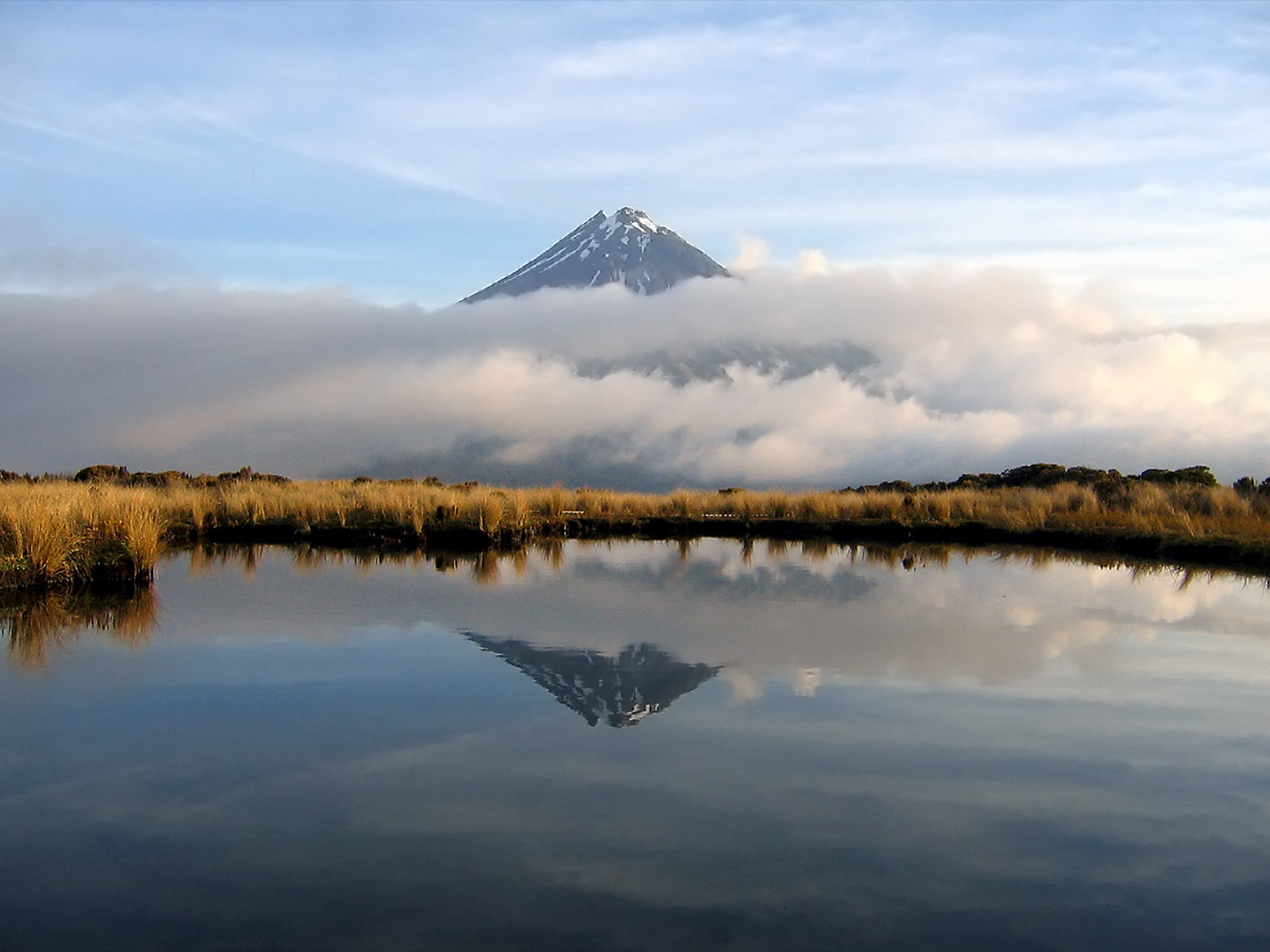
Ask that mountain – here before us, it will be here when we are gone – that mountain as witness, can we honestly say that we have done everything we can? That everything is ‘right’?
These are the questions we need to ask ourselves and the stories that should continue to be told if we are to participate in the journey of healing between the people and the land.
It is often difficult to know where to start in confronting these issues, I have more questions than answers yet I have hope. I have ordered a T-shirt from the Emmaus Rd community, on the front it reads Arohamai which means “sorry” or “forgive me” and on the back are a list of some of the injustices as occurred over those 40 years and are carried yet in our dreams and bones today:
I’M SORRY FOR THE
// INVASION OF YOUR VILLAGE – 5th NOV
// UNJUST ARREST AND EXILING OF TE WHITI AND TOHU
// LOOTING BY THE ARMED CONSTABULARY / 8th NOV
// DESTRUCTION OF THE WHARENUI & CROPS / 20th NOV
// FORCIBLE EJECTION OF 1,556 PEOPLE FROM THEIR HOMES /20th NOV
// RAPE OF YOUR WOMEN
// CONGENITAL SYPHILLIS IN YOUR CHILDREN
ALSO FOR THE:
// IMPRISONMENT WITHOUT TRIAL OF 420 PLOUGHMEN AND 216 FENCERS FOR TWO YEARS
// DEVASTATING EFFECT ON THEIR WIVES AND CHILDREN
// UNJUST CONFISCATION OF YOUR LAND
// BACKDATING OF LEGISLATION TO MAKE LEGAL THE GOVT’S ILLEGAL ACTS
AND OUR FAILURE AS A NATION TO FACE THESE ISSUES
In her Booker Prize Winning novel The Bone People Keri Hulme writes, “I was taught that it was the old people’s belief that this country, and our people, are different and special. That something very great had allied itself with some of us, had given itself to us. But we changed. We ceased to nurture the land. We fought amongst ourselves. We were overcome by those white people in their hordes. We were broken and diminished. We forgot what we could have been, that Aotearoa was the shining land. Maybe it will be again… (p.364)
I will wear this T-shirt as an act of public witness, as a peacemaker wanting to put things right personally and as someone who believes the people of New Zealand are different and special and in faith that the mountain will stand to see a shining land, whole and restored, again.
[1] The Waitangi Tribunal was established in 1975 by the Treaty of Waitangi Act 1975. The Tribunal is a permanent commission of inquiry charged with making recommendations on claims brought by Maori relating to actions or omissions of the Crown that breach the promises made in the Treaty of Waitangi. The full text of The Taranaki Report: Kaupapa Tuatahi can be found on the website http://www.waitangitribunal.govt.nz/.
follow your lights
they say encouragingly
trusting to some
innate inner knowledge
follow the way
that seems best to you
hurihinga to kanohi ki te ra
turn your face to the sun
tukuna to atarangi kia taka ki muri i a koe
allow the shadows to fall behind you
magi following a star
as ancient mariners
followed a north star
to shores unknown
in expectation of
what?
trusting to an inner knowledge
follow your lights
Four responses often overlooked:
- Exercise critical literacy in the social, economic and political geography we inhabit as church, proclaiming God’s sovereignty in ways that engage/challenge the entities that tend to rule our minds, hearts and societies;
- Understand that the gospel is first supposed to represent “good news for the poor”, and socially locating accordingly;
- Discern what it means to “go after big fish” today;
- Reach out to both victims and oppressors (restorative justice, building community across social boundaries)
(case in point the “Occupy” movement)
Full recording of the webinar should be available at www.chedmyers.org in a few days…
 itellyouarise