Tag Archive: Aboriginal


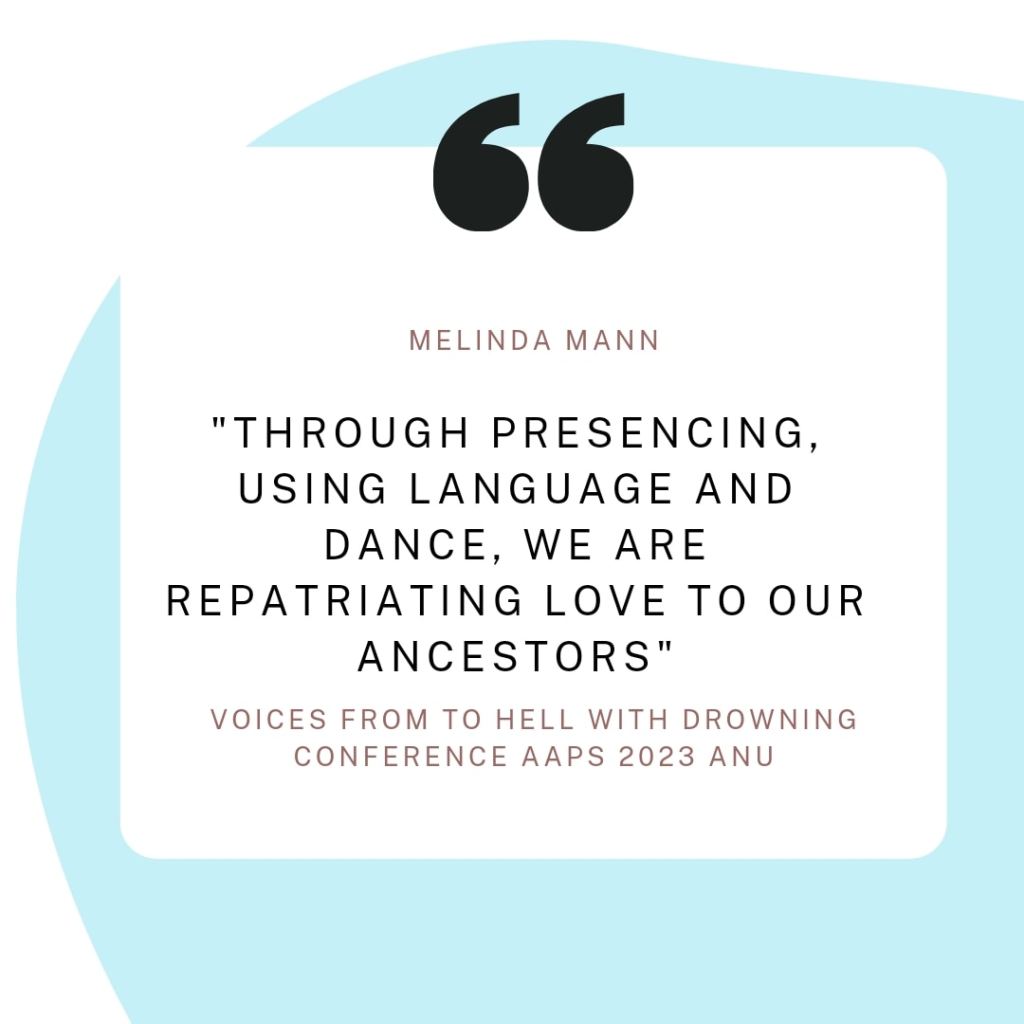
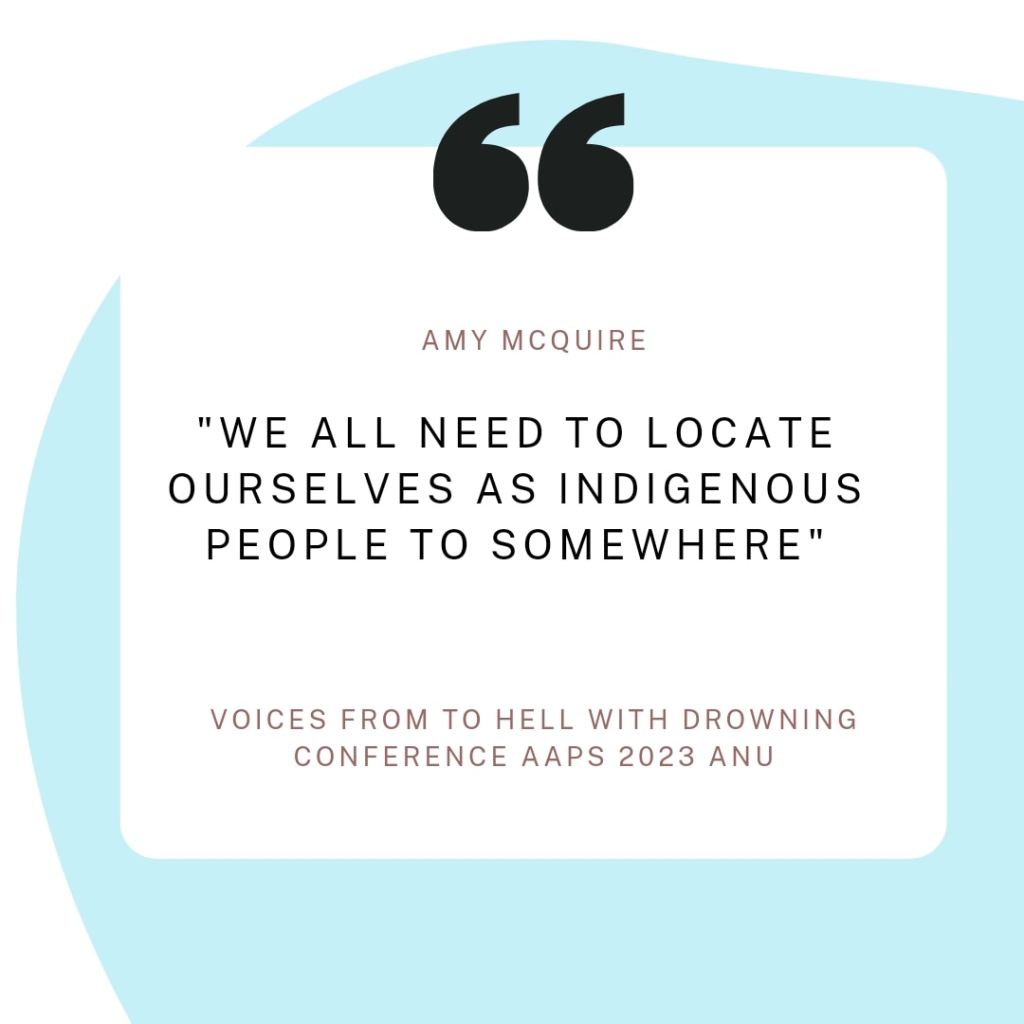
The 2023 AAPS conference theme emphasises the need to resist and reframe fatalist and narrow representations of Oceania.

From the highlands to the islands, the conference aims to advance multiscopic understandings of Oceanic people’s relationships and relationality of places through storytelling rooted in a trans-disciplinary, critical and creative Pacific Studies.

Justice for Creation: Indigenous perspectives and the role of the church

Consider what, or who, you’re apprenticed to in the context of climate justice.
From this grounding, and locating to place – what is the invitation to action?

Mark 1:9-10 In those days Jesus came from Nazareth of Galilee and was baptized by John in the Jordan.  And just as he was coming up out of the water, he saw the heavens torn apart and the Spirit descending like a dove upon him.   In those days William Barak was born into the Wurundjeri clan of the Woiwurrung people and was initiated into men’s business near the Walla Creek by his Uncle Billibellary. As he was coming up out of the water, he looked to the sky and saw Creator Bundjil soaring overhead.

An invitation here to visit the water’s edge and a lens to decolonise our theology…

Rivers are rich landscapes – you know that what is passing now has passed by others before you and will pass by others after you.

There is something special in the biodiversity of this – at once you are not alone and, also you can ask: What does the river bring here with it?  What will it carry away?

Consider what, or who, you’re apprenticed to in the context of climate justice. Where are you immersed? From this grounding, locating to place – what is the invitation to action?

Our land story is not valued in the main-stream cultural practices here on these lands known as Australia.

It is radically counter-cultural to resist, and insist that we need to acknowledge our elders past and present – of these lands and waters here, and those we come from. Might be different. Might be the same. We are because they were.

When we do this, we acknowledge our elders’ deep wisdom of listening and presence. 

When we do this, we acknowledge our elders’ relationships with Creator and Creation, and recognise they are custodians of land, language, law and more – now, and since time immemorial.  Our meeting is the confluence of these.

This wisdom is the inheritance of our communities, flowing down to us, carried within us. What will we pass forward?   Come. Meet us at the river. Tell us your land story.

_____

Raisera McCulloch is a Pasifika woman living on Bunjalung country. She’s an educator developing training on decolonizing practices for systems change and a consultant to INGOs in racial justice. Her homeland of Tuvalu is facing a climate crisis and she advocates for action so her own children can preserve their culture. Currently a student of NAIITS completing a Masters in Theological Studies focusing on Indigenous Theology. Founder of Indigenous Giving Circle, a philanthropic initiative created to decolonise wealth, working towards a reparations model of giving. 

Talitha Fraser, The Recollective, is a Ngai Tahu/Pakeha settler on the lands of the peoples of the Kulin Nation. She is the curator of The Recollective and Administrator for the Australian Collaborators in Feminist Theologies. She is passionate about building communities of care and resilience that honour that identity we come from, and celebrate those we move to claim and participate in. Her creative practice is one of contemplative listening: How does place or event shape creative practice, and how does practice change place, or event, or people?

Going to a sales page and creating a post to ask if there is an item instead of searching for the answer youself is like asking the person of colour you know what BIPOC stands for instead of googling it.

When you hear that white people need to ‘do our own work’ this is what we’re talking about. Especially don’t use questions as a way of doing the following:

  • trying to prove you are woke or engaged in issues of colour
  • trying to identify with/befriend that person so you can someone who says, ‘I have black friends’ or wants to name drop association to your own benefit
  • trying to befriend that person because you want or need something from them

For further reading please check out Clemenger Melbourne’s site: Deadly Questions for other commonly asked questions from ‘Why don’t Aboriginal people just get over it?’ to ‘What the most important things I can teach my child about the land and indigenous culture?’

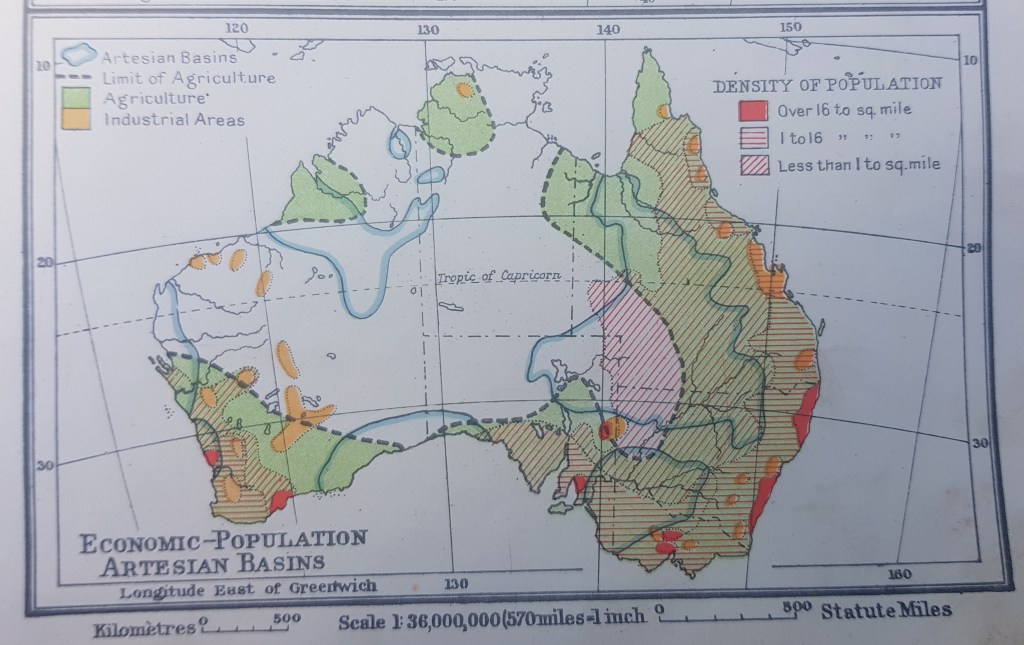
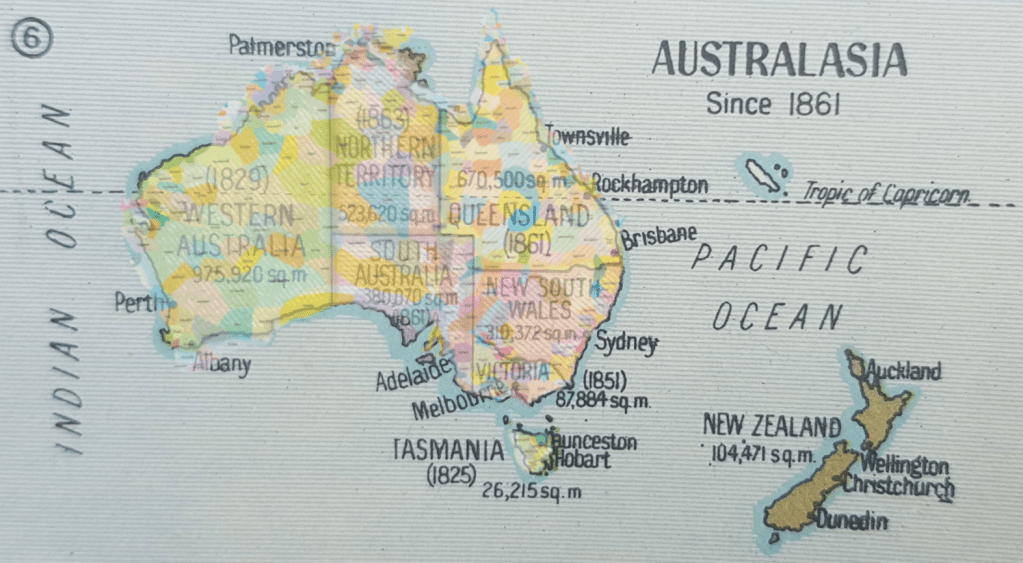
Continuing to consider this years theme for NAIDOC week of “Always Was, Always Will Be” with the Collins Australian Clear School Atlas New and Revised Edition.

This image shows Economic-Population. There’s a sense looking at a map like this that there’s still Terra Nullius – land where no people are and no work is happening. You can see that the measure used for ‘economy’ – doesn’t recognise the agriculture or trade practices of Aboriginal people.

Recognising Aboriginal people must surely need to begin by recognising the profound, enduring relationship and connections they bear with the land.

“Aboriginals engaged in seed propagation, irrigation, harvest,
storage, and the trade of seed across the region.”

― Bruce Pascoe, Dark Emu

When you say/hear an Acknowledgement of country, does considering the above make you reconsider what it means? “We acknowledge that we gather on the lands of which Aboriginal people have been custodians since time immemorial, and pay our respects to elders past, present and emerging”

The dashed line above denotes the ‘limits of agriculture’ (at least for the 60s-70s when this atlas was published). What can we learn about what is considered ‘agriculture’ from this image? Who gets to determine that?

Does the image raise any considerations for balance?

Always Was

This years theme for NAIDOC week is “Always Was, Always Will Be”. I’m interested in finding ways to creatively and contemplatively explore what this means as a white-presenting Settler in this place.

I love old books and paper, I’m going to use some of these as a lens: First up is the Collins Australian Clear School Atlas New and Revised Edition.

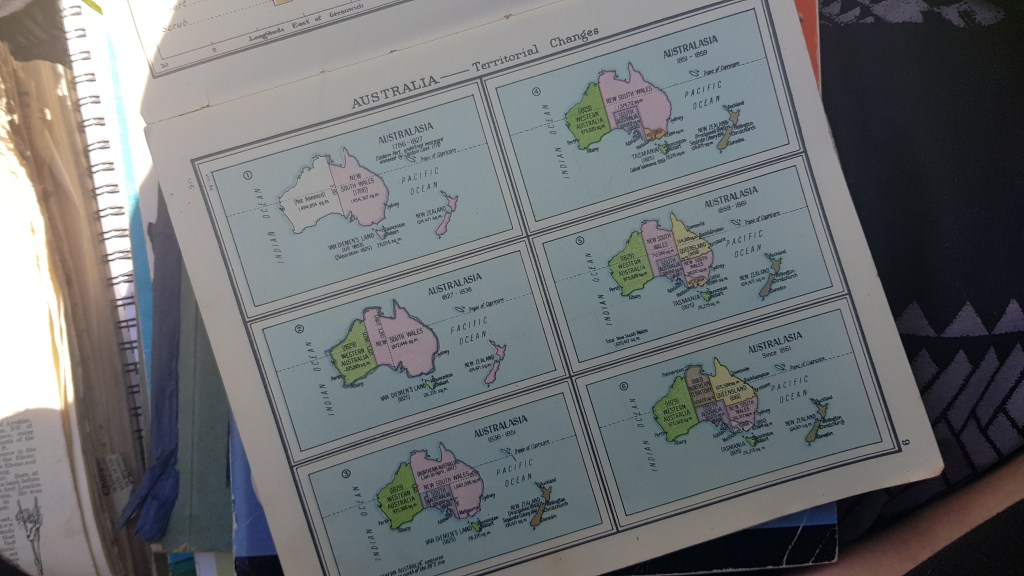
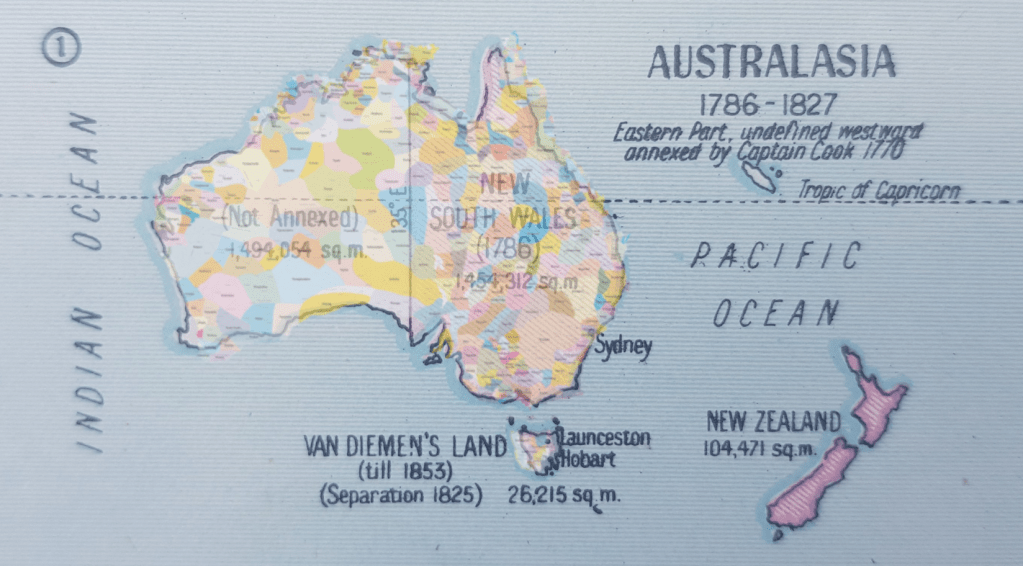
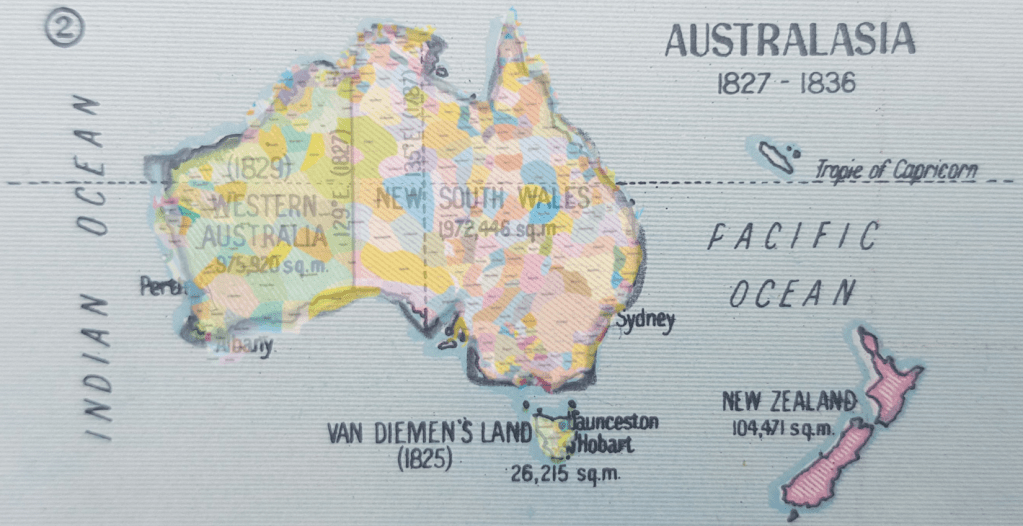
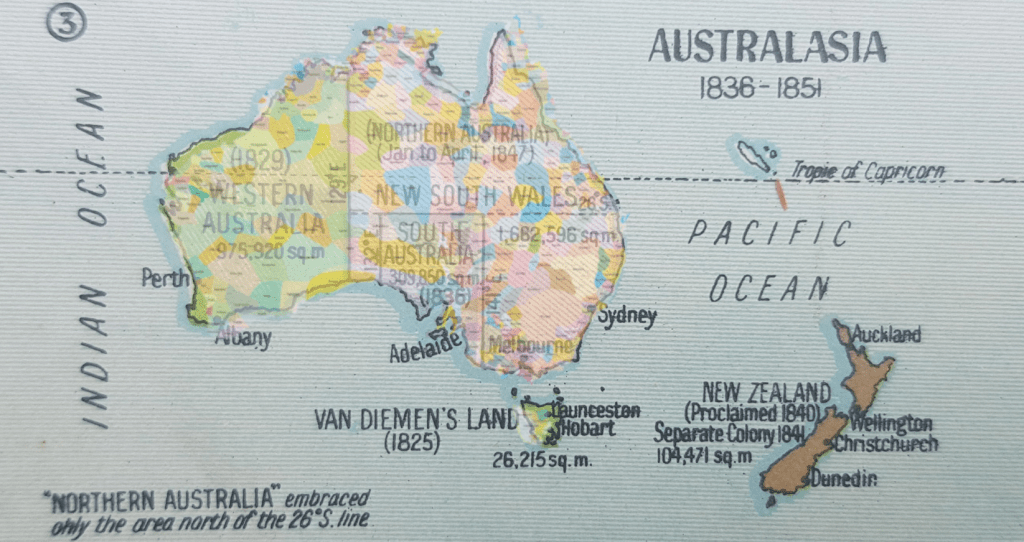
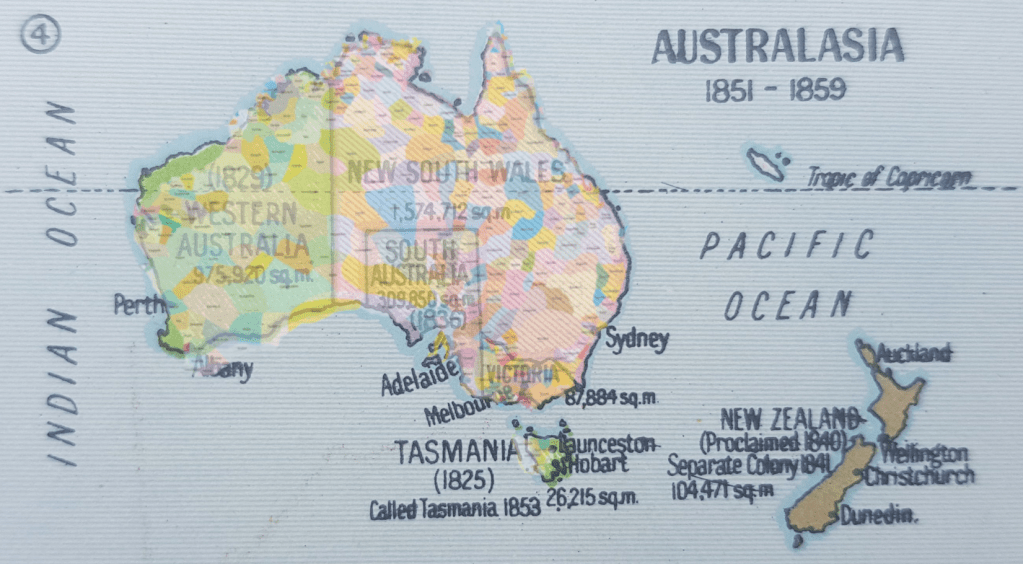
p.9 “AUSTRALIA – Territorial Changes”

These maps show the territorial changes (6) between 1786 and 1861. Here they are shown with an overlay of the AIATSIS map of Indigenous Australia. It’s hard not to liken that to a shadow, a haunting overlay, crossing and connecting countries and communities across territorial lines drawn and re-drawn.

What arises when you look at these? Has your home country/town been in different states?

It’s important to understand that when you are speaking to an Aboriginal or Torres Strait person and recognise that their cultural tale is millenia-long that the image of Australia they might imagine is the reverse: Aboriginal land with state and territory lines superimposed on top. When Aboriginal and Torres Strait Island people say: “Always was, always will be, Aboriginal land” this is what they mean… these many countries and territories existed prior to 1786 and they are still here.

Yesterday, Gomeroi woman, Rachel McPhail, living on Wiradjuri country did a call out to challenge Australia Post to encourage Aussies to include the traditional Nation name in the extra address line when sending letters and packages. To support this idea, you can check traditional Nations at AIATSIS.gov.au.

20190406_131813.jpg

A take home message of any indigenous event such as ‘Land and Place: Indigenous Perspectives in the Era of Displacement‘ these days is that non-indigenous people need to do their own homework and help to educate their mob but it can be hard for individuals or churches to know where to start.  This is a synthesis of some suggestions that arose from the NAIITS launch sessions and yarning circles and some other resources that I’ve found useful along the way that resonated with what I was hearing…

  • Do undergrad or postgrad study in indigenous theology with indigenous teachers through Whitley at the University of Divinity!
  • Visit collections and exhibitions in national galleries and museums – like a First Peoples tour of the Bunjilaka Cultural Centre at the Melbourne Museum, a guided walking tour of Melbourne CBD through the Koori Heritage Trust, or visit Narana.
  • Folks go on pilgrimages such as the walking the Camino de Santiago, or Via Dolorosa in Jerusalem… what if we connected with the Creator Spirit right here in this place? Visit Uluru, an intentional community like Campfire in the Heart,  or just go camping in an area of native bush near you and experience the land around you… if you’re not sure where to go (ask permission and) join the mob sitting in at the Djab Wurrung Embassy protecting 800-year old birthing trees from a motorway extension that’ll save drivers merely 3 minutes.
  • Connect with the mob at Indigenous Hospitality House (IHH). The Indigenous Hospitality House is a Settler (non-Indigenous) household on Wurundjeri country in Melbourne, Australia. The residents open their home to provide short-term accommodation for Aboriginal and Torres Strait Islander people who need to come to Melbourne for hospital business. They also make space for others to rethink their Settler identity and discipleship journey in light of Australia’s colonial history – they run bible study series, host regular Learning Circles,  and have published a book called Tales from the Table on their reflections and learnings from 15 years of hosting guests.
  • Explore and practice different rhythms of ritual and liturgy such as those of the Wilderness Way Community – put phones down to leave chronos time behind, take off shoes to connect with the earth, everyone is outside so you are hearing the Bible stories orally and acting them out. There are no mikes or screens or songsheets – a lot of the songs therefore are call and response or echo format…
    Everything I need is right in front of me (x2)
    Can we be manna, manna?
    Can we be manna for each other? (x2)
    See more suggestions for meditating in your watershed here.
  • Integrate daily, monthly, annual rhythms – in what you read, watch, who you follow on Facebook or on Instagram, what you do and where you go. Commit to knowing more than you did yesterday or last year. Learn significant dates for Aboriginal and Torres Strait Australians and find ways to acknowledge and observe them as an individual, a family, a community, a church… as a nation. You will find art and activism, celebrations and song.

Just like Aunty Rev Patricia Courtenay said: ‘Know the past, change the future’

Land and Place: Indigenous Perspectives in an Era of Displacement  NAIITS

Uncle Dr Terry LeBlanc: ‘Native perspectives on Land and Place’

Uncle Dr Terry LeBlanc: ‘Native perspectives on Land and Place’

We are all related. Connected together. We touch one another with life lived on the land together. Interrelated and interdependent with the land.

NAIITS stands for North American Institute for Indigenous Theological Studies, partnering to become an indigenous learning community here at Whitley.

The land is not to be feared or conquered but is part of us. Adam (adamah – earth) red dust on the ground. We are dust. We are the same dust.

THEOLOGY OF LAND

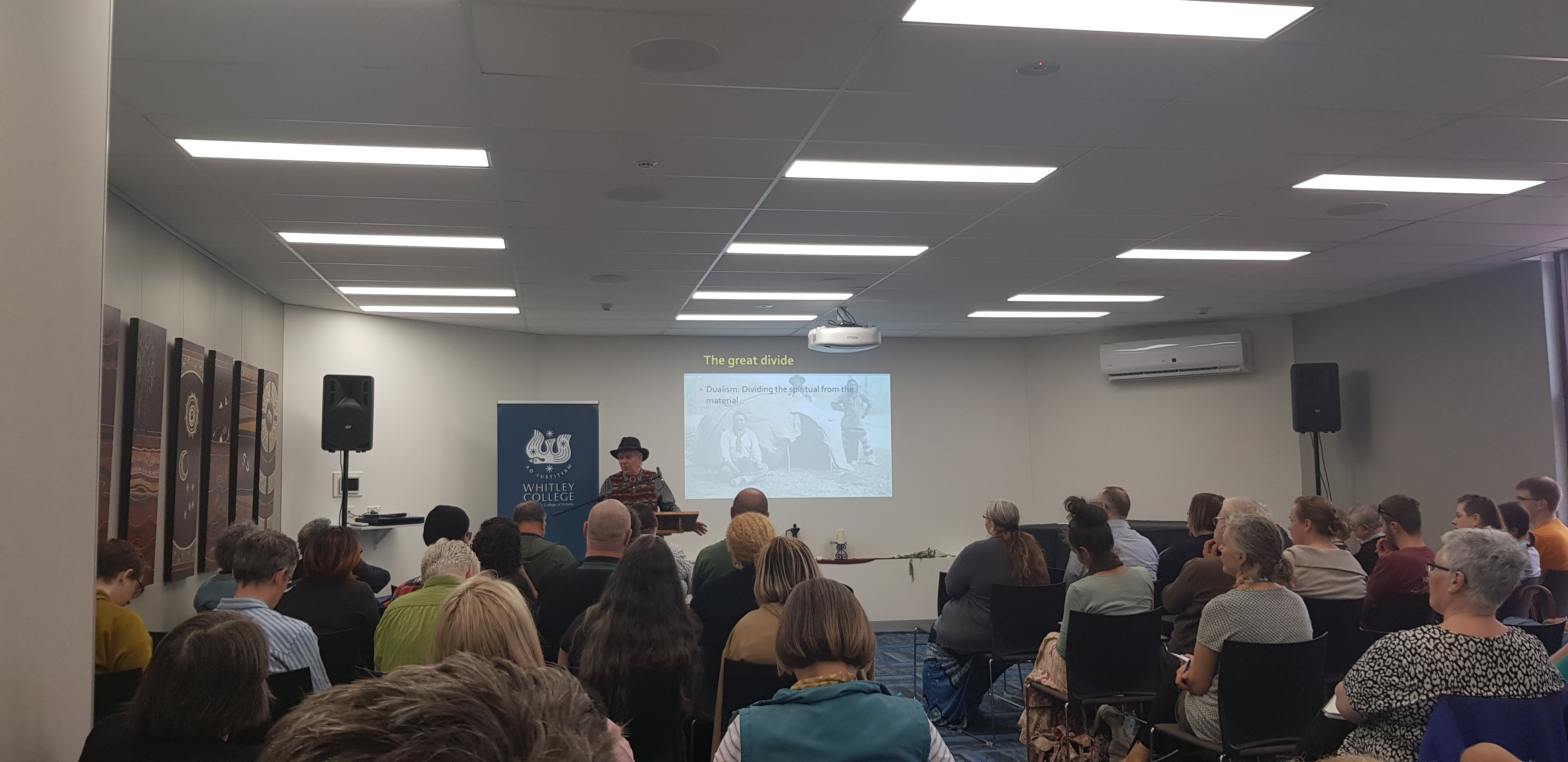
The Great Divide

  • Dualism: dividing the spiritual from the material
  • The reformers also divide the spiritual from the material: spiritual and political are now separated. Political and land separated.

Invited to do a welcome to Christian and Muslim refugees in Canada and was able to say: As I’ve welcomed the 500 years of refugees represented behind me I also want to welcome you. I’m sorry you’ve had to flee violence, to lose connection to the land of your ancestors.

Place – security, growth, wonder, sights smells… experience what God has for us in this place.

Utilitarian View of Land

  • Commodification of land the breaking loose of land from people along with the loss of work – labour now becomes a commodity.
  • John Locke and the primacy of private ownership.
  • Nature is seen as an enemy to be subdued and dominated.

Colonisers saw indigenous people as godless heathen savages. We can do this to Muslims still – see them as godless people of a godless land but this isn’t truth.  This belies a faith that says God is everywhere and all are made in the image of God.
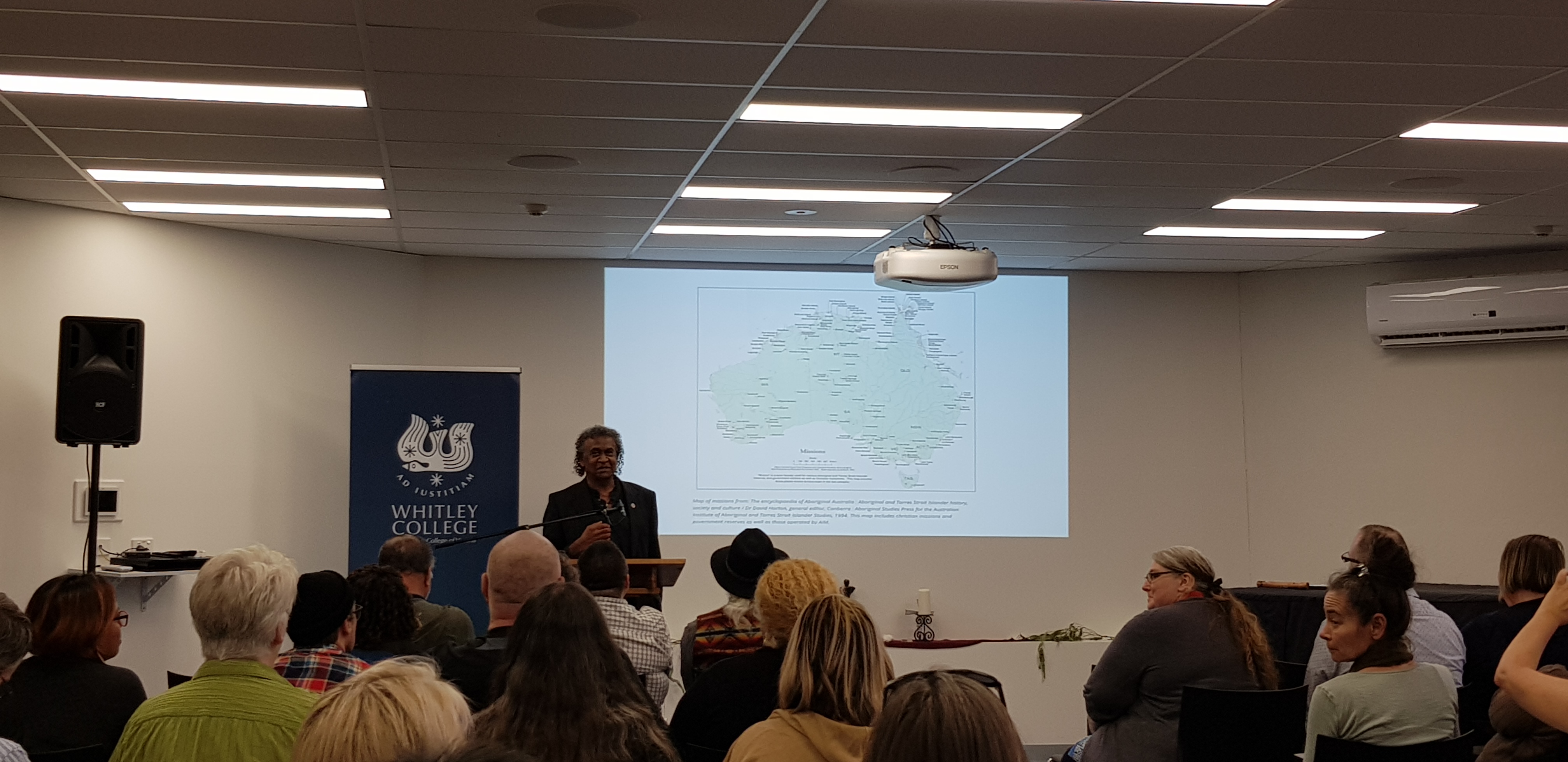
Uncle Rev Ray Minniecon: ‘Walking the Land’

Uncle Rev Ray Minniecon: ‘Walking the Land’

How as people and pastors can we operate to be authentically indigenous and authentically Christian? I ask myself these questions:

  1. Who am I?
  2. Where have I been?
  3. What do I do?

We are always in search of our people.  We meet and tell our stories. Sometimes our great, great, grandparents lived at the same mission.  Did they have other brothers and sisters? We don’t always know. People from a different family, from a different mob, from a different country might hold part of our story that hasn’t been heard.

I am confronted by racism everyday. I have learned how to have faith and to draw on the strength of the ancestors… ‘so that your faith might rest not on human wisdom but on the power of God’. (1 Cor 2:5). This includes church who continue to exclude us. I’m invited to speak about aboriginal issues but not to preach the gospel.  That is why I started a little congregation in community at St John’s Anglican in Glebe called ‘Scarred Tree Indigenous Ministries‘. We are grateful to work on land that has the last Scar Tree in Sydney CBD. It is a way for us to connect to our history and to the gospel. we have to confront Australia’s history as a church, neighbourhood and community. we would lose our minds, selves, souls if we don’t stand up.

TALKING CIRCLES
Someone in our group shared their story adding, “when you don’t know who you are, there are no reference points.”

Psalm 68:5-6  (NIV)
A father to the fatherless, a defender of widows,
    is God in his holy dwelling.
God sets the lonely in families,
    he leads out the prisoners with singing

God as Father gave me a sense of who I am. Knowing this, no one is a mistake. Then I had a moment on country in a park with sunlight… I knew I belonged to the land and felt known. Mother (Nature) – living and breathing.
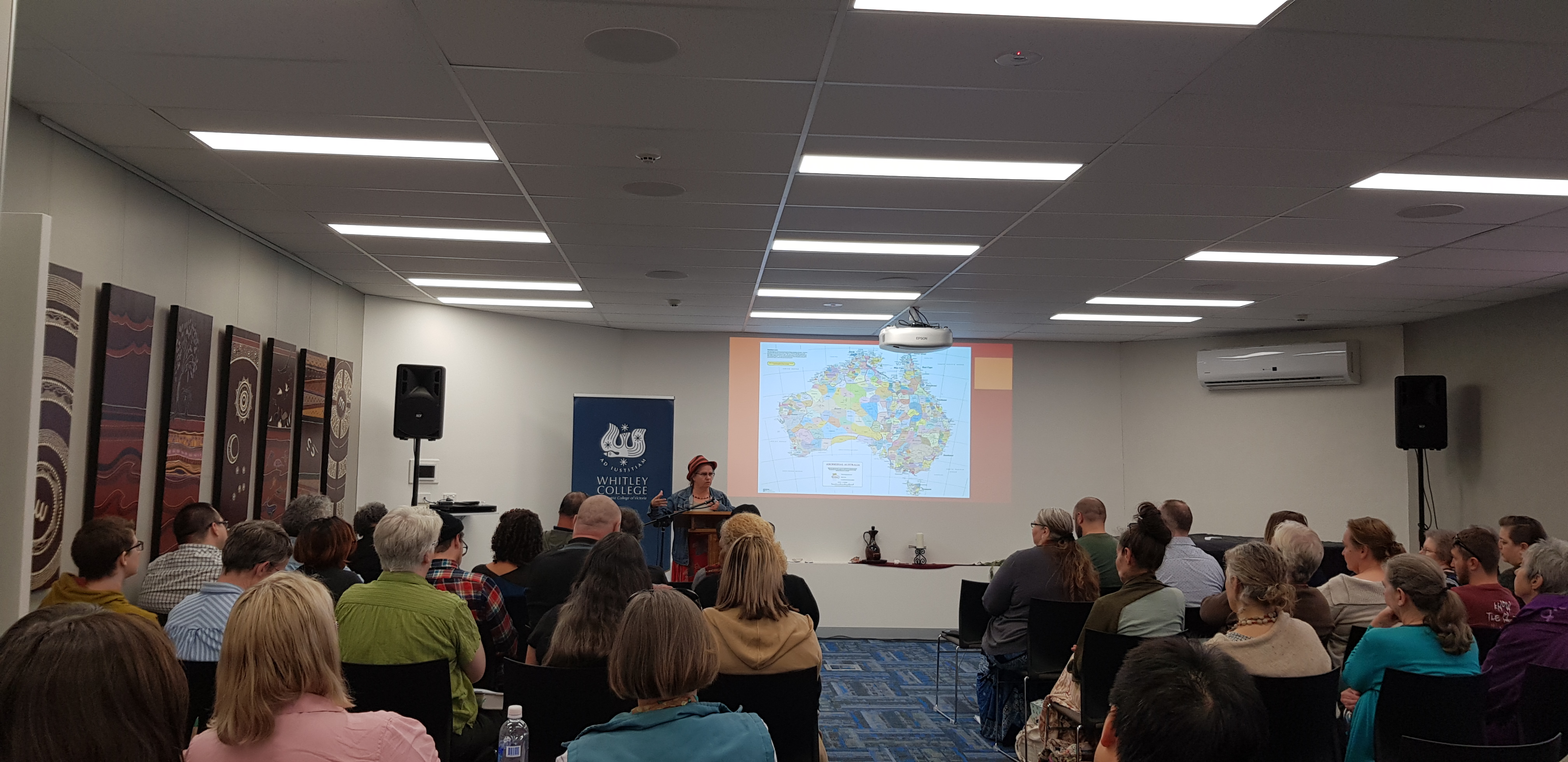
 

Aunty Rev Patricia Courtenay: ‘Aboriginal spirituality in an era of displacement’

Aunty Rev Patricia Courtenay: ‘Aboriginal spirituality in an era of displacement’

IDENTITY

Where did I grow up? What country is that and what language is spoken there?

ASSIMILATION

  • Displacement
  • Denial of culture and spirituality
  • Disconnection

RESPONSES

Our language is not ‘lost’, our home is not ‘lost’,  we are disconnected from them.

Why would you want to identify as aboriginal?

I am supported, protected and reminded who I am by my ancestors and totem animals. My strength is in my spirituality.

How can you identify as Aboriginal and a Christian?

I can separate the faith of the missions from Christianity.  There is a spiritual basis for this – acceptance of all – Jew and Gentile… 1 Cor 7:17-20. Live the life that the Lord has assigned… obey the commands of God in all things. You were provided identity at birth. Who were you called to be? Dualistic enquiry – I can be Christian without denying or giving up my cultural identity or heritage. Who I am is rooted in belonging and connectedness.

CULTURALLY SPIRITUAL WAYS OF KNOWING AND BEING

  • sense of belonging: Aboriginal belonging comes from story and love of the land.  Aboriginal people know and keep these stories. Are able to use these in other contexts. Able to use these for survival. We have an embedded spiritualness and awareness of sacred space.
  • holistic worldview: spirituality and culture are invisible. Our mind and body’s wellbeing are interconnected with our spirituality. An attack on one affects the other areas.
  • spirits of place: we have an oral tradition and literacy.  We have a spiritual connection to the land and knowledge generation and re-generation. Supernatural and natural occupy the same place and time.  Not mystical but mundane and embedded in the landscape. Someone might stay at a place and dream there – we learn through dreams.  This is considered a geographic source of sacred knowledge. The revelation comes to the person in the right place at the right time.  This is about identity, kinship and relationship to the land… receiving wisdom.  This wisdom is omnipresent but non-visible for no-indigenous.  Not mythfolk, lore or legend speaking of the past but continue happening now.

Aboriginal Australia still exists. When we gather and tell our stories ‘the land is speaking’. As guardians of the the land ‘we are speaking for the land’. The Creator Spirit/God’s relationship with indigenous people does and will continue to exist.  Language, world views, etc. can be shared with those willing to listen.

CREATING AN AUSTRALIAN CHRISTIAN

  • how do indigenous Australians reconnect culturally and spiritually?
  • how do non-indigenous Australians relate to indigenous Christians culture and spirituality?

‘Know the past, change the future’


Aunty Rev Janet Turpie Johnstone: ‘Bunjil weaves past and future in the present’

Aunty Rev Janet Turpie Johnstone: ‘Bunjil weaves past and future in the present’

Wominjeka – ‘we have come together for good purpose’

When we have shared stories and place, that goes with us when we leave.

Bunjil patterns the past and future in the present.  We’re not Animist, we don’t worship animals but are related to them and to the river.

Can we live with the land and waters so that everything has a place to live?

  • colonial invasion
  • Bunjils narratives
  • work with local elders eg. Bunjil’s Nest Project.

Reconciliation:

  • multiculturalism
  • migration
  • recognise
  • silence – denial


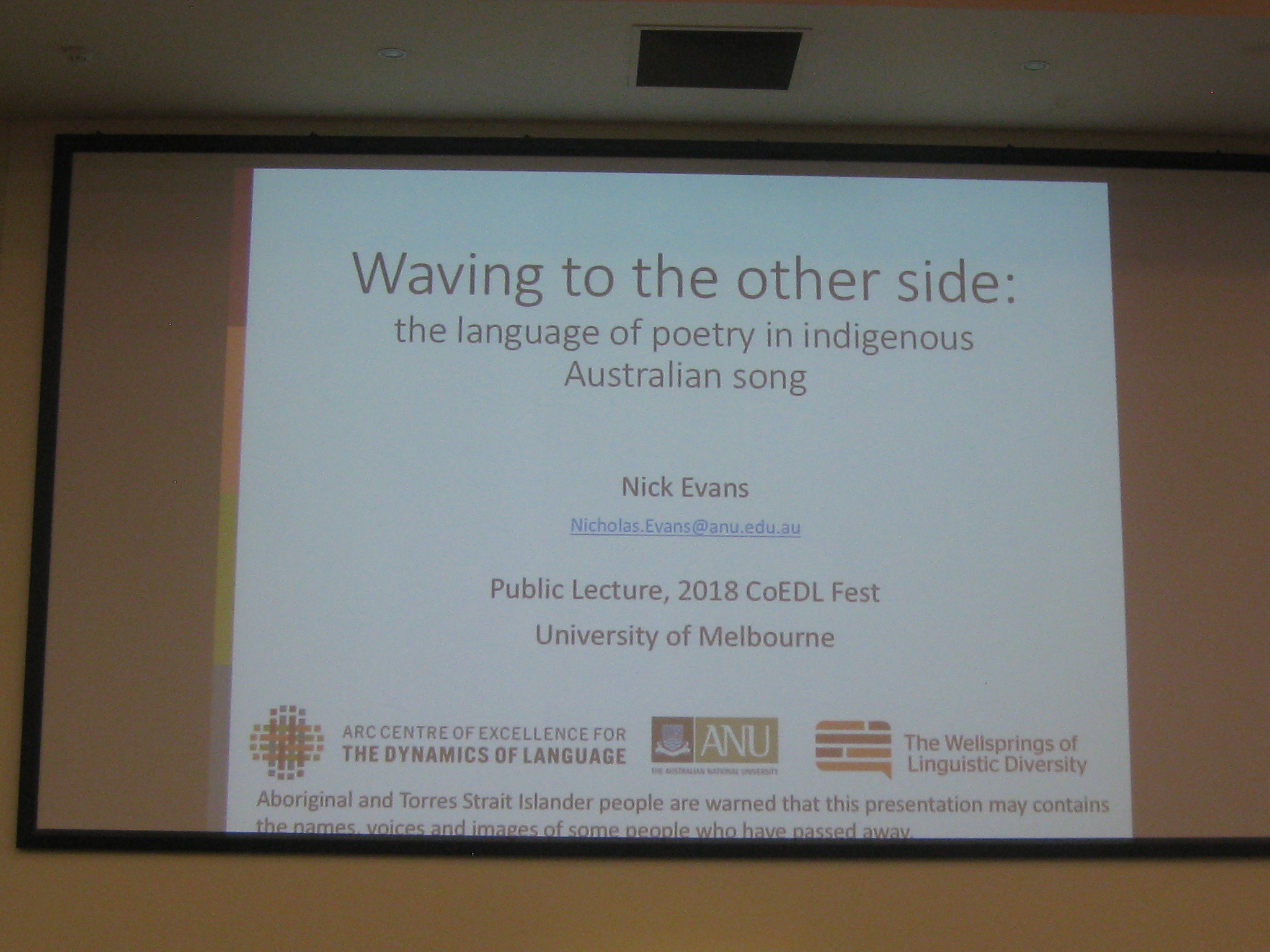
Professor Mark Brett & Naomi Wolfe: ‘Traditional Land and the Responsibility to Protect Immigrants: A Dialogue between Aboriginal Tradition and the Hebrew Bible’

Professor Mark Brett & Naomi Wolfe: ‘Traditional Land and the Responsibility to Protect Immigrants: A Dialogue between Aboriginal Tradition and the Hebrew Bible’

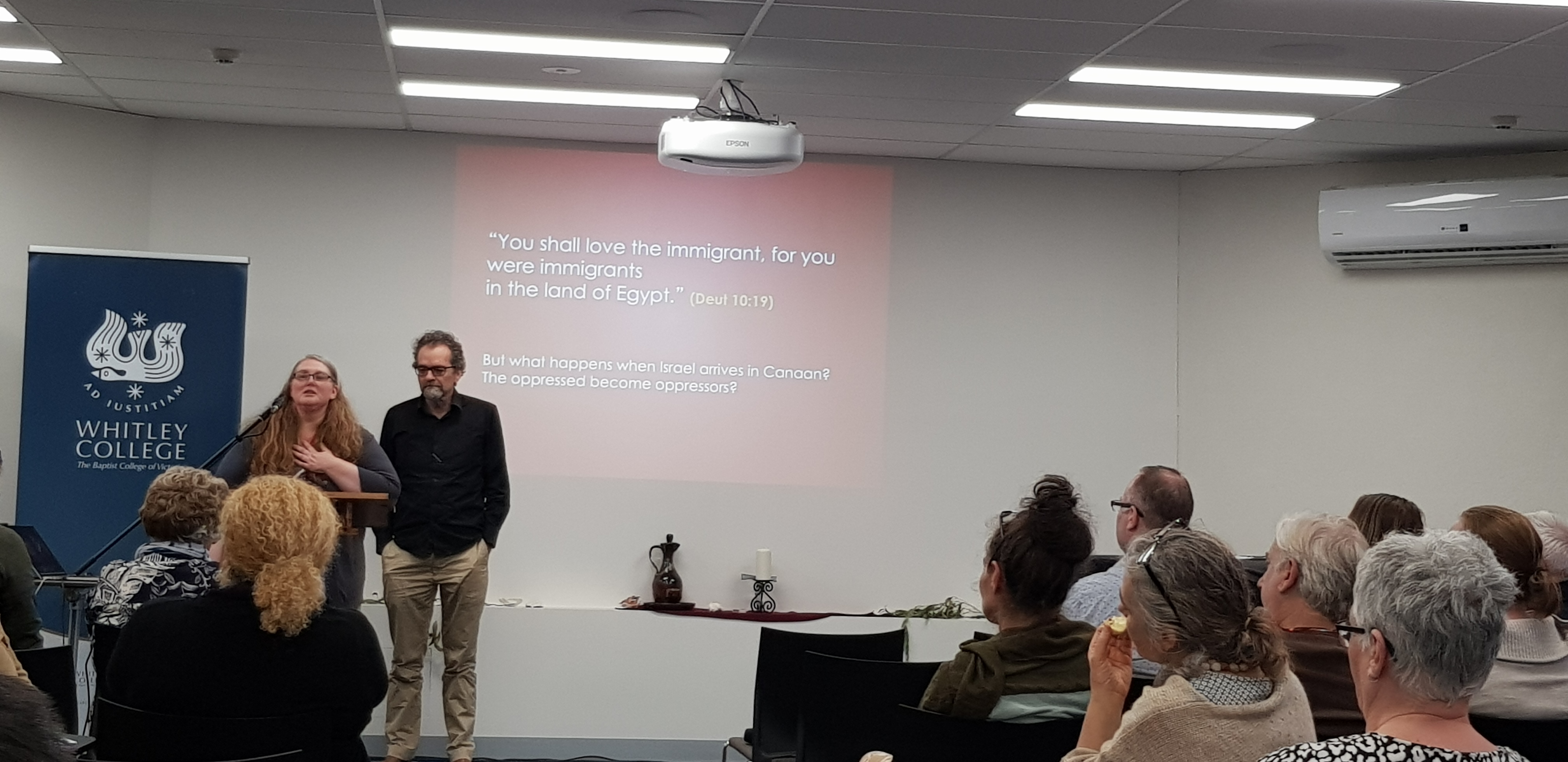
“You shall love the immigrant, for you were immigrants in the land of Egypt” (Deut 10:19)

But what happens when Israel arrive sin Canaan?  The oppressed become oppressors?

Indigenous mob don’t need a qualification to be who they are.  But this partnership has arisen from an international journey and collaboration.

Strangers, immigrants, sojourners… it’s the story of people who took others’ land.  If you don’t take care of the widow, orphans, migrants… you will lose your country.

Indigenous: country knows them, calls them home.  There’s a kinship system and people are looked after. ‘no one should be left behind’

Jer 26: 8-9 and Jer 26:16-19 people hated what he had to say… except some elders. Not citing Deuteronomy but oral storytelling – there moral compass is somewhere else. In the Samaritan story, who do indigenous people see themselves as in the story? Where are the settlers in the story?

We’re all Gentiles.  Settlers brought the thinking, they are the new Israel. They have the right to take the country. That’s wrong. They think they’re superior and that God is on their side. There is a theological problem with this logic.  White people are not the new Israel.

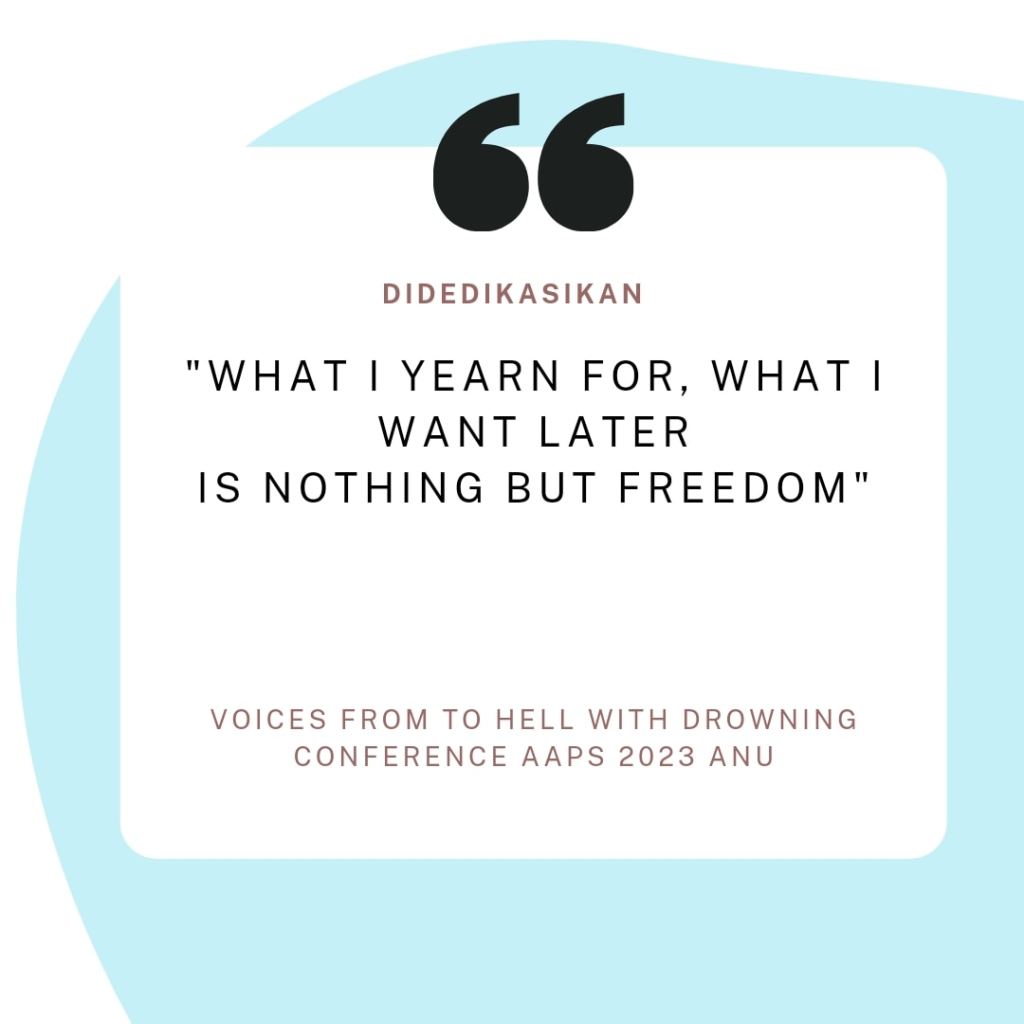
There is an idea that our liberation is bound to native title, but that’s extinct in Tasmania. So what does freedom look like for those of use from there?

  • where are we?
  • what does that look like for our relationship with settlers
  • what does that call us to be?
  • how does it call us to live?

Reinterpreting our stories:

Every identity therefore is a construction… a composite of different histories, migrations, conquests, liberations and so on. We can deal with these either as worlds at war or as experiences to be reconciled. Edward Said.

What next?

  • go back to the text
  • what does that mean for me?
  • Who am I? What’s my cultural identity?
  • how do I engage gospel? … those around me?

Reading the Bible as Israel is toxic for Gentiles.  Colonised people are colonising.

Our beliefs are already here, we don’t need yours. Our sacred land is right here. Our text is the land – we hear it with our feet and our hearts. It is broader and more inclusive.

We can have/give/build what was denied to earlier generations if we’re strong in culture.

Wonderful animation…

Bunjil The Creator: Bunjil’s Flight to the Stars


Tunnerminnerwait and Maulboyheener execution of freedom fighters Melbourne monument Australian colonial history First Nations Freedom Fighters day

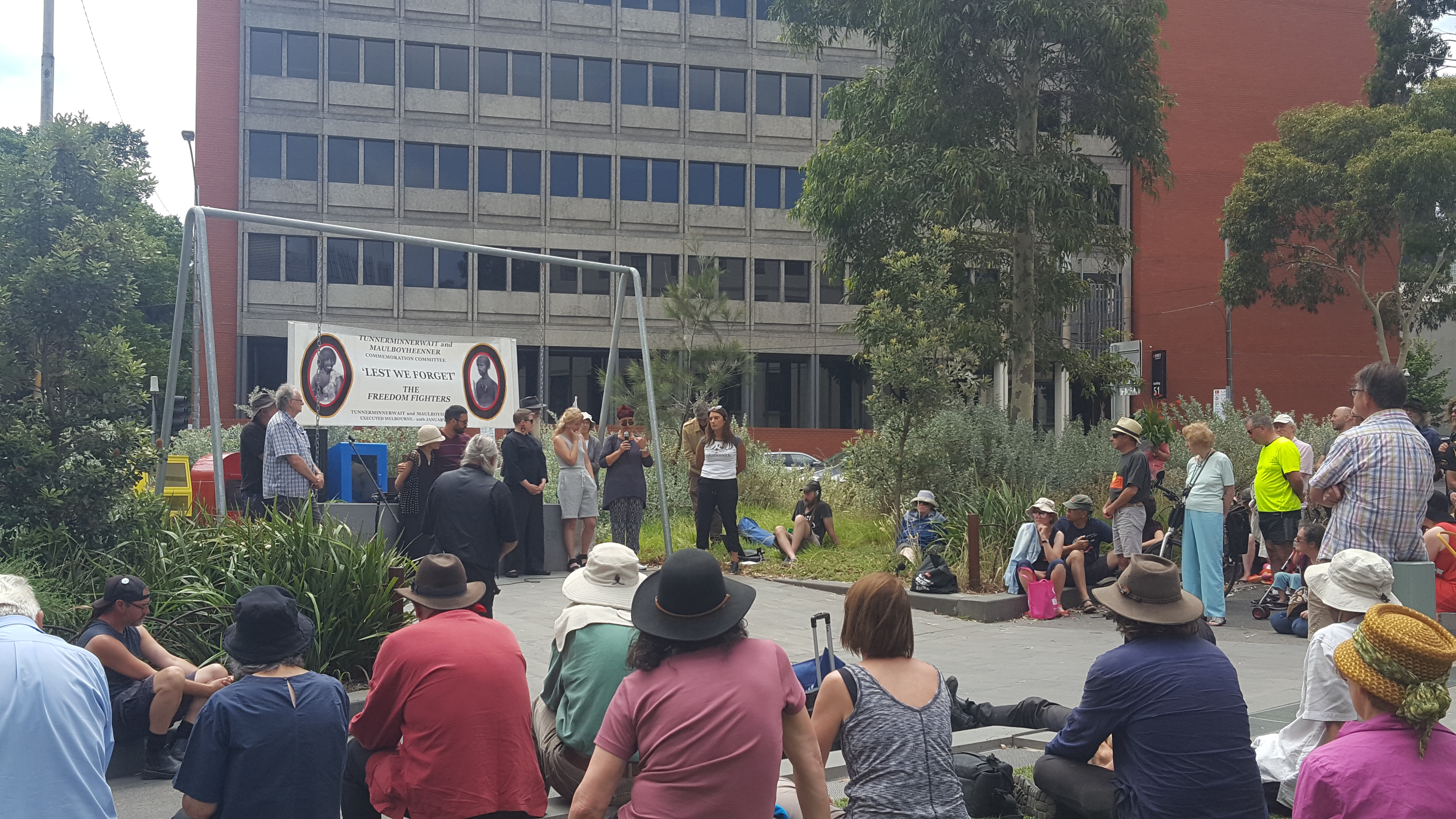
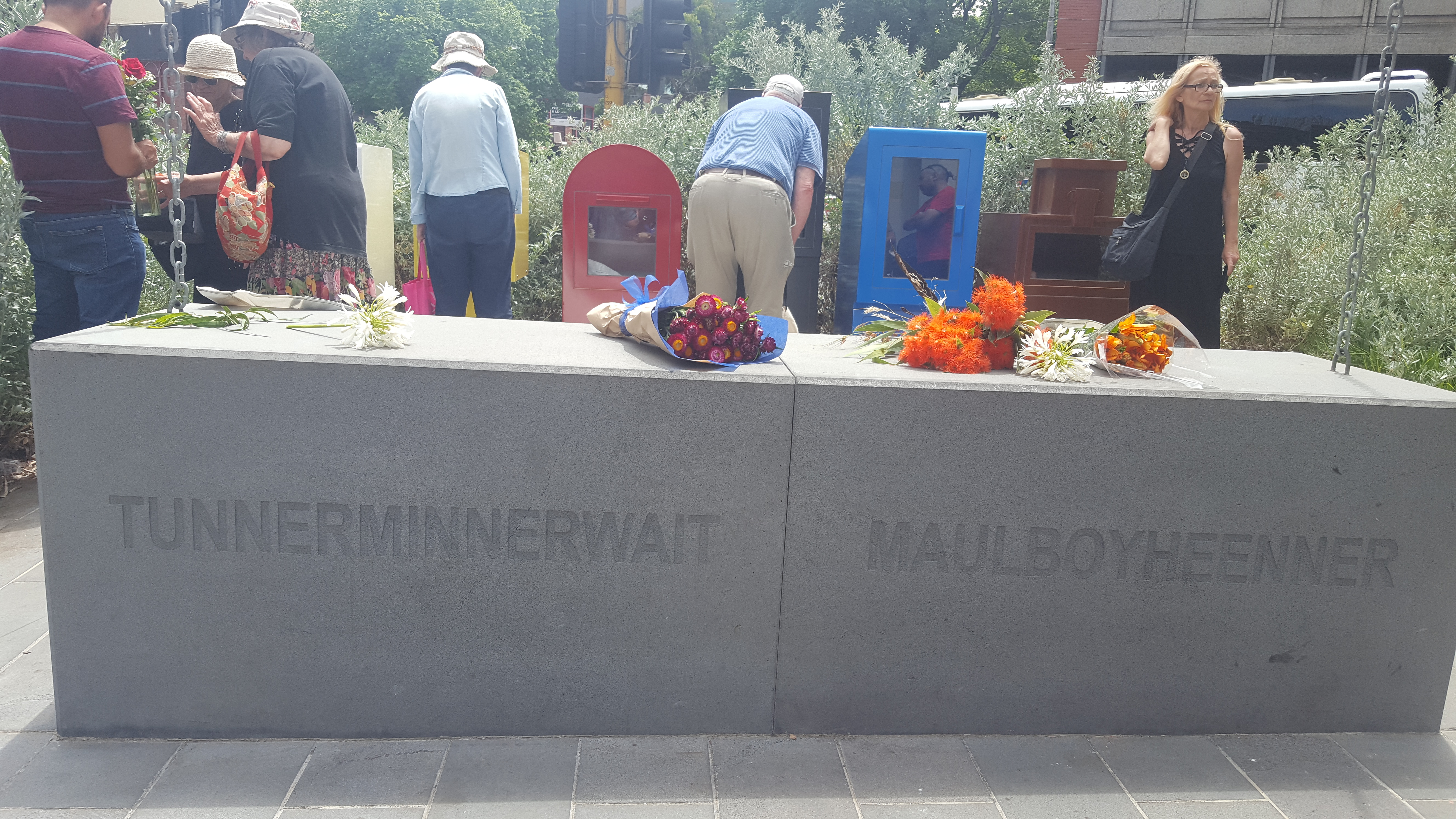
Today is the anniversary of the public execution of  two indigenous freedom fighters, Tunnerminnerwait and Maulboyheener, on the 20th January 1842. This commemoration is held annually at the monument established in their memory at the corner of Victoria and Franklin St in Melbourne. The monument was built in 2016 by Melbourne City Council after a decade long campaign by the Tunnerminnerwait and Maulboyheener Commemoration Committee – it remains the only monument in a major Australian city that recognises the frontier wars that occurred as Australia was colonised. Had Tunnerminnerwait and Maulboyheener killed? Yes. Fighting to protect their people, their lands, their culture, their languages, their laws and their way of life.

Tunnerminnerwait and Maulboyheener execution of freedom fighters Melbourne monument Australian colonial history First Nations Freedom Fighters day
Aunty Carolyn Briggs standing with descendants of Tunnerminnerwait and Maulboyheener and representatives of their Tasmanian tribes

Australia is a country living out many complexities – the dominant narrative and what the history classes teach is that no one was here, or very few, or that those who were here were sub-human somehow and uncivilised. To name and recognise Tunnerminnerwait and Maulboyheener is to honour those who survived a holocaust. The blood of many Aboriginal and Torres Strait Islander men, women and children has been spilled on this land, not all were able to fight; sometimes there were diseased blankets, poisoned food, attacks as people were sleeping, overwhelming numbers and overwhelming force.  To remember the names of these two men is to symbolically remember all those who lost their lives at the colonial frontier.

Tunnerminnerwait and Maulboyheener execution of freedom fighters Melbourne monument Australian colonial history First Nations Freedom Fighters day

Acknowledging these men, hearing this story, knowing these names goes some way to undoing the erasure of aboriginal people existing in this place which is a step toward relationship with them now.

“What hope is there for us? …it’s you.”

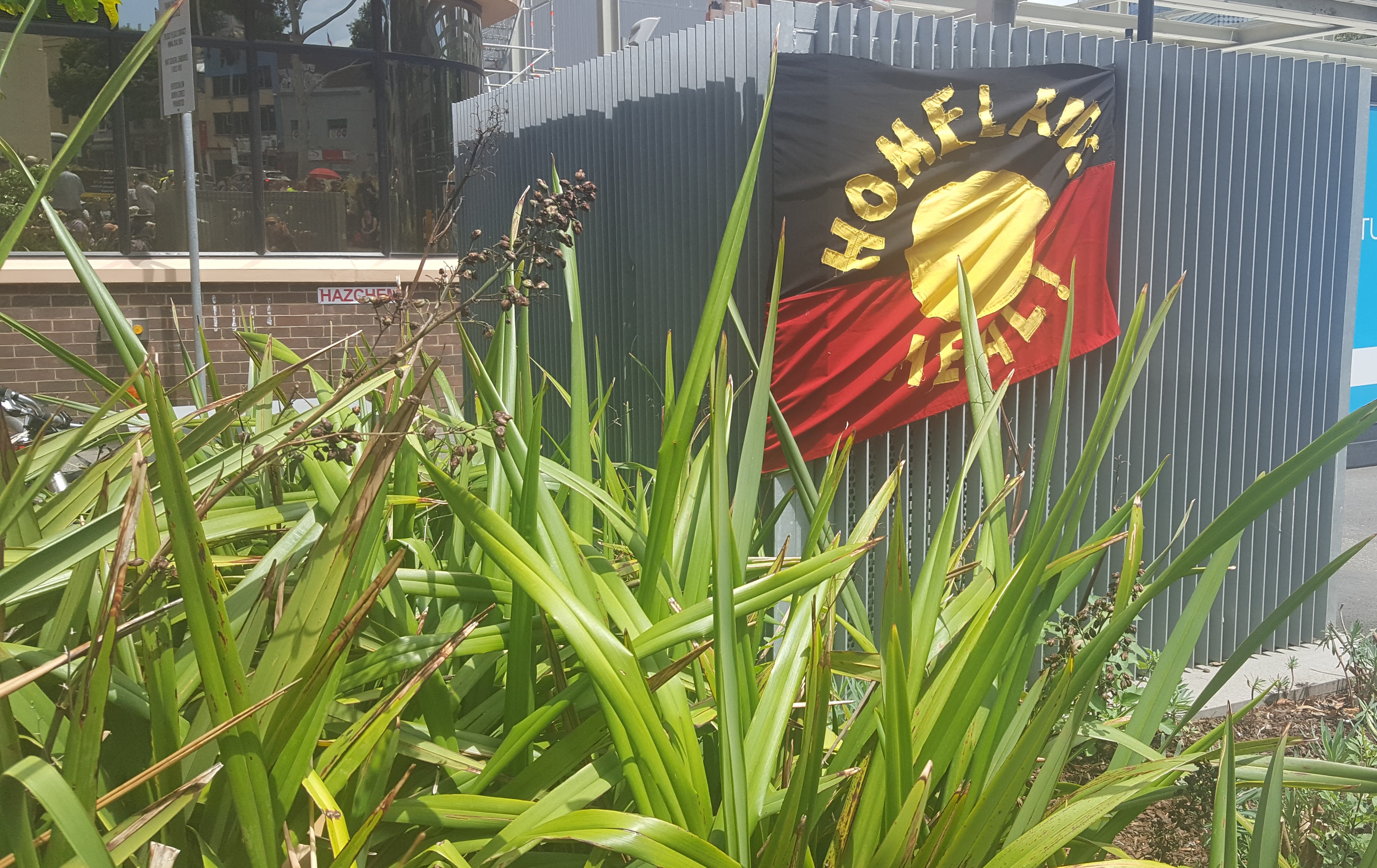
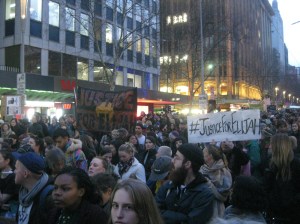
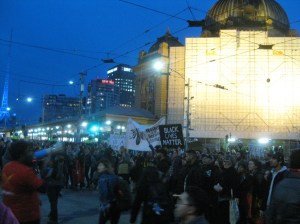
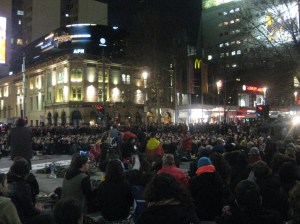
Hear the anger and the grief of this question, yes – but hear too the longing in the answer. In her welcome, Aunty Carolyn Briggs asks another question: “How would you honour this sacred ground if you were walking in a churchyard? Peoples blood has been spilled on the ground here, how will you show them respect?”  She tells us that the answer is to live well here, bringing: no harm to the land, no harm to the water, no harm to children. This is a challenge when we know that fish are dying in our major waterways from mismanagement, Aboriginal people are still dying, locked up and their children are still being taken away.  But someone has hung a banner here today that reads: “Homelands Heal”, and someone has asked: “What hope is there for us?” and answered: “It’s you.”

homeleands heal

Today brings to mind Jacques Ellul’s, The Meaning of the City, in which he discusses how the Hebrew word for city is ‘iyr or ‘iyr re’em and that this can have multiple meanings – “it is not only the city, but also the Watching Angel, the Vengeance and the Terror… we must admit that the city is not just a collection of houses with ramparts, but also a spiritual power. I’m not saying it is a being. But like an angel it is a power, and what seems prodigious is that its power is on a spiritual plane.”  An old Uncle stands up and shares that he has a vision that this year might be the year of revelation.  He remarks that: “White men made this place lawless. You can’t have a spiritual connection to this place except through us.” Because there was law in this place before the colonisers introduced prison and executions, and spirituality in this place before the colonisers brought the Bible.  Are we listening to the city of Naarm (Melbourne)? What does it have to say?
Melbourne’s first official public execution was apparently quite the festive spectacle and we are given to know that 3000-5000 people attended the public hanging of Tunnerminnerwait and Maulboyheener.  There were perhaps 100 people gathered to listen to songs and stories at this years commemoration… maybe next year there will be more.
“What hope is there for us?
It’s you.”
buried below Queen Vic Markets
Tunnerminnerwait and Maulboyheener execution of freedom fighters Melbourne monument Australian colonial history First Nations Freedom Fighters day

war memorial footscray lest we forget avenue of honour ANZAC Day 2018

This ANZAC day as we remember those who lost their lives in WW1 and WW2 we also acknowledge all of those who lost their lives in the Frontier Wars.

We acknowledge people of the Kulin Nation stalked game, collected food and fished along the river junctions, estuaries, oceans, swamps and lagoons of this place since time immemorial. They met, raised families, shared songs and stories.  We acknowledge this way of life was interrupted during white settlement and that this country was the scene of conflicts between the Kulin Nation people and the European colonisers.

You won’t see any war memorials depicting the Frontier Wars. When Aboriginal people mourn the loss of a family member they follow Aboriginal death ceremonies, or ‘sorry business’. It is believed that when a person dies, their spirit goes back to the Dreaming Ancestors in the land if the correct ceremonies rituals are conducted.  The tradition not to depict dead people or voice their (first) names is very old  – traditional law across Australia said that a dead person’s name could not be said because you would recall and disturb their spirit. After the invasion this law was adapted to images as well.

Aunty Margaret Parker from the Punjima people in north-west Western Australia describes what happens in an Aboriginal community when someone dies.

“…when we have someone passed away in our families and not even our own close families, the family belongs to us all, you know. The whole community gets together and shares that sorrow within the whole communityWe have to cry, in sorrow, share our grief by crying and that’s how we break that [grief], by sharing together as a community.

If you are interested in thinking further on this subject more you might visit NGV’s “Colony: Frontier Wars” exhibition on until 15 July 2018 or  read Richard Flanagan’s recent Press Club speech online. As we remember the grief of those lives lost in wars today the following poem by indigenous artist Zelda Quakaroot, from Mackay, Queensland might be a way to share our grief as a community. This poem was inspired by AFL player Adam Goodes, on the subject of war it may not be that “our voices have been heard” yet but we can be grateful for the space to hold grief as a community today for the fallen in war – named and unnamed.


STAND STRONG

Our ancestors spirits
Are here…
Respect never retires
Stand up
We’ve marched
Our voices have been heard;
Stand here
Where we belong
Stand altogether
With our passionate hearts
For respect
We all stand strong.

Sources: Wikipedia and Creative Spirits


I know nothing about anything.  I just need to get that out there. I make some presumptive connections above about why there might not be indigenous war memorials and sort of appropriate the “unnamed soldier” for my own poetic ends… The most I have heard about the Frontier Wars was on Monday at the Indigenous Hospitality House‘s Learning Circle.  I’m a you-have-to-start-somewhere kind of person and the second step in acknowledging you know nothing about something is to say: Why don’t I know about this? How can I find out more?  The above is a very hastily cobbled together poster I made very late last night… it didn’t arise out of any wisdom or stakeholder consultation (I’m sorry for that), it didn’t even get spell checked (crap!) it arose out of a deep sense of conviction that I should know more about what I know nothing about and wanting to give hands and feet to that commitment urgently.  Richard Flanagan’s Press Club speech is so pertinent to our times I wish everyone in Australia would read it.

In the meantime… I did a little morning vigil of my own putting these up in Footscray’s Memorial Park and on the Avenue of Honour plinth because I want to see Frontier Wars become part of the conversation… I want to have the conversation… and I can’t get to Canberra for the Frontier Wars March.


Squatter Henry Meyrick wrote in a letter home to his relatives in England in 1846:
The blacks are very quiet here now, poor wretches. No wild beast of the forest was ever hunted down with such unsparing perseverance as they are. Men, women and children are shot whenever they can be met with … I have protested against it at every station I have been in Gippsland, in the strongest language, but these things are kept very secret as the penalty would certainly be hanging … For myself, if I caught a black actually killing my sheep, I would shoot him with as little remorse as I would a wild dog, but no consideration on earth would induce me to ride into a camp and fire on them indiscriminately, as is the custom whenever the smoke is seen. They [the Aborigines] will very shortly be extinct. It is impossible to say how many have been shot, but I am convinced that not less than 450 have been murdered altogether.[2]     Source

Please see also Lyndall Ryan‘s interactive (partially completed) massacre map for violence near you…


What are war memorials for by the way… Remembering? Honouring? Celebrating? Prayer? Prevention? Cure? Should they be educational so that understanding the horror of war we might be dissuaded from ever participating in them by being transparent about the cost of war and violence – personal and political? Should they advocate for alternate and non-violent approaches? Make connections to waves of migration and refugees?

Ironically, the only one at Footscray’s war memorials this morning was me.  There are no flowers or wreaths, no events, no mourners although I saw a few folks in uniform heading for the local RSL.  The memorial has had a revamp recently, the Australian Government is commiting a lot to doing them up in upcoming years on top of the $100 million spent on a new museum in France, apparently there are a total 5-6 Frontier War memorials in all of Australia, maybe we could get a new museum here on country?

I confess I don’t feel as much as I think I should, I have ringing in my head the chorus “Lest We Forget” but we cannot remember what we do not know, how selective are the stories we’re being taught? And I wonder… have I forgotten what I’m supposed to remember?

What are we forgetting?
What are we remembering?

war memorial footscray lest we forget avenue of honour ANZAC Day 2018war memorial footscray lest we forget avenue of honour ANZAC Day 2018

I read some of the plaques at the memorial garden overlooking the Maribyrnong river and the racecourse.  The catch-cry of the funding appeal for planting the Avenue of Honour back in the day was that the memorial would be “…dedicated to citizens who fell in ANY war in which Australia has been engaged.” Could this language create space for remembering lives lost in the Frontier Wars?  One plaque quotes the widow of Private GF Blake of Footscray from an In Memoriam message in The Age ‘Each day I miss his footsteps/As I walk through life alone‘.  Walking is evocative language in this country, what learned wisdom about following in our elders first footprints and following songlines have to teach us about grief? What symbolism might we share of trails that end unexpectedly, or songs that are lost before they can be passed on, can we learn from?

Don’t forget to remember.   Let’s keep talking about what that means.


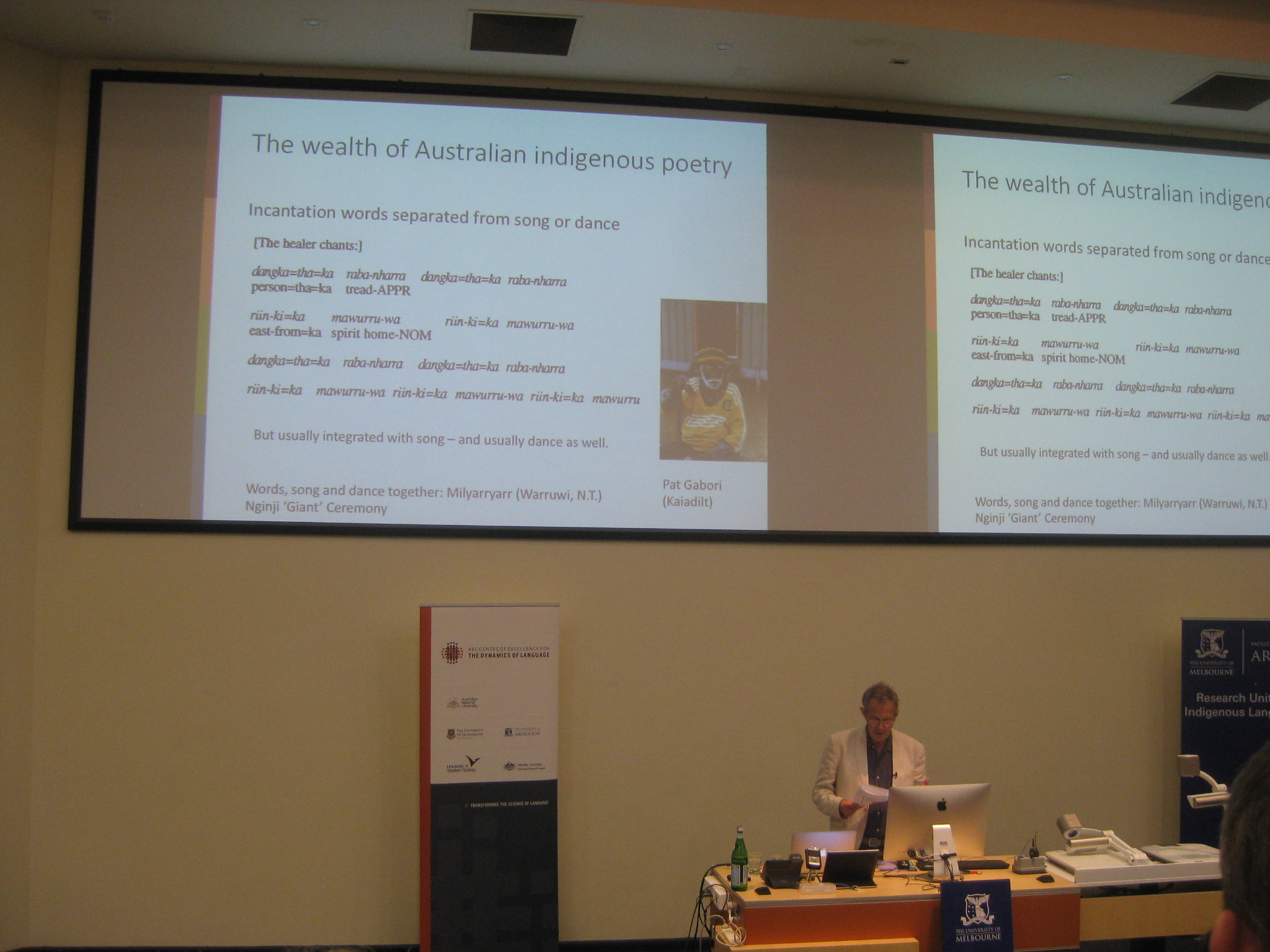
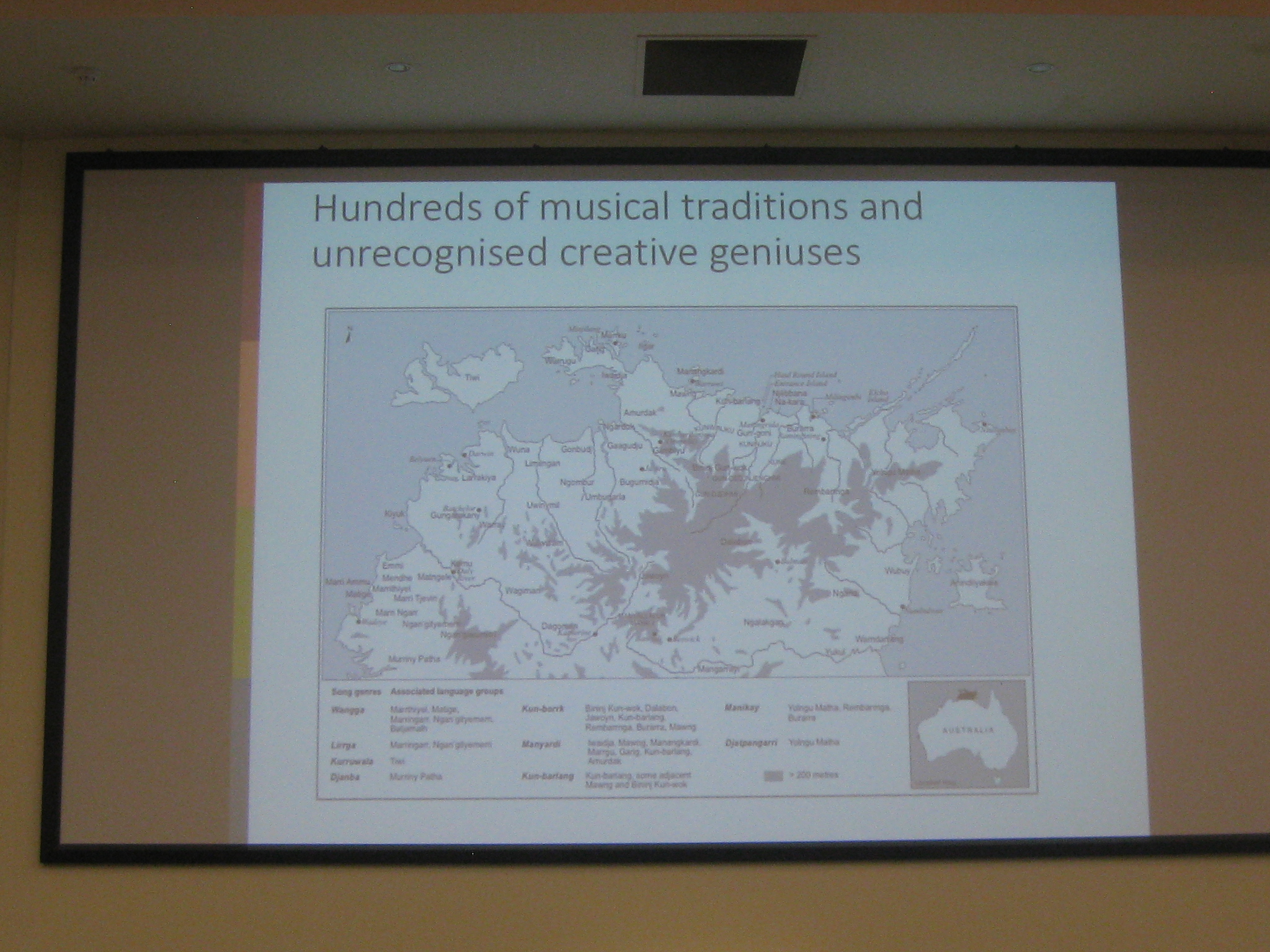
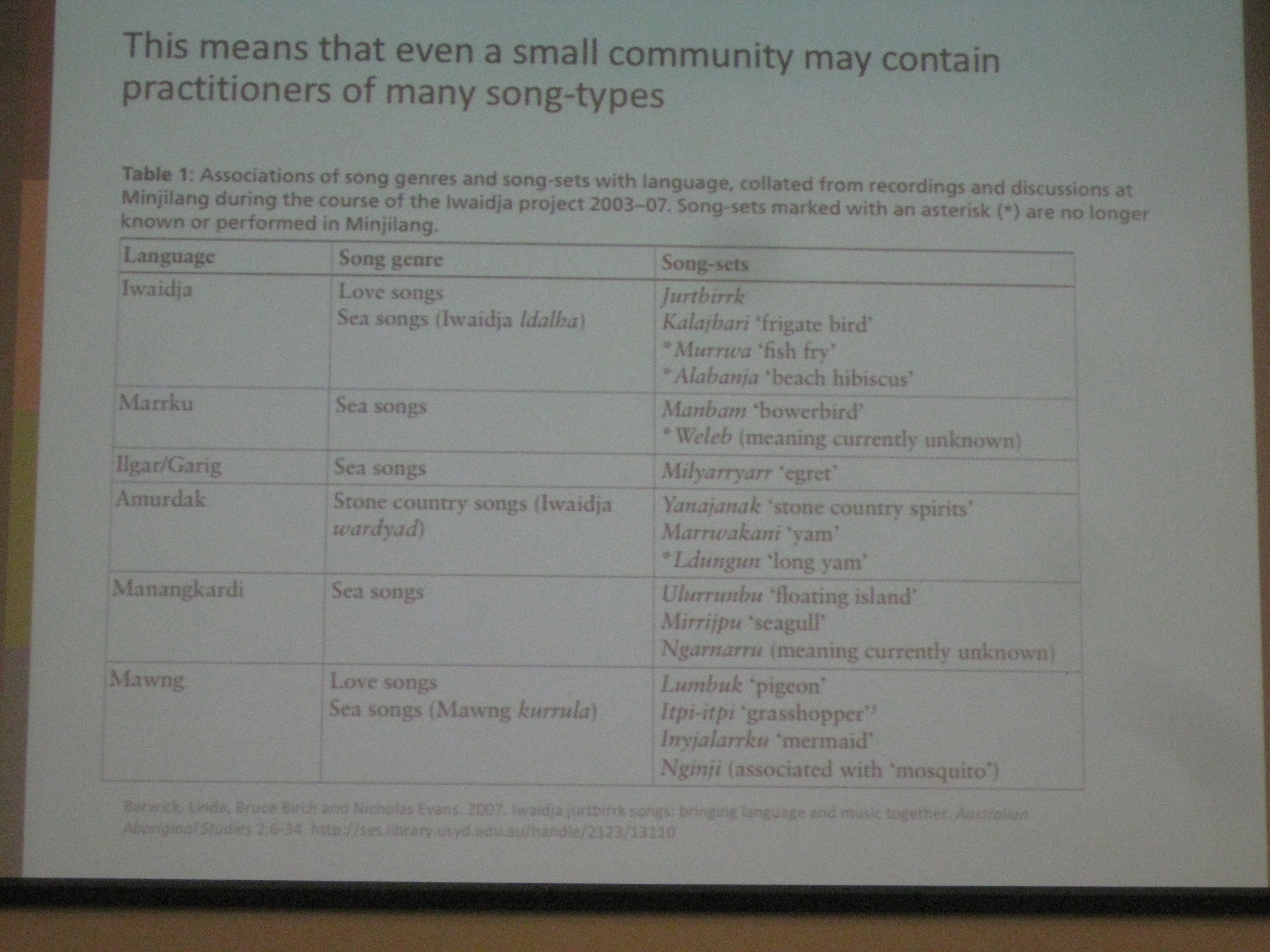
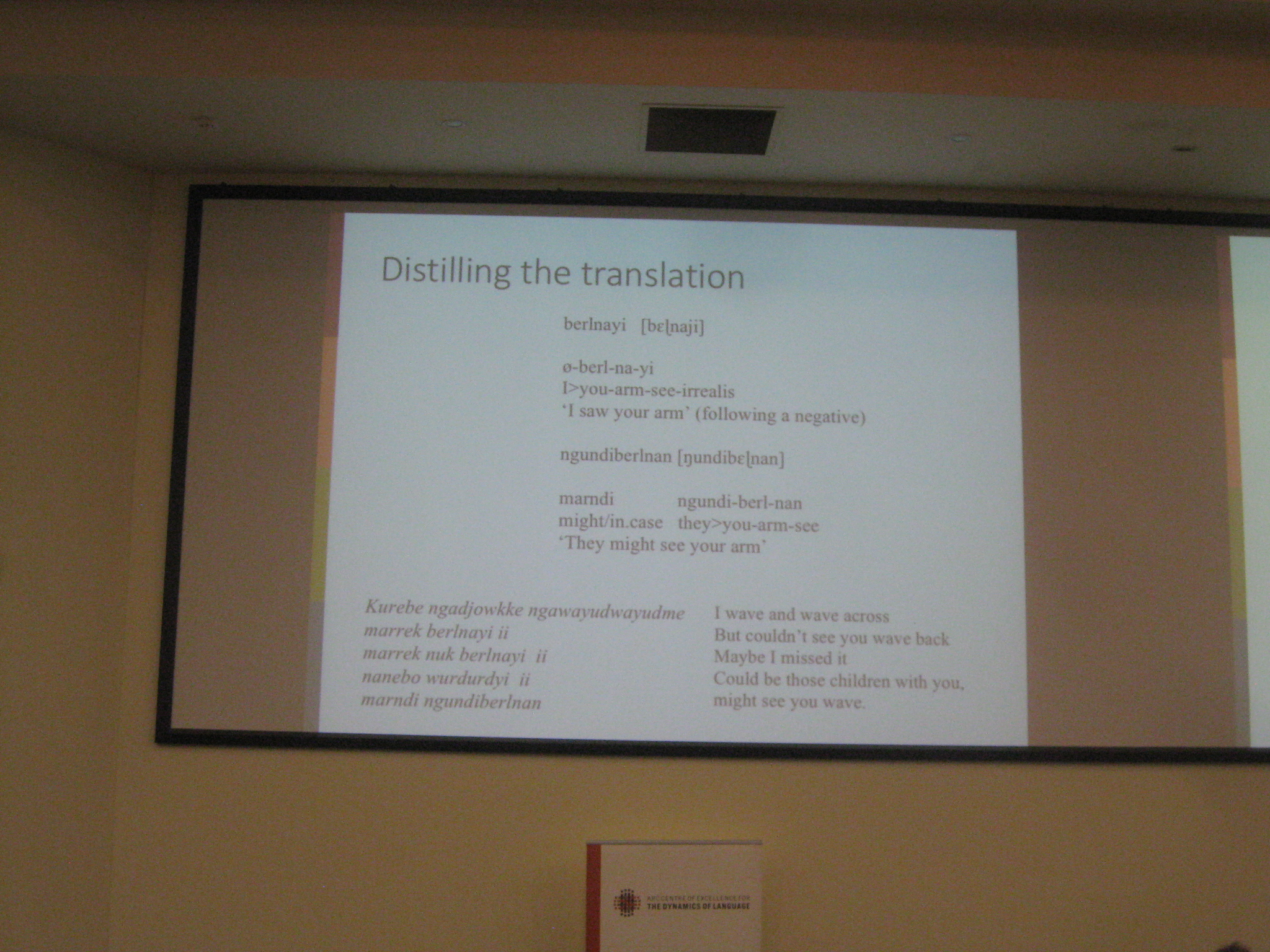
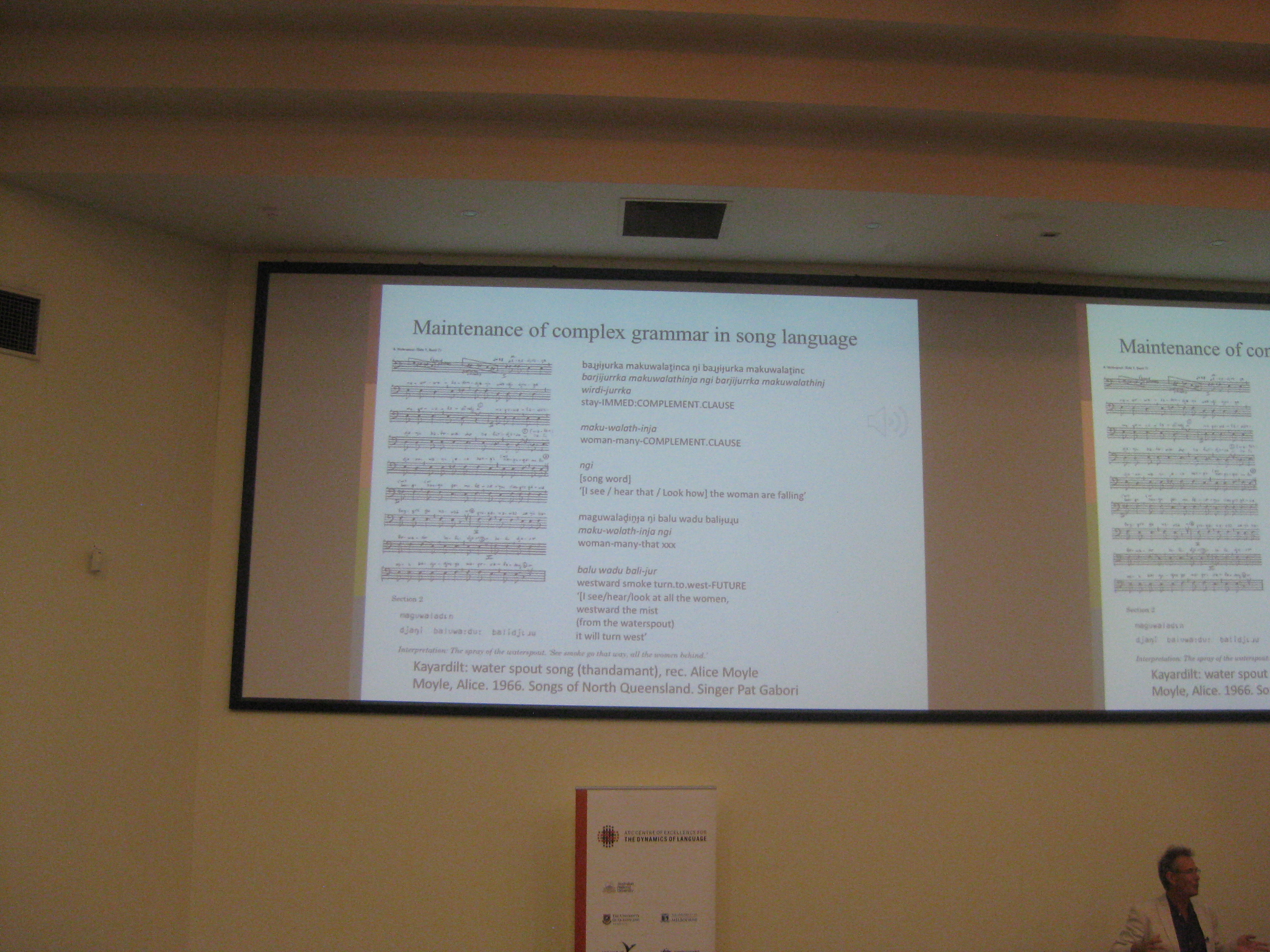
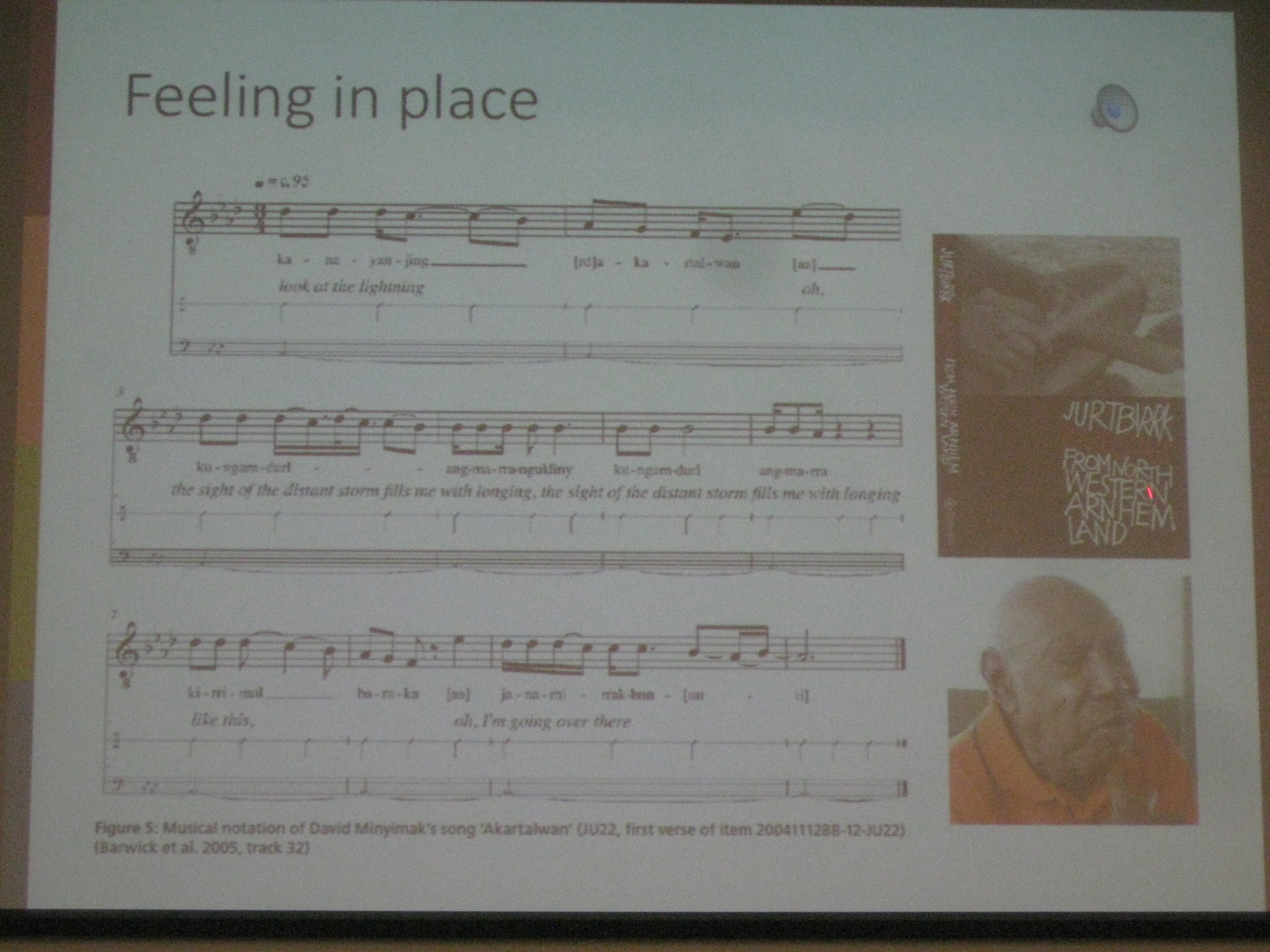
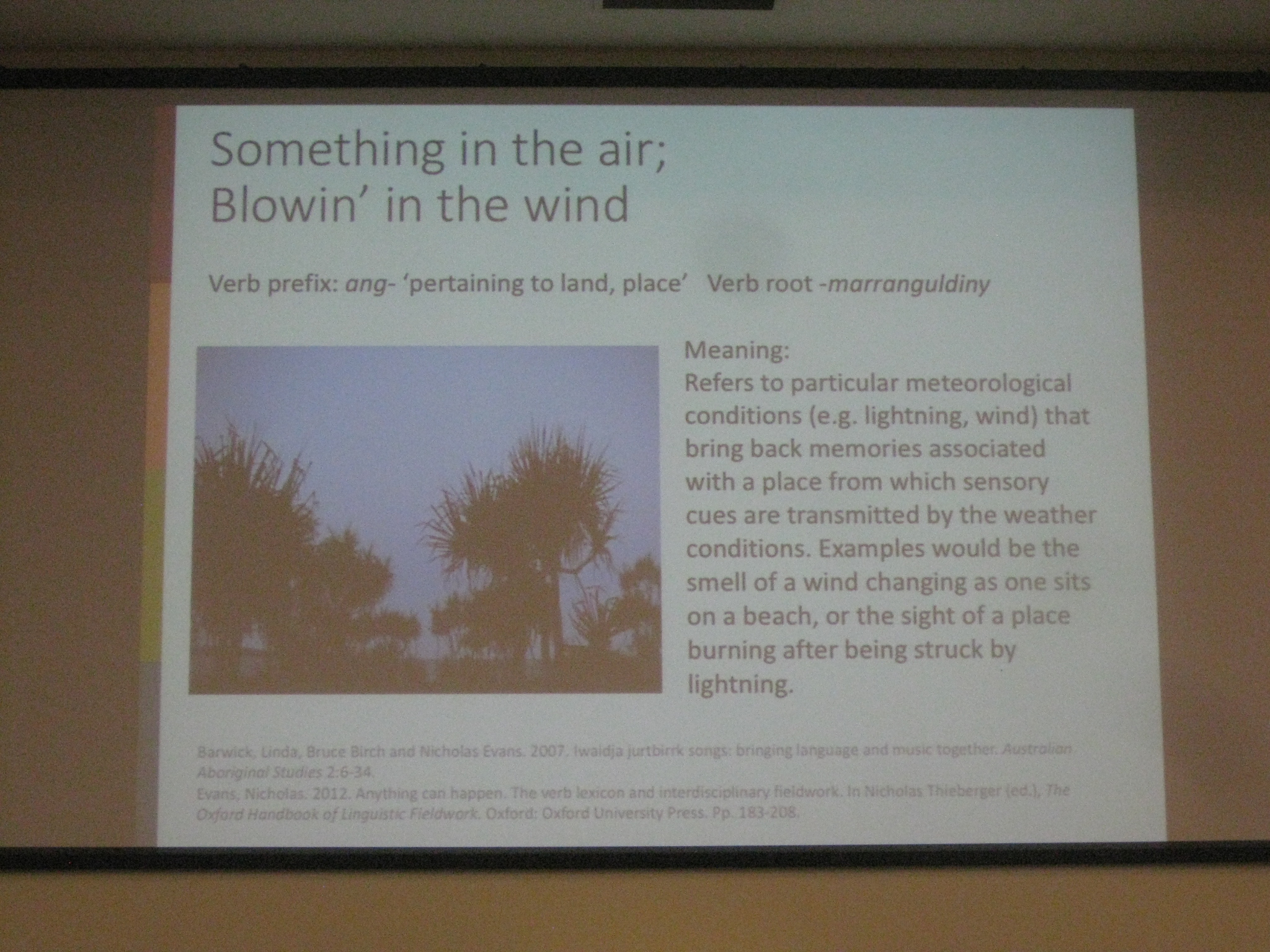
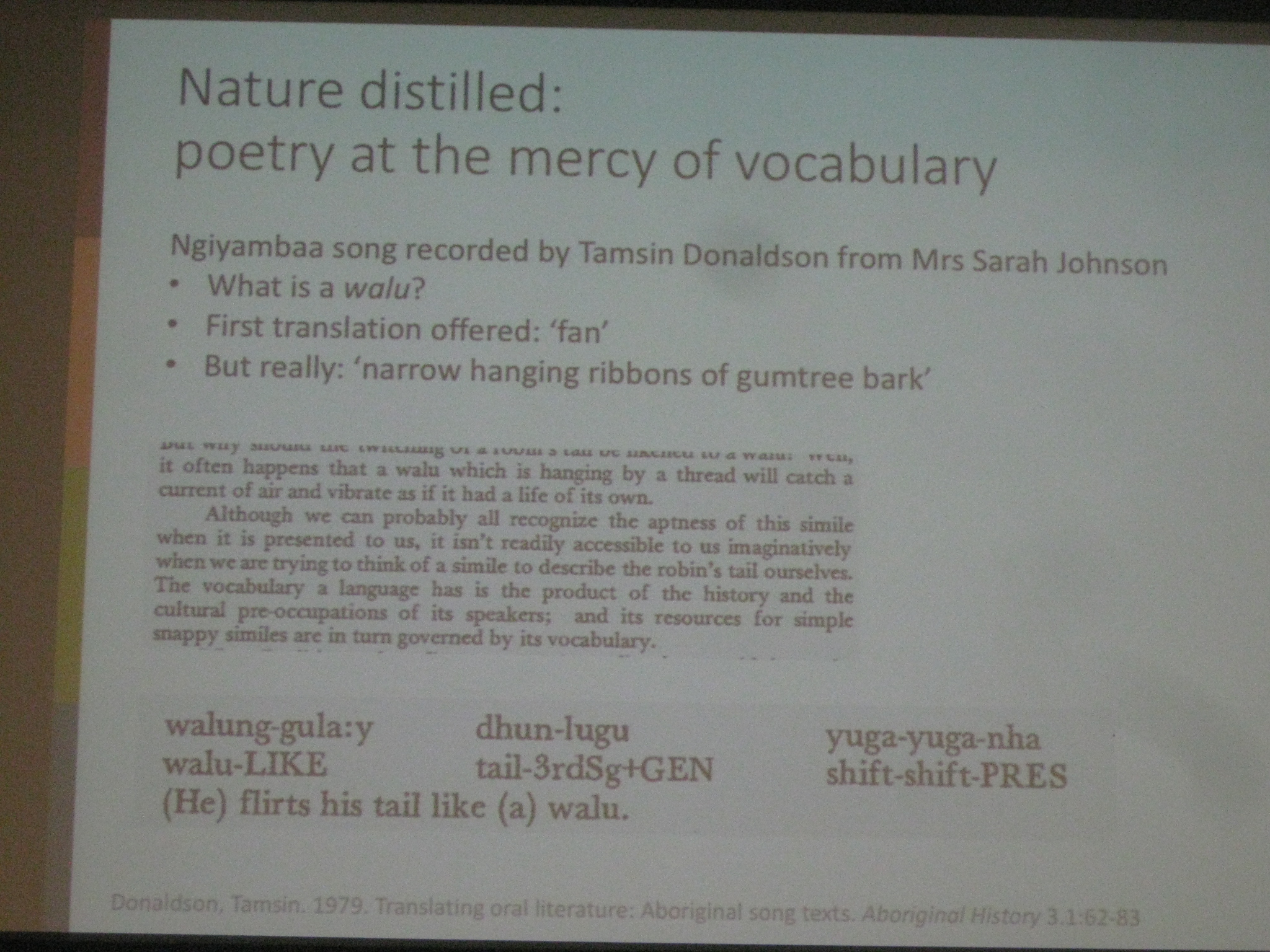
Waving to the other side: language of poetry in indigenous Australian song Nick Evans University of Melbourne 2018Waving to the other side: language of poetry in indigenous Australian song Nick Evans University of Melbourne 2018 incantation song dancemap Waving to the other side: language of poetry in indigenous Australian song Nick Evans University of Melbourne 2018 indigenous genius aboriginal musical traditions and creative geniusesWaving to the other side: language of poetry in indigenous Australian song Nick Evans University of Melbourne 2018Waving to the other side: language of poetry in indigenous Australian song Nick Evans University of Melbourne 2018 translationWaving to the other side: language of poetry in indigenous Australian song Nick Evans University of Melbourne 2018 aboriginal maintenance of complex grammar in song languageWaving to the other side: language of poetry in indigenous Australian song Nick Evans University of Melbourne 2018 different transcriptions, different meanings mayali djorli laywanga kungol djarre kungol wakwanWaving to the other side: language of poetry in indigenous Australian song Nick Evans University of Melbourne 2018 rare aboriginal words kungol djarre kangurl djarre kunngarl djare kangurl djarreWaving to the other side: language of poetry in indigenous Australian song Nick Evans University of Melbourne 2018 feeling in placeWaving to the other side: language of poetry in indigenous Australian song Nick Evans University of Melbourne 2018 something in the air marranguldinyWaving to the other side: language of poetry in indigenous Australian song Nick Evans University of Melbourne 2018 nature distilled ngiyambaa song walunggula dhunlugu yugayuganha