

You called me
You created me
and called me by name
in every echo of every
need, want, exclamation
I know I am made
I know I am named
I know I am Yours
made, named, Yours
Talitha Fraser
You called me
You created me
and called me by name
in every echo of every
need, want, exclamation
I know I am made
I know I am named
I know I am Yours
made, named, Yours
Talitha Fraser
Welcome, we acknowledge that we gather on the land of which the people of the Kulin Nations have been custodians since time immemorial.
This is our fourth in a series called The Art of Discipleship where we showcase the material of different books and engage with their material creatively.
WEEK FOUR
The activity this week is taken from:
Women of Spirit: Woman’s Place in Church and Society
This Australian book by Janet Nelson and Linda Walter looks at how church and society both have ways that they tells us what we are and aren’t supposed to do and how we are and aren’t supposed to look. How can we reinterpret our self-esteem and identity understanding ourselves to be made in the image of God?
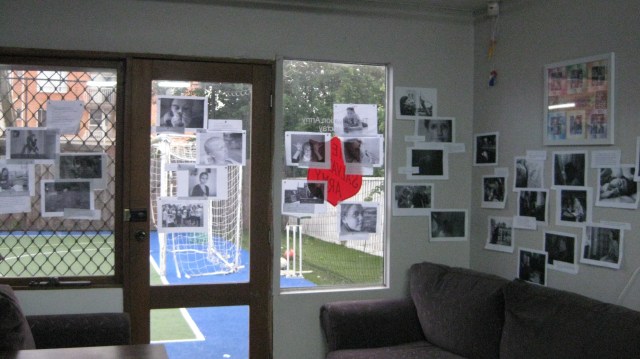
As has been done before, in a Seeds small group and a Women’s Circle at Surrender, images of women doing sacred ordinary things are blu tacked around the room with bible verses referring to women, where God is speaking to women and where “feminine” metaphors are applied e.g. God: “As a mother comforts her child, so I will comfort you; you shall be comforted in Jerusalem.” (Isaiah 66:13) or “How often have I desired to gather your children together as a hen gathers her brood under her wings, and you were not willing!” (Matthew 23:27).


This time we also had images of men juxtaposed with this “feminine” language and imagery.


So we had a time of some music playing while people walked around the room ( a reflection space created with pictures, bible passages, mirrors) immersed in these images and words and people were invited to grab a verse or image if it spoke to them and bring back and sit when they were ready.
Read the story of The Bunyip of Berkeley’s Creek (a theme of the main book)
How might seeing yourself in the image of God change your life/the way you live?
Using a camera, take some pictures of yourself – not a “selfie” that is about looking your best/who you’re with/what you’re doing but perhaps some part of your body you feel critical of, somehow a part that captures your ‘self’that you might feel critical of – scroll back through the images you have taken and prayerfully try and hear what God is saying to you in the mix of how you feel about yourself.


People can share their photos (if they feel comfortable to do so).
Discuss how the exercise makes you feel or what it gets you thinking about.
Close with the ‘Greeting Circle’ from p.194 – go around the circle blessing each person.
Blessed are you among wo(men) ____________________ [name]
For you have found favour in God’s sight.
Aunty Carolyn did the Welcome to Country at the Emerging Cultural Leaders event at Footscray Community Arts Centre tonight. She said:
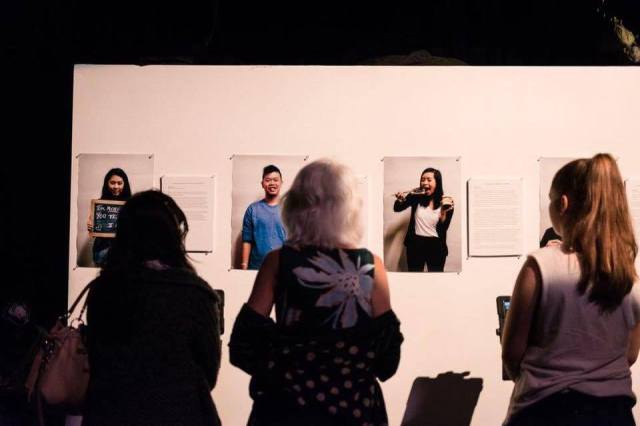
Loved to have this introduction and ideas of belonging, culture, identity and place in shared space with my friend Minh’s installation piece…
BIO: Minh Nguyen is currently completing her Masters of Applied Psychology. Her dissertation research explored constructions of ethnic identity amongst second generation Christian-affiliated Vietnamese in Melbourne. She found that through the negotiations between social relationships, and within one’s location in society, participants created a ‘different kind of Australian’ identity that accessed resources from the surrounding environment, their parent’s culture and experiences of racism and exclusion. This study provided an account of Vietnamese Christian identity construction, a particular historical, cultural, and social location within the complex world.
PROJECT: Immigrants are continually challenged by issues of settlement, sense of belonging, exclusion and identity construction. These issues are also important life challenges for the children of immigrants, the second generation and the generation thereafter. Chopsticks and Vegemite explores the identity construction of four people from a young Christian affiliated Vietnamese called Night Church. Unlike their parents, they create their identities and evaluate themselves in relation to the structures and ideologies of the new society, in addition to the memories retold of their parents’ birthplace.
You
persistently and insistently
speak love into my life
giving comfort and solace
even as I try to deny I need help
You see through me
You see into me, into my heart
and simply state ‘I love you’
no more or less than that
for me to respond or react
irregardless
You speak love into me
the medicine I don’t want to take
and need so desperately to live
there is no denying or demurring
You
persistently and insistently
speak love into my life
and I am grateful.
Talitha Fraser
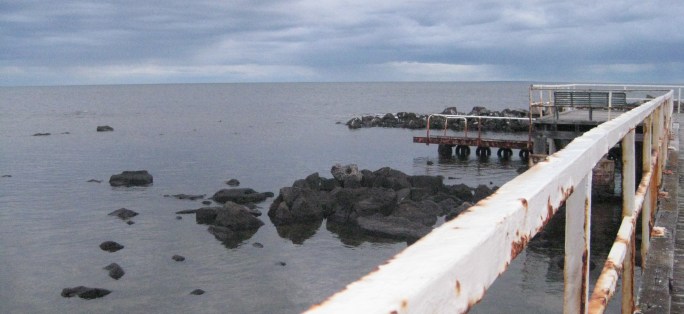
ssh… ssh… ssh…
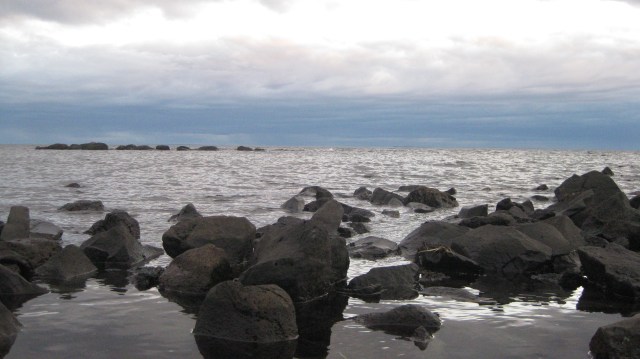
the sea soothes
ssh… ssh… ssh…
the sea moves
ssh… ssh… ssh…
the moving sea soothes
ssh… ssh… ssh…
the soothing sea moves
ssh…
ssh…
ssh…
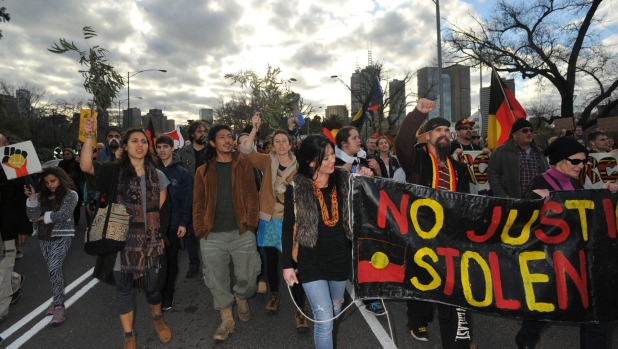
Protesters make their way across Princes Bridge. Photo: Joe Armao
This month the Government announced that they were going to turn off/stop maintaining access to water, electricity, etc. in multiple rural indigenous communities and this protest came very quickly in response. We like to think that “taking the land away” or dispossession was something that happened long ago and far away and has nothing to do with me but then something like this happens to bring it front and centre and our willful blindness is confronted by the reality: this is still an issue and it is still happening.
These are the words the protestors called in chorus:
Talk to me about economics. Talk to me about closing the supermarket so people had to travel for food, closing the school so families with children had to travel or move, talk to me about closing the petrol station – it might be true that some of these communities have only 4 people living in them but there used to be many more.
Talk to me about land and place. There’s hardly any of them, why should they get special treatment? They can move to the nearest big town… to give you a sense of scale Kimberley is c. 3 times the size of England and has a population of 40-50K people. The nearest town is, well, pretty darn far away – what we white fullas can forget is that indigenous Australia is a lot 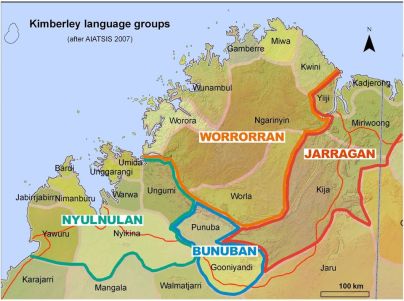 more like Europe, made up of many different countries with their own language, and myths, and dances and traditions… this map on the left is rough overview of the First Nations Peoples and language groups in Kimberley. This is their map of how they see the world – we wouldn’t expect it to be reasonable to ask the Italians to move to the nearest town in France and give up everything that informs their own unique culture and identity and we should not ask it of Aboriginal people here either.
photo credit: kimberleyfoundation.org.au
Talk to me about civilisation. We brought civilisation with us, did we not? Are these people not better off because we bought them farming and livestock and tools and machinery they didn’t have before? We brought in the piped water and wired electricity and overrode the old ways with our better new ways…? There might not be many left who remember and could live by the old ways. We’ve created a dependence and now you want to take the civilisation away? Did our civilisation include the law, and does the law include provision for human rights like access to water? What is civilisation?

Tell me a story. Tell me who your people are and where you are from.
At the start of some (too few) events, ceremonies or proceedings you might hear an Acknowledgement of Country… We acknowledge that we gather on the land of which the Peoples of the Kulin Nations have been custodians since time immemorial. I went to a cultural awareness training day with Aunty Doreen Garvey-Wandin a few years ago and she did this activity with sticky dots to illustrate how Aboriginal people have lived here for 50,000 years – if each dot is equivalent to 1,000 years – then this black drawing, on the very last dot, represents the 200 years of contact/settlement with us white fellas. We are a blip on a landscape that was here long before we came. We need to understand and be reminded of our place in the story of things from Aboriginal peoples point of view. While, I’m here I’ll point out that this is what makes “Australia Day” also so hard. It marks (and celebrates) the anniversary of colonisation over the culture that had existed here many thousands of years prior. These acknowledgements should not be empty words. We eat, we play, we gather, we work – on land where indigenous people were here before us – doing those things first – for many, many years.
Talk to me about belonging. Do we “belong” here? I think there is something in the psyche of all of us asking this question because at some level, perhaps we sense the truth of having displaced others to enjoy the space we now hold. I am from New Zealand, and we have our own history and yet unfolding story of fair trade for land, foreshores and fish – and who should be the custodians of these things. We need to respect Traditionally Acquired Knowledge more than we do because people lived and ate seasonably and sustainably and can probably teach us a thing or two about living well in this climate and speak wisely into other current social issues. Do I belong here in this crowd? It can be easy to feel smug – Maori is taught in our schools, we had a treaty and are hearing settlement claims, we have a Ministry for Maori Development… but that is not enough: Te Whiti, a Maori Chieftain, exhorts us to “Ask that mountain” – the land itself bears  witness to what takes place beyond any particular action of my lifetime whether we have done everything that we can to make things right. How might the Great Barrier Reef answer? Or Uluru? or The Big Pit in Kalgoorlie? I was proud to see the Maori flag raised and carried alongside the Aboriginal flag in solidarity. Others who have experienced displacement themselves – they do not forget. We need to recognise that living in a world that has more languages, more dances, more patterns, more stories makes it a more enriching place for all of us and is worth protecting and defending by us all.
We chant it together. We claim and proclaim it publicly:
Indigenous activist, Rieo Ellis
Thanks to ANTaR for this summary of the issue:
Announcement to discontinue funding essential services in remote communities
How many people live in these communities
According to the WA Department of Aboriginal Affairs, there are around 12,000 Aboriginal people currently living in the 274 communities in WA, with around 1,300 living in 174 of the smallest. In 115 of those communities, there are around 500 people in total, or an average of 4.4 people per community.
What will the impact be of shutting down communities
Premier Barnett himself acknowledged that closing communities would:
“…cause great distress to Aboriginal people who will move, it will cause issues in regional towns as Aboriginal people move into them.”
Professor Patrick Dodson, Yawuru man from the Kimberley, who authored a review of small homeland communities for the NTgovernment said closing down communities would:
“…be disastrous, increasing access to drugs and alcohol and exacerbating social tensions, which would flow on to antisocial behaviour and incarceration. The immediate consequences would be to create an internal refugee problem for the indigenous people.
He also said that breaking people’s connection to land:
“…would threaten the survival of Aboriginal knowledge and culture, because in towns people were restricted from camping, lighting fires, hunting and fishing.”
What criteria will be used to close communities
It is not known where any closures might occur, nor what criteria might be used. In fact, there has been great anxiety and uncertainty over this, particularly as no consultation has occurred prior to the statement being made by Premier Barnett.
The Federal Government prepared a document in 2010 titled “Priority Investment Communities – WA” which categorised 192 of 287 remote settlements as unsustainable. The majority of those assessed as unsustainable are in the Kimberley, with 160 communities in the region.
Non-Indigenous communities
We could not find any examples of government decisions to refuse to fund essential municipal services for non-Indigenous communities, including small communities in remote areas in WA. For example, the non-Indigenous community of Camballin (of about 300 people) is located near Looma (an Aboriginal community of around 370 people) in the Kimberly. Looma will be assessed by the Western Australian government for funding whereas Camballin will not.

Quotable Quotes
About Catholic music in general: The music tradition of the universal church is a treasure of immeasurable value, greater than that of any other art. Vatican II
About the Gregorian melodies: The Gregorian melodies air to foster the spiritual development of the individuals by providing an atmosphere conducive to a better understanding and living out of both God’s gift and the totality of the Christian faith.
About the Divine Office: This great prayer of the church, divided into portions throughout the day, sanctifies and consecrates the whole of human time by divine praise.
Ubi Caritas is taken fro th anitphons sung during the ceremony of the Washing of the Feet at the Mass of the Last Supper on Holy Thursday. As is the entire Mass of the Last Supper, this hymn is intimately connected with the Eucharist, and is thus often used during the Exposition of the Blessed Sacrament. Recent tradition has the first line as “Ubi caritas at amor” (where charity and love are), but certain very early manuscripts show “Ubi caritas est vera” (where charity is true). The current Roman Missal favors this later version, while the 1962 Roman Missal and classical music favours the former.
| UBI caritas et amor, Deus ibi est. Congregavit nos in unum Christi amor. Exultemus, et in ipso iucundemur. Timeamus, et amemus Deum vivum. Et ex corde diligamus nos sincero. |
WHERE charity and love are, God is there. Christ’s love has gathered us into one. Let us rejoice and be pleased in Him. Let us fear, and let us love the living God. And may we love each other with a sincere heart. |
| UBI caritas et amor, Deus ibi est. Simul ergo cum in unum congregamur: Ne nos mente dividamur, caveamus. Cessent iurgia maligna, cessent lites. Et in medio nostri sit Christus Deus. |
WHERE charity and love are, God is there. As we are gathered into one body, Beware, lest we be divided in mind. Let evil impulses stop, let controversy cease, And may Christ our God be in our midst. |
| UBI caritas et amor, Deus ibi est. Simul quoque cum beatis videamus, Glorianter vultum tuum, Christe Deus: Gaudium quod est immensum, atque probum, Saecula per infinita saeculorum. Amen. |
WHERE charity and love are, God is there. And may we with the saints also, See Thy face in glory, O Christ our God: The joy that is immense and good, Unto the ages through infinite ages. Amen. |

the sea and sky are moody
much like me…
I came here for perspective
I came here to be free
the wild gives you scale
it is true that I am small
but also interconnectedness
the horizon paints it all
in the system that includes all things
I have a part to play
it is enough to be and do this,
today, and every day.
Talitha Fraser
#LoveMakesAWay is a movement of Christians  seeking an end to Australia’s inhumane asylum seeker policies through prayer and nonviolent love in action.
A Christian movement based in seeking God, actions
are the last resort after other channels have been attempted and failed. Invite the mainstream to engage. Don’t care who knows we’re doing it, work behind the scenes, care whether the people who need it are being reached. Gospel tells us about the vision for the community that God envisions. We want to find God in the eyes of those who are suffering. In March 2014 1,138 children held in detention. Non-violent direct action that creates tension, where people say “No way!” we want to present the opposing voice that “Love makes a way” in the civil disobedience traditions of Ghandi and Martin Luther King. We want to bring attention to how serious an issue is and communicate that the church is serious about it. Encourage others to be bold and advocate in a stronger voice. 23 actions in 2014 – all agree children shouldn’t be in detention; care for them when they come out; rising up/mobilise church for policy change; dialogue with faithful Christian conservative leaders.
Witness of Christian faith.
Until we have a humane refugee/asylum seeker policy the LMAW campaign will continue.
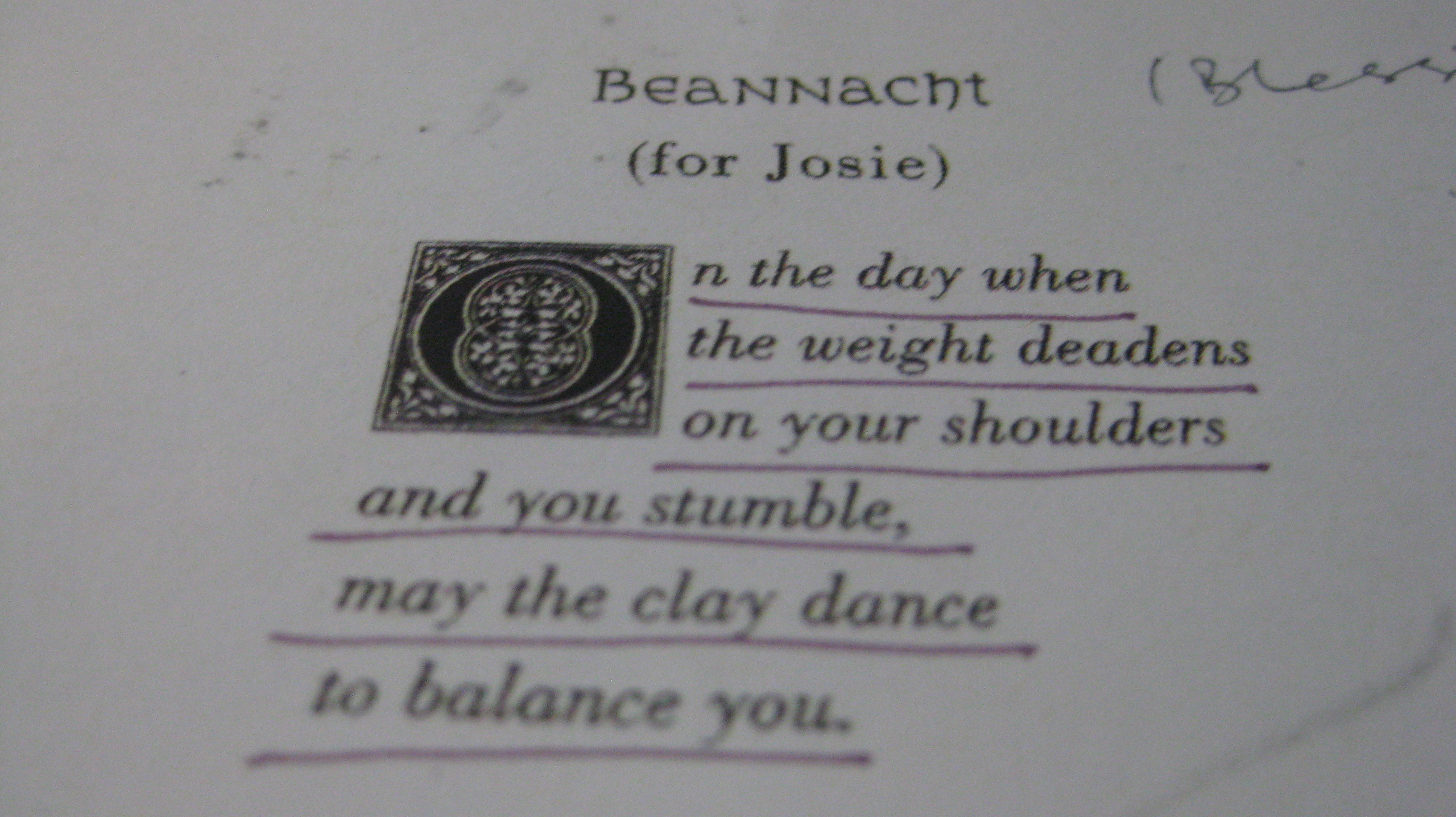
Six ideas about John O’Donahue’s writing:
4. Made up of these elements: body/landscape/transcience/memory. Body (trust/belonging); landscape (location, know and approach things and people); transcience (always passing away); memory (body, place and passing held together where our vanished lives remain alive – selective transfiguration)
5. Encourages us to break open and unpack internal and external landscapes e.g. root words. Break open familiar and see afresh. When we’re locked/blocked > impoverished. Remove the wall you have put between yourself and the light.
6. Seeks to find blessing. Invocation- calling forth… Calls for change and transformation.
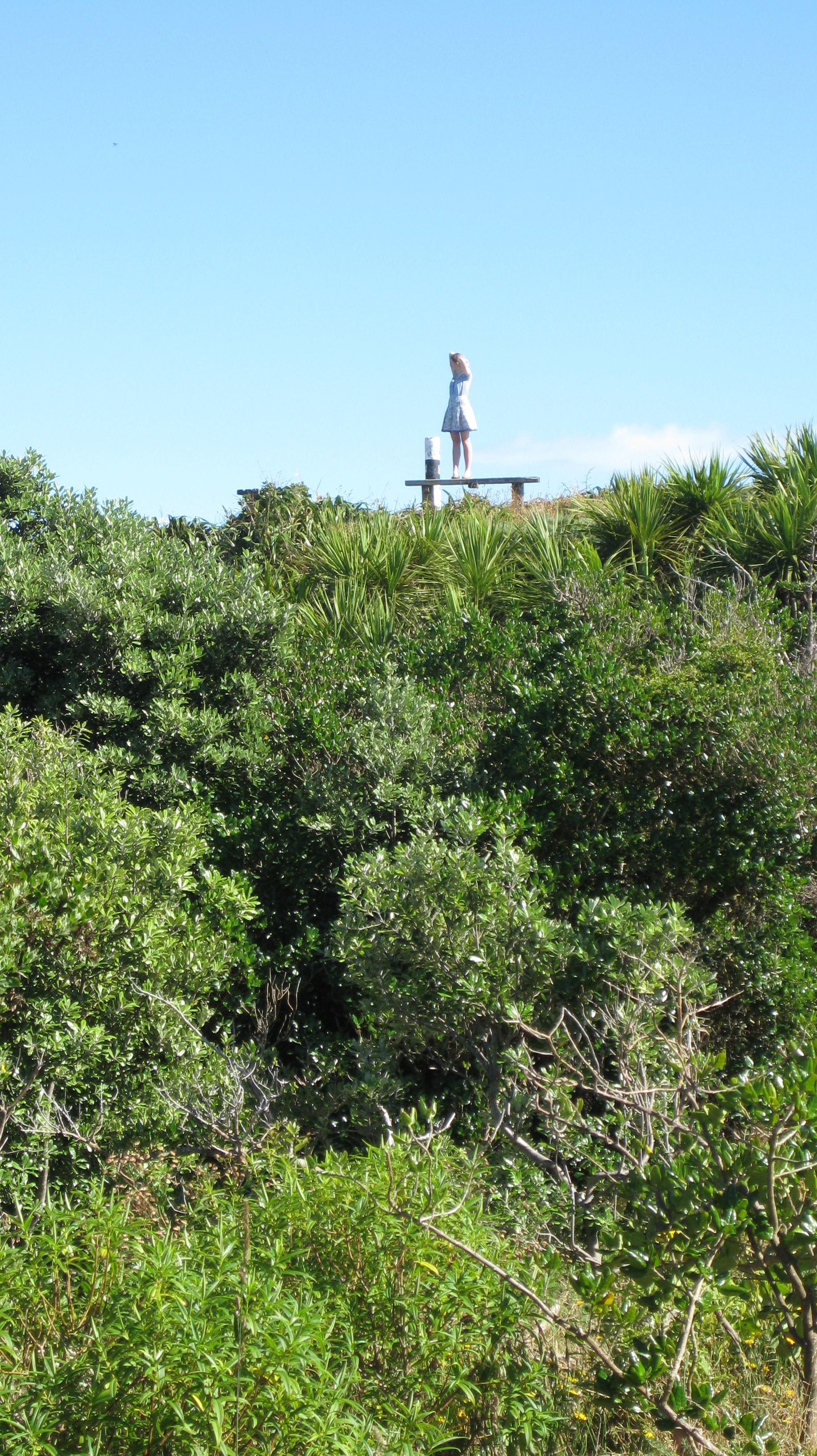 On the day when
the weight deadens
on your shoulders
and you stumble,
may the clay dance to balance you.
And when your eyes
freeze behind
the grey window
and the ghost of loss gets into you,
may a flock of colours,
indigo, red, green
and azure blue
come to awaken in you
a meadow of delight.
when the canvas frays
in the curach of thought
and a stain of ocean
blackens beneath you,
may there come across the waters
a path of yellow moonlight
to bring you safely home.
May the nourishment of the earth be yours,
may the clarity of light be yours,
may the fluency of the ocean be yours,
may the the protection of the anscestors be yours.
And so may a slow
wind work these words
of love around you,
an invisible cloak
to mind your life.
A philosopy of Ducas
“The longing of a people is caught in the web of their language. Dreams and memories are stored there. A language in the inner landscape where a people can belong. When you destroy a people’s language through colonisation or through the more subtle, toxic colonisation of consumerism, you fracture their belonging and leave them in limbo. It is fascinating how a language fashions so naturally the experience of a people into a philosophy of life. Sometimes one word holds centuries of experience; like a prism you can turn it to different angles and it breaks and gathers the light of longing in different ways… the phrase ‘ag fillead ar do ducas‘ means returning to your native place and also the resdicovery of who you are. The return home is also the retrieval and reawakening of a hidden and forgotten treasury of identity and soul. To come home to where you belong is to come into your own, to become what you are, to awaken and develop your latent spiritual heritage… Ducas also refers to a person’s deepest nature. It probes beneath the surface images and impressions of a life and reaches into that which flows naturally from the deepest well in the clay of the soul. It refers in this sense to the whole intuitive and quickness of longing in us that tells us immediately how to think and act; we call this instinct… You belong to your ducas; your ducas is your belonging. In each individual there is a roster of longing that nothing can suppress.”
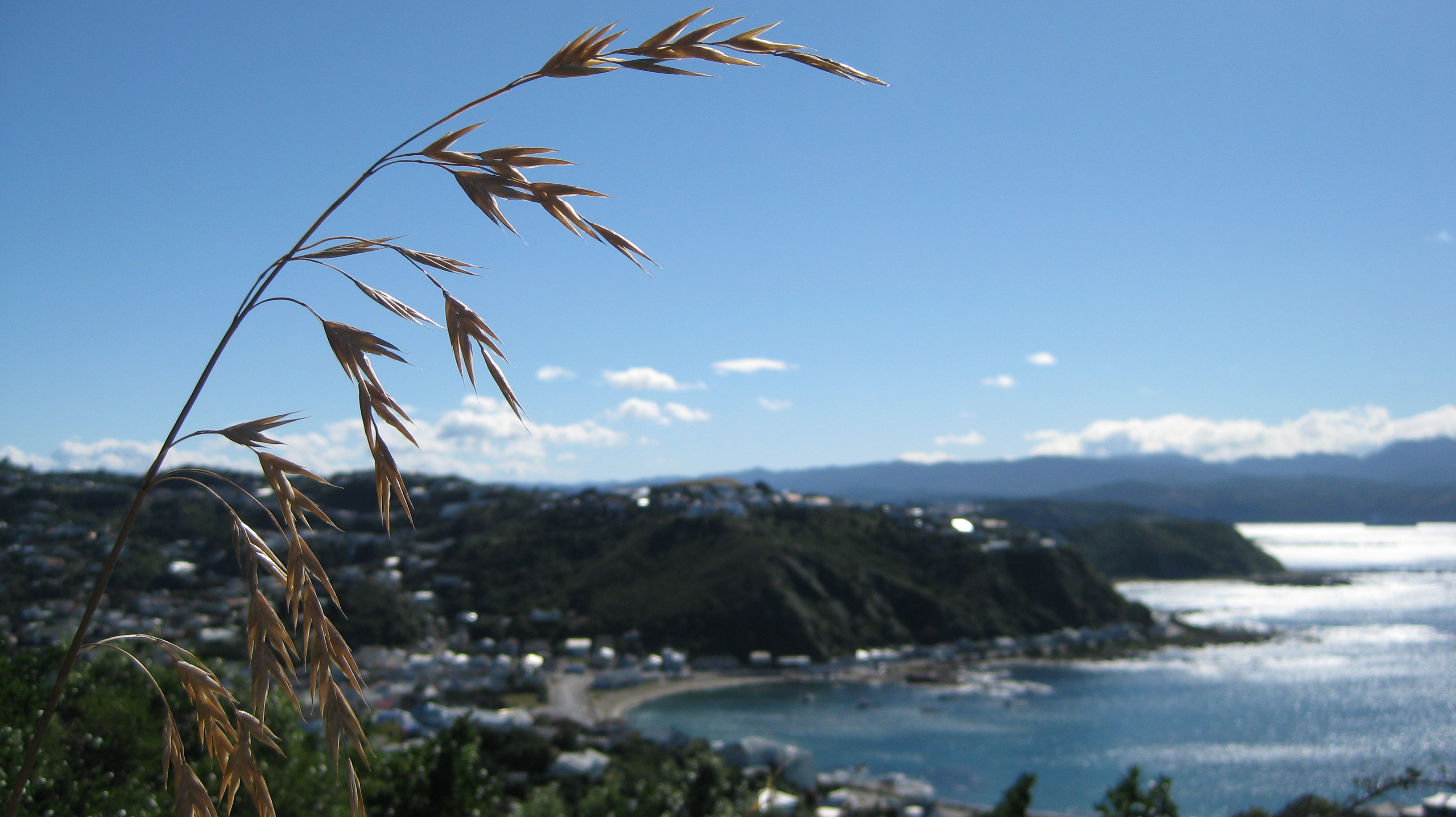
The Stranger (Eternal Echoes)
“It is impossible to be on the earth and avoid awakening. Everything that happens within and around you calls your heart to awaken. As the density of night gives way to the bright song of the dawn, so your soul continually coaxes you to give way to the light and awaken. Longing is the voice of your soul; it constantly calls you to be fully present in your life: to live to the full the one life given to you. Rilke said to the young poet: ‘Live everything’. You are here on earth now, yet you forget so easily. You have travelled a great distance to get here. The dream of your life has been dreamed from eternity. You belong within a great embrace which urges you to have the courage to honour the immensity that sleeps in your heart. When you learn to listen to and trust the wisdom of your soul’s longing, you will awaken to the invitation of graced belonging that inhabits the generous depths of your destiny.”
MATINS
I.
I arise today
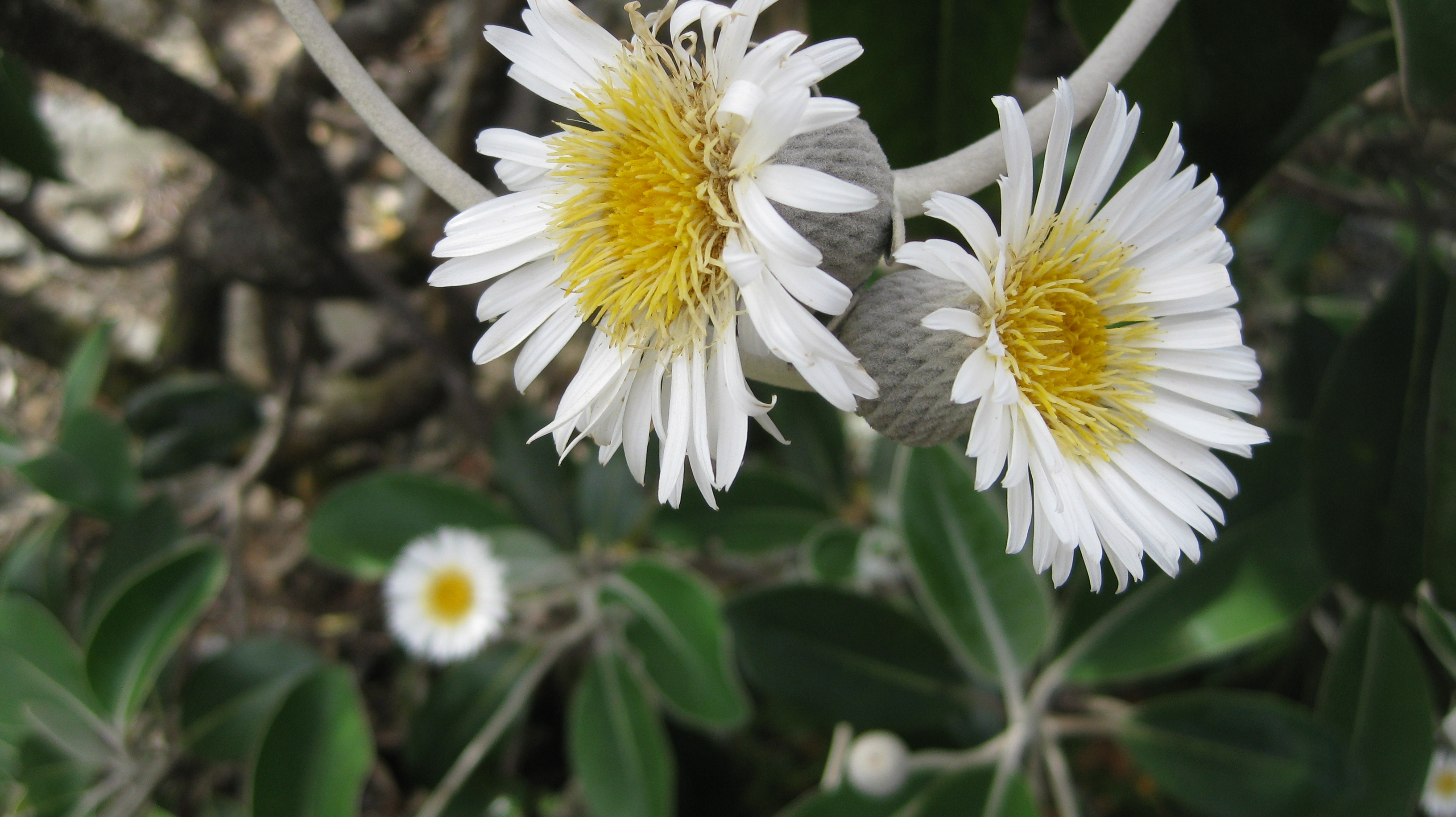
 itellyouarise