Tag Archive: discipleship


242

Over a series of weeks we will dip into a breadth of creative activities, drawing from a variety of resources, that invite us into a space where we encounter God and reflect on our Christian life and praxis. To give a loose sense of connection across the series we’ll frame them with an Opening, close with a Benediction and include a time of prayer each week.  We recognise everyone as spiritual beings and welcome people of all faiths and none.  We encourage you to bring a journal or blank notebook if you have one.

WEEK ONE

The activity this week is taken from:

The Artist’s Rule: Nurturing Your Creative Soul with Monastic Wisdom

This book by Christine Valters Paintner draws on The Rule of St. Benedict summarised in the phrase “pray and work,” it explores the mutually nourishing relationship between contemplative practices and creative expression.

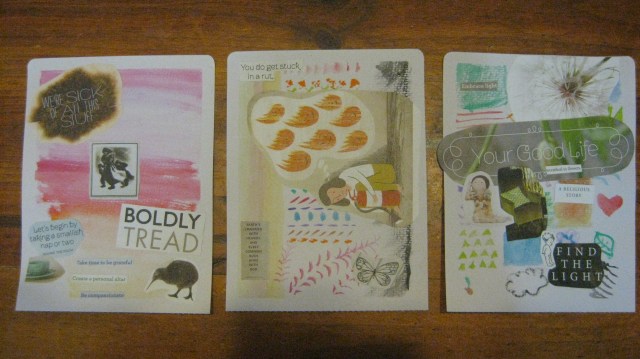
We did the Wisdom cards activity together.

For those playing at home you will need:

  • 3 x sheets A5 watercolour paper (for each person)
  • Invisible tape
  • Watercolours
  • Paintbrushes
  • Pens to write
  • Magazines to cut up words and images
  • Glue sticks

The first thing we do is prayerfully consider a question we might ask our inner child (what do you visualise when you hear the words “inner child”?) –  write this question on the back of one of your A5 sheets of paper. You can decide for yourself if you want your canvass landscape or potrait!

[Tip: This is not a magic 8 ball.  You will get a lot more out of this exercise if you ask BIG open-ended, existential type questions like “Who am I?” and “What is the meaning of all of this?” over small questions like “Should I buy tickets for the Mumford and Sons concert?”]

Next, our inner Wise One (what do you visualise when your hear the words “inner Wise One” or monk?)  – write this question on the back of another of your sheets of A5 paper.

And thirdly, a question we might ask them both together.

Turn these so they are blank side up and shuffle them around so you aren’t sure which question is on which card.  Now tape them down to the table, blank side up, with the invisible tape.  This stops the paper moving around while you’re painting and gives your work a clean border when you peel it off later.

If you’re resource sharing, at this point some might paint while others cut up magazines.  It doesn’t matter what order you do this in.  Flick through some magazines and cut out anything that jumps out at you. Words, phrases, images… anything that captures your attention or seems to speak to you.  Once you have a decent pile in front of you switch to painting and colour as you feel.  Some will instinctively feel bright and light, or dark; be highly detailed or minimal splashes of colour – there is no right or wrong way to do this. Go with your gut.

Now collage. Drawing from your pile – try this image with that phrase – does it fit with this one of your cards or that one?  You might need to go back to the magazines, you might find you only use 10 of the 40 things you cut out. It doesn’t matter.  Your cards will kind of speak to you, when the right words and images are assembled you will hear them and know that the card is “finished” and you can glue everything down in place.

Now you can gently peel away the invisible tape and see which question is written on the back of which card. Consider what synergy there is between our questions and these creative answers, the premise being we can often know answers to our own questions but we have to sneak up on ourselves to figure it out. Write these reflections in your journal.

Find somewhere to prop your  cards for a week where they can be a visual cue.  In a week, sit with your notebook again and see if there is any further learning/awareness to be drawn from your wisdom cards.

245


031

I have just collected my sister at the airport and Melbourne is flourishing with flowers to mark the occasion.

We’re walking home through the city following dumplings in Little China town on our way to the station, we go to cross Swanston Street near the State Library and we hear a voice exhorting in a microphone.

“What’s going on there?” asks my spiritual-not-Christian sister.

We have wandered along Southbank earlier tonight and watched the Crown flames shooting high against the dark night sky, seen a jugglers routine, listened to a buskers rendition of an Elton John classic… the city is in fine form but I sigh to see Cross Cultures church steps covered in handpainted signs saying:

“Repent!” and “Jesus gave his life for you!”

“Sorry,” I say, “someone soap-boxing repentance.” (I can’t even ad-lib here for you because I don’t remember what the words were they seemed so empty to me, I couldn’t hold them)

“Why are you sorry?” she asks.

“It offends me he can stand there and assume we don’t know God.  Everyone here (sweeping arm canvasses Melbourne nightlife) was made by God, in the image of God and is in a relationship with God whether they acknowledge it or not – his God is small, static, fixed and I imagine he puts more people off than he draws in… it puts me off!”

“Doesn’t any of it connect with you, speak to you,
remind you of old times?”

“No.” I respond flatly. But words of old times prompts the tune of Be Thou My Vision to mind and I lose track of the conversation for several metres… naught be all else to me save that Thou art, Thou and Thou only, Thou first in my heart, O be Thou my vision…

That was a close-ended answer. Answered for myself, out of my own filter and judgmental in its own way.  You have to think about what prompts a question and, defensive of potential association with street-side evangelisation, I did not inquire “Did any of it connect with you?”

ooOoo

I don’t suppose that an old man on the steps with his carefully handpainted signs and fervent faith is any threat to me so I don’t know why I need to set myself in opposition per se… are we ‘fighting for the same side’ or am I taking him down with ‘friendly-fire’? That has sometimes been the difference between good and evil winning in some significant cultural narratives. Ambitious in-fighting on the dark side vs. a coalition of goodies working together – Star Wars; The Lion, The Witch and the Wardrobe; Lord of the Rings… do you believe in fairytales?  Do I? Is that where I would look for answers? for truth?  Jesus set himself against the Pharisees, hanging out with Samaritans offended the Jews… he set himself against things as an outsider, ignored class rules and hung with homeless people and lepers.  Some of these stories have someone on the darkside who turns at an epiphany moment – Anakin Skywalker, Edmund, Boromir… and heroes that will die to achieve a greater good in Aslan and Frodo (although he doubts himself there at the end of all things)… at different points each lead has a mission they have to fulfill on their own, their own battle to fight in the bigger picture. Does it seem silly to try and use stories and ideas we already have to try and understand another Story?

We all choose stories to live by – from our families of origin, from our friends, gang, from TV/movies, books… but how many of us consciously choose what story we want to live by?

We have the power and the freedom to elect that as if our life were our very own pick-a-path adventure.

I went to see The Desolation of Smaug with friends and one commented upon coming out their frustration that “there’s no one in that film to look up to!” Thorin refuses to keep his promise to the people of Laketown, the people of Laketown get angry about that and side with the Elves who bring them food and supplies, the King of the Elves wants some of the treasure under the mountain for himself… the hero is the Hobbit yeah?  Bilbo may be keeping  the heart of the mountain to himself (albeit not for himself) so he’s not looking that good either… what a responsibility to have rest on individual people to see and work for a greater good that isn’t apparent to others and will cost you friendships and family along the way.

But what can you do to be in a position to see or know what the greater good is?

How do you know if your version of the truth or what you believe in will come to pass?  There must be a moment of risking everything, not knowing what will come of it, but knowing you have to make the next choice because it is necessary right in that moment and whatever comes next is beyond that.

What stories will you live by?

What stories will you choose by?

ooOoo

I followed up with my sister the next day:

“That guy, from the steps last night, did any of that connect with you?”

“Nah, I think I counted the word hell seven times
and didn’t see the word love once”

Yesterday I attended the book launch of “The Jihad of Jesus” by Dave Andrews… that’s a title that’ll get your attention…

I feel it takes a little explanation so I’m going to take the liberty of including Dave’s Preface here so that he is introducing the material in his own words…

“I do not write this an an expert. I am not.

I do not write this as a specialist. I am not.

I simply write this as a Christian, in conversation with Muslim friends, seeking to find a way we can struggle for love and justice that is true to the best of our traditions.

I am writing this for Christians who are concerned about the way Jesus has been (mis)represented by well-known crusading combative pastors, like Mark Driscoll.

I am writing this for Muslims who are concerned about the way jihad has been (mis)represented by well known militant extremist preachers, like Abubakar Shekau.

And I am writing this for people who subscribe to neither religion, but watch with horror, as Christians and Muslims slaughter one another in the name of God.

For many people jihad and Jesus are totally contradictory, mutually exclusive options.  You must choose the one or the other.  You cannot have both.  Given our present situation, Muslims would tend to choose jihad, Christians would tend to choose Jesus.

But it is my contention that – rightly understood -you can’t have one without the other.  in spite of the fact this may seem heresy to Muslims and/or Christians, I contend you cannot rightly pursue jihad without Jesus, or rightly pursue Jesus without jihad.

Reza Aslan’s book Zealot sets forth the case that Jesus was not simply a pious spiritual teacher, but actually a radical messianic activist. Of this there is no doubt.  Both Muslims and Christians believe Jesus was the Masih or the Messiah.  The debate is about what his radical messianic activism meant in the context of his time and what his radical messianic activism means in the context of the violence and counter-violence in our time.

If, as some would argue, Reza Aslan is right, Jesus could be a model for violent jihad.  But if, as I argue, Ahmad Shawqi is right, Jesus would be a model of nonviolent jihad: as

Kindness, chivalry an humilty were born on the day Jesus was born.  No threat, no tyranny, no revenge, no sword, no raids, no bloodshed did he use to call to the new faith.

The Jihad of Jesus is the sacred nonviolent struggle for justice.”

Dave Andrews, Bribane 2015

http://www.jihadofjesus.com

daveandrews.com.au

Nora (short, coloured, Muslim, woman) speaks first which is an important signal I think – the medium is the message.  She and her family build their home in a new development and meet with the neighbours regarding fence options and collectively decide not to have them but have the children stay, play, eat together… different religions, different cultures… five months later 9/11 happened.  She said “The fences will go up now” and they didn’t. Not until many years later when the family was to move.  They were known and, known, they were accepted.  Muslims make up 2.2% of the population in Australia (2011 census) – not likely to meet one but the culture of fear is being fed.  Nora felt called to speak out but Christians wouldn’t listen – “You won’t be accepted if you don’t remove your scarf”, serving her pork and giving her copies of the bible… someone suggested she meet Dave and she didn’t want to, this books captures 7+ years of the shared conversations that followed.

Dave (yes… tall, white, Christian, male) speaks second.  We believe in the same Abrahamic God- need to start where we agree and then explore other areas.  When 9/11 happened, Dave went to his local mosque and said “I’m sorry, they’re going to try and make it them and us (set us against each other) may I come in and join you in prayer as an act of solidarity?”

He gave Nora a copy of this books manuscript and has included her comments in footnotes where she has disagreed with him – minority/dissenting voice included.

Steps forward:

(Buy and read this book I reckon’!)

  • talk about it
  • live it out yourself
  • tell stories
  • invite others in
  • celebrate the wins


begin

014

begin
begin
begin anywhere
set out
step out
that is where to start
one day you do it
different than yesterday
ever so slightly
and it changes the world

Talitha Fraser

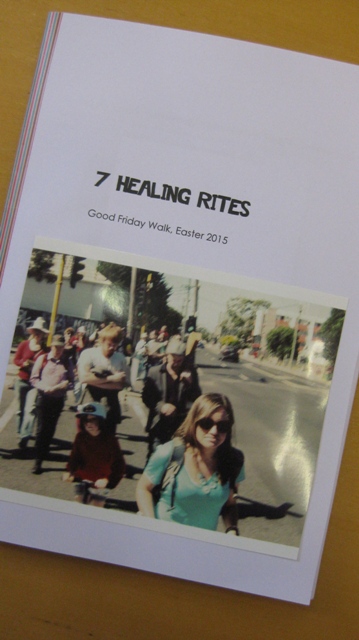
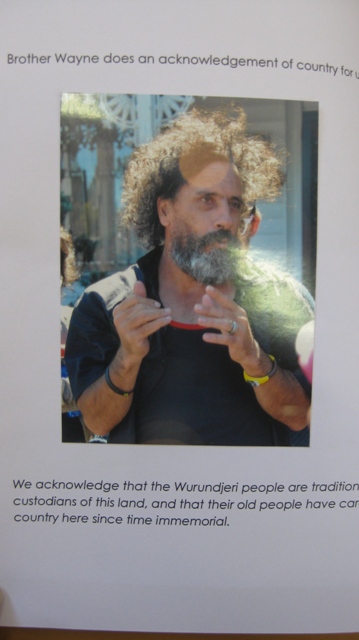
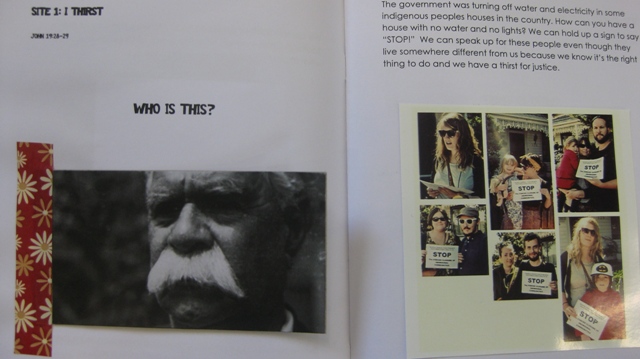
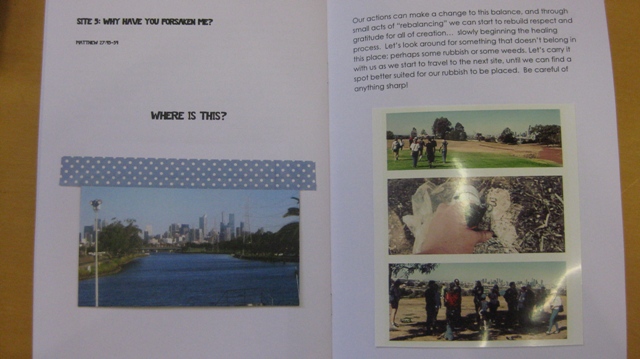
Further to our Stations of the Cross walk on Good Friday I made a lift-the-flap book for each of the families that participated.  How can we bring the messages of the high holidays into the everyday?  Kids know who cartoon and TV characters are because they are shown images of them, if we want them to learn to recognise our elders we must show images and share the words of these people… you cannot know what you haven’t learned, what you haven’t learned you cannot love.

007 - Copy

008 - Copy

009

012 - Copy

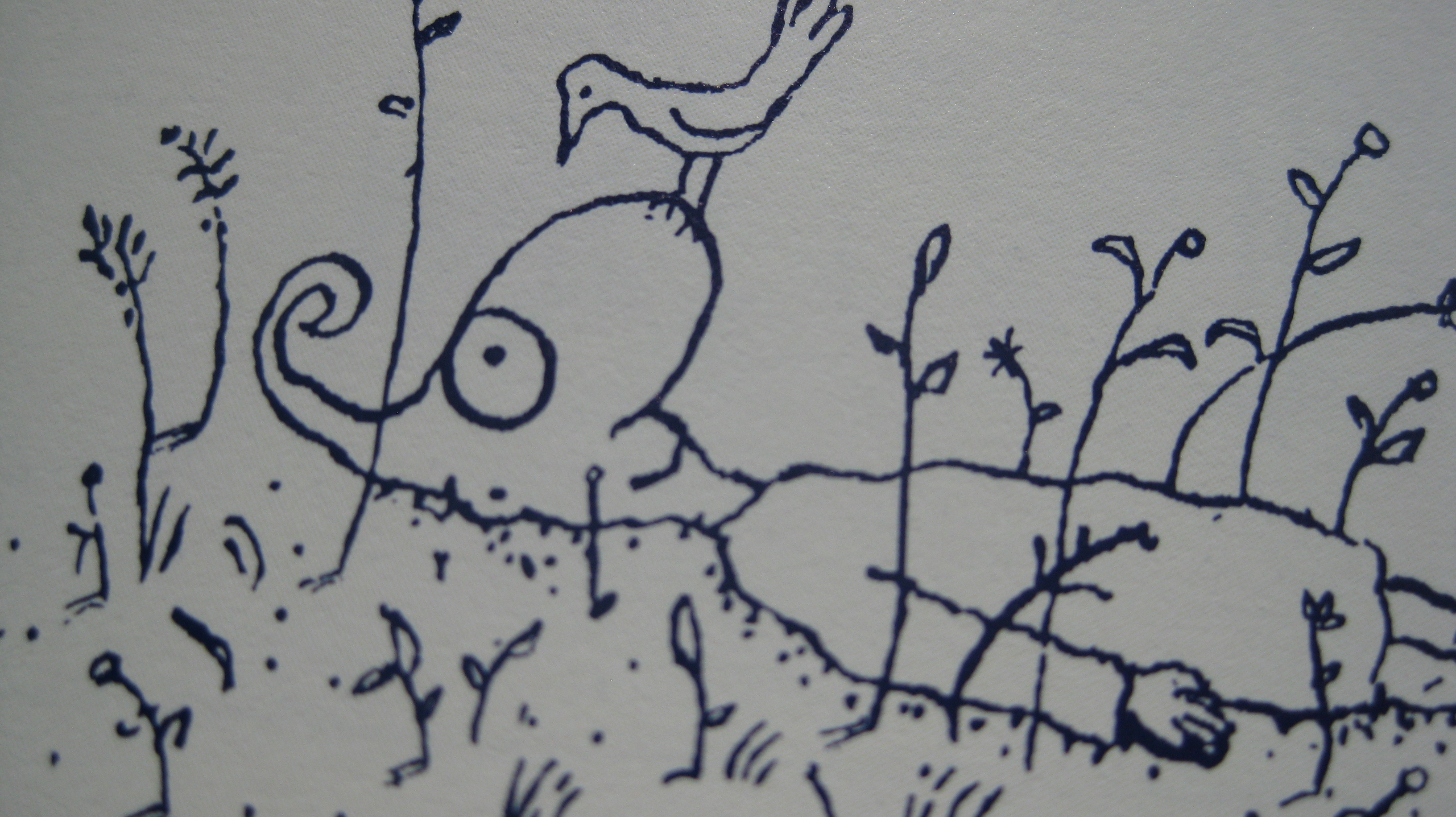
offwego[A short paper presented to the Spiritual Reading Group 21 July 2015 on Michael Leunig]

So… Leunig… one of the questions he is most often asked and is always baffled by, is what does a particular cartoon mean? “People will say, ‘I don’t know what it means but I like it.’ Leunig replies… “I don’t know either but I like it too. I’m not trying to say anything but I hope it awakens something in you.”

Michael Leunig was raised listening to Oscar Wilde stories on the radio. He read Enid Blyton, Biggles and Childrens Encyclopaedias… he went to Sunday  school and always said he found it, “not full of God but full of stories.” It was lyrical and what was lyrical made him happy – Leunig heard Psalms and asked of himself “What can I do like that?”

Though born in East Melbourne in 1945, Leunig grew up in Footscray going to Footscray North Primary School and Maribyrnong High School. Many of Leunigs friends, and many of his teachers when he grew up in the 1950s were war refugees or were the children of people from Germany, Russia, Poland. It was a very industrial area –ammunitions factory with machine guns firing, meat works, cannery… it smelt awful and drained into the river… for Leunig this wasn’t bleak but held lots of peace and space. Not a lot of nature around, but then you appreciate and give more significance to what you have… a duck and the moon.

A duck bought from the market while doing the family shop imprinted on Leunig following him around everywhere, coming home from school he’d turn the corner and the duck would see him and come running. So he always got ducks after that considering them playful and good-humoured and innocent with those rounded beaks.

A formative misadventure at eight years, occurred while playing at the rubbish tip Leunig stepped up to his thighs in hot coals and wires – receiving horrible and incredibly painful burns with fear of gangrene and amputation – for five months he couldn’t walk and had long periods of feeling cut off from others and lost.

From paper boy to making sausages at butchers on Barkley St, Leunig didn’t do well at school, repeating his last year, and came to work in the meatworks himself. This was great thinking time and Leunig advocates manual work that keeps your hands moving and your mind free. He said: “Working in such places either toughens or sensitises you” and it sensitised Leunig… he became a humanist (is now nearly vegan) and finely honed his earthy working class sense of humour. Leunig was conscripted for the Vietnam war in 1965 – he was going to fight it, a conscientious objector, but was rejected regardless when found to be deaf in one ear.

In Curly Stories, Leunig talks about it “Being an advantage to grow up without art consciousness… nothing to aspire to but things to find and create”. Homeschooling his own four children would have allowed him to foster a similar environment for them believing “Natural ideas exist within children… their play should be “utterly free” and they must be allowed to be bored – they feel free to explore and discover and the world is new to them and there’s this sense of wonder” Leunig refers to childrens ability to ‘blank out’ looking at a teapot spout or light through a window being present to what is right in front of them, commenting: “The loss of that beauty is appalling… how do I address that as a communicator? How can I express what everyone is feeling?” The prophet expresses the grief of the people. The artist expresses what is repressed.
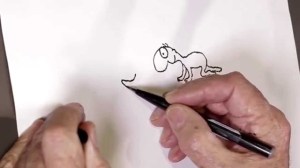
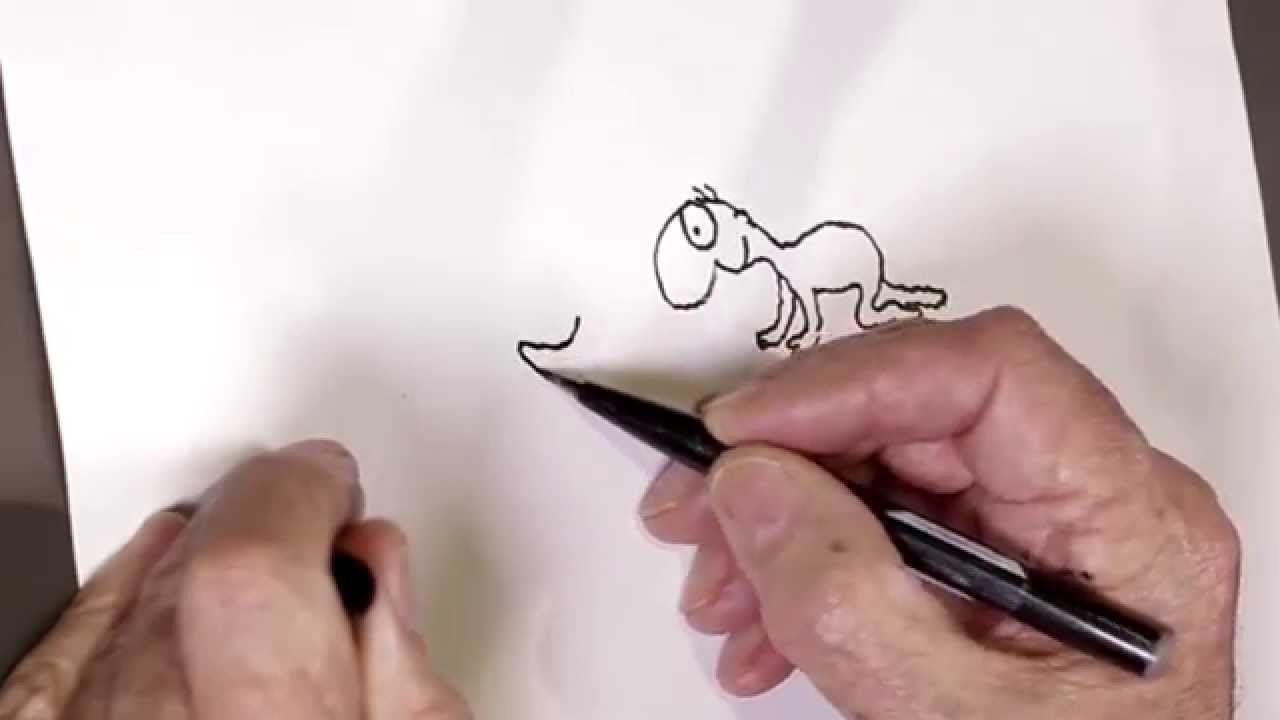
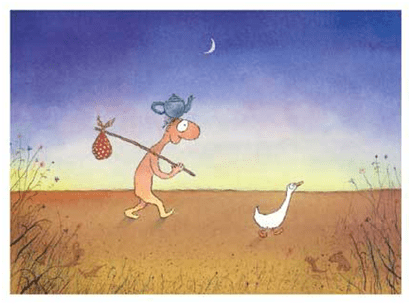
maxresdefaultWalking out of his 3rd year at Swinburne Film and Television School, it was 1969 when Leunig first began to work as a political cartoonist at Newsday, while the factories might have taught him to use humour – intellectual, witty, cynical – to deflect serious things, Leunig says “I was sung sentimental songs. Part of my first language. Fluent in that emotional language” His Grandma used to tell him: ‘All the world is bad, except for you and me, but even you’re a little strange.’ …perhaps this is where we meet The Creature… The Holy Fool– scribbled in the margins since school – amusing to his slightly hungover Editor, with a teapot on his head and riding a duck into the sunset, the image was put to print. Subhuman, primal, foetal, without gender. Leunig is somehow able to speak to our soul. To take small things and make them large, domestic things and make them sacred. For his own discipline he talks about the paradox of art theory – rules to follow, teachers to emulate >> how this stifles creativity. It’s about earning money, systematic success, built for efficiency, for velocity but you lose much, Leunig believes: “[You] cannot love or appreciate beauty at speed. How do you talk about it in ways that are unsuppressed and real? Might make a bridge with love, make a sandwich with love – it’s passed on to others. Love is what we go to bed thinking about.”the kiss by leunig
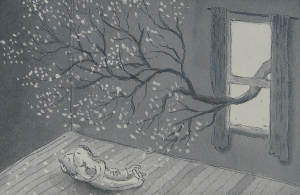
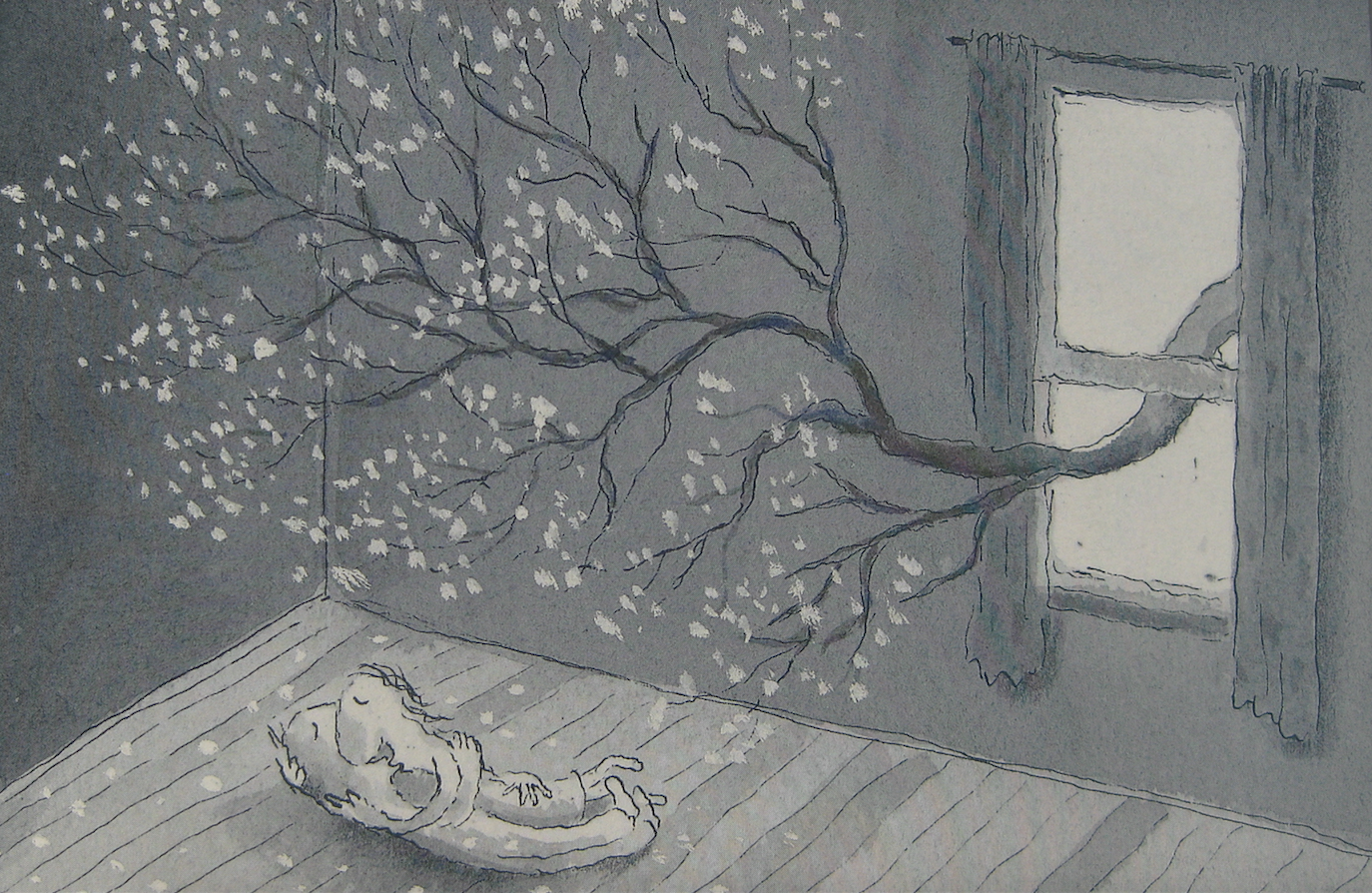
Since his first book in 1974, Leunig has produced 23 more – books of newspaper columns, poetry and prayer in addition to his prints, paintings and drawings. Leunig shares intimacy with us, personal and confessional – e.g. The Kiss. We are invited into the privacy of his love life, his soul searching… Leunig makes the private public. He takes the small dark fearful things and brings them out where we can look at them “crying with the angels for a world that is different – this is not fatalistic but hopeful”. Perhaps it is because he has offered his own soul first that we are willing to listen to him expound on many themes:

>> loneliness >> the 9 to 5 grind >> war >> sex >> consumption >> love >> god >> media >> religion >> politics

It was being asked to contribute a cartoon to a new paper in 1989, The Age, that Leunig started writing prayers to the horror of his friends… Rather than born-again Christian Leunig’s interpretation lay in the realm of John Keats’s “negative capability”, a word for the unsayable and profound in life. He wanted to say the words publicly as another way of addressing the problems of our time, of our society, of our psyche, of people’s personal suffering {1998} His friends reactions sort of egged Leunig on, wanting to see how much he could push believing that “until a man discovers his emotional life and his gentle, vulnerable side, until he gives it expression, he never will find his women or his soul, and until he does find his soul he will be tortured and depressed and miserable underneath a fair bit of bullshit”.

From Archbishops to Presidents, the Opera House, Australian Chamber Orchestra, National Theatre in London to clay figure animations for SBS and remote communities in northern and central Australia – Leunig has Gone Places and Done Things. Declared a national living treasure by the National Trust in 1999 and awarded honorary degrees by 3 universities for his unique contribution to Australian culture.
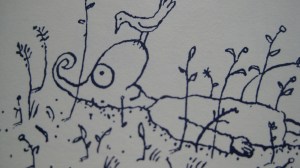
094The ‘war on terror’ following 9/11 was a watershed moment in Leunig’s cartooning work where, opposing the war and invasions of Afghanistan and Iraq, he was at odds with many editors, commentators and members of Australian society – there became less gentle and lyrical themes and he stopped drawing the whimsical characters Mr Curly and Vasco Pyjama as often although the duck and the moon have still faithfully remained. Adding curls arose out of Leunig’s desire to communicate that “What makes you feel so alone and strange is in fact normal. There’s a lot of curliness in life and you can have a homecoming – there is a place for you and for that aloneness, that eccentricity, and there’s a fulfilment of it eventually, it’s no longer the cause of your outcastness. So that’s the curl. It’s the curious, unique self and, if you find that, you find the connection to the whole world because the world is curious and unique and authentic at its best level.” You might say the war, not understanding how people can fight other people this way, has been a breach to Leunigs sense of connection to Australian society and thereby rest of the world.

These days, Michael Leunig has 3 small dogs but no ducks. He enjoys talking to strangers and going to bed at night. He is a devout nature lover and spends his time between the solitude of the bush in Northern Victoria and a home in Melbourne where he enjoys walking in the local park, morning coffee in the café, chamber music in the concert hall, and attending to work in his studio .

When asked: “What is the meaning of life?” Leunig replied: “For humans as for all the plants and creatures: know yourself, grow yourself, feel yourself, heal yourself, be yourself, express yourself”… “I want to be a voice of liberation”. Leunig speaks not only for the wealthy or the poor but both, not only those armed and those without weapons but both, not only the pretty people or only the ugly people but both – he enjoys this inconsistency and variety. As Barry Humphries says “through the vein of his compassion and humanity and his humour – illuminating many a darkling theme”

Like Jesus with his parables and questions – Leunig doesn’t present us with solutions or easy answers but an invitation. He sees his vocation as cracking what is stoic and cold in society – to make us feel anger, grief, joy, sadness… Leunig believes we have something to discover in the wrongness… “Live without ‘knowing’, in mystery. Find things. Unlearn. Get lost. Get primal, getinfantile. When you have lost all hope – start to play. You have nothing to lose. Stay with it and don’t take it too seriously…”

I hope maybe it awakens something in you.”

“We are so obsessed with doing that we have no time and imagination left for being.  As a result, men [people] are valued not for what they are but what they do or what they have – for their usefulness”

Thomas Merton

How is this expressed in the lives of people that you know? …in your own life?

What are common denominators?

If there is a correlation between time and imagination and being – what is gained?

Here are some definitions of imagination to reflect on (my underlining):

1.  the faculty of imagining, or of forming mental images or concepts of what is not actually present to the senses.
2.  the action or process of forming such images or concepts.
3.  the faculty of producing ideal creations consistent with reality, as in literature, as distinct from the power of creating illustrative or decorative imagery.
4.  the product of imagining; a conception or mental creation, often baseless or fanciful one.
5.  ability to face and resolve difficulties; resourcefulnessa job that requires imagination.
(Dictionary.com)
What are we?
Who are we beyond what we do and have?
How can we relate to others beyond what they do and have?

Communion @ FCOC

026


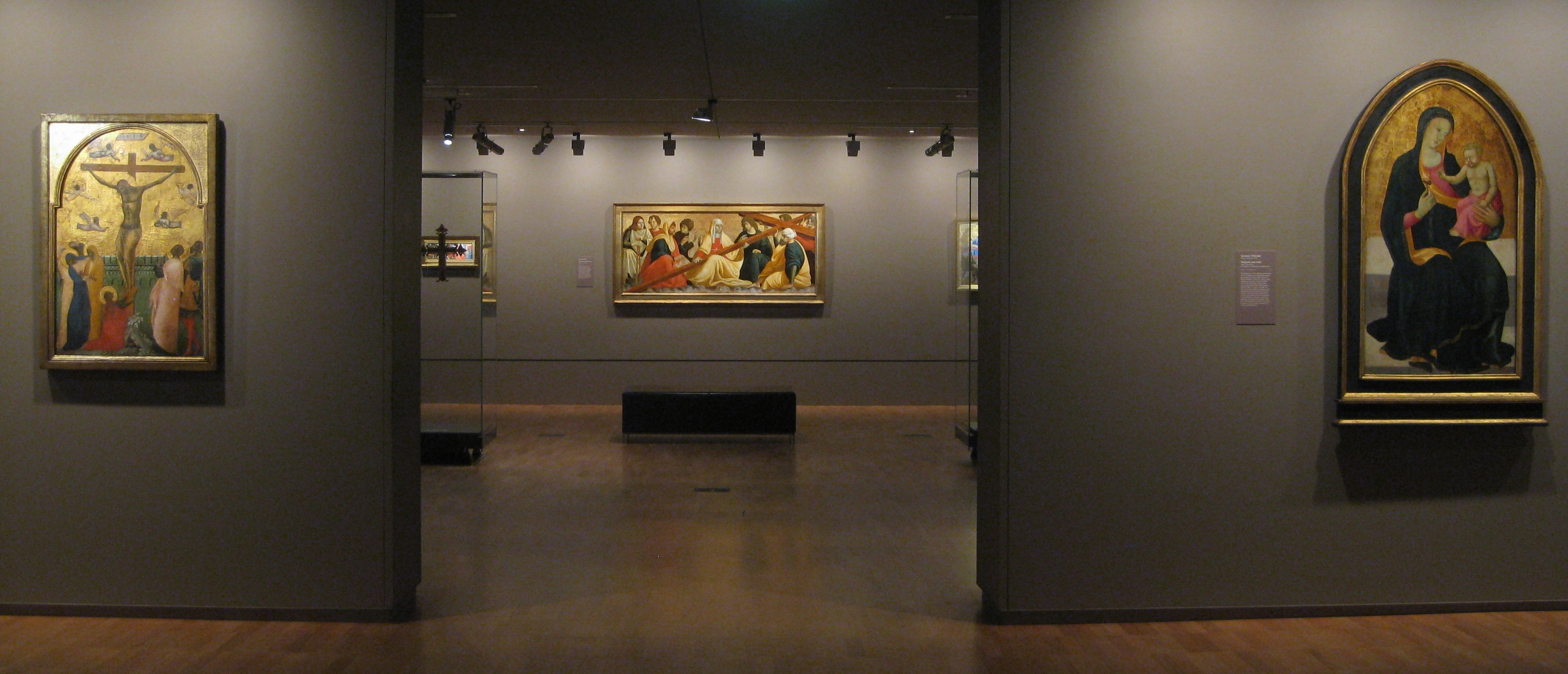
I took myself to NGV International this week for quiet time to prep for communion – this is a photo from their 16th and 17th Century Art section.  All the images in the gallery to the left of the frame were images of the crucifixion of Jesus and all those to my right the birth… we’ve just had Easter (crucifixion) and now we’ve got the months before Christmas (birth).  It’s easy to think of Jesus at these times – the time he was born and the time he died (then rose) – those were miraculous events and out of my reach. I know there are people out there who just connect with church at the high holidays but this is what they miss… I can’t ‘be like Jesus’ in the sense of how he was born or died, this can make Jesus seem far away, but the life in between these events… telling stories, listening to others, going for walks, praying, holding kids, going fishing – these things are in our reach… Life we can live between these special sacred high holidays in ‘ordinary time’, this is when it’s easier to be near and be like Jesus.

Jesus is sitting eating the Passover meal with his friends – people who worked for the Roman Empire and rebels who worked to overthrow it… JB Were and the Occupy Movement, the rich with inherited investments and property portfolios and those of inter-generational poverty on Centrelink, Aboriginal and Torres Straight Islander peoples with colonisers… took the food they were eating in front of them and made it sacred. He took ‘ordinary time’ and made it sacred, imbuing it with ritual and meaning.

…something to think about next time you go fishing.

Summer 12-13 125

… an image of God as a Tane Mahuta tree – too large to take in, too large to take with us.  We can carry smaller symbols carved out of wood that are portable, small enough to manage.  When we whittle, what gets cut away?  We need to be self-aware to the fact that any part of God that is small enough to understand, small enough to carry around, can only be some small, symbolic part of something much bigger.  We forget.  We imagine in the carved icon we can fit our hands around that we can understand all of who God is.  We can never understand all of who God is. We need to live knowing this.  We need to express our Christianity knowing this.  Anytime we imagine something is certain, something is known, God moves and invites us to come along… invites us to look with new eyes, in some new light – invites us to see.  The commitment to being a disciple of God is the commitment to move and to see again.

Talitha Fraser

004

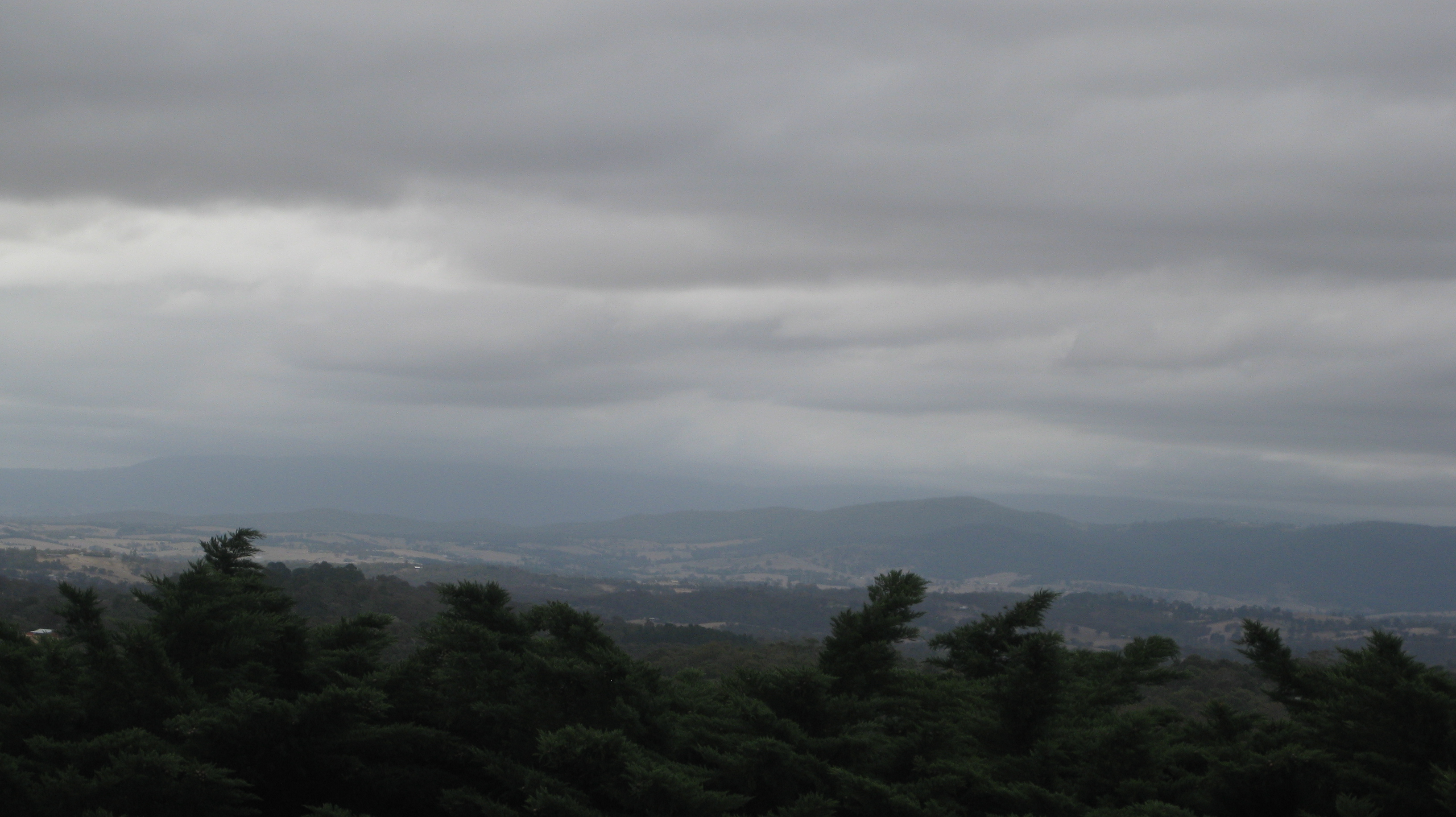
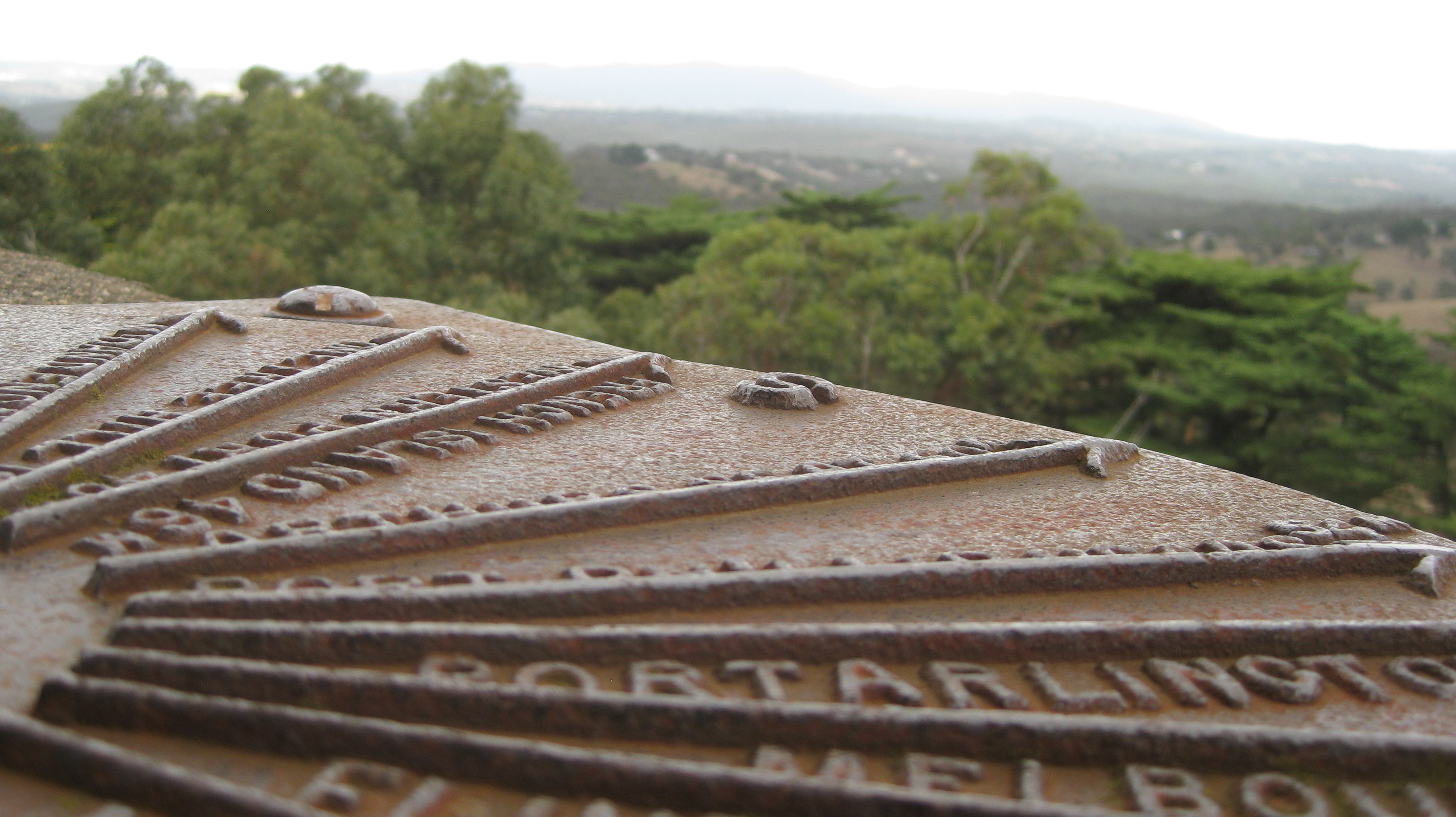
007012011Eltham War Memorial Tower & Park at Kangaroo Ground in Melbourne

What does it mean to look out?
How does/can it change your perspective to feel above things? to understand their size in the order of things?
Do you feel a sense of space and freedom when in the wilderness?

Try physically placing yourself where you need to be to get what you want in terms of headspace.

020

Western culture is at a turning point. Christendom forms of church (churches organised according to the machinery and mindset of empire) are dying, but spirituality increases.  What can Celtic models of spirituality offer?

Roots, rhythms and relationships
deep enough to provide common ground.

Jesus came to confirm what is true and purify what isn’t – Jesus does that, not you.
Are you spiritual or are you religious?
Church preaches kingdom but doesn’t model.  Homes model but don’t preach.  Need: little villages. CHurch that knows Sunday is not enough.

hub

Tribal leaders gave lands by the strategic highways of sea and river to church planters who established communities of daily prayer, education, hospitality and land care.  Peoples monastery churches served as daily prayer base, school, library, scriptorium/arts centre, drop-in, health centre.  They had farms with livestock and crops, workshops such as wood, spinning and milling. They were open to the world.  They offered soul friends, training and even entertainment.  Children, housewive, farm workers and visitors would wander in and out.  Visitors bought news from overseas.  They were villages of God.  Each had its wn flavour in worship and values (Rule) yet each was connected with the univvrsal church through common prctices, prayers, and priests ordained in the apostolic sucession.

today’s changing trends

Although our society is vastly different, changing trends again require churches that are more than single-building Sunday-only congregations.

  • A twenty four hour society calls for seven day a week churches
  • A cafe society calls for churches that are eating places
  • A travelling society calls for churchesthat provide accommodation and reconnect with the hostel movement
  • A stressed society calls for churches that provide spaces for retreat and meditation
  • A multi-choice society calls for churches that have a choice of styles and facilities
  • A fragmented socitey calls for holistic models and whole life discipling
  • An eco-threatened society calls for more locally sustainable communities.

“Can’t have deep ecology without deep spirituality” – John Phillip Newel.

The glory of God is seen
through the human life fully lived.

Need self-sustaining spiritual disciplines.
“Our hearts are restless until they find their rest in you Lord” – Augustine