Tag Archive: discipleship


Reflections on “Making Space” – Pohl

KEEPING PROMISES

  •  Keeping them
  • When to release others/ourselves
  • If viewed with scepticism then empty

Important to follow through on commitments that have been made – big or small – be explicit.

The practice of patience and accompaniment – what is the bigger picture we are all called to?

Commit to a slow process and working it out together.

Vanier – more I live in community life, most problems are never resolved but with time and listening stop being a problem… but there’s always another problem.

Listen. See it out in the open àlooks different.

Truth-teller to yourself – ask others to do that. What is the agenda? Is keeping the promise for me or for you?

Miss the value of what is different when we try and colonise.

Ability to listen and be brave – Andreana’s blog

Dewey – all communities will fail if they don’t have a single missional purpose.

—-

Some of my most painful experiences in community (and most powerful and transformative experiences of grace) have been in realising a need to release myself or others of a commitment we have made – can you think of examples of this in your own life? are there ways to learn to recognise this sooner, for ourselves and others , to work for “making space” before there is hurt or a sense betrayal?

 What is the bigger picture we are called to? This is to love each other well – and sometimes that means letting go. Keeping people bound to us by a promise when we should release them can be selfish or even abusive. Using language that assigns blame for break down in this scenario can add layers to that if a person feels guilt for ‘breaking’ a promise and how that affects others. If you release someone from a promise that has a completely different feeling than them ‘breaking’ the promise because they may be in a position where they feel they have no other choice. Ask them, what is the bigger picture they are being called to? It may not be leaving/breaking to go FROM something but to go TO something. Loving one another well is hearing that and supporting it to happen. How many relationships are ending in divorce because it’s so hard to negotiate loving one another well and keeping the larger picture we’re called to in view over resisting change that challenges our own point of view of how things should be. “Commit to a slow process, working it out together. Listen. See it out in the open – looks different.”


What does it mean to be a “truth-teller” to yourself? ‘I am a good person.’ Is that true?

‘I am a generous person’

‘I am a selfish person’

‘I am a good friend’

Pick a statement, one of these or your own, and spend 3-5 mins writing or thinking about the answer. Argue it. Then take the opposing statement ‘I am NOT a good person’ and argue that. Is it black and white? How much does family of origin factor in to some of your practices and responses? Expectations of others and yourself?

Is keeping the promise for me or for you? Think about this in light of the above because our motivations aren’t always clear, to ourselves let alone others.

 You are you and I am me. I cannot expect, and should not try to change, you to respond in a scenario the way that I would myself. My way is not the right way it is just ‘my’ way. Try saying that aloud a few times “My way is not the right way…”

Swap Super funds, make a giving budget, recycle water for flushing… these are some great commitments not achieved by my Household Covenant.

It’s 2012: I’ve just finished up at a proper job and Marita and I have taken in an Iraqi refugee, a young woman, named Shahad. We have scored a sweet deal on a low rent run-down Footscray house and I’ve just had a three month sabbatical visiting Bartimaeus Co-operative Ministries (BCM) in LA and returned home dreaming “What next?”
This expressed itself in the following, I’m sure annoying, way:

“At BCM I learned about cover crops and installed a timed irrigation system.   At BCM they shower over a bucket then use that water to flush. At BCM leftovers were upcycled into a new and different meal the next day so nothing was wasted. At BCM they don’t let you watch TV… they don’t even have a TV!”

…when the Household Covenanting series came up it seemed like a good way for my housemates and I to go on a journey together exploring ways of living sustainably and agreeing together on what some expressions of that might look like.

Where to start? Find meaningful part time work. One day per week in Footscray, no car, no screens. I don’t know about meaningful but I got an ABN and did contract administration – talk about part time – some weeks I had six days to be present in Footscray! While this part time lifestyle opened up opportunity for great projects (do maintenance on rental property – exceed minimum obligation, support Shahad, plant daffodils and tulips) it also wrought huge changes, suddenly go dumpstering is a weekly economic necessity, get piano lessons (subject to someone else’s expertise) isn’t financially viable and Marita’s family tradition of donating first income (giving this away as first fruits as gratitude to God) seems naive in the face of my irregular income. We imagined this spreadsheet tracking the-real-coffees-I-didn’t-drink forming, in part, the budget for our sustainability initiatives but I am instead dependent on the beneficence of my own friends charity to pick up my tab if they want a cafe catch up… This, THIS was in some ways where the real work/learning on savings, debt and poverty took place as I came to have a real and personal understanding of doing without – doing without ‘real’ coffee and inviting people to my home instead; doing without the safety buffer in my savings account led me, in fear and desperation, to rely on God’s providing and I received it in many ways and from sources I could not have imagined; doing without eating whatever I wanted when I felt like it and instead connecting with food seasonally by consuming food grown ourselves, sourced from Sharing Abundance[1] and dumpstered… I had to learn preserving methods, humble myself to let others pay for coffee, and give even though you don’t know where your next income is coming from. These are some great commitments achieved by my Household Covenant …and I didn’t even have them written down.

I could not have foreseen that supporting Shahad might mean leaving lights on across the house overnight to manage her fear of the dark over my desire to reduce power consumption (darn that was meant to be one of my easy ones). That my aim to buy second hand is overruled by her desire to have nice, new things that are her own for the first time in her life (we took her to IKEA for her birthday last year and she LOVED it!). Now I could understand what Jon meant when he told us ‘…the rule serves me, not me it’. My middle-class, educated reasoned choices to dabble in downward mobility cannot mean much to someone who has never had many of the choices and opportunities I have been given and part of my covenant should be to work to redress that imbalance. Perhaps I have not strictly achieved everything I set out to do but I am not unhappy with where I’ve ended up instead.

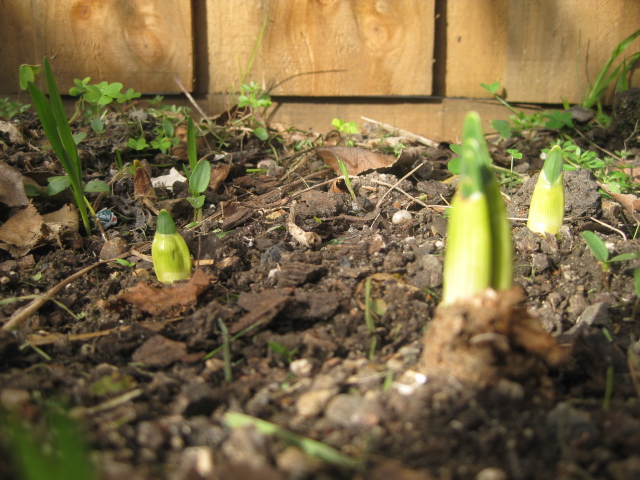
I do not know what will happen if you attempt a Household Covenant but I doubt you will be disappointed or find the attempt uninteresting… we plant daffodils and tulips every year now, although we moved house just last month and the bulbs were just tips pushing through the ground and we won’t be there to see them bloom, I wrote this: 007

“Reflecting today on the things we plant in the hopes of fruit to come.  We believe in planting so we do it but ultimately we have very little control over what grows and who it belongs to.  The pain is in our awareness of this and our discipline is planting anyway – even though we’re tired and someone else may receive the benefit of our careful tending, someone else may not like the plants we’ve chosen or where we positioned them and tear them out like weeds.  The thing that I value is only valued by others if they want it themselves.  What I grieve for, is not this house, much like another having four walls and a roof, but the harvest hoped for here that will not be realised by me. There is a large harvest, but few workers to gather it in.  Pray to the owner of the harvest that he will send out workers to gather in his harvest.”

Those little shoots felt like a metaphor for walking away from the sense of home we created in that place and the practices started that we now wouldn’t follow through. I hope God is sending me you, you know, not to go round and pick my ACTUAL daffodils, but to be a fellow worker in the field.

New housemates, new street, new garden… perhaps it is time for a new covenant.

“Hey, …Marita? …Shahad? …Ana & Atticus? You guys want to head to Ceres for some bulbs?!”

[1] www.sharingabundance.org is a food rescue initiative whereby produce is rescued from backyards and shared between homeowners, volunteers who pick and local community food programmes.

{a nicer – edited! – version of this article appeared in the Dec14 Manna Matters newsletter.  Go straight to the source and find out more about Household Covenants at the Manna Gum website}

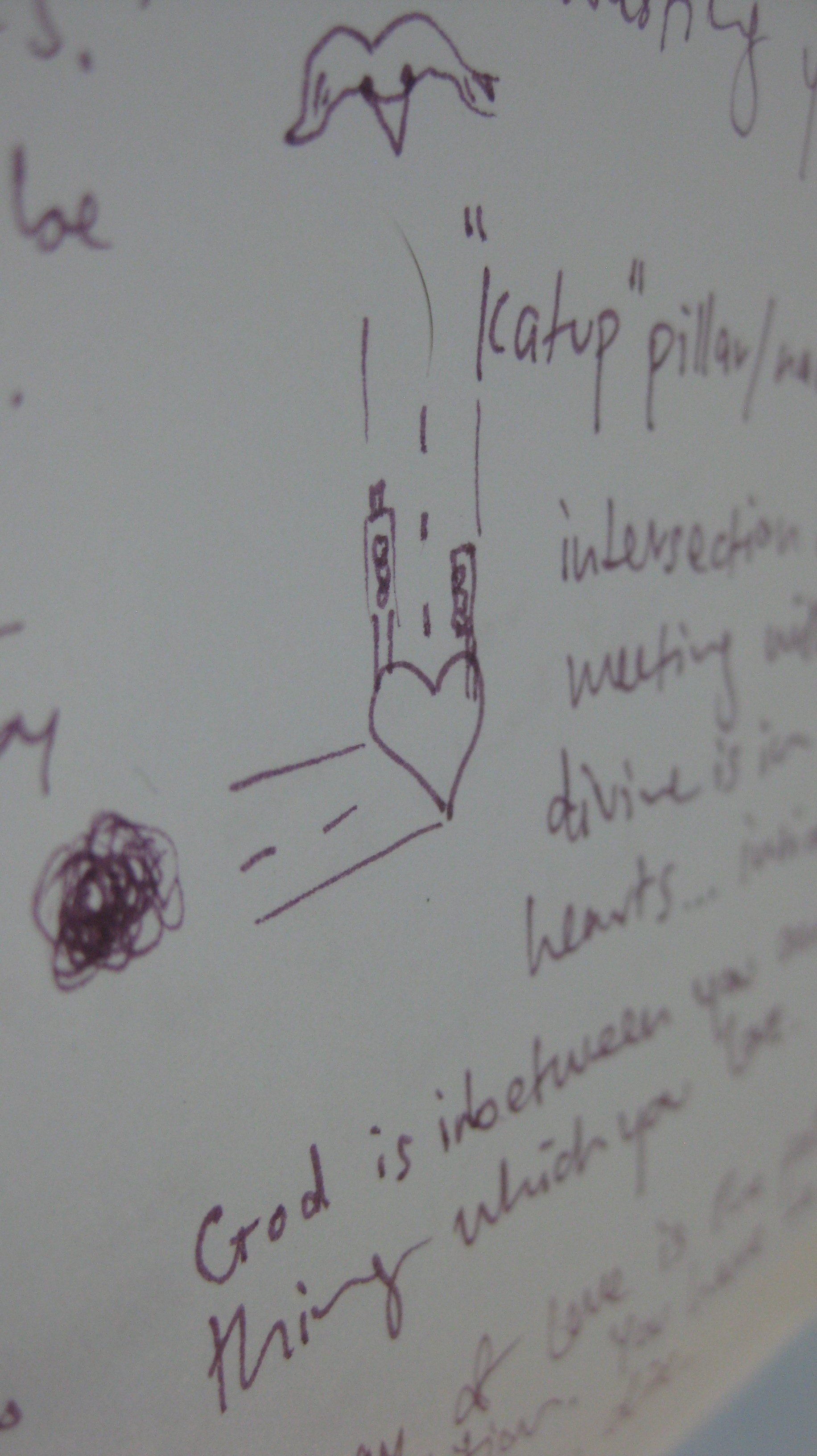
“This is giving your life to the one within that you know as Lord, which is a totally private matter. No one except you can judge how that is going. But if you’re not doing it, Rumi says, you are wasting your time here.” Coleman Barks. Preface, pg xv

058

The Way of Love is:

  • the path of annihilation – die before you die
  • not religious
  • escaping into silence

Love writes a transparent calligraphy, so on
the empty page my soul can read and recollect.

  •  a mystical conversation or shobet
  • is learning through grief

My work is to carry this love
As comfort for those that long for you,
To go everywhere you’ve walked
And gaze at the pressed down dirt.

  •  discipline – polishing the mirror

 Rumi says an ecstatic human being is a polished mirror that cannot help reflecting. What we love, we are. As the heart becomes cleaner, we see the kingdom as it is. We become reflected light. The polishing may be related to practices, a devotion we do everyday that is an emptying out…

 What does it look like to remember who we are (our best selves) and acting from there?

What practices could we engage in that help us remember?

Drowning

What can I say to someone so curled up
with wanting, so constricted
in his love? Break your pitcher

against a rock. We don’t need any longer
to haul pieces of the ocean around.

we must drown, away from heroism,
and descriptions of heroism.

Like a pure spirit lying down, pulling
its body over it, like a bride her husband
for a cover to keep her warm.

Longing

Longing is the core of mystery.
Longing itself brings the cure.
The only rule is, suffer the pain.

Your desire must be disciplined,
and what you want to happen
in time, sacrificed.

blog 020

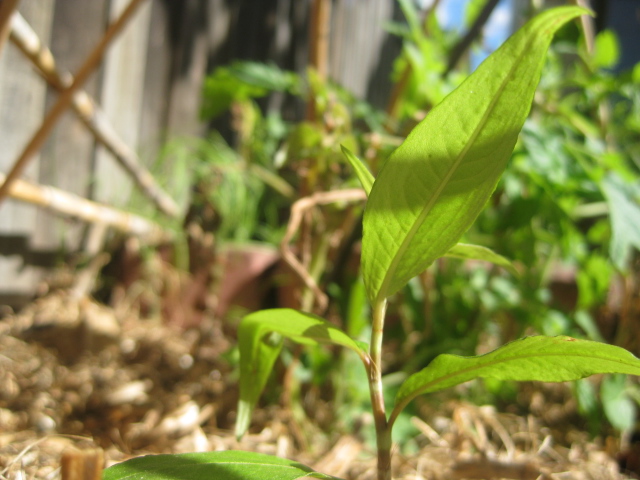
seedlings gardenReflecting today on the things we plant in the hopes of fruit to come.  We believe in planting so we do it but ultimately we have very little control over what grows and who it belongs to.  The pain is in our awareness of this and our discipline is planting anyway – even though we’re tired and someone else may receive the benefit of our careful tending, someone else may not like the plants we’ve chosen or where we positioned them and tear them out like weeds.  The thing that I value is only valued by others if they want it themselves.  What I grieve for, is not this house, much like another having four walls and a roof, but the harvest hoped for here that will not be realised by me.

There is a large harvest, but few workers to gather it in.  Pray to the owner of the harvest that he will send out workers to gather in his harvest.


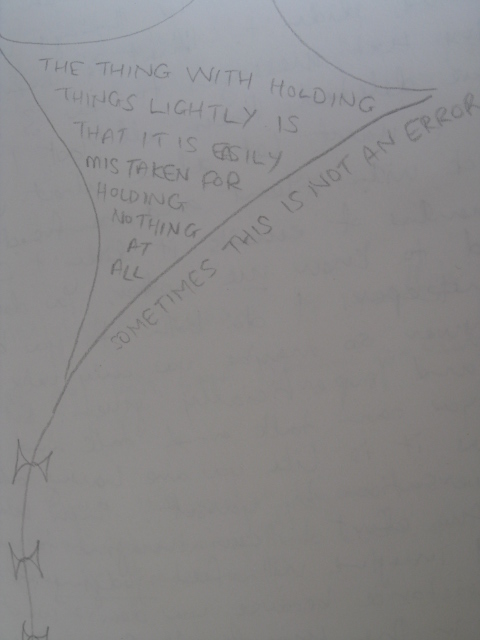
The thing…

blog 017

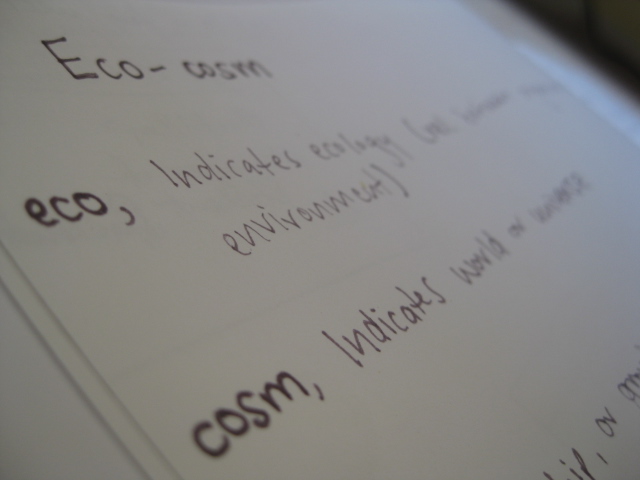
Eco-cosm

blog 004

This discipleship, or growing up, or whatever you want to call it is the process of discovering and defining our own ecocosm.  Each book of spirituality invites me to visit other peoples’ ecocosms and this is useful in as much as it assists with the awareness and structuring of my own.  This is where churches suit or not, where communities thrive or not… space needs to be allowed/created for the expression and fuelling of our individual ecocosms. In knowing others better I know myself and this is the strongest recommendation I can make for living in community.  In clarifying all the ways that I can understand 1-am-not-you, I can be affirmed in all the ways-I-can-be-my-best-self. We are each of us individually knitted in the womb, the hairs on our head counted, each of us made by God, each of us co-creators with God. Walk the path set before you to walk.  God is with you exactly where you are right now.  God has put people around you who need you, God has put people around you who can help you, inspire you, teach you… Ask always “What is the next step?” What is your leading edge? Our God moves and invites us to walk along the Way.  Pray “Here I am send me” and take a copy of Dr Seuss’s ‘Oh, The Places You’ll Go’ because it’s the closest thing to a handbook there is.  I’m a Type 2 in the Enneagram, I am INFJ in Myers-Briggs, my top 5 in Strengths Finder are: Belief, Restoration, Responsibility, Individualisation and Strategy, I am single in a world where marriage is the dominant culture, I am a woman in a male-dominated culture, I am mad in several specific but (hopefully) endearing ways and a product of my family of origin and the sum of all my life experiences to date.  I am my own ecocosm.  I need to own my own ecocosm.  No one else will tend it for me. I need to consciously tend my ecocosm – who can I meet up with? what can I read? where can I travel? how can I see anew, with new eyes, those familiar things that are so easy to take for granted or become complacent about the vital life breath of why-I-am? This might be right within the four walls of exactly, specifically, particularly where I am right now.  There is a story of an American Indian elder speaking with his grandson:

“…there is a battle between two wolves inside us all. One is evil. It is anger, jealousy, greed, and resentment. The other is good. It is joy, love, hope, humility, kindness, empathy, and bravery.”

The boy thought about it, and asked, “Grandfather, which wolf wins?”

The old man quietly replied, “The one you feed.”

i tell you arise

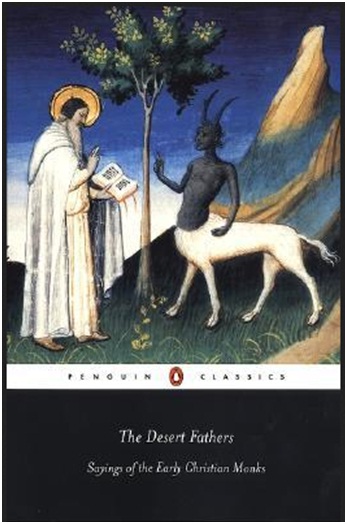
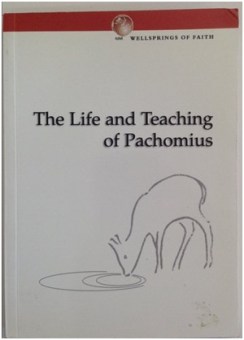
pachomiusThis year I am thinking a bit about the idea of “community”, what does it take to have a “good” one (sustainable/functional/inclusive/etc.) how is leadership/eldership developed? what structure does this the community have? how do people join or leave? are there basic components that are essential then localised variations?  What has been tried before and how did that work or not? Pachomius is part of going back to the Desert Fathers (and Mothers) and seeing what their communities were like… some common themes so far include:
– limiting company, food, sleep, talking
– living apart/in the desert
– working only enough to live and trusting to God’s provision for anything beyond that
– rhythm of prayer and fasting
– people would travel to visit/seek wisdom/join because they heard about their dedicated faith
– humility in service

Some chips of wisdom from Pachomius…  reflect on the question Where is your shining light?

It is not good to ask unnecessary questions. Speak only for the salvation of souls, because it is written: one who is faithful in small things will be faithful in great.  (p46) Lk16:10

Up! Do not stay with the dead. My son, do good deeds like the friends of God.  (Heb 6:12)  Do not sleep: act!
And make your neighbour do good deeds, for you have made yourself responsible for him.  (Prov 6:1-6)
Get up! Do not stay with the dead. and Christ will give you light (Eph 5:14) and grace will flower in you (2 Cor 4:16,17) (p280)

When a thought keeps troubling you, be patient, waiting for God to give you back your peace (p81)

If you give bread when you have plenty of it are you being truly good? And if you are downhearted when you are in need you are not truly poor in spirit.  But the bible says of the saints that they are in need of everything, they go through all sorts of troubles, and they are ill-used.  (Heb 11:37) But they are proud of having to undergo these things (Rom 5:3)(p85)

Bearing hard things with joy
Joyfully undergo any troubles.  If you knew the honour which is the reward for undergoing troubles you would not ask God to take them away. Yes, when you are weeping in your prayer, and when you are watching long hours for God’s help, that is of more value to you than to let yourself get soft and be made a prisoner (p87)

My son, run from the desires of the body.  They cloud the mind and stop you from coming to the knowledge of the secrets of God (Mt13:11).   They make you a stranger to the words of the Holy Spirit, and you will not be able to carry the cross of Christ or keep your hearts attention on praising God.  Do not eat more thn you need or you will not be able to taste the things of God (p89).

Run from earthly honours
You, my son, run from the soft life of this world.  Then you will be happy with the life to come.  Do not be careless.  Letting the days go by, for then Death will come to you suddenly and his servants, the faces of fear (Rev 9:7-11), come round you and cruelly take you of to their dark place of terror, fear and pain.  Do not be sad when you are cursed by men: be deeply sad when you sin – this is the true curse – and you go away bearing the wound of your sin.  From my heart I urge you to scorn honours.  Pride is the Devil’s own weapon.  It was with this arm of pride that he worked his deceit against Eve.  He said to her: “Take and eat the fruit of the tree and your eyes will be opened and you will be like gods” (Gen 3:5) She listened to him and thought it true.  She desired the glory of being like God and her own humn glory ws taken away, and you, if you go after the glory which comes from men it will keep you from the glory which comes from God.  It was different for Eve.  No one had told her that the evil spirit would test her.  That is why the Word of God came and took flesh of the Virgin Mary to free all the offspring of Eve. (p93)

God is living in you, you should be living in him
Look for what is good everywhere, be without deceit.  Be like the gentle sheep.  They are fleeced but say nothing (Is 53:7).  Do not go from place to place sayng: I will find God here, I will find him there (Mt 24:23). God has said: I am everywhere in heaven and on earth (Jer 23:24).  And again: If you cross over water I am with you.  The waves will not swallow you (Is43:2). My son, you should realise that God is in you, so that you may have life in him, in his law and commands.  Look: the thief was on the cross and he went into paradise, but Judas was among the Apostles and he handed his Lord over to people who hated him.  Rahab was a prostitute and she was counted among the saints (Jos 2:25), but see, Eve was in paradise, and the spirit of Evil led her into sin (Gen3).  Job was on a dungheap, and they say he was like his Lord, but see Adam was in God’s garden and he did not do as God commanded.  The angels were in heaven and God threw them out (2 Peter 2:4), Elijah and Enoch were on earth, but they were taken up to heaven (2Kgs2:11;Heb11:5). SO we should see God in every place and look for his help at all times (Ps104:4) (p94-95)

My son, run to God, for he made you, and it was for you that he underwent those sufferings.  For he said by the mouth of the Prophet Isaiah: I offered my back to the whips and my head to the blows. I did not turn my face away from the shame. (Is50:6) (p99)

To love is to build up (1Cor8:1) (p103)

Yes, even if we keep our virginity, and choose to live in poverty and solitude. God will still say to us: “Give me back my goods with interest” (Mt25:27) Angrily he will say to us: “Where is your robe for the bridal-feast? (Mt22:11,12) Where is your shining light? (Mt5:15,16; 25:10-12) (p107)

We must attend to ourselves and recognise God’s gifts. (p107)

Humility is the greatest strength
More than all this, we have been given humility.  It keeps all God’s gifts safe. It is that great and holy strength which the Son of God put on when he came into the world.  Humility is a strengthening wall and a storehouse for God’s gifts, protective clothing to keep us safe in the fight, and healing for every wound.  At the time of the Exodus the Hebrews made soft linens and things of gold for the tabernacle.  But at God’s order they covered it all over with a tent of goats hair (Ex26:7-11,14).  Humility is least prized among men but in the eyes of God it is of great value.  If we obtain it, we shall be able to crush underfoot all the power of the Evil One.  God himself has said: “Who is the man to whom I look? He that is humble and gentle.” (Is66:2) (p110-111)

Let us keep watch with a good heart
Let us fight against ourselves in all ways that we are able.  Let us put to death our bad desires and we shall become new men, in purity.  Let us loves others, and we shall be friends of Christ, who is friend of all men and women.  We have given our oath to God that our life will be monastic, which is to love, and for that we keep virginity not only of body but the virginity that is a weapon against every sin. (p112)

God commands us to work, not to have a soft living but to have enough to help the poor (p113)

Keep your strength of purpose (p114)

Use well every day of your existence and in the morning think what you will offer to God that day (p115)

Without delay, look for a safe place by yourself with God.  Be by yourself with Christ, weeping, and the Spirit of Jesus will speak to you through your thoughts. (p117)

“Forgive me Lord.  I have given pain to your image.” (Gen1:26) (p117)


desert fathersA hermit said, ‘When you flee from the company of other people, or when you despise the world and worldlings, take care to do so as it if were you who was being idiotic’. (p83)

A brother sinned and the presbyter ordered him to go out of church.  But Bessarion got up and went out with him, saying, ‘I, too, am a sinner.’ (p84)

In Scetis a brother was found guilty.  They assembled the brothers, and sent a message to Moses telling him to come.  But he would not come.  The the presbyter sent again saying, ‘Come, for the gathering of monks is waiting for you.’
Moses got up and went.  He took with him an old basket, which he filled with sand and carried on his back.
They went to him and said, ‘What does this mean, abba?’
He said, ‘My sins run out behind me and I do not see them and I have come here today to judge another.’
They listened to him and said no more to the brother who had sinned but forgave him. (p85)

If you are angry with your brother for any kind of trouble that he gives you, that is anger without a cause (Matt 5:22) But if anyone wants to seperate you from God, then you must be angry with him. (p100)

If a man answers before he has heard, it is foolishness to him and discredit (Ecclesiastes 11:8). If you are asked, speak; if not, say nothing. (p102)


Teaching 12 – The Root of Suffering

What keeps us unhappy and stuck in a limited view of reality is our tendency to seek pleasure and avoid pain, to seek security and avoid groundlessness, to seek comfort and avoid discomfort.  This is how we keep ourselves enclosed in a cocoon.  Out there are all the planets and all the galaxies and vast space, but we’re stuck down here in this cocoon.  Moment after moment, we’re deciding we would rather stay down in that cocoon than step out into that big space.  Life in our cocoon is cosy and secure.  We’ve gotten it all together  It’s safe, it’s predictable, it’s convenient, it’s trustworthy.  If we feel ill at ease, we just fill those gaps.

Our mind is always seeking zones of safety.  We’re in this zone of safety and that’s what we consider life, getting it all together, security.  Death is losing that.  We fear losing our illusion of security – that’s what makes us anxious.  We fear being confused and not knowing which way to turn.  We want to know what’s happening.  The mind is always seeking zones of safety, and these zones of safety are continually falling apart.  Then we scramble to get another zone of safety back together again. We spend all our energy and waste our lives trying to re-create these zones of safety, which are always falling apart.  That’s the essence of samsara – the cycle of suffering that comes from continuing to seek happiness in all the wrong places.


Teaching 20 – Solgan: “All activities should be done with intention”

Breathing in, breathing out, feeling resentful, feeling happy, being able to drop it, not being able to drop it, eating our food, brushing our teeth, walking, sitting – whatever we’re doing could be done with one intention.  The intention is that we want to wake up, we want to ripen our compassion, and we want to ripen our ability to let go, we want to realise our connection with all beings.  Everything in our lives has the potential to wake us up or put us to sleep.  Allowing it to awaken us is up to us.


Teaching 37 – The Practice of Compassion

We cultivate compassion to soften our hearts and also to become more honest and forgiving about when and how we shut down.  Without justifying or condemning ourselves we do the courageous work of opening to suffering.  This can be the pain that comes when we put up barriers or the pain of opening our heart to our own sorrow or that of another being.  We learn as much about doing this from our failures as we do from our successes.  In cultivating compassion we draw from the wholeness of our experience – our suffering, our empathy, as well as our cruelty and terror.  It has to be this way. Compassion is not a relationship between the healer and the wounded. It’s a relationship between equals. Only when we know our own darkness well can we be present with the darkness of others. Compassion becomes real when we recognize our shared humanity.


Teaching 43 – Tonglen: The Key to Realising Interconnectedness

…when anything is painful or undesirable, breathe it in.  In other words, you don’t resist it.  You surrender to yourself, you acknowledge who you are, you honour yourself.  As unwanted feelings and emotions arise, you actually breathe them in and connect with what all humans feel.  We all know what it is to feel pain in its many guises.

You breathe it in for yourself, in the sense that pain is a personal and real experience, but simultaneously there’s no doubt that you’re developing your kinship with all beings.  If you can know it in yourself, you can know it in everyone.  If you’re in a jealous rage and you have the courage to breathe it rather than blame it on someone else, the arrow you feel in your heart will tell you that there are people all over the world who are feeling exactly what you’re feeling.  This practice cuts through culture, economic status, intelligence, race, religion.  People everywhere feel pain – jealousy, anger, being left out, feeling lonely.  Everyone feels it in the painful way you feel it.  The storylines vary, but the underlying feeling is the same for us all.

By the same token, if you feel some sense of delight – if you connect with what for you is inspiring, opening, relieving, relaxing – you breathe it out, you give it away, you send it out to everyone else… If you’re willing to drop the storyline, you feel exactly what all other human beings feel.  It’s shared by all of us.  In this way, if we do this practice personally and genuinely, it awakens our sens eof kinship with all beings.

Teaching 86: Six ways to be Lonely

Usually we rgard loneliness as an enemy.  It’s restless and pregnant and hot with the desire to escape and find soemthing or someone to keep us company.  When we rest in the middle of it, we begin to have a non=threatening relationship with loneliness, a cooling loneliness that turns our usual fearful patterns upside down.  There are six ways of describing thsi kind of loneliness:

1. LESS DESIRE is the willingness to be lonely without resolution when everything in us yearns for something to change our mood.

2. CONTENTMENT means that we no longer believe that escaping our loneliness is going to bring happiness or courage or strength.

3. AVOIDING UNNECESSARY ACTIVITIES means that we stop looking for something to entertain us or to save us.

4. COMPLETE DISCIPLINE means that at every opportunity, we’re waiting to come back to the present moment with compassionate attention.

5. NOT WANDERING IN THE WORLD OF DESIRE is about relating directly with how things are, without trying to make things okay.

6. NOT SEEKING SECURITY FROM ONE’S DISCURSIVE THOUGHTS means no longer seeking the companionship of constant conversation with ourselves.