
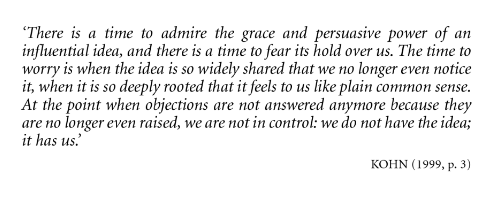
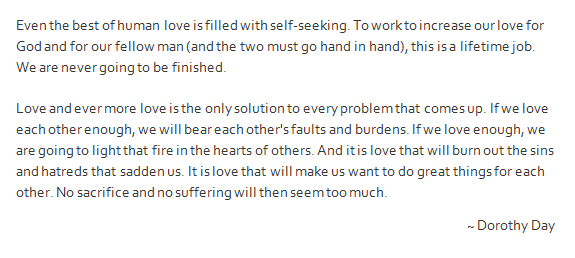
Found this in an op shop and am loving it so can only imagine I will have to restrain myself from a public rendering of the entire tome… I’m not apologising for that… I think its too beautiful.
[p.24-25]
Through our thoughts and our human experiences, we long ago became aware of the strange properties which make the universe so like our flesh:
like the flesh it attracts us by the charm which lies in the mystery of its curves and folds and in the depths of its eyes,
like the flesh, it disintegrates and eludes us when submitted to our analyses or to our fallings off and in the process of its own perdurance;
as with the flesh, it can only be embraced in the endless reaching out to attain what lies beyond the confines of what has been given to us.
All of us, Lord, from the moment we are born feel within us this disturbing mixture of remoteness and nearness; and in our heritage of sorrow and hope, passed down to us through the ages, there is no yearning more desolate than that which makes us weep with vexation and desire as we stand in the midst of the Presence which hovers about us nameless and impalpable and is indwelling in all things.
Now, Lord, through the consecration of the world the luminosity and fragrance which suffuses the universe take on for me the lineaments of a body and a face – in you. What my mind glimpsed through its hesitant explorations, what my heart craved with so little expectation of fulfillment, you now magnificently unfold for me: the fact that your creatures are not merely linked together in solidarity that none can exist unless all the rest surround it, but that all are so dependent on a single central reality that a true life, borne in common by them all, gives them ultimately their consistence and their unity.
Shatter, my God, through the daring of your revelation the childishly timid outlook that can conceive of nothing greater or more vital in the world than the pitiable perfection of our human organism.

You called me
You created me
and called me by name
in every echo of every
need, want, exclamation
I know I am made
I know I am named
I know I am Yours
made, named, Yours
Talitha Fraser
Welcome, we acknowledge that we gather on the land of which the people of the Kulin Nations have been custodians since time immemorial.
This is our fourth in a series called The Art of Discipleship where we showcase the material of different books and engage with their material creatively.
WEEK FOUR
The activity this week is taken from:
Women of Spirit: Woman’s Place in Church and Society
This Australian book by Janet Nelson and Linda Walter looks at how church and society both have ways that they tells us what we are and aren’t supposed to do and how we are and aren’t supposed to look. How can we reinterpret our self-esteem and identity understanding ourselves to be made in the image of God?
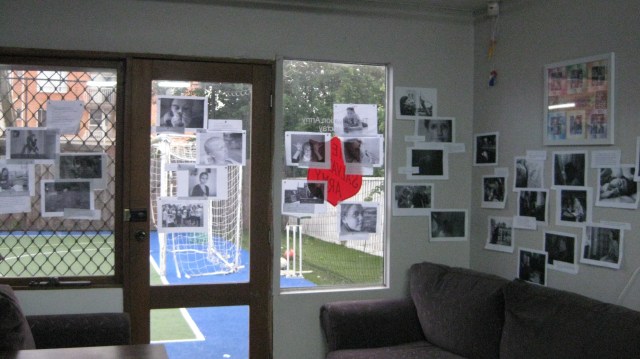
As has been done before, in a Seeds small group and a Women’s Circle at Surrender, images of women doing sacred ordinary things are blu tacked around the room with bible verses referring to women, where God is speaking to women and where “feminine” metaphors are applied e.g. God: “As a mother comforts her child, so I will comfort you; you shall be comforted in Jerusalem.” (Isaiah 66:13) or “How often have I desired to gather your children together as a hen gathers her brood under her wings, and you were not willing!” (Matthew 23:27).


This time we also had images of men juxtaposed with this “feminine” language and imagery.


So we had a time of some music playing while people walked around the room ( a reflection space created with pictures, bible passages, mirrors) immersed in these images and words and people were invited to grab a verse or image if it spoke to them and bring back and sit when they were ready.
Read the story of The Bunyip of Berkeley’s Creek (a theme of the main book)
How might seeing yourself in the image of God change your life/the way you live?
Using a camera, take some pictures of yourself – not a “selfie” that is about looking your best/who you’re with/what you’re doing but perhaps some part of your body you feel critical of, somehow a part that captures your ‘self’that you might feel critical of – scroll back through the images you have taken and prayerfully try and hear what God is saying to you in the mix of how you feel about yourself.
People can share their photos (if they feel comfortable to do so).
Discuss how the exercise makes you feel or what it gets you thinking about.
Close with the ‘Greeting Circle’ from p.194 – go around the circle blessing each person.
Blessed are you among wo(men) ____________________ [name]
For you have found favour in God’s sight.
Aunty Carolyn did the Welcome to Country at the Emerging Cultural Leaders event at Footscray Community Arts Centre tonight. She said:
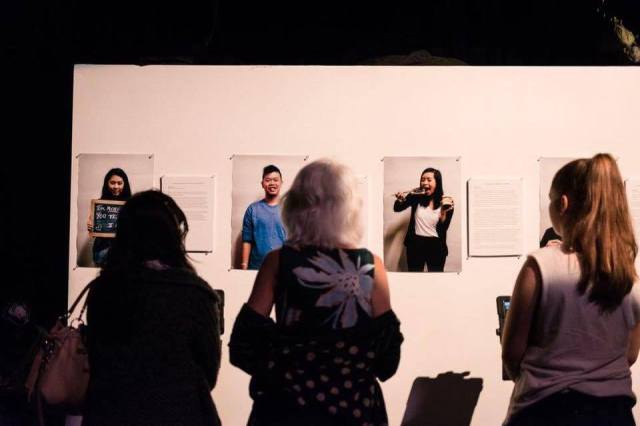
Loved to have this introduction and ideas of belonging, culture, identity and place in shared space with my friend Minh’s installation piece…
BIO: Minh Nguyen is currently completing her Masters of Applied Psychology. Her dissertation research explored constructions of ethnic identity amongst second generation Christian-affiliated Vietnamese in Melbourne. She found that through the negotiations between social relationships, and within one’s location in society, participants created a ‘different kind of Australian’ identity that accessed resources from the surrounding environment, their parent’s culture and experiences of racism and exclusion. This study provided an account of Vietnamese Christian identity construction, a particular historical, cultural, and social location within the complex world.
PROJECT: Immigrants are continually challenged by issues of settlement, sense of belonging, exclusion and identity construction. These issues are also important life challenges for the children of immigrants, the second generation and the generation thereafter. Chopsticks and Vegemite explores the identity construction of four people from a young Christian affiliated Vietnamese called Night Church. Unlike their parents, they create their identities and evaluate themselves in relation to the structures and ideologies of the new society, in addition to the memories retold of their parents’ birthplace.

In addition to the Carmelite Library in Middle Park, I have been known also to haunt the State Library of Victoria, it’s central, so so pretty, an easy place to occupy oneself before, after and between things and I love their exhibit of the written word from carved stone tablets, hand-drawn illuminated manuscripts and giant atlases to the printed word. It is a creative space and that is what I go there and “take out”.
Today I find myself in ‘LT A821 Poetry’ and I take two books off the shelf back to my spot in the carrels, called “Poems from Prison” and to contrast perhaps, “Sometimes Gladness” but, first things first, this fell out as soon as I opened it:

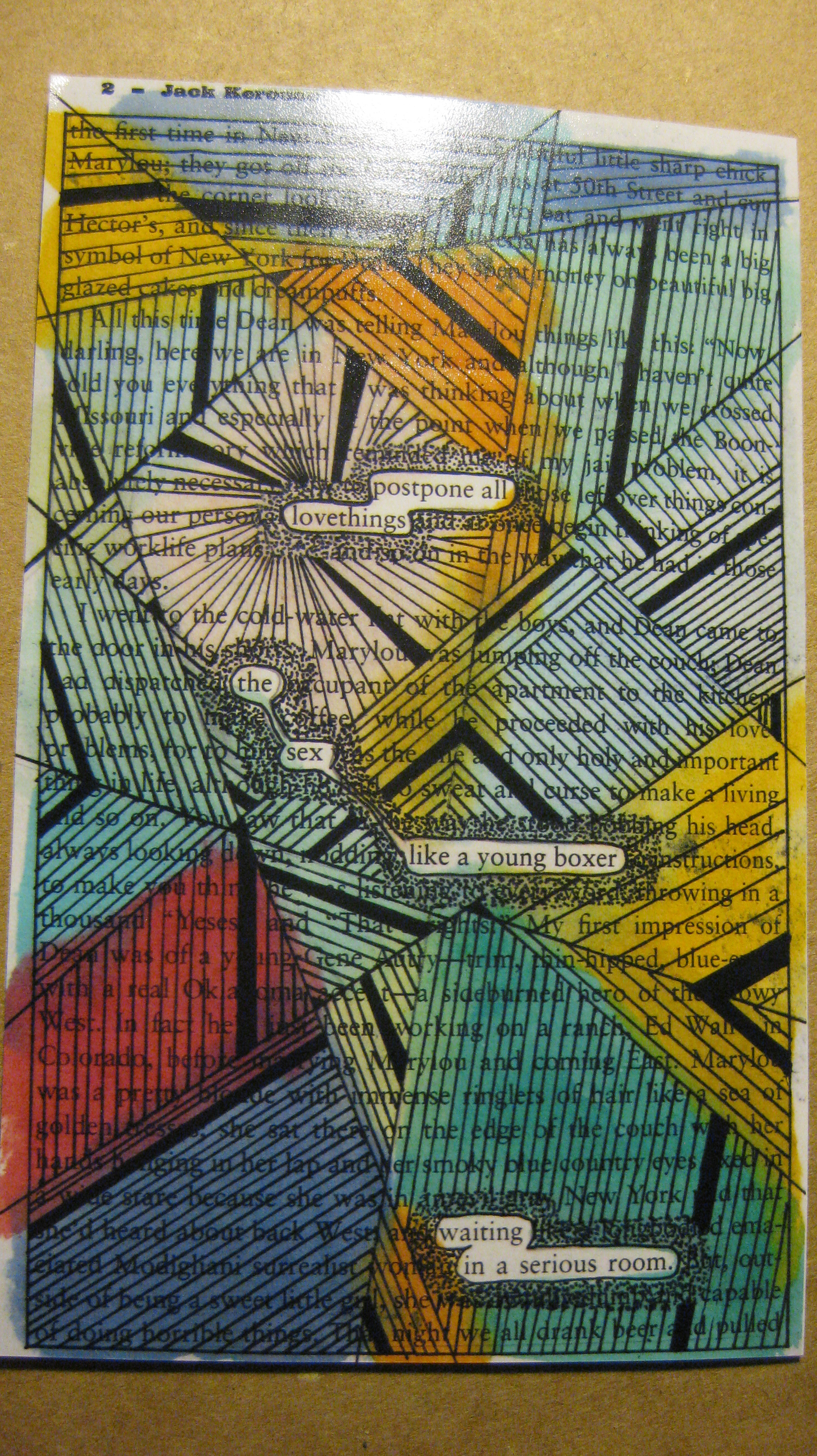
Who is the Reverse Butcher? <obviously as I was sitting in the library, I did not know, but that’s that magic of time and connectivity, I can insert the link right here and you can have a look!>
Speaking of time – has this poem been tucked inside the book since last year or was it written then and only placed in the book today?
This is an intriguing and colourful way to communicate… it might be a fun exercise to attempt in fact – isolating words on a page to say something quite different that what the original author intended… can you still cal it an original artwork when you have literally carved it out of someone elses work? It is fascinating I think, our capacity to take things others have said or taught or done and make them our own.
How much does it cost to get postcards made up? what is it for? what does it do? anything? Perhaps it is not its purpose to do anything but ‘be’. Outside of the normal rules of submitting poetry this is anonymous and there are no criteria to fulfill… I’m a little #antiresidency myself, at least as far as The Establishment is concerned did it feel ironic (or clever?) to tuck it between the pages of a book on “Poems from Prison”? So many questions!
Now, I actually copied quite a few poems out (how often do you get to hear poems written by people who are in prison after all?), this is their truth and, I think, something of their healing… I’ll limit myself to two.
I LAY DOWN WITH ME TO FORGET YOU – JACK MURRAY
I don’t want to believe
the message on your face
inches away
through the rust wine
finger-clutched smooth
by husky love promises
but my eyes
blind to all
blind to nothing
tell
that it’s true
true
But I remember when
one summer day
we held hands like children
and went into a
brand-new empty house
smelling of paint and plaster
and looking out strange windows
we could see
the wilderness over the back fence
so we made love
on the fresh-sanded floor
and your thighs
tasted of sawdust
happy but sad too
we went outside to our
mickey mouse car
with the baby on the back seat
and left
like love was
left on the stove
to stew and simmer until
all the impurities evaporated
and nothing
remained but enough tasty poison
to murder us both
or me
was I such an enemy?
You
wise but helplessly dumb
touched with a little style
guile-smart with experience but
gifted only with the power
to live your life in more sadness
than
a normal person could
think of
Four foot round the chest
I opened bottles with my teeth
tore Rod McKuen books
in half
with my bare hands
but I wasn’t strong enough
to make you happy
remember?
how could you forget
blame never alters
kind words are hard to find
—————————————————–
I WANT TO WRITE A BOOK ABOUT ANGER – ROBIN THURSTON
I want to write a book about ANGER
about how anger CAUSES things
I want to do this. I’ll show it SUBTLY and
in various stages.
I’ll do it something like Bronte did love.
I’ll show anger in DEGREES.
I’ll build it past recompense,
demonstrating how a moment’s ANGER
can warp a whole LIFE,
and give a man a fork through his lip
or an empty eye socket,
or maim him all in a minute
to be endured forever. The book
will be MATURE, and for adults.
It should be a masterpiece of informed
intelligent writing.
…and from “Sometimes Gladness” by Bruce Dawe (because sometimes poets can say things our spirit knows but can’t find words for)
HAPPINESS IS THE ART OF BEING BROKEN (p.37, v.2)
Always the first fragmentation
Stirs us to fear… Beyond that point
We learn where we belong, in what uncaring
Complex depths we roll, lashed by light,
Tumbling in anemone-dazzled fathoms
Seek innocence in surrender,
Senility an ironic act of charity
Easing the agony of disparateness until
That day when, all identity lost, we serve
As curios for children roaming beaches,
Makeshift monocles through which they view
The same green transitory world we also knew.
ADVICE TO AN INTERPLANETARY VISITOR
When you find him,
that last citizen,
hiding wherever there is left to hide,
too timid to surface,
living on nuts or whatever was at hand
when the flash came
– be kind to him, comfort him,
break the news to him gently
that he is the sine qua non, the ultimate reason
for everything.
Let him walk where he will,
let him reassure himself with trees, yes, and the light
walking between them, let him listen to waters
conversing like children, the rain
telling its secular tears, let him
lose himself in what was, roaming
the city streets where wires hang
like ganglia, let him touch things
and remember. Soon enough
logic may cross his brow
like an evil shadow.
When you find him
– give him your alien kindness,
stroke him with feelers of love.
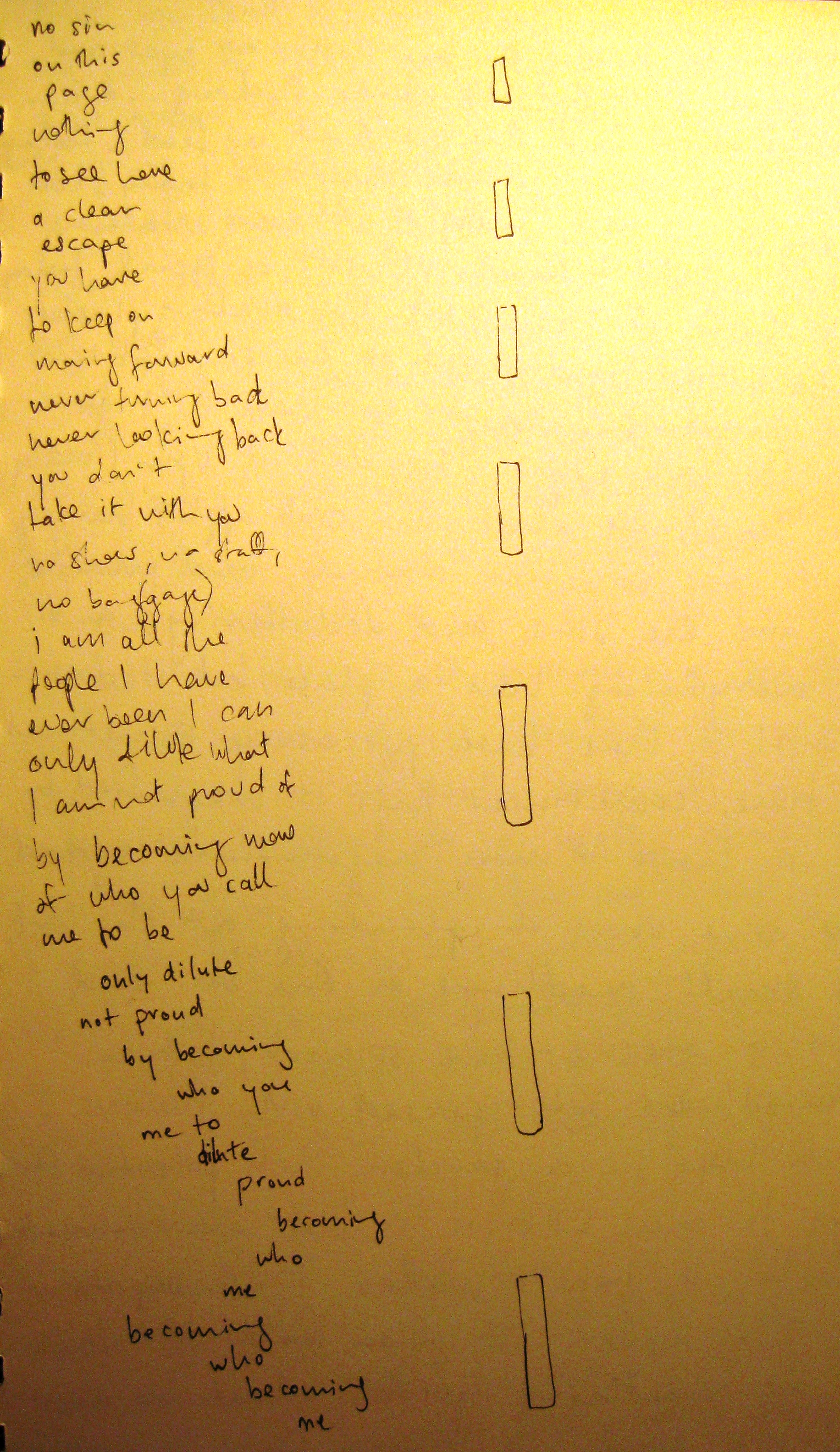
Talitha Fraser
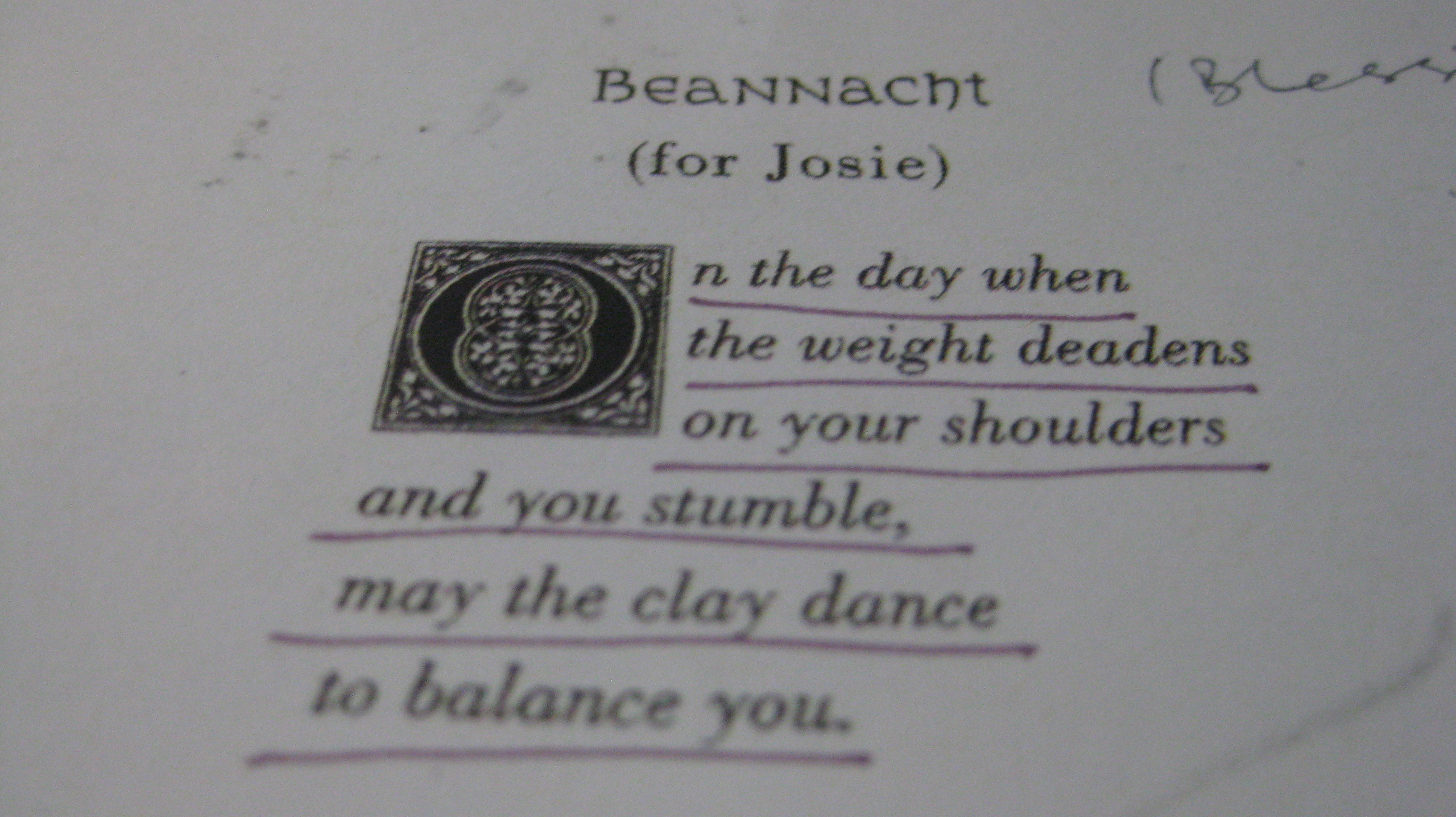
Six ideas about John O’Donahue’s writing:
4. Made up of these elements: body/landscape/transcience/memory. Body (trust/belonging); landscape (location, know and approach things and people); transcience (always passing away); memory (body, place and passing held together where our vanished lives remain alive – selective transfiguration)
5. Encourages us to break open and unpack internal and external landscapes e.g. root words. Break open familiar and see afresh. When we’re locked/blocked > impoverished. Remove the wall you have put between yourself and the light.
6. Seeks to find blessing. Invocation- calling forth… Calls for change and transformation.
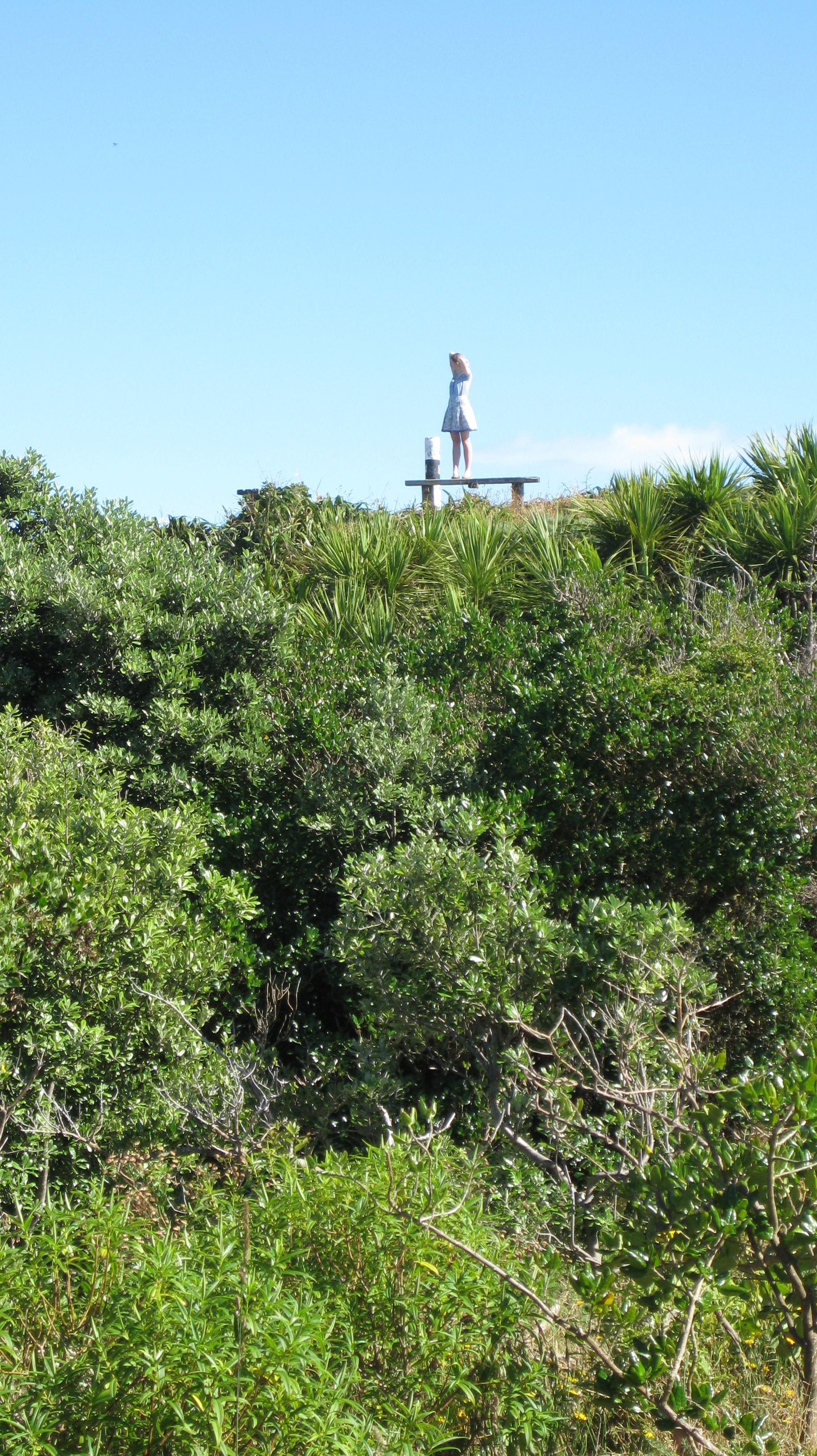 On the day when
the weight deadens
on your shoulders
and you stumble,
may the clay dance to balance you.
And when your eyes
freeze behind
the grey window
and the ghost of loss gets into you,
may a flock of colours,
indigo, red, green
and azure blue
come to awaken in you
a meadow of delight.
when the canvas frays
in the curach of thought
and a stain of ocean
blackens beneath you,
may there come across the waters
a path of yellow moonlight
to bring you safely home.
May the nourishment of the earth be yours,
may the clarity of light be yours,
may the fluency of the ocean be yours,
may the the protection of the anscestors be yours.
And so may a slow
wind work these words
of love around you,
an invisible cloak
to mind your life.
A philosopy of Ducas
“The longing of a people is caught in the web of their language. Dreams and memories are stored there. A language in the inner landscape where a people can belong. When you destroy a people’s language through colonisation or through the more subtle, toxic colonisation of consumerism, you fracture their belonging and leave them in limbo. It is fascinating how a language fashions so naturally the experience of a people into a philosophy of life. Sometimes one word holds centuries of experience; like a prism you can turn it to different angles and it breaks and gathers the light of longing in different ways… the phrase ‘ag fillead ar do ducas‘ means returning to your native place and also the resdicovery of who you are. The return home is also the retrieval and reawakening of a hidden and forgotten treasury of identity and soul. To come home to where you belong is to come into your own, to become what you are, to awaken and develop your latent spiritual heritage… Ducas also refers to a person’s deepest nature. It probes beneath the surface images and impressions of a life and reaches into that which flows naturally from the deepest well in the clay of the soul. It refers in this sense to the whole intuitive and quickness of longing in us that tells us immediately how to think and act; we call this instinct… You belong to your ducas; your ducas is your belonging. In each individual there is a roster of longing that nothing can suppress.”
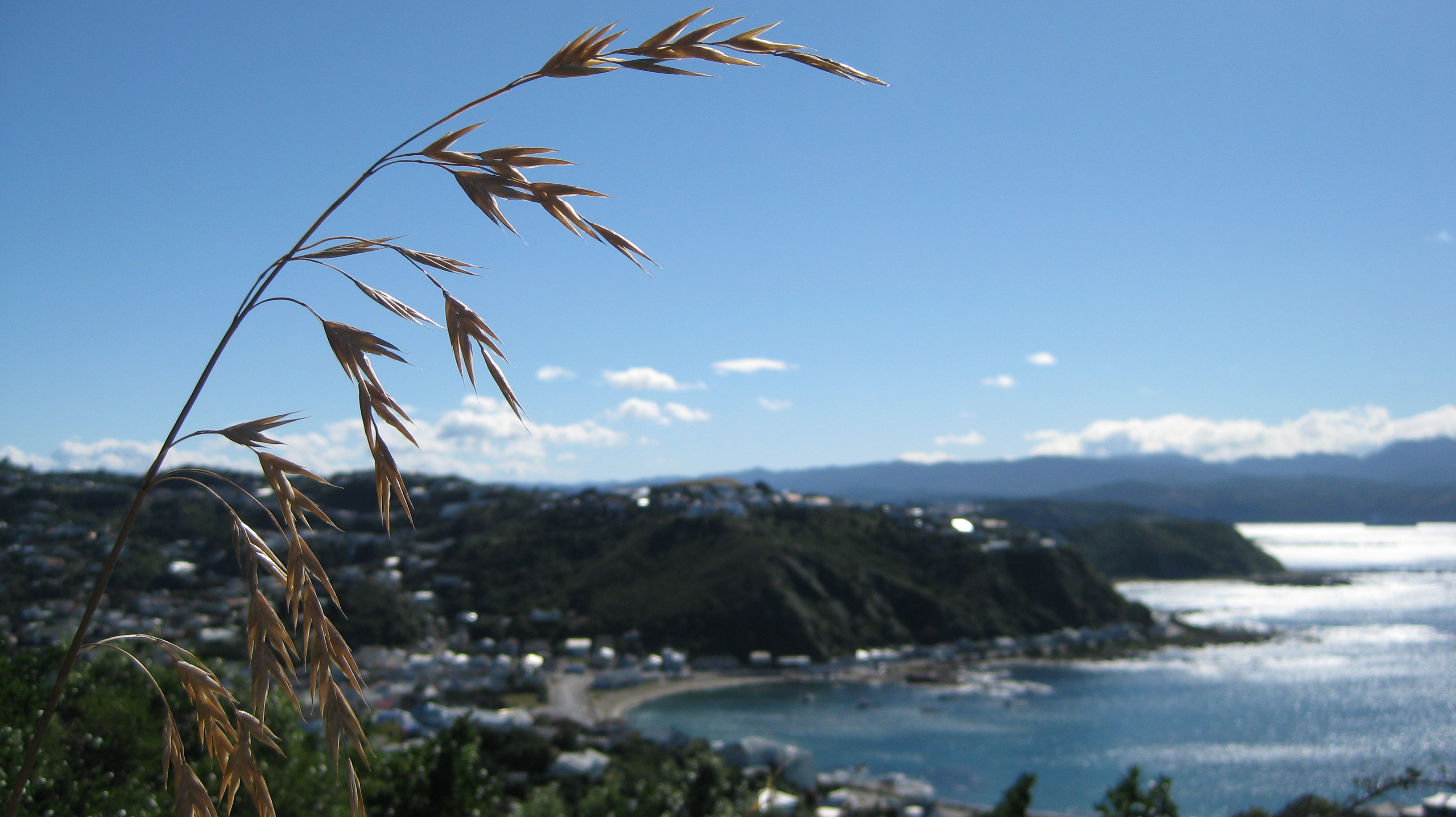
The Stranger (Eternal Echoes)
“It is impossible to be on the earth and avoid awakening. Everything that happens within and around you calls your heart to awaken. As the density of night gives way to the bright song of the dawn, so your soul continually coaxes you to give way to the light and awaken. Longing is the voice of your soul; it constantly calls you to be fully present in your life: to live to the full the one life given to you. Rilke said to the young poet: ‘Live everything’. You are here on earth now, yet you forget so easily. You have travelled a great distance to get here. The dream of your life has been dreamed from eternity. You belong within a great embrace which urges you to have the courage to honour the immensity that sleeps in your heart. When you learn to listen to and trust the wisdom of your soul’s longing, you will awaken to the invitation of graced belonging that inhabits the generous depths of your destiny.”
MATINS
I.
I arise today
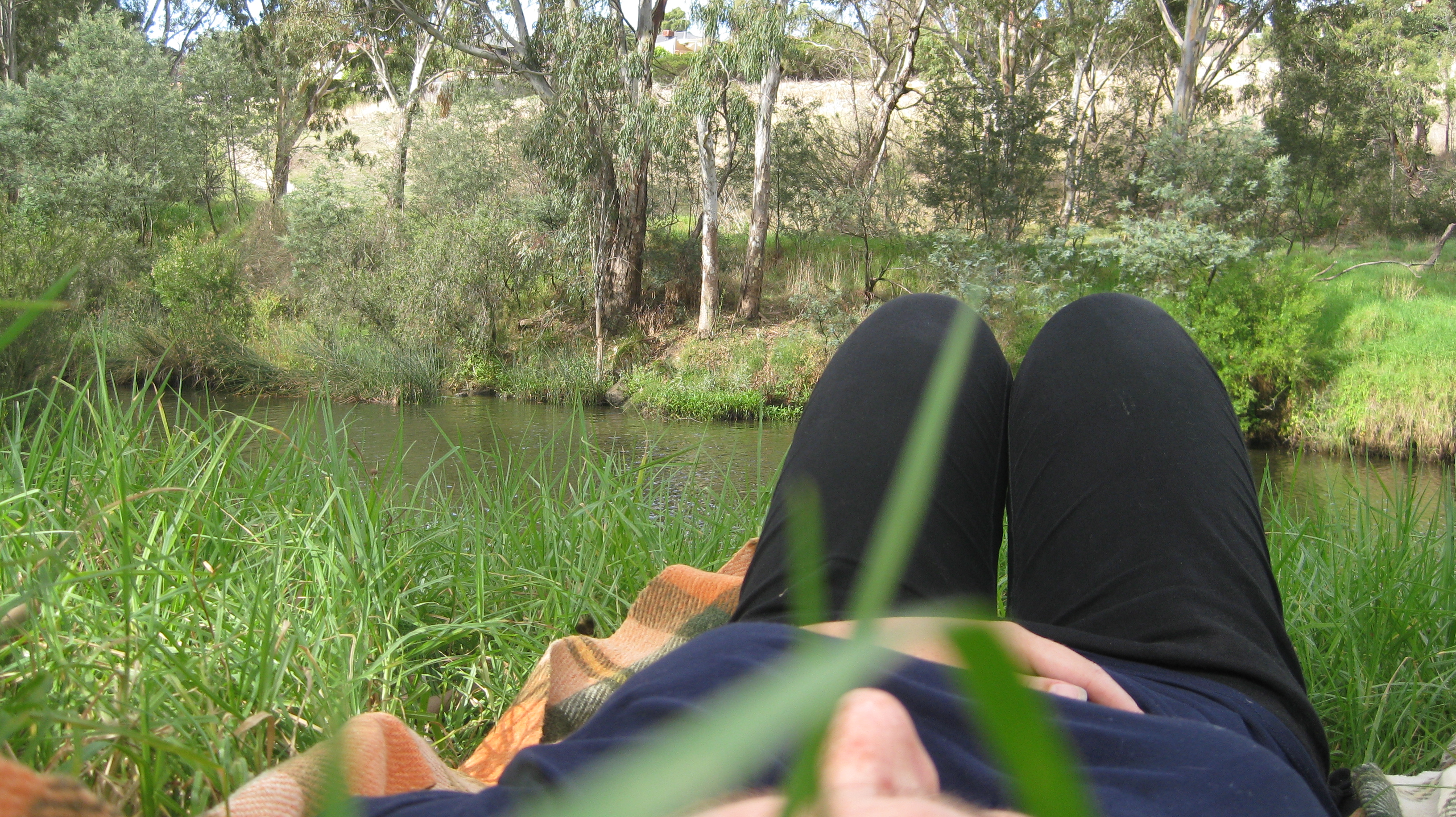
Head is clamped in a vice.
Immobilising pain, immobilising
tongue and hand
I am unreconciled between who I wish I was
and who I am.
Longing for something (else) sacred
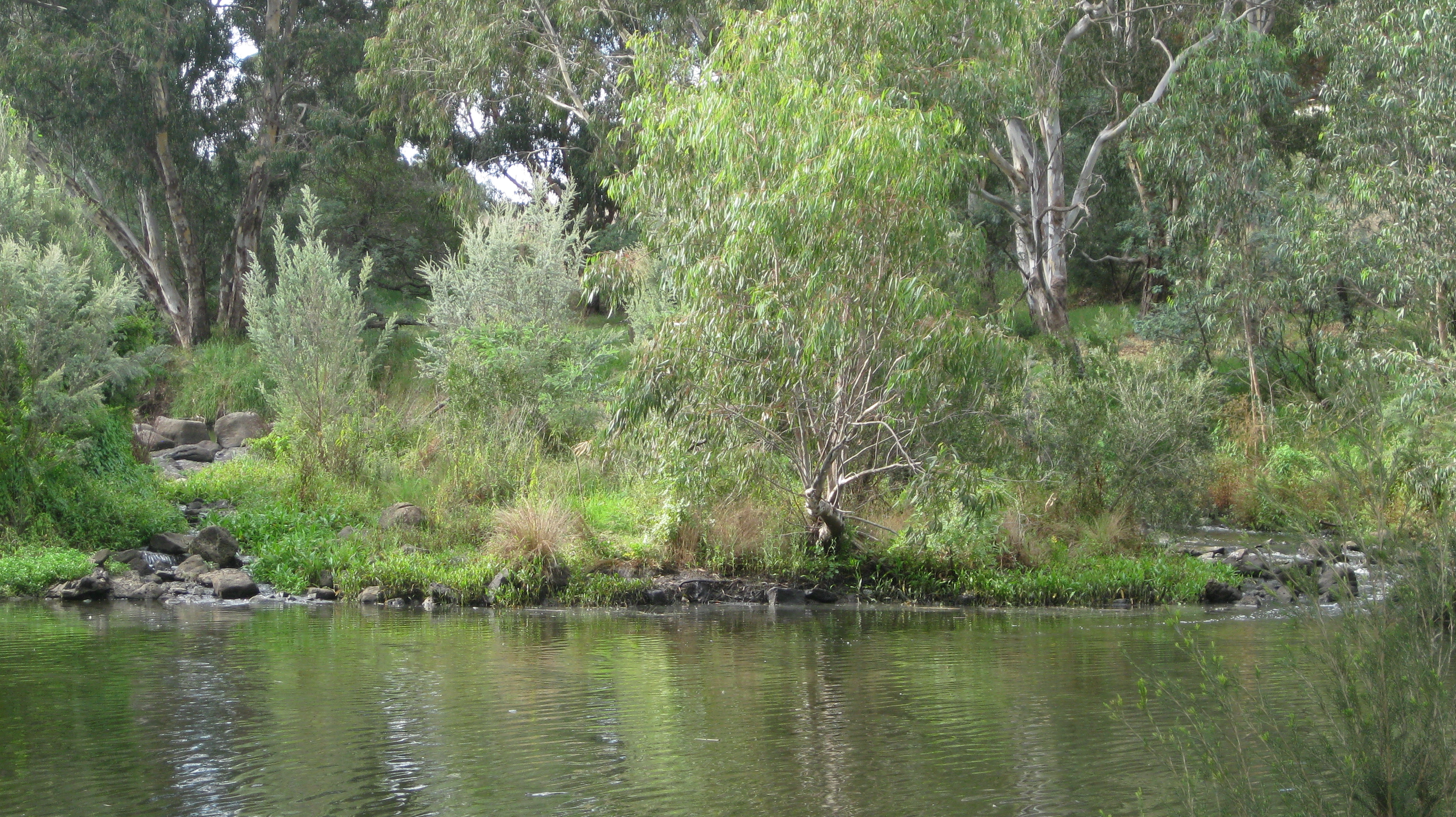
when I can run my hand through soft grass,
listen to the water going places and
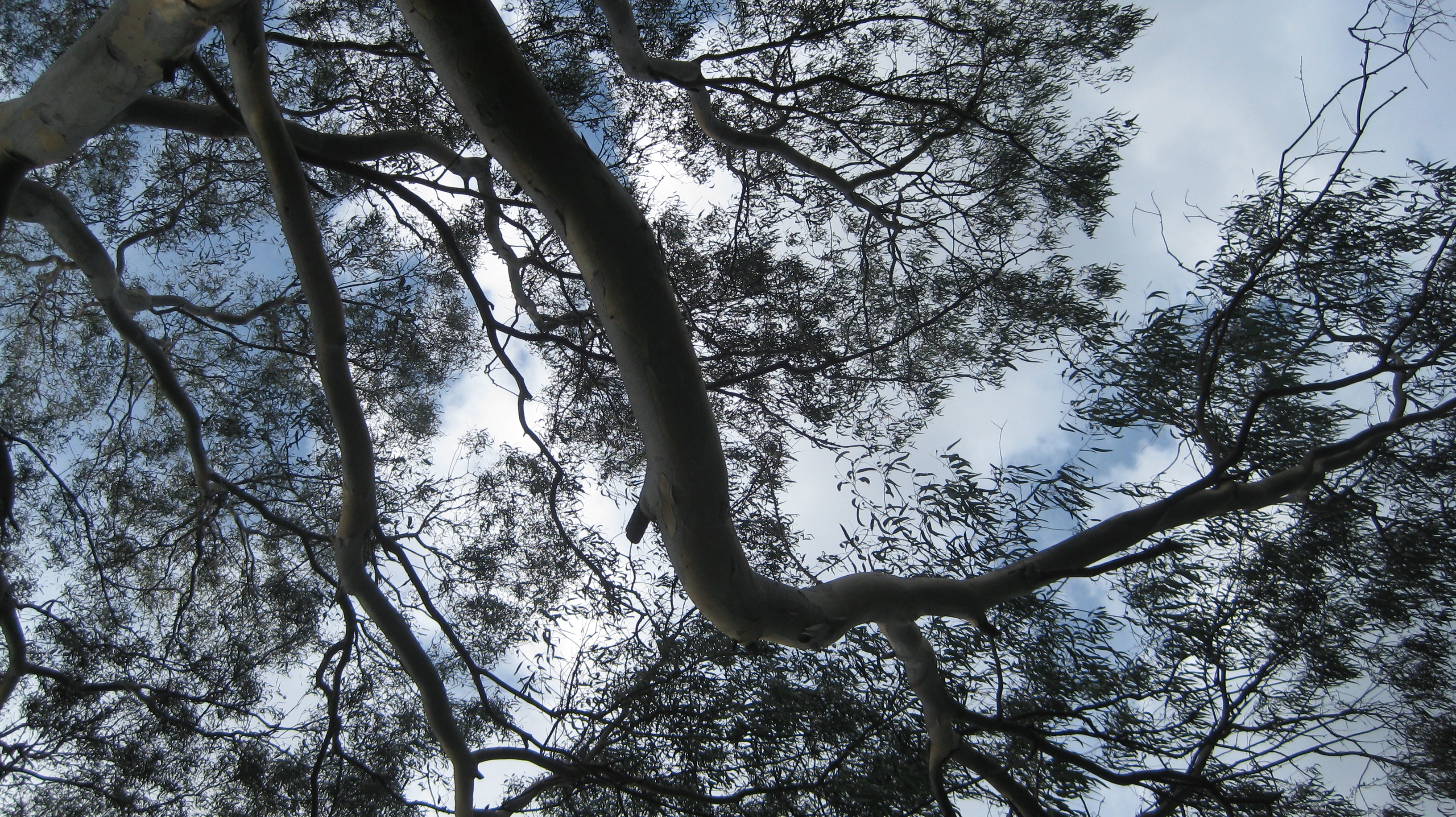
be embraced by the over arching branches.
I feel like I have carried troubled violence
into a peacful place – the unrest within
I want to curl up here on the bank
a rest awhile – wake to the world being different
or myself.
What does it mean to be made in the
image of God?
Talitha Fraser
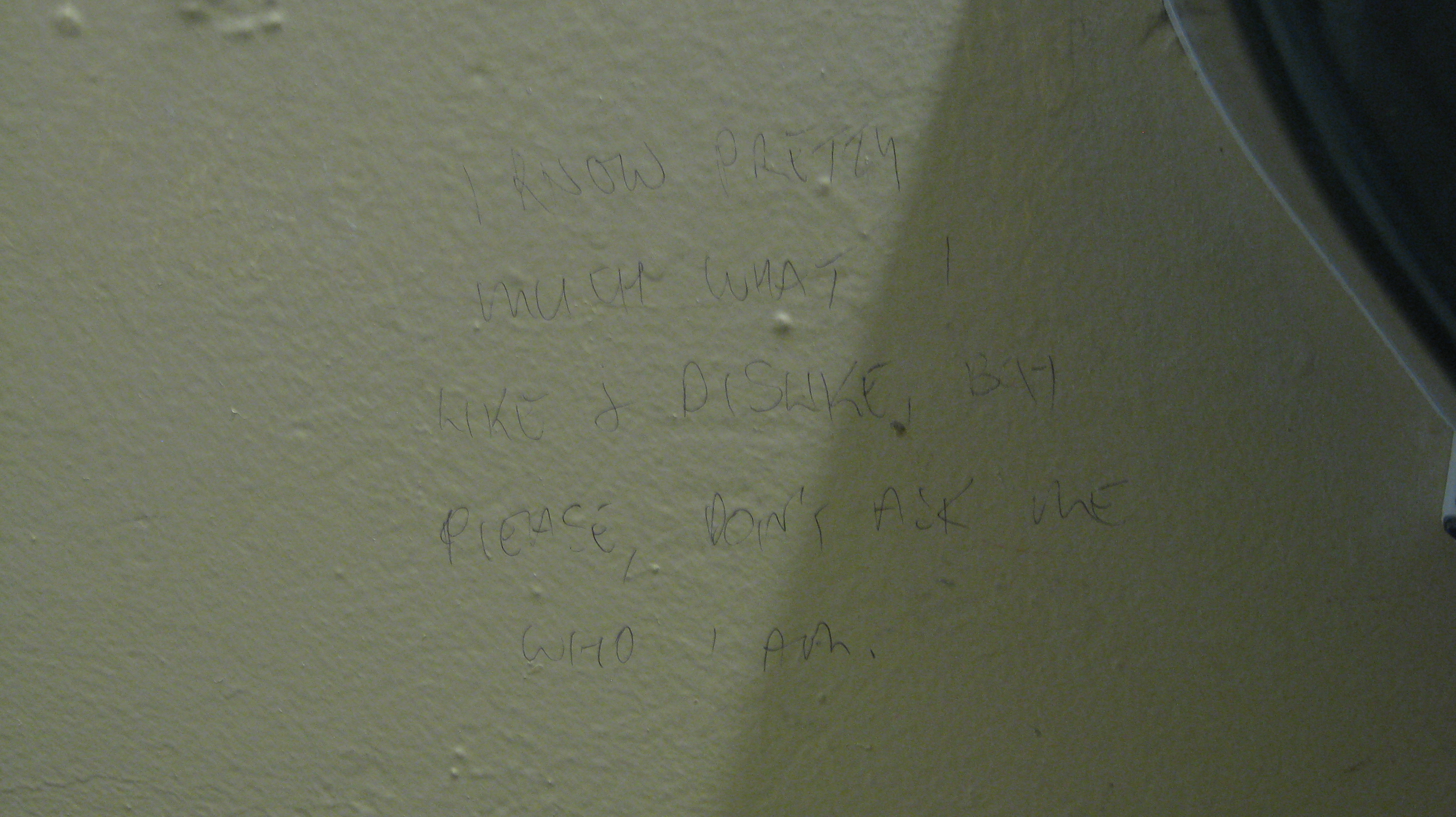
 itellyouarise