Tag Archive: questions


IMG_5908

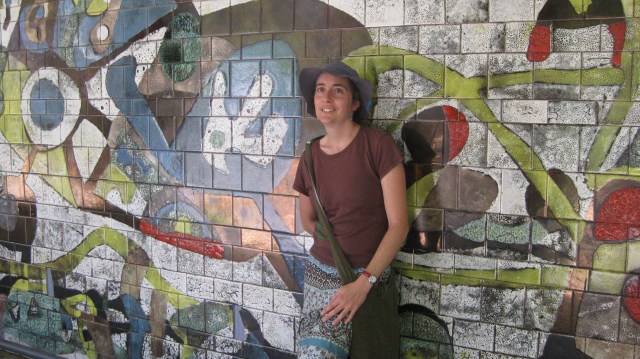
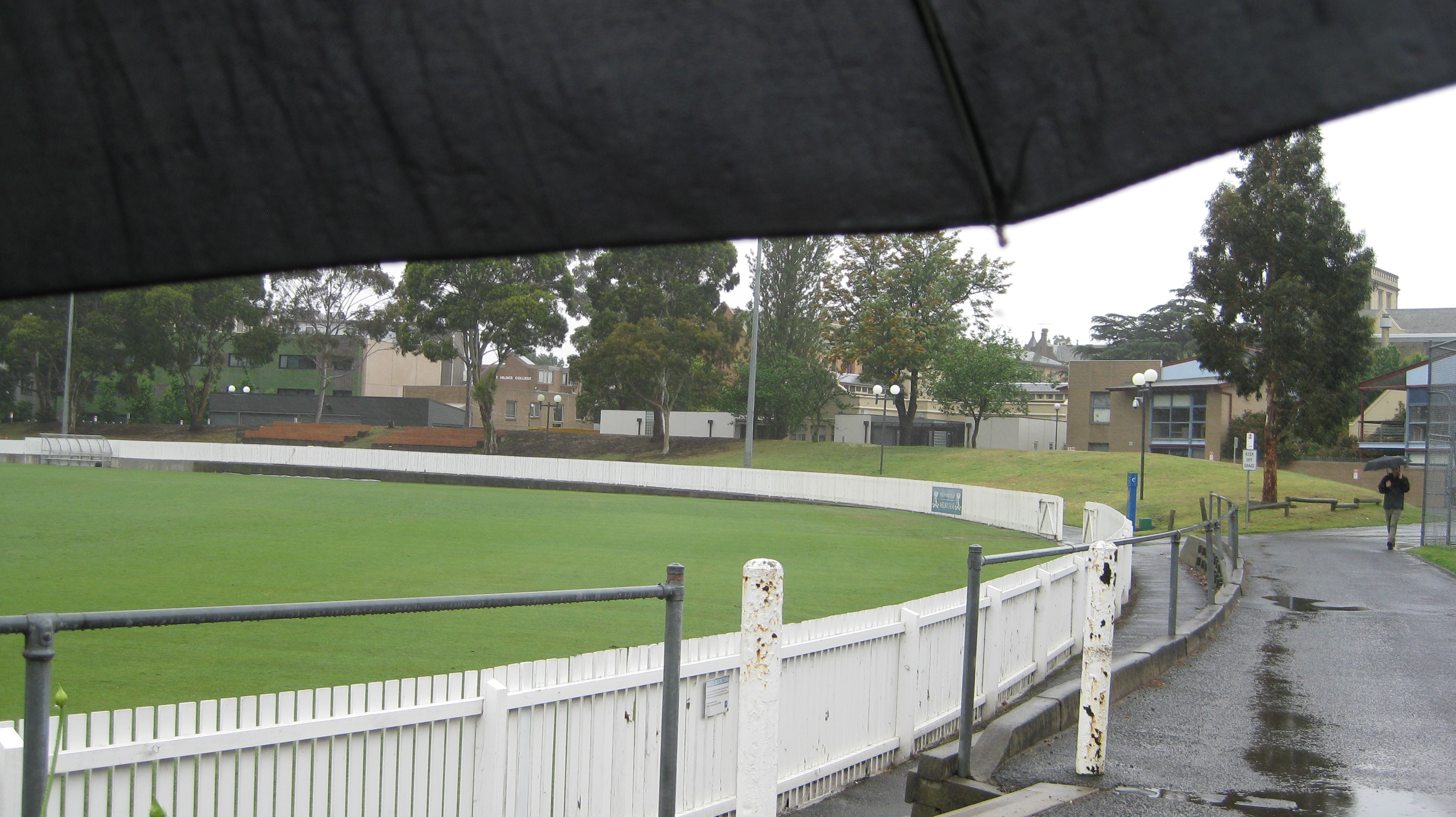
Some fine Saturday I would like to recommend you idle away an afternoon doing the Billibellary’s Walk at the University of Melbourne.  I work in the precinct so it felt like a good fit to contextualise what was happening in this specific place 300 years ago, 200 years ago, 100 years ago, now… or maybe what’s not happening…?


Billibellary’s Walk

Wominjeka. Welcome to Wurundjeri Country

Billibellary’s Walk is named after the Ngurungaeta, or clan head, of the Wurundjeri people at the time of Melbourne’s settlement. The walk is a cultural interpretation of the University’s Parkville campus landscape that provides an experience of connection to Country which Wurundjeri people continue to have, both physically and spiritually.

The walk is designed to help participants hear the whispers and songs of the Wurundjeri people that lie within the University of Melbourne’s built environment. The walk alerts us to signs and stories that may not be apparent to visitors, but which provide some insight into the experience of the Wurundjeri people of the Woiwurrung language group who have walked the grounds upon which the University now stands for more than 40,000 years. It is intended to provide the impetus for further exploration of issues pertinent to the Aboriginal community.

http://www.murrupbarak.unimelb.edu.au/

Smart phone App


IMG_5911

The actual talking-point sites around the campus don’t often have a strong link to what you’re talking through but probably understanding that little remains from earlier times is precisely part of the journey they are taking you on.  I was lucky enough to do it with Samara from the Indigenous Hospitality House in Carlton so the talking points and questions were enriched by having someone along so much more deeply invested and holding wisdom in cultural awareness.  You could do it as a tourist, as a social studies class, as someone seeking to hear truth… being open to ideas, history, stories and what they have to teach us about the impacts of colonisation.  You could do it as someone who likes to look at a big, tall, beautiful tree and know that it’s been there since before you came along and will stand for many years after you go – bearing witness.

IMG_5914

The walk poses a lot of questions.  It doesn’t necessarily have the answers.  You have to sit in that. Not having the answers.  This is something we’re still living out hey…

I find myself getting fired up as our conversation canvasses: religion, authoritarianism, institutionalisation….  from colonisation to terrorism to the Royal Commission investigating child abuse… it all somehow feels like the same thing and it feels broken.

“We’re not going to be the ones who fix it” Samara points out.

“Then who?” I demand.

“We be a part of it.”

This walk invites you to do that.  Be a part of it.


IMG_5915

IMG_5798


If cleanliness is next to godliness then I am a sinner indeed.

There is is difference between cleaning out of a sense of duty and as an act of love.  When its an act of love it’s a lot less unpleasant for one thing, you approach it differently because it’s an opportunity not a chore.  How can I show you that I love you well today?  How often do people ask themselves that question?

I was thinking today that if my body is not sacred or profane then I make it an object… a gun is not sacred or profane in and of itself but how it is used.  If you asked me to think of a sacred object I think I would struggle.  It seems a word belonging to past times when a church or an icon of some kind might be called sacred.  What is “sacred”?  Something employed only for the glory of God?  What is “only”?  What is the glory of God?  Credo was sacred – not clean, tidy or holy necessarily but sacred.  Are the churches that hire out as function spaces more profane?  As long as >50% is for the glory are we doing ok? Cleaning the bathrooms can be a sacred act if it is done as an act of service and expression of love.  Nothing I eat or drink can profane my body… there is a new law.  What else can I do, or not do, that might make my body more sacred? Or profane?  I pray but I don’t think that makes me sacred.  I might light a candle – the candle itself is not sacred but my intent in lighting it… if I follow that logic then You are sacred, and also those spaces we might encounter You.  I do not encounter You often in church these days and that make my heart glad because it makes the trees, the birds, the sky, the water, the blank A4 page sacred if that is the intent I bring to it.

Water on the counter and the floor, then we walk across the floor, so over the day a trail of muddy footsteps back and forth develops. Have you made my bathroom dirty? Am I unclean amidst your preparations for prayer?

What is sacred? What is profane?

Is there not love in the hands that change the nappy and soothe tears?  In the hands that shower a disabled father and wash the incontinent sheets? Is there not love in the hands wielding cleaning cloths and assembling shelves?  So humbling such a love as this and I expect good work if it can be seen for what it is.

Where my thoughts are on God, I encounter God.


Facilitated by Mehrin Almassi from the Indigenous Hospitality House, in this bible study series we will seek to make connections between the story of the nation of Israel told in Lamentations and our own national story. We will look to see whether this book may help us to address our shared histories of displacement and endeavour to distill how we might move forward as a nation in light of the biblical example.

Connection to Creator (Spirit)

What do we think of when we hear the word Spirit? What do we think of when we hear the words Spirit of God?
What do we think about when we hear the term Creator Spirit?
What do we think is meant by each of these phrases? Are they related? Could they be?

Read Lamentations 3

Did the Israelite people have a sense of the Spirit of God – the Creator Spirit?
What was God like for the people of Israel? What was their experience of relating to God?
How do we relate to and/or experience God? Is our experience different to that of the Israelites? If so, can we think why?

Let’s read the Boon Wurrung Story.

What might this story teach us about the way the Boon Wurrung people experience the Creator Spirit?
What may this story teach us about the importance of our own stories in relation to local, national and international issues?
How else might we apply important narratives of the past to current situations needing attention?

Kids Activity

In parallel to grown ups run a kids session: talk about pictures as stories, songlines and place.

Will need:

  • messy clothes (if painting)
  • paint and brushes and/or lots of sticky dot stickers
  • paper
  • photos (bring along some or a camera to take some on the day)

What do you like about stories?
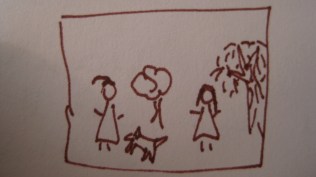
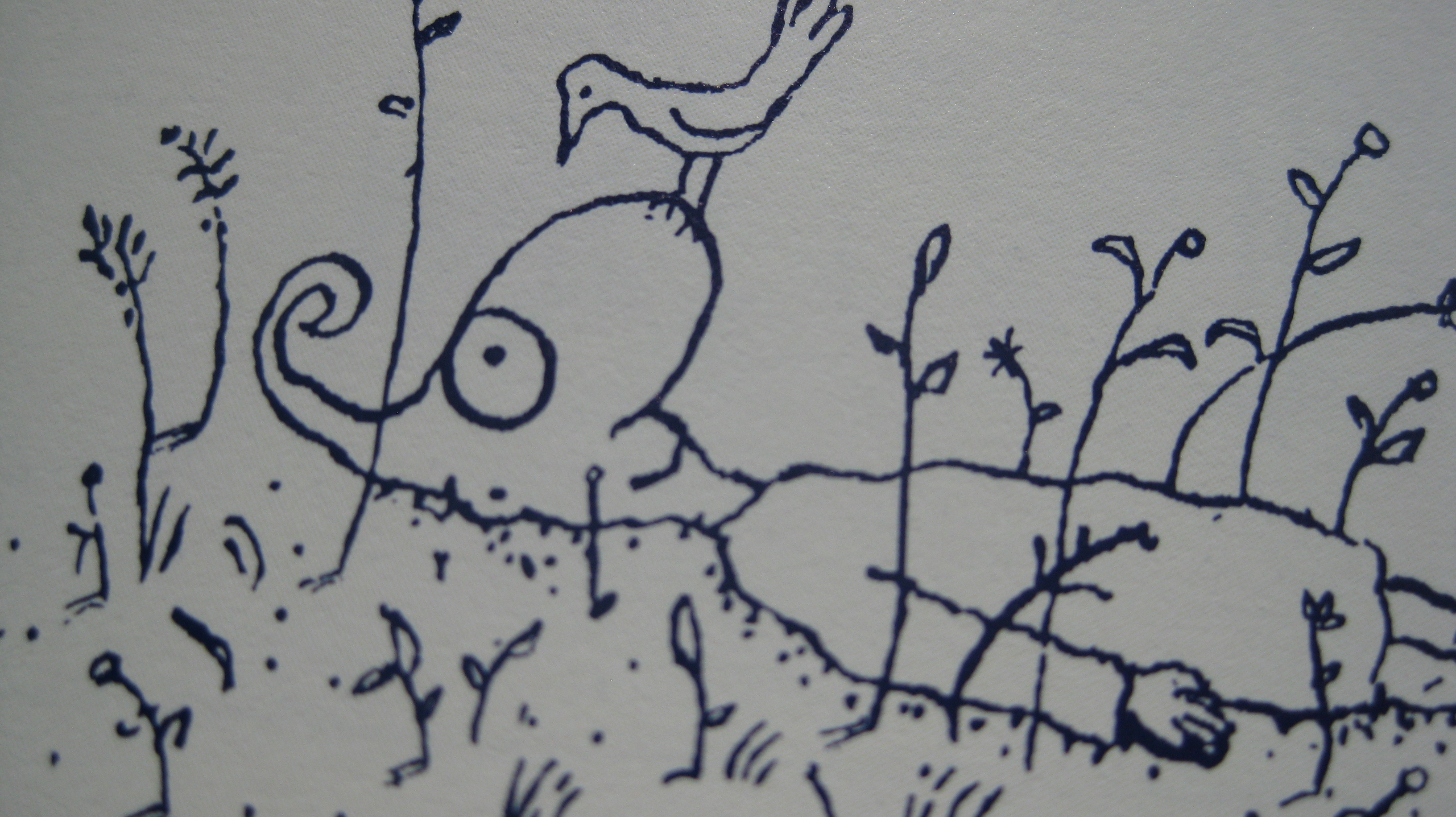
Look at this image? What is this a picture of?

IMG_6499


(girls, dog, trees…)

This picture tells the story of the time Talitha and Bron went to the park with Gracie.

11834903_10153063761386868_8866957583155349394_o

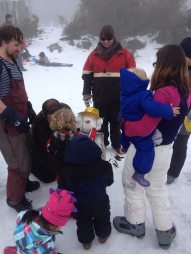
 What about this image? what’s happening here? who was there? but they aren’t in the picture… how do you know they were there?

(pictures can capture a “moment”, some part of a bigger memory, tobogganing and snow angels, other friends… reminder of something bigger that we can no longer see)

Pictures have two things, a place and a “happening”.

Using your pictures so far, talk about where they are happening and what is happening.

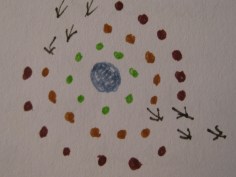
IMG_6501Indigenous stories tell something about a place and also about something happening there.

WHERE: Maybe there is a waterhole (blue), things grow there (green), drier sand/soil as you move away (orange), day rocks (red).

WHAT: An animal comes to the watering hole and then goes (tracks).

Ask children to share a memory, a story, and make a picture – collectively or individually (age depending). Then ask of each: Where is your story taking place? What is happening there?

How would you feel if you couldn’t got there again?  If you couldn’t do that again? (sad)

Today the grown ups are talking about the story of lamentations – a lament is a sound of grief and sorrow.  That’s what people in the story did when they couldn’t go back to the place they remembered or do the things they used to do there.

Learning:

our stories and our pictures can be used to tell each other about places we haven’t been and things we haven’t done, remembering and reminders can comfort us when we feel sad

let’s take a photo now, today of all of us together, making and telling stories so that we have a memory-capture. It’s good to take photos and write stories and make pictures because they help us remember

take your picture now to a grown up – tell them your story – use things inside the picture and outside the picture


IMG_5145

Facilitated by Mehrin Almassi from the Indigenous Hospitality House, in this bible study series we will seek to make connections between the story of the nation of Israel told in Lamentations and our own national story. We will look to see whether this book may help us to address our shared histories of displacement and endeavour to distill how we might move forward as a nation in light of the biblical example.

Connection to Place

What role does a sense of place play for each of us?
What is our connection to the environment?
What is our relationship with the land?

Are there any natural places which hold significance for you? If so, how do those places make you feel?
What happens to us when we are in a place which is significant to us?
What happens when we are unable to be in places which are significant to us?

Read Lamentations 2.

What can we understand of the Israelites’ connection to place through this narrative?
How connected do they seem to their places of significance?
what impact does not being able to access their important places have on them?

Listen to Kev Carmody’s song  This Land Is Mine.

How might the biblical account help us to appreciate the experiences of the First Peoples of this land?
In what ways might we help promote reconnection with land/place/environment for indigenous peoples? For ourselves?
How might this reconnection relate to indigenous people’s experience of God? How might it relate to our experience of God?


242

Over a series of weeks we will dip into a breadth of creative activities, drawing from a variety of resources, that invite us into a space where we encounter God and reflect on our Christian life and praxis. To give a loose sense of connection across the series we’ll frame them with an Opening, close with a Benediction and include a time of prayer each week.  We recognise everyone as spiritual beings and welcome people of all faiths and none.  We encourage you to bring a journal or blank notebook if you have one.

WEEK ONE

The activity this week is taken from:

The Artist’s Rule: Nurturing Your Creative Soul with Monastic Wisdom

This book by Christine Valters Paintner draws on The Rule of St. Benedict summarised in the phrase “pray and work,” it explores the mutually nourishing relationship between contemplative practices and creative expression.

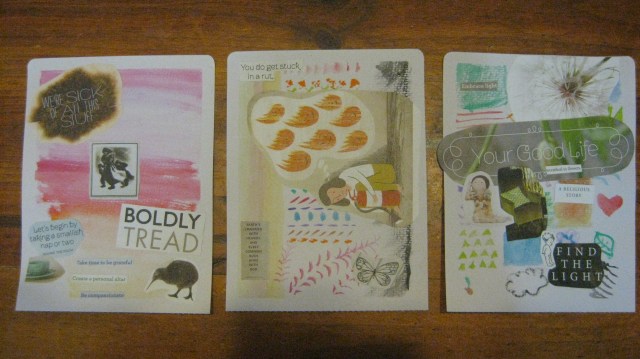
We did the Wisdom cards activity together.

For those playing at home you will need:

  • 3 x sheets A5 watercolour paper (for each person)
  • Invisible tape
  • Watercolours
  • Paintbrushes
  • Pens to write
  • Magazines to cut up words and images
  • Glue sticks

The first thing we do is prayerfully consider a question we might ask our inner child (what do you visualise when you hear the words “inner child”?) –  write this question on the back of one of your A5 sheets of paper. You can decide for yourself if you want your canvass landscape or potrait!

[Tip: This is not a magic 8 ball.  You will get a lot more out of this exercise if you ask BIG open-ended, existential type questions like “Who am I?” and “What is the meaning of all of this?” over small questions like “Should I buy tickets for the Mumford and Sons concert?”]

Next, our inner Wise One (what do you visualise when your hear the words “inner Wise One” or monk?)  – write this question on the back of another of your sheets of A5 paper.

And thirdly, a question we might ask them both together.

Turn these so they are blank side up and shuffle them around so you aren’t sure which question is on which card.  Now tape them down to the table, blank side up, with the invisible tape.  This stops the paper moving around while you’re painting and gives your work a clean border when you peel it off later.

If you’re resource sharing, at this point some might paint while others cut up magazines.  It doesn’t matter what order you do this in.  Flick through some magazines and cut out anything that jumps out at you. Words, phrases, images… anything that captures your attention or seems to speak to you.  Once you have a decent pile in front of you switch to painting and colour as you feel.  Some will instinctively feel bright and light, or dark; be highly detailed or minimal splashes of colour – there is no right or wrong way to do this. Go with your gut.

Now collage. Drawing from your pile – try this image with that phrase – does it fit with this one of your cards or that one?  You might need to go back to the magazines, you might find you only use 10 of the 40 things you cut out. It doesn’t matter.  Your cards will kind of speak to you, when the right words and images are assembled you will hear them and know that the card is “finished” and you can glue everything down in place.

Now you can gently peel away the invisible tape and see which question is written on the back of which card. Consider what synergy there is between our questions and these creative answers, the premise being we can often know answers to our own questions but we have to sneak up on ourselves to figure it out. Write these reflections in your journal.

Find somewhere to prop your  cards for a week where they can be a visual cue.  In a week, sit with your notebook again and see if there is any further learning/awareness to be drawn from your wisdom cards.

245


031

I have just collected my sister at the airport and Melbourne is flourishing with flowers to mark the occasion.

We’re walking home through the city following dumplings in Little China town on our way to the station, we go to cross Swanston Street near the State Library and we hear a voice exhorting in a microphone.

“What’s going on there?” asks my spiritual-not-Christian sister.

We have wandered along Southbank earlier tonight and watched the Crown flames shooting high against the dark night sky, seen a jugglers routine, listened to a buskers rendition of an Elton John classic… the city is in fine form but I sigh to see Cross Cultures church steps covered in handpainted signs saying:

“Repent!” and “Jesus gave his life for you!”

“Sorry,” I say, “someone soap-boxing repentance.” (I can’t even ad-lib here for you because I don’t remember what the words were they seemed so empty to me, I couldn’t hold them)

“Why are you sorry?” she asks.

“It offends me he can stand there and assume we don’t know God.  Everyone here (sweeping arm canvasses Melbourne nightlife) was made by God, in the image of God and is in a relationship with God whether they acknowledge it or not – his God is small, static, fixed and I imagine he puts more people off than he draws in… it puts me off!”

“Doesn’t any of it connect with you, speak to you,
remind you of old times?”

“No.” I respond flatly. But words of old times prompts the tune of Be Thou My Vision to mind and I lose track of the conversation for several metres… naught be all else to me save that Thou art, Thou and Thou only, Thou first in my heart, O be Thou my vision…

That was a close-ended answer. Answered for myself, out of my own filter and judgmental in its own way.  You have to think about what prompts a question and, defensive of potential association with street-side evangelisation, I did not inquire “Did any of it connect with you?”

ooOoo

I don’t suppose that an old man on the steps with his carefully handpainted signs and fervent faith is any threat to me so I don’t know why I need to set myself in opposition per se… are we ‘fighting for the same side’ or am I taking him down with ‘friendly-fire’? That has sometimes been the difference between good and evil winning in some significant cultural narratives. Ambitious in-fighting on the dark side vs. a coalition of goodies working together – Star Wars; The Lion, The Witch and the Wardrobe; Lord of the Rings… do you believe in fairytales?  Do I? Is that where I would look for answers? for truth?  Jesus set himself against the Pharisees, hanging out with Samaritans offended the Jews… he set himself against things as an outsider, ignored class rules and hung with homeless people and lepers.  Some of these stories have someone on the darkside who turns at an epiphany moment – Anakin Skywalker, Edmund, Boromir… and heroes that will die to achieve a greater good in Aslan and Frodo (although he doubts himself there at the end of all things)… at different points each lead has a mission they have to fulfill on their own, their own battle to fight in the bigger picture. Does it seem silly to try and use stories and ideas we already have to try and understand another Story?

We all choose stories to live by – from our families of origin, from our friends, gang, from TV/movies, books… but how many of us consciously choose what story we want to live by?

We have the power and the freedom to elect that as if our life were our very own pick-a-path adventure.

I went to see The Desolation of Smaug with friends and one commented upon coming out their frustration that “there’s no one in that film to look up to!” Thorin refuses to keep his promise to the people of Laketown, the people of Laketown get angry about that and side with the Elves who bring them food and supplies, the King of the Elves wants some of the treasure under the mountain for himself… the hero is the Hobbit yeah?  Bilbo may be keeping  the heart of the mountain to himself (albeit not for himself) so he’s not looking that good either… what a responsibility to have rest on individual people to see and work for a greater good that isn’t apparent to others and will cost you friendships and family along the way.

But what can you do to be in a position to see or know what the greater good is?

How do you know if your version of the truth or what you believe in will come to pass?  There must be a moment of risking everything, not knowing what will come of it, but knowing you have to make the next choice because it is necessary right in that moment and whatever comes next is beyond that.

What stories will you live by?

What stories will you choose by?

ooOoo

I followed up with my sister the next day:

“That guy, from the steps last night, did any of that connect with you?”

“Nah, I think I counted the word hell seven times
and didn’t see the word love once”

IMG_5585

offwego[A short paper presented to the Spiritual Reading Group 21 July 2015 on Michael Leunig]

So… Leunig… one of the questions he is most often asked and is always baffled by, is what does a particular cartoon mean? “People will say, ‘I don’t know what it means but I like it.’ Leunig replies… “I don’t know either but I like it too. I’m not trying to say anything but I hope it awakens something in you.”

Michael Leunig was raised listening to Oscar Wilde stories on the radio. He read Enid Blyton, Biggles and Childrens Encyclopaedias… he went to Sunday  school and always said he found it, “not full of God but full of stories.” It was lyrical and what was lyrical made him happy – Leunig heard Psalms and asked of himself “What can I do like that?”

Though born in East Melbourne in 1945, Leunig grew up in Footscray going to Footscray North Primary School and Maribyrnong High School. Many of Leunigs friends, and many of his teachers when he grew up in the 1950s were war refugees or were the children of people from Germany, Russia, Poland. It was a very industrial area –ammunitions factory with machine guns firing, meat works, cannery… it smelt awful and drained into the river… for Leunig this wasn’t bleak but held lots of peace and space. Not a lot of nature around, but then you appreciate and give more significance to what you have… a duck and the moon.

A duck bought from the market while doing the family shop imprinted on Leunig following him around everywhere, coming home from school he’d turn the corner and the duck would see him and come running. So he always got ducks after that considering them playful and good-humoured and innocent with those rounded beaks.

A formative misadventure at eight years, occurred while playing at the rubbish tip Leunig stepped up to his thighs in hot coals and wires – receiving horrible and incredibly painful burns with fear of gangrene and amputation – for five months he couldn’t walk and had long periods of feeling cut off from others and lost.

From paper boy to making sausages at butchers on Barkley St, Leunig didn’t do well at school, repeating his last year, and came to work in the meatworks himself. This was great thinking time and Leunig advocates manual work that keeps your hands moving and your mind free. He said: “Working in such places either toughens or sensitises you” and it sensitised Leunig… he became a humanist (is now nearly vegan) and finely honed his earthy working class sense of humour. Leunig was conscripted for the Vietnam war in 1965 – he was going to fight it, a conscientious objector, but was rejected regardless when found to be deaf in one ear.

In Curly Stories, Leunig talks about it “Being an advantage to grow up without art consciousness… nothing to aspire to but things to find and create”. Homeschooling his own four children would have allowed him to foster a similar environment for them believing “Natural ideas exist within children… their play should be “utterly free” and they must be allowed to be bored – they feel free to explore and discover and the world is new to them and there’s this sense of wonder” Leunig refers to childrens ability to ‘blank out’ looking at a teapot spout or light through a window being present to what is right in front of them, commenting: “The loss of that beauty is appalling… how do I address that as a communicator? How can I express what everyone is feeling?” The prophet expresses the grief of the people. The artist expresses what is repressed.
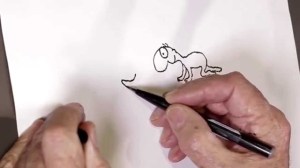
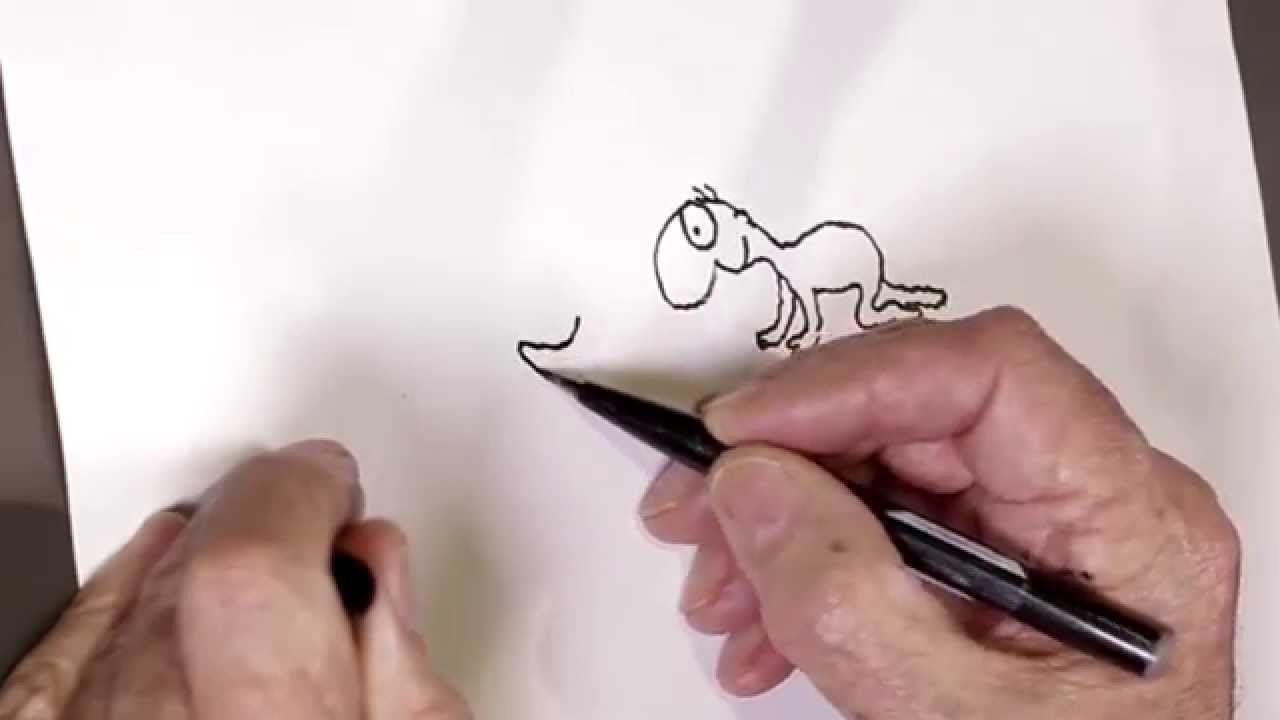
maxresdefaultWalking out of his 3rd year at Swinburne Film and Television School, it was 1969 when Leunig first began to work as a political cartoonist at Newsday, while the factories might have taught him to use humour – intellectual, witty, cynical – to deflect serious things, Leunig says “I was sung sentimental songs. Part of my first language. Fluent in that emotional language” His Grandma used to tell him: ‘All the world is bad, except for you and me, but even you’re a little strange.’ …perhaps this is where we meet The Creature… The Holy Fool– scribbled in the margins since school – amusing to his slightly hungover Editor, with a teapot on his head and riding a duck into the sunset, the image was put to print. Subhuman, primal, foetal, without gender. Leunig is somehow able to speak to our soul. To take small things and make them large, domestic things and make them sacred. For his own discipline he talks about the paradox of art theory – rules to follow, teachers to emulate >> how this stifles creativity. It’s about earning money, systematic success, built for efficiency, for velocity but you lose much, Leunig believes: “[You] cannot love or appreciate beauty at speed. How do you talk about it in ways that are unsuppressed and real? Might make a bridge with love, make a sandwich with love – it’s passed on to others. Love is what we go to bed thinking about.”the kiss by leunig
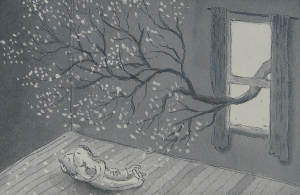
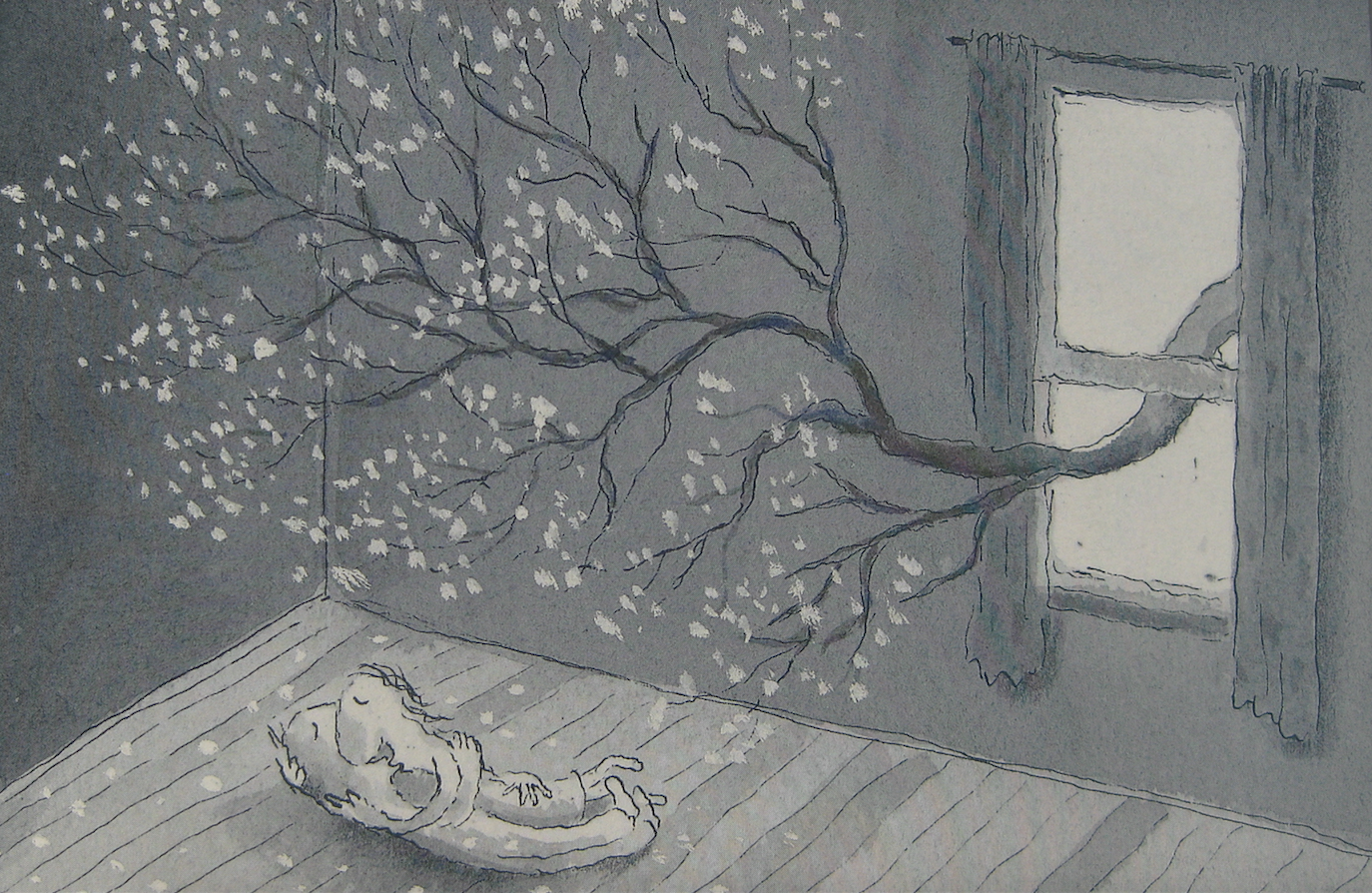
Since his first book in 1974, Leunig has produced 23 more – books of newspaper columns, poetry and prayer in addition to his prints, paintings and drawings. Leunig shares intimacy with us, personal and confessional – e.g. The Kiss. We are invited into the privacy of his love life, his soul searching… Leunig makes the private public. He takes the small dark fearful things and brings them out where we can look at them “crying with the angels for a world that is different – this is not fatalistic but hopeful”. Perhaps it is because he has offered his own soul first that we are willing to listen to him expound on many themes:

>> loneliness >> the 9 to 5 grind >> war >> sex >> consumption >> love >> god >> media >> religion >> politics

It was being asked to contribute a cartoon to a new paper in 1989, The Age, that Leunig started writing prayers to the horror of his friends… Rather than born-again Christian Leunig’s interpretation lay in the realm of John Keats’s “negative capability”, a word for the unsayable and profound in life. He wanted to say the words publicly as another way of addressing the problems of our time, of our society, of our psyche, of people’s personal suffering {1998} His friends reactions sort of egged Leunig on, wanting to see how much he could push believing that “until a man discovers his emotional life and his gentle, vulnerable side, until he gives it expression, he never will find his women or his soul, and until he does find his soul he will be tortured and depressed and miserable underneath a fair bit of bullshit”.

From Archbishops to Presidents, the Opera House, Australian Chamber Orchestra, National Theatre in London to clay figure animations for SBS and remote communities in northern and central Australia – Leunig has Gone Places and Done Things. Declared a national living treasure by the National Trust in 1999 and awarded honorary degrees by 3 universities for his unique contribution to Australian culture.
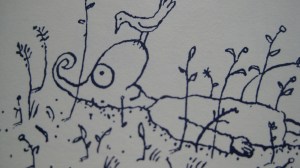
094The ‘war on terror’ following 9/11 was a watershed moment in Leunig’s cartooning work where, opposing the war and invasions of Afghanistan and Iraq, he was at odds with many editors, commentators and members of Australian society – there became less gentle and lyrical themes and he stopped drawing the whimsical characters Mr Curly and Vasco Pyjama as often although the duck and the moon have still faithfully remained. Adding curls arose out of Leunig’s desire to communicate that “What makes you feel so alone and strange is in fact normal. There’s a lot of curliness in life and you can have a homecoming – there is a place for you and for that aloneness, that eccentricity, and there’s a fulfilment of it eventually, it’s no longer the cause of your outcastness. So that’s the curl. It’s the curious, unique self and, if you find that, you find the connection to the whole world because the world is curious and unique and authentic at its best level.” You might say the war, not understanding how people can fight other people this way, has been a breach to Leunigs sense of connection to Australian society and thereby rest of the world.

These days, Michael Leunig has 3 small dogs but no ducks. He enjoys talking to strangers and going to bed at night. He is a devout nature lover and spends his time between the solitude of the bush in Northern Victoria and a home in Melbourne where he enjoys walking in the local park, morning coffee in the café, chamber music in the concert hall, and attending to work in his studio .

When asked: “What is the meaning of life?” Leunig replied: “For humans as for all the plants and creatures: know yourself, grow yourself, feel yourself, heal yourself, be yourself, express yourself”… “I want to be a voice of liberation”. Leunig speaks not only for the wealthy or the poor but both, not only those armed and those without weapons but both, not only the pretty people or only the ugly people but both – he enjoys this inconsistency and variety. As Barry Humphries says “through the vein of his compassion and humanity and his humour – illuminating many a darkling theme”

Like Jesus with his parables and questions – Leunig doesn’t present us with solutions or easy answers but an invitation. He sees his vocation as cracking what is stoic and cold in society – to make us feel anger, grief, joy, sadness… Leunig believes we have something to discover in the wrongness… “Live without ‘knowing’, in mystery. Find things. Unlearn. Get lost. Get primal, getinfantile. When you have lost all hope – start to play. You have nothing to lose. Stay with it and don’t take it too seriously…”

I hope maybe it awakens something in you.”

I followed

IMG_5600

I followed the three
through the gate
past the roadworks
down the track
imagining they led the Way.
They climbed a fence.
I spoke from my side:
“I thought you knew the Way!”
“We know a Way.”
“Oh. Well, I supposed I should follow?”
“Here.  Let us help you.”
Holding my sandwich and handbag
they politely look aside as I clamber
awkwardly to where they are standing.
“A ten for execution?”
We laugh and go On.

Talitha Fraser

IMG_5684


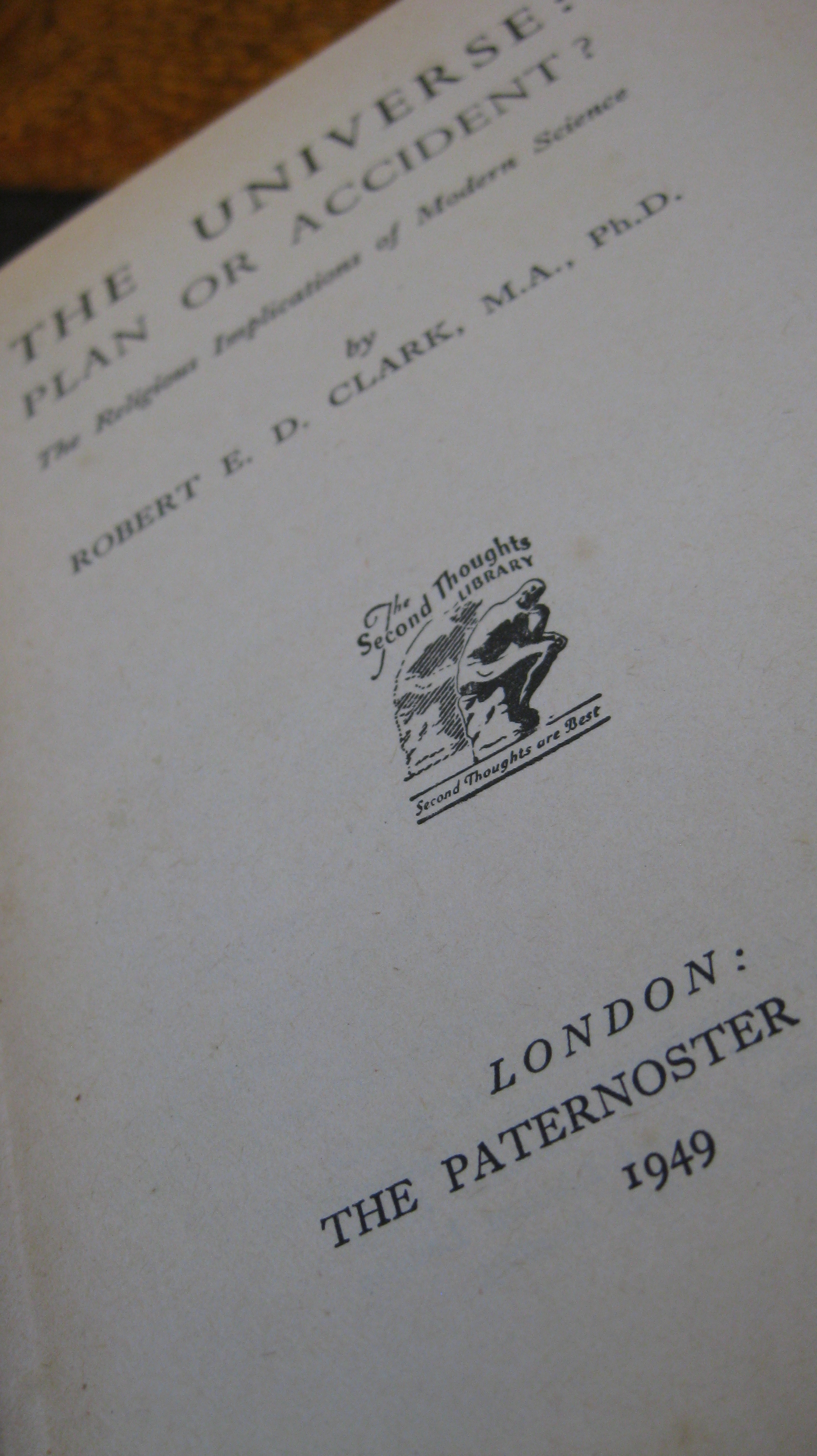
Only I would tear pages out of a book, draw on them, paint them, then decide I wanted to read it… not sure whether to laugh or sigh – perhaps a little of both is in order… already fascinating…

p.7-8  If we would appeal to science at all, we must use her methods – not methods of our own choosing.  Now it is a generally accepted principle in science that it is only through the study of the unusual, the odd and the seemingly inexplicable, that man can be led onwards towards new knowledge.  The scientist whose mind revolves only in the grooves of well recognised theory has little chance of discovering important new principles.  In fact, an important element in the scientific method consists in the focusing of attention upon the things that science cannot explain, or has difficulty in explaining.  In this way only can it be discovered whether known principles will cover all the facts, or whether new remain to be discovered.

We must apply the same method if we wish to build a reliable philosophy of nature.  If we consider only the recognised laws of science we shall never discover whether they are adequate to explain everything in the universe – we shall never even discover whether they are the most important factors of which we ought to take cognisance.  To reach a sane judgement, we must turn to the odd and the peculiar.  We must think about things which, in the light of present scientific knowledge, seem inexplicable.  We must ask if they really are inexplicable, or only apparently so.  And should the first possibility seem the more likely, we must ask whether the inexplicable facts can be explained – explained, not of course, in a fundamental sense, but in the scientific sense of co-ordinated or grouped together by a new hypothesis or theory which would make them inexplicable no longer.  Finally, if we are able to do so we must test our theory – we must see whether it can help us to understand yet other facts, which we have overlooked hitherto, whether it will stimulate our minds to research in new directions and so forth.  And, as the past history of science has shown on repeated occasions, it will often happen that the good theory, based upon phenomena that once seemed queer and out of the ordinary, will help us to understand the ordinary and commonplace.

This is the scientific method of discovery of truth – the method upon which the scientific edifice of our day has been built.  And it is also the way of common sense – a codification of the rules that are always used in establishing evidence.  For the scientific method is only a glorified version of the ways of common sense.  The detective, like the scientist, focuses his attention upon the details that seem queer and inconsistent with the knowledge he already possesses;  like the scientist he frames his theories upon those parts of the picture that at first seem odd and inexplicable; like the scientist again he seeks to discover whether his theories are adequate.  The economist, the historian, the archaeologist, the linguist – every one, in fact, whose business it is to discover facts adapts the same procedure.  The scientific method is the method of human reason.

p.9 Instead of examining the inexplicable. The modern writer only too often examines the explicable: instead of showing interest in the extraordinary, he revels in the ordinary.  And his reply to those who adopt a more orthodox procedure is to the effect that they are inventing a “God of the gaps” who will be doomed to extinction as soon as all-conquering science has discovered how the gaps may be filled in.

p.10

Instead of avoiding the difficulties, instead of begging the question by pretending that every difficulty is mere gap, we must boldly explore the suppose gaps with all the care we can muster.  Nor need we apologise for doing so.