
How often are Your gifts held out to us freely
And we do not recognise they are gifts,
Or we recognise but do not claim,
Or we claim but do not use,
Or we use but do not share
with others as You have with us?
How often are Your gifts held out to us freely
And we do not recognise they are gifts,
Or we recognise but do not claim,
Or we claim but do not use,
Or we use but do not share
with others as You have with us?
Swap Super funds, make a giving budget, recycle water for flushing… these are some great commitments not achieved by my Household Covenant.
It’s 2012: I’ve just finished up at a proper job and Marita and I have taken in an Iraqi refugee, a young woman, named Shahad. We have scored a sweet deal on a low rent run-down Footscray house and I’ve just had a three month sabbatical visiting Bartimaeus Co-operative Ministries (BCM) in LA and returned home dreaming “What next?”
This expressed itself in the following, I’m sure annoying, way:
“At BCM I learned about cover crops and installed a timed irrigation system. At BCM they shower over a bucket then use that water to flush. At BCM leftovers were upcycled into a new and different meal the next day so nothing was wasted. At BCM they don’t let you watch TV… they don’t even have a TV!”
…when the Household Covenanting series came up it seemed like a good way for my housemates and I to go on a journey together exploring ways of living sustainably and agreeing together on what some expressions of that might look like.
Where to start? Find meaningful part time work. One day per week in Footscray, no car, no screens. I don’t know about meaningful but I got an ABN and did contract administration – talk about part time – some weeks I had six days to be present in Footscray! While this part time lifestyle opened up opportunity for great projects (do maintenance on rental property – exceed minimum obligation, support Shahad, plant daffodils and tulips) it also wrought huge changes, suddenly go dumpstering is a weekly economic necessity, get piano lessons (subject to someone else’s expertise) isn’t financially viable and Marita’s family tradition of donating first income (giving this away as first fruits as gratitude to God) seems naive in the face of my irregular income. We imagined this spreadsheet tracking the-real-coffees-I-didn’t-drink forming, in part, the budget for our sustainability initiatives but I am instead dependent on the beneficence of my own friends charity to pick up my tab if they want a cafe catch up… This, THIS was in some ways where the real work/learning on savings, debt and poverty took place as I came to have a real and personal understanding of doing without – doing without ‘real’ coffee and inviting people to my home instead; doing without the safety buffer in my savings account led me, in fear and desperation, to rely on God’s providing and I received it in many ways and from sources I could not have imagined; doing without eating whatever I wanted when I felt like it and instead connecting with food seasonally by consuming food grown ourselves, sourced from Sharing Abundance[1] and dumpstered… I had to learn preserving methods, humble myself to let others pay for coffee, and give even though you don’t know where your next income is coming from. These are some great commitments achieved by my Household Covenant …and I didn’t even have them written down.
I could not have foreseen that supporting Shahad might mean leaving lights on across the house overnight to manage her fear of the dark over my desire to reduce power consumption (darn that was meant to be one of my easy ones). That my aim to buy second hand is overruled by her desire to have nice, new things that are her own for the first time in her life (we took her to IKEA for her birthday last year and she LOVED it!). Now I could understand what Jon meant when he told us ‘…the rule serves me, not me it’. My middle-class, educated reasoned choices to dabble in downward mobility cannot mean much to someone who has never had many of the choices and opportunities I have been given and part of my covenant should be to work to redress that imbalance. Perhaps I have not strictly achieved everything I set out to do but I am not unhappy with where I’ve ended up instead.
I do not know what will happen if you attempt a Household Covenant but I doubt you will be disappointed or find the attempt uninteresting… we plant daffodils and tulips every year now, although we moved house just last month and the bulbs were just tips pushing through the ground and we won’t be there to see them bloom, I wrote this: 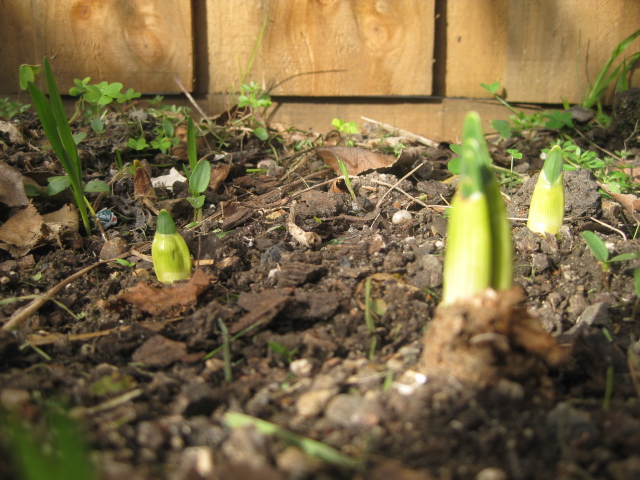
“Reflecting today on the things we plant in the hopes of fruit to come. We believe in planting so we do it but ultimately we have very little control over what grows and who it belongs to. The pain is in our awareness of this and our discipline is planting anyway – even though we’re tired and someone else may receive the benefit of our careful tending, someone else may not like the plants we’ve chosen or where we positioned them and tear them out like weeds. The thing that I value is only valued by others if they want it themselves. What I grieve for, is not this house, much like another having four walls and a roof, but the harvest hoped for here that will not be realised by me. There is a large harvest, but few workers to gather it in. Pray to the owner of the harvest that he will send out workers to gather in his harvest.”
Those little shoots felt like a metaphor for walking away from the sense of home we created in that place and the practices started that we now wouldn’t follow through. I hope God is sending me you, you know, not to go round and pick my ACTUAL daffodils, but to be a fellow worker in the field.
New housemates, new street, new garden… perhaps it is time for a new covenant.
“Hey, …Marita? …Shahad? …Ana & Atticus? You guys want to head to Ceres for some bulbs?!”
[1] www.sharingabundance.org is a food rescue initiative whereby produce is rescued from backyards and shared between homeowners, volunteers who pick and local community food programmes.
{a nicer – edited! – version of this article appeared in the Dec14 Manna Matters newsletter. Go straight to the source and find out more about Household Covenants at the Manna Gum website}
“When one tugs at a single thing in nature, he finds it attached to the rest of the world.” (John Muir, 1838-1914)
Definition of sustainability as meeting “the needs of the present without compromising the ability of future generations to meet their own needs” (Brundtland Commission, officially WECD 1983-1987)
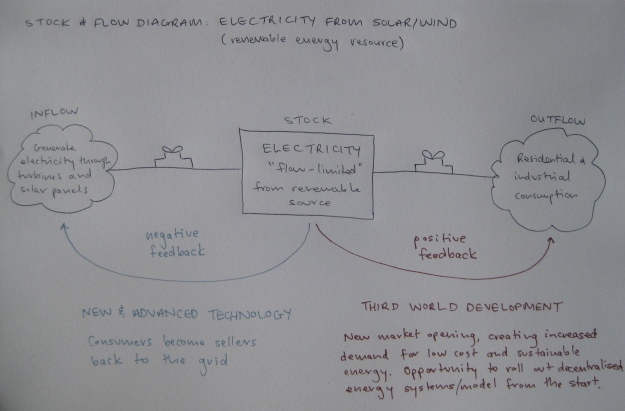
Systems:
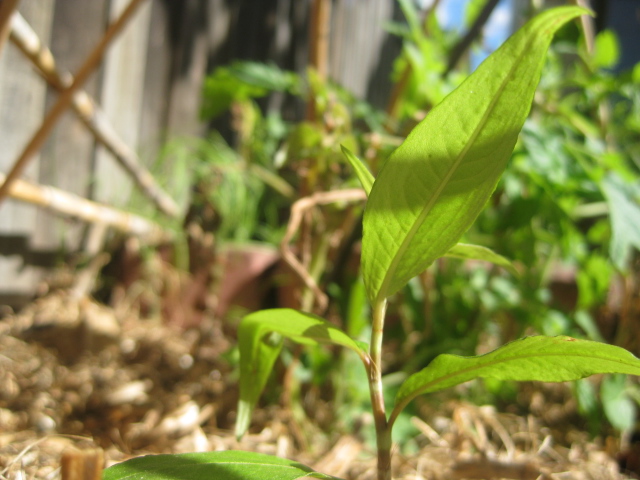 Reflecting today on the things we plant in the hopes of fruit to come. We believe in planting so we do it but ultimately we have very little control over what grows and who it belongs to. The pain is in our awareness of this and our discipline is planting anyway – even though we’re tired and someone else may receive the benefit of our careful tending, someone else may not like the plants we’ve chosen or where we positioned them and tear them out like weeds. The thing that I value is only valued by others if they want it themselves. What I grieve for, is not this house, much like another having four walls and a roof, but the harvest hoped for here that will not be realised by me.
There is a large harvest, but few workers to gather it in. Pray to the owner of the harvest that he will send out workers to gather in his harvest.
“The radical church is the fastest-dying church in the world”
Myers, C. (1988) Binding the Strongman Orbis.
DISCIPLESHIP AND FAILURE: “YOU WILL ALL DESERT ME”
At the time, his words could hardly have hit home any harder, I ws still recovering from the painful breakup of my own community, the loss of home and marriage. I had never expected that the “cross” would take this shape. If readers of this book still feel it is an exercise in imaginative idealism, they should be aware that Mark’s vision is flesh to me, flesh seared and scarred. I have seen business-as-usual rudely disrupted by the kairos of the call, seen the vision of radical discipleshhip community realized. And more importantly, I have also seen those dreams fade, seen our best attempts to weave a fabric of hope and wholeness unravel, seen good persons bail out.
The radical discipleship movement today is beleaguered and weary. So many of our communities, which struggled so hard to integrate the pastoral and prophetic, the personal and the political, resistance and contemplation, work and recreation, love and justice, are disintegrating. The powerful centrifugal forces of personal and social alienation tear us apart; the “gravity” exerted by imperial culture’s seductions, deadly mediocrities, and deadly codes of conformity pull our aspirations plummeting down. Our economic and political efforts are similarly beseiged. The ability of metropolis to either crush or co-opt movements of dissent seems inexhaustable.

Sabbath Economics: Negative Capital (Debt)
In a time of global economic crises and the Occupy Wall Street campaign it is interesting to reflect on debt and the role it plays in our lives. There were an estimated 488 million debit cards and 686 million credit cards in circulation in the United States in 2009 and an estimated 36 million debit cards and 16 million credit cards in circulation in Australia. (Source: Euromonitor International, January 2010). Historically the dominant cultural driver has been religion or government – it is currently commerce.
The Jesus movement also stood in opposition to the dominant economic model of debt bondage in his day, modelling instead what Ched Myers calls “a re-communitized economy of generalized reciprocity of sharing and cooperation” (p.34)
How much debt does your household have? What are some ways we can imagine living beyond the bondage of this debt?
Is not life more than food and the body more than clothing?
——-
Talitha: (Unmarried/No dependents/Renting) I was raised to live within my means – to buy things second hand, pick up a bargain when things are on special, then when that money is needed further on because the car breaks down or something the resources are there, my family wasn’t wealthy but we had ‘enough’. It was interesting to reflect on how for all of us our childhood contexts were deeply impacting on our relationship with money as adults. How do we role model good stewardship to our own children/the children in our community when they often aren’t participants in the financial choices that we make? A debt load such as a mortgage is a really deep commitment by families to embed themselves in this neighbourhood, a stability that is vital to my own capacity to be here, but then to service that they need to work more hours – are there ways that I could help the families in my community pay of their mortgages faster, thereby ‘freeing’ them up? What other good work might happen?
I liked playing with the concept of a credit card slip that is a gentle reminder of the bigger cost of spending beyond the purchase price. Want one for your wallet? Send no money now, for just 3 easy purchase payments of… lol, if there’s interest I’ll make ‘em free. Keen to think about whether we could have a bit of a communal giving account to which I transfer the money that I would otherwise have spent on something I don’t really need – if I see that money as ‘excess’ to my needs, to what better use could I be putting it? E.g. I probably get a neck & shoulder massage at the mall four-six times a year, if I made a conscious decision to do massage swaps with someone in my community instead then 1) that would probably be another way we’re able to deliberately connect and 2) this might give me $120-180 for the kitty – and a reward of this stewardship would be being able to decide together on a purpose to put that towards that benefits others.
Also recommend checking out the Christians for Occupy page, we follow a God who isn’t far away but here among us – he would have been amongst the 99% but he would have left us to go and find the 1%. Yeah, we are called to solidarity with the poor but also to invite Zaccheus to share a meal at our table, how can we keep having conversations about finance that aren’t polarising and invite others to know another layer of richness in their life – that generosity is a gift that blesses the giver as well as the receiver?
“Sabbath Economics”… is the conviction that God’s creation is abundant, and that there is enough for all – if we live within the limits of our needs instead of by our cravings (p5)
Over the coming months the Footscray Girl Fridays will be reading ‘Sabbath Economics: HouseholdPractices‘ by Matthew Colwell and invite you to discern and discuss with us.
Chapter One: Surplus Capital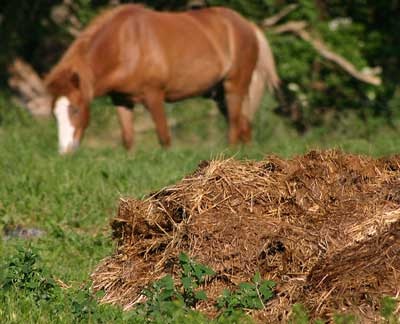
This chapter uses a great analogy of comparing an investment to a horse: “You can have a horse and use only what the horse produces (the manure); or you can use the horse itself, and not just what comes out of it.” (p25)
We often focus on the return of our investments but what are we actually investing in? How can we make the principle and the return work for the fulfillment of our values?
How many loaves have you?
(picture from: http://www.onlinegardenertips.com)
—
Talitha: (Unmarried/No dependents/Renting) I went as far as opening a trade shares account once but I could never quite bring myself to transfer money over to it. There’s something scary to me about a million+ people ‘out there’ deciding the value of any given thing in the ‘market’ on a given day. It is faceless and I’m giving the power to assign worth over to people I don’t know. I even struggle with superannuation and insurance and a sense that these are first world constructs that replace community – if we live in a community where people look out for one another wouldn’t we provide for one another in need and care for one another if sick or old? I don’t think I want to buy into that construct because it doesn’t feel like the ‘way it should be’, luckily I don’t have assets or dependents yet so I can stay on the fence a while longer! Urban Seed recently shifted their banking to be with mecu they have sustainable practices with economic, environmental and social outcomes such as tree planting to offset a car loan or buying land that is set aside for conservation to offset a mortgage. I think I have a bit of a brain block about how much work it might be to switch banks, I think they sound cool but don’t change my own practice (in our chat last Friday we talked about printing out the boring paper work and completing it together so we’d have some support and accountability around this!). Last year to boost the economy Kevin Rudd gave us all a tax break and Seeds/MannaGum ran a bit of a campaign called “Manna from Kevin” …here was some surplus income, how could we think deeply about how we spend it? One couple put on a free breakfast for everyone who lived in their street – some thought the invitation was a practical joke but some really close friendships have grown out of that first shared meal together. Another small group together decided to pool their stimulus package giving them $10K to create a job to pay someone half a day a week to do work in their community. I thought about it myself for a long time – I’m not from a wealthy family and I don’t earn a lot now – $1,000 represents a large amount in my world. What is my duty to my family? what about those things I could improve in my own situation like replacing a fridge which is small and every shelf is broken and it doesn’t even stay that cold so milk goes off really quickly… I had to go through a bit of a process around reflecting on the fact that if I was going to give it grudgingly then I shouldn’t give it all, just spending it on myself would be as bad. If I was going to give it away I should do so freely and joyfully – with open hands. This actually took a few months of praying about it, reading some of the bible passages that relate to money (Mark 12: 41, Luke 16, Matthew 20…), I started to hear the stories come in of how other people’s money was bringing about such good results… by this time I knew I wanted to give away my money too but I felt a bit embarrassed that I hadn’t wanted to do it straight from the start so I gave it all away without ever telling anyone about it – it went to a variety of things but one I have an ongoing connection with is KIVA essentially they make microloans to people who would get turned down by a bank for being too small, or risky, or would take too long to repay – it’s often something small re-roofing their house or buying a bicyle so they can deliver flowers not just sell them at their front door to build their business – I like the idea of empowering people to change their own lives and once their initial loan is repaid I can choose to re-lend it to another borrower. That initial ‘investment’ has allowed me to make 18 different loans so far. KIVA is US based I think, a quick google search brings up Australian sites http://www.microloanfoundation.org.au/ and http://www.opportunity.org.au/ that might be worth checking out… I think the last few years has seen a huge shift in how I see money – I think it needs to move around or it becomes stagnant, good gifts go into gaps – keep giving, keep getting. I bless and am blessed and there is ‘enough’. In the same way that money, as paper and metal, carries the value that humanity all agrees to rather than what it is materially worth, I’ve come to give it a different value of its worth in my life – it’s on the same level as any resource of time or skill that I could volunteer to something. Those aren’t resources you can ‘bank’ you just have to make good choices about how you use what you have at any given time. Does that make sense? Activist Philip Berrigan said “Hope is where your ass is”, well, I’m putting my money there too.
Naomi (Married/No dependants/Renting) My basic philosophy thus-far: work for fun not for money, don’t spend more than you earn and don’t worry your head off about tomorrow. I like it simple.
Having pretty recently got married, it dawned on me that it’s probably about time that I grow up and think a bit about money, money, money. We got the joint account … but it hasn’t progressed much further.
To get ahead in life, there are a lot of things I “should” be doing with my money – figuring out the tax breaks, buying a property or two, working a job that pays a decent wage and making my way up the corporate ladder, investing in the stockmarket. The thing is, in comparison to the majority of the world, I’m already ahead in life. Far ahead.
The money I have represents power. Every choice I make with what to do with my dollars, makes an impact. $2 milk at Coles, where the prices are down, sure is enticing to the hip-pocket, but is it the ethical choice? Rent or buy? Drop a few coins in to the busker’s hat, or not? And I haven’t got a clue what my super money is doing while I’ve got my back turned!
And so what do I do when faced with the overwhelming and over-my-head financial options? I put the paperwork aside and the decision making off for a rainy day.
So our Girl Friday chat was a refreshing breath of honest questioning. We can talk all we want about the concepts of Sabbath Economics (and believe me, I do want to chat & see it more!) but what does it mean for our real, daily actions with our money? None of us has it figured out, yet, but the corporate desire to make some headway is encouraging.
Check out Ched Myer’s article on the Biblical Vision of Sabbath Economics. I’m still working my way through it. Hope to comment more.
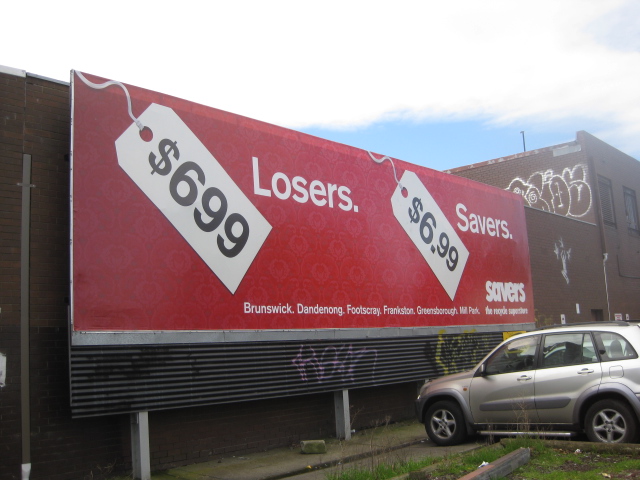
How’s this for sabbath economics and speaking to the powers?
 itellyouarise