Category: influential reading material


IMAG0792

An outsider would not have noticed any visible changes. The same skies, the same seas. The same faces… But they know that everything was different. Their banal everyday life which they knew with such familiarity had been transfigured,  They had been given new eyes and the solid objects and stone faces which filled their space became transparent. It was as if they saw invisible things which were visible only to those who had seen the angel troubling the waters of the pool – the dead man.

Normal mirrors reflect things which are present; but dreams show things which are absent… their stories about the dead man were stories about themselves. Stories not about what they were (that is what they saw when they looked in their mirrors…) but stories about what they desired to be: this is what they saw as they faced their dreams…

Inside our flesh, and mixed with the noises of Death, there is written an indelible story of beauty.  And even without knowing we know that we are destined to this happiness: the Prince must meet Sleeping Beauty.

The villagers remembered. Their stories were the return of a lost time: the past, desired, repressed, forgotten, dead, resurrected from the grave.

…How could I explain to her that the story was always happening in the present just because it had never happened in the past, in the far distant land?

…the beautiful wants to return… its time is sacred; it is reborn every morning; it is the time of resurrection.

…Once upon a time, in a far distant land…” : a cloud of mist covers the narrative to conceal its real time and space which are ‘now’ and ‘here’… the ‘once upon a time, in a far distant land’ is a metaphorical was of speaking about a present loss.

p.39-41, The Poet, the Warrior, the Prophet
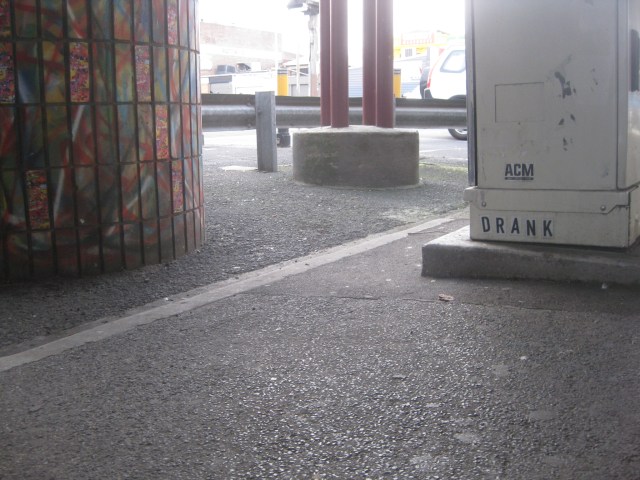
IMG_6364

“… a subtle moment, a reversal occurs.  I know longer drink the wine. It is the wine which drinks me. I have been ‘drunk’ by it. I am drunk. Now it is not the wine which enters my body. It is the wine which holds me inside a glass and drinks me, and I enter into a totally different world, a strange world which I don’t know.  My body is possessed by ‘spirits’ which had remained outside till that moment. ‘In vino veritas’: in wine truth abides.

The eucharist: If the body and the blood were assimilated into our bodies, they would become what we are. But the eucharist is the reversal of normality: we eat and drink the bread and the wine, but it is the bread and the wine which eats us. We are to become what they are: the body and the blood of Christ.”

p.14-15, The Poet, the Warrior, the Prophet
IMAG0784

“If I find in myself a desire which no experience in this world can satisfy, the most probable explanation is that I was made for another world. If none of my earthly pleasures satisfy it, that does not prove that the universe is a fraud. Probably earthly pleasures were never meant to satisfy it, but only to arouse it, to suggest the real thing.

~ C.S. Lewis, Mere Christianity

IMG_3794

To explain: from the Latin ‘ex-planare’, to flatten, spread out, make level. A great bulldozer will push the mountains inside the abysses and everything will be become a luminous plain under midday sun.

To explicate: from the Latin ‘explicarte’, a verb derived from ‘plicare’ which means ‘to fold’. To explicate: To eliminate all folds where darkness abides; to spread the text out, so that light will illuminate the whole surface.

A good teacher is a luminous creature.  Whenever he gets darkness disappears.  He even carries candles in his pockets, which he lights whenever he finds a dark corner on his text: footnotes…

I became sure that I was no longer a good teacher when, instead of turning the lights on, I preferred to turn them off… and I feel sorry when the sun dispels it because my imagination together with elves and leprechauns, is deprived of the mist-eerie atmosphere without which it cannot breathe.

And I also love the darkness which abides inside the deep and lovely woods of Frost’s poetry, and the light which fractures through unquiet waters in Eliot’s poems, and the eerie atmosphere of the gothic cathedral, which reminds me of the entrails of the great fish inside the sea: a sunken cathedral… my whole Being reverberates, and I know that it belongs to the darkness of the woods, to the depth of the sea, to the mystery of the cathedral… If lights are turned on I am homeless…

I keep asking myself as to the reasons which led me astray and which force me to march in the opposite directions. But reasons I find none. Only suspicions…

I suspect that I do not want to decipher the mystery.  I want questions and not answers.  I want the sea and not the harbour.

p.8-9, The Poet, The Warrior, The Prophet

IMG_3967

…death cannot be eroded.  It is a part of life, and it actually imparts meaning to life because it involves a basic contradiction that is essential for an understanding of human existence. Why should Christ have died on the Cross if death were simply an absurdity?  Christ’s death rests on the presupposition that every death is tragic. And his death imparts to every death a dimension of hope and victory. Christ on the cross hallowed the agony of love. The gift which Christ offers to those who love is the cross, and it is this gift which purifies love.

To love life as it really is means to accept it in its total reality, which includes death; to accept not only the idea of death but also those acts which anticipate death, in the offering and giving of ourselves.

…In a sense, every sacrifice of our personal interest and our pleasure for the sake of another person or simply for the act of ‘love’ is a kind of death. But at the same time it is an act of life and an affirmation of the truth of life.

Preface, p.16 – Thomas Merton, from Love by Ernesto Cardenal

IMG_0595

Human consciousness projects itself.  It is dynamic and daimonic.  Its excess – like the imagination of a child – cannot be content with immediate appearance and actuality but transfigures these and moves in new geographies.  As a listener becomes aware of higher and deeper octaves, so more generally man-in-the-world takes possession of ever richer and more subtle registers of existence and maps them as best he can.

No one is going to stop human nature from its impulse to shape the mystery that lies about us. Thank the powers that be that we can dream in this sense, that we can send out feelers in the unknown and fly coloured kites into the azure or the storm.  It is as natural to fabulate as to breathe, and as necessary… the human heart would suffocate if it were restricted to logic.

p.74-75 Theopoetics, Amos Niven Wilder

This slideshow requires JavaScript.


An effective social action will operate at a deeper level where the wrestling is with the loyalties, barriers and spells that rule a way of life and its institutions.  In such an arrangement no doubt occasions of public confrontation will arise.  When they do Christian action will have a symbolic or dramatic character, enforcing its deeper persuasions.  Early Christianity was more like guerilla theater than social revolution, but it overthrew principalities and powers.

A revitalised message comes out of drastic involvement in the life-options of the situation… there are many areas of solidarity with human scandal and many forms of private and costly wrestling with pervasive tyrannies old and new… but imaginative solidarity with our modern disorders informs all such resistance both public and private.  It is in this crucible that the powerful new rhetoric and witness are forged, and the revolution of images.

p. 27-29, Theopoetics


The Weaving Country exhibition will run at Footscray Community Arts Centre until 1 April, 2017 and I encourage people to check it out, many of these beautiful pieces are available to buy.

Artists include Sandra Aitken, Eileen Alberts, Donna Blackall, Lee DarrochDebbie Flower, Gail Harradine, Cassie Leatham, Denise Morgan-Bulled, Greta Morgan, Glenda Nicholls, Kathy Nicholls, Marilyne Nicholls, Eva Ponting, Bronwyn Razem and Lisa Waup.

Weaving Country

Weaving Country is a story of weaving and fibrecraft across Aboriginal Victoria from the Victorian Aboriginal Weavers Collective.

In this exhibition we have aimed to create a woven narrative, beginning with baskets as vessels for gathering and fibres as the threads that knit together family and kinship ties.

In this way we liken our first collaborative curatorial journey together as a journey of gathering and collecting.  Having gathered the weavers works into our metaphorical curatorial basket, we have then bought these works together to create a cohesive and beautiful body of work.

Weaving Country is about Country and place.

Each weaver’s generational knowledge of grasses, fibres, harvesting and process is inherent in their practice.  What is not always apparent, and is the idea this exhibition aims to provoke, is the impact environmental changes have on the grasses ad fibres used by the weavers and therefore on the overall health and wellbeing of COuntry and People.  This is reflected in the diverse use of materials and the incorporation of found objects.

The Victorian Aboriginal Weaving Collective speak with one voice through their diverse woven and sculptural forms to the strength and vitality of this continuing and unbroken tradition. These contemporary works demonstrate their innovation yet retiran cultural integrity and truth.

By Vicki Couzens and Hannah Presley

This slideshow requires JavaScript.