Category: influential reading material


IMG_5696.JPG

A Poetry Handbook – Mary Oliver

p.120

“Among the things I learned in those years were two of special interest to poets.  First, that one can rise early in the morning and have time to write (or, even, to take a walk and then write) before the world’s work schedule begins.  Also, that one can live simply and honorably on just about enough to keep a chicken alive. And do so cheerfully.

This I have always known – that if I did not live my life immersed in the one activity which suits me, and which also, to tell the truth, keeps me utterly happy and intrigued, I would come someday to bitter and mortal regret.”

IMG_5903.JPG

I have started reading The Jihad of Jesus by Dave Andrews.  With a title like that I think it confronts and offends peoples sensibilities before they ever read a page.  I can assure you there is plenty of scope for it to confront and offend sensibilities once you open it too. How can it not?  This is a self-effacing story.  I’m only 30 pages in but I understand that it costs something – before I can preach to you about non-violence I must confess the horrendous history of violence, rape, torture, murder done in Your name.  It makes you wonder, why anyone might align themselves with such a thing as this?  How can you be associated with Christians, with religion, when it has not just participated in but driven so much atrocity in the world?

I do find it hard to align with the structure, the culture of the “institution” of the church.  I can feel very far away from You when I am in these walls.  It is necessary for healing, on both sides, to participate in building a world that is different.  Who is sick?  Who needs to be saved?  We do not send a doctor for those who are well but those who are sick.  I know I am sick.  I know I need help.  I need help everyday.  I must take the plank out of my own eye before I look at the speck in yours.  Do you not want to be well?  I do.  I long to be well. It hurts. It’s uncomfortable, it’s sickening to read these things and understand that they form part of the cultural tail I claim.  But we get Martin Luther King and Mother Teresa too.  What is stopping you from being the next Martin Luther King?  These were imperfect human beings – MLK cheated on his wife with some regularity I believe and MT was someone who set such high standards she was difficult to please and work with.  Side by side with them they might not be so easy to admire and love as their reputations act like airbrush to photography.  I am not so easy to love up close.  Religion is not so admirable up close either.

We judge those harshly who have gone before.  In our current age where brain comes before brawn we think “how savage“, we want to know how these actions might conceivably be justified and the only response we have is “they know not what they do”.  We know now – issues of indigenous land rights and protection of culture, mandatory detention of refugees, family violence, climate change, water shut offs in Detroit,  war and genocide… we have our own share in stupidity or willful blindness or whatever you want to call the gross injustices of our own time… consumption climbing relative to our social isolation as we look for the things that will fill us but not to each other.

[p.1, The Jihad of Jesus]

“Jihad is an Islamic term referring to a religious duty for Muslims.

In Arabic, the word jihad translates as a noun meaning “struggle”… there are two commonly accepted meanings of jihad: an inner spiritual struggle and an outer spiritual struggle.

The “greater jihad” is the inner struggle by a believer to fulfill his or her religious duties.  This non-violent meaning is stressed by both Muslim and non-Muslim religious authors.

The “lesser jihad” is the physical struggle against oppressors, including enemies of Islam. This physical struggle can take a violent or non-violent form.”

If fulfilling your greater struggle is to follow the call to living a life of love, peace, forgiveness… then this “lesser” struggle needs to be framed by the principles of the first.

I am grateful for smart, wise elders who can write these books, have these conversations, articulate what needs to be said – even if it confronts and offends.

IMG_5678

Welcome, we acknowledge that we gather on the land of which the people of the Kulin Nations have been custodians since time immemorial.

This is our fourth in a series called The Art of Discipleship where we showcase the material of different books and engage with their material creatively.

WEEK FOUR

The activity this week is taken from:

Women of Spirit: Woman’s Place in Church and Society

This Australian book by Janet Nelson and Linda Walter looks at how church and society both have ways that they tells us what  we are and aren’t supposed to do and how we are and aren’t supposed to look.  How can we reinterpret our self-esteem and identity understanding ourselves to be made in the image of God?

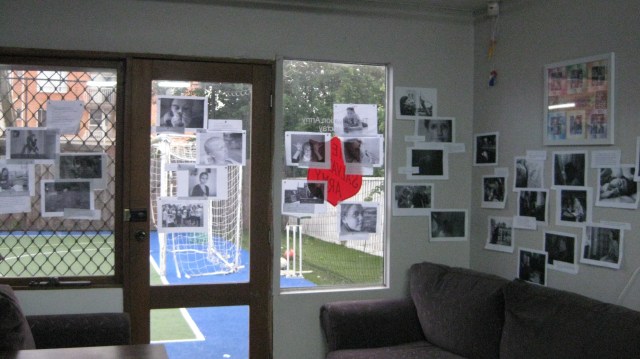
As has been done before, in a Seeds small group and a Women’s Circle at Surrender, images of women doing sacred ordinary things are blu tacked around the room with bible verses referring to women, where God is speaking to women and where “feminine” metaphors are applied e.g. God: “As a mother comforts her child, so I will comfort you; you shall be comforted in Jerusalem.” (Isaiah 66:13) or “How often have I desired to gather your children together as a hen gathers her brood under her wings, and you were not willing!” (Matthew 23:27).

This time we also had images of men juxtaposed with this “feminine” language and imagery.

So we had a time of some music playing while people walked around the room ( a reflection space created with pictures, bible passages, mirrors) immersed in these images and words and people were invited to grab a verse or image if it spoke to them and bring back and sit when they were ready.

  • What stands out?
  • What jars? What resonates?
  • What image/text do you have? – tell us about it

Read the story of The Bunyip of Berkeley’s Creek (a theme of the main book)

  • What does it mean to dwell in this idea that: God delights in you!!?
  • Where do you look for your identity? Sense of self?

“If this is my experience, it means that something of the greatest importance is happening.  It means that God is inviting me to discover “Him” no longer as another beside me but as my own deepest and truest self.  He is calling me into the experience of meeting Him to the experience of finding my identity in Him.  I cannot see Him because He is my eyes.  I cannot hear Him because He is my ears.  I cannot walk to Him because He is my feet. And if apparently I am alone and He is not there that is because He will not separate His presence from my own.  If He is not anything at all, if He is nothing, that is because He is no longer another.  I must find Him in what I am or not at all. (Williams 1976)” p.171

How might seeing yourself in the image of God change your life/the way you live?

Using a camera, take some pictures of yourself – not a “selfie” that is about looking your best/who you’re with/what you’re doing but perhaps some part of your body you feel critical of, somehow a part that captures your ‘self’that you might feel critical of – scroll back through the images you have taken and prayerfully try and hear what God is saying to you in the mix of how you feel about yourself.

IMG_5679.JPG

IMG_5115

People can share their photos (if they feel comfortable to do so).
Discuss how the exercise makes you feel or what it gets you thinking about.

Close with the ‘Greeting Circle’ from p.194  – go around the circle blessing each person.

Blessed are you among wo(men) ____________________ [name]
For you have found favour in God’s sight.


IMG_5514


“For me, the activist poem is a performative activist poem: one in which action is an implicit part of the writing, delivery, and hopefully the reception of the piece… the poem becomes a literal act with cause and effect. Its action cannot be denied because it is an implicit part of its creation (and delivery).”

John Kinsella

Aunty Carolyn did the Welcome to Country at the Emerging Cultural Leaders event at Footscray Community Arts Centre tonight.  She said:

“This is sacred land. One of the oldest existing.  Watched over by Bunjil the Eagle on land and Waa the Crow protects the waterways.  We are to respect the land, not destroy, and respect those to whom this country belongs.  Creation itself is sacred, so when we participate in right relationship, we participate in what is sacred… profanity is setting yourself against Creation. In being willfully blind we are supporting what is profane. By wasting food and water when others have none.  We don’t want to be discomforted or put out… there’s something sacred in being discomforted rather than doing what everyone else does.  Assimilation is just another word for massacre.”


emerging cultural leaders

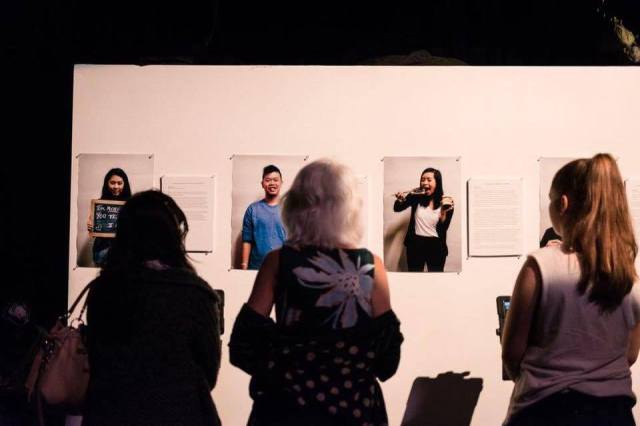
Photo credit: Minh Nguyen

Loved to have this introduction and ideas of belonging, culture, identity and place in shared space with my friend Minh’s installation piece…

BIO:  Minh Nguyen is currently completing her Masters of Applied Psychology. Her dissertation research explored constructions of ethnic identity amongst second generation Christian-affiliated Vietnamese in Melbourne. She found that through the negotiations between social relationships, and within one’s location in society, participants created a ‘different kind of Australian’ identity that accessed resources from the surrounding environment, their parent’s culture and experiences of racism and exclusion. This study provided an account of Vietnamese Christian identity construction, a particular historical, cultural, and social location within the complex world.

PROJECT: Immigrants are continually challenged by issues of settlement, sense of belonging, exclusion and identity construction.  These issues are also important life challenges for the children of immigrants, the second generation and the generation thereafter.  Chopsticks and Vegemite explores the identity construction of four people from a young Christian affiliated Vietnamese called Night Church.  Unlike their parents, they create their identities and evaluate themselves in relation to the structures and ideologies of the new society, in addition to the memories retold of their parents’ birthplace.  

IMG_5264

Welcome, we acknowledge that we gather on the land of which the people of the Kulin Nations have been custodians since time immemorial.

This is our third in a series called The Art of Discipleship where we showcase the material of different books and engage with their material creatively.

WEEK THREE

The activity this week is taken from:

Binding the Strong Man: A Political Reading of Mark’s Story of Jesus


This book by Ched Myers looks at the book of Mark as a manifesto for radical discipleship — i.e., Jesus as exemplar of nonviolent resistance to the powers-that-be in his day, and ergo in ours.  We will be reading Mark, all of it, in one go and sitting in the queries; “What do the questions Jesus poses to the disciples have to say to us today?”

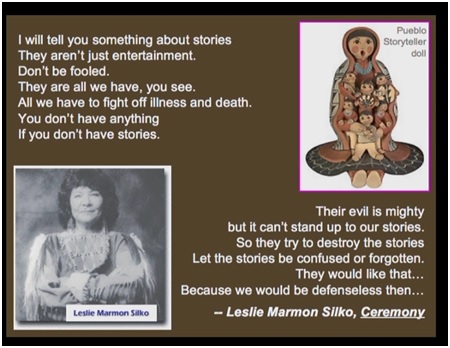
The Word is removed from us in time and space. We all tell stories and know how to tell stories. It is a common language that bridges other cultural gaps between us. These stories are not just entertainment but they actually educate and nourish us. BUT because they are good and healing stories, there are powers out there that will try to destroy them or… “let them be confused or forgotten” – BUT these evil powers cannot stand up to these stories (a statement of faith – conviction -hope that there is a power greater than what we face).  So what we are doing, reading scripture is counter cultural – sitting down and sharing, taking time.

silko

Radical – arising from or going to a root or source. From latin radicalis, having roots.

Radical simply means to go to the roots. Twin task of going to roots of tradition in scripture and in spirituality and in social solidarity and in roots of our contemporary pathologies to deal with root causes and not symptoms.

What are the current issues these stories could be informing?

  • War Israel/Palestine/Afghanistan/Syria/Russia
  • Riots/protests throughout middle east – for democracy and Europe/America in relation to global financial crisis.
  • Isaiah 14.:8: strategic asset Cedars of Lebanon, oil of the ancient times. What was empire then and what is it now? Phonecia, Babylon, Rome – clear cut the cedars for masts for ships and bearing poles for temples. Ecological justice.
  • Matt 1-2, Luke 1-2 Christmas story sentimentalised – imperial violence and human displacement, infanticide as a matter of domestic policy.
  • Road to Emmaus – story of courage and resistance, within a few days of crucifixion. Easter Luke 16:31 – under the shadow of death, not a zen walk down a country road. What is the meaning of the death of our leader for our movement.
  • Immigration/boat people – Isaiah 56, scripture and restorative justice – right using the bible to exclude immigrants and gay people. Radical
  • Matthew 18 restorative justice, ambassadors of reconciliation 2 Corinthians 5:16-6:2.

Draw parallels and analogies with our current context.

  • Ambassadors in chains Ephesians 2-3 & MLK letter from a Birmingham jail (Eph 3:10, 6:1)

How does the story read in our own context?

allegory

As we read be mindful of the following:

  • Oral tradition – uses language to set the scene – are we at the seaside or in the city now?  Look for introduction of new characters, new settings, changes in plot.  Often read the bible like a 5 minute segment out of an entire movie  – how can you understand what’s going on when you come in part way through the story? Need to rebuild critical literacy.
  • We can romanticise the Roman Empire – nothing nice about it.  I am a descendant of the colonising empire – British Empire, conquest, world sovereignty, racial superiority and global management.  Empire looks very different from the bottom IMG_5266up, than the top down – victims are always reminded of their vassalage. Money replaced with that with an image of Emperor or Queen.  The Romans were driven out of Judea and then they struck back. Jerusalem was laid siege, conquered and burned.  The book of Mark was written during this war.  Empire can be defined as the rule of the centre over the periphery.
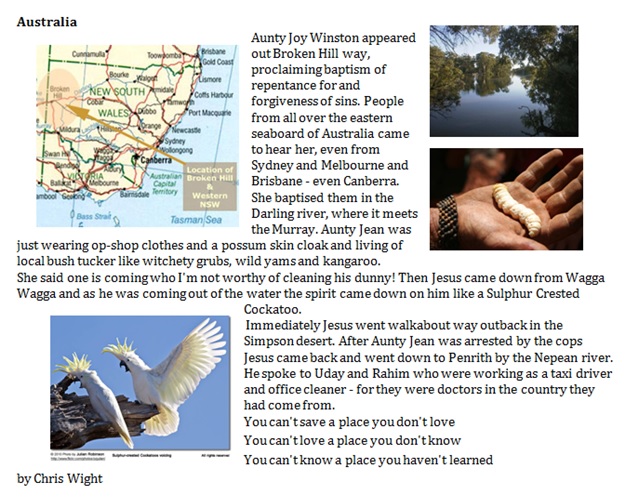
  • Mark 1:7 baptiser – One is coming who is stronger than I am.  Power contesting power.  Not baptised with only water but the holy spirit and fire.  Baptism was and is a personal and political statement in a social context calling on the Holy Spirit of water and fire out in the undomesticated wilderness against the struggle of empire.
  • “True evangelical faith cannot lie dormant. It clothes the naked, it feed the hungry, it comforts the sorrowful, it shelters the destitute, it serves those that harms it, it binds up that which is wounded, it has become all things to all people” Menno Simons 16th century.  This is a discipleship of struggle and resistance as well as renewal.  Will it have a cost?  Baptism into Christ and into Christs death.  When Jesus was baptised he went right under into the Jordon, shedding  everything of socialisation – rises up completely unobligated to empire.  Jesus was baptised into a specific watershed/river, a specific story, a specific (un)kingdom.


Working from the same copy, read the – whole – book of Mark aloud in one session. The document below, to help with the sense on one whole flowing story (as the oral tellers would speak it), has had all chapter and verse numeration and story “titles” removed.

Mark stripped back

First thoughts?
Sound/feel different than it usually does? What stands out?
Have some general discussion around the ‘mindful’ notes re our ideas about – stories, empire, baptism, discipleship…

Facilitated by Mehrin Almassi from the Indigenous Hospitality House, in this bible study series we will seek to make connections between the story of the nation of Israel told in Lamentations and our own national story. We will look to see whether this book may help us to address our shared histories of displacement and endeavour to distill how we might move forward as a nation in light of the biblical example.

Connection to Creator (Spirit)

What do we think of when we hear the word Spirit? What do we think of when we hear the words Spirit of God?
What do we think about when we hear the term Creator Spirit?
What do we think is meant by each of these phrases? Are they related? Could they be?

Read Lamentations 3

Did the Israelite people have a sense of the Spirit of God – the Creator Spirit?
What was God like for the people of Israel? What was their experience of relating to God?
How do we relate to and/or experience God? Is our experience different to that of the Israelites? If so, can we think why?

Let’s read the Boon Wurrung Story.

What might this story teach us about the way the Boon Wurrung people experience the Creator Spirit?
What may this story teach us about the importance of our own stories in relation to local, national and international issues?
How else might we apply important narratives of the past to current situations needing attention?

Kids Activity

In parallel to grown ups run a kids session: talk about pictures as stories, songlines and place.

Will need:

  • messy clothes (if painting)
  • paint and brushes and/or lots of sticky dot stickers
  • paper
  • photos (bring along some or a camera to take some on the day)

What do you like about stories?
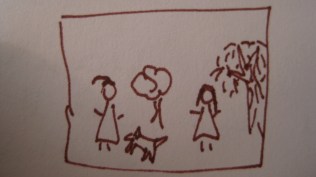
Look at this image? What is this a picture of?

IMG_6499


(girls, dog, trees…)

This picture tells the story of the time Talitha and Bron went to the park with Gracie.

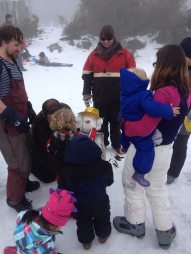
11834903_10153063761386868_8866957583155349394_o

 What about this image? what’s happening here? who was there? but they aren’t in the picture… how do you know they were there?

(pictures can capture a “moment”, some part of a bigger memory, tobogganing and snow angels, other friends… reminder of something bigger that we can no longer see)

Pictures have two things, a place and a “happening”.

Using your pictures so far, talk about where they are happening and what is happening.

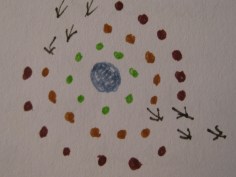
IMG_6501Indigenous stories tell something about a place and also about something happening there.

WHERE: Maybe there is a waterhole (blue), things grow there (green), drier sand/soil as you move away (orange), day rocks (red).

WHAT: An animal comes to the watering hole and then goes (tracks).

Ask children to share a memory, a story, and make a picture – collectively or individually (age depending). Then ask of each: Where is your story taking place? What is happening there?

How would you feel if you couldn’t got there again?  If you couldn’t do that again? (sad)

Today the grown ups are talking about the story of lamentations – a lament is a sound of grief and sorrow.  That’s what people in the story did when they couldn’t go back to the place they remembered or do the things they used to do there.

Learning:

our stories and our pictures can be used to tell each other about places we haven’t been and things we haven’t done, remembering and reminders can comfort us when we feel sad

let’s take a photo now, today of all of us together, making and telling stories so that we have a memory-capture. It’s good to take photos and write stories and make pictures because they help us remember

take your picture now to a grown up – tell them your story – use things inside the picture and outside the picture


IMG_5145

Facilitated by Mehrin Almassi from the Indigenous Hospitality House, in this bible study series we will seek to make connections between the story of the nation of Israel told in Lamentations and our own national story. We will look to see whether this book may help us to address our shared histories of displacement and endeavour to distill how we might move forward as a nation in light of the biblical example.

Connection to Place

What role does a sense of place play for each of us?
What is our connection to the environment?
What is our relationship with the land?

Are there any natural places which hold significance for you? If so, how do those places make you feel?
What happens to us when we are in a place which is significant to us?
What happens when we are unable to be in places which are significant to us?

Read Lamentations 2.

What can we understand of the Israelites’ connection to place through this narrative?
How connected do they seem to their places of significance?
what impact does not being able to access their important places have on them?

Listen to Kev Carmody’s song  This Land Is Mine.

How might the biblical account help us to appreciate the experiences of the First Peoples of this land?
In what ways might we help promote reconnection with land/place/environment for indigenous peoples? For ourselves?
How might this reconnection relate to indigenous people’s experience of God? How might it relate to our experience of God?


Welcome, we acknowledge that we gather on the land of which the people of the Kulin Nations have been custodians since time immemorial.

This is our second in a series called The Art of Discipleship where we showcase the material of different books and engage with their material creatively.

WEEK TWO

The activity this week is taken from:

Christi-Anarchy: Discovering a Radical Spirituality of Compassion and you can read a little more about it here from the first time I read it if you’re interested.

This book by Dave Andrews goes into the fact that Jesus Christ preached a gospel of love and peace with justice but the history of the Christian religion is littered with every kind of evil – What went wrong?

Mediation:  Dave Andrews poem speaks to Jesus’ compassion, his hunger for justice,  and desire to work with marginal groups for real transformation in our world – inviting us to live this way too through the eyes of the disciple Peter.

The prologue of Christi-Anarchy: Discovering A Radical Spirituality Of Compassion retells Dave’s unfortunate history of being kicked out of YWAM many years ago.  This lays the foundation for the rest of the book – a grave injustice done in the name of Christ. At micro and macro levels…

The very first chapter of Dave Andrews book is called:

A History of Christianity: A History of Cruelty

And it’s broken down into 4 areas:

-Councils, Creeds & Coercian: ca. AD 100-500
-Emperors, Popes & Power: ca. AD 500-1000
-Crusades, Inquisitions & Control: ca. AD 1000-1500
-Worldwide Evangelism, Witch Hunts & Genocide: ca. 1500-2000

So you can see how this is not an easy read – to really ‘look’ at the history of the church (our church) and to try and grapple with how this relates to our own understanding of who Jesus was and the way that he lived.

What I’m hoping to create tonight is a bit of a meditation space reflecting on Dave Andrews words speaking to Jesus’ compassion, and his hunger for justice, his desire to work with marginal groups for real transformation in our world and inviting us to live this way too through the eyes of the disciple Peter – speaking into the disillusionment or cynicism we might sometimes feel towards our own church/discipleship movement.

To give you a bit of an overview about where this is going – you will want to make yourselves comfortable because I’m basically going to try and read this like a play/well… a monologue… and it’s going to take about 20 minutes – I’m going to make the room dark because I want you to try and  visualise the scene  and put yourself in  Peter’s shoes.  I’ll leave things dark and quiet for a few minutes while people reflect and then bring us back together for sharing/prayer…

IMG_5066

So, from the macro to the micro for Peter to set the scene and condense the bible into a paragraph… we know from the oral history passed down and recorded that the people of God were slaves under Pharoah, led across the Red Sea to freedom, wanderers in the desert and led across the River Jordan into the Promised Land – Jerusalem, they finally have their own sovereignty: a line of Kings: Joshua, Saul, David, and Solomon … who turns from God’s ways and the city is destroyed in Chronicles, rebuilt in Ezra,  and restored in Isaiah then a series of prophets come… the day is coming when Israel will be judged for its sins, prophesies of the birth of one to come… after Babylonion captivity, they are under the domination of Persia…IMG_5065

We fast forward 400 years between the
Old Testament and the new – and Rome is now the dominant power… Herod the “great” is slaughtering male children, under a star somewhere in Bethlehem a child is born, in a dark and troubled place…

Jesus is born – the next great political leader, descending of Kings, fulfilling the prophecies –  who would lead the uprising to free the people from Roman oppression and win back the independence of the Jews!!  Jesus says “Truly, this very night, before the rooster crows you will deny me 3 times” and Peter responds, “Even if I have to die with You, I will not deny You.” And all the disciples agreed.

Except that Jesus didn’t really behave the way people expected… didn’t lead the way we expected, fight the way we expected… died when we didn’t expect it

Arrested, disgraced and denied three times… Peter broke down and wept.

(here follows the reading of the poem, n.b. not complete in these images)

IMG_5051

IMG_5057

IMG_5058

IMG_5060

Reflection questions:

  • what thoughts/feelings are arising?
  • …since I read this on the internet it must be true: Palestine is the most fought-over country in the world, and Jerusalem is the most captured city in all history. It has been pillaged, ravished, burned and destroyed more than 27 times in its history… paradox of peace and conflict in this area…
  • What is Andrews’ Jesus role modelling here around community conflict? (e.g. promises we make and can’t keep) what pathways back to wholeness are role modelled here? (e.g. be honest with one another, share meals, communicate openly…)  What can you honestly and openly offer? What are our experiences of where this has worked/not worked well?

Time of prayer for ourselves and others.

IMG_5048


sarah2

Apologies for my bitsy notes my hand wasn’t keeping up very well! Premise is this: What if our experience of the declining position and viability of the Western Church were good news?  What if the confusion, failure, and ‘lost-ness’ of this ecclesial ‘dark night’ could be inhabited as a space where new ways of being church and of engaging the needs of the world might be revealed and lived into?  This lecture will explore how the practice of contemplation might enable us to embrace rather than resist this experience, reconnect with the gospel dynamic of death and resurrection, and also be renewed for participation in divine liturgy, mission and justice.

photo source: http://www.eremos.org.au

Late 20th century saw a resurgence of contemplative practice, Merton, Keating, John Main – disciplined practice of silent prayer – waiting on God in deepening receptivity.

Not our own thoughts, even spiritual ones.  Contemplative practice is healing for our culture – slowness, connectedness, way/method of prayer – grow into a personal relationship with God. Mystic = personal experience of God.  Not a passing emotional state or passed down from leaders.  In meditation we verify the truths of our own faith.  What can mediation offer to the whole church body?  Reconnects to gospel death and resurrection – engaging the decline and disorientation.  “Emptiness” in he life of faith.  Meditation – laying aside thought and waiting on God – demanding practice.  Planning, worrying, daydreaming… need to lay aside self-consciousness itself.  Thoughts carry egoic identification with it.  Deep subversion of the self.  It takes nerve to become quiet.  Radical self-forgetting.  Described by Cassian – “complete simplicity that demands not less than everything”;  Buddhist – “eye that sees everything but not itself”;  Main – “hand yourself over and hold nothing back, become self-dispossessed so as to receive our life back as a gift”.  Experienced differently as individuals, how will it be experienced as a church?  Jesus gives self to God.  We claim vocation to be like Christ.  Church won’t give it’s life/identity over – seeks to secure its identity – doesn’t like questions or change.  Fails to realise the transformation it proclaims.  What does ecclesial emptying look like?

liturgy

In ‘Writing the Icon of the Heart’, Ross describes being on a boat surrounded by icebergs and glaciers “stupefied by glory” – went to do communion.  Inadequate to where they were. Cup and wine were an intrusion.  Would have been okay if reached for our hands in silence or to pass elements but no, pulled out the book and started to read the words I usually loved. Words that shrank rather than grew…Distraction.  Not illuminating.  Need to get in touch with alienation…  playacting.  Not in touch with God, or my sin, or grace – went home frustrated.

Liturgy needs to point beyond itself, not be – or try to make itself – at the centre.  Needs to emerge from deep listening and pre-packaged agenda is IN the way not OPENING up a way.  our lives are already sacred and liturgy tries to remind us of that (doesn’t give us/make us sacred).

Words affect who we are and our becoming – affect our formation.  Liturgy can’t be an end to itself.  Must be willing to talk about self-dispossession and be willing to be dispossessed… not more relevant or ‘contemporary’ – a liturgy will be effective only insofar as it effaces itself.  Every true sign must be self-effacing.  Must start in silence and be listening and responding to what is given.

mission

does your church have meetings about getting new people to come and how to make them stay?  do we extend good hospitality?  is our community growing?  sustaining? are we seen as welcoming? are we living up to our own idea of how welcoming we are?  Genuine desire to do justice and be justified (confirmed we’re doing the right thing). Self-referencing and self-conscious… self-centred instead of “just”.

Genuine desire to welcome, but also desire to be ‘seen’ as “most inclusive parish” >> this is death dealing.  Reassured not to see identity as “good”,  give ourselves wholly, handing over ecclesial consciousness instead of wondering how we’re doing it >> get on with it.

Other experiences of Benedictus:

Community made up of secondary teachers (high needs students: drugs), climate change scientists, paediatrician, counsellors, lawyers, healthcare workers… don’t want to take energy from their vocation.  Encourage and resource them to do the good work they are already called to… church might not “socially engaged”.  Freedom, integrity and passion to love.

Encourage formation in contemplative ways – engage the world in different ways.  Reflective peer groups.  Signs of life and new ways of being.  Relate to unhelpful patterns with awareness.  “Why do I have this conversation with my mother every time…” , complaints about work but not making change… structured formation, how can you be liberated?  Church calls us to this.   Formation… in God’s work in the world, lay formation/lay ministry… not calling people into church building but equipping and sending out.  Take these vocations as seriously as it takes its own.  Can the church serve people as they serve the world?  Not a church trying to preserve its own place and identity.  But one that consents to its own self-effacement – we might not know if this group makes a different in individuals visiting once or regulars going back to their work… we might never know.  Faithful communities point away from themselves.  Well-meaning/patronising/complacent when needing the accolade of knowing the difference its making.  Church needs to be faithful to its own vocation, as it discerns.

There is still gender related injustice.  Anglican delegation of women in ministry “keep agitating”, lots of energy but little progress.  Agitating a sign of false spirit.  Agitating is a block to healing – avoiding what was necessary.  Stop.  Risk being fully present to the worlds pain and our response to it… discern your response out of that.  Social action… not saying ‘do nothing’ but Rowan Williams ‘internal contemplation, makes space for truth, for Gods’s reality to come through.’

Depth, broken openness required of us as individuals and communities.  Transformation of imagination and relationships – climate change, reconciliation with indigenous, gender… need to become aware of what we resist and fear.  Let our hearts break open to receive larger vision.  UN: St George slaying the dragon/Isaiah weapons to ploughshares… Leunig does this through prophetic invitation that inspires a bigger imagination.

what can we do?

Prayer of the heart: poverty/listening.  Formation/contemplative action.  Gift of our present ecclesial circumstances (moments of unintentional contemplation – moment of truth/revelation, stripped of illusion) inner alien and unsettling truth.  Discovering ourselves to be less than we thought.  Inadequacies.  Deprived of familiar comforts – social status, political power… running on empty.  Stave off descent into emptiness.  What if rather than resisting we embrace the empty space?  Disciples – didn’t know what they were hoping for.  Poverty o spirit – reaching of our boundaries of being (can’t go on by ourselves) – made bigger.  Be with broken-heartedness and poverty… live into the gift of new and expanded life.  Not all at once… but little bits.

Need to be adequate to depths of worlds need, let go of limiting identity – let ourselves go – fall empty-handed into the hands of the living God.  Follow Jesus into depth of death and chaos.

 Become uncreated to be created.  Broken to be a blessing to all.

Anabaptist/Quaker traditions haven’t had the identity/power in the same ways – what can these traditions offer us?  Still need to be accountable to self.  Still ways to manipulate e.g. silence can be wielded to mean something.  Is the leader and the liturgy connected to deep ground?  Not about individual preference/styles or arguing against communal worship.  Sign is the vehicle that takes us to the encounter.

The church has no place of its own to secure and no need to be defensive.