
A Chinese man with a cane tied my old chest of drawers to his wife for her to carry to their home which I hope was somewhere nearby! I kept repeating “but it’s broken” and he kept repeating “very thank you, very thank you” – a western suburbs multilingual misunderstanding? Or a message of there always being something of value, something that can be put to good purpose, in the broken things – even if we can’t see it…
Latest Entries »
What is your perfect day?
A few months ago, I had someone ask me once what my perfect day was, and I felt a bit uncomfortable with the question and didn’t really know how to answer and so I turned the question back to them. But it kept coming back to me afterwards… I’ve done a bit of thinking about happiness, what it takes to feel “happy”, how much happiness is in my own control and what it would take for when someone asks me the question “How are you?” for my answer to be “I’m happy today!”
As it turns out, my perfect day isn’t strolling the Champs de Mars under the Eiffel Tower in Paris eating pain au chocolat; or even walking along the beach with my headphones in, then sitting out on the rocks and eating ice cream while the waves roll in round me; if that were a perfect day for me then I would only be happy very rarely! Although that is the kind of answer I felt ‘supposed’ to give – it didn’t feel honest.
On reflection, my perfect day contains a mix of a few things:
– crossing a good number of things off on my list of “things to do”
– a social engagement with someone I’m close to over a coffee or similar that makes a good connection between us, and
– having what I call a “kingdom moment” which is where I have one of those interactions with someone, anyone, whether you know them or not, but at some point in the conversation you know you are changed for having known the other person because you saw something of God in them and it transforms you
When I get that mix right – I have a really profound sense of the work I do and the vocation or work I’m called to being the same thing, an alignment between who I am called to be and who I am, I understand, just for a moment, why God made me and why I am here.
That moment is what makes me happy, that moment of knowing is what makes me glad to be alive.
On any given d ay, I may only get one or even none of those things. And it is easy to feel dissatisfied. It’s a precarious thing to find happiness – a whole lot hangs in the balance and we just have to take life one day at a time. It helps to remember at those times I’m most frustrated that its God’s purpose not mine that matters and that those things which come up may have a value for Him that I will ever know.
I have secretly loved the person tagging Melbourne “happy” – it makes me smile everytime I see it (which is not usual of most words tagged) and it makes me think someone else is pursuing happiness too and hopefully leaving a trail where they’ve found it…
In a song Michael Franti’s written called “Gloria”: one of the lines talks about how “I know each day in life with you gets better than the last, so today I’m just glad to be alive”
I thought we could frame our prayers today in the sentiment of that grace. Even though we have things in our day that might feel bad or worrying or frustrating or overwhelming, and the end of the day, in balance, we’re glad to be alive and to have experienced those things as well as the ones which bring us joy.

A quote from A Two-Part Invention by Madeleine L’Engle
…most growth has come during times of trial. Trial by fire. Fire as an image of purification is found all through literature. Dante speaks of the fire of roses. George MacDonald’s Curdie has to plunge his hands deep into the burning fire of roses. In Scripture we read, “Our God is a consuming fire”. God is “like a refiner’s fire”. Moses saw God in a burning bush, a bush which was burned and was not consumed, as we are to be burned by this holy fire and yet not consumed. We are to be refined in the fire like silver. Shadrach, Meshach, and Abednego walked through the flames. The Spirit descended and descends in tongues of fire.
Satan has tried to take fire over as his image, teasing, tormenting us with the idea of the flames of hell. Dante understood the wrongness of this in having the most terrible circle of hell be cold.
Coldness of the last circle of hell; coldness of heart; lack of compassion; treating people as objects; pride, setting ourselves apart from the “others” – all these are cold.
It is a terrible choice: the purifying fire of the Creator or the deathly cold fire of Satan.
Soon after I became a Christian I was given a copy of “The Fight” by John White – basically a primer on Christian living for the newly converted, I can’t remember much about it except that I recall earnestly working my way through some questions at the end of each chapter and tucking these answers inside. My point, almost 15 years on, it that with a title like this I can’t say I wasn’t warned and yet I believe I’d like to register a complaint… does discipleship have to be this hard? It does. It is the crucible that burns away the impurities and transforms or the seed that dies for a plant to grow and produce fruit.
“Will you lay down your life for me?”
You have to choose a path less travelled, and keep choosing it, again and again. ‘Disciple’ and ‘discipline’ are based on the same root word “to learn”. All manner of things will be well, not necessarily the ones you had planned, and you will be blessed abundantly. You will give more than you knew you had, find more that you knew to look for. But, fair warning, it will be hard work, it is a lifelong struggle against the tide of dominant culture and ‘empire’.

Of all the virtues we’ve explored,
love is surely the most comprehensive,
the most all-encompassing,
and the most slippery of them all.
What is love?
The word is used so loosely,
widely and indiscriminately,
it’s hard to pin down.
so generic is ‘love’
its substance evaporates.
I love my wife,
I love my iPhone;
I love God,
I love coffee.
Love is all you need apparently.
Love rules,
love triumphs over all.
Love obligates,
love liberates;
love is fickle,
love is strong;
love is free,
love costs;
‘greater love hath no man that this,
that he lays down his life for a friend’
We fall in love,
we make love,
we search for it on-line.
We give it generously,
sacrificially,
resentfully,
inadequately,
tentatively.
We long for love,
we dream of it;
we crave it,
we weep for it.
Love compels us,
love eludes,
confounds and distracts us.
love fulfils us and makes us sad.
Love enrages,
infuriates,
intoxicates
and blinds us.
Love lets us down,
love fails,
loves end.
And when love is lost
it leaves an ache so deep it scars.
So love is many things.
But today we celebrate the love of God.
It is a different love, a holy love.
It is also a love of complexity,
but one of such depth
and breadth
and height
and length
it renders all other loves
insignificant by comparison.
At this table we hold love in our hands:
the bread and the wine,
the body and the blood of Christ.
it is a love of such pain
and cost and sacrifice,
it leaves us speechless.
It is a love that reaches into
the depths of human experience
in all its beauty and ugliness,
it glory and depravity.
It’s a love that knows no bounds,
no limits,
no exclusions.
There’s no fine print.
It is a love that confronts,
names honestly,
forgives completely,
heals and restores.
It is perfect love.
It is this love that
1 Corinthians 13 describes,
the perfect love of God.
It is this love
we are now called to emulate.
Quite frankly, it’s beyond us.
It’s a high calling,
a big ask, this love.
it’s always patient,
always kind,
never boastful,
envious or rude.
It’s eternally selfless,
without a hint of malice,
irritation or resentment.
It rejoices in truth and transparency
no matter what the cost.
It bears all things,
believes all things,
hopes all things,
endures all things.
It never ends.
All in all, impossible really;
yet possible in the smallest of ways.
We are not called to perfection,
but we are called to follow, to try,
to keep believing when we fail,
to rise again when we fall.
Through simple words of affirmation:
‘You are precious!’
Through warm embraces
and tender brushes of the cheek;
through daily actions of welcome,
surrender and service;
by giving preference
to the meek, and the poor and the sick;
by sitting with the marginalised
and the grieving;
by speaking against wrong-doing
and unfairness.
By cooking when we don’t feel like it
persisting when we would rather resign,
forgiving when we would rather keep a grudge warm,
serving others when we would prefer to sit alone.
In all of these ways
and a thousand others,
we give hands and feet to love.
Trifling efforts they may be,
fraught with mixed motives
and uneven results.
but in our feeble efforts
at love in daily life,
we touch a love so much deeper,
so much higher,
so much more all-encompassing
than anything we can conjure up ourselves.
‘For now we see in a mirror, dimly,
but then we will see face to face.’
‘And now faith, hope and love abide,
these three: and the greatest of these is love.’
Thanks for the blessing of these words Simon Holt, CSBC
An exercise in stretching the metaphor but I wonder whether if there’s so much to see in the questions in Mark whether there might not also be something in his exclamations if they serve as an indication of the things he felt strongly about/speaks to with authority…?
1:25 Be silent and come out of him!
1:25 A new teaching – with authority!
1:40 Be made clean!
2:7 It is blasphemy!
2:12 We have never seen anything like this!
3:11 You are the Son of God!
3:34 Here are my mother and my brothers!
4:3 Listen!
4:9 Let anyone with ears to hear listen!
4:39 Peace! Be still!
5:8 Come out of the man, you unclean spirit!
5:41 Little girl, get up!
6:2 What deeds of power are being done by his hands!
7:9 You have a fine way of j the commandment of God in order to keep your tradition!
8:33 Get behind me, Satan!
9:7 This is my Son, the Beloved; listen to him!
9:23 If you are able! – All things can be done for the one who believes.
9:24 I believe, help my unbelief!
9:25 You spirit that keeps this boy from speaking and hearing, I command you, come out of him, and never enter him again!
10:24 Children, how hard it is to enter the kingdom of God!
10:47 Jesus, Son of David, have mercy on me!
11:9 Hosanna! Blessed is the one who comes in the name of the Lord!
11:10 Blessed is the coming kingdom of our ancestor David! Hosanna in the highest heaven!
11:21 Rabbi, look!
12:38-39 Beware of the scribes, who like to walk around in long robes, and to be greeted with respect in the market places, and to have the best seats in the synagogues and places of honor at banquets.
13:1 Look, Teacher, what large stones and what large buildings!
13:6 Many will come in my name and say, ‘I am he!’ and they will lead many astray.
13:21 And if anyone says to you at that time, ‘Look! Here is the Messiah!’ or ‘Look! There he is!’ – do not believe it.
14:41 Enough! The hour has come; the Son of Man is betrayed into the hands of sinners.
14:45 “Rabbi!” and kissed him.
14:63 You have heard his blasphemy!
14:65 Prophesy!
15:14 Crucify him!
15:18 Hail, King of the Jews!
15:29-30 Aha! You who would destroy the temple and build it in three days, save yourself, and come down from the cross!
15:39 Truly this man was God’s Son!
I’ve been reading Binding the Strong Man by Ched Myers, it’s a much more challenging way of reading the bible than I’ve ever been exposed to before, and not just because I needed a dictionary beside me to understand it, it’s really grounded in something real and therefore relevant – for the first time the bible isn’t some collection of myths and legends or a problem solving oracle. Basically I can’t read it and not help feeling moved to respond and called to discern what this looks like for my own context… is that not what a bible study should be?
In Ched’s words (p.11) Mark’s gospel originally was written to help imperial subjects learn the hard truth about the world and themselves. He does not pretend torepresent the Word of God dispassionately or impartially, as if that word were innocuously universal in its appeal to rich and poor alike. His is a story by, about, and for those committed to God’s work of justice, compasison and liberation in the world. To modern theologians, like the Pharisees, Mark offers no “signs from heaven” (Mark 8:11). To scholars, who, like the cheif priests, refuse to ideologically commit themselves, he offers no answer (Mark 11:30-33). But to those willing to raise the wrath of the empire, Mark offers a way of discipleship (Mark 8:34)
Here are some questions I pondered on my way to work one day – what are you discussing as you walk along? what things?

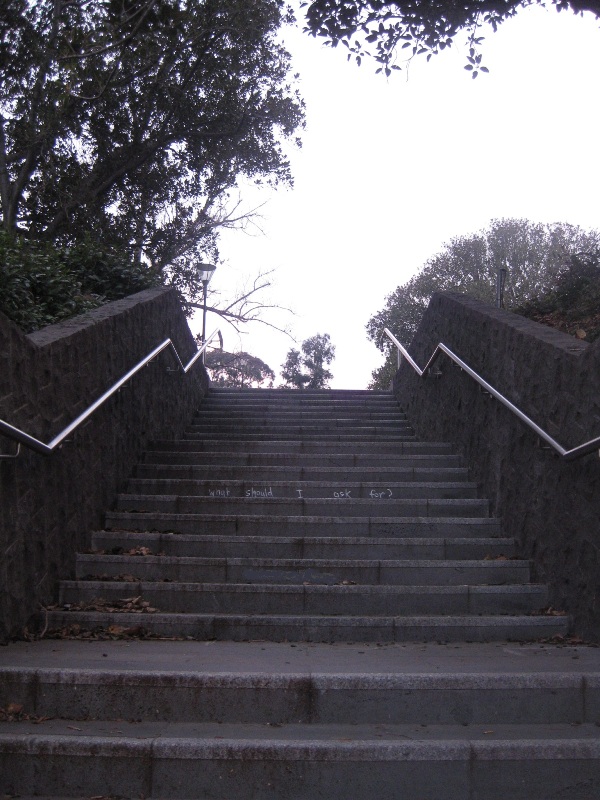


The other night I went to the 10th Annual Homeless Memorial. Once a year this motley community gathers to remember those ‘streeties’ or ‘parkies’ who have passed away. You can get hot soup, a hot dog, and warm clothes are available to take away. But it is about more than that. We are offered an opportunity to reflect on those people with whom we create connections, those with whom we feel ‘at home’, regardless of any material shelter. We remember those who now or have in the past offered light or warmth to our lives. Voice is given to the pain of separation from parents, siblings, children, society. Voice is given to the pain of decisions that cannot be unmade, things which cannot be unsaid and knowledge that we cannot go back – only forward. A humble gratitude is offered to ‘the people from the organisations represented here’, supported with warm applause from the crowd in and around the marquee.
We sing: songs we all know the words to. We don’t need song sheets. We cradle our lit candles and sprigs of rosemary.
Please swallow your pride
If I have things you need to borrow
For no one can fill those of your needs
That you don’t let show
For it won’t be long
‘Til I’m gonna need
Somebody to lean on
—
They say we stand for nothing and
There’s no way we ever could
Now we see everything that’s going wrong
With the world and those who lead it
We just feel like we don’t have the means
To rise above and beat it
So we keep waiting
Waiting on the world to change
It’s hard to beat the system
When we’re standing at a distance
So we keep waiting
Waiting on the world to change
—
We hold a minute’s silence, and it is deep and rich and full. There are names unspoken…tears unshed…and hope unlooked for. We only need to look around to know we are not alone in this grief. We only need to look around to have more than our hunger fed, our coldness clothed… instead we know the truth. We are not strangers to one another as we thought. And a last a cappella chorus rings out…
Amazing Grace, how sweet the sound
That saved a wretch like me
I once was lost but now am found
Was blind but now I see
As I board the tram this morning, jostling for position and validating my ticket I become aware of a man who is obviously upset. His voice loud but incoherent, I can only catch occasional words and phrases; openly weeping he says something about the Japanese and Americans, numbers of people who had died, lamenting “the children… the children…” Some people openly stare, others deliberately looked away, avoiding eye contact. A child wearing a pink backpack, pink hat and pink scarf burrows her heads into her mother’s side, covering her other ear to block out his voice. We are all afraid of him; at the very least he makes us uncomfortable. Why doesn’t he sit quietly and mind his business like everyone else? There is a hush on the tram and only this elderly mans querulous and confused voice asking “Why?”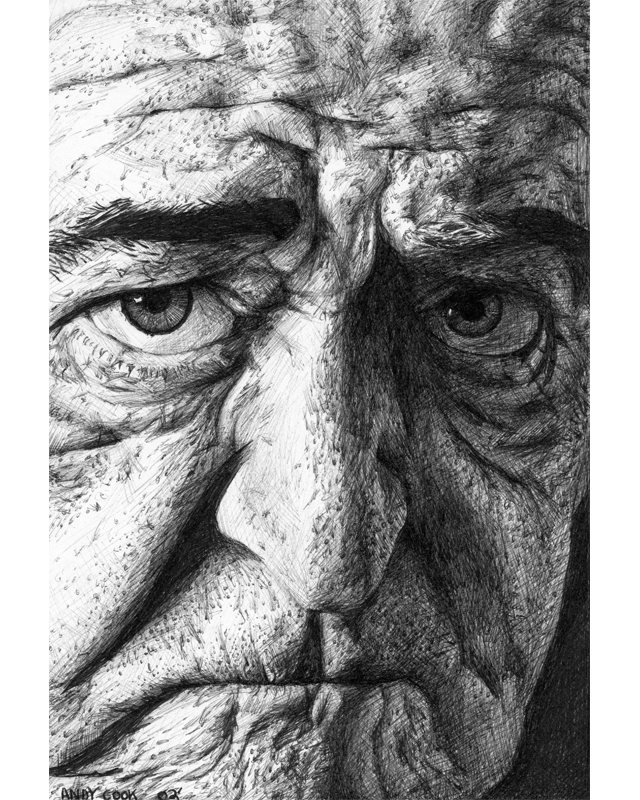
I consider engaging him in conversation but a young woman beats me to it… “Hi, I’m here to help you. Can you lower your voice? Ssh. You’re scaring people. I am your friend. What is your name? Where are you going?” The man does not know. The tram has halted and everyone now openly watches the scene unfold. An older man comes up behind her, backup against the unexpected. The lights change to red twice, three times, and the elderly man cannot answer the questions. A police vehicle pulls up at the lights beside us. The older man jumps out and taps on their window, and they pull over. The woman, his new friend, tells the elderly man some more friends have arrived, they’re going to give him a ride to the city, to come with her. He is assisted from the tram and led away.
The aberrant element removed, the lights change and our tram moves off, a relieved babbling fills the hush “…must be dementia”, “I know, my grandfather…” But some are silent witnesses, beginning to end and I wonder whether, like me, they think of how they could or should have responded. Internally, I have a querulous and confused voice that joins in asking “Why?”
When Jesus called, he said “Take nothing for you journey…”
Were the twelve afraid?
God’s peace be with you
Did they wonder if they could do these things?
Next to the quality of your ministry did they feel inadequate and unworthy?
God’s peace be with you
Did they want to postpone their journey until they had all the possible things they might need? Until they were sure of their abilities?
God’s peace be with you
Did they want to hold off on a commitment until they were absolutely sure it wouldn’t be a mistake? Did they ever feel they had no time, no talent, no knowledge, no energy, no guaranteed results?
Jesus said “take nothing”, and they went.
They went with His power.
God’s peace be with you.
Father God, I want to thank you for ——–, I want to thank you for calling them to be leaders. There are times when responsibility can seem too much to bear and we wonder how we came to be here, to deserve this trust. That in ‘taking nothing’ we ‘have nothing’. Grace each of them with the sense of peace of knowing you are with them, the sense of faith that is born of giving up our will to yours, and the sense of love that is born of forgiveness and communion. May this spirit which passes understanding, and this grace which makes us what we are, and this fellowship of His communion make us one in spirit and in heart. Let them find ease in You who are our leader. We need not be afraid, for you are with us always. In Jesus name, amen.
[Sharing communion @ Kinfolk]
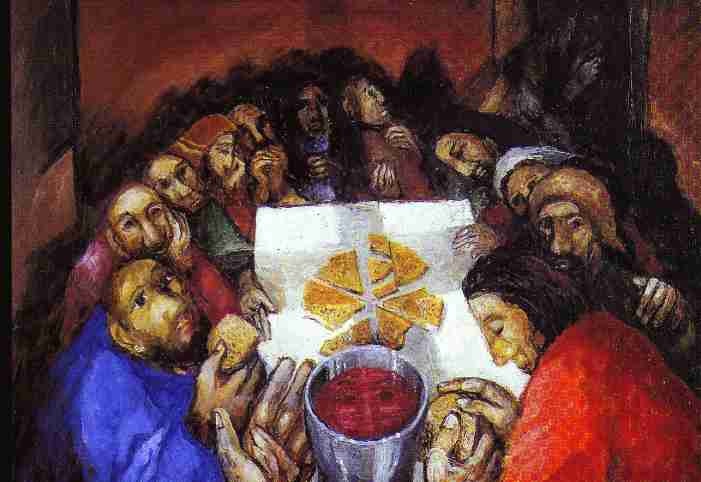 The last Supper by Sieger Köder
– an excerpt from Care of the Soul by Thomas Moore, p.253-54…
Faith is a gift of spirit that allows the soul to remain atteached to its own unfolding. When faith is soulful, it is always planted in the soil of wonder and questioning. It isn’t a defensive and anxious holding onto certain objects of belief, because doubt, as its shadow, can be brought into a faith that is fully mature.
Imagine a trust in yourself, or another person, or in life itself, that doesn’t need to be proved or demonstrated, that is able to contain uncertainty. People sometimes put their trust in a spiritual leader and are terribly betrayed if that person then fails to live up to ideals. But a real trust of faith would be to decide whether to trust someone, knowing that betrayal is inevitable because life and personality are never without shadow. The vulnerability that faith demands could be matched by an equal trust in oneself, the feeling that one can survive the pain of betrayal.
In soul faith there are always at least two figures – the “believer” and the “disbeliever”. Questioning thoughts, drifting away temporarily from commitments, constant change in one’s understanding of on’s faith – to the intellect these may appear to be weaknesses but to the soul they are the necessary and creative shadow which actually strengthens faith by filling it out and ridding it of its perfectionism. Both the angel of belief and the devil of doubt play constructive roles in a full-rounded faith. The third part of the trinity is life in the flesh lived with deep trust.
One of the liturgies that we use at the Seeds table picks up some similar themes so I want to stick it in here so they’re read together –
It would not have been God’s table
On their own, the bread and wine are nothing.
To become a foretaste and a promise
of love made real and a world made whole,
they need a story and a blessing
and a people who believe…
It would not have been God’s table
if they hadn’t all been gathered around it:
the betrayer and the friend
the power-hungry and the justice seeker
the faithful and the fickle.
When Jesus poured the wine, and the bread was broken;
when everyone could eat –
the outcast and the beloved
the arrogant and the gracious
the wrong-doer and the wrongly done by –
the table became a foretaste
of love made real
and of a world made whole.
Your company at the table, [guest],
will include the betrayer and the beloved
the wrong-doer and the wrongly done by.
It would not be God’s table without them.
And the promise is
that when you are together,
when you tell the story and give the blessing
when you break the bread and pour the wine
you will discover a foretaste
of love made real
and of a world made whole.
By Cheryl Lawrie, Uniting Church Australia
 itellyouarise