



If cleanliness is next to godliness then I am a sinner indeed.
There is is difference between cleaning out of a sense of duty and as an act of love. When its an act of love it’s a lot less unpleasant for one thing, you approach it differently because it’s an opportunity not a chore. How can I show you that I love you well today? How often do people ask themselves that question?
I was thinking today that if my body is not sacred or profane then I make it an object… a gun is not sacred or profane in and of itself but how it is used. If you asked me to think of a sacred object I think I would struggle. It seems a word belonging to past times when a church or an icon of some kind might be called sacred. What is “sacred”? Something employed only for the glory of God? What is “only”? What is the glory of God? Credo was sacred – not clean, tidy or holy necessarily but sacred. Are the churches that hire out as function spaces more profane? As long as >50% is for the glory are we doing ok? Cleaning the bathrooms can be a sacred act if it is done as an act of service and expression of love. Nothing I eat or drink can profane my body… there is a new law. What else can I do, or not do, that might make my body more sacred? Or profane? I pray but I don’t think that makes me sacred. I might light a candle – the candle itself is not sacred but my intent in lighting it… if I follow that logic then You are sacred, and also those spaces we might encounter You. I do not encounter You often in church these days and that make my heart glad because it makes the trees, the birds, the sky, the water, the blank A4 page sacred if that is the intent I bring to it.
Water on the counter and the floor, then we walk across the floor, so over the day a trail of muddy footsteps back and forth develops. Have you made my bathroom dirty? Am I unclean amidst your preparations for prayer?
What is sacred? What is profane?
Is there not love in the hands that change the nappy and soothe tears? In the hands that shower a disabled father and wash the incontinent sheets? Is there not love in the hands wielding cleaning cloths and assembling shelves? So humbling such a love as this and I expect good work if it can be seen for what it is.
Where my thoughts are on God, I encounter God.
Welcome, we acknowledge that we gather on the land of which the people of the Kulin Nations have been custodians since time immemorial.
This is our second in a series called The Art of Discipleship where we showcase the material of different books and engage with their material creatively.
WEEK TWO
The activity this week is taken from:
Christi-Anarchy: Discovering a Radical Spirituality of Compassion and you can read a little more about it here from the first time I read it if you’re interested.
This book by Dave Andrews goes into the fact that Jesus Christ preached a gospel of love and peace with justice but the history of the Christian religion is littered with every kind of evil – What went wrong?
Mediation: Dave Andrews poem speaks to Jesus’ compassion, his hunger for justice, and desire to work with marginal groups for real transformation in our world – inviting us to live this way too through the eyes of the disciple Peter.
The prologue of Christi-Anarchy: Discovering A Radical Spirituality Of Compassion retells Dave’s unfortunate history of being kicked out of YWAM many years ago. This lays the foundation for the rest of the book – a grave injustice done in the name of Christ. At micro and macro levels…
The very first chapter of Dave Andrews book is called:
A History of Christianity: A History of Cruelty
And it’s broken down into 4 areas:
-Councils, Creeds & Coercian: ca. AD 100-500
-Emperors, Popes & Power: ca. AD 500-1000
-Crusades, Inquisitions & Control: ca. AD 1000-1500
-Worldwide Evangelism, Witch Hunts & Genocide: ca. 1500-2000
So you can see how this is not an easy read – to really ‘look’ at the history of the church (our church) and to try and grapple with how this relates to our own understanding of who Jesus was and the way that he lived.
What I’m hoping to create tonight is a bit of a meditation space reflecting on Dave Andrews words speaking to Jesus’ compassion, and his hunger for justice, his desire to work with marginal groups for real transformation in our world and inviting us to live this way too through the eyes of the disciple Peter – speaking into the disillusionment or cynicism we might sometimes feel towards our own church/discipleship movement.
To give you a bit of an overview about where this is going – you will want to make yourselves comfortable because I’m basically going to try and read this like a play/well… a monologue… and it’s going to take about 20 minutes – I’m going to make the room dark because I want you to try and visualise the scene and put yourself in Peter’s shoes. I’ll leave things dark and quiet for a few minutes while people reflect and then bring us back together for sharing/prayer…

So, from the macro to the micro for Peter to set the scene and condense the bible into a paragraph… we know from the oral history passed down and recorded that the people of God were slaves under Pharoah, led across the Red Sea to freedom, wanderers in the desert and led across the River Jordan into the Promised Land – Jerusalem, they finally have their own sovereignty: a line of Kings: Joshua, Saul, David, and Solomon … who turns from God’s ways and the city is destroyed in Chronicles, rebuilt in Ezra, and restored in Isaiah then a series of prophets come… the day is coming when Israel will be judged for its sins, prophesies of the birth of one to come… after Babylonion captivity, they are under the domination of Persia…
We fast forward 400 years between the
Old Testament and the new – and Rome is now the dominant power… Herod the “great” is slaughtering male children, under a star somewhere in Bethlehem a child is born, in a dark and troubled place…
Jesus is born – the next great political leader, descending of Kings, fulfilling the prophecies – who would lead the uprising to free the people from Roman oppression and win back the independence of the Jews!! Jesus says “Truly, this very night, before the rooster crows you will deny me 3 times” and Peter responds, “Even if I have to die with You, I will not deny You.” And all the disciples agreed.
Except that Jesus didn’t really behave the way people expected… didn’t lead the way we expected, fight the way we expected… died when we didn’t expect it
Arrested, disgraced and denied three times… Peter broke down and wept.
(here follows the reading of the poem, n.b. not complete in these images)


Reflection questions:
Time of prayer for ourselves and others.
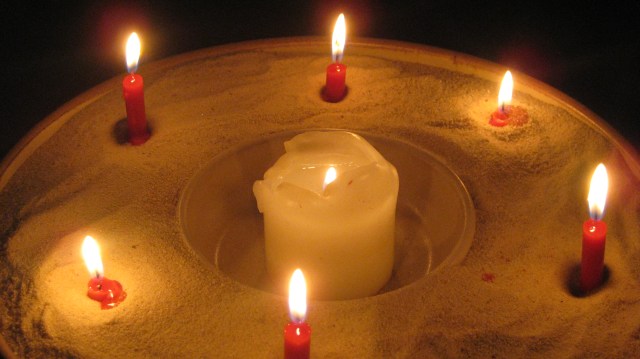
Non violence is a weapon for the strong – Mahatma Ghandi
Non violent communication (NVC) is base don the principles of nonviolence – the natural state of compassion when no violence is in the heart.
NVC begins by assuming that we are all compassioante by nature and that violent strategies – whether verbal or physical – are learned behaviours taught and supprted by the prevailing culture. NVC assumes that we all share the same basic human needs, and that each of our actions are a strategy to meet one of more of those needs.
People who practice NVC have found greater authenticity in the communication, increased understanding , deepening connection and conflict resolution.
(Further reading: Non-violent Communication by Marshall B Rosenberg)
We are made in the image of God > compare Christian creations story with others. We are created in the image of a Creator. This has been co-opted by empire – trying to sell clothes, make up, some ideal image – they are trying to sell something I already have. The world and earth are alive and creating always. There is a scientific link between art/creativity and healing… when you are writing a story, cooking, drawing, gardening… we are not functioning out of the survival part of our brain. Importance isn’t what is made but the process of creating.
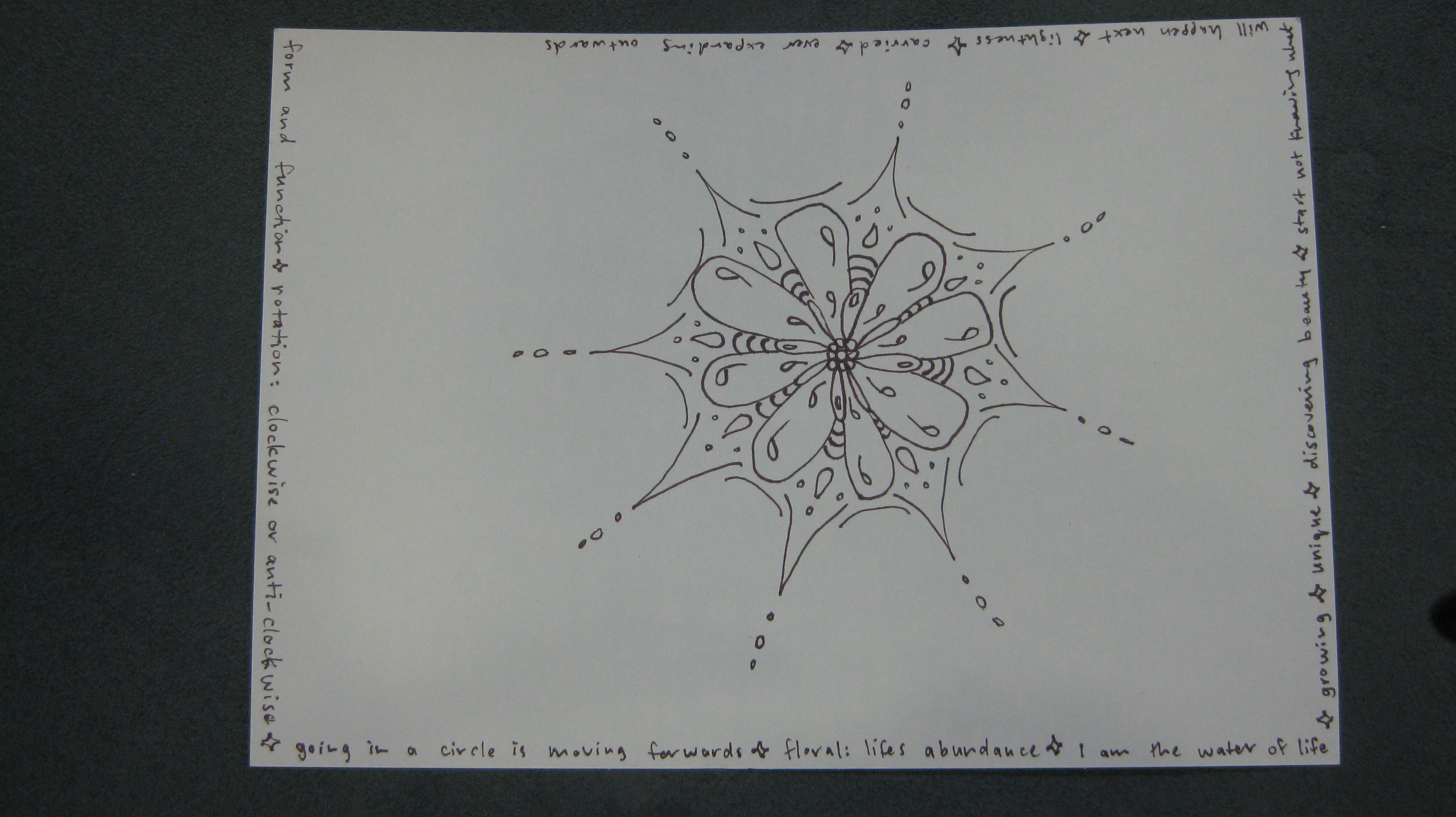
MANDALAS
The Mandala (Sanskrit for circle or completion has a long history of being recognised for a deep spiritual meaning and representation of wholeness.
The very nature of creating a mandala is therapeutic and symbolic. The shapes and colours you create in your mandala will reflect your inner self at the time of creation. Your instinct and feeling should inspire and guide you through the process of creation. Ultimately, you will be creating a portrait of yourself as you are when creating the mandala. So whatever you are feeling at the time, whatever emotions are coming through, will be represented in your mandala.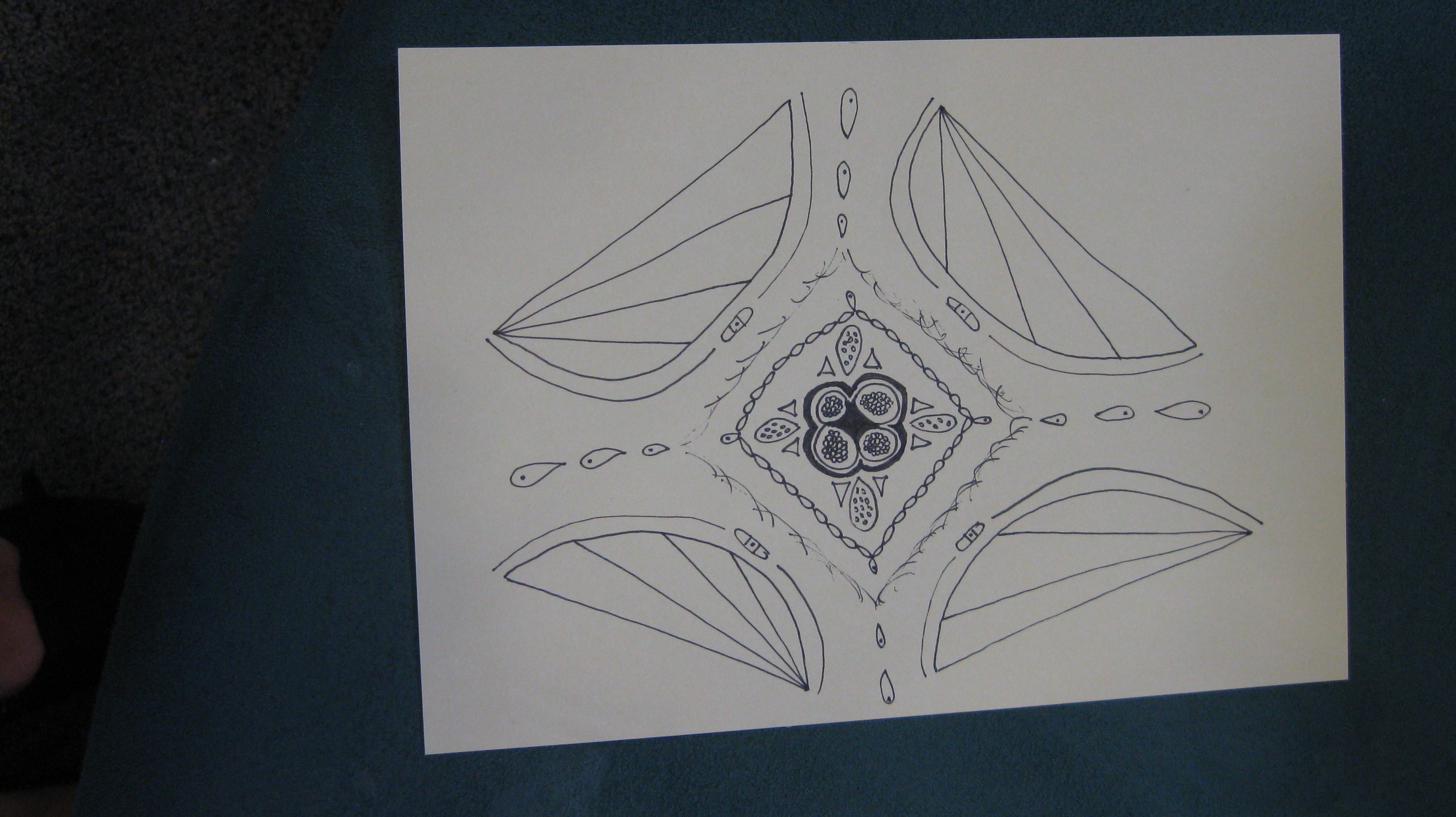
So then, how shall we live?
Practices and principles for compassionate, non-violent communication
Proposition: We are made in the image of God, therefore if I am careful and I am creative, exploring who you are and revealing who I am can be an act of worship (our communication)
First issue is realising our reaction to what we perceive as agression or conflict… this is not right or wrong this is just how we are made:
Colossians 1:18-20
He was supreme in the beginning and – leading the resurrection parade – he is spreme in the end. From beginning t end he’s there, towering far above everything, everyone. So spacious is he, so roomy, that everything of God finds its proper place in him without crowding. Not only that, but all the broken and dislocated pieces of the universe – people and things, animals and atoms – get properly fixed and fit together in vibrant harmonies, all because of his death, his blood that poured down from the cross.
Basic technique:
Stumbling blocks: judgements, comparisons, denial of responsibility, demanding.
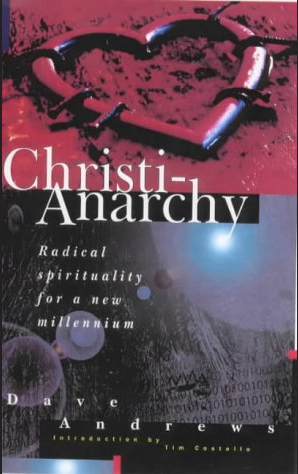 Jesus Christ preached a gospel of love and peace with justice. But the history of the Christian religion is littered with every kind of evil. What went wrong?
If you have ever wondered – how can anyone choose to be “Christian” when so much harm has been been done in the name of the church? I can only say 1) that’s a very good question and 2) Dave Andrew’s has creditably tried to answer it. It’s not enough to say: “Well, I didn’t do those things…” these stories form part of the history we are a part of and it is only when we know and accept that story that we can understand and speak for our place in it.
Literally, “Chapter 1 – A History of Christianity: A History of Cruelty” is a history of the faith spanning 4 eras:
-Councils, Creeds & Coercian: ca. AD 100-500
-Emperors, Popes & Power: ca. AD 500-1000
-Crusades, Inquisitions & Control: ca. AD 1000-1500
-Worldwide Evangelism, Witch Hunts & Genocide: ca. 1500-2000
Dave Andrews also talks about how his connection with the YWAM community broke down.
If you are working to reconcile brokeness with grace, to understand why you should (or anyone would) persist in the pursuit of faith when church/religion/community can disappoint you and let you down then this is a good read albeit a confronting one because it goes there, looking at the ugliness… (I’d recommend reading it with others or at least at time you are feeling strongly rooted/centred in your faith because it IS confronting)
In a complete plot spoiler, I’m about to tell you how it ends (so feel free to skip this and buy the book) with Dave Andrew’s conclusion and call to live the Way of Christ as it was intended:
Reflections on “Making Space” – Pohl
KEEPING PROMISES
Important to follow through on commitments that have been made – big or small – be explicit.
The practice of patience and accompaniment – what is the bigger picture we are all called to?
Commit to a slow process and working it out together.
Vanier – more I live in community life, most problems are never resolved but with time and listening stop being a problem… but there’s always another problem.
Listen. See it out in the open àlooks different.
Truth-teller to yourself – ask others to do that. What is the agenda? Is keeping the promise for me or for you?
Miss the value of what is different when we try and colonise.
Ability to listen and be brave – Andreana’s blog
Dewey – all communities will fail if they don’t have a single missional purpose.
—-
Some of my most painful experiences in community (and most powerful and transformative experiences of grace) have been in realising a need to release myself or others of a commitment we have made – can you think of examples of this in your own life? are there ways to learn to recognise this sooner, for ourselves and others , to work for “making space” before there is hurt or a sense betrayal?
What is the bigger picture we are called to? This is to love each other well – and sometimes that means letting go. Keeping people bound to us by a promise when we should release them can be selfish or even abusive. Using language that assigns blame for break down in this scenario can add layers to that if a person feels guilt for ‘breaking’ a promise and how that affects others. If you release someone from a promise that has a completely different feeling than them ‘breaking’ the promise because they may be in a position where they feel they have no other choice. Ask them, what is the bigger picture they are being called to? It may not be leaving/breaking to go FROM something but to go TO something. Loving one another well is hearing that and supporting it to happen. How many relationships are ending in divorce because it’s so hard to negotiate loving one another well and keeping the larger picture we’re called to in view over resisting change that challenges our own point of view of how things should be. “Commit to a slow process, working it out together. Listen. See it out in the open – looks different.”
What does it mean to be a “truth-teller” to yourself? ‘I am a good person.’ Is that true?
‘I am a generous person’
‘I am a selfish person’
‘I am a good friend’
Pick a statement, one of these or your own, and spend 3-5 mins writing or thinking about the answer. Argue it. Then take the opposing statement ‘I am NOT a good person’ and argue that. Is it black and white? How much does family of origin factor in to some of your practices and responses? Expectations of others and yourself?
Is keeping the promise for me or for you? Think about this in light of the above because our motivations aren’t always clear, to ourselves let alone others.
You are you and I am me. I cannot expect, and should not try to change, you to respond in a scenario the way that I would myself. My way is not the right way it is just ‘my’ way. Try saying that aloud a few times “My way is not the right way…”


 itellyouarise