Tag Archive: community


Reflections on “Making Space” – Pohl

Living into community

  • gratitude
  • keeping promises
  • speaking truth
  • hospitality

Cultivating the practices that sustain us.

GRATITUDE

Thou hast given me so much, give me one thing more… grateful heart – pulsing out beat of thankfulness for whatever is going on around you.

Communities that struggle are the most joyful > negro spirituals: deep pain, deep joy

We don’t know full stories – how our stories end, be happy with where we are.

Our gratitude is linked to expectations – for some people in the world to be given 3 meals a day > very grateful. Now we can eat whenever we want… it’s a given… a “norm”, we take it for granted and it will take something more/extra/different to be grateful again. Discipline of saying grace.

Have a choice to give out of our burden of wealth. Responsibility to share what we have.

Desire for things to be different vs. grateful for what we have > tension.

Where have we seen models/rituals/rhythms of gratitude done well? > noticing comes before gratitude.

  • Credo Tuesday Gathering and prayers
  • Lighting candles/prayers for others à physical actions
  • The Artists Way affirmations and dates – Julia Cameron
  • The OK line

ok line

Builds resilience
in the spectrum, not so bad
episode > moves
reflect, build confidence.

the things we plant

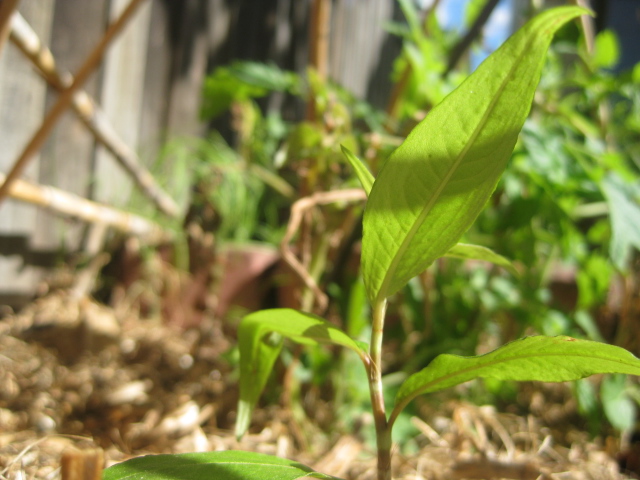
seedlings gardenReflecting today on the things we plant in the hopes of fruit to come.  We believe in planting so we do it but ultimately we have very little control over what grows and who it belongs to.  The pain is in our awareness of this and our discipline is planting anyway – even though we’re tired and someone else may receive the benefit of our careful tending, someone else may not like the plants we’ve chosen or where we positioned them and tear them out like weeds.  The thing that I value is only valued by others if they want it themselves.  What I grieve for, is not this house, much like another having four walls and a roof, but the harvest hoped for here that will not be realised by me.

There is a large harvest, but few workers to gather it in.  Pray to the owner of the harvest that he will send out workers to gather in his harvest.


blog 014

023


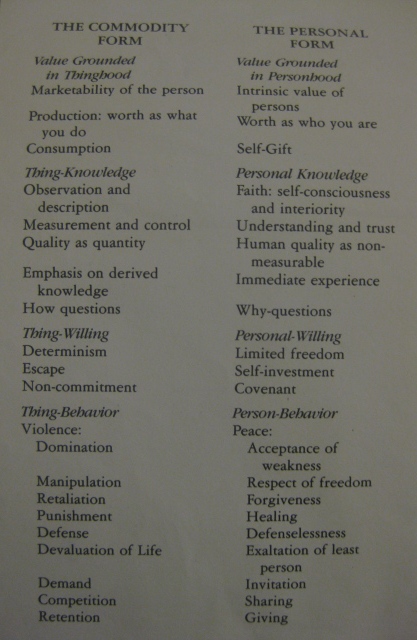
A community of this kind must be (a) consciously choiceful, (b) explicitly committed to and willing to be called to life in the Gospels, (c) open to change through the authentic living-out of its principles, and willing to be challenged to fuller Christian praxis, and (d) prepared to confront the patterns of the Commodity Form – injustice, manipulation, domination, dishonesty, escape – not only as they appear in the culture at large but also as they surface within the group itself.

…The continued intimacy of shared life which is open to new life, however, is one which necessarily entails the suffering of growth and of daily dying to immediate gratification, to the satisfaction of one’s clamoring ego, and to one’s defenses against self-revelation.

~ John F. Kavanaugh, S.J.

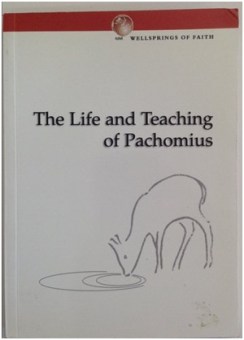
pachomiusThis year I am thinking a bit about the idea of “community”, what does it take to have a “good” one (sustainable/functional/inclusive/etc.) how is leadership/eldership developed? what structure does this the community have? how do people join or leave? are there basic components that are essential then localised variations?  What has been tried before and how did that work or not? Pachomius is part of going back to the Desert Fathers (and Mothers) and seeing what their communities were like… some common themes so far include:
– limiting company, food, sleep, talking
– living apart/in the desert
– working only enough to live and trusting to God’s provision for anything beyond that
– rhythm of prayer and fasting
– people would travel to visit/seek wisdom/join because they heard about their dedicated faith
– humility in service

Some chips of wisdom from Pachomius…  reflect on the question Where is your shining light?

It is not good to ask unnecessary questions. Speak only for the salvation of souls, because it is written: one who is faithful in small things will be faithful in great.  (p46) Lk16:10

Up! Do not stay with the dead. My son, do good deeds like the friends of God.  (Heb 6:12)  Do not sleep: act!
And make your neighbour do good deeds, for you have made yourself responsible for him.  (Prov 6:1-6)
Get up! Do not stay with the dead. and Christ will give you light (Eph 5:14) and grace will flower in you (2 Cor 4:16,17) (p280)

When a thought keeps troubling you, be patient, waiting for God to give you back your peace (p81)

If you give bread when you have plenty of it are you being truly good? And if you are downhearted when you are in need you are not truly poor in spirit.  But the bible says of the saints that they are in need of everything, they go through all sorts of troubles, and they are ill-used.  (Heb 11:37) But they are proud of having to undergo these things (Rom 5:3)(p85)

Bearing hard things with joy
Joyfully undergo any troubles.  If you knew the honour which is the reward for undergoing troubles you would not ask God to take them away. Yes, when you are weeping in your prayer, and when you are watching long hours for God’s help, that is of more value to you than to let yourself get soft and be made a prisoner (p87)

My son, run from the desires of the body.  They cloud the mind and stop you from coming to the knowledge of the secrets of God (Mt13:11).   They make you a stranger to the words of the Holy Spirit, and you will not be able to carry the cross of Christ or keep your hearts attention on praising God.  Do not eat more thn you need or you will not be able to taste the things of God (p89).

Run from earthly honours
You, my son, run from the soft life of this world.  Then you will be happy with the life to come.  Do not be careless.  Letting the days go by, for then Death will come to you suddenly and his servants, the faces of fear (Rev 9:7-11), come round you and cruelly take you of to their dark place of terror, fear and pain.  Do not be sad when you are cursed by men: be deeply sad when you sin – this is the true curse – and you go away bearing the wound of your sin.  From my heart I urge you to scorn honours.  Pride is the Devil’s own weapon.  It was with this arm of pride that he worked his deceit against Eve.  He said to her: “Take and eat the fruit of the tree and your eyes will be opened and you will be like gods” (Gen 3:5) She listened to him and thought it true.  She desired the glory of being like God and her own humn glory ws taken away, and you, if you go after the glory which comes from men it will keep you from the glory which comes from God.  It was different for Eve.  No one had told her that the evil spirit would test her.  That is why the Word of God came and took flesh of the Virgin Mary to free all the offspring of Eve. (p93)

God is living in you, you should be living in him
Look for what is good everywhere, be without deceit.  Be like the gentle sheep.  They are fleeced but say nothing (Is 53:7).  Do not go from place to place sayng: I will find God here, I will find him there (Mt 24:23). God has said: I am everywhere in heaven and on earth (Jer 23:24).  And again: If you cross over water I am with you.  The waves will not swallow you (Is43:2). My son, you should realise that God is in you, so that you may have life in him, in his law and commands.  Look: the thief was on the cross and he went into paradise, but Judas was among the Apostles and he handed his Lord over to people who hated him.  Rahab was a prostitute and she was counted among the saints (Jos 2:25), but see, Eve was in paradise, and the spirit of Evil led her into sin (Gen3).  Job was on a dungheap, and they say he was like his Lord, but see Adam was in God’s garden and he did not do as God commanded.  The angels were in heaven and God threw them out (2 Peter 2:4), Elijah and Enoch were on earth, but they were taken up to heaven (2Kgs2:11;Heb11:5). SO we should see God in every place and look for his help at all times (Ps104:4) (p94-95)

My son, run to God, for he made you, and it was for you that he underwent those sufferings.  For he said by the mouth of the Prophet Isaiah: I offered my back to the whips and my head to the blows. I did not turn my face away from the shame. (Is50:6) (p99)

To love is to build up (1Cor8:1) (p103)

Yes, even if we keep our virginity, and choose to live in poverty and solitude. God will still say to us: “Give me back my goods with interest” (Mt25:27) Angrily he will say to us: “Where is your robe for the bridal-feast? (Mt22:11,12) Where is your shining light? (Mt5:15,16; 25:10-12) (p107)

We must attend to ourselves and recognise God’s gifts. (p107)

Humility is the greatest strength
More than all this, we have been given humility.  It keeps all God’s gifts safe. It is that great and holy strength which the Son of God put on when he came into the world.  Humility is a strengthening wall and a storehouse for God’s gifts, protective clothing to keep us safe in the fight, and healing for every wound.  At the time of the Exodus the Hebrews made soft linens and things of gold for the tabernacle.  But at God’s order they covered it all over with a tent of goats hair (Ex26:7-11,14).  Humility is least prized among men but in the eyes of God it is of great value.  If we obtain it, we shall be able to crush underfoot all the power of the Evil One.  God himself has said: “Who is the man to whom I look? He that is humble and gentle.” (Is66:2) (p110-111)

Let us keep watch with a good heart
Let us fight against ourselves in all ways that we are able.  Let us put to death our bad desires and we shall become new men, in purity.  Let us loves others, and we shall be friends of Christ, who is friend of all men and women.  We have given our oath to God that our life will be monastic, which is to love, and for that we keep virginity not only of body but the virginity that is a weapon against every sin. (p112)

God commands us to work, not to have a soft living but to have enough to help the poor (p113)

Keep your strength of purpose (p114)

Use well every day of your existence and in the morning think what you will offer to God that day (p115)

Without delay, look for a safe place by yourself with God.  Be by yourself with Christ, weeping, and the Spirit of Jesus will speak to you through your thoughts. (p117)

“Forgive me Lord.  I have given pain to your image.” (Gen1:26) (p117)


“The radical church is the fastest-dying church in the world”

Myers, C. (1988) Binding the Strongman Orbis.

DISCIPLESHIP AND FAILURE: “YOU WILL ALL DESERT ME”

At the time, his words could hardly have hit home any harder, I ws still recovering from the painful breakup of my own community, the loss of home and marriage.  I had never expected that the “cross” would take this shape. If readers of this book still feel it is an exercise in imaginative idealism, they should be aware that Mark’s vision is flesh to me, flesh seared and scarred. I have seen business-as-usual rudely disrupted by the kairos of the call, seen the vision of radical discipleshhip community realized.  And more importantly, I have also seen those dreams fade, seen our best attempts to weave a fabric of hope and wholeness unravel, seen good persons bail out.

The radical discipleship movement today is beleaguered and weary. So many of our communities, which struggled so hard to integrate the pastoral and prophetic, the personal and the political, resistance and contemplation, work and recreation, love and justice, are disintegrating.  The powerful centrifugal forces of personal and social alienation tear us apart; the “gravity” exerted by imperial culture’s seductions, deadly mediocrities, and deadly codes of conformity pull our aspirations plummeting down.  Our economic and political efforts are similarly beseiged.  The ability of metropolis to either crush or co-opt movements of dissent seems inexhaustable.

A staff member shared this reflection at prayers a few months ago:

A person kneels to contemplate a tree and to reflect the troubles and joys of life. It is difficult to accept that life is difficult; that love is not easy and that doubt and struggle, suffering and failure, are inevitable for each and every one of us. We seek life’s ease. We yearn for joy and release, for flowers and the sun. And although we may find these in abundance we also find ourselves lying awake at night possessed by the terrible fear that life is impossible. Sometimes when we least expect it we wake up overwhelmed by a massive sense of loneliness, misery, chaos and death: appalled by the agony and futility of existence. It is difficult indeed to accept that this darkness belongs naturally and importantly to our human condition and that we must live with it and bear it. It seems so unbearable. Nature, however, requires that we have the darkness of our painful feelings and that we respect it and make a bold place for it in our lives. Without its recognition and acceptance there can be no true sense of life’s great depth, wherein lies our capacity to love, to create and to make meaning. A person kneels to contemplate a tree and to reflect upon the troubles and joys of life. The person imagines mornings and evenings in a great forest of prayers, swarming and teeming with life… The person is learning how to pray.

Prayer Tree – Leunig

Jean Varnier in “Community & Growth” says:

I am more and more struck by people in community who are dissatisfied. When they live in small communities, they want to be in larger ones, where there is more nourishment, where there are more community activities, or where the liturgy is more beautifully prepared.  And when they are in large communities, they dream of ideal small ones.  Those who have a lot to do dream of having plenty of time for prayer; those who do have a lot of time for themselves seem to get bored and search distractedly for some sort of activity which will give a sense to their lives. And don’t we all dream of the perfect community, where we will be at peace and in complete harmony, with a perfect balance between the exterior and the interior, where everything will be joyful?

It is difficult to make people understand that the ideal doesn’t exist, that the personal equilibrium and they harmony they dream of come only after years and years of struggle, and that even then they come only as flashes of grace and peace.  If we are always looking for our own equilbrium, I’d say even if we are looking too much for our own peace, we will never find it, because peace is the fruit of love and service to others… look instead at your brothers and sisters in need.  Be close to those God has given you in community today… everything will resolve itself through love.
More and more I am coming to understand that it is our brokenness that binds us rather than our perfection.  In a consumer society where it always feel like the grass is greener somewhere else it is important to buy-in somewhere and commit to growth in your own patch of the neighbourhood.  In owning the brokenness and needs I bring to community I am humbled to extend to others the welcome I myself receive.  Those plants I want to see the fruit of? I have to help them grow… I pray that you will know  a flash of grace and peace this week.


Urban Vision’s model is for those living in community to pay board and then share their room with a young person.

Luke 10 – sending out the 70

Three things:

1)      Don’t take purse, bag or sandals

Simplify your life.  Don’t take anything with you.  Feel like we need to have all of the resources/tools/time before we start.  Why would God give you a miracle when you already have stuff? (Jacqui Pullinger)

In order to be involved in significant hospitality in your house, what would you need to simplify? (discuss with person sitting next to you)

–          Queen-sized bed kills community (barrier to having people stay as compared with 2 single beds in a room)
–          Need a smaller couch (could move study into lounge then and have a spare room)
–          Work less hours
–          Be ‘present’ more
–          Share house to cover rent/mortgage

Hospitality means more if it costs you something e.g. person will know you are sacrificing privacy/personal space to have them. Sharing in economy of ‘enough’ rather than only giving out of my excess.

Average person has six groups of people they connect with:
–          family
–          work/study
–          worship/church
–          social/sport/bookclub
–          people we live with
–          Ministry e.g. youth work
Need to cull groups to create physical time.  Home can become a castle (has a moat, don’t let anyone in) or motel (only use it to drop gear off/sleep). We made a conscious decision to only have three groups: Family, work and then everything else combined into one.  Relocation is helpful.  Doing something like “Servants to Asia” easier than relocating in your own context.  We won’t initiate with wider group of friends – those who are committed to the friendship will be faithful to asking us.  Modular approach – go on holiday for a week – be deliberate about spending time with good friends then rather than catching up every week.

2)      Sending as lambs amongst wolves

Bad news for disciples.  Only thing he promises is that He will never leave or forsake us. Hospitality opens us to a level of vulnerability. Living in inner city, did I get beaten up? Yes. Can’t follow Jesus without it being dangerous.  You will disappoint your parents.  They love you and don’t want you to be hurt.

In order for me to do hospitality, what are the risks? What are you afraid of? (discuss with person sitting next to you)

–          duty of care/accusations (particularly for men around kids/youth work)
–          introversion of other housemates
–          are my kids safe?
–          my own personal safety (particularly for women)

Living in the centre of God’s will, safest place to be. Some lessons learned/benefits:
–          community
–          aunties and uncles
–          spend time debriefing
–          children are good observers but not good interpreters, blame themselves
–          know the background of those you take in (doesn’t necessarily mean that you don’t take them but you know what the risks are)
–          don’t have kids the same age as ours – creates a sense of competition/competing for space whereas if younger/older sense of difference and room for everyone.
–          don’t take anything into your house that isn’t going to be a blockage if you lost it e.g. ring from grandmother (hard to forgive if you lost it)
–          need to have a “no resentment policy” – nothing that will cause bitterness
–          once kids are at an age where looking for influence be careful about who you invite in, e.g. more cautious around that once children were teenagers.

3)      When you meet someone on the road, do not stop and talk. Stay only in one house.

What are the cultural distractions/idols that stop us from doing hospitality well? E.g. career, mortgage, super/retirement…

Downsize and take back control.

It is what you make here that is important not what you get there (illusion that grass is greener)

I am an introvert – throw yourself into it! For the first three months you love it and think everything is really great, for the next year and a half or so the noise of the people you live with feels like a constant annoying drone. Once you get to 2 years its background noise and you don’t notice it anymore.  Rhythm of prayer with focus on silence.  Run marathons – just me and the road.  Switch off into a book but can now do that while I’m in a room full of people.

Becomes obvious quickly where a young persons fragility lies.  Adults are better at hiding the dysfunction – structure our lives to account for our dysfunction. Once in community that doesn’t work, being in community wears down those self-managing boundaries.  Unprocessed-ness spills out onto other people (community will explode after 2 years).  If you want to have community need to have a high commitment and integrity to become who you are called to be.

There are always inclusion/exclusion factors/tensions.  In order to be inclusive at another level you have to be exclusive – want them to join kingdom of God, not to join us.  It is imperative that we have sustainability. Small core of committed people working to a common goal together.

Where do the people come from? Around Urban Vision, totally word of mouth. At Ngatiawa we get ex-prisoners, school guidance counsellor makes referrals. Need a maintain a balance between community members and punters – need more structures as you get bigger e.g. smoking circles. We made it a rule that no one was allowed to smoke with anyone else.

–          Don’t what it to be them and us, and this is a separation that reinforces that
–          Who is influencing? Those who are also struggling themselves
–          Have one struggler, bond with them before introducing another struggler
–          Strong sense of family/extended family (whanau) combine worlds.

When bringing in a new ‘struggler’ how do you find out what their issues are to measure/prepare appropriately for risks?

–          Can often find out some info from whoever is making the referral
–          Ask, what are you addicted to?
–          Ask, do you have any mental health issues?
–          Always other stuff that comes up as you get to know someone

~ I don’t want to know details/be polluted. Want to be able to relate to them as a person

I shifted over from NZ in July & started connecting regularly with Seeds from about October 2007. I have spent a lot of time since then trying to figure out exactly what “community” is. Marcus regularly talks about this concept of “growing home”, meeting to prepare and share a meal together, to be neighbours and engaged in the community together – that’s where church happens.

This tapped into this greater struggle I already had going in my head: relating to missing family and friends back home, to feeling like I have no support networks here. In a new city nothing is familiar; the streets, street/place names, the skyline, the public transport system – going out, it feels like you need to arm yourself for a hostile environment.  Can feel vulnerable and insecure all the time.

When I started learning about the work of Urban Seed, I approached it based on the assumption that I would be on the ‘giving help to homeless people’ side of the service. I didn’t realise that actually, I am homeless myself…

“homelessness” is nothing to do with not having a house. Urban Seed doesn’t provide housing, Urban Seed provides an opportunity to be connected in a community. Feels like a really profound revelation for me – my definition of homeless was quite narrow:

Homeless: Without a home. Persons who lack permanent housing.

But in reality, homelessness is:

Homeless: ‘An inadequate experience of connectedness with family and/or community.

If we use the latter definition, does that change the number of homeless people you know?

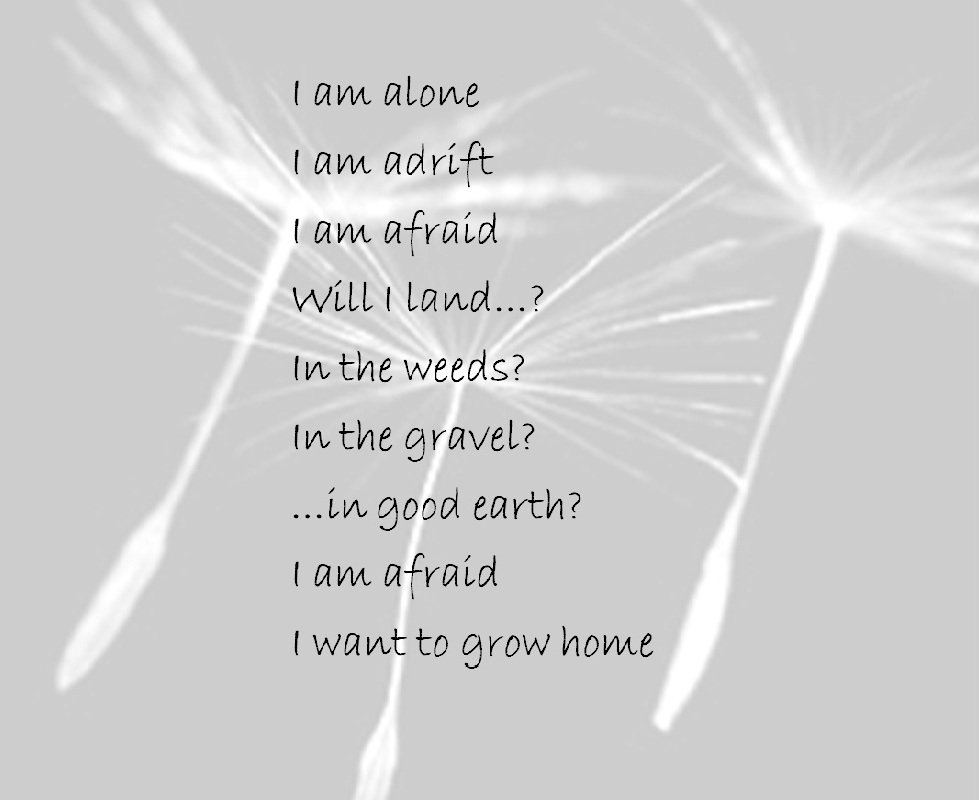
The picture at the top is a poem I wrote when in this space – trying to express something of my experience of the state of homelessness…

This is loosely based on the parable of the farmer in the gospels (Matthew), the farmer scatters seed and the stuff on the road gets eaten by birds, the seed in rocky ground grows but gets scorched and some landed in the weeds and got choked but some landed in good earth and produced 100/60/30x what was planted.

I have times when I wonder whether shifting here was the right thing to do. I keep waiting to see one of those big signs like you have on the highways here that say WRONG WAY, TURN BACK! I am afraid that I might not flourish here, that I might not find good earth I which to put down strong roots.

Marcus pointed out that we’re all homeless, all on a journey back to our heavenly home – having to leave the home we know, that’s part of our history.

This kingdom of faith is now your home country. You belong here… God is building a home. He is using you in what he is building. He used the apostles and prophets for the foundation. Now he’s using you, fitting you in brick by brick, stone by stone, seed by seed with Jesus as the cornerstone that holds everything together. We see it taking shape day after day…  (slight paraphrasing, Ephesians 2:19-22)

I was feeling adrift, like I wasn’t connected to anything, reading this was really grounding, it gave me something concrete to hold onto – it was such a relief to have something I felt certain about.

Maybe I’ve been homesick all my life, homesick for heaven, and because all of the things that made my life full I couldn’t see it as clearly.  Perhaps because my environment was known and familiar I could pretend that was enough, and it’s only through shifting to a new country that I’ve had to question what I think I know.

2 Corinthians 5:4 reads “For while we are in this tent, we groan and are burdened, because we wish to be clothed with our heavenly dwelling, so that what is mortal may be swallowed up by life.”  Perhaps the pursuit of happiness in this life is really part of the search for home, a search for heaven.  Maybe this life is never meant to be completely satisfactory, the passage goes on to say God has given us the Spirit as a deposit, guaranteeing what is to come. So we have this Spirit within us that is always longing for God, to be with God… longing for home.

For a lot of people in the pursuit of happiness, they express dissatisfaction with their tents by redecorating them or damaging them. Perhaps no one’s quite sure what our home’s supposed to be, we live by faith not by sight, but it seems we’re all agreed that it’s something other than what we have.  What we’re pursuing is change, what we long for is to grow home…

Now when I go back to NZ I found it very valuable in helping me to see how much progress I’ve made towards growing a home here. Urban Seed is helping me do that, helping a lot of people do that. That’s what Urban Seed/Seeds is about: It’s about providing good earth, where people can put down some roots and grow, it’s about providing spaces where people who feel homeless can experience connectedness while on the journey to grow home.