



Tag Archive: peace

Maori continued with the task unarmed and, to a person, they declined to respond to aggression when removed. Go, put your hands to the plough. Look not back. If any come with guns and swords, be not afraid. If they smite you, smite not in return. If they rend you, be not discouraged. Another will take up the good work. If evil thoughts fill the minds of the settlers and they flee from their farms to the town, as in the war of old, enter not . . . into their houses, touch not their goods nor their cattle. My eye is over all. I will detect the thief, and the punishment shall be like that which fell upon Ananias. When the ploughmen asked Tohu what they should do if any of their number were shot, he replied, ‘Gather up the earth on which the blood is spilt and bring it to Parihaka’ (Scott, pp 56-57).
February 6th is Waitangi Day in New Zealand, the anniversary of the signing of the Treaty of Waitangi in 1840. To the British this achieved full sovereignty and government of the country but Maori thought, while giving authority to govern, they would still be entitled to manage their own affairs in their own way. Similarly to Australia Day on January 26th being known as “Invasion Day” to the First Peoples of that nation, Waitangi Day is often attended by protest as well as being a celebration of nationhood.
What perhaps not enough New Zealand settler descendants may know is that there were Taranaki chieftains who never signed the Treaty of Waitangi, steadfast in their refusal to acknowledge foreign sovereignty in preference for maintaining their own way of life on their own land – the pa at Parihaka became a sanctuary for Maori forced, fought, deceived off their land. Likened forerunners to Ghandi and Martin Luther King, Te Whiti and Tohu ran a campaign of non-violence spanning 40 years sheltering the dispossessed.
The Waitangi Tribunal[1] published “The Taranaki Report: Kaupapa Tuatahi” in 1996 saying, “ If war is the absence of peace, the war has never ended in Taranaki, because that essential prerequisite for peace among peoples, that each should be able to live with dignity on their own lands, is still absent and the protest over land rights continues to be made.” Contrary to the belief held by many New Zealanders that in an acknowledged first equal language, proportional representation in government and other policies we might be considered advanced in our journey of equality and reconciliation, in fact we are the only colonising country where there is no land held and managed autonomously by the indigenous population (Ch.8 Parihaka).
The title of Dick Scott’s book is a quote from Te Whiti, Chieftain at Parihaka who says:
Ask that mountain – here before us, it will be here when we are gone – that mountain as witness, can we honestly say that we have done everything we can? That everything is ‘right’?
These are the questions we need to ask ourselves and the stories that should continue to be told if we are to participate in the journey of healing between the people and the land.
It is often difficult to know where to start in confronting these issues, I have more questions than answers yet I have hope. I have ordered a T-shirt from the Emmaus Rd community, on the front it reads Arohamai which means “sorry” or “forgive me” and on the back are a list of some of the injustices as occurred over those 40 years and are carried yet in our dreams and bones today:
I’M SORRY FOR THE
// INVASION OF YOUR VILLAGE – 5th NOV
// UNJUST ARREST AND EXILING OF TE WHITI AND TOHU
// LOOTING BY THE ARMED CONSTABULARY / 8th NOV
// DESTRUCTION OF THE WHARENUI & CROPS / 20th NOV
// FORCIBLE EJECTION OF 1,556 PEOPLE FROM THEIR HOMES /20th NOV
// RAPE OF YOUR WOMEN
// CONGENITAL SYPHILLIS IN YOUR CHILDREN
ALSO FOR THE:
// IMPRISONMENT WITHOUT TRIAL OF 420 PLOUGHMEN AND 216 FENCERS FOR TWO YEARS
// DEVASTATING EFFECT ON THEIR WIVES AND CHILDREN
// UNJUST CONFISCATION OF YOUR LAND
// BACKDATING OF LEGISLATION TO MAKE LEGAL THE GOVT’S ILLEGAL ACTS
AND OUR FAILURE AS A NATION TO FACE THESE ISSUES
In her Booker Prize Winning novel The Bone People Keri Hulme writes, “I was taught that it was the old people’s belief that this country, and our people, are different and special. That something very great had allied itself with some of us, had given itself to us. But we changed. We ceased to nurture the land. We fought amongst ourselves. We were overcome by those white people in their hordes. We were broken and diminished. We forgot what we could have been, that Aotearoa was the shining land. Maybe it will be again… (p.364)
I will wear this T-shirt as an act of public witness, as a peacemaker wanting to put things right personally and as someone who believes the people of New Zealand are different and special and in faith that the mountain will stand to see a shining land, whole and restored, again.
[1] The Waitangi Tribunal was established in 1975 by the Treaty of Waitangi Act 1975. The Tribunal is a permanent commission of inquiry charged with making recommendations on claims brought by Maori relating to actions or omissions of the Crown that breach the promises made in the Treaty of Waitangi. The full text of The Taranaki Report: Kaupapa Tuatahi can be found on the website http://www.waitangitribunal.govt.nz/.
On Monday I was able to sit in on Ched and Elaine running a webinar for a class on restorative justice (the students are studying their “Ambassadors of Reconciliation” publications) and they made moving reference to a trip they made to Birmingham where they were able to visit a memorial of the Children’s March a critical moment in the non-violent civil rights movement where “on 2 May, more than a thousand African American students skipped their classes and gathered at Sixth Street Baptist Church to march to downtown Birmingham. As they approached police lines, hundreds were arrested and carried off to jail in paddy wagons and school buses. When hundreds more young people gathered the following day for another march, commissioner Bull Connor directed the local police and fire departments to use force to halt the demonstration. Images of children being blasted by high-pressure fire hoses, clubbed by police officers, and attacked by police dogs appeared on television and in newspapers and triggered outrage throughout the world.”
Monday 16th January is Martin Luther King day here in the US, here is an article by Ched to inspire and challenge us to dream of creative ways to love…
“…to see what will become of his dream.”
Martin and Jesus
Ched Myers, January, 2005
Not long after Martin Luther King was killed, the great American rabbi Abraham Heschel asserted that the very future of our country might well depend upon how the legacy of this extraordinary man would be handled.
Unfortunately, the way King is officially honored on our national holiday has little to do with the leader of the most significant religious and political movement in U.S. history, which dramatically and permanently changed the landscape of American race relations. Rather, King is portrayed as a lovable, harmless icon of peace and tolerance. King’s legacy has been widely domesticated, captive to street names and prayer breakfasts. And his revolutionary message gets typically reduced to a vague and sentimental sound-byte—”I have a dream”—which apparently can mean anything to anyone.
King’s real public voice, however, was prophetic in every sense of the word. His oratory was often polarizing and upsetting to the status quo—and even moreso, his campaigns of militant civil disobedience. This “subversive” voice is perhaps best heard in his famous “Beyond Vietnam: A Time to Break the Silence” speech, delivered on April 4, 1967 at the Riverside Church in New York (for the text and an audio excerpt go to www.drmartinlutherkingjr.com/beyondvietnam.htm).
In this talk, King—who was by then a famous civil rights leader and Noble Peace prize recipient—publicly articulated his opposition to the Vietnam war for the first time. Government authorities—most notably FBI chief J. Edgar Hoover—were furious that King had joined his considerable moral authority to the anti-war movement. It is not surprising that exactly one year later almost to the hour, the prophet was gunned down in Memphis.
The Vietnam war was, of course, an earlier example of the U.S. trying to secure “regime change” in a foreign country, as is the current case in Iraq. Thus the real King is highly inconvenient for a materialistic, militaristic and racist nation that has canonized him and then ignored his clarion call to overturn those “giant triplets” of evil.
Interestingly, the same can be said of another prophet, Jesus of Nazareth. The portrait we get in the gospels—of an anointed man who ministered among the poor, relentlessly challenged the rich and powerful, and was executed as a political dissident—is a far cry from the stained glass window Christ we encounter in churches.
It seems to be a pattern in human culture: we are far more comfortable with dead prophets than living ones. We honor them publicly only after they are safely disposed of, after which they are put on display in museums and shrines. Jesus understood well this tendency: “Woe to you!” he exclaimed, “For you build the tombs of the prophets whom your ancestors killed” (Luke 11:47).
One of Dr. King’s colleagues, Rev. James W. Lawson, a Methodist minister who still works tirelessly for justice here in Los Angeles, likes to say that if you want to understand King you must look at Jesus. Yes, he means that King was a committed Christian disciple, who understood the call of the gospel to advocacy for the oppressed and nonviolent resistance to injustice. King prayed as he picketed, he preached to presidents, and he challenged Christians to take their faith out to the streets.
But Lawson means more than that. There are uncomfortable parallels between the Jesus story and the ministry of King. Both came from ethnic minority communities who suffered great discrimination. Both spent time listening to the pain of the dispossessed and broken. Both worked to build social movements of commitment and conviction. Both proclaimed God’s justice in ways that got them into trouble with the authorities. Both were involved in dramatic public protests that resulted in arrest and jail. Both were deemed a threat to national security, and had their inner circles infiltrated by government informers. And both were killed by the authorities because of their work and witness.
It seems to me , however, that the converse also applies: If you want to understand Jesus, look at King. That is to say, the more you study the history of the civil rights movement, the more the gospels come alive. Most Christians tend to think of Jesus in a highly spiritualized, even romanticized way, as if he was always bathed in light, clothed in white, everybody’s best friend. But Jesus didn’t get whacked because he was a nice guy and joined hands with folk singing “We are the World.” His times were as contentious and conflicted as King’s or ours, his choices were costly, the risks real.
If we take the time to learn about the challenges that Dr. King faced trying to build a social movement for integration in the teeth of the hostile system of American apartheid, it can help us re-imagine how difficult it must have been for Jesus. Jesus’ world was not the fantasy-scape we so often imagine the Bible to inhabit, but a terrain not unlike that of the U.S. in 1968, a world of government surveillance and conspiracy, of imperial “justice” meted out by good old boys who can hardly contain their glee when the prophet is killed, then issue stern calls for law and order in the wake of the “tragic death” that they engineered.
Jesus, too, was hemmed in by all the political factions of first century Palestinian society. He had to navigate death threats from without and dissent from within his movement; he had as colleagues only a tiny group of feckless, knuckle-headed and betrayal-bound companions. So let’s keep it real: struggling for the Kingdom of God in a world held hostage by tyrants, terrorists, militarists, and kingpins, a world that seems to merit only ambivalence from toothless religious leaders and insular academics and distracted young folks—it’s hard work.
Yet both Jesus and King believed that the movement for God’s justice is worth giving our lives to—which they invited us to do. It wasn’t that King was so peculiar, says Lawson; it’s that he seems that way to us because we haven’t yet found the commitment and courage to try to change the world . If Jesus or King seem like remote historical figures to us, it is only because we haven’t engaged in the struggle for which they lived and died (and in different ways, live still).
But everything they were trying to fix is still broken. And the kinds of folks they sought to heal and to liberate are still crying out for compassion and justice. King protested the war in Indochina because “the poor of America are paying the double price of smashed hopes at home and death and corruption abroad… The great initiative in this war is ours. The initiative to stop it must be ours.” The same case could be made of the current war in Iraq and the growing poverty in our own country. But how often was that message heard during the public paeans to King delivered by politicians and preachers over the recent national holiday?
Ultimately, then, a real encounter with Jesus or with Martin will call into question all our comfortable certainties about our selves and our society. For these prophets call us to defend the poor, but we instead lionize the rich; they tell us that our weapons cannot save us, but we instead watch with rapt fascination when bombs drop on Baghdad; they challenge us to forgo idolatry, but we instead keep looking for that next cool thing to buy. Above all, these prophets warn us that the only way of salvation in a world locked down by the spiral of violence is the way of nonviolent, sacrificial, creative love. That the only way to true transformation in a world of deadened conscience and numbing conformity is the way of committed discipleship.
Dr. King was gunned down on the balcony of the Lorraine motel in Memphis, which has been turned into the National Civil Rights museum. Just below that balcony is a memorial plaque (above). The only words inscribed on it are from Genesis 37:19-20, the taunt of Joseph’s scheming brothers: “Behold, here cometh the dreamer… Let us slay him… and we shall see what will become of his dreams.” Every time I stand before that plaque, I weep.
We do well to honor the real Martin Luther King, a child of the church and a treasure to the nation, who followed his Lord in life and death. The question of what will become of his dream, however, remains posed to us like an unresolved chord. It invites us to discipleship in a world still captive to racism, militarism and poverty.
This is an edited version of a talk Ched gave to students at Concordia University in Irvine, CA on Jan 21, 2005.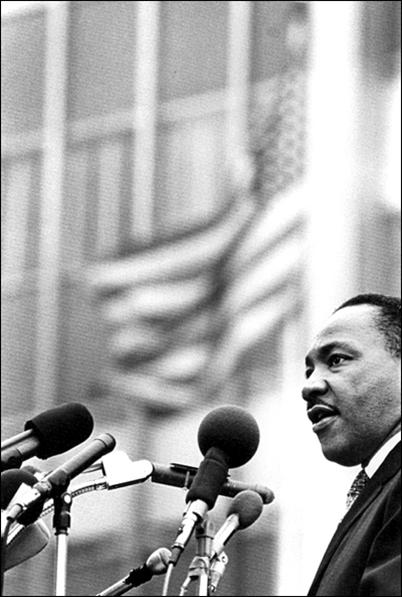

 Next open webinar: Jan 19, 5:45-7:15 pm PST: Webinar: Mark’s Call to Discipleship in Socio-political and Economic Context” only $9.50, you can sign up at http://www.chedmyers.org/blog/2012/01/03/2012-monthly-bcm-webinar-series-begins-jan-19-your-mark
When Jesus called, he said “Take nothing for you journey…”
Were the twelve afraid?
God’s peace be with you
Did they wonder if they could do these things?
Next to the quality of your ministry did they feel inadequate and unworthy?
God’s peace be with you
Did they want to postpone their journey until they had all the possible things they might need? Until they were sure of their abilities?
God’s peace be with you
Did they want to hold off on a commitment until they were absolutely sure it wouldn’t be a mistake? Did they ever feel they had no time, no talent, no knowledge, no energy, no guaranteed results?
Jesus said “take nothing”, and they went.
They went with His power.
God’s peace be with you.
Father God, I want to thank you for ——–, I want to thank you for calling them to be leaders. There are times when responsibility can seem too much to bear and we wonder how we came to be here, to deserve this trust. That in ‘taking nothing’ we ‘have nothing’. Grace each of them with the sense of peace of knowing you are with them, the sense of faith that is born of giving up our will to yours, and the sense of love that is born of forgiveness and communion. May this spirit which passes understanding, and this grace which makes us what we are, and this fellowship of His communion make us one in spirit and in heart. Let them find ease in You who are our leader. We need not be afraid, for you are with us always. In Jesus name, amen.
[Sharing communion @ Kinfolk]
 itellyouarise