Tag Archive: stories


#freepostcards

124

Wedding

A Lovely Love Story by Edward Monkton

The fierce Dinosaur was trapped inside his cage of ice.

Although it was cold he was happy in there. It was, after all, his cage.

Then along came the Lovely Other Dinosaur.

The Lovely Other Dinosaur melted the Dinosaur’s cage with kind words and loving thoughts.

I like this Dinosaur thought the Lovely Other Dinosaur.

Although he is fierce he is also tender and he is funny.

He is also quite clever though I will not tell him this for now.

I like this Lovely Other Dinosaur, thought the Dinosaur.

She is beautiful and she is different and she smells so nice.

She is also a free spirit which is a quality I much admire in a dinosaur.

But he can be so distant and so peculiar at times, thought the Lovely Other Dinosaur.

He is also overly fond of things.

Are all Dinosaurs so overly fond of things?

But her mind skips from here to there so quickly thought the Dinosaur.

She is also uncommonly keen on shopping.

Are all Lovely Other Dinosaurs so uncommonly keen on shopping?

I will forgive his peculiarity and his concern for things, thought the Lovely Other Dinosaur.

For they are part of what makes him a richly charactered individual.

I will forgive her skipping mind and her fondness for shopping, thought the Dinosaur.

For she fills our life with beautiful thoughts and wonderful surprises. Besides,

I am not unkeen on shopping either.

Now the Dinosaur and the Lovely Other Dinosaur are old.

Look at them.

Together they stand on the hill telling each other stories and feeling the warmth of the sun on their backs.

And that, my friends, is how it is with love.

Let us all be Dinosaurs and Lovely Other Dinosaurs together.

For the sun is warm.

And the world is a beautiful place  
“hanging around”

Caught sight of someone “hanging around” our fence, thought “What on earth are they doing?” Sort of bobbing up and down against the fence… moved out of my line of sight so I shrugged and went about my day…

I wandered out the front half an hour later to realise with dismay my bobbing friend was still pacing out the front of our house.

“Hello?” I say, “Are you alright? Do you need any help?”

“Thank you for stopping.  I’m not a bad person. I know how this must look…”

“Where are you going? Do you need anything? Directions?”

“Cigarettes.”

“Oh, I’m sorry I don’t smoke… wait, you want to buy cigarettes? There’s a milk bar just up the road there… where the traffic lights are…”

“Thank you.  Thank you so much for stopping.”

I don’t know what condition he might have that would make him bob up and down or become disorientated. I don’t know if he’d had a serious fall or been beaten or why… I do know we were courteous to one another and it was ‘enough’.

Padraig O Tuama is in town as resident poet for 3 months with the Uniting Church, I believe his greatest gift to me has been sharing his whole truth and the space that he creates that invites me to share my own – and the shared healing that is found through that.

These are snippets from tonight “poetry, prayer, promise & protest speaking to humanity’s hidden yearning for decency, goodness, survival and companionship” which may not make sense out of context but might be enough to inspire you to look further (books on Amazon) or ask me about it someday…

Trinity in me: hopeful theist, agnostic and someone in pain

In Irish no words for yes or no. Will answer “I will”, “I can”, “Tis”, “May be so”

God of watching * God of silence * God of darkness

Why do we have to dehumanise to delineate?

Once I was blind, now I’m blinder still

The people stood in darkness and in it became their light.

Appearance of the Blessed Virgin Mary (BVM)
“You never liked me much did you..”
“No. No, I didn’t”
“That’s ok”

Moments of consolation in the midst of desolation

God is the crack where the story starts and we are the crack where the story gets interesting.

“It is in the shelter of each other that people live”

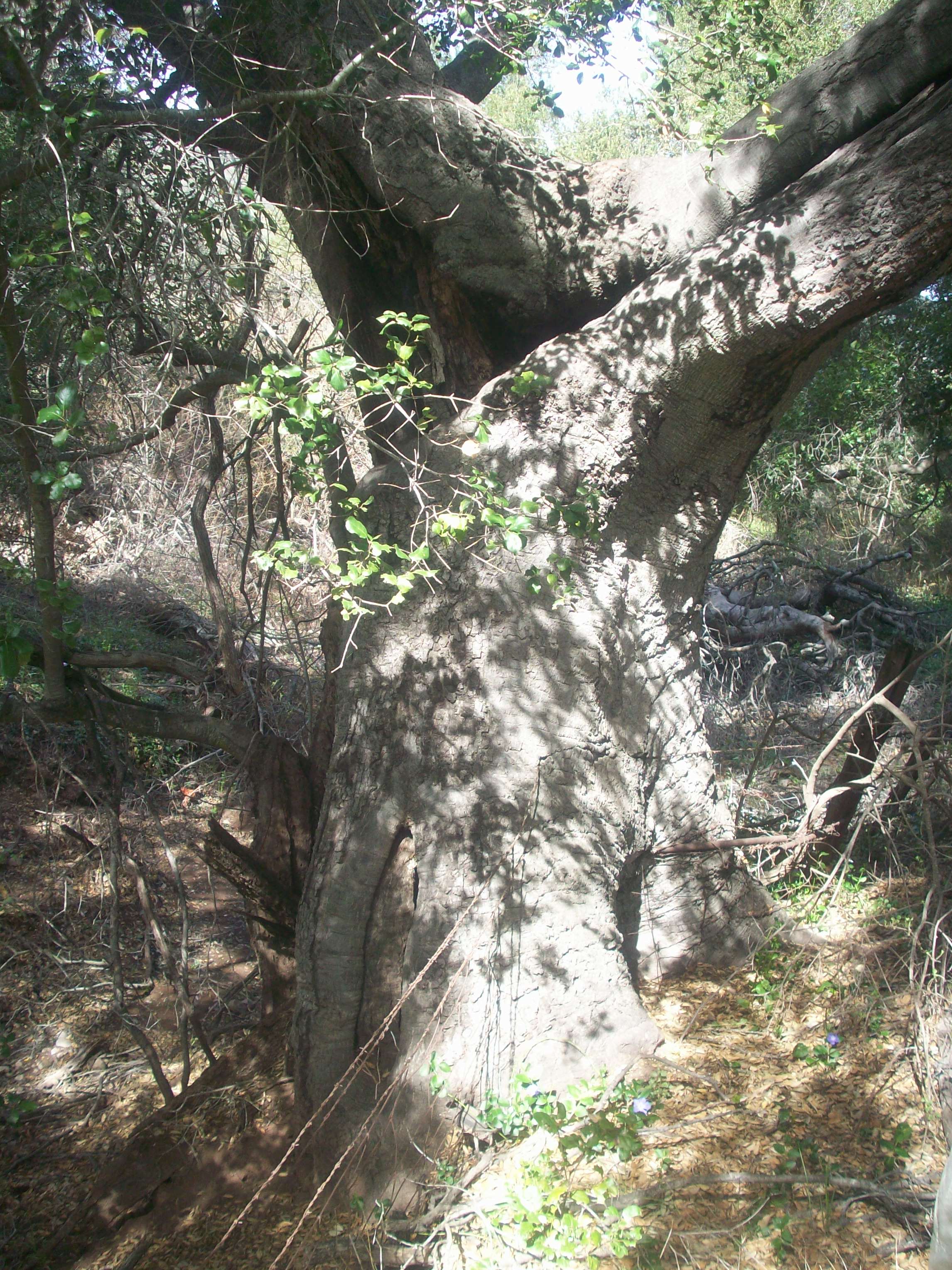
Pictured: Grandma Oak – a significant tree to Elaine and Ched. One of the oldest where they live in Oak View,
this grand dame has been split by lightening
and overgrown the “limiting” babrbed wire that got in her way
– a strong, beautiful triumph of nature
!

While doing the internship in Oak View there were two other interns based offsite who travelled in for Tuesday/Wednesday and it was great to get to spend time coming to know Julia and Jeremy… I am an introvert and generally try to avoid meeting new people because it feels so awkward and uncomfortable and I’d rather skip that stage!  Early in the piece we were doing the dishes after lunch together and Jeremy begins “So…” and my inner introvert braced anticipating the question “What do you do?”, or similar, but no, instead he said “…tell me about a significant tree in your life”.  In the interests of full disclosure Jeremy is into anarchal primitivism and the interconnectedness of creation so that’s how he rolls but I felt dumbfounded but what a great question I conceived that to be.

So many of those preliminary introduction questions seem to be about establishing status/knowledge and we skipped it!

My mind went to the low-sweeping willow tree in Wellington Zoo whose branches touch the ground and an afternoon I spent having a picnic under there watching the world go by, or the wild gardens of Erskine College in Island Bay where my friend Jack and I rambled playing everything make-believe amongst the twisted roots and then my mind went to Footscray.  Footscray is where I live now, an inner-city suburb of Melbourne quite industrial and functional compared with the leafy avenues out east.  It was a bit of a shock to realise that I don’t currently have a significant tree – no place I go to get away from the house for space, perspective, to climb or lean against and read… I made it a bit of an objective being back to go on a tree-seeking mission.  …I didn’t find one.  But I did find a spot I like that feels tree-ish so perhaps I’ll plant one there.

So… tell me about a significant tree in your life…
I will tell you something about stories
[he said]
They aren’t just entertainment
Don’t be fooled.
They are all we have you see.
All we have to fight off illness and death.

You don’t have anything if
you don’t have stories.
Their evil is mighty
but it can’t stand up to our stories.
So they try to destroy the stories.
Let the stories be confused or forgotten.
They would like that…
Because we would be defenceless then…

Leslie Marmon Silco – Ceremony

Stories are all we have – the hermeneutic approach of the Bartimaeus Institute.

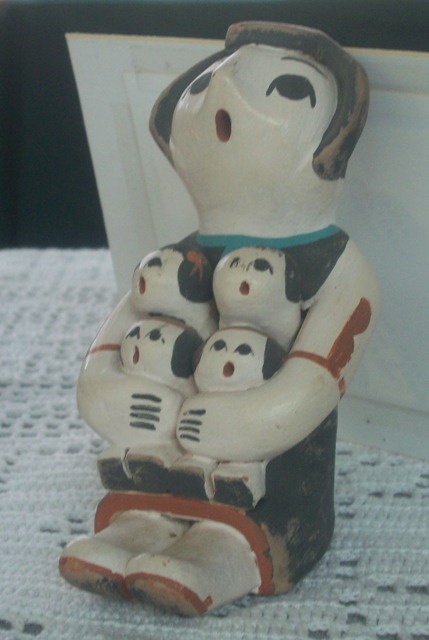
Native Americans make storytelling dolls out of pottery – collecting the clay is a spiritual and mindful process, native plants and minerals are used for the colours and designs, shaped and smoothed by hand, sanded, slip coats applied and then hand polished – a lengthy and involved process.  These beautiful artworks generally depict an elder with children in their lap,  honouring the oral tradition of the culture, validating the importance of each persons voice in family/community and the importance of the role of storytellers in society for keeping awareness alive.

MLK once said: the arc of the moral universe is long, but it bends towards justice.  That is to say that we need to draw on the wisdom of tradition, history and our elders to better understand ourselves and the world in which we live.

John 1:18 No one has ever seen God.  It is the Son, who is close to the Father’s heart, who has made God known (Greek: exegesato) – Jesus ‘decodes’ gives meaning to God.

Luke 10:25-30, 36f
A) What must I do to inherit eternal life?
B) What’s written in the Torah? How do you read it?
C) Love the Lord your God
D) Given right answer. Do this.
E) Who is my nieghbour?
F) Who was neighbour to the robbed man?
G) One who showed mercy.
H) Go and do it.

3 disciplines of interpretation: what stands? how do we read it? what do we do with it?

Who around you has stories you could be learning from?  Are you making space to hear them?
If you live a life trying to be like Jesus, what are the ways in which your life points to or gives meaning to God?
What ways does what you read influence/affect praxis in your life?

We need wisdom that is older, wider, deeper than we are – sacred stories provide that.  Listening to the old stories needs to be central to any expression of faith that is related to transformation. We need to have a practise of returning to the well of imagination.

We kicked off the Bartimaeus Institute tonight and by way of introduction to the space, one another and the content we did an exercise in replacing Mark’s prologue in our bioregion – it was great to hear some of the native stories of California, Minnesota, Texas, Saskatchewan…

(we acknowledge the people of the Kulin nations as first custodians of the land on which we work and play – and ask you forgive our ignorance and accept this as a light story in entering into the spirit of the exercise and representative of a desire to learn our own context more deeply…)

The Australian midrash went something like this…

Aunty Joy Wandin was up Broken Hill way sharing stories to remember the Dreamtime and people from all over, from as far away as Sydney and Melbourne, were coming to hear, and were baptised by her at the confluence of the Murray and Darling Rivers.  Aunty Joy wore simple clothes from a second hand shop with a possum-skin cloak overtop and ate good bush tucker like yams and witchety grubs.

She shared at the gathering, “The one who is more deadly than I is coming after me; I am not worthy to clean his dunny.  I have blessed you with water; but he will give you the blessing of the creator spirit – the Rainbow Serpent.

William Barak came from Waggawagga to be baptised in the Murray/Darling River. And just as he was coming up out of the water, he saw the heavens part and the spirit descended like a sulphur-crested cuckatoo on him. And a voice came from heaven, “You are my mob, and I think you’re deadly.”

And the Creator Spirit immediately drove him walkabout. He was in the outback for forty days and tempted by the Waa the Crow Trickster with the promise of shiny things from the mining of oil, coal and uranium;  Barak was with the wild dingos, platypus, wombats and other animals, and gentle bunyips waited on him.

Now, after Aunty Joy was locked up, Barak went up Penrith way, also sharing stories of the Creator Spirit from the Dreamtime, and saying, “Listen, the time for the healing between people and the land is here.”

And as he walked along the Nepean River, he saw Wilam huffing petrol and Hassad – a doctor in his own country but here just a taxi driver – and said “Come with me – I have something else for you to do.”

– – – – – – – – – – – –

The task of replaced thoelogy is to reclaim symbols of redemption which are indigenous to the bioregion in which the church dwells, to remember the stories of the people of the land, and to sing anew its old songs.
These can then be woven together with the symbols, stories and songs of biblical radicalism.
This will necessarily be a local, contextual and personal exercise
(Who Will Roll Away The Stone, 1994)

you can’t save a place you don’t love

you can’t love a place you don’t know

you can’t know a place you haven’t learned


As applies not only to our neighbourhood, country, world – but also to the bigger historical creation story we find ourselves in .

very Christian

A stranger stopped my friend and I yesterday as we were walking down the street to ask an inane question.  I said something unkind about him once he’d left. My friend smiled and said, “Sometimes you are very Christian, and sometimes you are so not.”

My smile twisted and became wry, “No. I’m a Christian all the time,” I say, “…sometimes I’m better at it than others.

This morning made my way to Melbourne Town Hall at 4.15am for the StreetCount – it’s my third year now.
80 volunteers canvassing the city 4.30-7.30am counting those experiencing primary homelessness or “sleeping rough”
23 people were interviewed and 36 observed, down on the c. 100 of other years. A sign of improvement or do people avoid the count?

Indian Store manager at Macca’s on Swanston Street really engaged with us, pointing out people as they came in – “You need to talk to him.”  He knows who the regulars are – “he’s been here 6 months now”.  They are part of the rhythm of his work, the store is open 24 hours and they clean at c.6am.”Oh, they all leave while we clean and then they come back – give it twenty minutes. He asked us what the survey was for? what it was supposed to achieve? “I have offered to find them a job, I can find them a place to stay if they are willing to share but they say ‘I am okay’, I do not know how to help them if they do not accept my help. I will pray.”

I didn’t know what to think of such generosity and perhaps the punters don’t either…

Of the 7 counted by my partner and I, two were asleep, two we interviewed and three declined to participate – of these, only one wasn’t in/near Hungry Jacks/Macca’s.  It makes me think twice about  representative capitalist power of the 24 hour- junk food joints, for the person missing the last tram or who just has no where else to go these fast food meccas offer a haven of warmth and safety.

One man we interviewed in Hungry Jacks flinches as the street sweeper goes by, “it’s so noisy… I haven’t slept…”  This man is 55, his health is deteriorating – Type 2 diabetes, sleep apnoeia, high blood pressure and a heart condition. He was discharged from the hospital at midnight and has hung out here for the intervening hours.  Some have turned away from the formality of our fluro vests and clipboards before we even say hello but this man is eager, hungry even, to speak with us and share his story.  He has been married, had kids, was on the school board for 5 years and ran his own small business – his grief is palpable as our questions probe the reasons behind his circumstances – the questionnaire doesn’t ask particularly personal questions: age, type of shelter, how long have you been there… but this is his life.  He cannot understand how his life came to this. He does not understand how a society he has strongly felt a part of and contributed to now feels so far removed. I don’t believe I understand it either. “What is there for my demographic? It is easier for a woman to get housing, or if I had a drug or alohol problem I could get help tomorrow… I am none of these things. I pay my rent. What help is there for me?” A food voucher for $30 quarterly, a night of accommodation at the Gatwick – these are piecemeal placebos for the people searching for home.

…but it’s broken

A Chinese man with a cane tied my old chest of drawers to his wife for her to carry to their home which I hope was somewhere nearby! I kept repeating “but it’s broken” and he kept repeating “very thank you, very thank you” – a western suburbs multilingual misunderstanding? Or a message of there always being something of value, something that can be put to good purpose, in the broken things – even if we can’t see it…