Tag Archive: struggle


015

The Christian Virtue of Hypomone – Transfiguration Community (Bible Study)

hypo – under
menein, mone –

  • to remain standing, to stand one’s ground (as in an Olympic wrestling match)
  • to endure to the end (as in a race), to last the distance
    • under the impact of evil
    • under the impact of a burden
    • in the face of a hostile and unbelieving culture
    • in the midst of seductions and temptations
  • to withstand resistance
  • to bear or suffer (patience)
  • to persevere
  • to be immovable

Its opposite is:
cowardice, caving in, colluding,
passive doormat kind of suffering,
running away, to waver, wobble, flee, give way,
to be changed, to pass away, to be transient, perishable

Menein is an active stance, a brave withstanding, a virtue.  Hypomone is used 7 times in the book of revelation, as the right and necessary virtue of the faithful i the old aeon (age)

Biblical: the soil that bears fruit under pressure

  • Luke 8:15 ‘But as for the seed in the good soil, these are the ones who, when they hear the word, hold it fast in a beautiful and good heart, and bear fruit in hypomone.
  • Acts 14:22
  • Romans 2:7, 12:12, 15:4-5
  • 1 Corinthians 13:7
  • 2 Corinthians 6:4, 12:12
  • Ephesians 6:11, 13, 14 The goal of the wrestling with the principalities and powers etc is to stand (used 4 times). The word used here is not hypomone but stenai.
  • Colossians 1:11
  • 1 Timothy 6:11
  • 2 Timothy 3:10
  • Titus 2:2
  • Hebrews 12:1
  • Revelation 2:2ff, 2:19, 13:10; 14:12

Walter Wink – Naming the Powers

Steadfastness in Prayer
Refusal of idolatry
Absolute intransigence – Unbending determination – an iron will.
The capacity to endure persecution, torture and death without yielding one’s faith – one of the fundamental attributes of non-violent resistance.
The power to sustain blows.  Obstinacy – Endurance.
Perseverance on the basis of the inner victorious sense that all contrary relationships and hostile forces can be overcome.

The strength that comes from faith, hope and love.

Hypomone is not gritting one’s teeth in stubbornness but the strength to suffer that comes from faith, hope and love. ‘Let your only experience of evil be in suffering – not in its creation.’

#freepostcards

124

13.03.14 JK Baxter

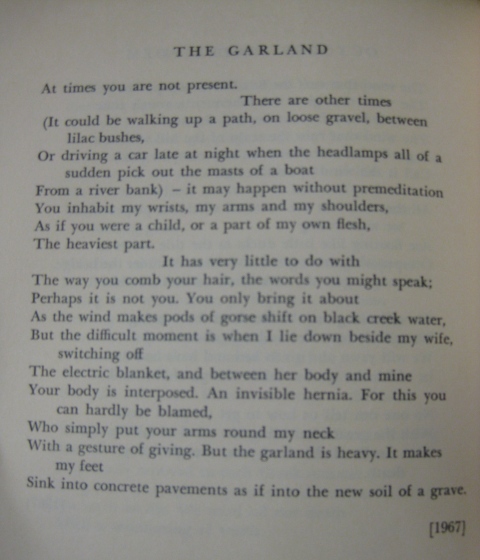
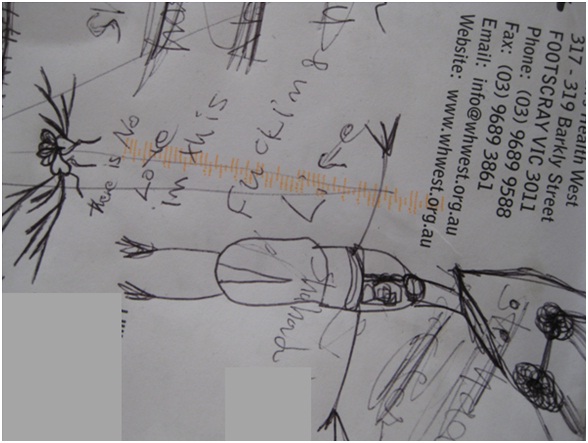
there is no love

11.02.14 no love

SLETIA

Life is hard
just wait
good will come
Life is hard just wait good will come
Life is hard
life is hard
just wait
just wait
Good.  Good will come.
Good will come.
Life is hard just wait good will come.Come life is
hard
just wait
good will
good will
come.


Today I am reading a copy of the Gnostic Bible (Barnstone & Meyer).

Gospel of Thomas:

(38) Often you have wanted to hear these sayings I am telling you, and you have no one else from whom to hear them.  There will be days when you will seek me and you will not find me.

“The radical church is the fastest-dying church in the world”

Myers, C. (1988) Binding the Strongman Orbis.

DISCIPLESHIP AND FAILURE: “YOU WILL ALL DESERT ME”

At the time, his words could hardly have hit home any harder, I ws still recovering from the painful breakup of my own community, the loss of home and marriage.  I had never expected that the “cross” would take this shape. If readers of this book still feel it is an exercise in imaginative idealism, they should be aware that Mark’s vision is flesh to me, flesh seared and scarred. I have seen business-as-usual rudely disrupted by the kairos of the call, seen the vision of radical discipleshhip community realized.  And more importantly, I have also seen those dreams fade, seen our best attempts to weave a fabric of hope and wholeness unravel, seen good persons bail out.

The radical discipleship movement today is beleaguered and weary. So many of our communities, which struggled so hard to integrate the pastoral and prophetic, the personal and the political, resistance and contemplation, work and recreation, love and justice, are disintegrating.  The powerful centrifugal forces of personal and social alienation tear us apart; the “gravity” exerted by imperial culture’s seductions, deadly mediocrities, and deadly codes of conformity pull our aspirations plummeting down.  Our economic and political efforts are similarly beseiged.  The ability of metropolis to either crush or co-opt movements of dissent seems inexhaustable.

A staff member shared this reflection at prayers a few months ago:

A person kneels to contemplate a tree and to reflect the troubles and joys of life. It is difficult to accept that life is difficult; that love is not easy and that doubt and struggle, suffering and failure, are inevitable for each and every one of us. We seek life’s ease. We yearn for joy and release, for flowers and the sun. And although we may find these in abundance we also find ourselves lying awake at night possessed by the terrible fear that life is impossible. Sometimes when we least expect it we wake up overwhelmed by a massive sense of loneliness, misery, chaos and death: appalled by the agony and futility of existence. It is difficult indeed to accept that this darkness belongs naturally and importantly to our human condition and that we must live with it and bear it. It seems so unbearable. Nature, however, requires that we have the darkness of our painful feelings and that we respect it and make a bold place for it in our lives. Without its recognition and acceptance there can be no true sense of life’s great depth, wherein lies our capacity to love, to create and to make meaning. A person kneels to contemplate a tree and to reflect upon the troubles and joys of life. The person imagines mornings and evenings in a great forest of prayers, swarming and teeming with life… The person is learning how to pray.

Prayer Tree – Leunig

Jean Varnier in “Community & Growth” says:

I am more and more struck by people in community who are dissatisfied. When they live in small communities, they want to be in larger ones, where there is more nourishment, where there are more community activities, or where the liturgy is more beautifully prepared.  And when they are in large communities, they dream of ideal small ones.  Those who have a lot to do dream of having plenty of time for prayer; those who do have a lot of time for themselves seem to get bored and search distractedly for some sort of activity which will give a sense to their lives. And don’t we all dream of the perfect community, where we will be at peace and in complete harmony, with a perfect balance between the exterior and the interior, where everything will be joyful?

It is difficult to make people understand that the ideal doesn’t exist, that the personal equilibrium and they harmony they dream of come only after years and years of struggle, and that even then they come only as flashes of grace and peace.  If we are always looking for our own equilbrium, I’d say even if we are looking too much for our own peace, we will never find it, because peace is the fruit of love and service to others… look instead at your brothers and sisters in need.  Be close to those God has given you in community today… everything will resolve itself through love.
More and more I am coming to understand that it is our brokenness that binds us rather than our perfection.  In a consumer society where it always feel like the grass is greener somewhere else it is important to buy-in somewhere and commit to growth in your own patch of the neighbourhood.  In owning the brokenness and needs I bring to community I am humbled to extend to others the welcome I myself receive.  Those plants I want to see the fruit of? I have to help them grow… I pray that you will know  a flash of grace and peace this week.


‘to love our neighbours as ourselves’ is a common belief across all faiths.

Sometimes feel depressed – actually those are things worth feeling depressed about (global financial crisis, global warming…) We are complicit in an exploitative system.  Fills us with sorrow.  Accept it as a reasonable response and don’t let it incapacitate me.

Joy and sorrow can co-exist.  Sadder the older I get.

Nehemiah – the joy of the Lord is my strength. In the midst of my sorrow need to find a reason for hope/joy.  God is always there.  God brings joy.  Need a spiritual discipline of finding God in sorrow.  In all things God is working for good.  When we find God in a situation we will find good.  Get up everyday and find something I can rejoice in: within myself, in my relationship with my wife, my family, my community…

Action research – look for problems.  Find them. Generate more à become overwhelmed e.g. “what do you see as the problems in our relationship?”, ask your partner that question and you will have found some problems to work on!

Appreciative research – peak experience, best practice.  What do you like about our relationship? Why? How could we do this more often in the future? E.g. what are the best times we’ve had together? What made them good? How could we have them more often?

Dealing with the negative in a more positive framework is more energy-giving.

What is truly there? Something about how it operates that sustains it – start from that.  E.g. people will keep running a programme long beyond when it is sustainable, it must be because there is something in that worth saving.

Positions polarise – close down options into one of two.  Those positions harden and it becomes difficult to see resolution.  Ask “why?” of both sides to draw out fears and desires.  See if there are solutions beyond their positions that meet desires and address fears. Not easy and not quick.  Fear of the process greater than need to change. E.g. building mosque – the side against were concerned about increased traffic flow and parking, Muslim people feared religious intolerance in their community.

Several options that can look like:
–          No existing relationship, no interest in a common goal
–          Committed to action, regardless of how it affects other relationships
–          Relationship so important, need to NOT act. Can’t risk it.
–          Do have a relationship – are interested in resolution (partial/unlimited)

Community with family:

Plan our time together and there are different kinds:
–          Non-negotiable time, this belongs to my wife and family and it cannot be given away
–          Non-negotiable time, give freely to everybody – don’t need to talk about it
–          Negotiable, to family or community

It is easy to give up something that is not important to yourself on behalf of someone else e.g. living without a fridge in India – easy for Dave to commit to but not for his wife àfundamental injustice.  Only sacrifice what is mine, not what belongs to others. Sometimes excruciating to negotiate, ‘worst way of doing it, apart from all the other ways’. Consequences of not negotiating – more painful.  Negotiating is a heavy process. Something that is life-giving for me might also be death-giving t someone else – have to negotiate to a cost. Often these aren’t win:win but rather choose what is life-giving for her this time and hope that it will roll around to my turn next time.  Important to be putting the other person first.

When first started this work it was all or nothing. Gave freely and fully. Became hurt. You can help and resource others without risking anything but you can’t love them.  Need to be willing/able to be vulnerable. I was becoming increasingly hardened. Prayed. God is love.  To reflect God to the world need to show love.  Get hurt along the way and now scared.  Need to ask ourselves: what can we do today to reach out to those around us so if its not reciprocated or appreciated it won’t destroy us?

Want to risk but can’t take the same amount every day.  A given that we will reach out but give ourselves permission to say how much we are able to risk. E.g. could be the difference between jumping in my car to go to work and only waving at my neighbours on the ways past, or walk out the door and seek people out but only talk about what is ‘light, right, nice, polite’ – no capacity to go to the depths, or go up to one person and go deep: “I’m sorry that we aren’t getting on so well, love to shout you a coffee sometime and talk about it…”

Need to monitor our own degrees of vulnerability.  Become bitter if give more than we can give happily.

Sacrificial giving – condemn Pharisees who only give a little themselves and exploit widows.  Exploit our desire to be generous and then guilt-trip is for more. Jesus was willing to die but not every day, most times Jesus ran away – only died once.  No one takes my life from me but I can lie it down. Sacrifice. We will take a stand and get done over, but not every day.

Need to think about our choices in relation to our partners/kids. E.g. if I am away on holiday for 14 days – need to manage myself to be back, present and attentive, on day 15.  Otherwise that is time that I have stolen from my wife and kids.

So many voices, culture, choices in our head driving us – seek out still small voice (role of the Holy Spirit). For myself, get a blank piece of paper and write things down with an arrow beside them

Arrow pointing upwards: things I want to ask God
Arrow pointing downwards: things God tells me
~ this becomes my ‘to do’ list

Prayer: God grant me the serenity to accept the people I cannot change, the courage to change the one I can and the wisdom to know it’s me.

Turning inwards, that job will never be complete.  But others seeing you on the journey might be inspired to become more like you. Teach me the lessons I need to learn so that I can be useful to someone else in the future.

Appreciative inquiry – if actions are oppressing a third party: have to intervene. In some occasions you can avoid/walk away but others you must intervene.

Becoming involved in conflict:

Keep your distance – a) helps situation not to escalate and b) gives you a head start if you need to run. Say something like “hey mate, can I help you something?” address the perpetrator not the victim.  Will think you’re on their side.  Want to protect them from harm themselves. Always frightened and fearful when getting involved.  If fair fight might sometimes keep walking but not if someone is out-numbered or overpowered.

Be gentle on ourselves. Can be our own worst enemy and our own best friend.  Rather than seeking validation from others, seek how God sees me. My needs and ideas are valid too.  Can’t wait for someone else to tell me that.  Desire for acceptance/approval. “The Lucifer effect”

In the context of God’s validation, accept ourselves.

Activist/doing – gets approval.  Hard work of seeking God and being still – becoming aware of our own faults and limitations. Can ‘survive’ and not maintain your soul. What is the bottom line of what you are willing to compromise of your faith/values? E.g. in a concentration camp: some did anything to survive, even kill other jews (had a life, but no soul), others were reformers preaching hope/outspoken, executed quickly (had soul but not their life), third type would not intervene in someone being beaten but would not engage in brutality themselves (both soul and life).

Whether they fire or shoot me  won’t do ….

What is the bottom line of what you are willing to compromise of your faith/values?

The Word of God is written on our hearts not in our hearts.  Our hearts need to be broken for the word to come in.

Spirit is God travelling incognito – us!

The Spirit breathes energy into our tired souls.  Sustaining anonymously until we know we need a breath of fresh air.  It’s when we feel breathless/”’I can’t breathe” – we cry out for fresh air and the Spirit rises to answer.  Ezekiel’s vision of dry bones. Yahweh a wind that comes like a rush of air àrevival of a group of people.  God will breathe within it.  Coming of the Spirit restored that nation, giving strength and resolve to its people.

Jesus told disciples – not the rules and regulations but the Spirit at the heart of his being that gave him energy to be who he was.  They didn’t get it.  Be empty, open, receptive, create a hospitable space in your heart for the Spirit to come.  Disciples spent time in prayer – not rushing around but waiting until the Spirit came. Pentecost came and they were ready, speaking in tongues. I will pour out my spirit on all people. Spirit descends in ‘tongues of fire – takes ‘nobody’ disciples and makes them somebody.  In touch with core passion – who we were created to be in the first place.  Desire to fulfil our potential.  Creates more light than heat – we won’t burn out if we are being true to who God created us to be.  Need to be our true selves authentically in any situation.

Engage with struggle. No one with an unmet need – glimpses of glory in community.  Disciples fought over distribution of resources – sought the power of the Spirit.  Greater collective and individual control.  In Acts – they choose 7 men who are strong in the Spirit.  All agreed to give power to the minority.  Marginalised given authority to have control and manage affairs for themselves ‘today scripture is fulfilled in your hearing’.  Spirit is not only working in us but working in others – no culture, church, tradition where Spirit is not already working.  Go with the flow.  Grieve when it ends and wait for the breath of fresh air to come again. Fruits of the spirit are love, peace, joyfulness, self control… à where the fruit is, that is where the Spirit is already working.  Arrogant to think it arrives with me. Work with a Spirit of forgiveness and compassion, follow the spirit of text rather than the law. Pray “God fill us with the Spirit that was in Jesus” – a spirit of love and justice.  We don’t have a monopoly on the Spirit but we need to be open/receptive to it.